
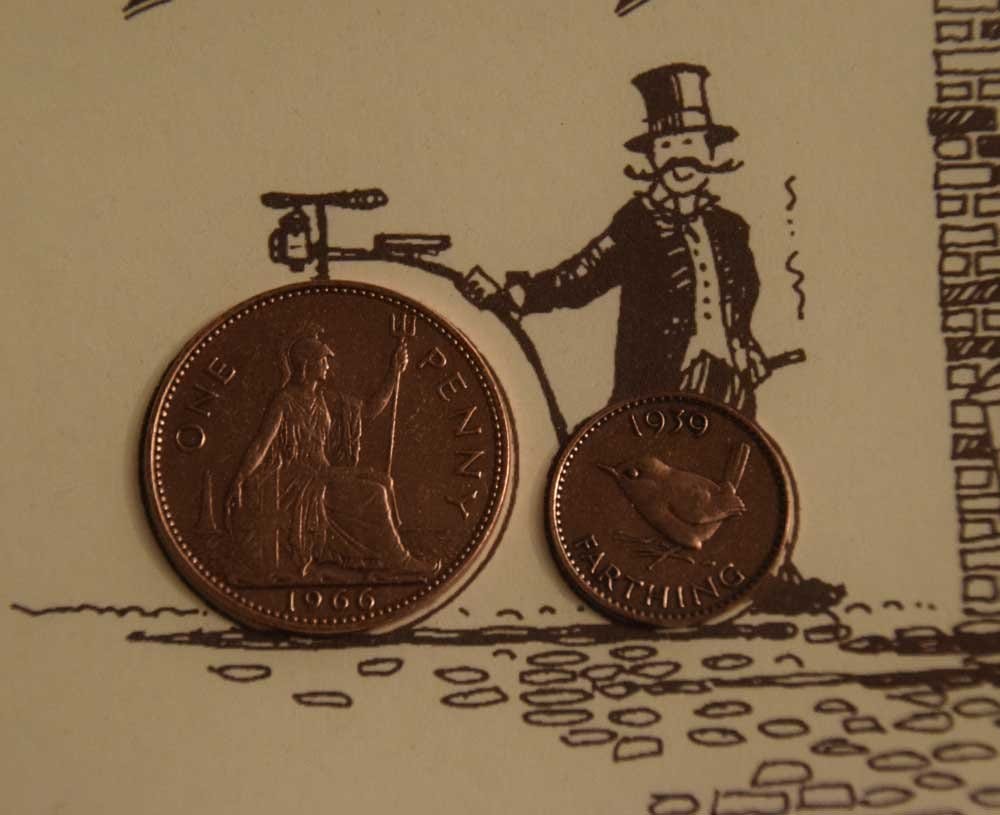
Why were the iconic Victorian era bicycles with the giant front wheel called a “Penny Farthing”?
Answer at the bottom.
In 1894, a Jewish French army officer named Alfred Dreyfus was convicted of passing military secrets to Germany. The case divided the French - conservatives wanted him imprisoned, progressives wanted him freed. Le Velo, was France’s dominant newspaper focussed on cycling and supported Dreyfus. Its major sponsors, furious at the paper’s political stance, pulled their funding and started a rival newspaper called L’Auto Velo in 1900. Le Velo sued the rival paper for trademark infringement and won, forcing it to become L’Auto - an odd name for a cycling newspaper. L’Auto’s sales were low so at a crisis meeting, a young journalist Geo Lefevre pulled an idea out of his backside - suggesting that they can sponsor a race around France. The idea worked and in January 1903, L’Auto announced the biggest cycling race ever conceived - 2428km across six stages.
This was ‘le genesis’ (that’s the extent our our French) of the Tour de France - an annual race that pushes the human spirit. This week we saddle up and look at some astounding stories from the Tour De France.
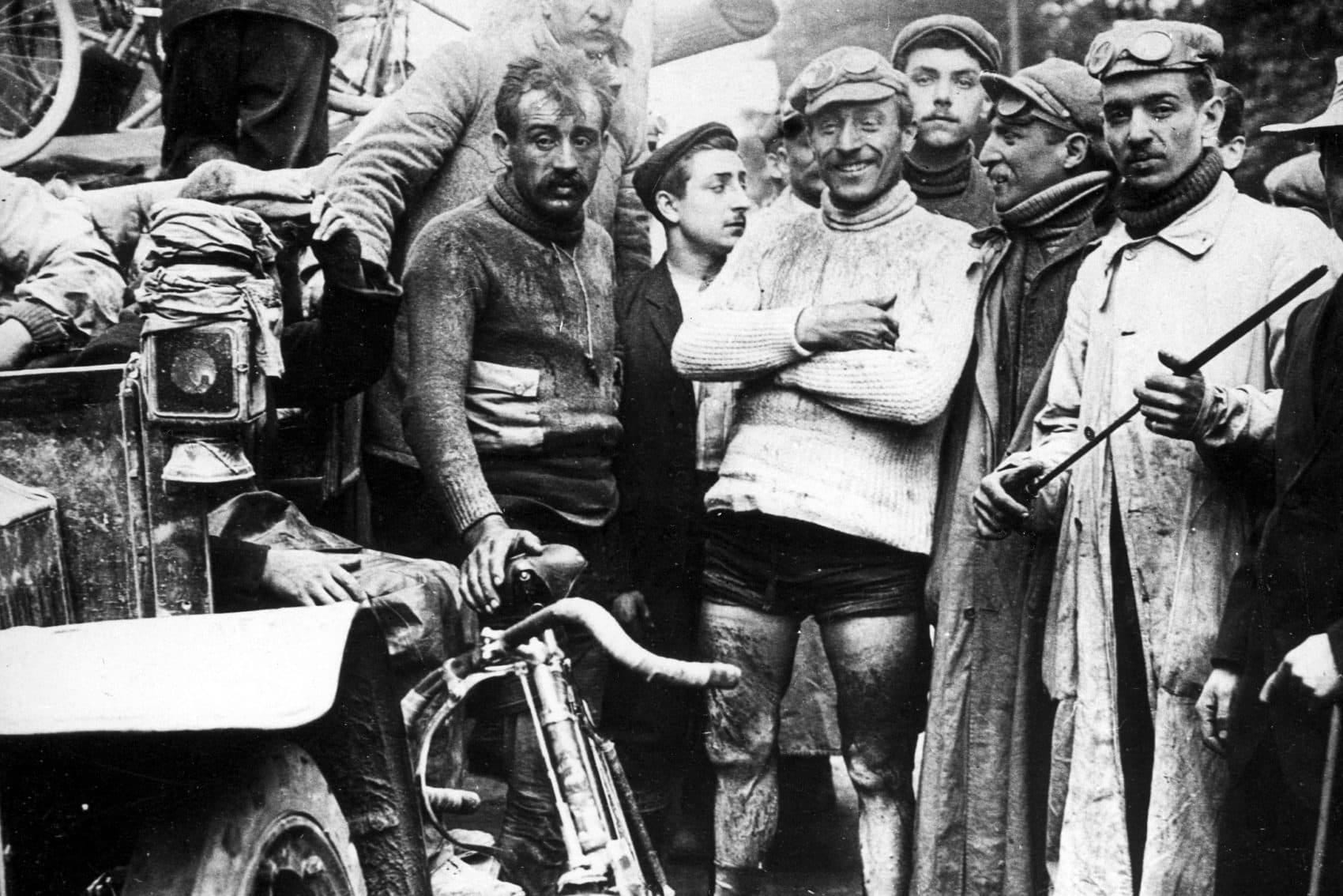
If ‘doping to win’ is a yardstick to measure the success of your event, the Tour De France achieved this in only its 2nd race ever. The 1904 edition remains one of the most chaotic sporting events of all time. Riders, clearly taking inspiration from Mario Kart, threw tacks and nails on the road behind them to puncture rivals’ tyres. Fanatical fans, gripped by a regional fervor, attacked the riders. At one point, officials were firing pistols into the air to disperse the mobs. A rider, wonderfully named Hippolyte Aucouturier, had enough of cycling and tied a piece of cork to a length of a string and attached it to a passing car. He bit down on it to be towed uphill. The winner of the race - Maurice Garin, the defending champion from the inaugural race, was disqualified several months later as it was discovered he had taken a train! There is no metaphor in this - he had taken an actual train. The top four finishers were all disqualified in various states of disgrace. The fifth-placed rider, Henri Cornet, aged nineteen, was handed the trophy and presumably asked to look pleased about it. He is still the youngest winner in Tour history. What happened to Garin? He opened a petrol station and he filled customers’ tanks and told them that he was the first ever winner of the race - though he might have skipped mentioning he was also the first winner to be disqualified. You know the ol’ saying - less is Maur-ice.
The Tour De France’s Yellow Jersey is one of the most recognisable garments in world sport. This iconic piece of clothing was chosen because a shop had a surplus of yellow garments!
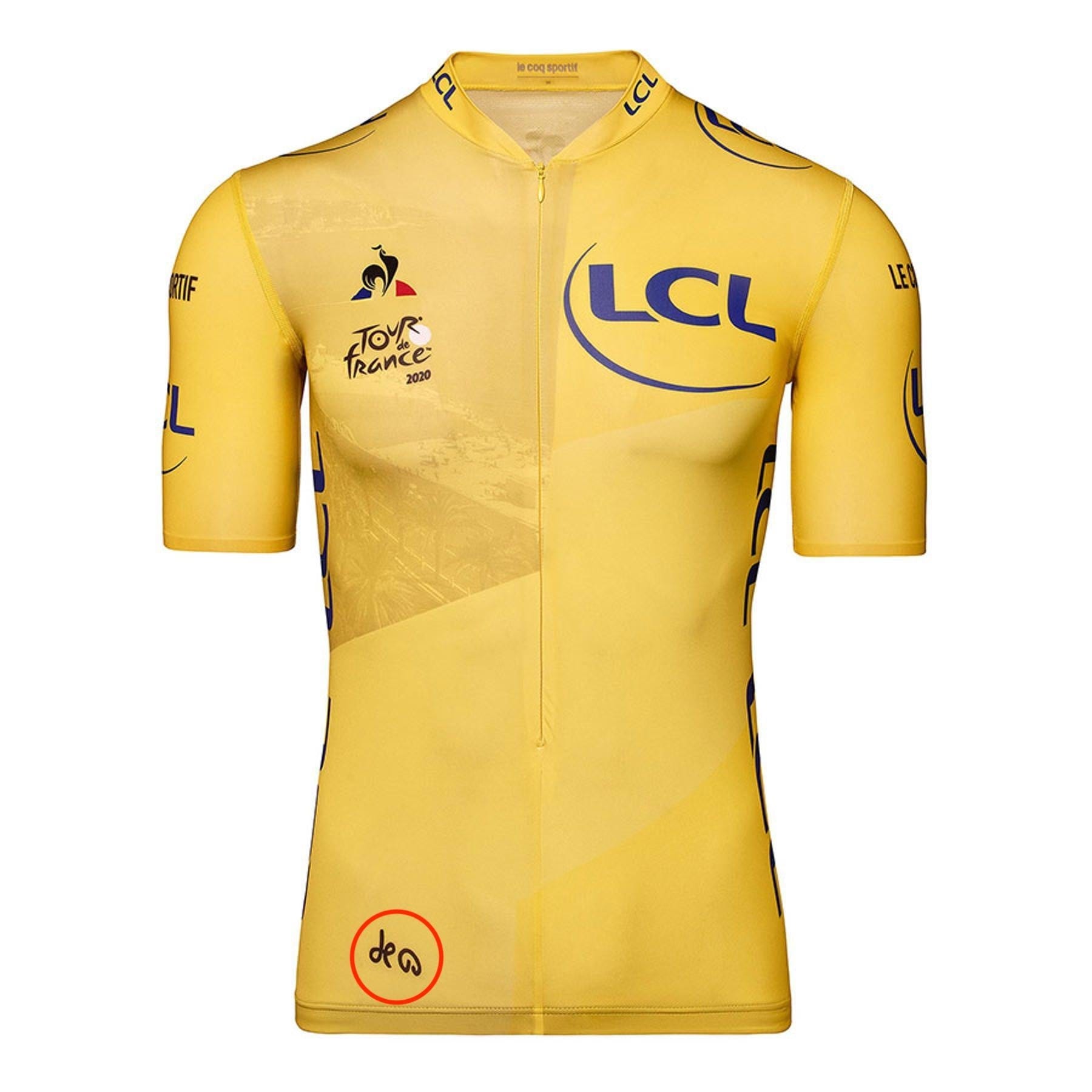
In 1919, the tour director Henri Desgrange decided, two-thirds of the way through the race, that the leader needed to be more visible. The green armband used till then to indicate the race leader was not something you could pick out from a 200 rider peloton. Desgrange went to a supplier and asked for fifteen jerseys in different sizes, all the same colour. The supplier had fifteen jerseys available, but only in yellow as nobody wanted that colour. So on July 18, 1919, Desgrange went to Eugene Christophe and handed him the sport’s most accidental iconic fashion statement. Christophe, the first one to wear it - hated it. He felt he looked like a canary. He hated it so much that he lost the lead and never wore the jersey again. When Henri Desgrange died in 1940, his initials HD were added to the waistband and is seen to this day on the yellow jersey. Still waiting for the switch to Full HD though.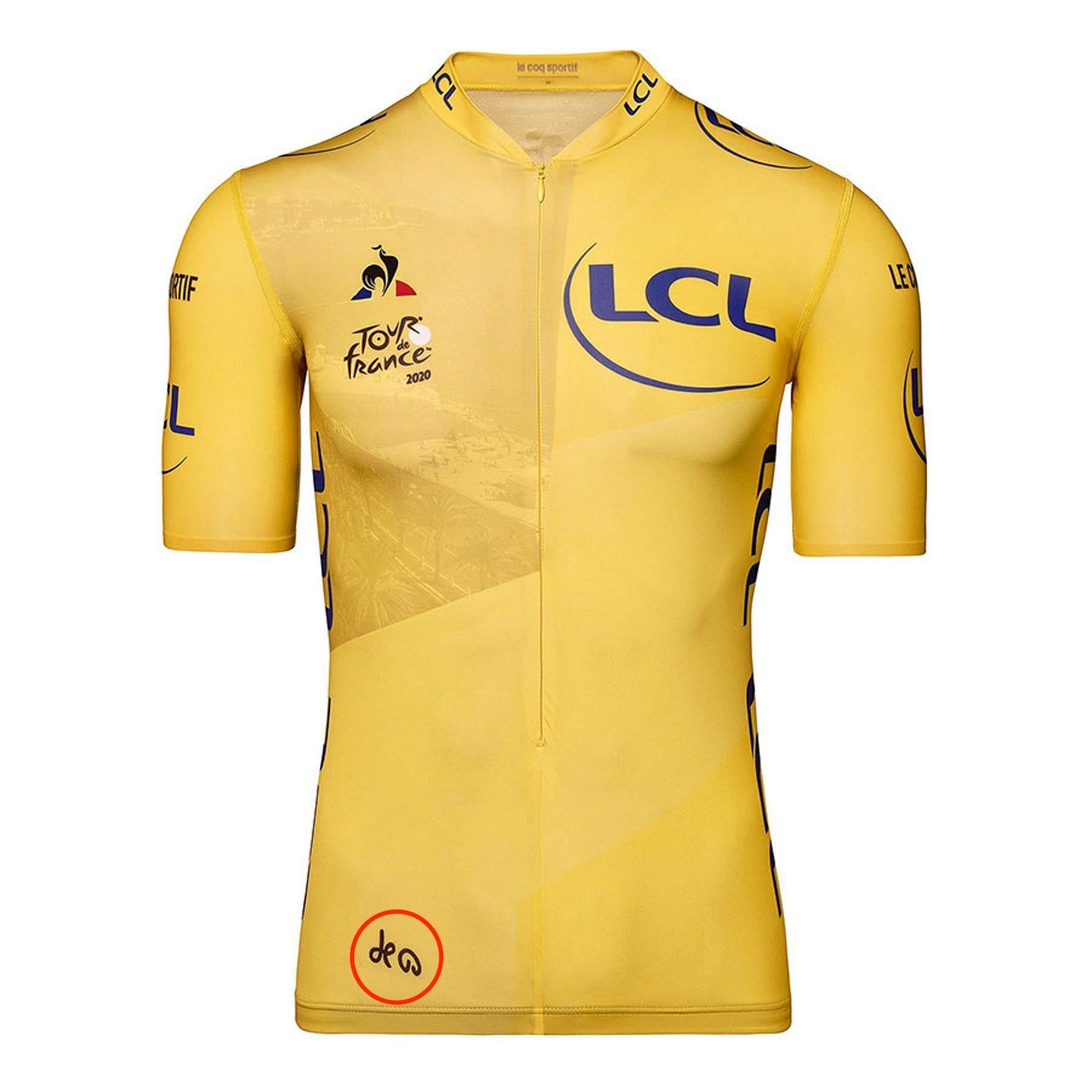
Note the “HD” at the bottom left of the jersey
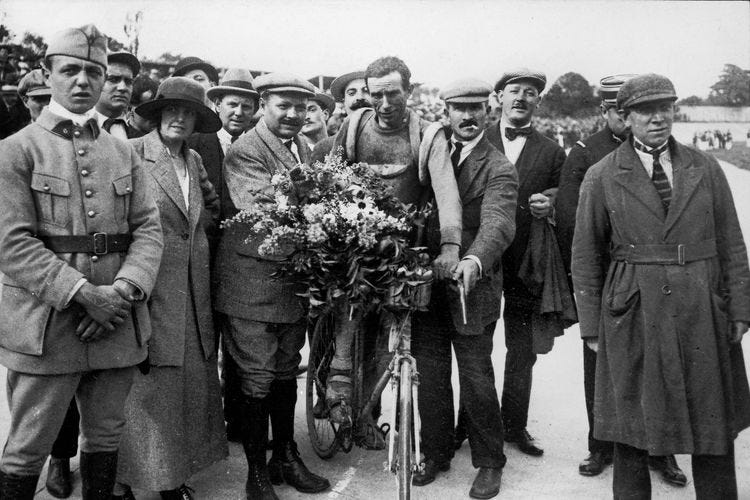
On the morning of July 23, 1989, the authorities were ready to crown Frenchman Laurent Fignon, champion for the third time. He rode with his trademark ponytail bobbing with quiet authority and led American Greg LeMond by over 50 seconds going into the final stage. A lead that big is usually considered a formality. The last stage was a time trial of 24.5km into Paris and many couldn’t conceive a scenario where Fignon could lose his lead. Greg LeMond had a near fatal hunting accident two years earlier - with shotgun pellets lodged near his heart and liver. So you could say that it was a foregone conclusion. Yet, there’s always room for the improbable in sport. LeMond acquired a set of aerodynamic triathlon handlebars - a piece of equipment unfamiliar in the cyclic world. He had also wind-tunnel tested his position and arrived at the starting line in an aerodynamic helmet. LeMond rode as if he was the star of an Indian Masala film - defying laws of physics. He averaged 54.5 kilometers per hour - the fastest individual time trial in Tour history at that point. He crossed the line and the world was stunned. He had overcome a 50 second time deficit and won the race by a mere 8 seconds. After 3288 kilometers, the difference between winning and losing was probably the time it takes to change a light bulb. Fignon never won the Tour again. He died in 2010 carrying those 8 seconds with him.
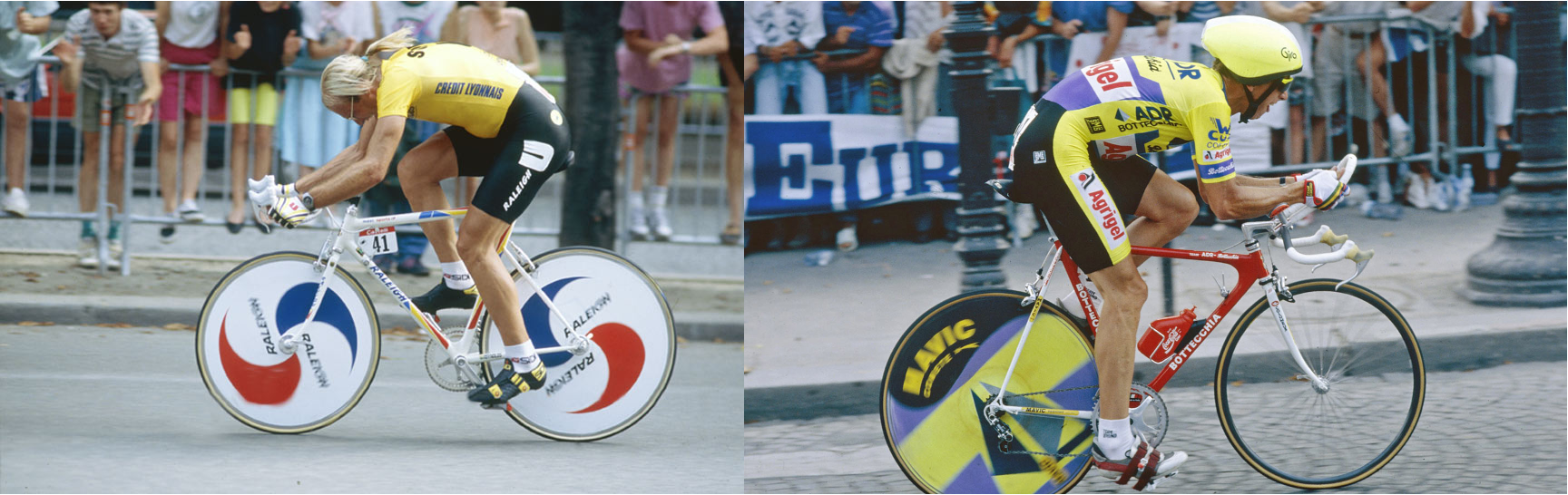
Laurent Fignon (left) and Greg LeMond (right) during their time trial in 1989. The helmet and the bars changed cycling.
Tom Hanks yelled Bangalore in a movie. Know more here.
Why was the song list like that in Taylor Swift’s Era tour concert? Know more here.
Modern problems modern solutions

Because its wheels resembled the sizes of the British penny and farthing coins placed side by side.
💟 IWTK
Comments
Nothing yet. Say the first thing.
Sign in to join the conversation.