
Friends,
The workers of Deir el-Medina were artisans responsible for building the royal tombs in the Valley of Kings. They had not been paid for 18 days and their declaration, preserved verbatim in what is now called the Turin Strike Papyrus, was just three words:
WE ARE HUNGRY.
They marched down from the valley and settled at a temple - a deliberate choice as temples in ancient Egypt were sanctuaries of non-violence. This way the workers made themselves untouchable. The authorities had no idea how to handle this tactic by the workers other than to simply appease the workers. They sent extra food and the workers went back.
This was the story of the first recorded strike in history. In this week’s edition we raise our fists in solidarity, and look at instances where people have united to stick it to the man ✊
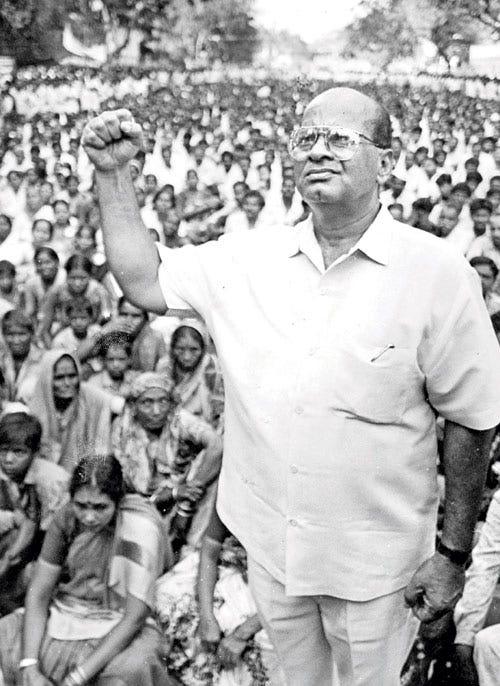
Mumbai has some of the most expensive real estate in India and some of that can be traced back to the Great Bombay Textile Strike of 1982. On January 18th, 1982 around 250000 mill workers from 60 textile mills in Bombay walked out of their mills under their leader Datta Samant. Their demand was to obtain a bonus and an increase in wage. Datta was a trained doctor from a working class background, who was chosen by a large group of Bombay mill workers to lead them in a precarious conflict between the Bombay Mill Owners’ Association and the unions. Seen as a strong political threat to the ruling establishment, the government took a firm stance and rejected Samant’s demands. The strike lasted over 18 months and it failed. Mill owners took their mills to other cities leaving over 200,000 unemployed. The mills closed down and it became a real estate gold rush. Dadar, Parel, Prabhadevi, Kalachouki etc all became battle of land grab by real estate developers leading to rocketing rates. This strike reshaped Mumbai forever but the mill workers got nothing.
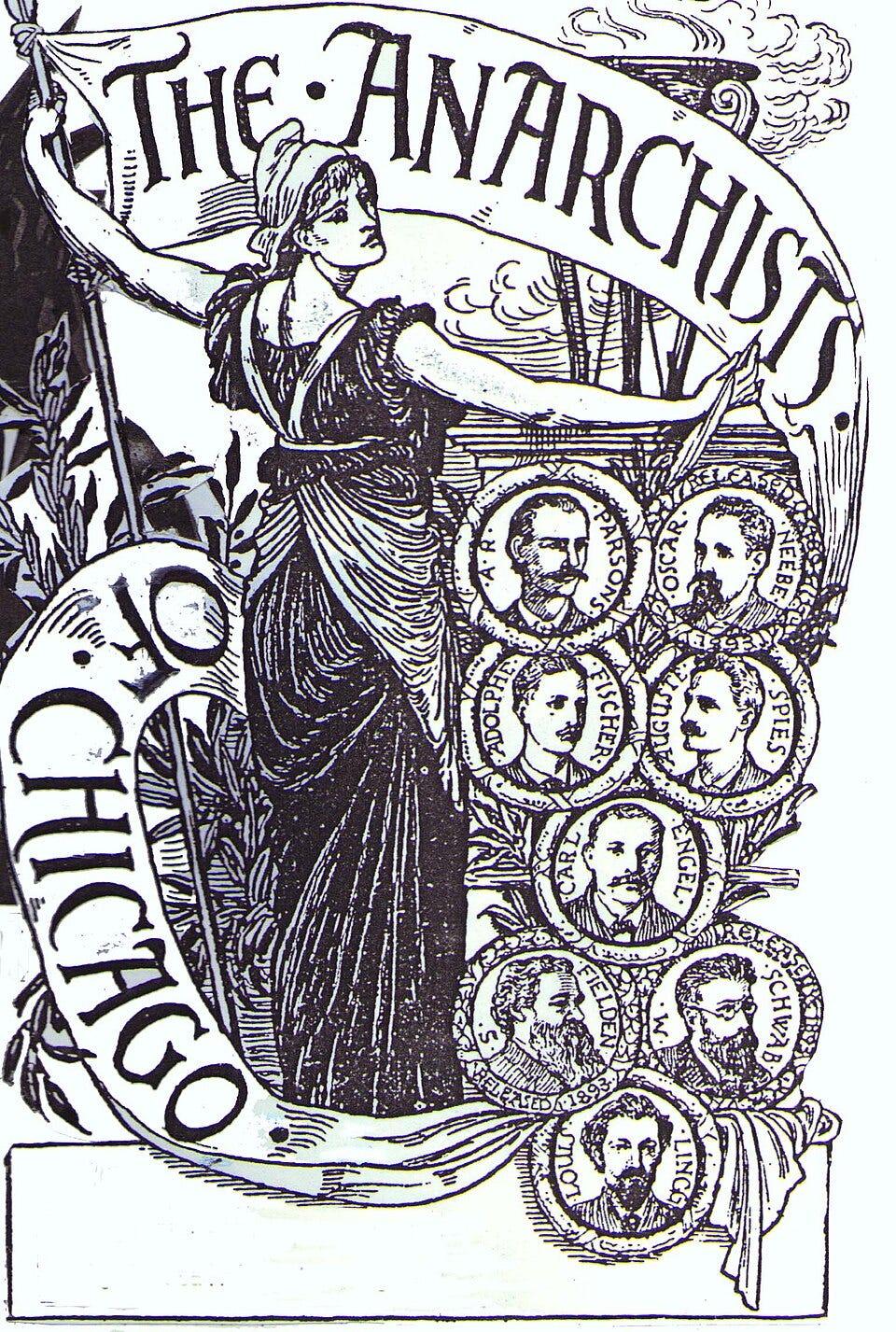
We may crib today about working for 8 hours in a day. And yet the eight hour work day is not a gift handed down but was taken as a right by the workers. American workers in 1886 were averaging slightly over sixty hours across a six day week. The factory wasn’t a workplace, it was a place where you lived until you were too broken to live anywhere else. The workers marched with a slogan that was so elegant in its simplicity - Eight hours for work, eight hours for rest, eight hours for what we will. On May 4th 1886, a rally in Chicago began peacefully but this was disrupted when a bomb was set off which resulted in seven police officers and four workers dead. The state, grateful for this pretext of violence, descended on the workers and eight were charged with conspiracy, seven of whom were sentenced to death. The eight were termed Anarchists of Chicago. The evidence against most of them seems to be that they had spoken at the rally. This is known as the Haymarket Affair and is now considered as one of the reasons why May 1st is observed as the international workers day. Ironically the USA chooses to celebrate labour day as the first Monday of September. It took more than 40 years of strikes, fires and legislation before the eight hour day stuck. Henry Ford standardized it in 1914 and the federal government standardized it in 1938. The gift of an eight hour workday took some time in wrapping.
A revolution that began with a.. grapefruit?
A bunch of South African grapefruits on a conveyor belt moved toward the till of a 21-year-old named Mary Manning,
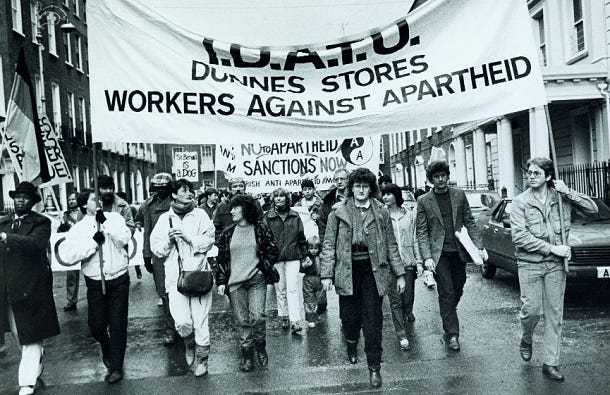
in a Dunnes Stores in Dublin. This was 1984, and Manning decides to close her register, refusing to check out the grapefruits from South Africa. She’s suspended and 9 other colleagues walk out with her. And this is how 11 young, mostly working class Irish women and a handful of men began what would become one of the most recognized acts of anti-apartheid activism in the world. Mary did not know the full extent of the apartheid atrocities - she had heard of Nelson Mandela and Steve Biko but not much more. The protestors faced outright hostility from Dunnes, their employers, the trade union movement and the police. Seeing this they were joined in solidarity by one Black man named Nimrod Sejake. He was, several of the strikers recalled, the first Black person they had ever seen in real life. He told them what apartheid actually meant on the ground, in the body, in the blood. The strike did not waver. Over time they got the attention of one Archbishop Desmond Tutu - who met them enroute to collecting his Nobel prize. This then attracted the attention of Reverend Jesse Jackson, surprised that a bunch of white ladies were protesting for the black population. This then attracted the attention of a man walking the long road to freedom, Nelson Mandela who met them in 1990. The efforts of these ladies forced the Irish Government to stop importing items from Apartheid South Africa, becoming the first western government to do so. It is worth noting that Nimrod Sejake was the cell mate of Nelson Mandela in Robben Island. He had gone from Mandela’s cellmate to Mary Manning’s picket line. In the end the grapefruits lost, the checkout girl won and the revolution was here.
How do MBA students protest? It depends.
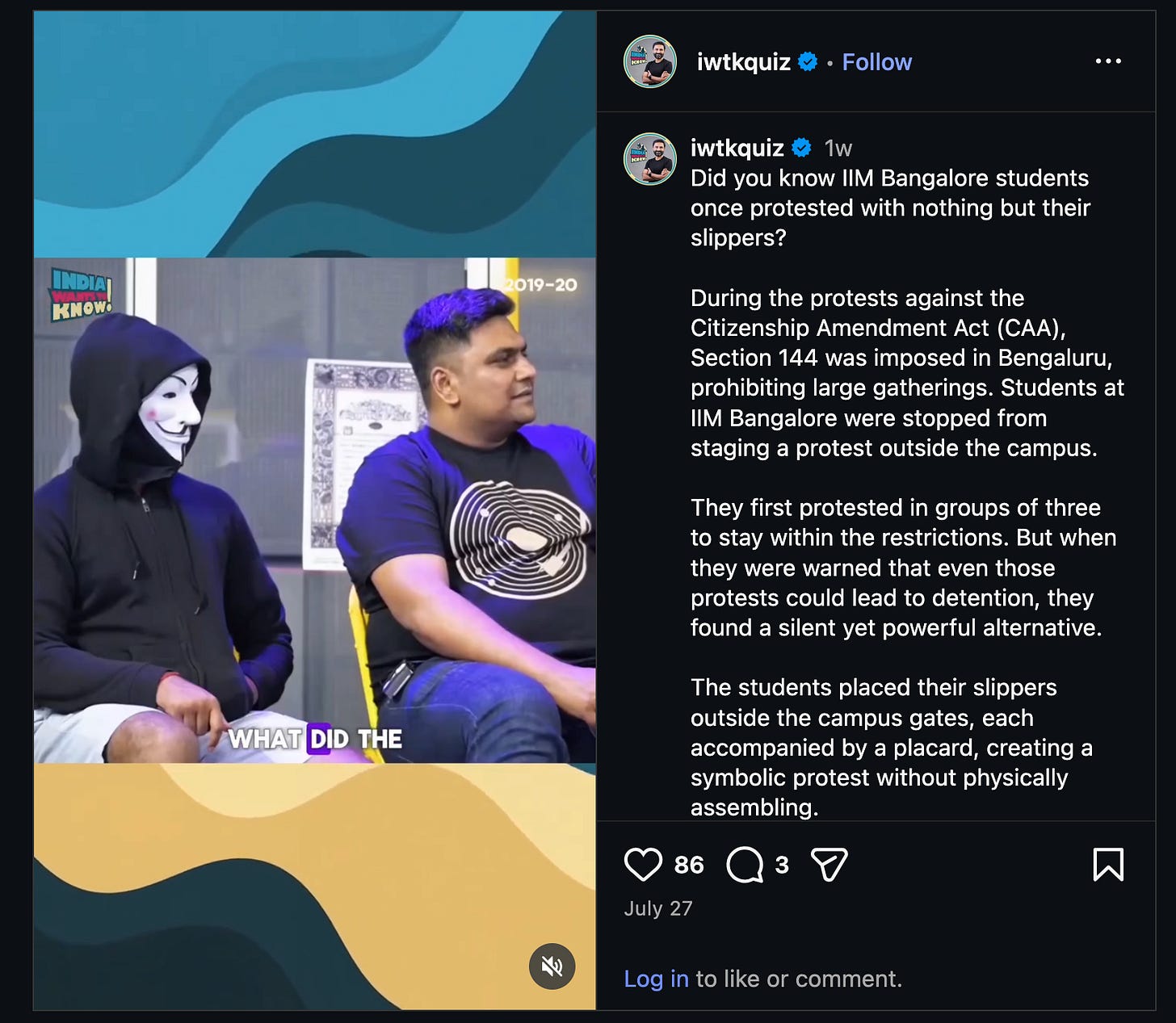
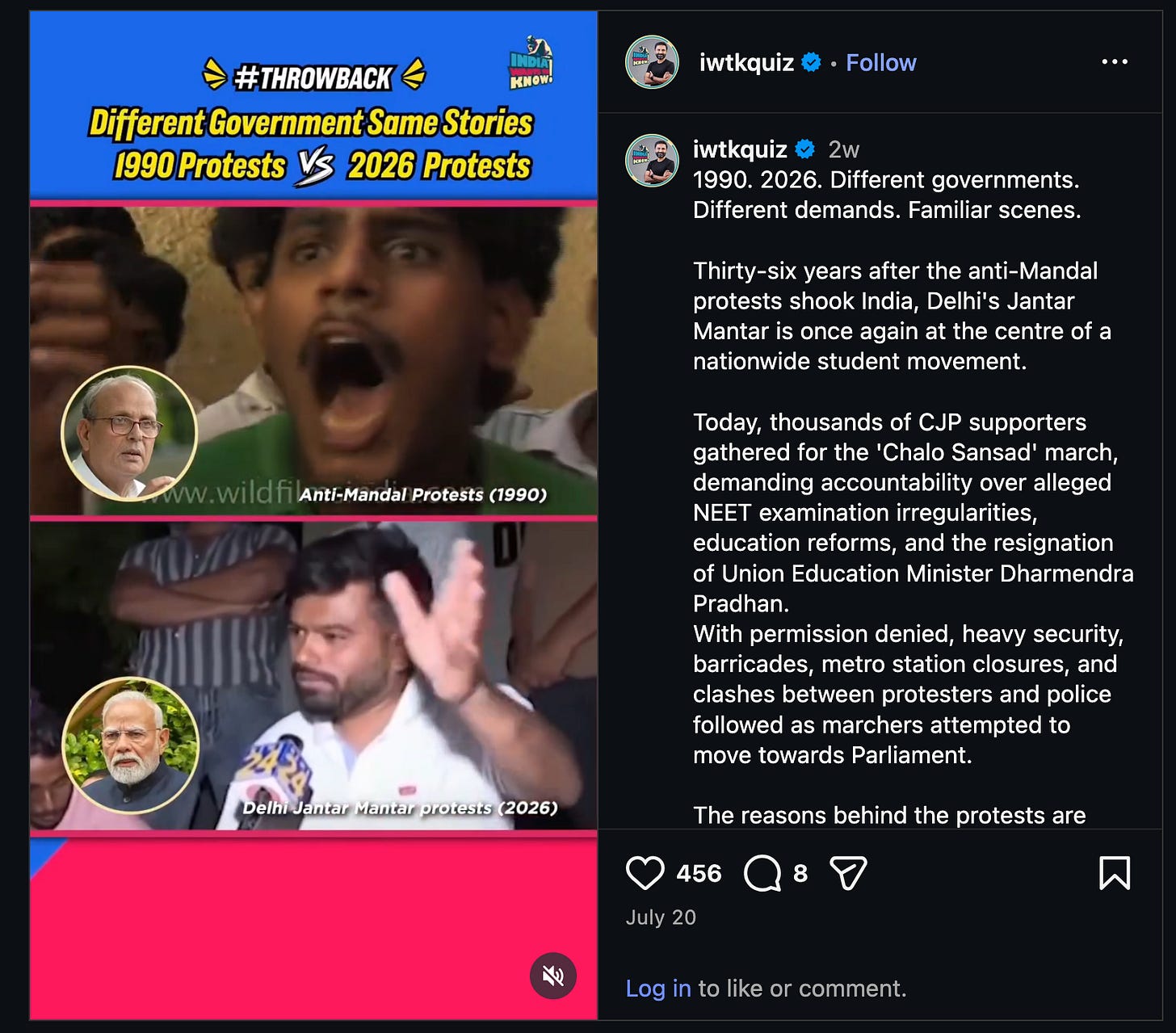
Jantar Mantar has seen several protests. But 2 student protests stand out - the protest against the Mandal commission and the recent one.
The Dhaniya is new expandable memory.

💟 IWTK
Comments
Nothing yet. Say the first thing.
Sign in to join the conversation.