
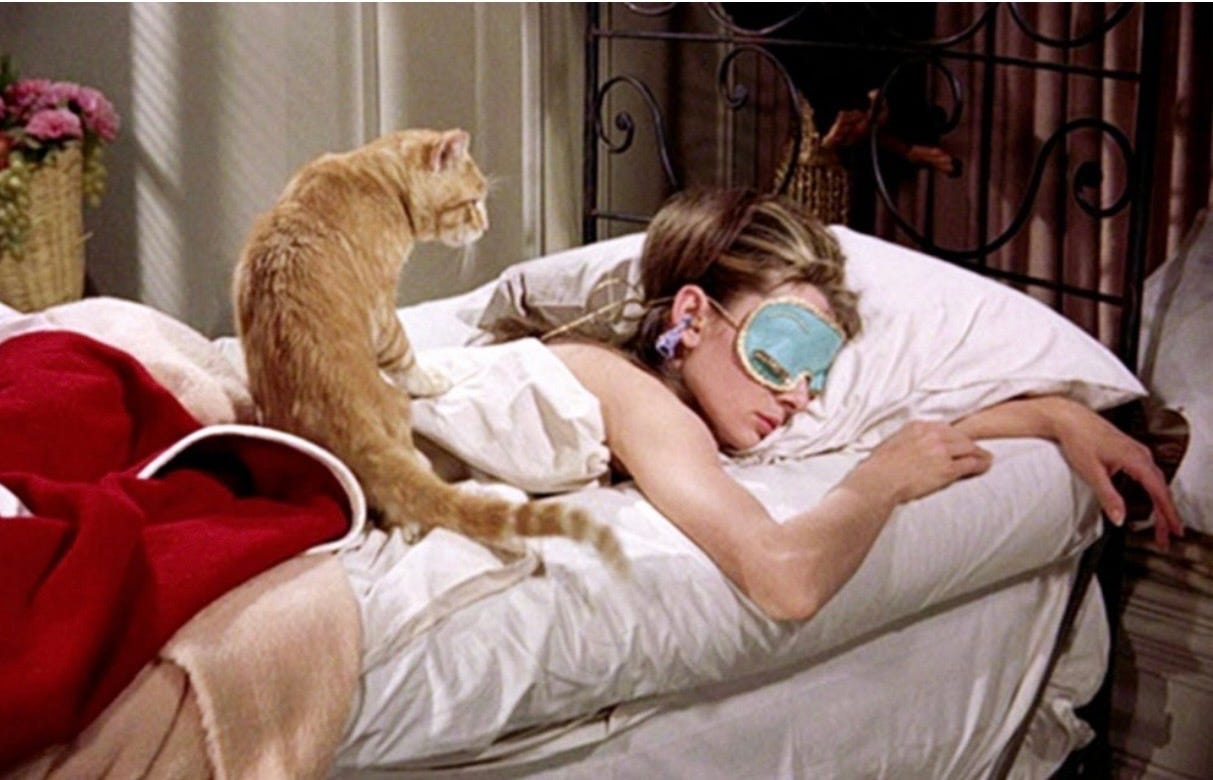
Here’s the mistake, and almost everyone makes it.
You get into bed at eleven. You’ve had a normal evening, screens and lamps and a late dinner and maybe a glass of something, and now you close your eyes and expect your body to switch off like a light. It doesn’t. You lie there. You check the time. You calculate how many hours you have left if you fall asleep right now, which is the single most reliable way to guarantee you won’t. And in the morning you decide, again, that you’re just a bad sleeper.
You’re not a bad sleeper. You’re a plane trying to land without descending.
That’s the whole idea I want to give you tonight, and it changed my sleep more than any supplement I own. Sleep isn’t a switch you flip at bedtime. It’s a landing, and a landing begins a long way out. By the time your wheels touch the ground you should already have been descending for hours, losing altitude gradually, dropping through one layer of stimulation after the next, until sleep isn’t something you’re chasing but something you simply arrive at.
My descent starts at 7.30pm. I go to bed around eleven. That’s three and a half hours of coming down, and I know how that sounds. But almost none of it costs me anything, most of it happens while I’m doing something else, and the result is that I don’t lie in the dark negotiating with my own brain anymore. I land.
So this is the last hour, and the two before it. The order matters here just as much as it did in the morning, but the logic is inverted. Mornings are addition, layer upon layer, building you up into the day. Evenings are subtraction. Every step in what follows removes something: light, then food, then water, then heat, then sound, and finally the senses themselves. You are putting the day away piece by piece, and your nervous system reads every removal as a signal that it’s allowed to stop bracing.
Three things before we begin.
First, everything here is downstream of the sleep essay I wrote earlier, which covered the architecture: consistent hours, a dark cold room, the fundamentals that no ritual can replace. This essay is the choreography that sits on top of that foundation. If your basics are chaos, fix those first and this will work far better.
Second, I track. I wear an Oura ring, which means I’m not guessing about any of this. I can see, most mornings, what the previous evening did to me, and a great deal of what I’m about to tell you survived precisely because the data kept agreeing with it. I’ll also tell you where the tracking becomes a problem, because it can.
Third, some of this is proven and some of it is pleasure. I’ll label both. Nothing here is sponsored, and where the free version wins, I’ll say so.
Now, past the door: the exact sequence, the thing I do at 7.30 that changes the entire night, the journal that taught me more about my own sleep than any device did, the one habit I have to give you a genuine safety warning about before you copy it, and the final layer of the descent, which is the part nobody talks about.
Comments
Nothing yet. Say the first thing.
Sign in to join the conversation.