
There’s a particular kind of cynical doomerism you can find among a whole lot of people on the internet-brained left—it’s more prevalent these days, for obvious reasons, but it’s been present since at least the first Trump administration.
That outlook, as best I can sum it up, is that everything’s bad and getting worse and will continue to until it all ends badly. That even though we can prevent it, we won’t. That the days are filled with “the horrors”, that you must “doomscroll” to bear witness to them no matter how much it depresses you, and then it basically culminates in this meme that makes the rounds every so often:
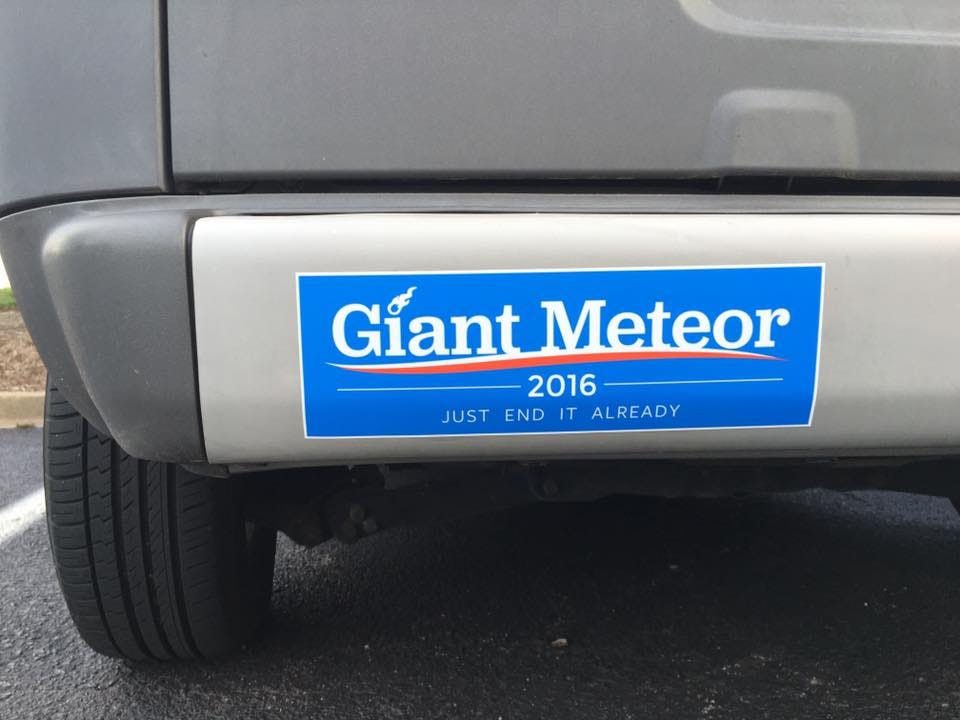
I have good news for these doomers, though I kind of think they might hate that. They may actually get what they claim to want!
In a new update, the space agency has increased the chances of asteroid 2024 YR4 colliding with Earth, with the probability of impact rising to 3.1 per cent or one-in-32 odds of impact — the highest probability of a collision yet.
This is the highest risk assessment an asteroid has ever received, after the 2.7 per cent chance of Apophis hitting in 2004.
On Feb. 7, experts at NASA had bumped up the odds to a one-in-43 chance, but the probability just keeps rising.
On the one hand, a three-percent chance of something happening is quite low. On the other hand, for odds on a large meteor hitting the earth it kind of seems pretty high. Three-percent chances hit every single day.
This, to me, feels like the perfect news story for our troubled times. It’s a total and utter disaster, but at some date just far enough away that it doesn’t quite matter yet. It probably won’t hit us, but it sure might, and you can convince yourself in either direction depending on your current emotional state. It will have ever-changing odds, which can be updated daily for fresh engagement (you can remind yourself to refresh this page every so often if you’re that sort of person). Oh, and it relies on incredible science done by smart people at NASA who might be fired any day now. A real current news hook, even!
So for all of these reasons, do not expect this story to go away anytime soon. Especially when so many people are ironically and publicly rooting for the meteor. It’s just good, solid news business judgement to grab some headlines from this while you can. Unlike the disasters happening right here every day, this meteor has not yet hurt or killed anyone, nor destroyed anyone’s home or livelihood. And yet you can allude to all of that whenever you write about it. It’s a theoretical doomsday. Those do great numbers at the box office.
God, it’s perfect really. And as such, though you will find these down lower in any story written by a responsible outlet on this meteor, you will likely not see the following on breathless social posts or ironic TikToks or hear these from your doomer friends. But you should know them:
"This is not a crisis at this point in time. This is not the dinosaur killer. This is not the planet killer. This is at most dangerous for a city." Some people will find this disappointing. I find it comforting. Though I also live in the city most people in my country would pick to be hit by a meteor if they had to choose.
Another thing some may find comforting is that there are actually plenty of meteors that may hit the earth, and the probabilities are changing all the time. You can track ‘em all here—again, if you get down on that kind of stuff. In order to trigger the warnings that YR4 has, the chance of impact needs to rise above one percent. And many that do that eventually…fall right back down below one percent. So this is not a percentage that only goes in one direction.
Finally, if you are the sort of person who would just rather not dwell on it, who would prefer to either take the hit in 2032 or not and not have to hear about every change in the odds, I have good news for you, too! We can only measure the percentage of this one right now because of its orbit. We can see it and run the odds only up until April of this year, after which we will lose sight of it until 2028:
Future observations will reduce the uncertainty in the 2024 YR4’s trajectory and impact probability. The NEA will be observable through early 2025 April, after which point it will become too faint to be observable from Earth until 2028 June when the asteroid’s approximately 4 year orbit returns it to the vicinity of Earth.
That last one, however, is not that great for the daily WillItHitUs.com website I was planning to build in my spare time. Nor is it great for the continued health of our clickbait industry.
It is probably good for our collective mental health, though. After all, who wants to walk around for several years with the threat of impending and inevitable doom hanging over their heads? That would be an awful feeling and it would probably drive many of us to behave in strange and uncivil ways.
Maybe we’ll find out in 2028 what that’ll be like, when we get the new odds.
No posts
Comments
Nothing yet. Say the first thing.
Sign in to join the conversation.