
Christopher Nolan’s Odyssey may be the most recent reimagining of the legendary Homeric epic, but it now claims a place in a nearly 3000 year old tradition.
Since first being transcribed from an oral tradition, the Odyssey (and the Iliad) occupied the minds and hearts of people across the ancient Mediterranean world. We need look no further than Virgil’s Aeneid to see how these Homeric legends held political and social power in Rome centuries after their composition across the sea.
While the literary tradition inspired by the Homeric epics is vast, this newsletter highlights a decadent three-dimensional pre-film reimagining of Odysseus and his journey from Roman visual culture.
I invite you to consider the legacy of reimagining these tales, and how the question of ‘historic accuracy’ is a lot more complex than popular discourse surrounding the Odyssey seems to let on. I’ll let you decide who did it better… the Romans or Christopher Nolan.
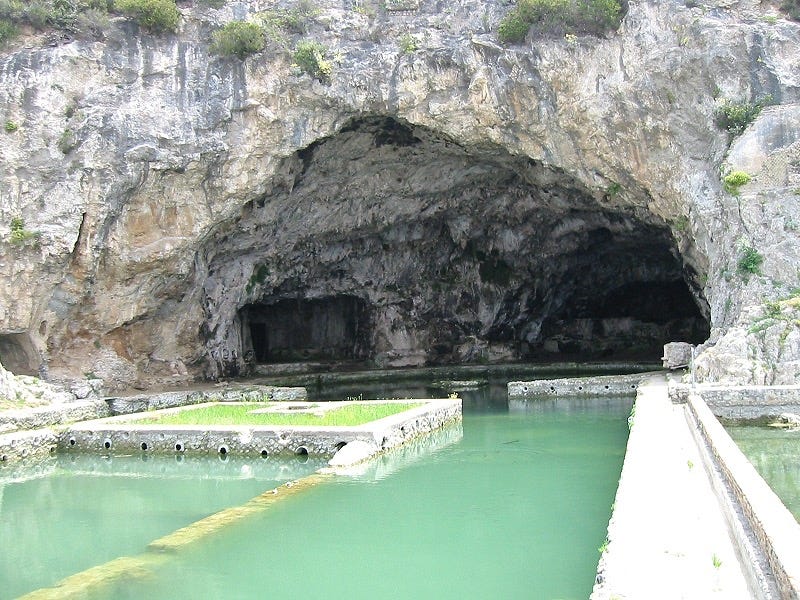
Long before film, we had sculpture. Figures could occupy space in three-dimensions, confronting viewers on a human-scale, with vibrant emotion and suggested motion. Although many representations of the Homeric epics survive across media, I am a big fan of a series of early imperial sculptural groups unearthed in the grotto of Tiberius’ villa at Sperlonga. That’s right. An imperial villa adorned with iconic scenes of Odysseus’ journey.
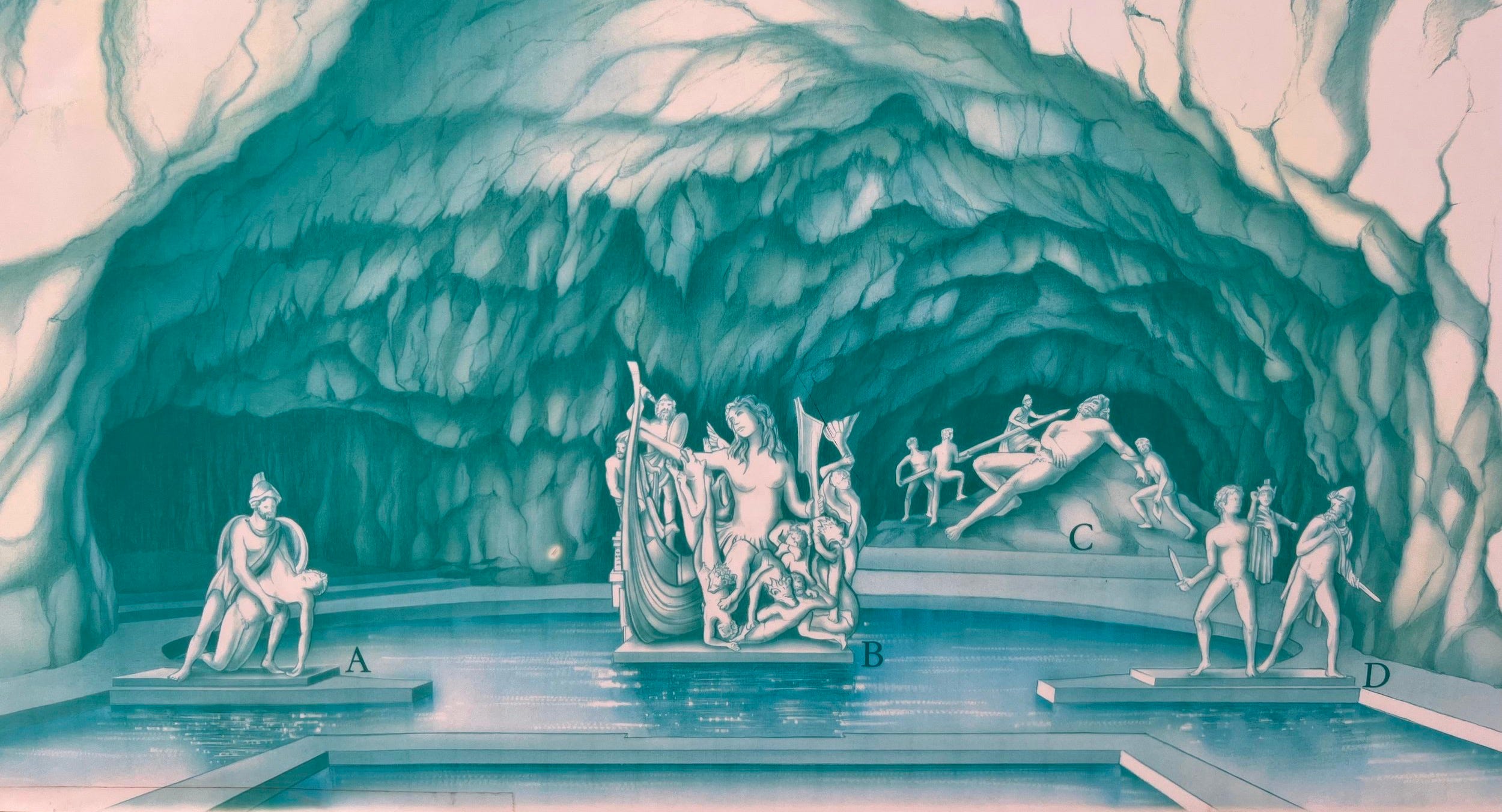
This was not just a grotto though. This was a dining room, or triclinium.
As described by writings of Suetonius and Tacitus, Tiberius’ grotto collapsed.1 In turn, the statues only survive in fragments and have been restored— perhaps with some creative liberties undertaken along the way. Nonetheless, these sculptural groups offer a glimpse into Roman modes of visualizing myth, and reimagining the Homeric epic.
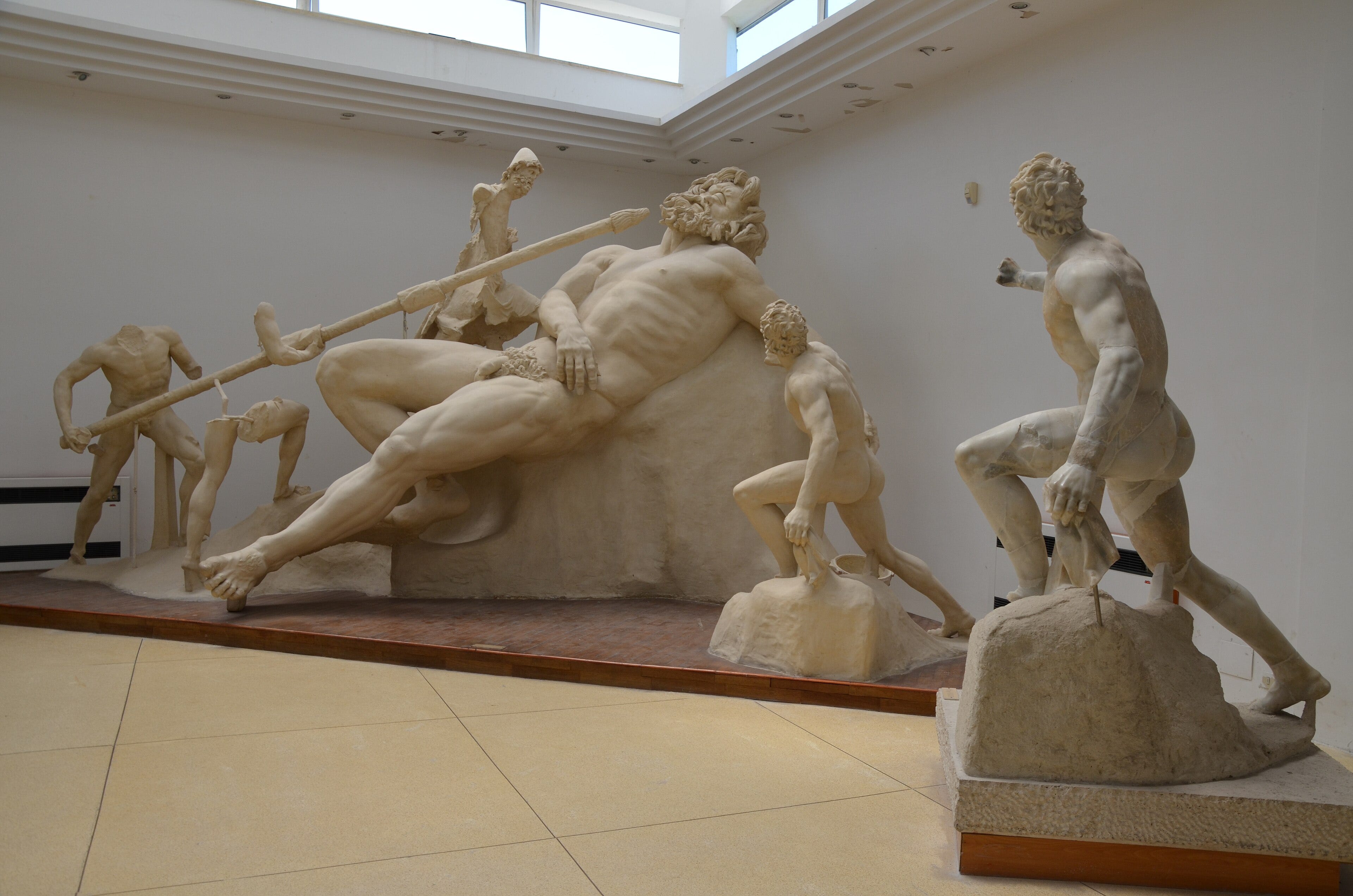
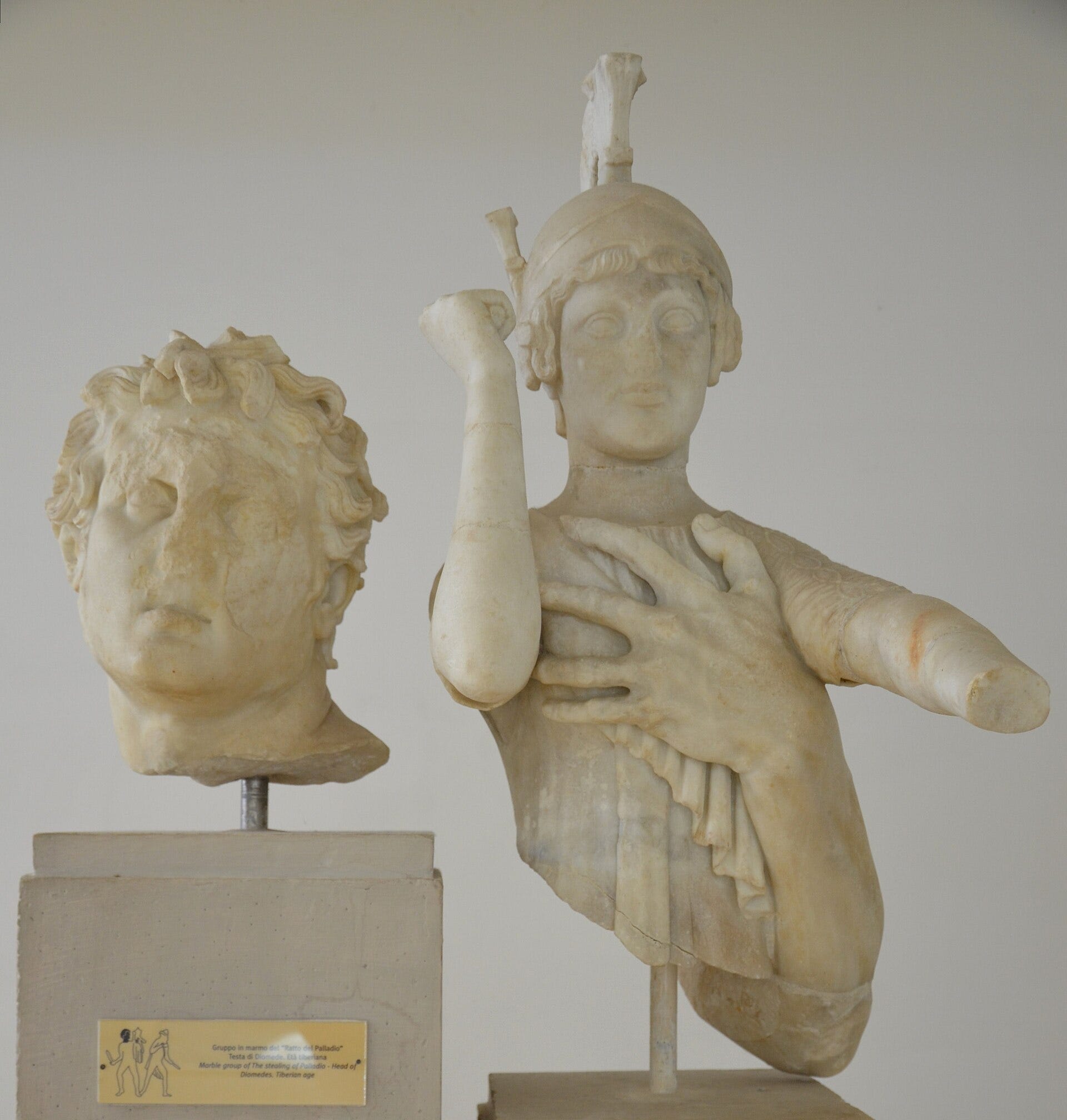
There are seemingly four groups that capture distinct moments from the Odyssey and Iliad: The Scylla Group (B, Book 12 of the Odyssey), The Polyphemus Group (C, Book 9 of the Odyssey), The Pasquino Group (A, from the battles of the Iliad), and The Palladium Group (D, from the lost ‘Little Iliad’). Scholars seem to argue about whether every piece is in its original group, but the four scenes are generally accepted.
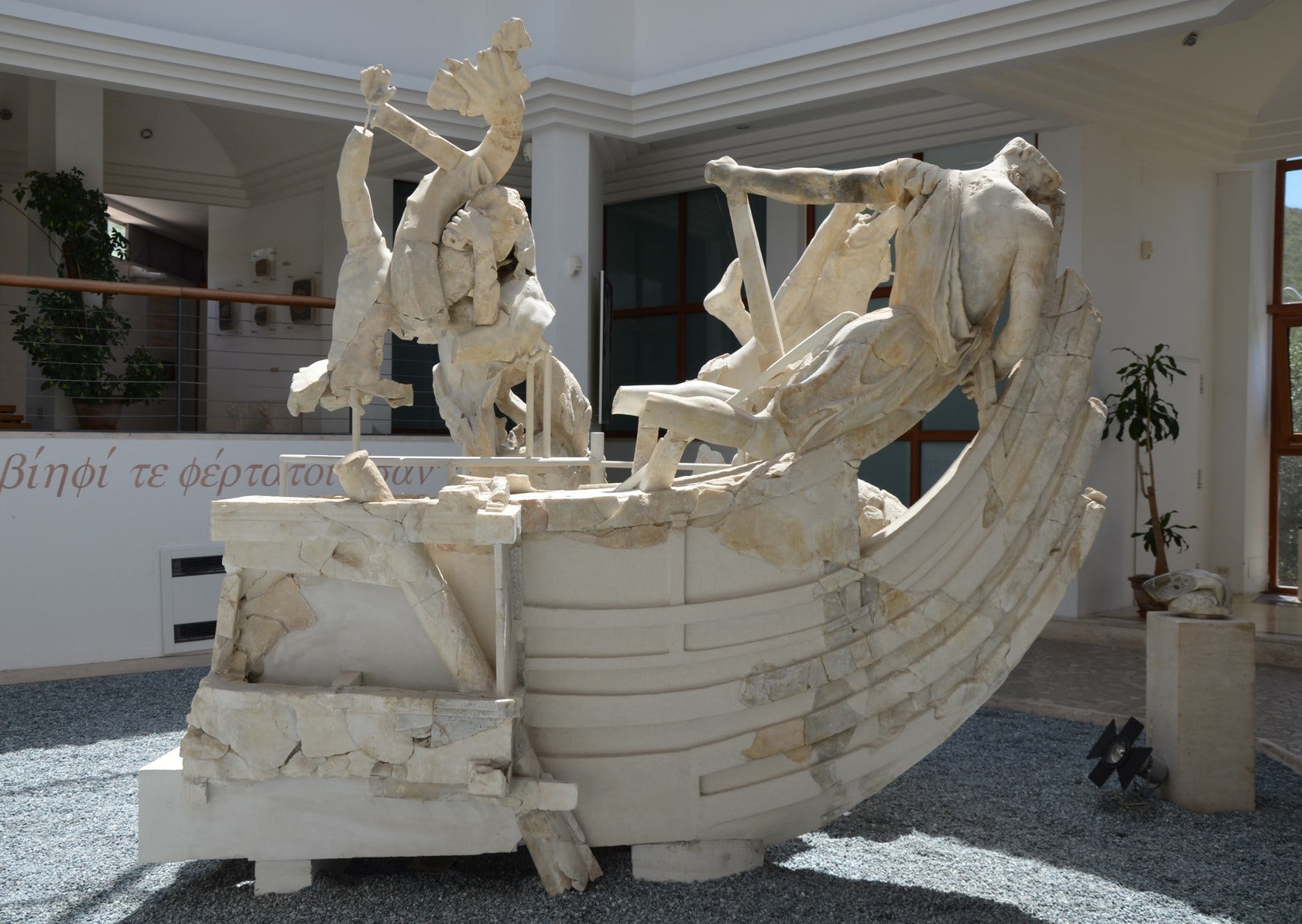
These groups are, despite the stillness of marble, quite theatrical. Polyphemus’ monumental scale, the repeating curves in the Scylla composition, and exasperated expressions of the struggling Odysseus all contribute to a sense of drama, an unwilling immersion in the myth as it seemed to unfold within the dining room.
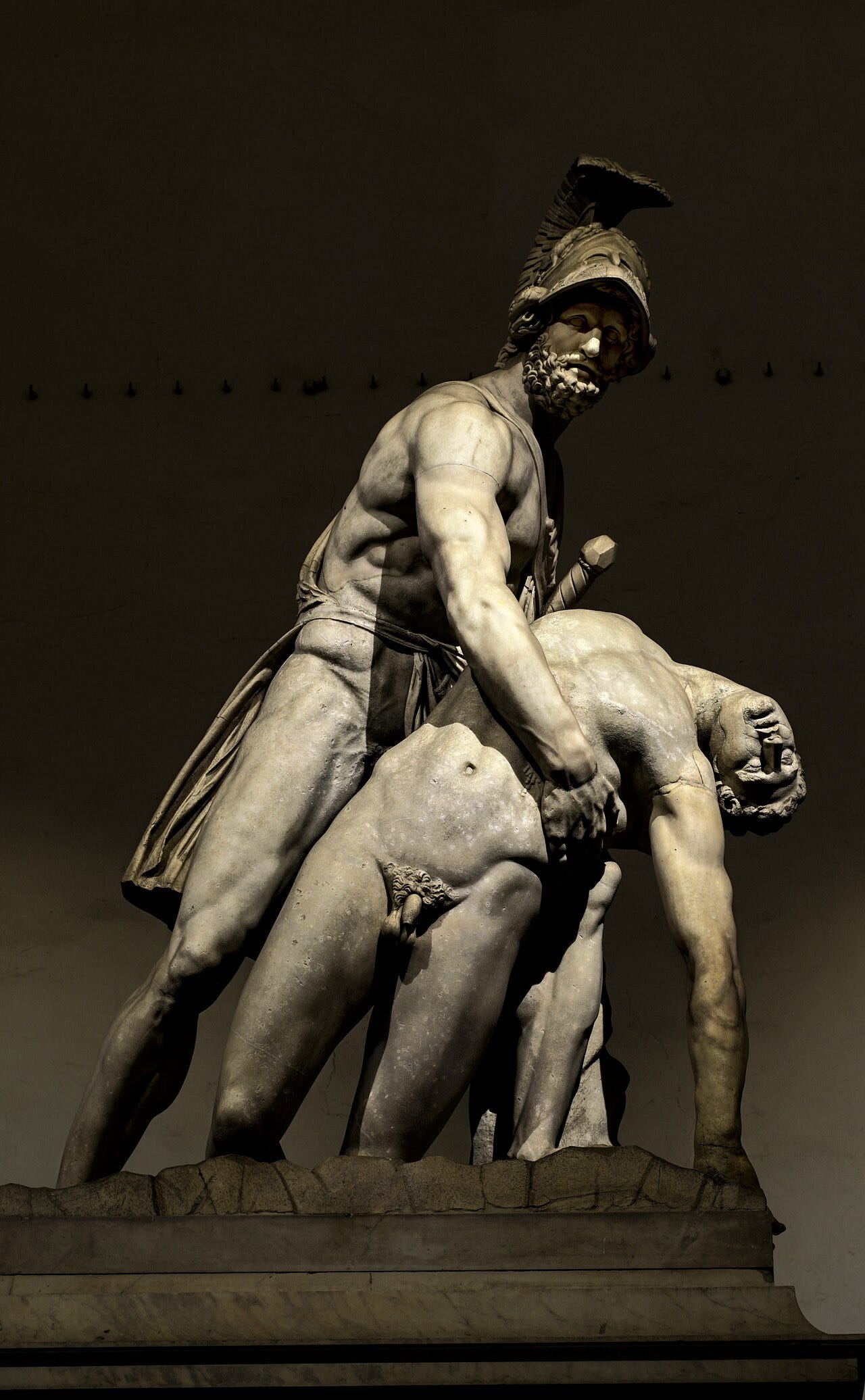
Indeed, the “Baroque” theatricality of these early Roman sculptures, perhaps owing to Hellenistic prototypes, can be contrasted with the restraint of classical compositions from the Greek world. I will not dive into this here, but these sculptures are most often cited in Art Historical discourse concerning the Roman tendency to “copy” Greek prototypes; this is an old debate, but one that still looms large in the field.
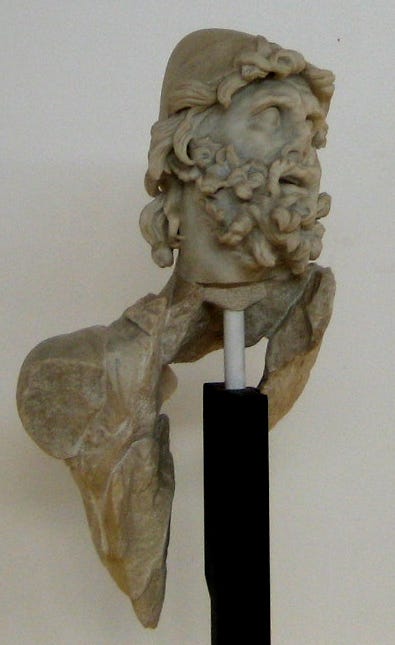
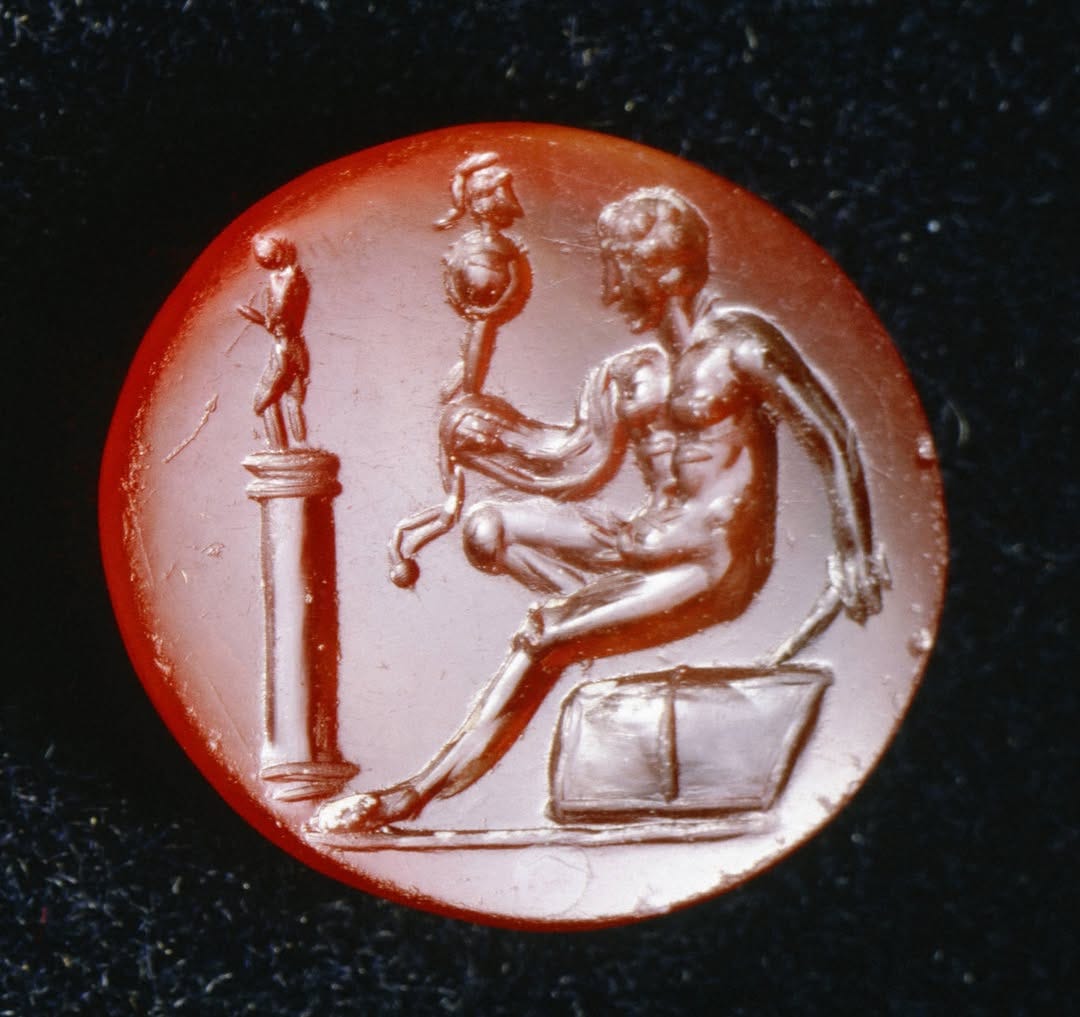
Allow me a brief aside on historical accuracy. In most depictions of Odysseus from Roman contexts, he wears this pointed cap, or the pileus (pilos in Greek). This is a hat associated with freedmen, travelers, and merchants. As a wandering character, the cap was quite fitting for Odysseus in a Roman cultural context. However, no such hat existed in the Bronze Age during which period Odysseus was thought to have journeyed homewards.
While the Romans did not necessarily conceptualize their past as we do, this hat is only attested as early as the 7th century BC, so I would suggest that, by our standards, it is ‘anachronistic.’ Even the Romans filtered the Odyssey through their own cultural frames of reference. Should we fault them for that? Digression concluded.
Once vibrantly painted, these groups were placed at various points throughout Tiberius’ manmade seaside dining experience. Guests would have reclined at the edge of the water, likely on cushions. Their views of each other, the grotto’s natural topography, and the outside world would have been interwoven with these vivified heroes. Tiberius and his guests would have dined within this historical-mythical landscape; the Odyssey was not a tale separated in time and space from their life, but a narrative intertwined with their own experiences and indulgences.
This is markedly different from experiencing a film on a the Silver Screen
On the one hand, such Roman immersion perhaps speaks to their distinct cultural relationships with the Homeric epic. Like I mentioned earlier, Homer’s tales were foundational to Roman identity and seem to have become even more so once Virgil memorialized Aeneas’ role in founding the city-turned-empire.
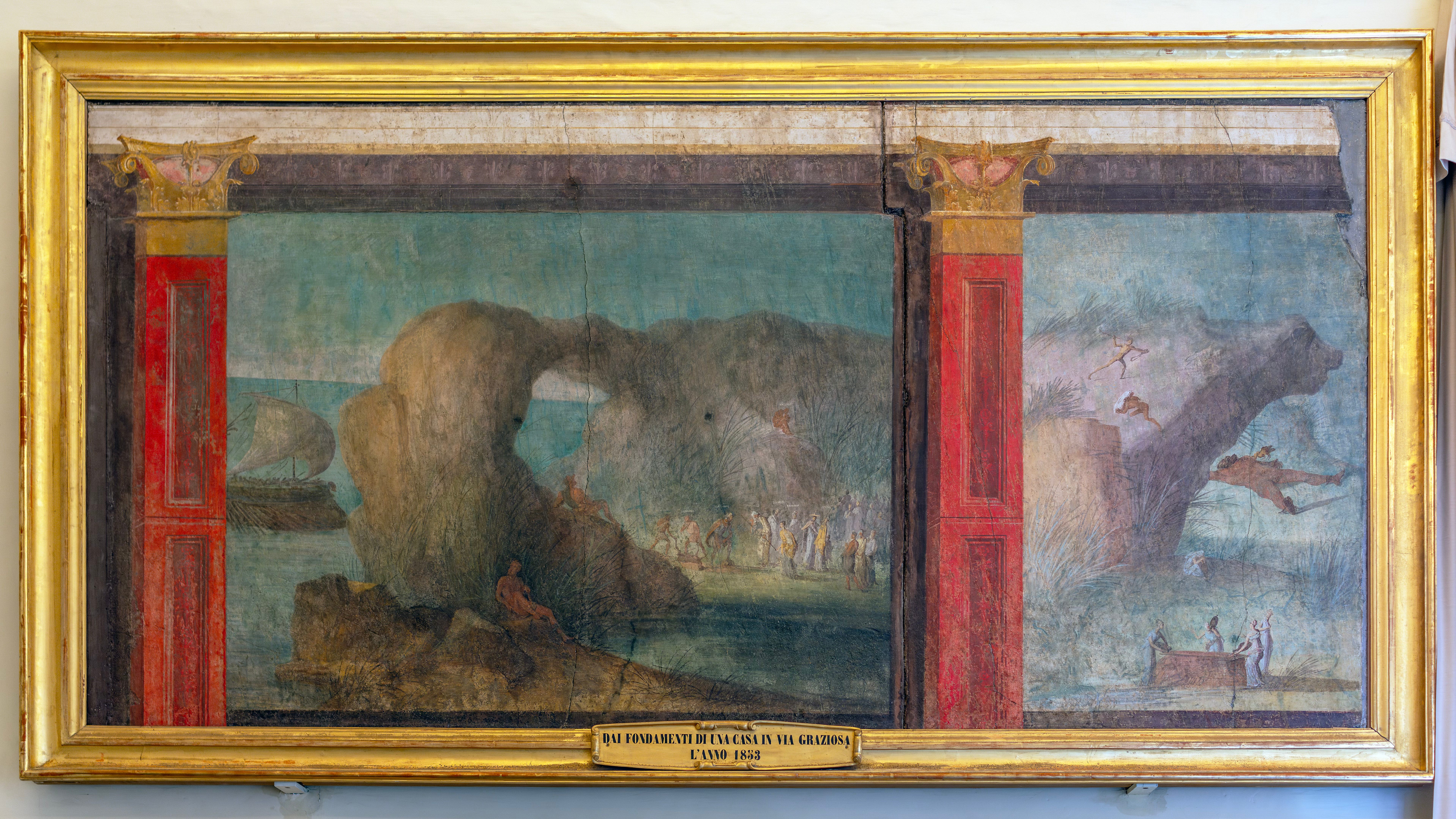
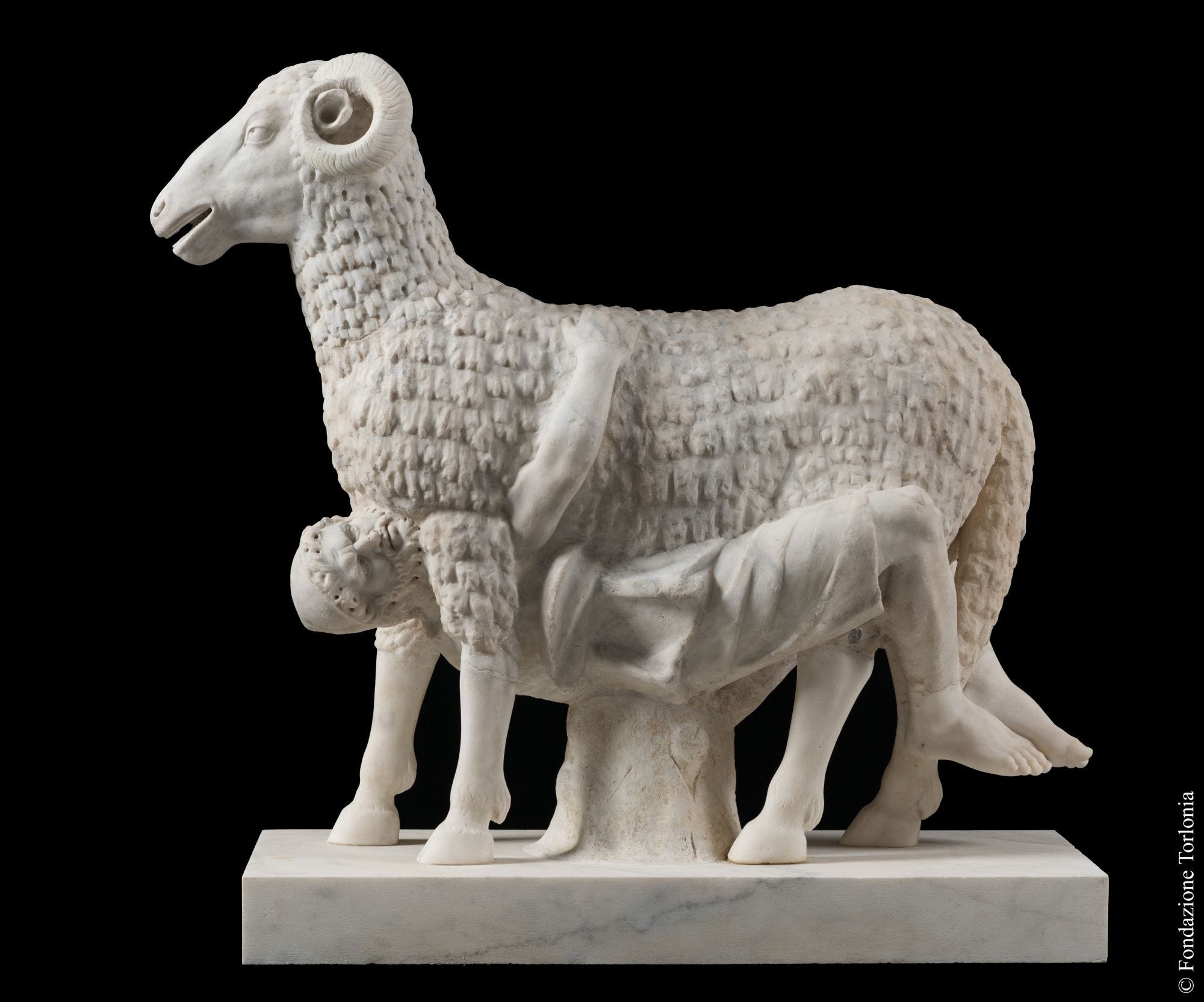
Yet on the other hand, I cannot help but wonder if our mode of engaging with myth is the byproduct of something else— perhaps, of the way that technology has fundamentally altered our relationship to images. We consume more than we experience. The experience of watching Nolan’s Odyssey today is not an embodied relationship to Odysseus, his crew, and the terrifying monsters they encounter; instead, it is a neatly packaged reality, removed from our physical world into a screen, despite the continued relevance of the narrative and its broader themes. Scroll below to see a selection of other ways in which the Homeric cycle was interwoven into the environment of daily life in Rome.
Of course such a shift did not occur in a vacuum. We no longer worship the deadly divinities who alter the course of Odysseus’ journey, nor do we understand the narrative as history itself.
Nonetheless, Roman visual renditions of the Odyssey, like the Sperlonga groups, represent a different mode of encountering epic. Perhaps Nolan’s Odyssey should provoke less debate over the value of historical accuracy, and more about the evolving relationship between man and myth, between narrative, image, and experience.
Let me know your thoughts in the comments! Once you see the film, be sure to pick a winner and share with the class.
The Via Graziosa frescoes from a Roman Villa, 1st century CE, the Vatican Museums (see Coarelli F. The Odyssey frescos of the Via Graziosa: a proposed context. Papers of the British School at Rome. 1998;66:21-37. doi:10.1017/S0068246200004219)

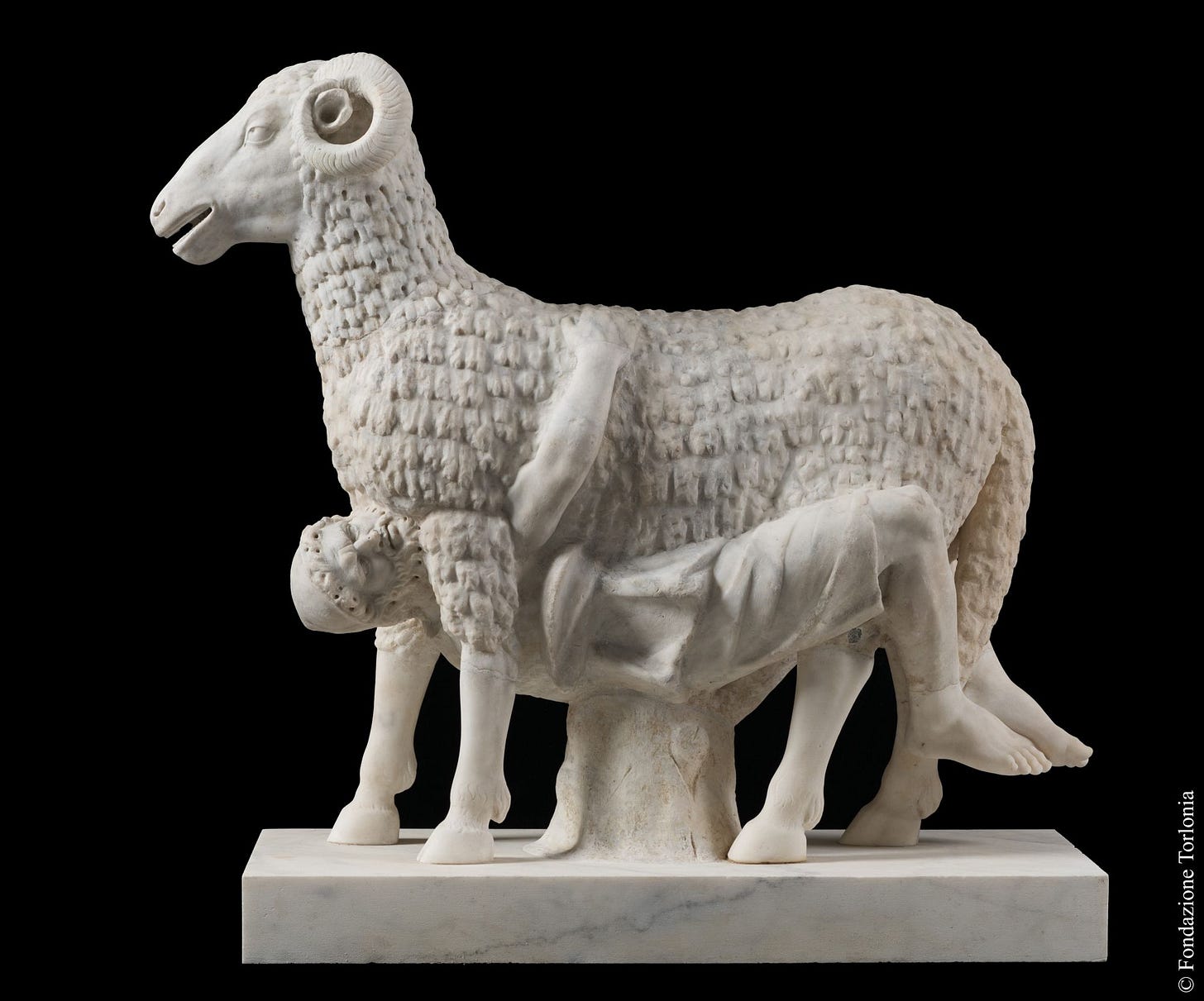
Statue of Odysseus under the Ram, Unknown context, 2nd century, Torlonia Collection.
Diomedes and Palladium, engraved gem (Carnelian) likely worn on a ring, 1st century CE, Princeton University Art Museum (museum label written by your’s truly in 2023)
Stewart, A., “To Entertain an Emperor: Sperlonga, Laokoon and Tiberius at the Dinner-Table”, The Journal of Roman Studies, Vol. 67, (1977), pp. 76–90, JSTOR
Ridgway, Brunilde S., "The Sperlonga Sculptures: The Current State of Research", in From Pergamon to Sperlonga: Sculpture and Context, Editors: Nancy Thomson De Grummond, Brunilde Sismondo Ridgway, 2000 (1997 papers written up), University of California Press, ISBN 0520223276, 9780520223271,
Tacitus, Annales, 4.59; Suetonius, The Twelve Caesars, Tiberius, 39
No posts
Comments
Nothing yet. Say the first thing.
Sign in to join the conversation.