
note: I discuss human remains (mainly Pompeii’s plaster casts) in this post. I have not included any photographs of them. I will, however, include a number of photographs of houses and art that I have taken during my first week on site this year.
Pompeii is a legendary site. But how exactly was all of it unearthed? In today’s newsletter, I present an introduction to the excavation history of the site mixed in with some reflections on my time working there. Between its ancient and modern history there are layers upon layers of history and material culture to dive into. Also, at the end, I provide some (mostly free) resources for you to follow up with for a more comprehensive understanding of this remarkable place.
If this theme is interesting to you all, this will be the first in a series of Pompeii-focused posts. At the moment, I would also like to write on evidence for cultural exchange within Pompeii and the Four Styles of Roman Wall painting. Would anything else be of interest to you? Let me know in the comments!
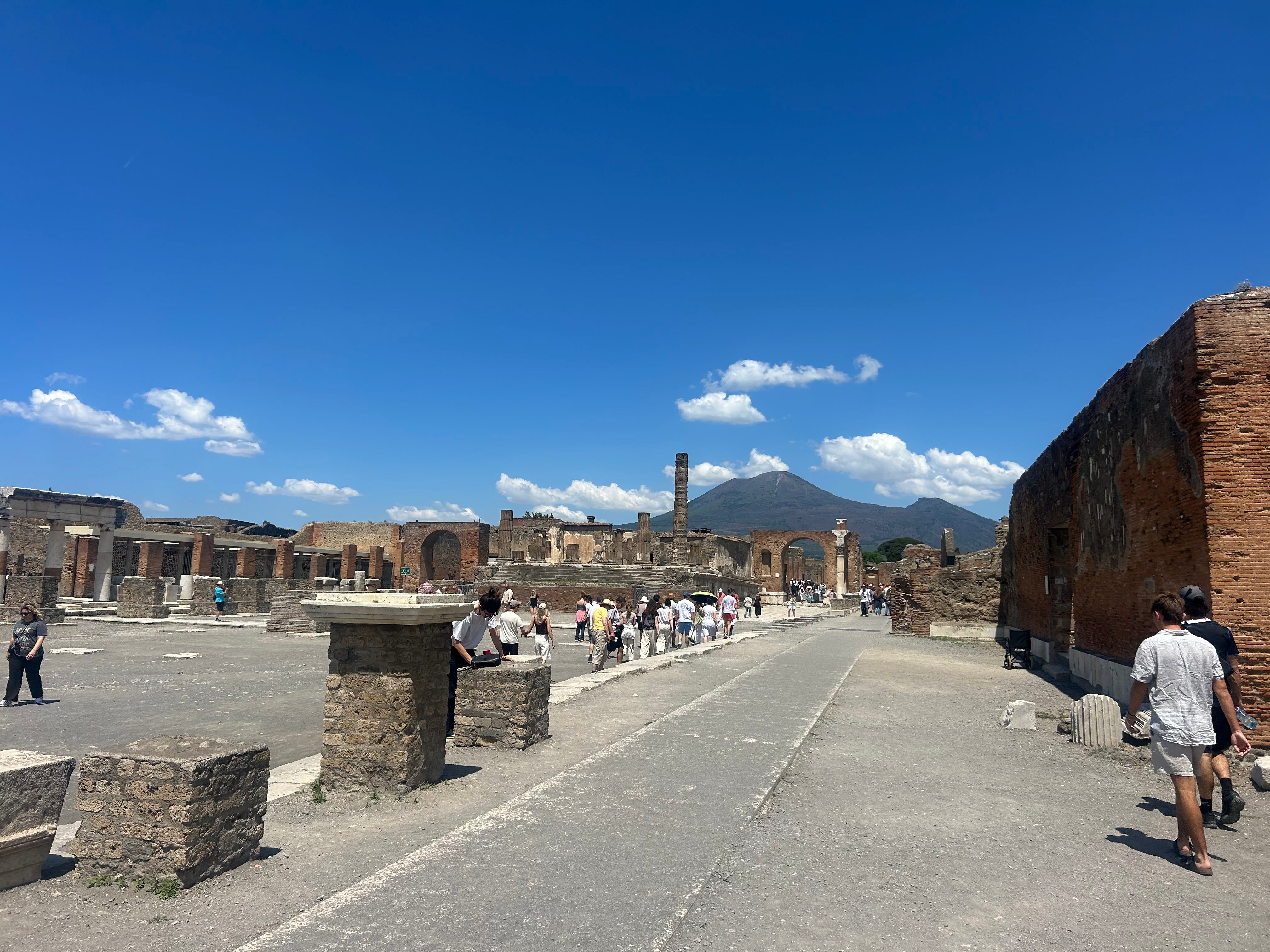
For context, I visited the site for the first time in 2022 as an undergraduate student studying abroad. I vividly remember listening to “Pompeii” by Bastille as we circumnavigated Vesuvius by bus. I returned the next summer for research to write my thesis on engraved gems and the creation of religious experience in the city. I’m now in the midst of my second season working on the Finds team of an active academic excavation in the city!
The Romans were not the first people to occupy the Italian peninsula. In the 8th century, the southern area of Italy was a hub of colonization by Greek and Phoenician settlers. Alongside other indigenous Italic populations, they occupied this area of the Peninsula. The region was defined by intercultural engagement and trade.
Pompeii was first established by the Osci, an Italic people. Relatively little is known about this early period of the city as much of its material remains are covered by later periods of development, but it seems that the settlement only became permanent In the 6th century BC.1 By the fourth century, Pompeii was ruled by the Samnites, another Italic people with whom Rome waged war in the later 4th century.
By 270 BC, Rome had subjugated the entirety of the peninsula, but much tension persisted within conquered communities. When the ‘Social Wars’ broke out between Rome and malcontent communities (which essentially were angered by the lack of political representation) across the Peninsula, Pompeii struck back. Consequently, Roman general Lucius Cornelius Sulla Felix sieged the city in 89 BC. After quelling the resistance, Sulla introduced about 2000 veterans into the city, renaming it Colonia Veneria Cornelia Pompeianorum and infusing it with the traditions and practices of the imperial center.2
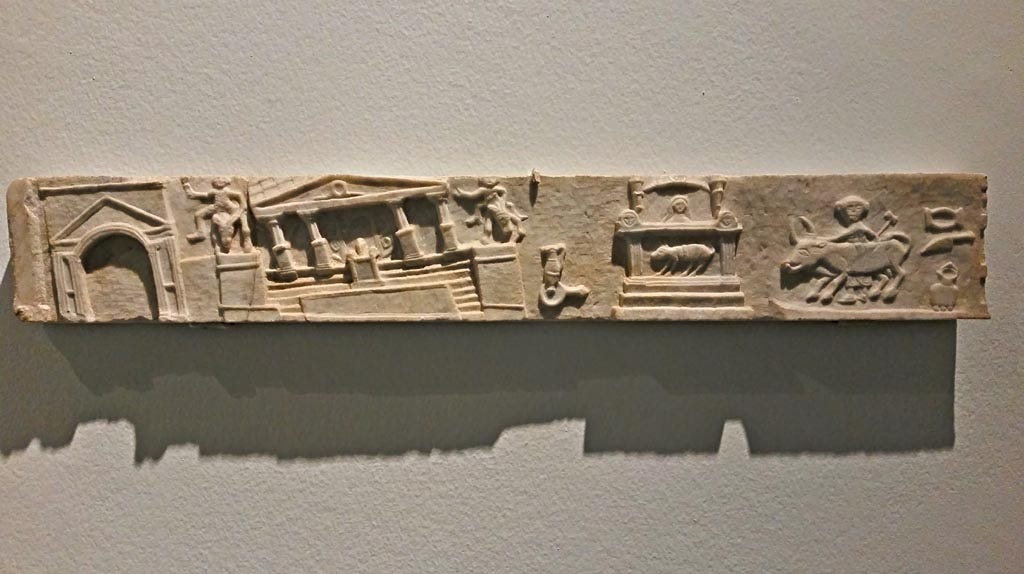
The city continued on as a hub of trade and regional development, as it seems to have been long before the Roman period. In 62 CE, the city was struck by a catastrophic earthquake. Public infrastructure and homes alike were severely damaged. Indeed, evidence preserved from 79 CE suggests that the city was still actively being repaired, likely from that event.
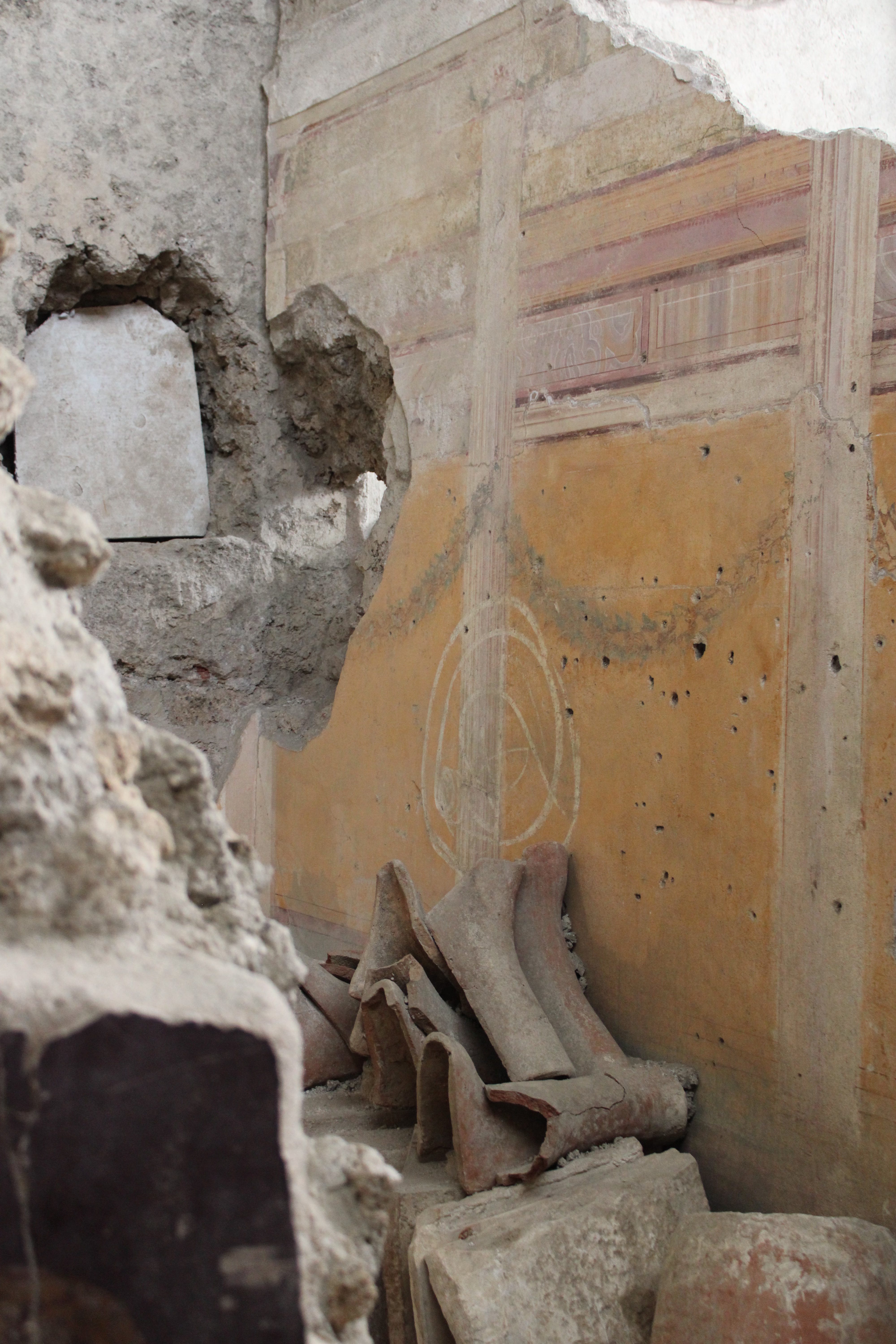
The earthquake of 62 was indeed just one of many, signals that seismic activity was ramping up in the region. Then in 79 CE, Vesuvius erupted. Various urban centers experienced the eruption distinctly based on their spatial relationship to the volcano. Pompeii was first pummeled with rocks, causing roofs to cave in. Only later did the pyroclastic flow run through the city and meters of ash submerged the city.
It seems that many citizens of Pompeii successfully evacuated. However, thousands lost their lives that day. While the city and the mundane evidence of daily life it provides bring many people (like myself) much joy, I think it is important to acknowledge the loss and sufferings that are ultimately unsolicited preconditions of our modern intellectual satisfaction. For me, studying daily life and lived experience offers an avenue to engage with these people and honor them in a way.
Walking through the streets of Pompeii covered in dirt while wearing a badge means one thing: visitors will ask you questions. Most commonly I have received the following questions: (1) where is the exit? (2) where are the bodies? Honestly, I find the obsession with the casts to be unsettling. They are human remains, often capturing individuals in the position they occupied during their final, painful moments on earth.
Of course, I direct visitors to wherever they ask, but I often wish there was some more reverence. Pompeii is of course a city, but in its final day, the urban center became metaphorical cemetery.
With that being said, the plaster casts are perhaps the site’s most iconic feature, so let’s talk about them. As I mentioned earlier, Pompeii was covered in meters of ash during the eruption of Vesuvius. Any organic remains left within the ash disintegrated over time. These remains include wood, textiles, and living beings. Often, these organic materials then left hollow areas within the ashy layers of the archaeological record.
Pompeii’s director, Giuseppe Fiorelli (1860-1875) perfected this technique in 1863. So too did he formalize the top-down process of excavation that is standard today. By moving from the top of the ground downwards, excavators could (and continue to) fill gaps in the ash with plaster that captures the form of whatever entity has long since deteriorated. Indeed, this means that the bones of once living beings — humans and animals alike — are encased within the plaster.
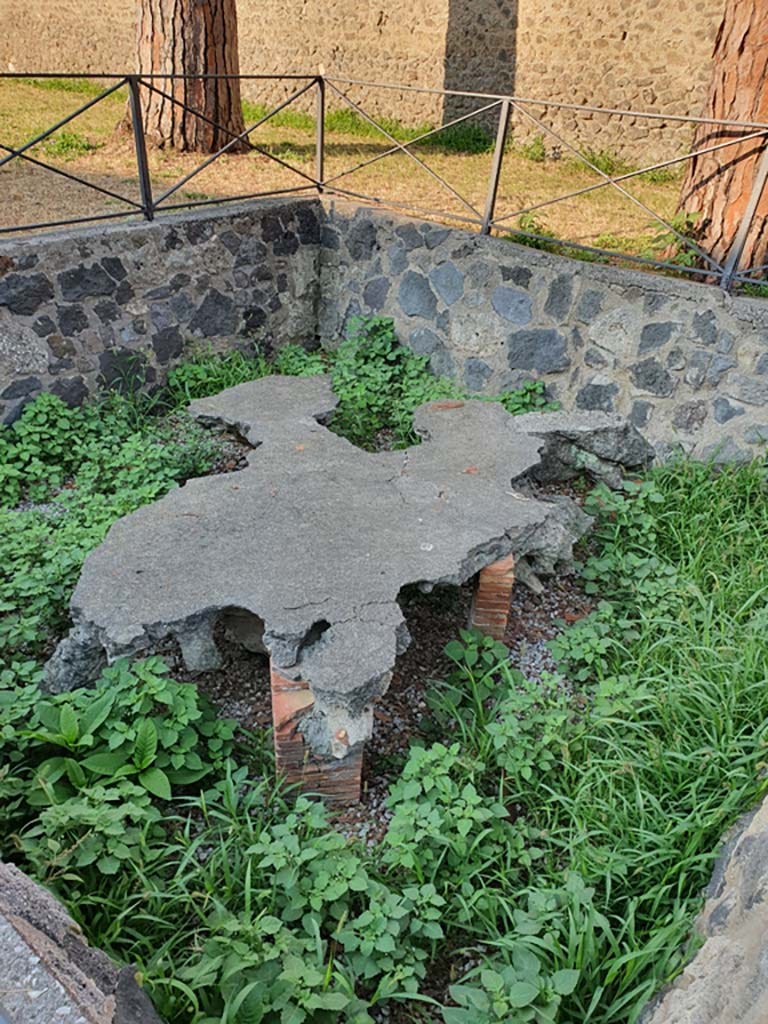
In addition to providing the jarring casts of ancient people, this techniques offers insights into the roots that occupied ancient gardens. Wilhelmina Jashemski’s pioneering studies of Roman gardens used root casts to identify the types of flora that filled ancient garden spaces.3
Giuseppe Fiorelli also regularized the mapping of the city using a modern system of that divides the city into Regio, each Regio into insulae or blocks, and each block into numbered units. These numbers are used in academic and popular parlance. While they have greatly improved consistency in locating and identifying specific sites, they are indeed modern. Ancient people did not list their address as ‘Regio III, Insula VI, House 2,’ for example.
There are of course many other site directors who have influenced the history of the site. Amedeo Maiuri, who held the directorship between 1924 and 1961, was also extremely influential. You’ll notice his tenure overlapped with the Great War, during which in 1943 Allied Forces dropped 165 bombs on the site as it was thought to serve as ammunition storage for the Axis powers. This was part of a larger effort, Mission Avalanche, which sought to liberate southern Italy.
Maiuri was responsible for rebuilding and repairing many sites. He was the first director to introduce systematic, stratigraphic excavations. Plus, he played a large role in turning the archaeological ruins into a “park” meant to facilitate an enjoyable and intuitive introduction to life in this Roman city.
Maiuri was, however, a supporter of Benito Mussolini. We can indeed understand many of Maiuri’s innovations in relation to burgeoning Italian fascism. Mussolini was quite invested in ancient Roman culture; under his regime, antiquity became a source of pride and national identity. The splendor of Pompeii and Herculaneum quickly became part of this narrative.4 Archaeology was, and continues to be, political. It’s easy to overlook the entanglement between contemporary culture and the process of unearthing and understanding the past, but when we identify this confounding factors we can understand excavation history with more nuance.
Speaking of political controversy, it’s worth jumping ahead a few decades to the tenure of Pietro Giovanni Guzzo (director 1995-2009). Since the site is located within one of earth’s more seismically active regions, Pompeii has fallen victim to a number of large earthquakes since antiquity. In addition to the bombing of 1943, this left much work to be done to repair and conserve what remained of the ancient city. In turn, Guzzo declared a moratorium on new excavations in Pompeii in 1999. In addition to allowing the park to focus on preservation, this call would ensure that future generations of archaeologists — presumably with better technology — could access undisturbed evidence of the 79 AD site.
This moratorium was controversial. It was also relatively short-lived. In 2018, under the director ship of Massimo Ossana, new excavations commenced. They continue under the leadership of present director, Gabriel Zuchtriegel. The new finds from these excavations of previously untouched buildings often make quite a splash.
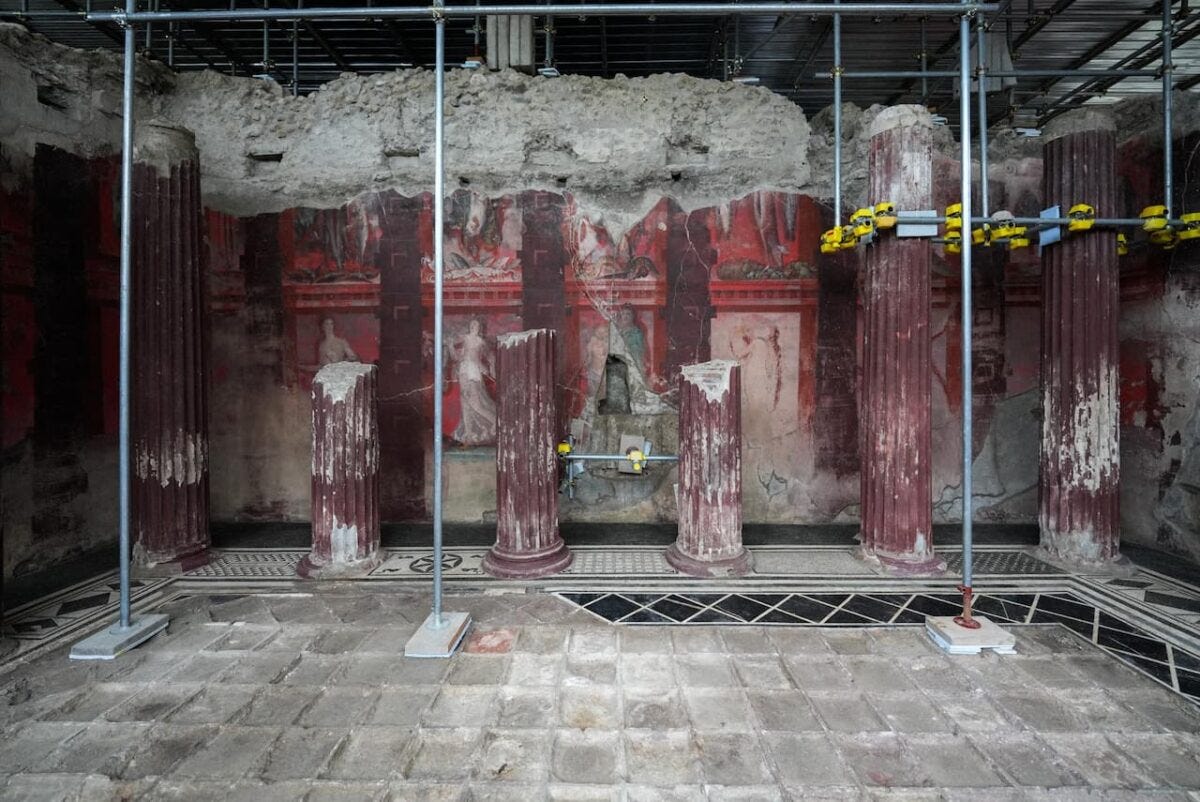
You might remember recent news of a “Roman Pizza” being discovered painted on a wall, or the gorgeous bacchic thiasos painted in the courtyard of a late Republican house. These were both recent discoveries made in Regio IX.
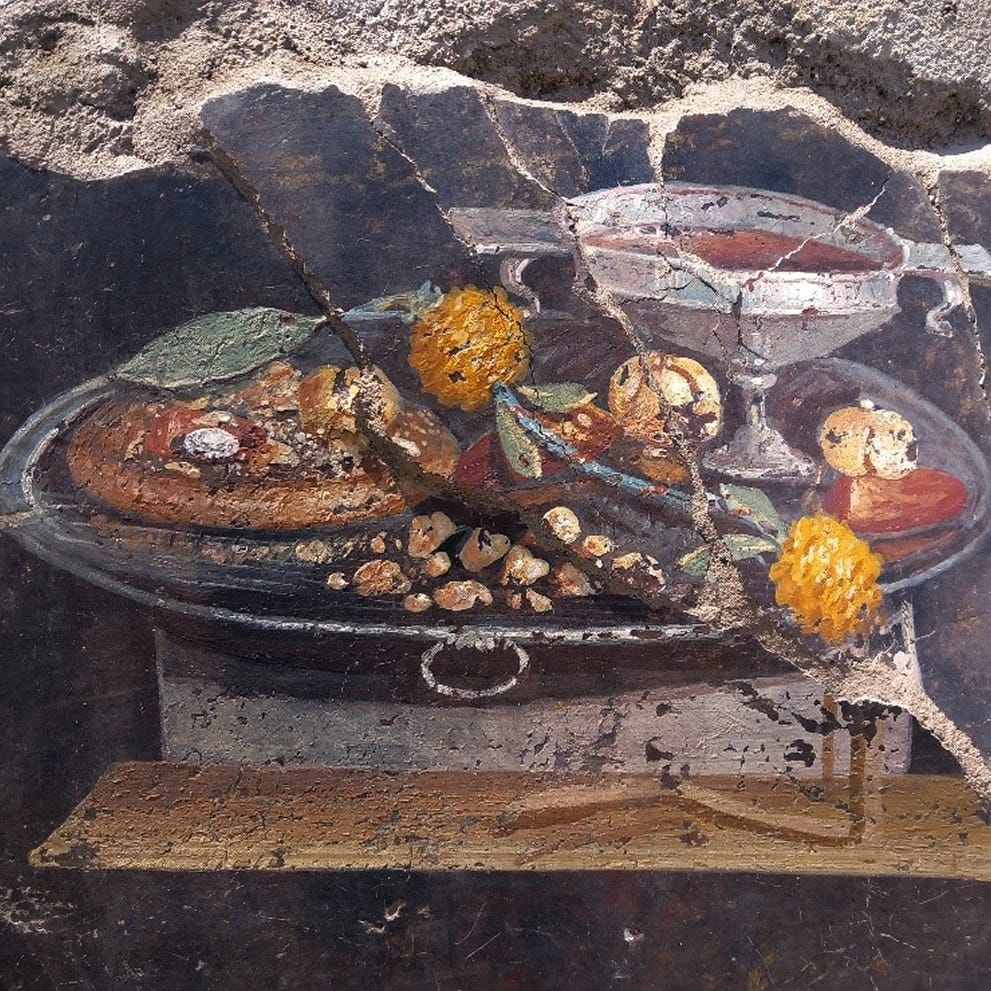
Working in Pompeii also means I often find myself walking through the Aldstadt — or Old city — before the swaths of eager visitors. This is the area of the city that seems to have taken its 79 AD form at the earliest moment in time. It’s easily identifiable on a map as the city streets are quite irregular, a contrast to the orthogonal grids that define the rest of the city. In addition to the residential insulae, it includes the ancient ‘Triangular Forum’ where the podium of a pre-Roman temple, an altar, and other monuments occupy an awkwardly zoned public area. It’s quite peaceful in the mornings before chaos commences.
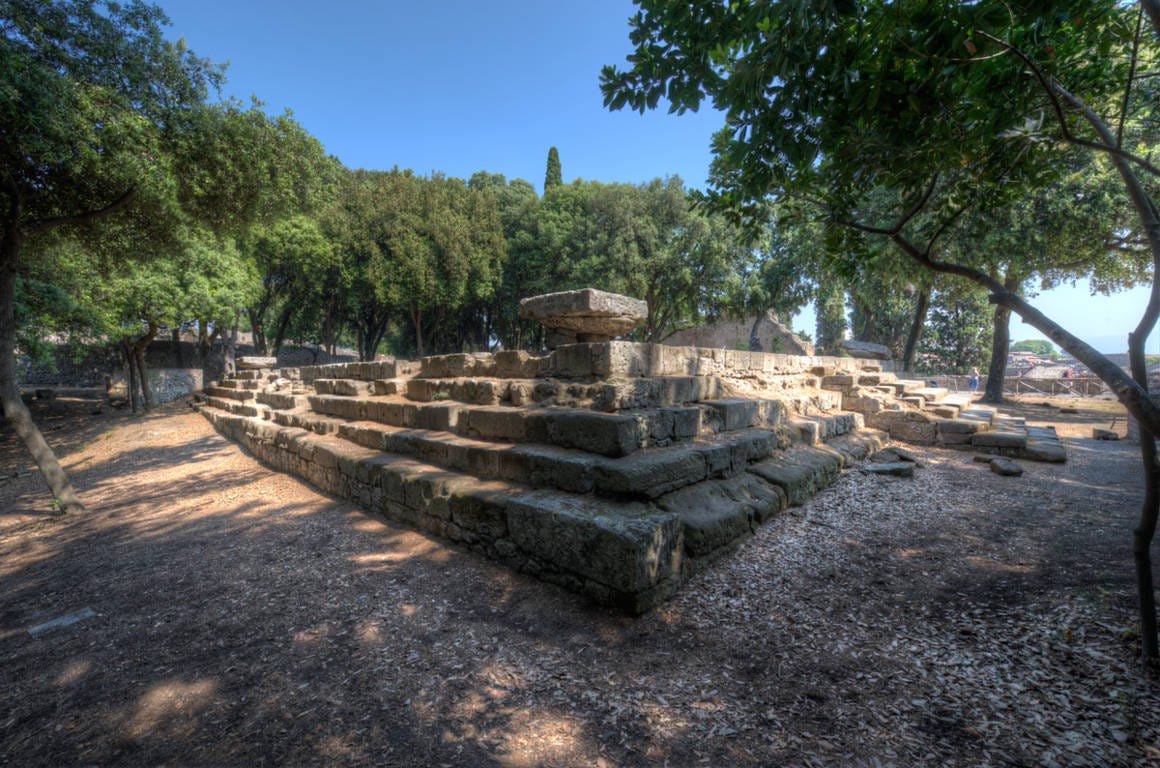
Indeed, the Aldstadt (German for Old City) was excavated relatively early in the city’s modern history. Nonetheless, much is happening in the area. Presently, in addition to the academic archaeological projects that investigate at or below the 79 AD level, conservators are actively working on the Insula Meriodinalis or the Western Insula.5 Here, large houses were built over the city’s fortifications after Sulla brought his veterans to town. These houses are quite large and luxurious.
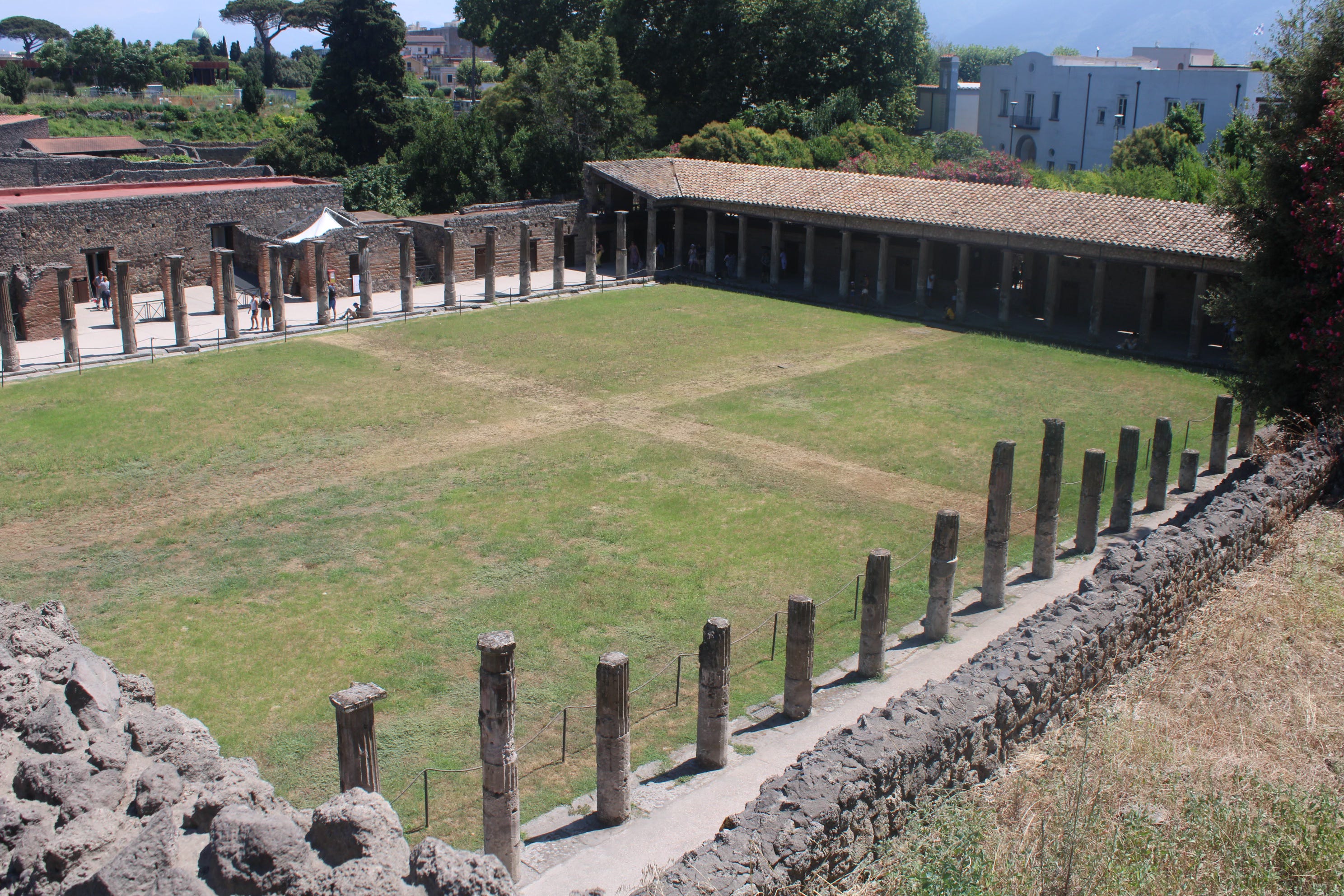
In contrast to the Aldstadt, the remainder of the city is deemed the Neustadt (German for New City). These city blocks are much more regular, running at perpendicular angles. Much excavation is actively unearthing parts of the Neustadt that have yet to be exposed to their 79 AD level (like Regio V and Regio IX). In other words, until recently these parts of the city were still covered in ash, pumice, and lots of dirt.
As we have explored, much of the city came to light through modern excavation, but in reality much of the site was also unearthed (or plundered) in even earlier “excavations.” Pompeii was discovered in 1748. It was thought to be another ancient city, Stabiae, until an inscription naming the site was found near the Herculaneum Gate. The city was only discovered because the Bourbon king, Charles III, sought ancient treasures to decorate his infamous Portici Palace.
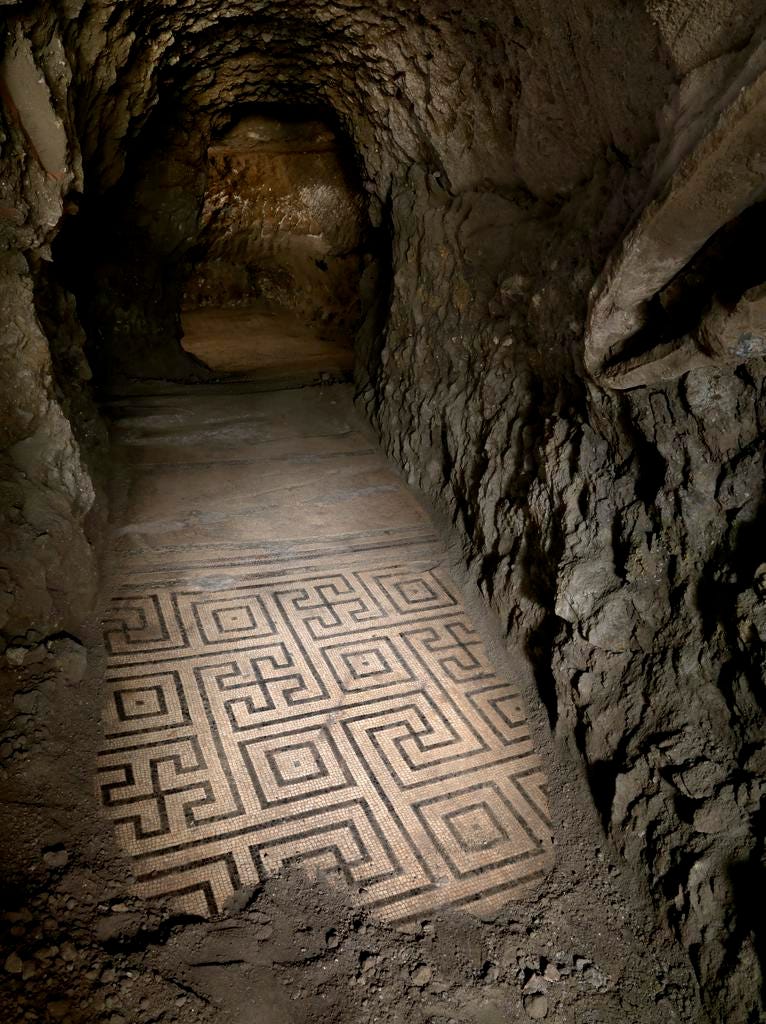
Still today we see evidence of Bourbon ‘excavations.’ Instead of working from the top downwards, they simply drilled tunnels through buildings and collected whatever treasure they stumbled upon. Soon, these early investigators began to unearth buildings from the earth. Leaving them exposed turned Pompeii into a must-see stop on the Grand Tour, a coming-of-age voyage undertaken by wealthy men in the 18th and early 19th centuries.
.Guida di Pompei. 2nd ed. (p.58-59).")
Surely, these visitors needed souvenirs. In turn, these visitors circulated objects and depictions of the site across Europe and eventually North America. Unfortunately, this is why many artifacts "from the Bay of Naples” in collections across North America and Europe survive without provenance. We do not know exactly which houses or temples they come from, and that often prohibits close, detailed analyses.
While the site attracted wealthy tourists, it also attracted artists and classical scholars. Between 1758 and 1766, for example, the founder of Art History, Johann Joachim Winkelmann visited the site. He compiled reports to share across Europe garnering interest in the magnificent material culture that came from Pompeii and Herculaneum.
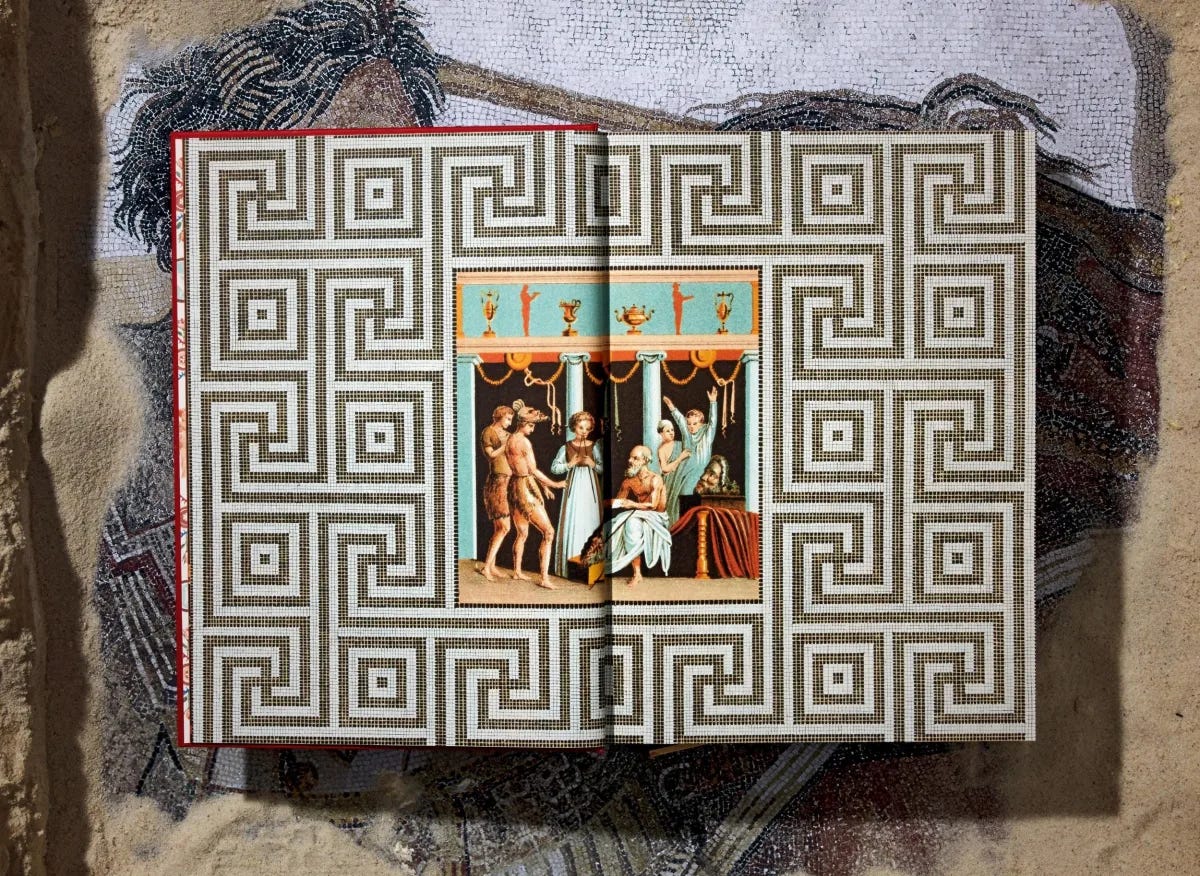
Similarly, artists and architects came to the city to document the splendid paintings and structures. Charles-François Mazois and later Fausto and Felice Niccolini respectively published massive tombs of prints capturing the visual spectacles that emerged from the ground.
At the time, these prints helped circulate Pompeian visual culture, increasing scholarly interest and tourism. Yet, today they fill a large void. Between the blaring Southern Italian sun, natural disasters, and World War II much of the site (and its paintings) have been lost or severely damaged. Early recreations give us a sense of the original grandeur of these artworks.
So, to return to the titular question… unearthing a city (at least in the case of Pompeii) was and continues to be a many-phased process. Various techniques, technologies, and motivates underlie the various efforts to bring the fabric of the Roman city to life for visitors and scholars.
Today excavations continue. Some park-lead excavations seek to unearth the 79 AD city to its full extents. While teams of internationally-based academics instead seek to dive below 79 AD, asking questions about the daily life, trade, construction techniques, and more.
Pompeii is an extraordinarily well published and accessible site. Here are a handful of sources that you can follow up with for more information on the city, its inhabitants, and life in the Roman world:
Curator's Tour of Life and death in Pompeii and Herculaneum exhibition at the British Museum
this virtual video tour highlights the incredible objects displayed in the British Museum’s 2013 exhibition, Life and Death in Pompeii and Herculaneum.
managed by two volunteers, this website accumulates an endless stream of photos that document the entirety of the site across time, its a great opportunity to just look — that’s one of Art History’s foundational skills!
The World Of Pompeii, edited by P. W. Foss & J. Dobbins
an interdisciplinary academic introduction to the site, its history (ancient and modern), and essentially any sub-topic you could imagine
Strabo, Geographia 5.4.8; for more on the city’s early history and notable written evidence see Jean-Paul Descoeudres “History and Historical Sources” in P. Foss and J. Dobbins (eds.) The World of Pompeii, 2009.
Josiah Osgood. Italy and the Reinvention of Rome (150–50 BCE). In Rome and the Making of a World State, 150 BCE–20 CE, 2018.
For a brief, free introduction see https://www.archaeological.org/archaeologists-you-should-know-jashemski/; see also Selected Writings of Wilhelmina F. Jashemski (free via https://archive.org/details/jashemski-studies-1963-1995/mode/2up)
Calvanese, Vincenzo, Massimo Mariani, Paolo Mighetto, Alessandra Zambrano, and Gabriel Zuchtriegel. “Knowledge, Design and Execution in Archaeological Sites: The Insula Meridionalis in Pompeii.” Procedia Structural Integrity 78 (2026): 1134–42.
No posts
Comments
Nothing yet. Say the first thing.
Sign in to join the conversation.