
It is August! Where is the year going?
I recently did my July review and August prep, and I thought I’d share my process for this. My monthly reviews are more narrative-based reflection than structured planning, I’ve found that I don’t need too much top-down planning in my life (right now at least), and my GTD reviews are done on a weekly basis. However, I do find a monthly check-in with myself to be important. I typically do them on the first Sunday of the month. This is what it looks like.
My monthly reviews are about collecting “essence”, which is my shorthand for everything I do that captures the essence of what it felt like to be Beth in July 2026. I’ve been doing this for years now, inspired by Annie Ernaux’s The Years, which entirely changed my world view. I wrote about that elsewhere.
The home for my reviews are my Month objects in Capacities. This is what the template currently looks like.
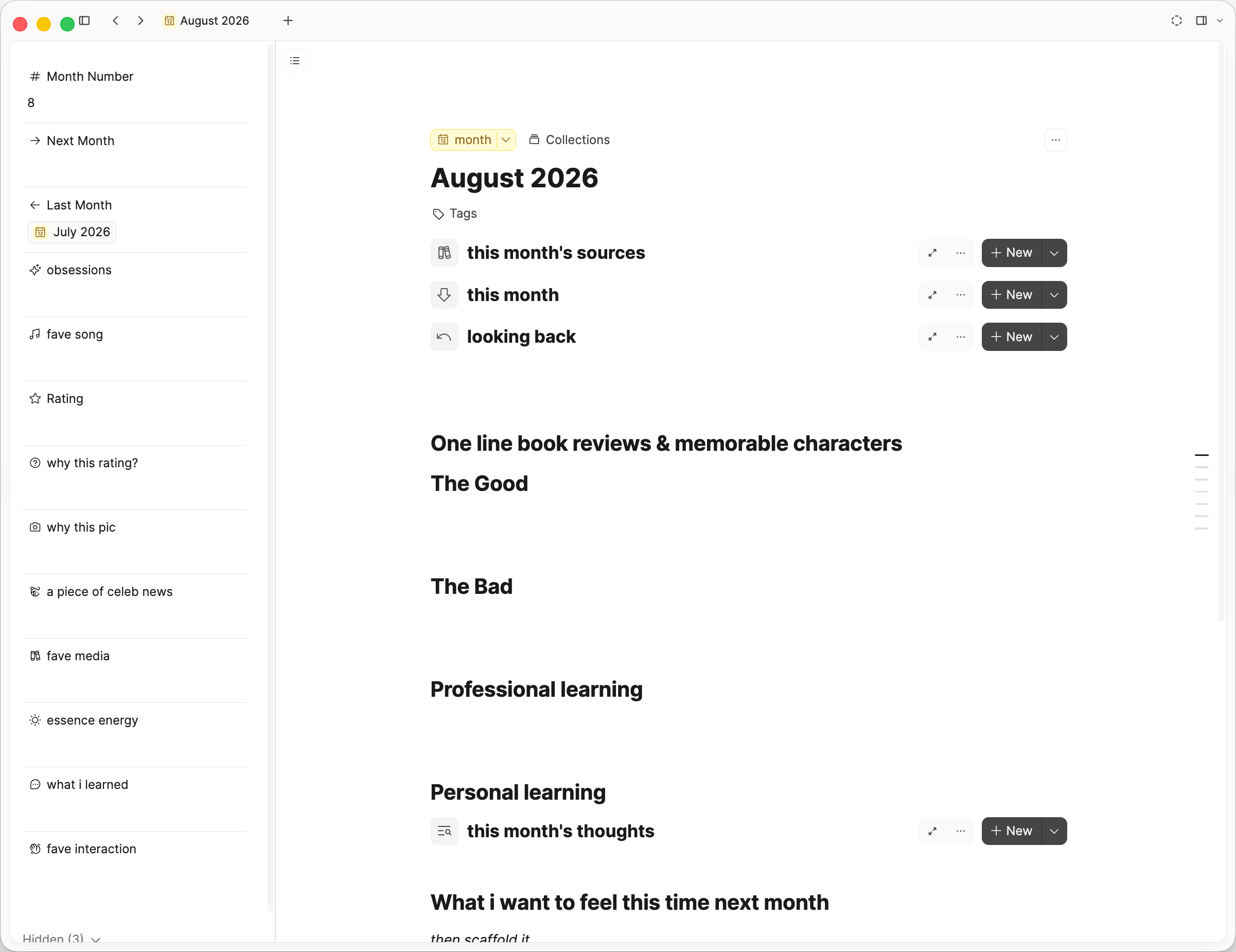
Properties
Most of my properties relate to my aim of essence collection: obsessions, my favourite song, fave media, essence energy etc. I find looking back on previous months to be crazily powerful because of this, and they always make me smile.
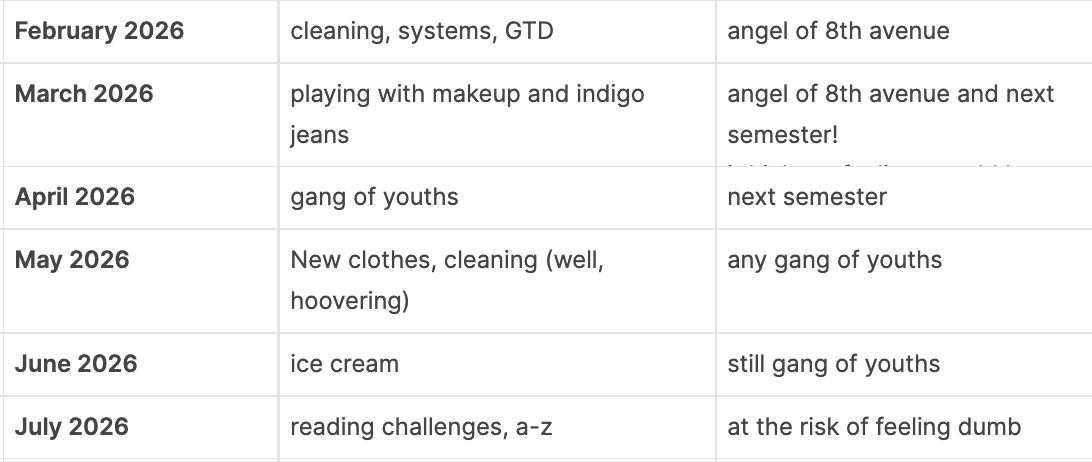
I also like to take my time choosing a cover image, and then explaining why I did that. It makes it more meaningful to me, and especially so when I reflect on other months. The same thinking lies behind the ‘fave interaction’ property, and the rating property too. I like to capture the traces of my thinking, as well as the actual data.
The other properties are navigational, and the month number means I can group all my Julys together and look back on my life through that lens. The “Looking Back” query is embedded into the template for this.
Narrative
Then I move onto the writing portion of the review. I first go through all the fiction books of the month as a fun memory exercise. I read so much, and my fiction often triggers rabbit holes or new ideas, so I find reviewing them to be a good framing for the month.
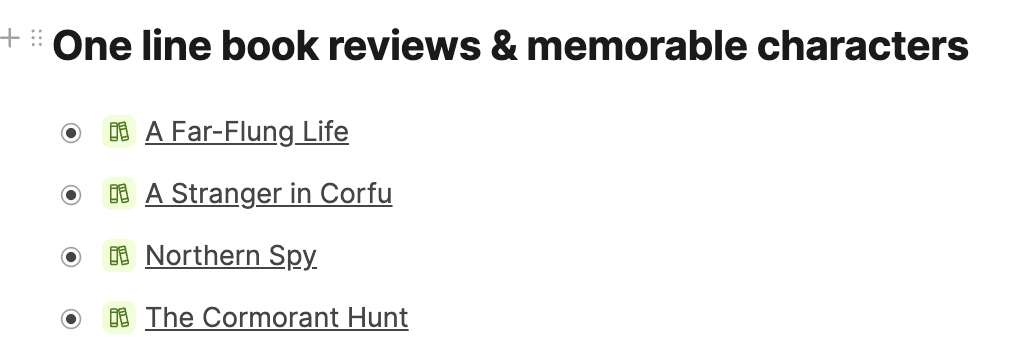
After this, I work down the list of headings: the good, the bad, the learnings. It normally takes me a minute to get my brain in gear, then I find I’m listing a lot of things, with memories sparking other memories. Once I’ve remembered all I can, I go through my weekly reviews to fill in some gaps, and to offer some reflection on what happened in previous weeks. The “this month” query put this information into the month. I like the granularity of the weeks, and the tighter feedback loop it gives me. I find this sits nicely with the more zoomed out month view, which is more about higher level reflection.
Reflection continues with a query called “this month’s thoughts”. I shared my thought object type in a previous post. I love them. It’s good just to check in with the thoughts after some time has passed. This isn’t an essay-level piece of reflection, sometimes just a sentence with a timestamp.
That’s the narrative side done. It’s a lot of layered reflection which I find helpful for helping me see something I’ve overlooked, something I’ve forgotten, or just finding new angles on things. It’s very important to me to live a reflective life, and this is the infrastructure for that.
I do three top-down planning activities per month
I check our calendars: what is unusual and what has tasks (e.g. birthday presents, travel plans). As long as there’s a task created, I will get it done.
I ask myself if there’s something I specifically want to achieve this month: things at work, home or personal. I don’t always have something here, sometimes I just like a month of maintenance (I LOVE the concept of maintenance).
I ask myself how I want to feel at the end of the month. If there’s a gap to be closed there, or a project to create, then I will do that.
What I do a lot of though, is maintenance tasks. I anchored them to the first of the month because I find it really satisfying to tick off the bigger, weirder chores all together. I just find these keep things running smoothly. Weekly is too often, yearly too infrequent so I often choose monthly or every other month.
These maintenance tasks cover the fun and the mundane. Fun examples: go through my pictures and order prints, take a picture out of our living room window to make the yearly album of how the trees change throughout the seasons, check new Kindle 99p deals. Mundane: hoover the couch, clean the front door, various deep cleaning tasks…
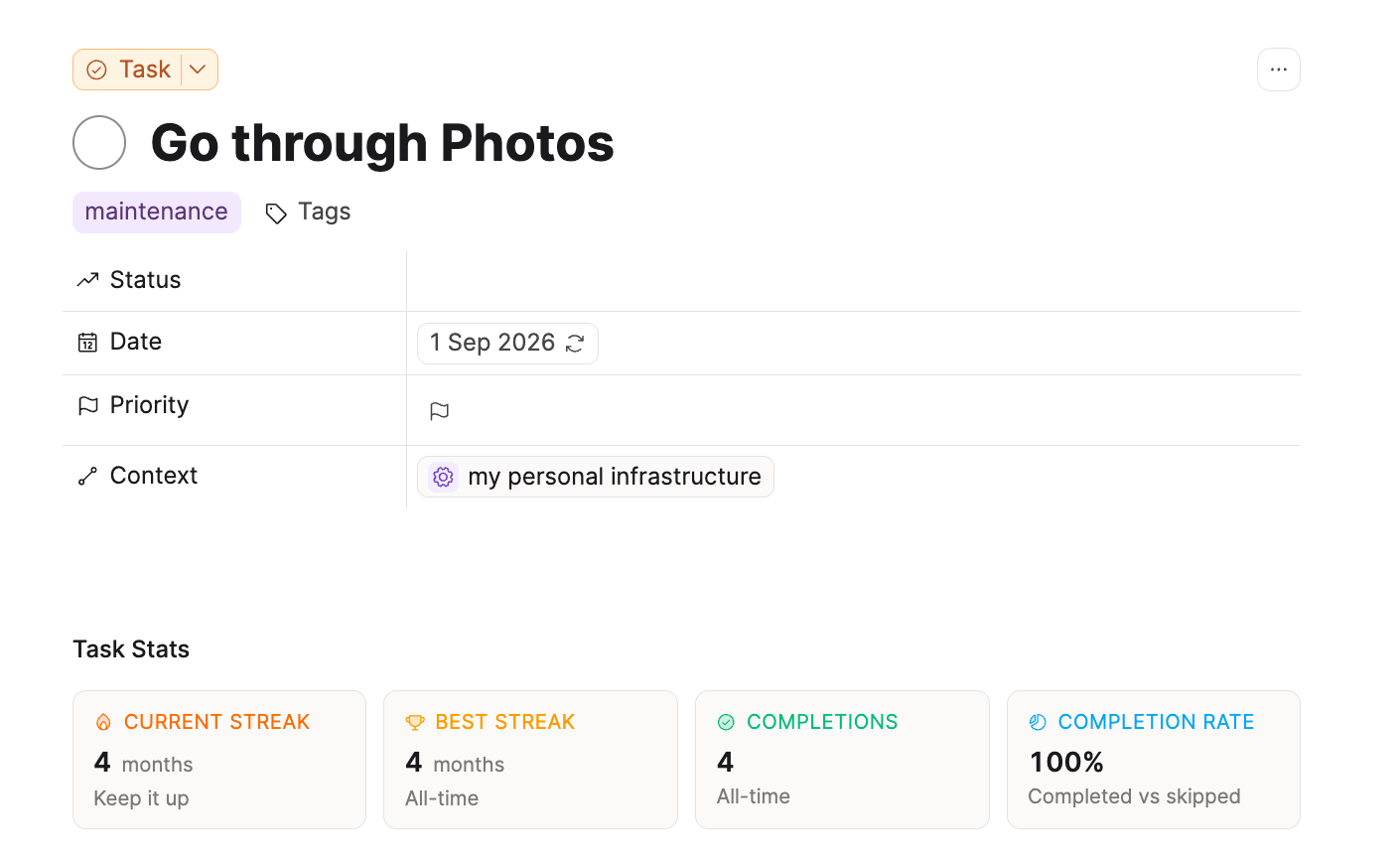
If I give everything the date of the first of the month, then it’s a built-in reminder to a) do them or to b) reschedule them because there is a strange month coming up. For example, all the deep clean kitchen tasks make no sense for August: it’s getting ripped as I type this! So I skipped all those tasks for August.
One mindset I find very important with recurring tasks in general is that it’s not a moral failing not to complete a task list in a given day, it’s more a reminder of something that should be on my radar at the moment. This is particularly true for my recurring tasks given I created them having decided what standards I’m happy to maintain across the areas of my life. In other words, I want to do the task for a reason, it should be on my radar, ideally I’ll do it on the 1st of the month but if I’ve got plans I will just adjust and come back to it later.
As you can see in the screenshot, my monthly note has a lot of properties and a lot of headings. This structures the pattern I want to follow each month and makes this process repeatable. For me this is what keeps infrastructure “transparent”: if I set up my monthly template well, I don’t think about how to do the review, I just follow what is there.
This is a repeatable idea for other types of reviews: weekly, yearly or even ad-hoc check ins with yourself.
I think that’s everything for my monthly reflection and planning process. What does yours look like? :)
No posts
Comments
Nothing yet. Say the first thing.
Sign in to join the conversation.