
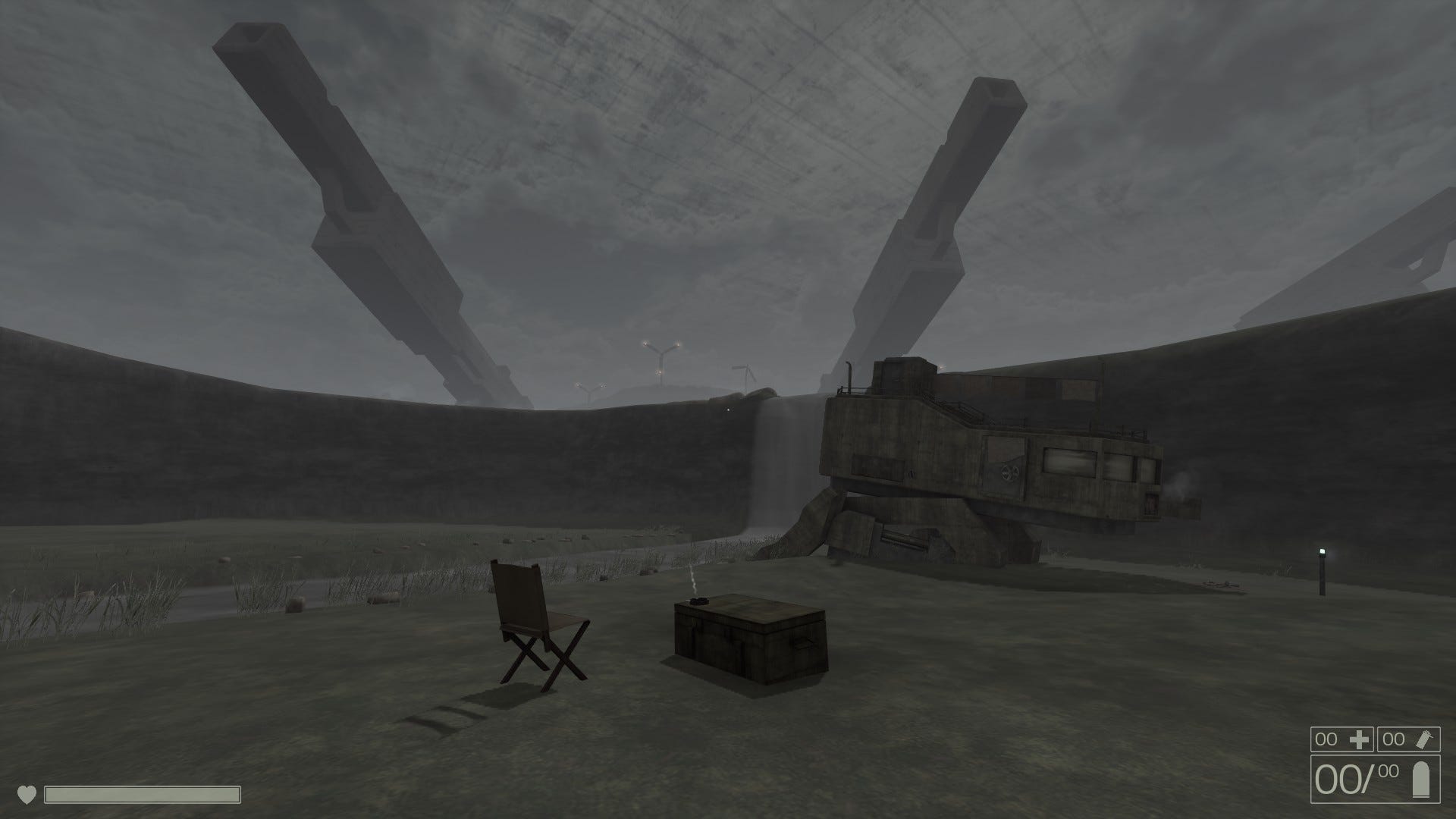
Metal Garden is a short, atmospheric single player FPS game released on March 21, 2025. I was fortunate enough to have Aleksandra Herout, the main developer for this game, agree to an interview! The interview will contain spoilers, so please go play this game before reading!
August: How long have you been developing games for, and how did you start?
Aleksandra: Metal Garden is the first game I've ever released, but I've been tinkering around game engines since maybe the second year of high school (around 2016 or so). I tried to make several smaller games then, but I just didn't have any knowledge on how to create 3D assets, and so never made much progress. Ever since I can remember I wanted to make games that felt like entering other worlds, so making games without having good knowledge of 3D environments just didn't feel right. In college I got more serious about it, and over the course of about two years I worked on several FPS games by myself, each of which I eventually had to cancel because they were just too ambitious for a first-time developer. A classic rookie mistake I had to make multiple times before I finally learned my lesson! When I started Metal Garden's production, I decided it would be the simplest version of an FPS project, something I was sure even I could complete. It still took about two years, but I was really proud I could finish and release a full project, even if it is a bit short by conventional standards!
August: Where did the idea for Metal Garden come from?
Aleksandra: The idea for the setting is something I've had in my head for so many years now I'm not even sure where it originally came from, but the concept was always that it was a megastructure made up of old, interconnected garden worlds. I've always been obsessed with fantastical and arcane architecture, whether ones I'd find in the real world or fictional ones - Tsutomu Nihei's mangas, paintings of artists like Ian Miller and John Harris, dungeon-cities of Dark Souls. Perhaps they weren't the origin point of the setting and visuals, but they helped give it shape as I daydreamed about it throughout the years.
The structure and narrative style of the game were very much influenced by sci-fi short stories. A lot of them start you in a place of some familiarity, and close to the end present a big twist that changes how you perceive their world. Since I knew Metal Garden would have to be a short game, I decided to use this structure, and situate the story in a less technologically advanced part of the setting where an interesting progression from a known to unknown world could be made.
August: What was it like creating the sense of scale needed for the player being in a megastructure?
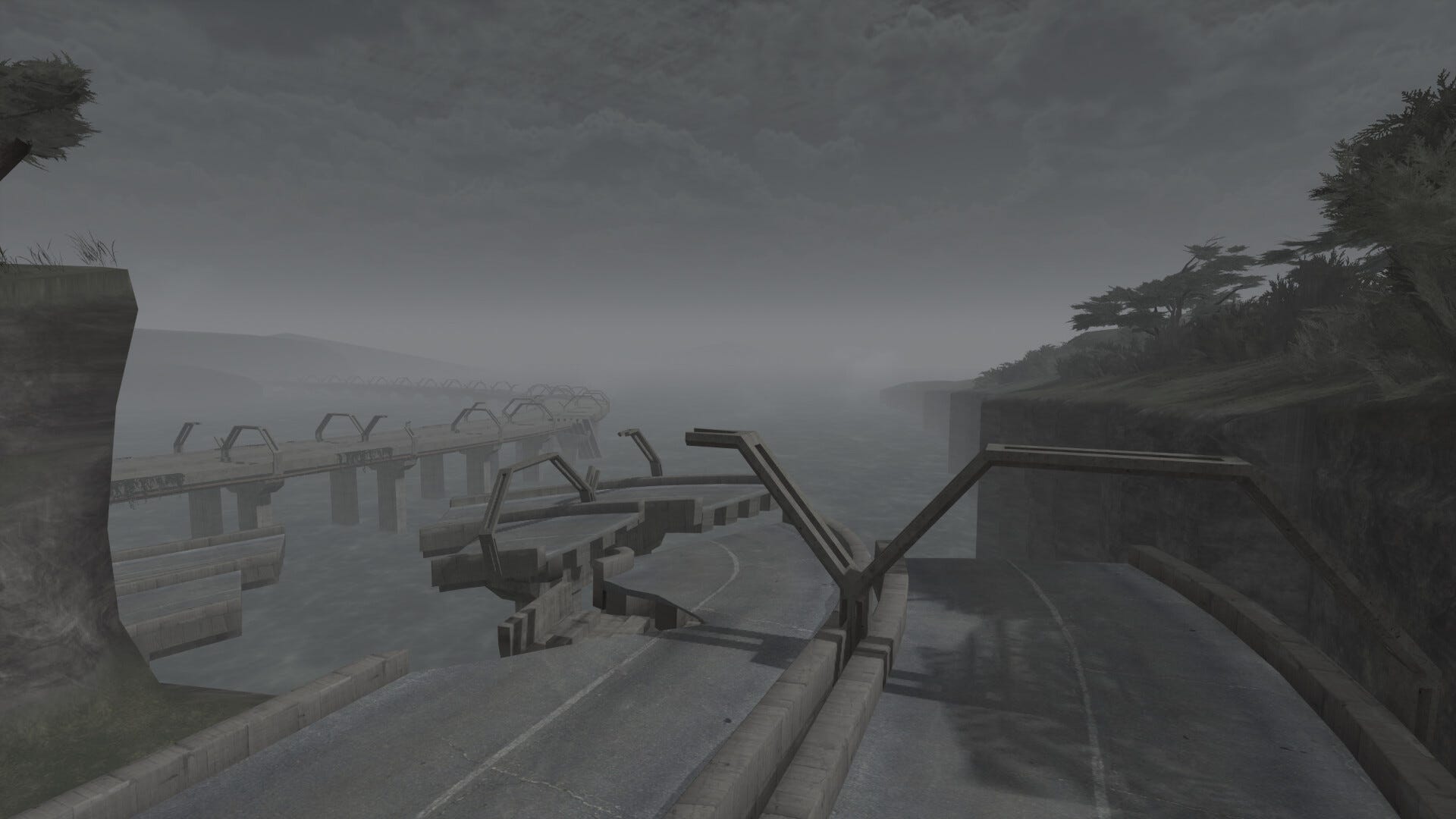
Aleksandra: I actually found this quite challenging, because I really wanted to capture two almost diametrically opposed ideas: I wanted to make a game that would feel like a slow, atmospheric walk through this world, and also to capture its great size and scale. So I had to design environments that felt like a part of a massive megastructure, but that weren't too boring and uneventful to traverse moment-to-moment. I tried to get around this by adding lots of breaks in the terrain and opportunities for platforming.
A lot of the feeling of scale also comes from the skybox, which I think was an excellent way of grounding the player in this world without need for much explanation. "What kind of world is it?" Well it's one where there's a ceiling above the sky.
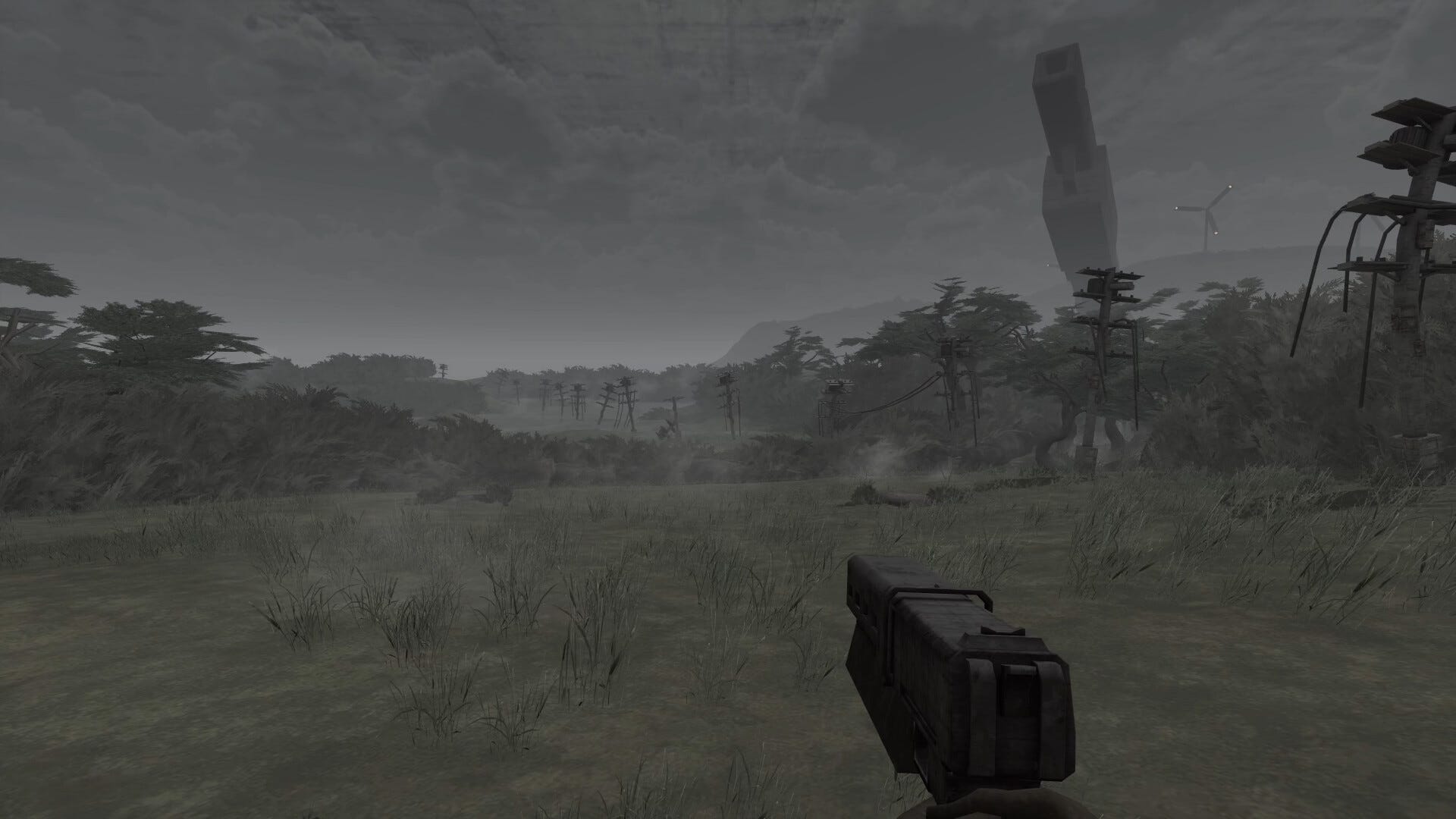
August: The environments are very striking, grand, and peaceful in a way. What did designing them look like, from concept to modeling?
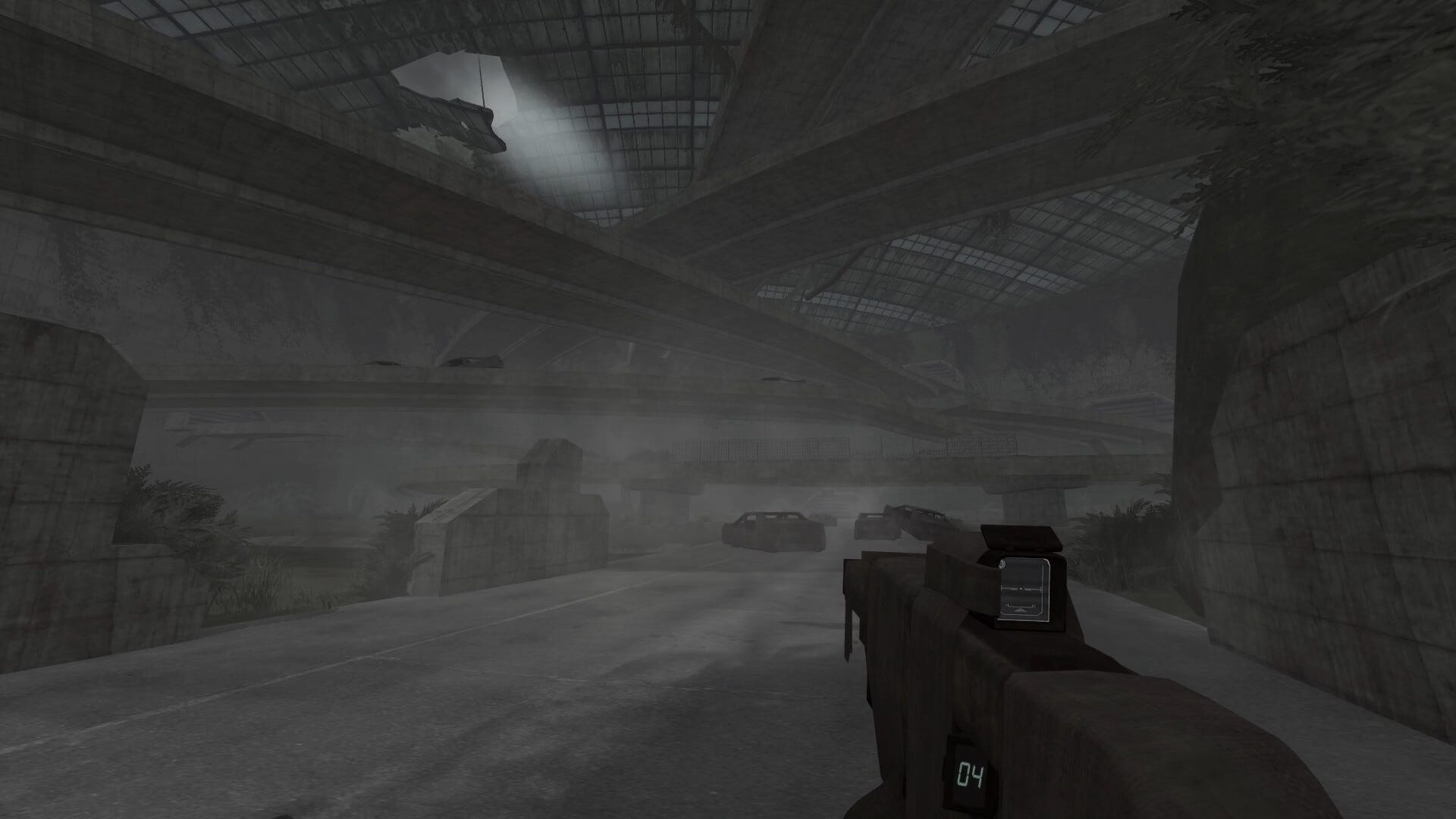
Aleksandra: Each environment I start with a certain concept, either visual or mechanical, such as "criss-crossing vertical highway lanes", "low rolling hills with satellite arrays" or "an ambush encounter played over small suspended platforms". Then, I make a blockout of that one environment in Blender, and export it into Unreal Engine. There, I start messing with visual detail and enemy placement, and figure out how it connects to other parts of the level.
With Metal Garden, I didn't have a level plan or create an initial paper blockout, but instead just created these disconnected environments and encounters, and then figured out connecting paths between them. This isn't really a way I'd recommend building levels, and mostly came about through my own inexperience, but it did lead to a kind of stream of consciousness level design that resulted in some unique structures.
I think that a lot of the specificity of visuals also comes from the fact I 3D modelled all of the environments in Blender and then exported them to the game engine, rather than build them from modular pieces as is the standard in most modern development pipelines. I also modelled the terrain rather than use a terrain tool, so that I could make it look as precise as I wanted to.
August: For a game with more linear level design, how did you approach adding side paths and rewarding curiosity?
Aleksandra: This may sound strange, considering how much of an integral role they play in the final design of the game, but all of the side paths didn't exist at all until about two or three months before the release of the game. My original plan was just to release the game for free, but when I was unable to find regular employment for a while, I decided to turn it into a commercial project extremely late into development. At the time, the game only featured the main path, and I felt that would make it too small and short for me to charge money for it. So I crunched quite heavily, and added all of the side paths in the next month or so. This was... extremely stressful, but I'm not quite sure what other choice I had at the time.
Since the main path through the game was already created, I treated the side paths as a kind of tucked away, hidden appendages of the world. I think this helped sell the fantasy of the game much better, finding these other structures and civilizations hidden out of plain sight.
A rather big issue I encountered with the side paths then was how to reward players for venturing down them. Since they were made so late in production, I didn't have any mechanics or new weapons left to reward players with. At that point I ended up significantly retooling both the mechanical progression through the game and where pieces of lore were attained, so that I would be able to offer some of them at the end of the side paths.
August: The double jump is very integral to the entire game, why did you want an emphasis on platforming as well as combat?
Aleksandra: The need for platforming and double jump came from the desire to have very vertical level design. That allowed me to make some more fantastical structures, and a vertical dungeon-like design in some parts. The double jump also meant I could have the player navigate bigger and more precarious gaps. There are other hidden mechanics to help with platforming as well, for example, after you leave a platform you still have several additional milliseconds to jump, and it'll only count as a regular jump, and not a double jump.
The reason Metal Garden is a combat game in the first place is because I wanted to make a world that felt dangerous to traverse. The possibility of danger creates spatial mechanical drama, which makes you pay attention to the game's world, looking out for traps, ambushes, ammo, health... It's a great tool of immersion. However, I think that when it comes to implementation of combat, I got somewhat distracted by pursuing my inspirations in the genre (Half-Life and Destiny especially), and copied the pacing and minutiae of combat from them, rather than create one that would truly fit with the rest of the setting. While I don't think the combat in Metal Garden is bad, I do wish I had realized what I wanted to achieve with it earlier in production. I think that then I could have made it more focused on that feeling of danger and precarity.
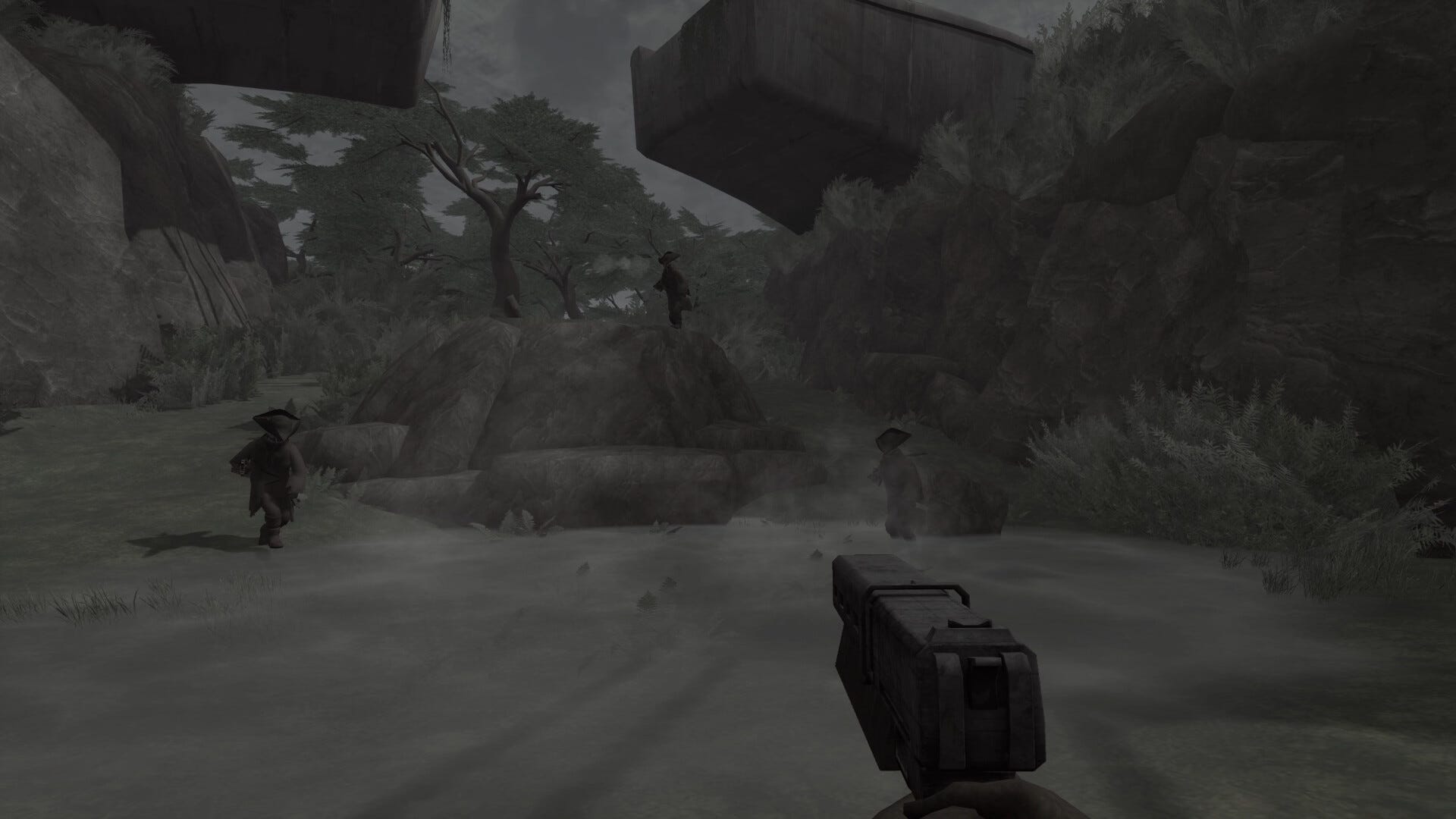
August: What were the designs of the enemies and wildlife inspired by?
Aleksandra: The design of the enemy mercenaries was actually hugely inspired by cloaked figures common to paintings of romantic artists, particularly Caspar David Friedrich. I thought that was a really striking image, so I combined it with a kind of retro military gear setup that made sense in Metal Garden's setting.
I really wanted to have animal species in the game too, because I wanted to show this world is mainly populated by people who are not shaped like regular humans. The leopard soldiers weren't really inspired by any one design, but various fantasy creatures in manga and games provided a broad base to draw from.
With the wildlife, the goal was to create animals that looked more plausible than fantastical. Even though there is no written aspect of the story that refers to them, I wanted their presence to imply a wider ecosystem beyond the game's reach. I didn't want them to just be monsters you have to fight, but a way of adding richness to the background of the world. That's why they're either territorial water animals or a cattle-like animal breed.
August: There are consistently unique and fresh enemy encounters in Metal Garden, from an ambush in a tight space to the arena sequence near the end. How did you approach designing enemy encounters?
Aleksandra: I always try to think of each enemy encounter as a kind of small story scene. If you were writing a book or making a movie, you wouldn't wanna repeat similar scenes, right? So the first thing I try to think of is what kind of a story scene should each encounter be. An ambush in a tight space, an arena fight, an encounter where you get a drop on enemies from above, etc. Then I design each encounter in isolation, so I can be sure they all work mechanically and play good. Once I have a sufficient amount of them, I'll start arranging them around the level based on what makes dramatic sense, and then finally I'll start figuring out connecting paths between them. In some cases, I'll even make encounters out of these connecting paths, as I sometimes realize their unique architecture can make for a fun mechanical challenge that'll tell a story of its own.
August: The injury system was a lot of fun to experience, how did you come up with each injury effect? Were there other injuries you experimented with?
Aleksandra: With injuries, I tried less to punish the player, and more to force them to play in a different way. So the goal with each injury was to force the player to adapt in some way - no reticle should force you to aim down sights more, shaky aiming force you to rely on your shotgun more, impeded sprint cuts off your escape routes, etc. Instead of giving people a hard lock of death and telling them to just repeat a part of the level until they get it right, I'd rather give them interesting debuffs and force them to live with an unideal situation. In practice though, I don't think it always works like that. Players either end up not experiencing the injuries, or they end up in a spiral where they immediately gain all of them, die, and have to replay the level portion anyway. So the system still needs more work.
I don't think I really experimented with any other injuries, but earlier in development the existing injuries used to be a lot harsher. For example, leg injury would completely remove your ability to sprint, and shoulder injury your ability to aim down sights. That was just too severe though, and it made the game a slog to get through.
August: The game has no music apart from a few sequences, why did you want there to be no music for the majority of the experience and why add music where you did?
Aleksandra: At first, this was just a design choice because I had never made music of my own, so I decided I would follow in the footsteps of the Souls games and focus more on environmental audio. But later in production I started teaching myself to make music, and decided that a few of the key moments in the game should be scored. Of course, that had to be the two bigger fights in the penultimate chapter, but I also wanted a song for the sequence where you go below and out of the structure. I found this really added a lot of emotional backdrop to the scene, but it wouldn't have that same impact if the rest of the game was filled with music as well. It's the contrast with the preceding quiet that makes it matter, as much as the song itself.
August: There is lore peppered throughout the game that adds so much to the world, would you ever want to expand upon it or is interpretation an integral part?
Aleksandra: I think a crucial part of any good setting is its suggestive ability. When it can imply something vast and strange with a striking image or a few words of dialogue that are not followed up on. I think I was able to tap into that a very little bit with Metal Garden, and I wouldn't like to ruin it by explaining in great detail every piece of lore I wrote for it. While there is a very specific explanation for everything in the game's world, I'm happy if most players just see the lore as something that makes them wonder for a while, a fuel for imagination.
However, if I ever do end up creating a sequel, then yes, of course I will be expanding on the world and the lore quite a bit - setting up some new mysteries and answering some old ones. I would just like to do that without ruining the suggestive quality of the first game.
August: The game trusts the player to figure things out on their own, do you run into any difficulties designing an experience like that?
Aleksandra: Yes, I had quite a few players stuck on certain puzzles, or be unsure how to progress through some of the environments. Metal Garden doesn't have a waypoint system or a minimap showing the direction of the objective, so it can be easy to become unsure how to progress.
I think the most difficult part of designing the game like this is just finding some way to let the player know which way through the environment is 'The Main Path' that they're supposed to take to continue the game, versus which ones are just side paths. This was very obvious before I decided to add side paths, but once I added them, I also introduced quite a lot of confusion into level design. And I think this does lead to some frustrations where players walk too far down the main path, and then realize they locked themselves out of some side paths because they went too far. But I think you could easily solve this by just designing around side paths much earlier in production.
August: The fight with the mech was a standout moment, how was it designing that fight?
Aleksandra: In a sort of roundabout way, the mech boss fight is actually what led to the game having a soundtrack in the first place. I wanted a climatic fight I could do without dialogue (because the game is not voiced), so I came upon the idea of the opening part of the fight being synced to music. I found that set up the experience of the fight much better than the enemy shouting some intimidating dialogue. So I rolled up my sleeves and taught myself how to make some simple music. The song that plays in the fight was the first one I made for the game, but I still quite like it.
I'm also a big fan of very reactive bosses, where they can act differently depending on which area of their body you damage. That's where the idea for the destructible missile launchers came from.
Overall though, this boss fight was pretty fun to work with from a development point of view. Regular enemies need to work in all kinds of encounters and environments, which means they end up needing a lot of code and checks so they don't break. But I only needed to make the mech's code and animations work for a single environment, so that was much easier to manage.
August: Do you think you will return to the world of Metal Garden in the future?
Aleksandra: I would really like to! A sequel to Metal Garden is likely not going to be my next game however - I'm pretty burned out on the setting and genre at the moment because of the crunch, the stress around handling a Steam release by myself, and the fact that I've been working on shooter games for the last few years. I want to creatively recharge by working on a game in a different style and at slightly lower intensity next, but after I do that I think I'm going to want to return to Metal Garden's setting. I'm not usually huge on sequels, but I feel like it has so much untapped potential it'd be a shame not to keep exploring it at least a bit longer. Mechanically, visually and narratively, I just think I can push it all so much further.
August: Thank you for your time, is there anything you want to say to fans of Metal Garden?
Aleksandra: Thank you for letting me talk about my game! And I also want to say a big, big thank you to everyone who's supported Metal Garden by buying it, leaving reviews and comments, talking about it to their friends, and sending me mail with encouragements and their experiences! Metal Garden was mostly made part time while handling school and work, and it's only because of everyone's generosity that I can now dedicate myself to making games full time. Once again, thank you!
No posts
Comments
Nothing yet. Say the first thing.
Sign in to join the conversation.