
Since I started writing about emotional health in 2020, a certain kind of comment has become hard to ignore.
Why aren't you posting about X issue?!
Can you ask your friend [content creator] why she isn't posting about X?!
Your post about ___ is not inclusive to the neurodivergent community!
As someone with a history of abuse, your post doesn't apply to me!
And the one thing all these types of comments have in common: the commenter is publicly angry.
Public anger is everywhere. A quick scroll on social media will show you: someone crashing out at a restaurant over a wrong order, an influencer furious at a passerby for walking through their shot in a public park, a comment section lighting up because a favourite celebrity didn't post the right thing fast enough, a passenger removed from a flight because they decided to fight someone over a seat.
Academic and author Arthur C. Brooks calls this the “Age of Offence.” A 2023 Pew Research survey found that 47 percent of Americans believe people saying things that are “very offensive” to others is a major problem in the country. This public indignation and calling-out-cancel culture is also known as Performative Moral Outrage: the public expression of anger at someone else's perceived moral failure; not with the intent to change anything per se, but to instead be seen as caring.
Let’s break down the phrase:
Performative means it is a public display intended for an audience (mostly on social media, though it happens in person too). The performance is the point. It seeks validation, an audience, and the implicit signal: I am one of the good ones.
Moral means it positions itself as ethical and is black-and-white. It is a defense of values, a policing of others’ behavior, especially around socio-political issues.
Outrage: expressed as anger, rage, indignation, and disgust.
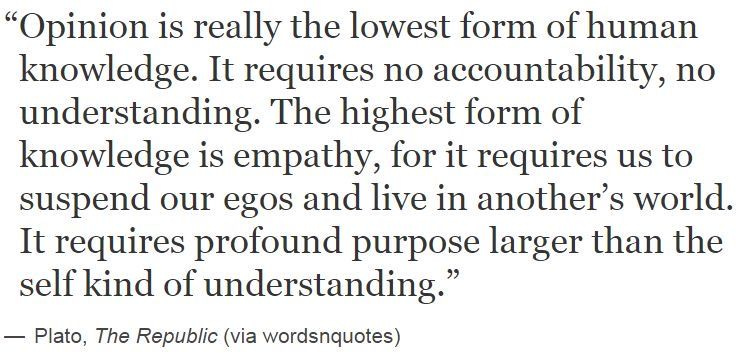
There is an internet phenomenon called The Bean Soup Theory: when people center their experience in a situation that is not about them. It was popularized by TikTok creator Kara, who posted a now viral bean soup recipe, and the comment section flooded with “what if I don’t like beans?”, and “can you share a substitute for beans?”… in a bean soup. It is a great example of how small our worldview becomes because the algorithms that shape our lives have been trained so precisely on our preferences. The effect is an ever-shrinking personalized universe. And when something in real life appears that doesn’t fit - a recipe we’d never make, an experience we don’t share, a piece of content that wasn’t written for us - we are, almost physiologically, unprepared for it. Rather than scrolling past, we center ourselves in it. We get angry.
This is known as psychological entitlement: a tendency to believe you deserve special consideration, and that the world should organize itself around your experience. Research has linked heightened entitlement to low empathy and high interpersonal conflict. With this entitlement comes the belief that content, people, and public discourse should, at all times, speak to you specifically, and that the failure to do so is a form of harm.
This essay is free to read in full for paid subscribers. Here’s what’s inside:
Why the psychology of anger, Performative Moral Outrage, and what that means for how you respond to it
What unprocessed emotions actually does to a person (and to the people around them)
Loneliness and a dysregulated nervous system.
The difference between moral outrage and moral agency, and how to build the latter
Four concrete, research-backed ways to move from performative anger toward something that actually changes things
How to tell the difference between rage that changes things and rage that just changes how you feel for twenty minutes
Comments
Nothing yet. Say the first thing.
Sign in to join the conversation.