
Offer care
Or leave me be
But place no more
Demands on me
The whole state of dorsal shutdown (GRAY) in four lines.
People are always communicating something.
A person curled up and weeping in bed is not “not communicating.” They are communicating: I have no more capacity. The only question is whether we are willing to read the message as it is, or whether we keep trying to overwrite it with our own needs.
When the nervous system has dropped into dorsal shutdown, the usual social toolkit stops working. Advice, pep talks, “just try a little,” “hear me out,” “you need to forgive,” “why are you being like this” are counter-productive, because all of it lands as more weight. The system is offline. It is not taking new tickets.
Most people don’t notice they’re still making demands. They think they’re being helpful, or honest, or “just communicating.” But anything that requires the shutdown person to produce a response, regulate faster, explain themselves, or make the other person feel better is still a demand. Conditional care is also a demand. “I’ll be soft with you if you stop being like this” is not care, but another sneaky demand.
A quick distinction that helps:
A request leaves the other person free to say no without punishment.
A demand carries a cost for non-compliance—even if the cost is only a shift in tone, a withdrawal of warmth, guilt, or quiet disappointment.
Now let’s zoom out for a sec.
Sympathetic mode (RED) is the mobilised state. It’s the one that makes requests and bids in the first place. When enough of those bids get answered, the energy stays relatively clean. You ask, you play, you reach, and the world answers often enough that the system stays online.
But when the ratio starts looking bad because of too many ignored bids, too many unmet needs, too many small losses in the daily rat-play of relating—the same mobilised energy gets sharper. More urgency. More insistence. More aggression. The ledger feels unbalanced, so the system pushes harder.
A curious case here: what we call people-pleasers run this same program, only the aggression is aimed inward.
They translate almost every request or perceived need from other people as a demand they must meet or be punished (excluded, left behind, stripped of safety). So they make aggressive demands on themselves: Handle it, don’t be a burden, fix their mood, you need to perform better etc.
Regardless of that, they’re still hoping for the same payoff as anyone—positive responses to their bids, some evidence that they are safe and welcome. They just outsourced the enforcement to their own nervous system. The internal DDoS continues until the server finally crashes into dorsal.
The poem is appropriate in its shortness, because when someone has already gone offline, the options narrow hard:
Offer actual care that doesn’t require them to do anything,
or just leave them be.
The practical difference between those two options is co-regulation vs self-regulation.
Everything else is still traffic they can’t process. Keep pushing it and there’s a good chance the other person will completely lose it at you, have a psychotic break, become violent or go nuclear in some other way.
So, sometimes “leave me be” is exactly right, because the person needs quiet and space to self-soothe and you may not be in an emotional position to meet their quiet request for care either.
Other times, simple presence from someone who is already in a steadier state is enough without fixing, without talking it through, and without expectations. Just hang around. Maybe put a hand on the back, maybe offer a quiet hug, maybe offer nothing but don’t leave.
A damned caveat: some more thoroughly trained people-pleasers will refuse the offer of care. “DON’T TOUCH ME!” isn’t in this case so much disgust or anger directed at you as it is the anticipation of another demand sandwiched inside your offer. To a person with that kind of thinking care seems like another demand or a debt that will have to be repaid later. In those cases the cleanest move is still the same: don’t push. Leave the offer visible and then respect the no.
I realised all this when I remembered a peculiar instance where, instead of the usual blame-pong over a dumb argument, I received a warm offering of coffee and breakfast. I didn’t know what hit me then—but it was simply the other person letting go of the beef and offering care instead.
Pretty damned decent discovery. What a useful thing to be more conscious about.
Extra notes:
Most people do need some volume of real requests. Not demands, but genuine invitations to contribute. That’s one of the ways community feeling and a sense of usefulness actually form. When someone systematically blocks all incoming requests (because they can only experience them as demands), they also cut themselves off from the very thing that would give them belonging and purpose. The isolation then feeds the depression.
So, when a person has the kind of perception that request = threat, they opt to one of the two copes, resulting in anxiety or depression. What a fascinating connection…
Anxious / people-pleasing mode: still in the game, burning energy to comply, hoping that enough perfect performance will finally bring safety and positive bids in return. High sympathetic activation directed mostly inward, but also tends to leak (projected private logic).
Depressed / reclusive or self-numbing mode: has largely exited the game. The system has decided the cost of answering is too high, so it reduces capacity instead through withdrawal, numbness, or substances; both to avoid the demands and to dull the background fear of the punishment that might come for not meeting them.
What’s next? I DEMAAAAND you read the introduction to polyvagal mapping where you can get an explanation for the RED and the GREY states - but also learn about the SAINT MODE aka GREEN aka Ventral Vagal dominant state (and perhaps from it you can derive some methods for achieving it).
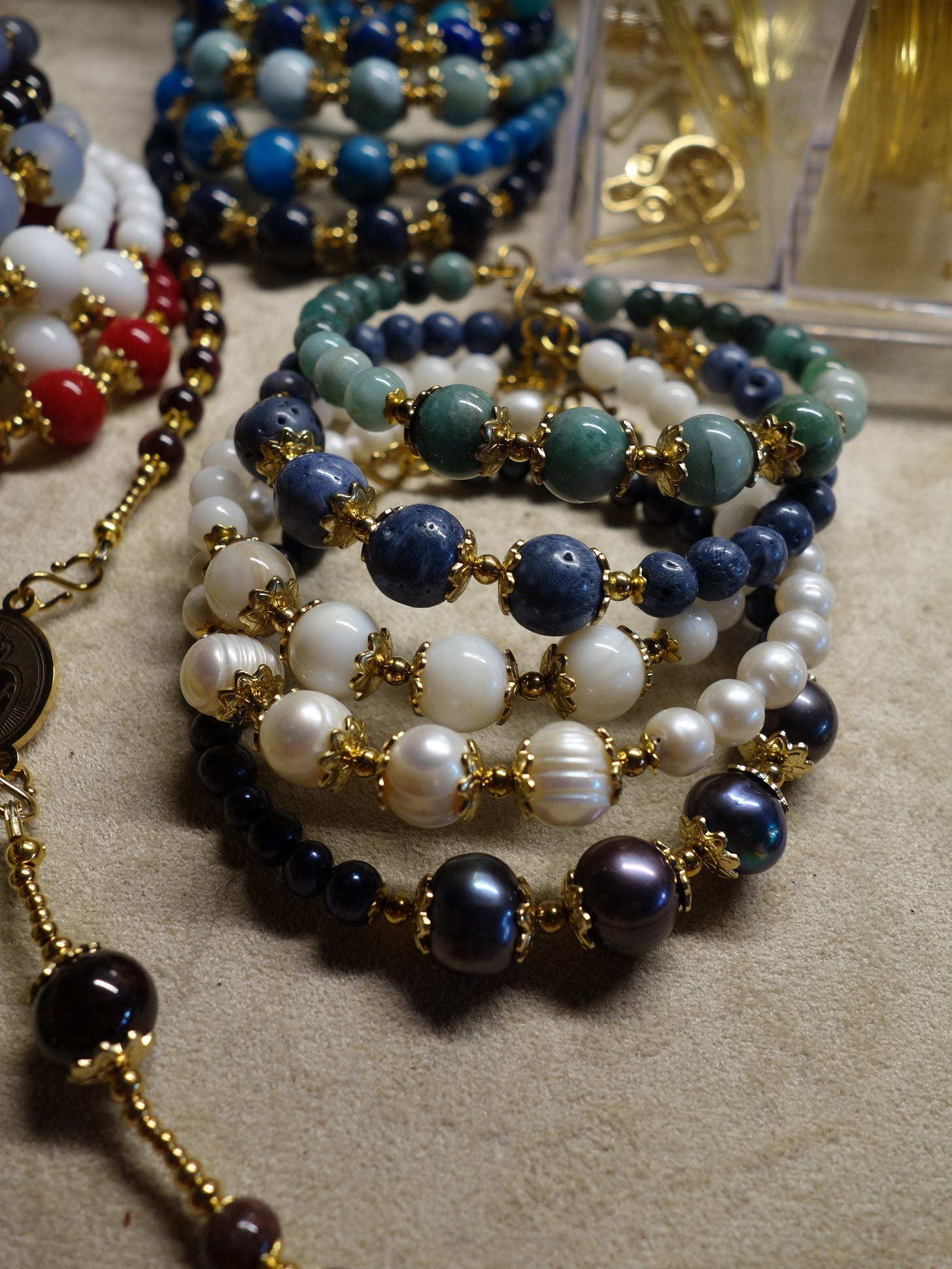
I make jewellery at my desk and show them on my beautiful gift shop - males, females, or anything you want to show up on the ballroom (some of the pieces are even suitable for cats!)
Comments
Nothing yet. Say the first thing.
Sign in to join the conversation.