
I keep thinking about something a historian told me in a café in Bratislava.
We were talking about castles. I’d just visited Čachtice, which sits on a hill like a broken tooth and he said, “You know the story of Elizabeth Báthory, yes? The Blood Countess?” I nodded. Everyone knows that story. She bathed in the blood of virgin girls to stay young. Killed hundreds of them. A real-life vampire.
He stirred his coffee and said, “What if I told you almost none of that is true?”
That conversation derailed my entire trip. Because the more I looked into Elizabeth Báthory, the less sense the official story made.
Here’s what I found.
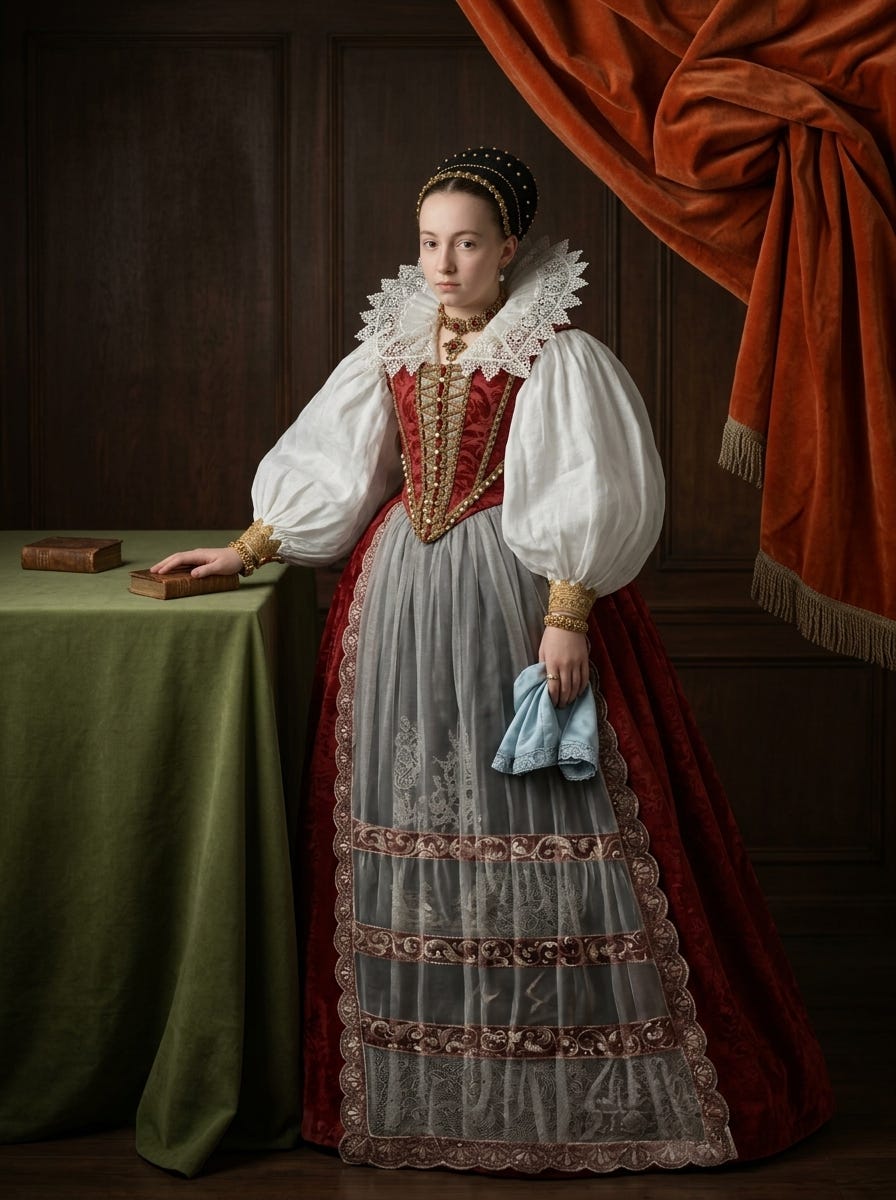
Elizabeth Báthory.
A reconstruction of her appearance based on a period painting using AI.
Elizabeth Báthory was a Hungarian countess born in 1560 into one of the most powerful families in the kingdom. She married young, managed vast estates, and by all accounts was intelligent and well-educated. She spoke several languages. She ran her husband’s lands while he was away at war.
Then, according to legend, she became a serial killer.
The story goes that between 1590 and 1610, Elizabeth tortured and murdered anywhere from 80 to 650 young women. She supposedly bathed in their blood, believing it would preserve her youth and beauty. In 1610, her crimes were discovered. She was walled up alive in her castle and died four years later, alone in a small room.
It’s a perfect horror story. It’s been retold in dozens of books and films. It’s also taught as historical fact in a lot of places.
But here’s the thing: I can’t find solid evidence that any of it actually happened the way we’ve been told.
Elizabeth Báthory was never actually tried.
Think about that for a second. This woman supposedly committed the most prolific serial murders in European history, and she never stood trial. Her accomplices did. Four of them were tortured and executed in 1611. But Elizabeth herself? She was confined to her castle without any formal legal proceeding.
Why?
The official reason was her noble status. You couldn’t put a countess on trial like a commoner. But that doesn’t really hold up when you look at the context. This was the early 1600s, and nobility got tried and executed all the time when it was politically convenient. Elizabeth’s own cousin, Gábor Báthory, was killed just a few years later in a political dispute.
So why protect her from trial if the evidence was so overwhelming?
I started looking at who actually accused her.
The person who “discovered” Elizabeth’s crimes and ordered the raid on her castle was Count György Thurzó, the Palatine of Hungary. Essentially the king’s right hand.
He was also her cousin. And he owed her family a massive amount of money.
See, Elizabeth’s husband had been a war hero, and the Báthory family had loaned enormous sums to the crown and to other nobles. When Elizabeth’s husband died in 1604, she inherited everything and started calling in debts. She was one of the richest women in the kingdom, and she had the receipts to prove half the nobility owed her.
György Thurzó was on that list.
Here’s the timeline: In 1610, Thurzó gets reports of murders at Čachtice Castle. He organizes a raid. He finds bodies. He arrests Elizabeth’s servants. They confess under torture to helping her kill dozens, maybe hundreds, of girls.
But he never finds Elizabeth actively doing anything. The “evidence” is all testimony from servants who are being tortured, plus some bodies that were found on the grounds.
Elizabeth is quietly imprisoned. Her lands are divided up among male relatives. Her debts are never repaid.
Convenient.
I got access to translated trial records from Elizabeth’s servants. Well, “trial” is generous. These were torture sessions.
The numbers don’t match. One servant says 37 victims. Another says over 100. A third says she heard it was more than 200 but never saw bodies. The priest who testified said he’d buried 50 bodies, then later said it might have been more, he wasn’t sure.
No mass grave was ever found.
The descriptions of torture methods get more elaborate as the testimonies go on, like each person is trying to outdo the last. By the end, they’re describing things that sound like they came from medieval horror fiction. Iron maidens, flesh-eating devices, blood baths.
These devices didn’t exist yet. The iron maiden, for example, wasn’t invented until the 18th century. It’s a later fabrication, but it keeps showing up in “eyewitness” accounts from 1610.
That suggests the records were either embellished later or the servants were being fed details.
There’s also the matter of the victims. In some testimonies, they’re all young virgin girls from noble families. In others, they’re peasant servants. The story keeps changing depending on who’s talking and when.
Elizabeth wrote letters from her imprisonment. Dozens of them. They still exist in archives.
She never once confesses. She never expresses guilt or tries to justify her actions. Instead, she writes about property disputes, asks about her children, complains about the conditions of her confinement.
She writes like someone who thinks she’s been wrongfully imprisoned.
In one letter to her son, she says, “I am kept here like a criminal though no law has judged me.” In another, she references “false witnesses” and asks for a proper trial.
If she was guilty and knew it, why keep demanding a trial? Why not just accept the quiet imprisonment that saved her from execution?
Unless she actually didn’t do it.
I’m not saying Elizabeth Báthory was innocent of everything. Managing a castle in 1600s Hungary wasn’t a gentle business. Servants were beaten. Discipline was brutal by our standards. People died from disease, accidents, harsh punishment.
It’s entirely possible some young women died at Čachtice under questionable circumstances. It’s possible Elizabeth was a cruel employer.
But the vampire countess bathing in blood? The systematic murder of hundreds of girls?
I think that’s a story that got built over time to justify a land grab.
Here’s my best guess: Elizabeth was a wealthy, powerful woman without a husband. She was calling in debts from men who didn’t want to pay. She had control of lands those men wanted.
So they used the one thing that always works to destroy a powerful woman: they called her a witch. Well, close enough. A monster. Unnatural. Evil.
They tortured some servants until they gave the right testimony. They found some bodies because of course there were bodies on a medieval estate, people died all the time and they spun it into a horror story.
No trial meant no chance for Elizabeth to defend herself. No chance for inconvenient questions about who owed her what.
She gets locked away. The debts disappear. The lands get redistributed. Everyone wins.
Except her.
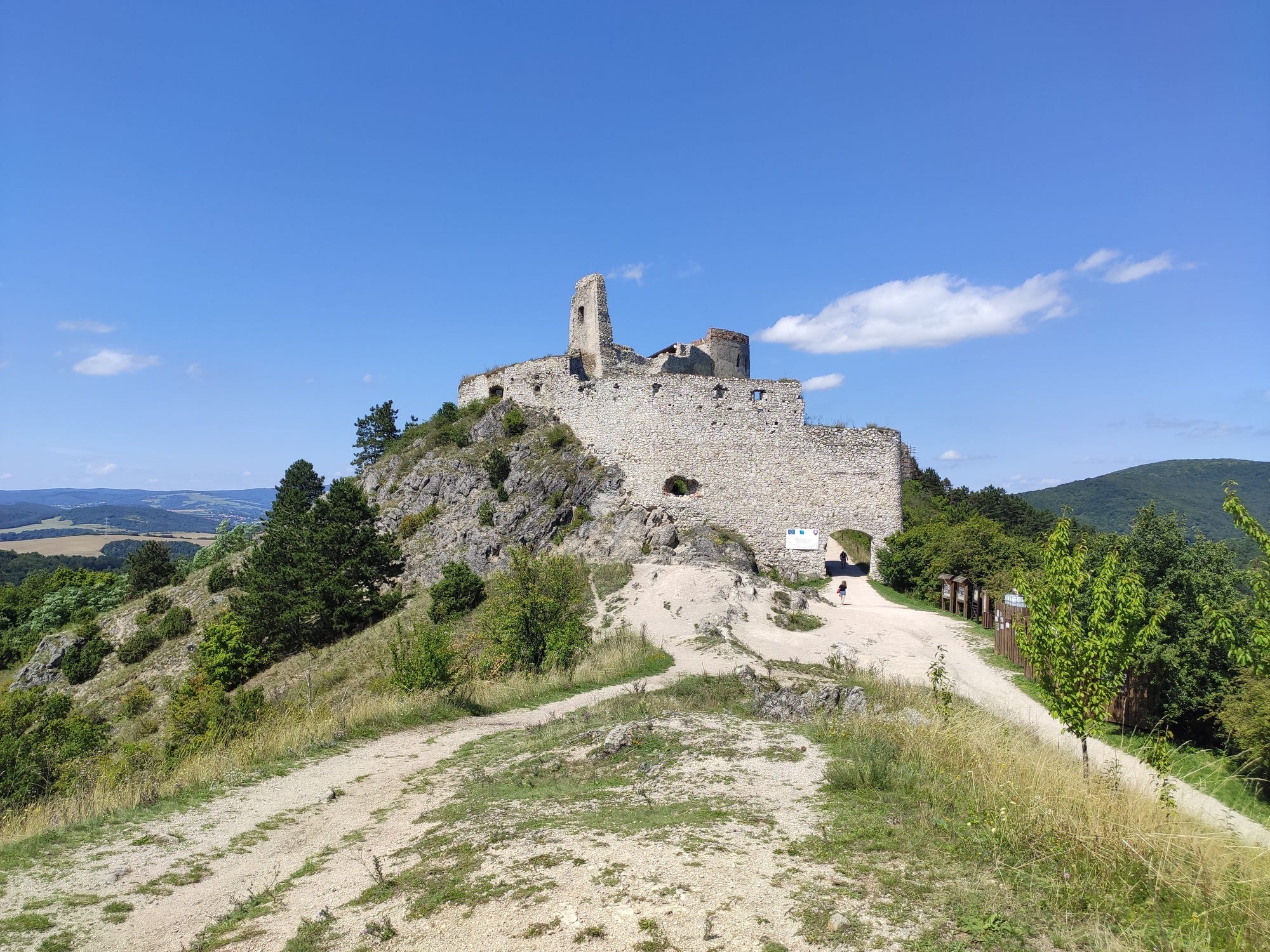
Čachtice Castle (Slovakia) today.
There’s one thing I can’t quite explain away, and it bothers me.
In the raid on Čachtice, Thurzó’s men reported finding one girl dead and one dying. That’s in the official report, and it’s weirdly specific compared to the vague torture confessions.
If this whole thing was a setup, why include that detail? It actually makes the case seem smaller and more immediate, not the decade-long murder spree they needed to justify seizing her assets.
Unless it’s there because it was true. Maybe a servant really had just died, from punishment or disease, and they walked in right after.
Or maybe it’s the one real thread in a tapestry of lies, included to make the rest of it seem credible.
I don’t know.
I’m looking at a book about Elizabeth Báthory published in 1894. It repeats the blood bathing story as fact. So does a book from 1720. And one from 1970.
The story gets worse over time, actually. Each retelling adds details. More victims. More blood. More violence.
We want her to be a monster. It’s a better story that way.
But I keep thinking about those letters. About a woman demanding a trial she never got. About testimony extracted under torture. About debts that were never repaid.
And I think about how easy it is to turn someone into a monster when they’re not alive to defend themselves.
I might be wrong. Maybe Elizabeth Báthory really was a serial killer, and the political convenience of her imprisonment was just lucky timing for the men who owed her money.
But the more I read, the more it feels like we’ve been telling the wrong story for 400 years.
If you want to follow more of this kind of thing, I send out longer investigations every week or so. No horror movie stuff, just trying to figure out what actually happened in cases like this. You can subscribe if that sounds interesting.
Otherwise, I’m curious what you think. Does the official story hold up when you actually look at the details? Or are we all just repeating a very old, very effective lie?
No posts
Comments
Nothing yet. Say the first thing.
Sign in to join the conversation.