
Irrational Analysis is heavily invested in the semiconductor industry.
Positions will change over time and are regularly updated.
Opinions are authors own and do not represent past, present, and/or future employers.
All content published on this newsletter is based on public information and independent research conducted since 2011.
This newsletter is not financial advice and readers should always do their own research before investing in any security.
Feel free to contact me via email at: irrational_analysis@proton.me
Several people have asked me about Intel CPO/SiPho group this year and my default answer was “who cares they suffered massive attrition, got re-org-ed like 5 times and are dead”.
Well… saw some interesting papers today and maybe they are not completely dead.


Also bonus coverage on an Aeva SOA paper and a Nvidia/Lumentum paper.
Lazy low-quality stream-of-consciousness writing today. Sorry but Cerebras event this week and Hot Chips next week take priority. Don’t wana burn myself out before those two key events. Also quite busy with dayjob.
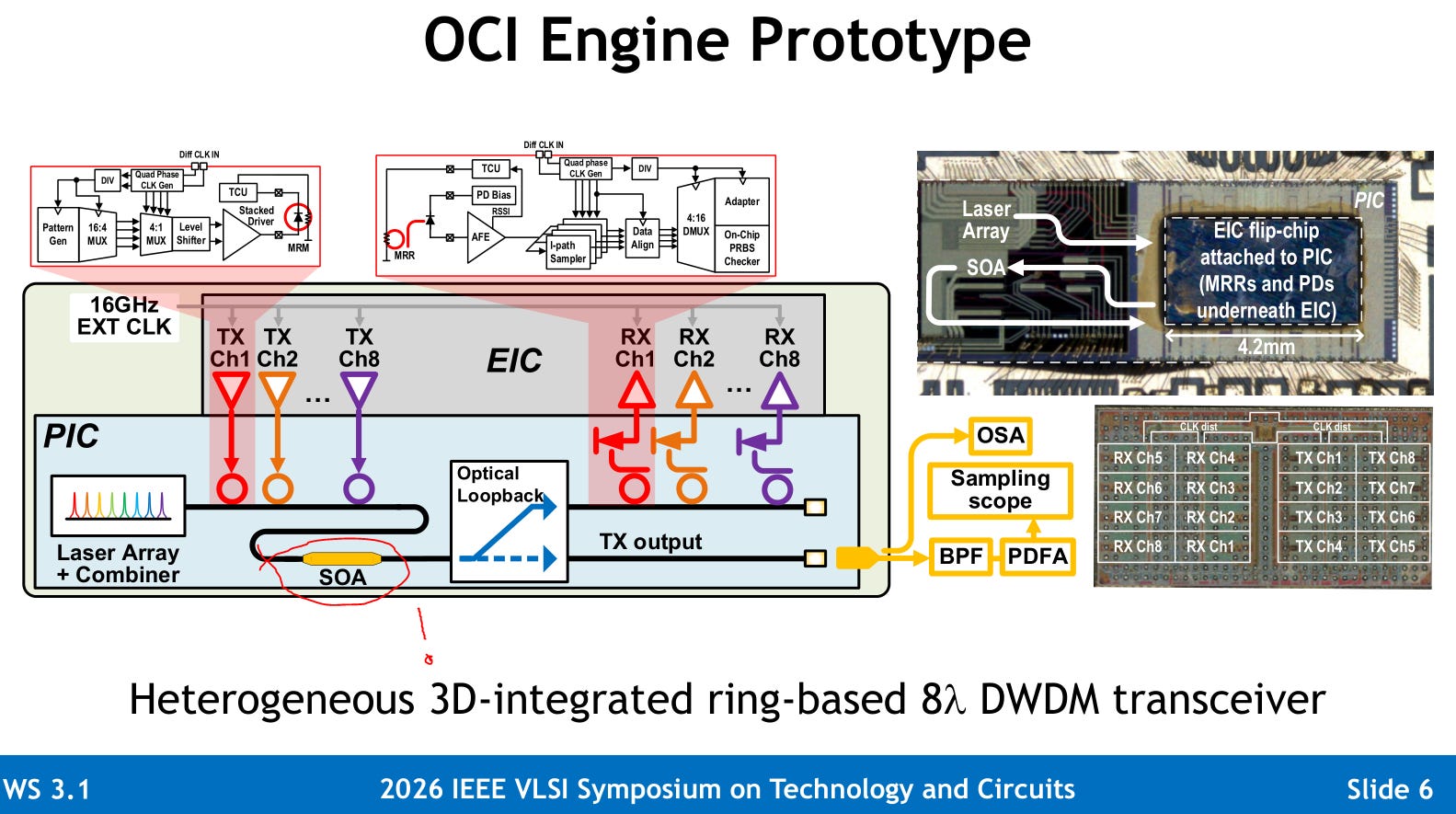
Intel is using an SOA to amplify all 8 modulated wavelengths. We are going to see RIN problems due to four-wave-mixing.
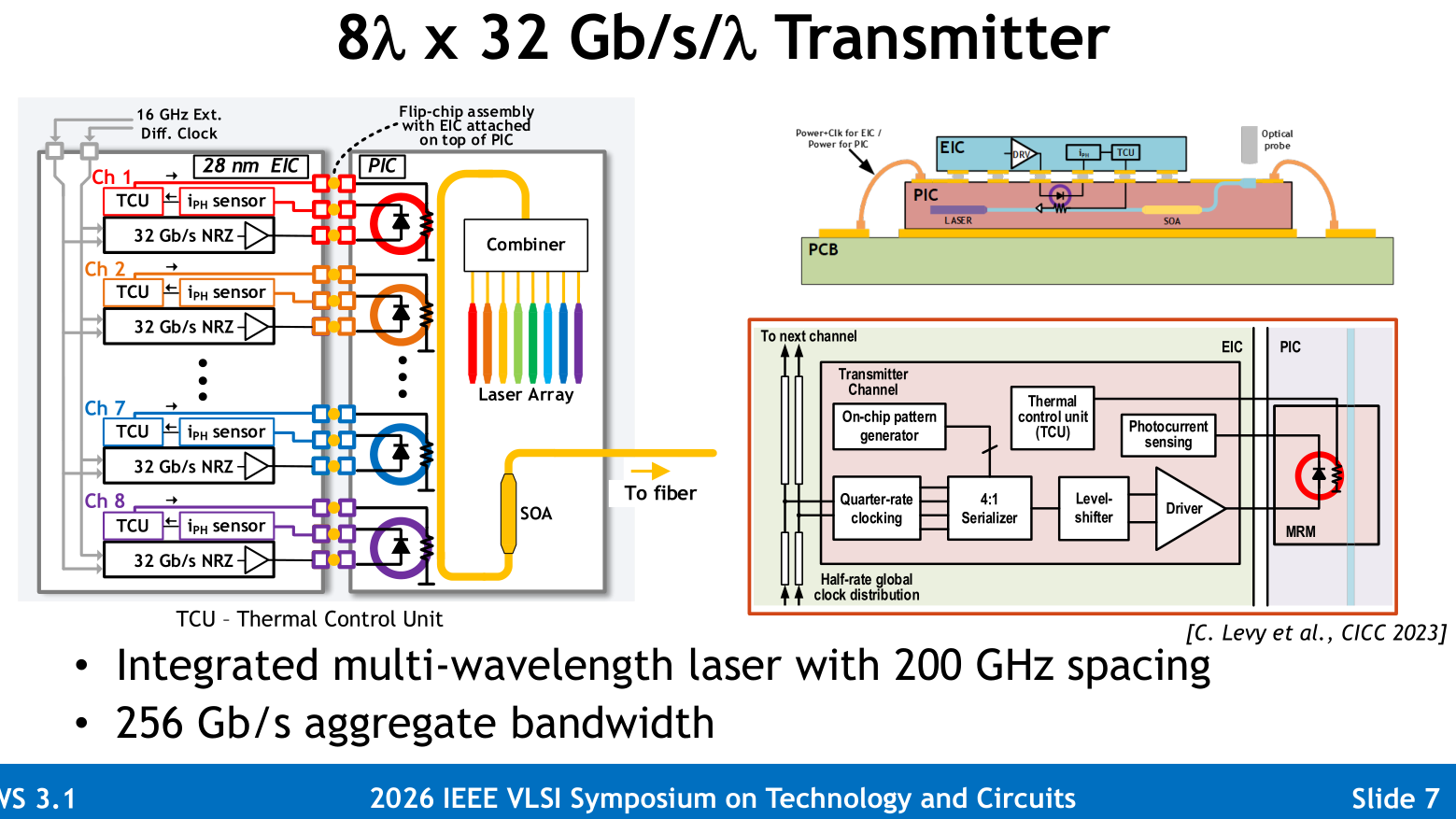
For those unaware, Intel has a special hybrid-integration laser tech. I think the gratings are external and etched into silicon. Similar to Scintil in some respects. Heard a rumor that Intel and Scintil looked at each other’s patents and it was decided their approaches were different enough that no IP was infringed. This strategy is different from Openlight/Tower.
My understanding is Openlight/Tower can only offer single wavelength at max 20 mW (13 dBm) in waveguide. Intel and Scintil can deliver multi-wavelength at lower power.
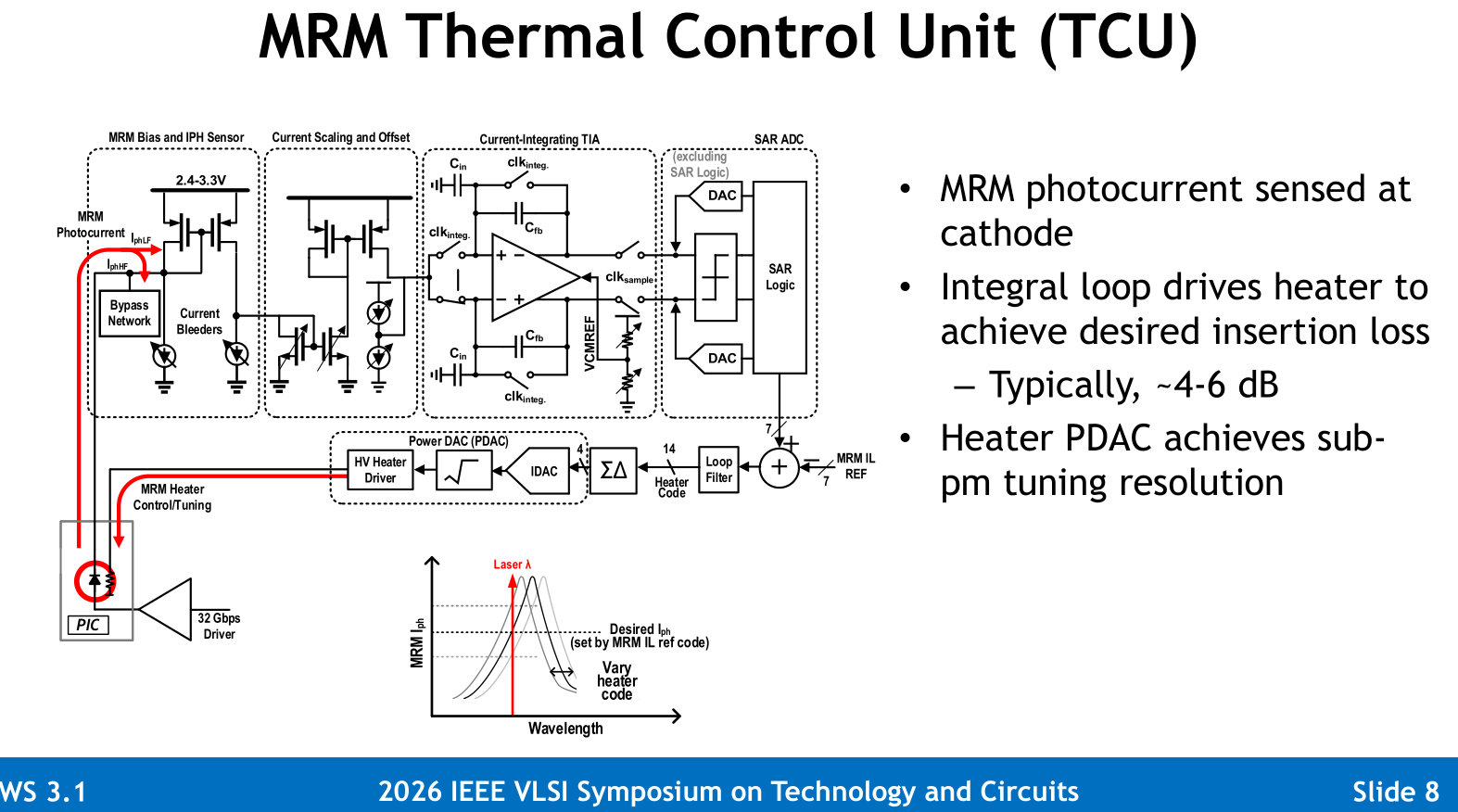
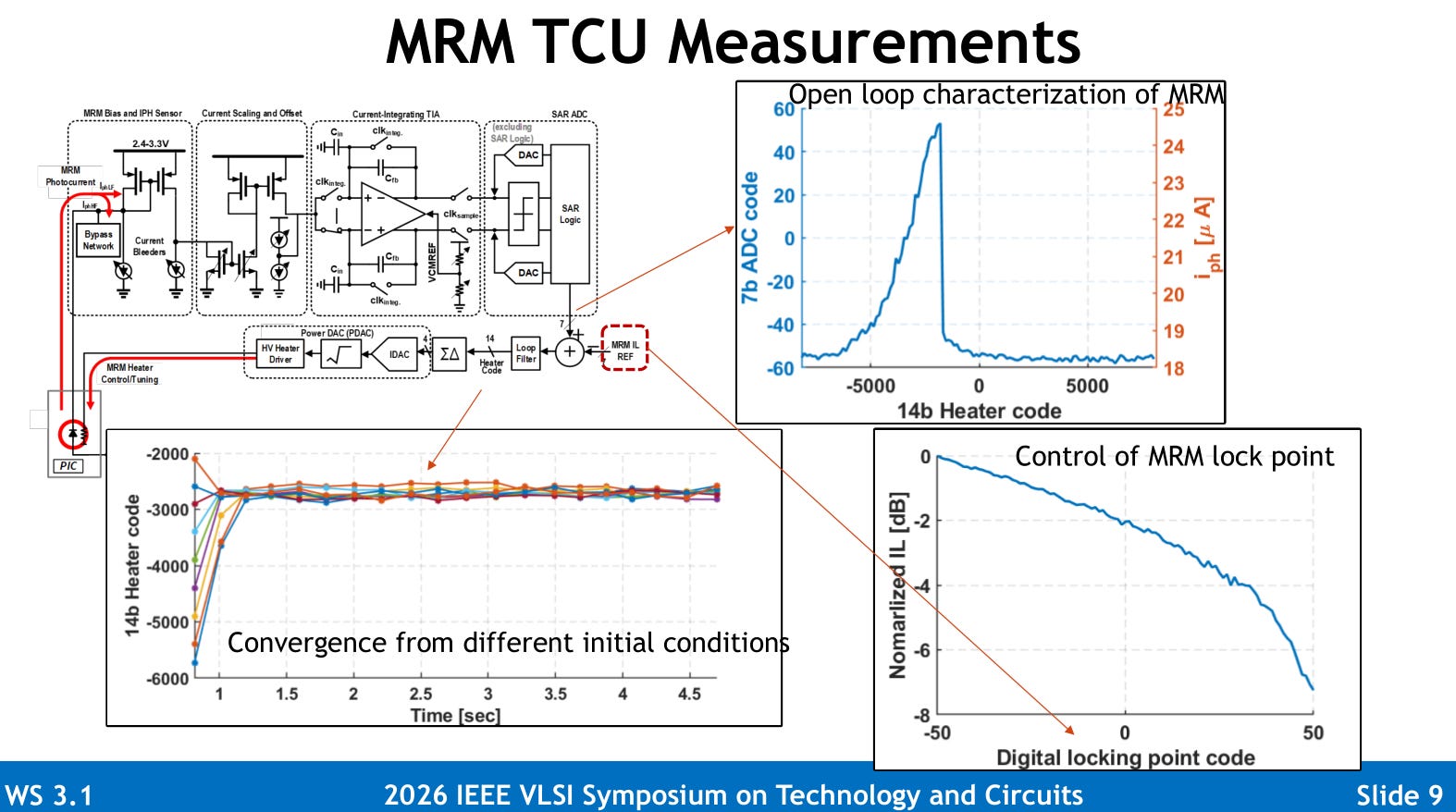
There is no mention of laser wavelength control which is interesting. When lasers are co-integrated at this level, you can’t control the wavelength with temperature using TECs. Which makes me curious as to how the hell they fabricate the lasers so accurately.
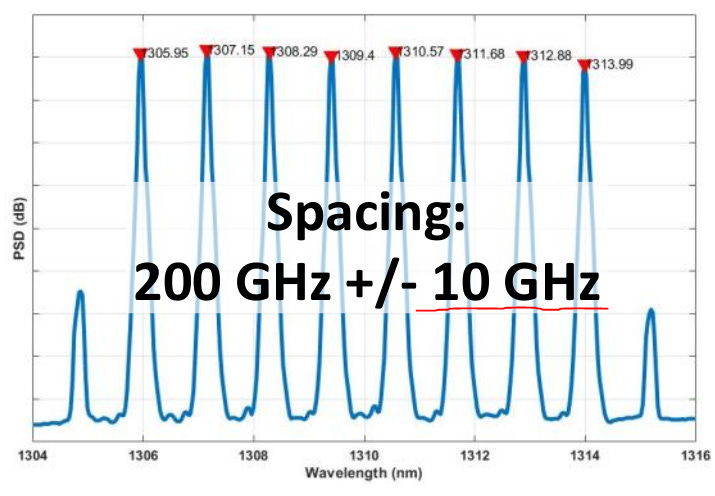
+/- 10 GHz spacing accuracy is insanely good. How the fuck did they pull this off?
One note is the side-modes. Those are coming from SOA four-wave-mixing. Looks like around 30 dB SMSR which is better than I expected. This SOA must be pretty weak with no pre-amp stage. Remember, every pair of wavelengths spawns two FWM tones. There are crap noise tones hidden under each primary wavelength. Three crap tones to be precise. OSA cannot pick them up you need to filter each wavelength and take the RIN spectrum with a reference PD and good (low noise floor) ESA.
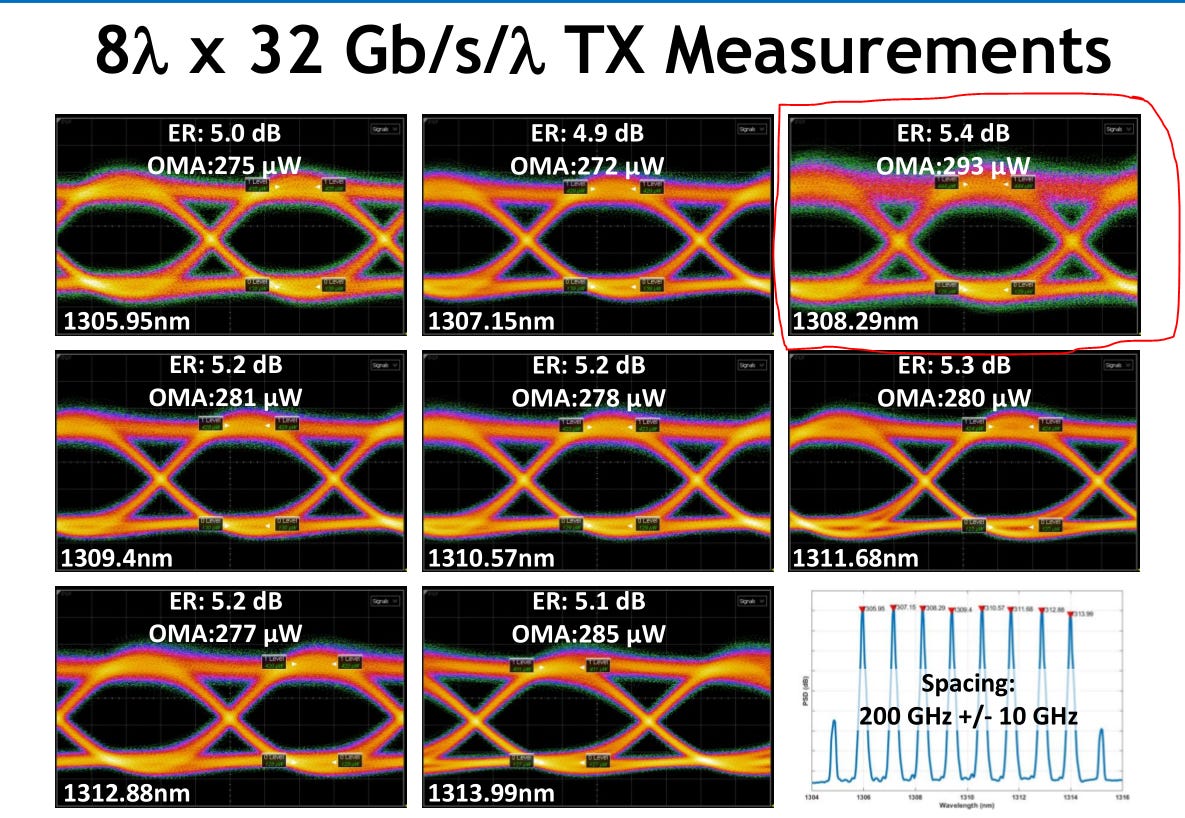
Extinction ratio is strong. Usually rings give 3-4 dB so getting 5 dB on all of them is nice. Circled the worse eye (1308.3 nm) RIN obviously much worse.
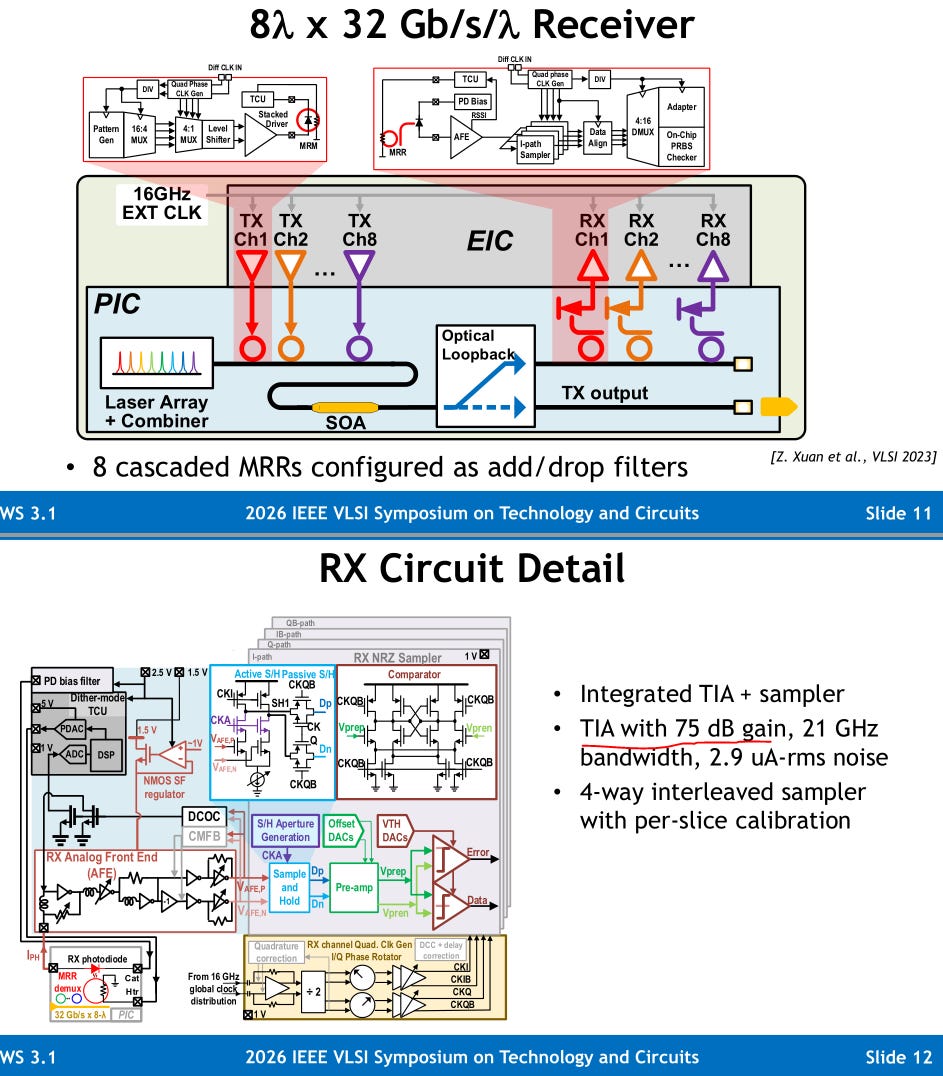
75 dB gain on TIA? Damn nice. How lol.
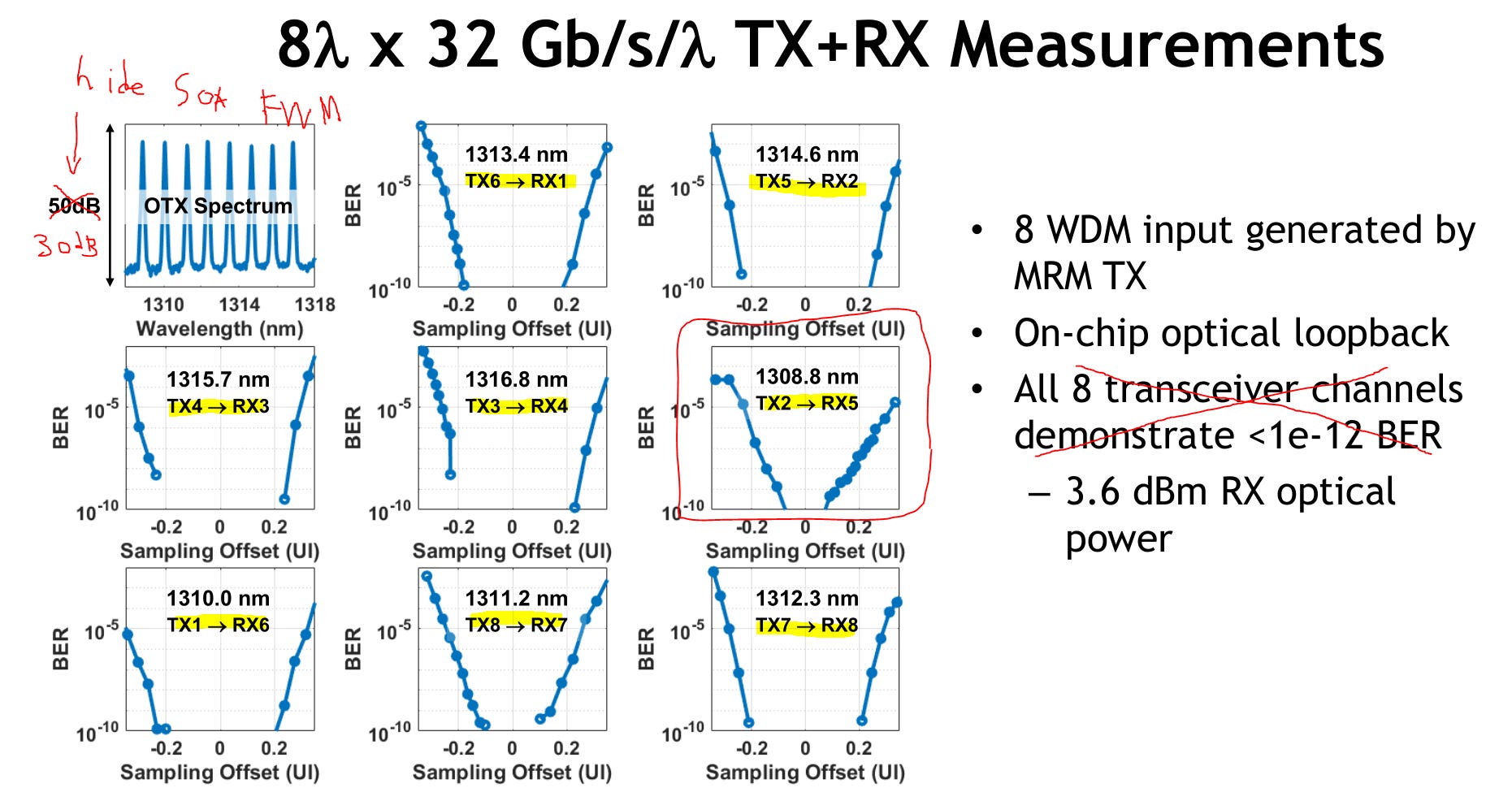
The SMSR is not 50 dB. This is a lie. Real number is 30 dB. They clipped spectrum to hide the FWM tones generated by the SOA out of band. Regardless, there is crap in-band too that is too close for OSA resolution to resolve but absolutely effects performance. This is cheating don’t do this Intel friends.
The BER of all channels is not < 1e-12. Let me find the Nvidia slides to explain why.
Also Intel chose strange Tx and Rx lane pairing. Meethinks someone spent a week in the lab trying various combinations to try and cheeze results by getting lucky with Rx ring filter response and thermal setpoints. At scale the results will almost certainly be materially worse.
SOA FWM fucked them. I am 99.9% confident on this. Only way to explain such drastic lane-to-lane variation due to amplitude noise.
This is the god-tier Nvidia CPO bathtub curve at same number of wavelengths same datarate per lane but clock-forwarded.
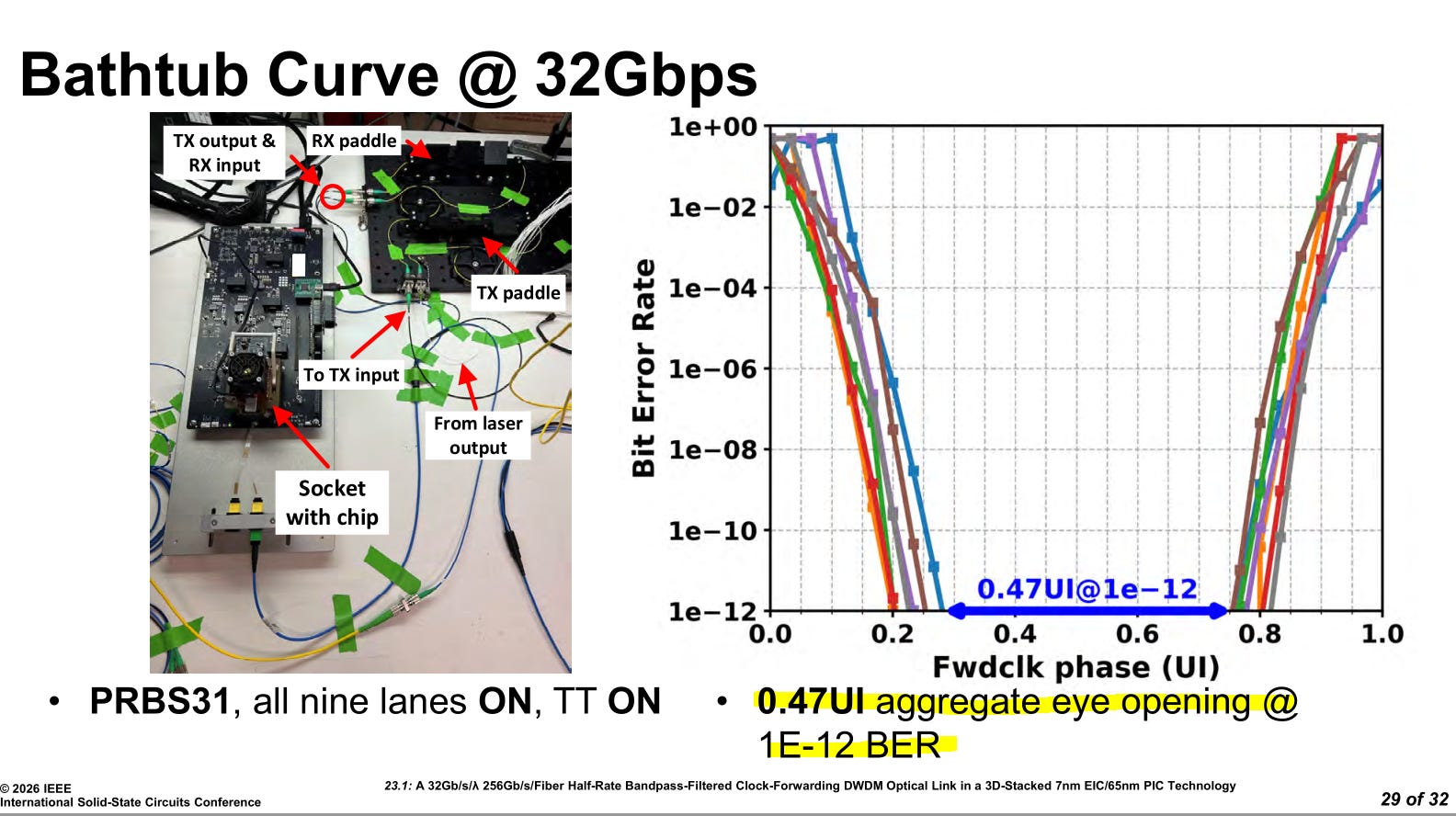
BER and eye opening of ALL LANES defined for a particular phase noise (UI offset). Intel’s results are frankly garbage compared to Nvidia which is more of a compliment to Nvidia rather than a dis to Intel.
At a (total, not +/-) sampling offset of 0.47 UI, all of the Intel CPO lanes would catastrophically fail. If Intel got 0.2 UI opening, they would hit 1e-10 BER. They are not going to get that level of timing because they are not clock forwarding.
If Nvidia is an A+, Intel just got a C+, maybe a B- if we want to coddle them.
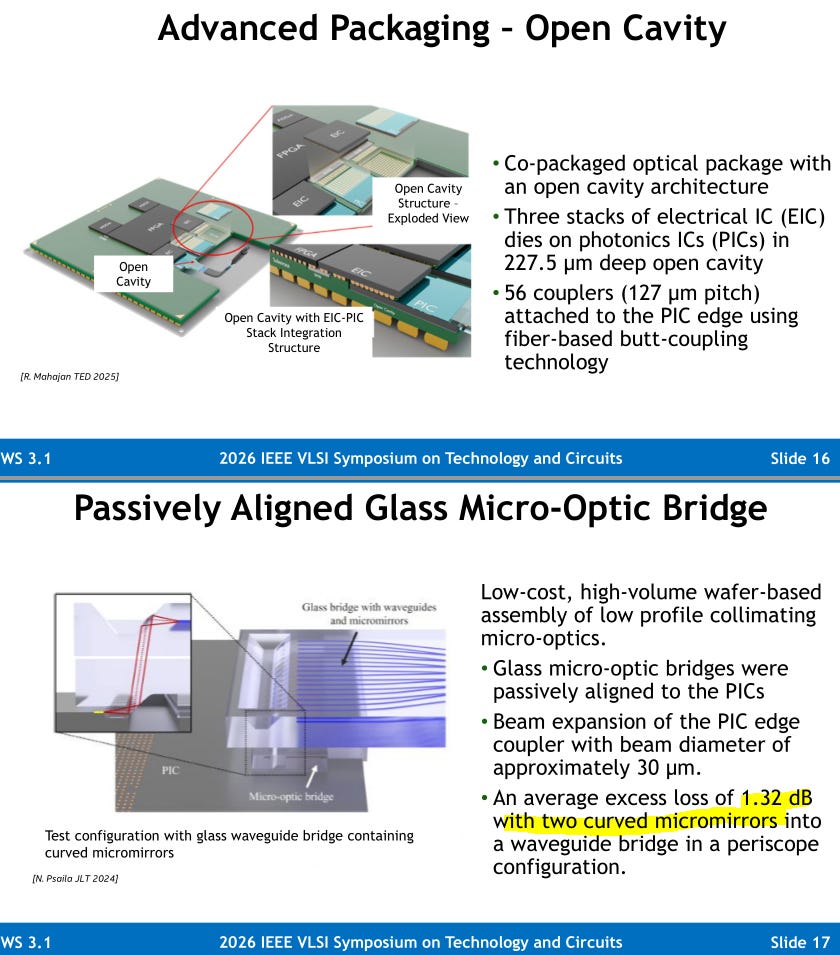
Average loss of 1.3 dB with two lenses is… ok. A normal edge coupling optical bench would be much better. But Intel wants this attachable periscope-ish connector so sure this is fine tradeoff.
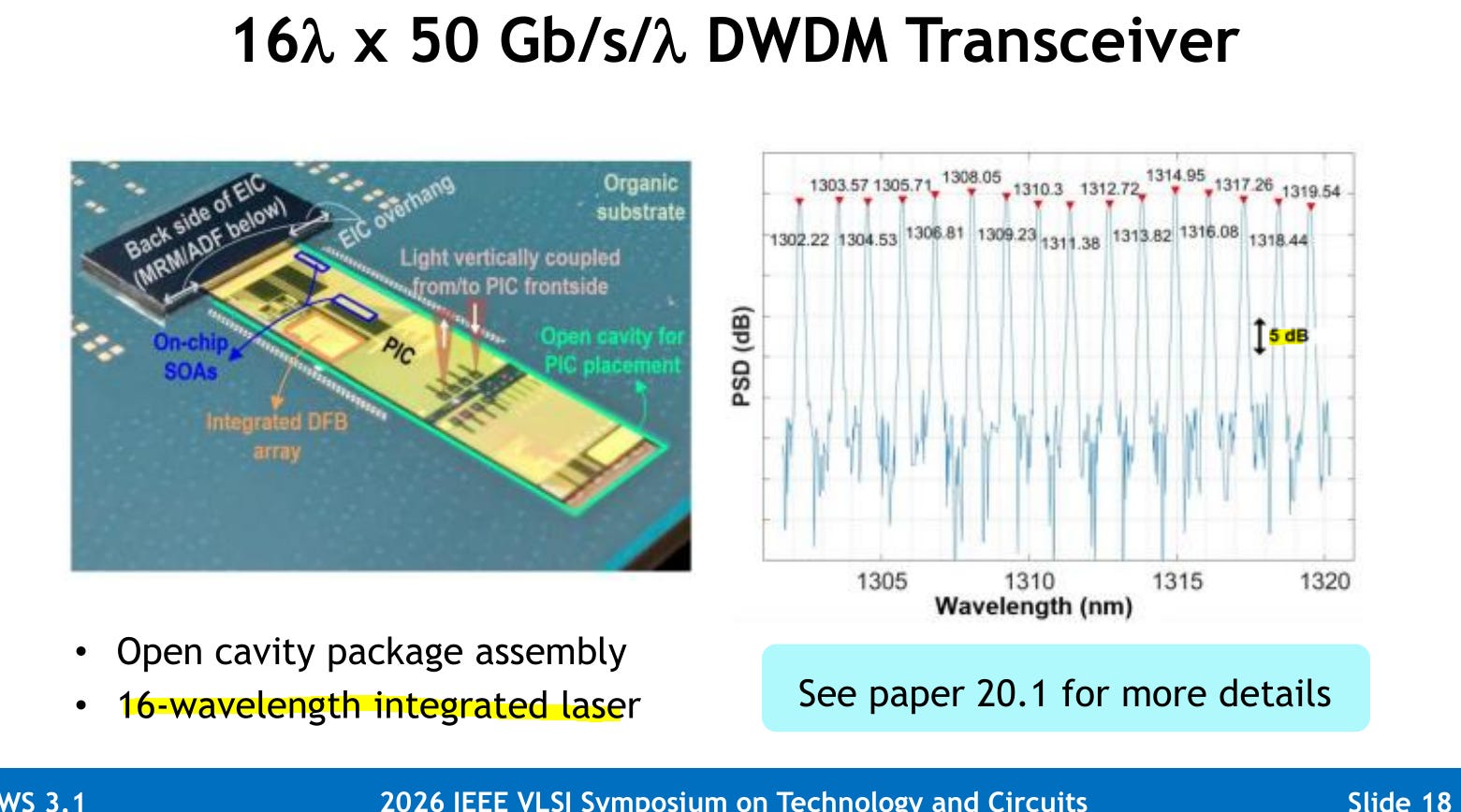
16 wavelength laser array with excellent flatness and wavelength spacing accuracy? WOW!
But… their SMSR is kinda dogshit at 25 dB. Does not inspire confidence on mode-hop tolerance.
Much more on this when I cover paper 20.1.
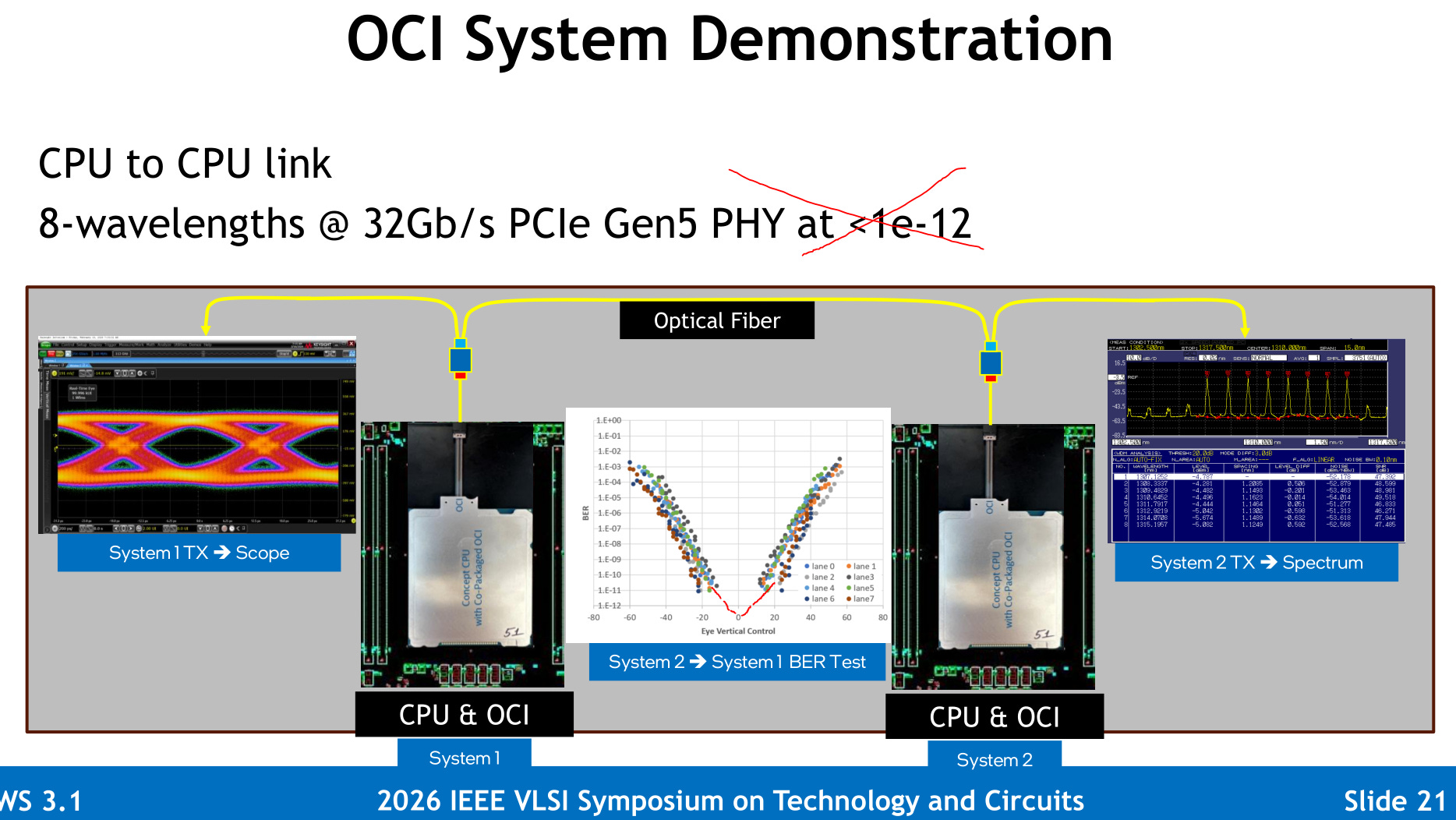
Guys you cant claim BER from a bathtub curve at perfect timing. Even Nvidia who used clock forwarding (drastically lower jitter as Tx jitter tracked and no PPM) speced BER at a wide 0.47 UI timing window.
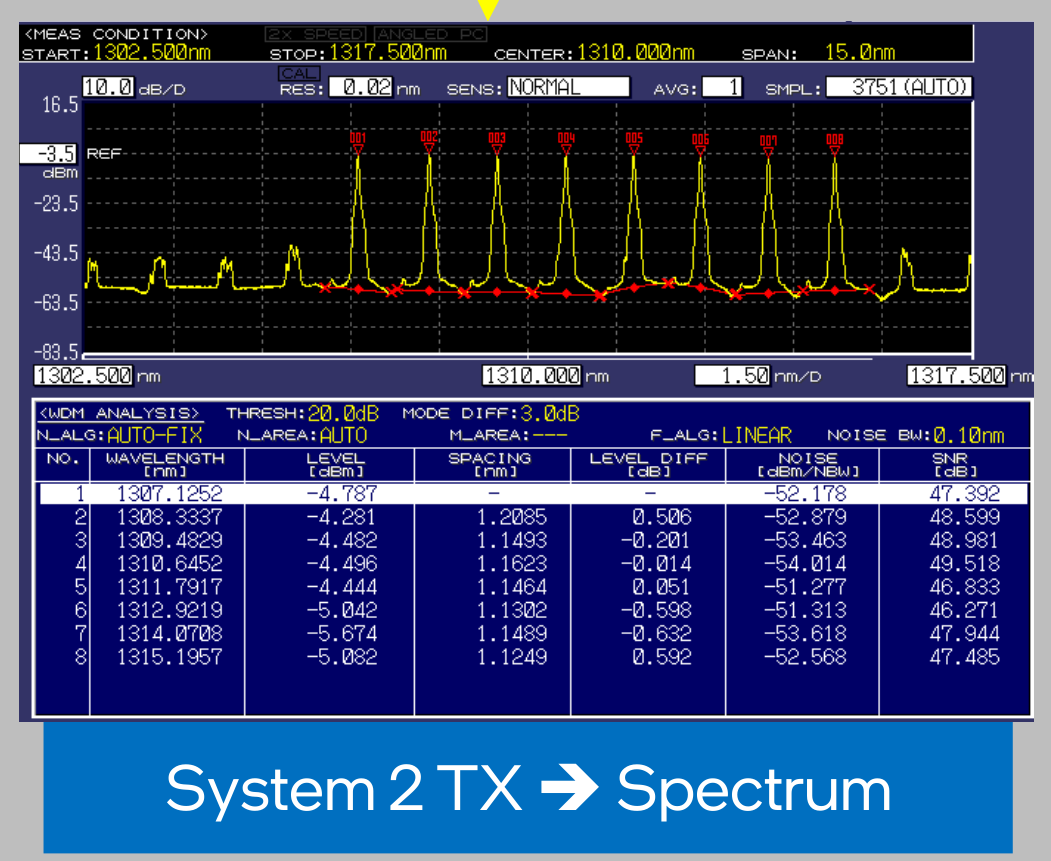
I recognize the UI. Yokogawa wavemeter. ANyway, the flatness is excellent. Spacing accuracy is worse than +/-10 GHz because the first wavelength is off but whatever. What confuses me is the out of band sidemodes being much weaker than previous plots. Meethinks someone lowered SOA power to make this wavemeter measurement look better. CHEEZE.
Now on to the 16 wavelength mystery. I don’t find this believable and think they are hiding something but let’s see.
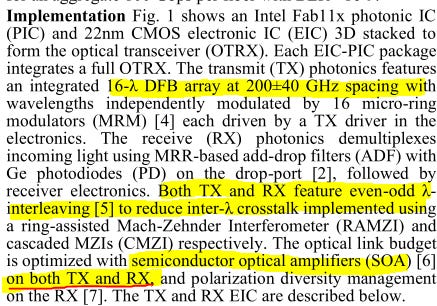
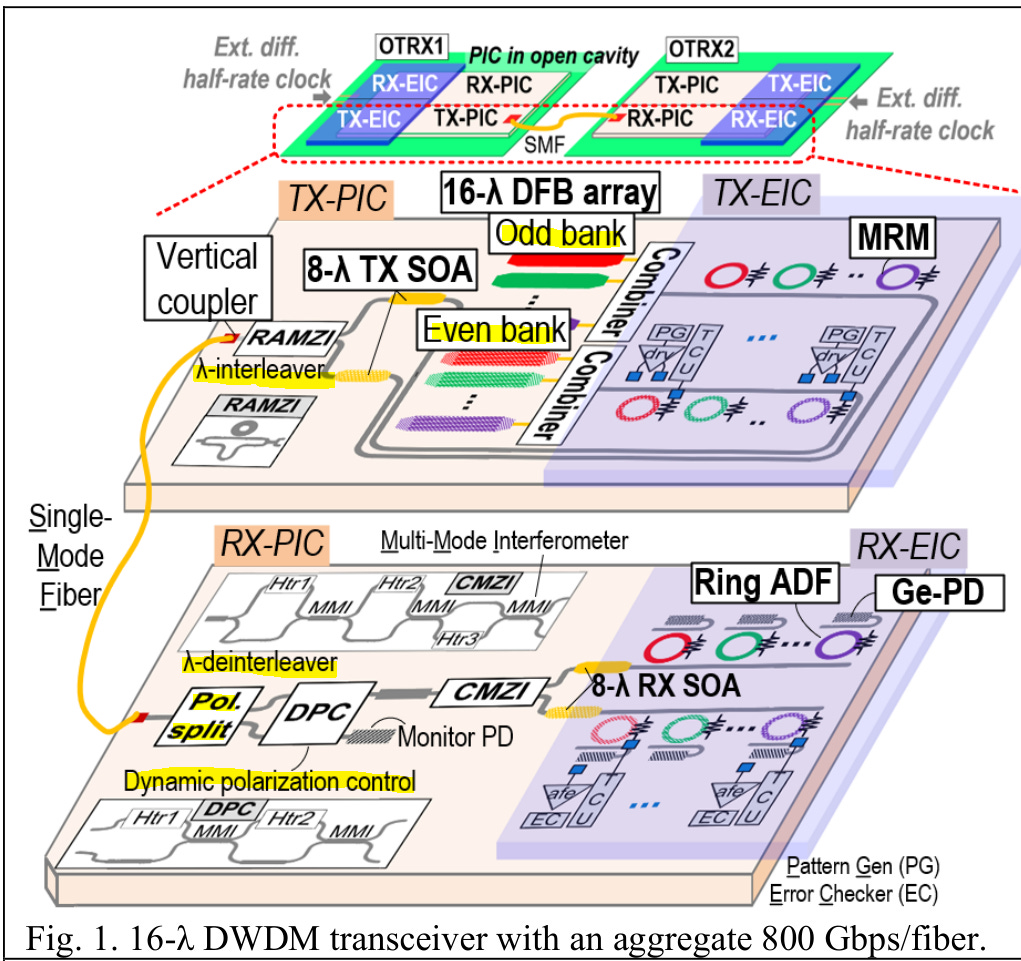
Ok so its not real 16-lambda. Interleaves with some bizarre choices, particularly on Rx. There are good reasons to keep each Tx ring bus to 8-wavelength. Thermal crosstalk and such. On Rx… my gut feeling is they should have just done a single 16-ring Rx bus. Using three cascaded MZI to de-mux on Rx is… stupid. Kills link budget and thus they add another SOA stage in Rx. Congrats guys you now have even more FWM crap polluting RIN.
The de-mux stage also forces polarization control, adding even more loss and control complexity. This is a very ugly system. Really don’t like this.
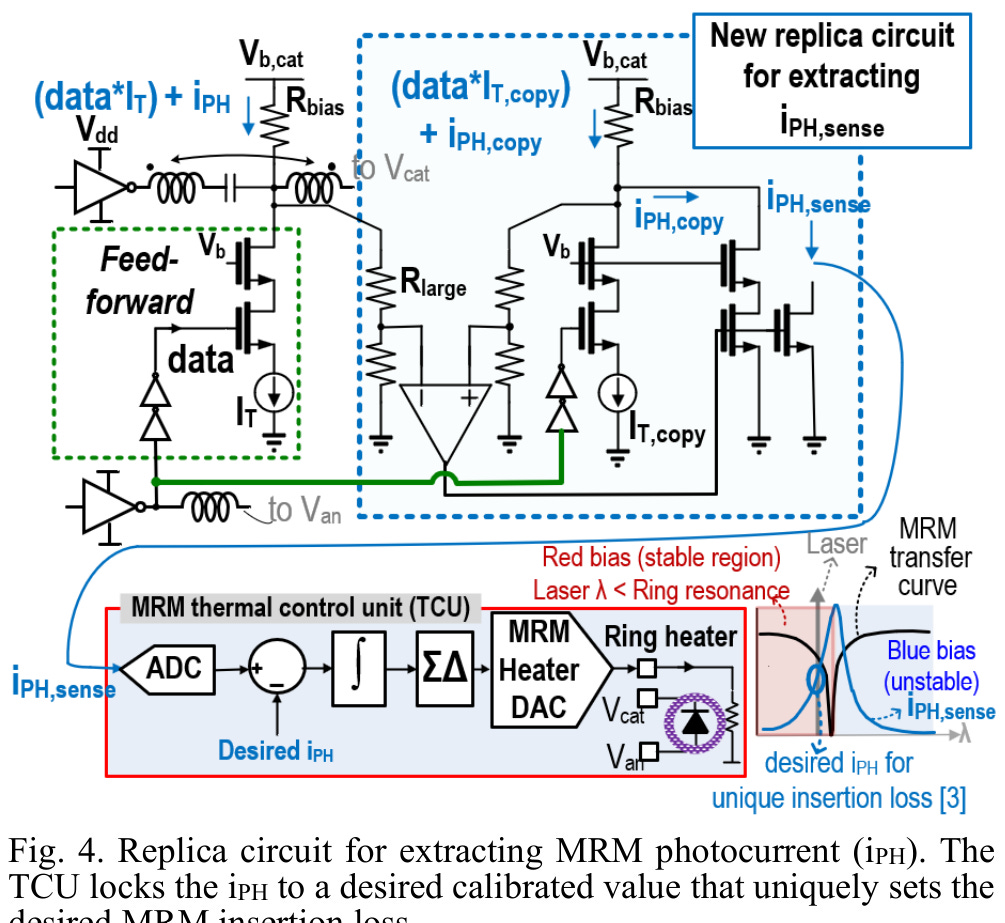
Once again no laser tuning. All tuning on the rings.
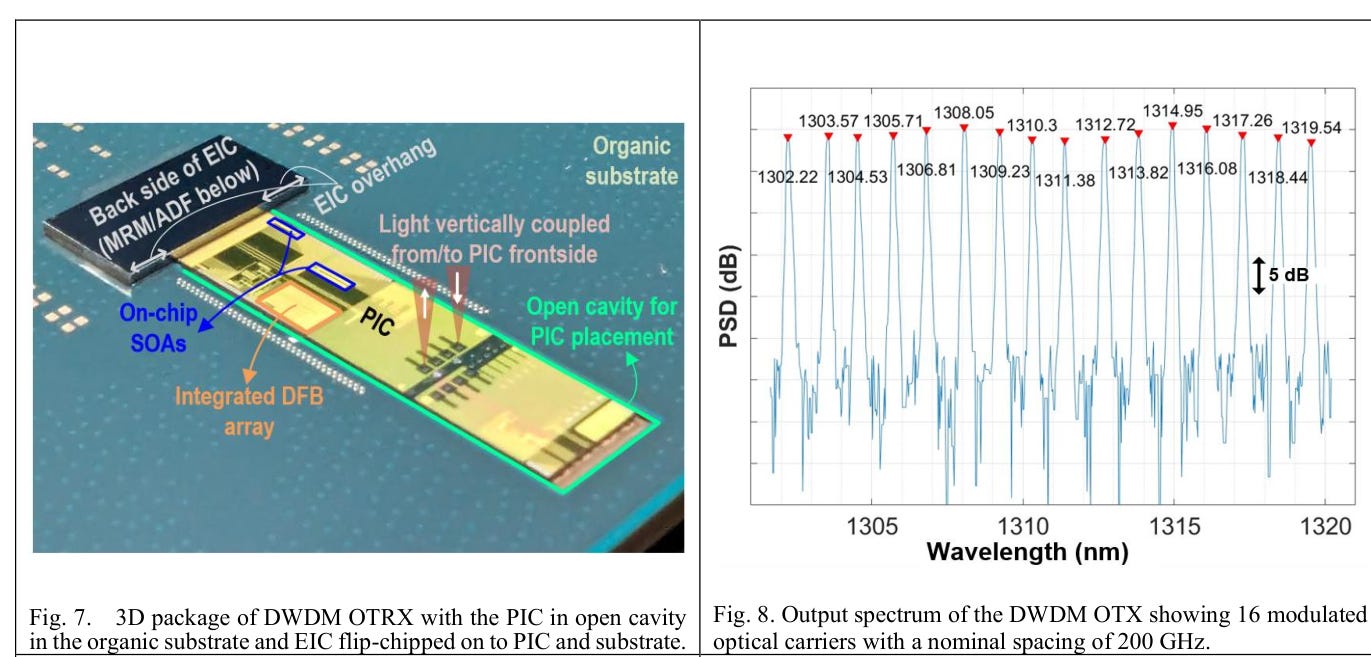
I suppose the lasers have good SMSR. Noise floor probably coming from SOA. If it is not obvious to you yet, I hate SOA in the context of multiple wavelength inputs.
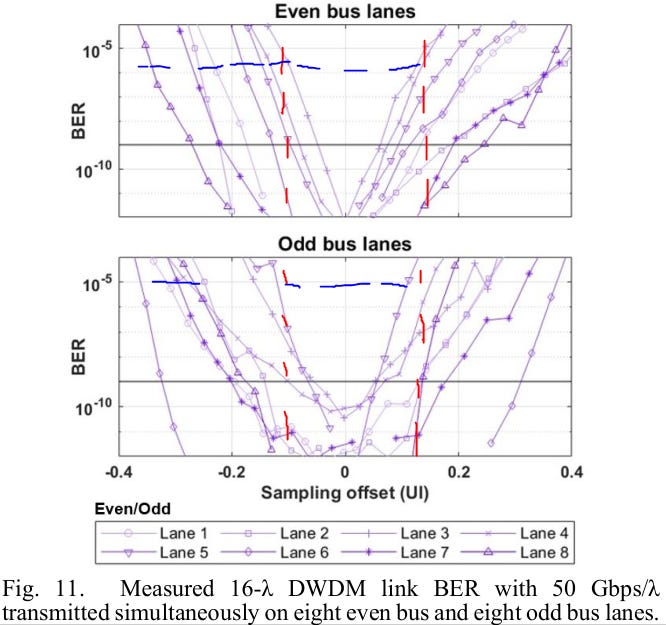
Remember Nvidia measured BER of 1e-12 at a 0.47 UI sampling offset and they are clock-forwarding.
If I am very generous and set Intel’s results to 0.2 UI sampling offset, BER is at 1e-5.
Garbage. They are getting killed by FWM from two SOA in the path. This architecture is stupid.
Next let’s look at a very interesting paper by Nvidia and Lumentum given the recent commentary by Hurlston on co-integrated lasers for NPO at the earnings call.
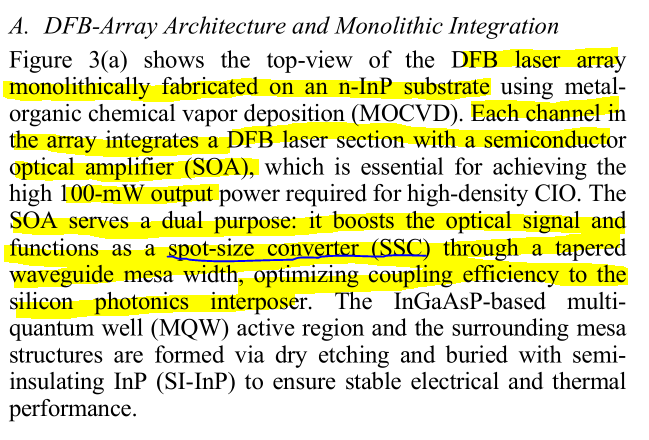
This paragraph is super juicy. Monolithic DFB laser array like Seivers (Ayar Supernova). I hate monolithic DFB arrays as a reminder. Yield nightmare. Can’t properly control wavlength spacing. Shit reliability.
What’s extra interesting is they use an individual SOA per channel both for amplification and beam-shapeing. Improve coupling efficiency as DFBs typically need two lenses for effective coupling.
This thing is a MOPA array lol. Given the output is only 100 mW per channel, I suspect the DFB is 20 mW (13 dBm) class running a little hot at 14 dBm. SOA small signal gain of 6 dB in saturation (the region you want for this scenario to minimize RIN) seems reasonable. No FWM issues here because each SOA only has one wavelength input.
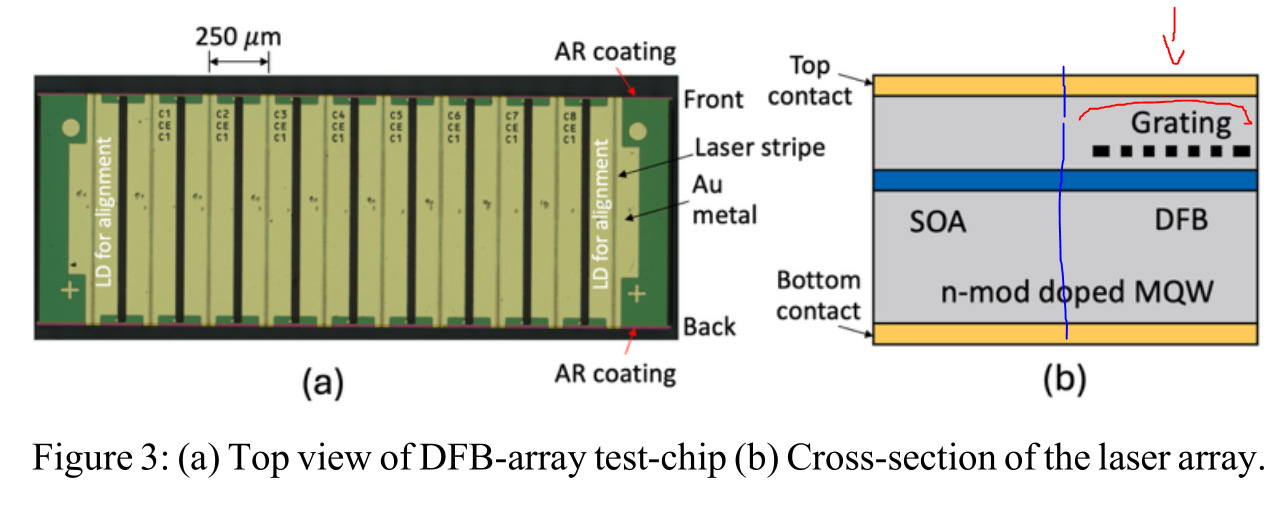
One gain medium, just remove the gratings for the SOA section. Also of course alter the waveguide structure. This monolithic InP chip is…. 2.25 mm x 1 mm which is… shit for yield. Because there are 9 wavelengths and spacing will impact yield, modeling this is extra complicated. I don’t have time for this. The yield will be horrific no need for math.
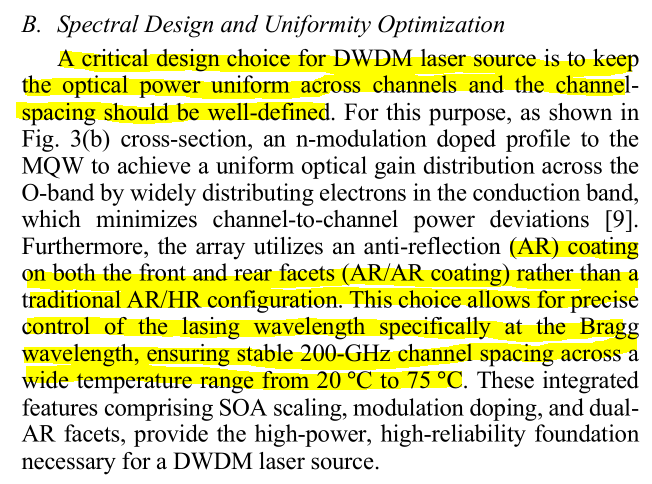
Interesting they use AR coating on the back facet which is usually reserved for a monitoring PD. Don’t understand why this decision helps with wavelength spacing. If anyone knows please send me an email.
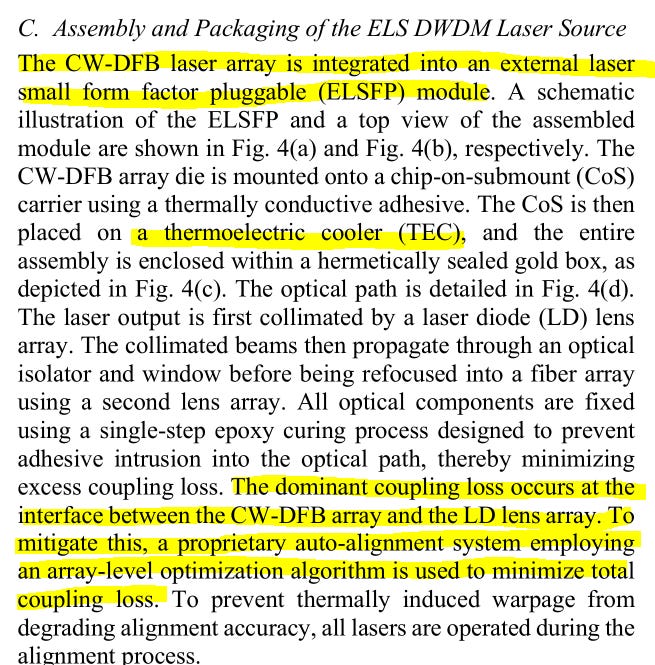
Confirmation of single TEC so no thermal control of wavlengths spacing as expected.
Interesting comment on alignment. I have heard rumors about the coupling loss Lumentum claims to achieve. 0.5 dB to be precise. Too good to be true but maybe I am just in denial lol.
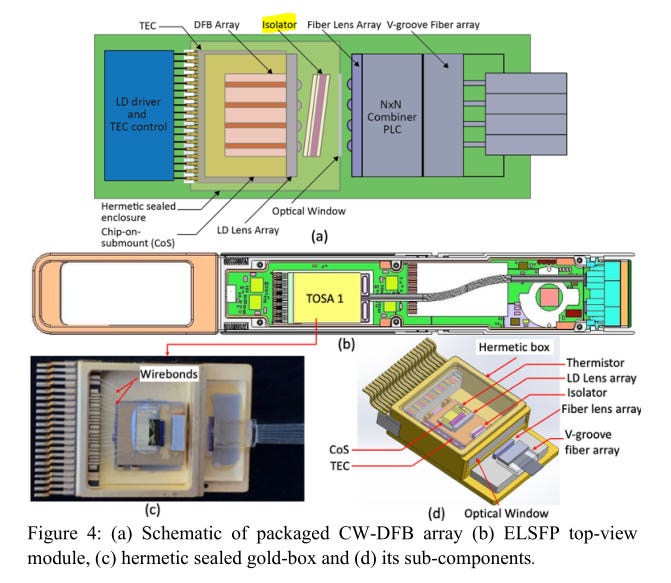
What the fuck this entire thing only needs one isolator?! This is huge cost savings on the isolators needed and active alignment costs.
ELSFP module packaging probably for initial performance char. Let’s see what they got.
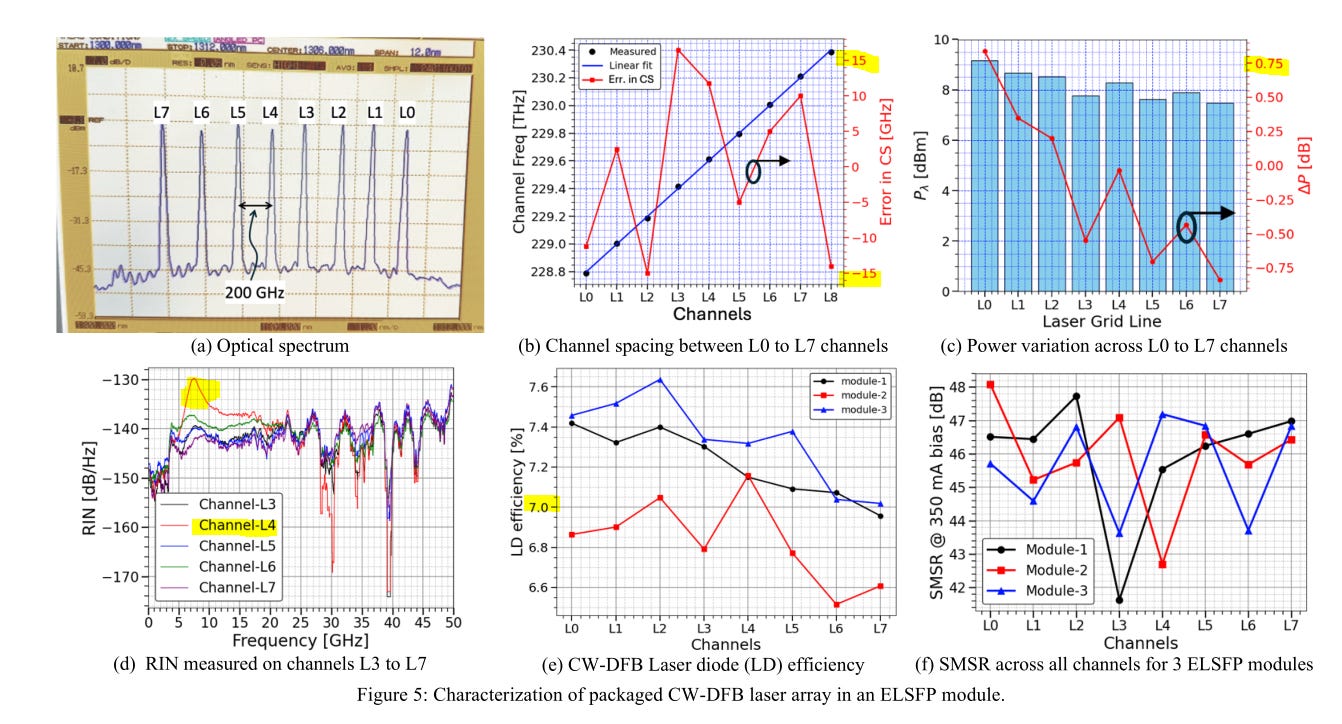
Power variation is excellent!
Spacing accuracy is excellent!
SMSR is excellent!
RIN is shit.
One of the channels has a nasty relaxation oscillation spike.
Even if we remove that, RIN will end up around -137 dBc/Hz which is shit.
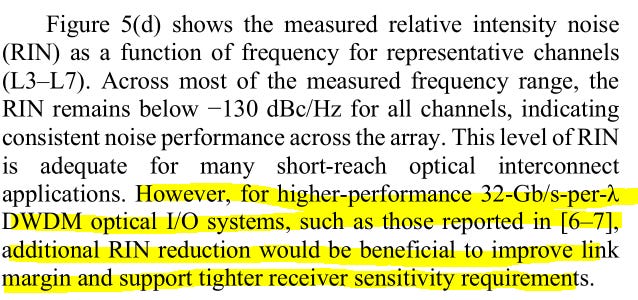
Translation: This RIN is garbage and we cannot use this monolithic laser array.
Seriously this RIN is so bad it is basically unusable for any real-world link. Above paragraph is Nvidia Research cope.

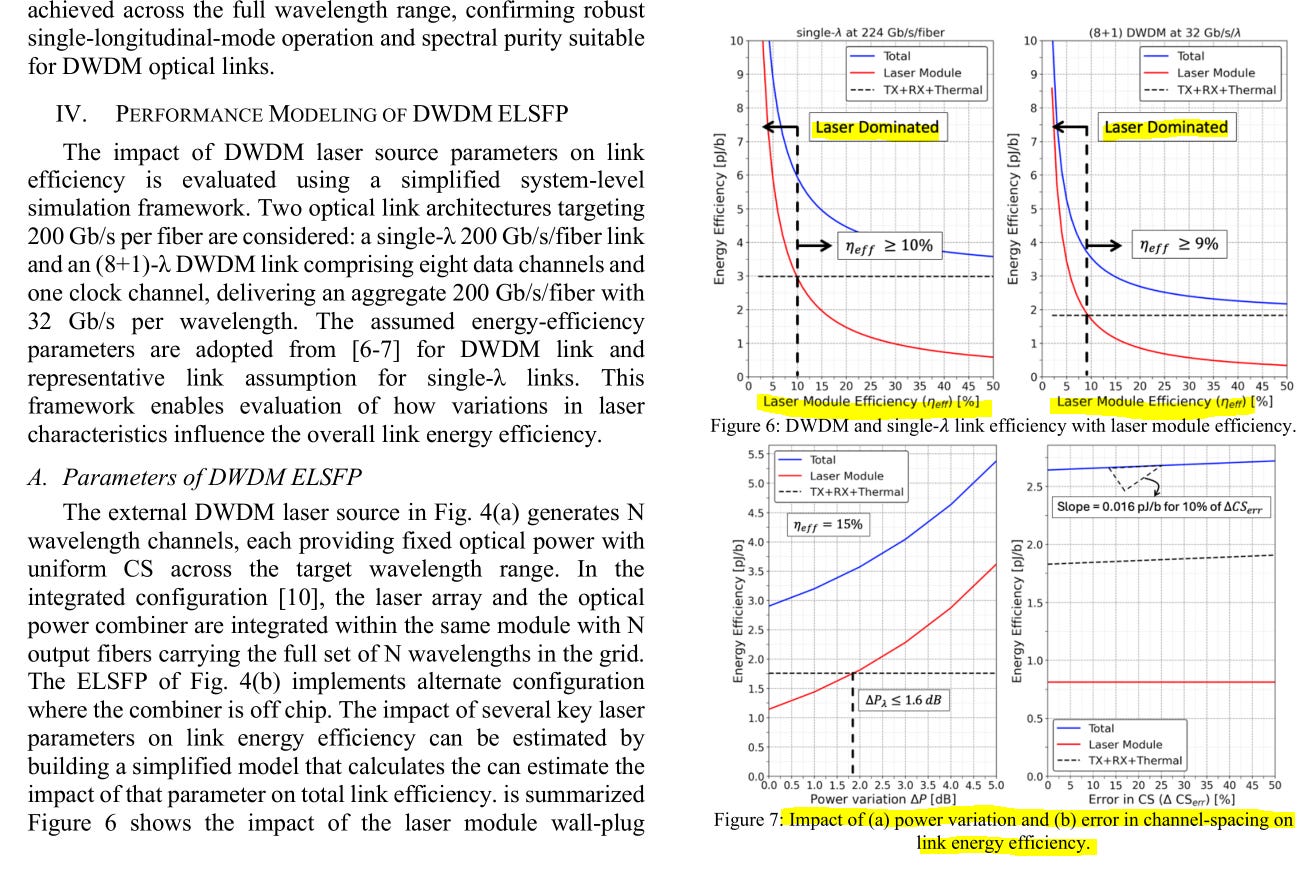
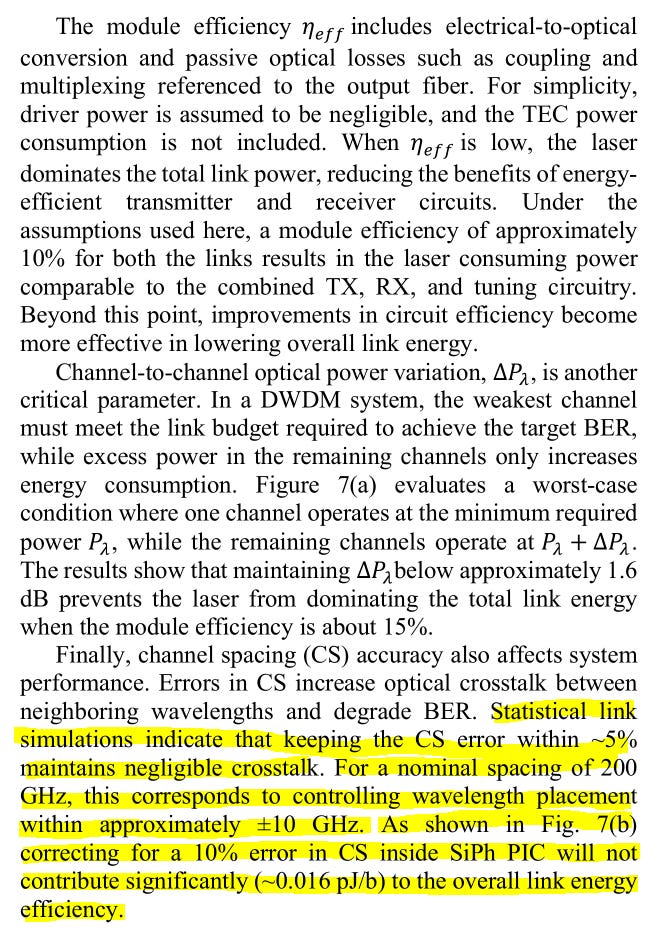
This part of the paper is massive alpha. I had been trying to model this myself (in a poor man ghetto way) unsuccessfully for almost a year and gave up. Moved on to other things for a variety of reasons.
Thanks Ben!

Laser WPE of 10% is critical for making CPO/NPO make sense from an energy savings perspective. The burden is on the laser power efficiency and the system efficiency exponentially degrades as laser WPE drops below 10%.
Power variation (flatness of DWDM laser spectrum) hurts efficiency meaningfully but the real reason people want less than +/- 0.5 dB variation is ring-modulator self-heating. Makes thermal control and stability of the ring bus very difficult. RING SELF-HEATING EVIL.
Wavelength spacing accuracy of +/- 10 GHz (on 200 GHz DWDM grid) matters for optical crosstalk but is basically irrelevant for power efficiency. This is very surprising to me. I thought the demand for tight wavelength control was coming from people wanting to save on ring heater tuning power. Turns out, it is because of optical crosstalk which… is very surprising. On a 200 GHz grid with 32G modulation, you end up having massive guard bands. Perhaps Rx filter rings have very wide response as a compromise for… something. Never understood this. Again if anyone has insight send me an email.
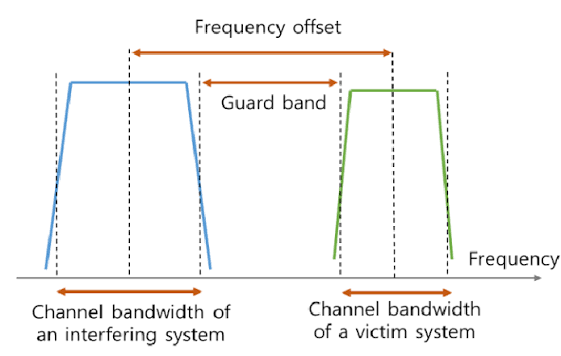
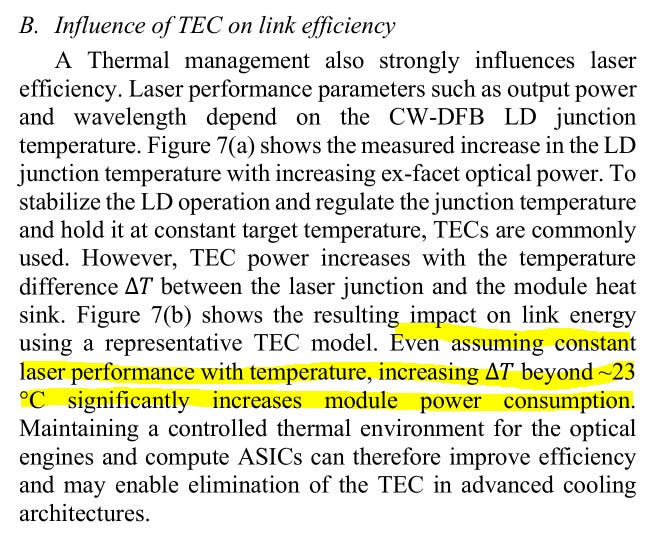
Standard delta_T is 10C. I’m not sure why they bothered to model all the way to 23C. Your TEC is gona explode or go into thermal runaway at such a high delta_T.
Aeva SOA is very good.
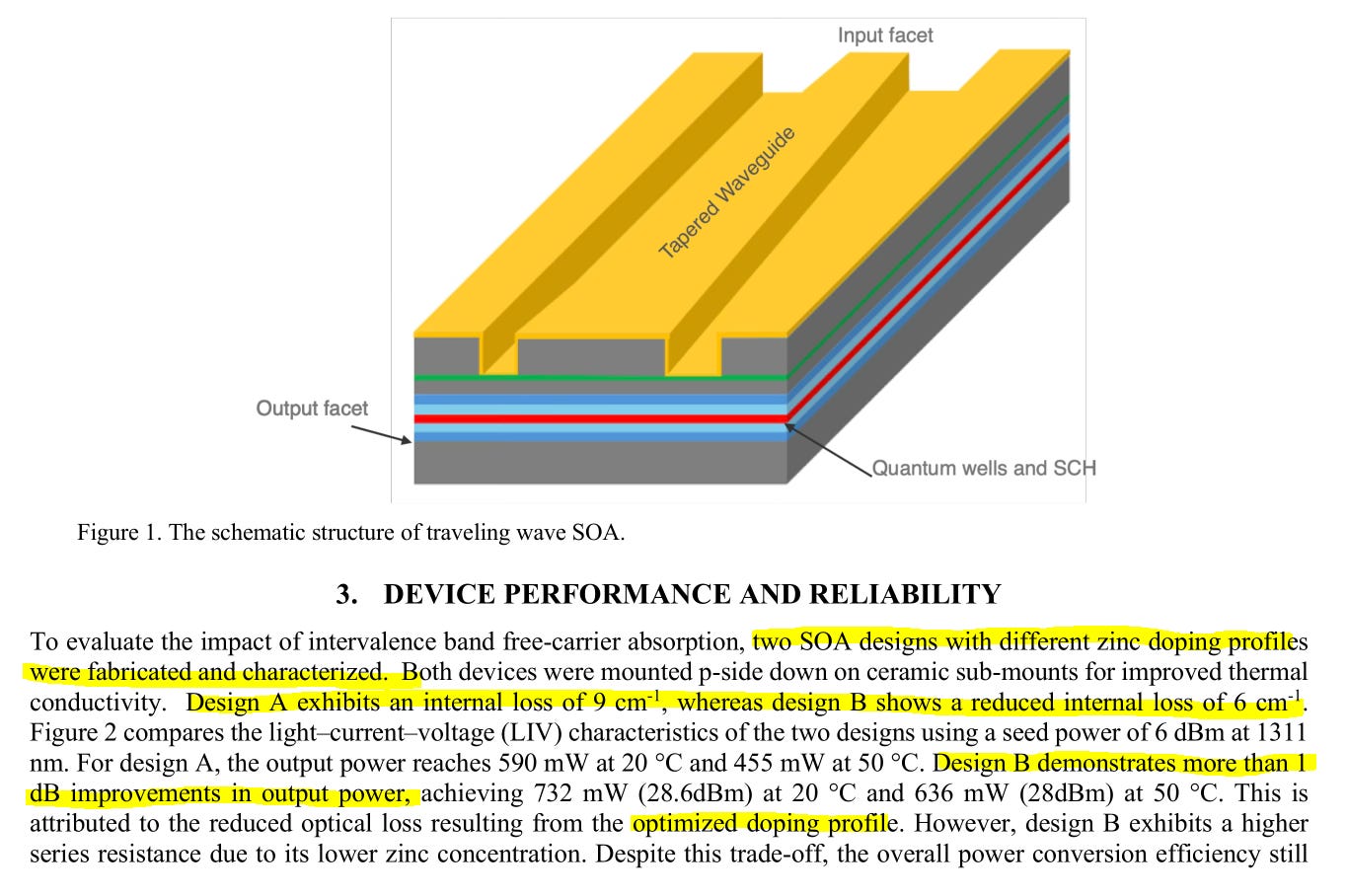
They have two designs. Delta is zinc doping chemistry physics blah blah blah.
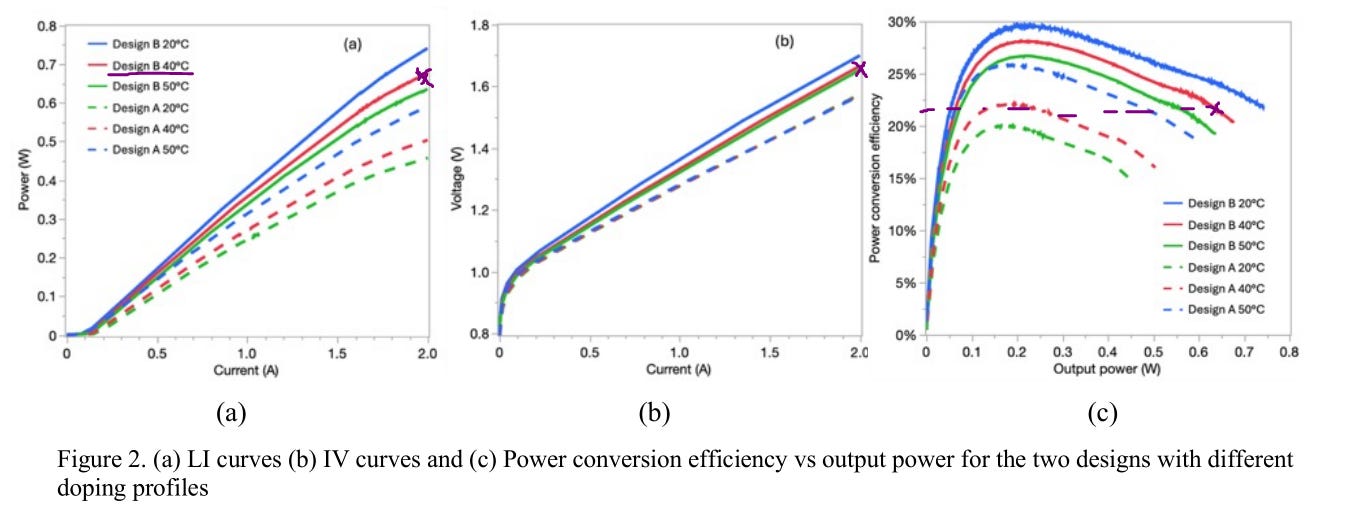
40C is a reasonable operating point for datacenter applications. 22% PCE at 650 mW output power. Excellent.
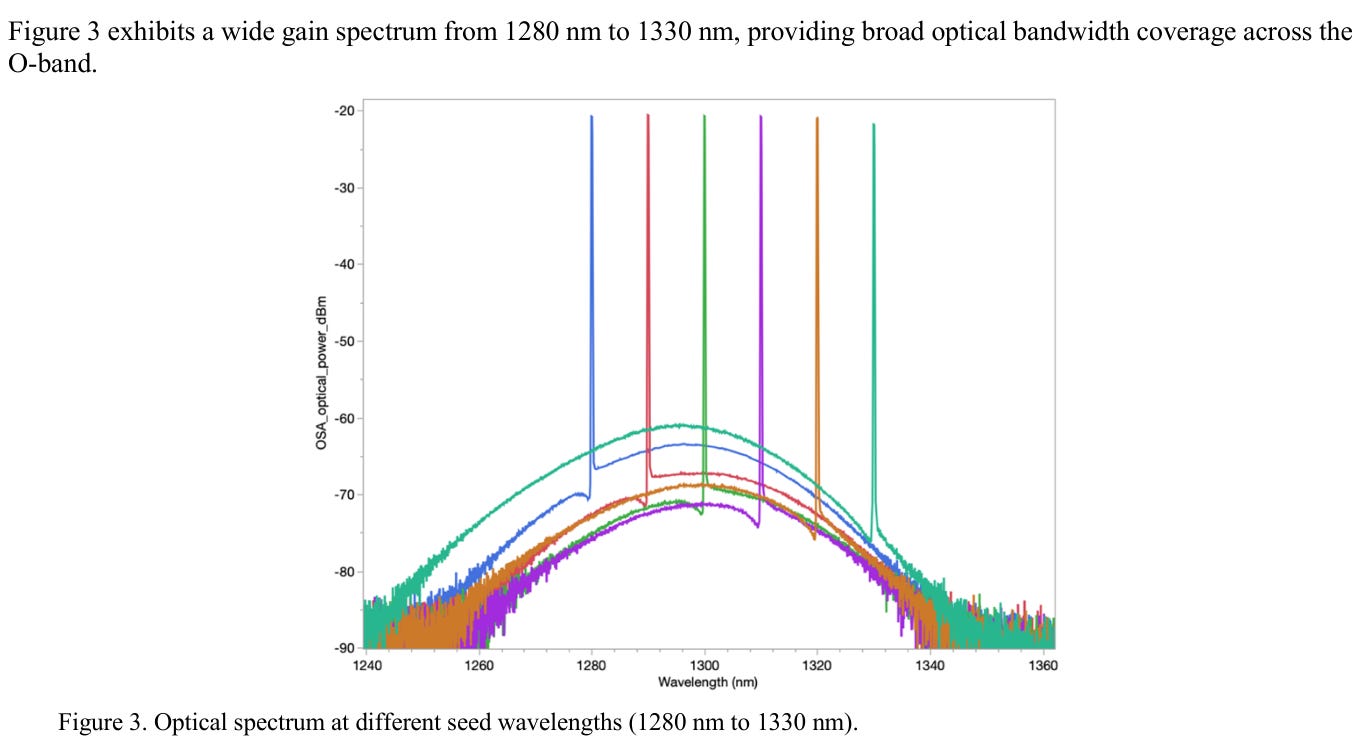
Excellent flatness with ASE (noise floor) 40 dB down. Very very good.
See this Seminex clowns? This is what a real high-power SOA looks like. Losers.
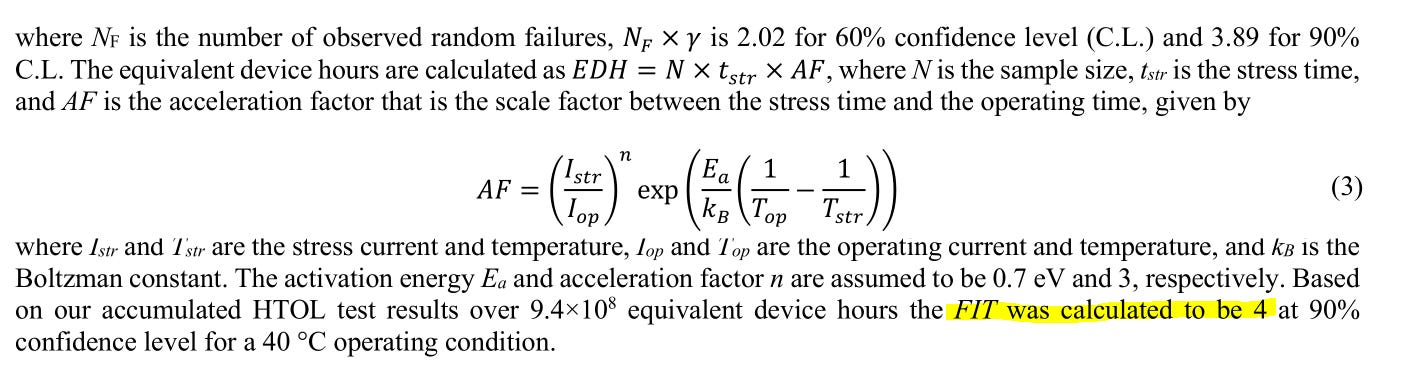
FIT < 5 is good. Great job!
No posts
Comments
Nothing yet. Say the first thing.
Sign in to join the conversation.