
Hey everybody! Rae here, co-founder of DNNR.
The feed can reach millions. A table can change your life.
AI will make the internet cheaper. Presence will become priceless.
IRL > URL is not anti-tech. It’s pro-human.

Why Miami tech never happens + how to actually build a thriving startup community
I kicked the hornet’s nest. I didn’t mean to go viral hating on the Miami startup scene, but I had a string of bad experiences in 2022-2023 while I was living there that I was never very public about.
But earlier this week on my way to the coffee shop I saw this article: why miami tech never happens.
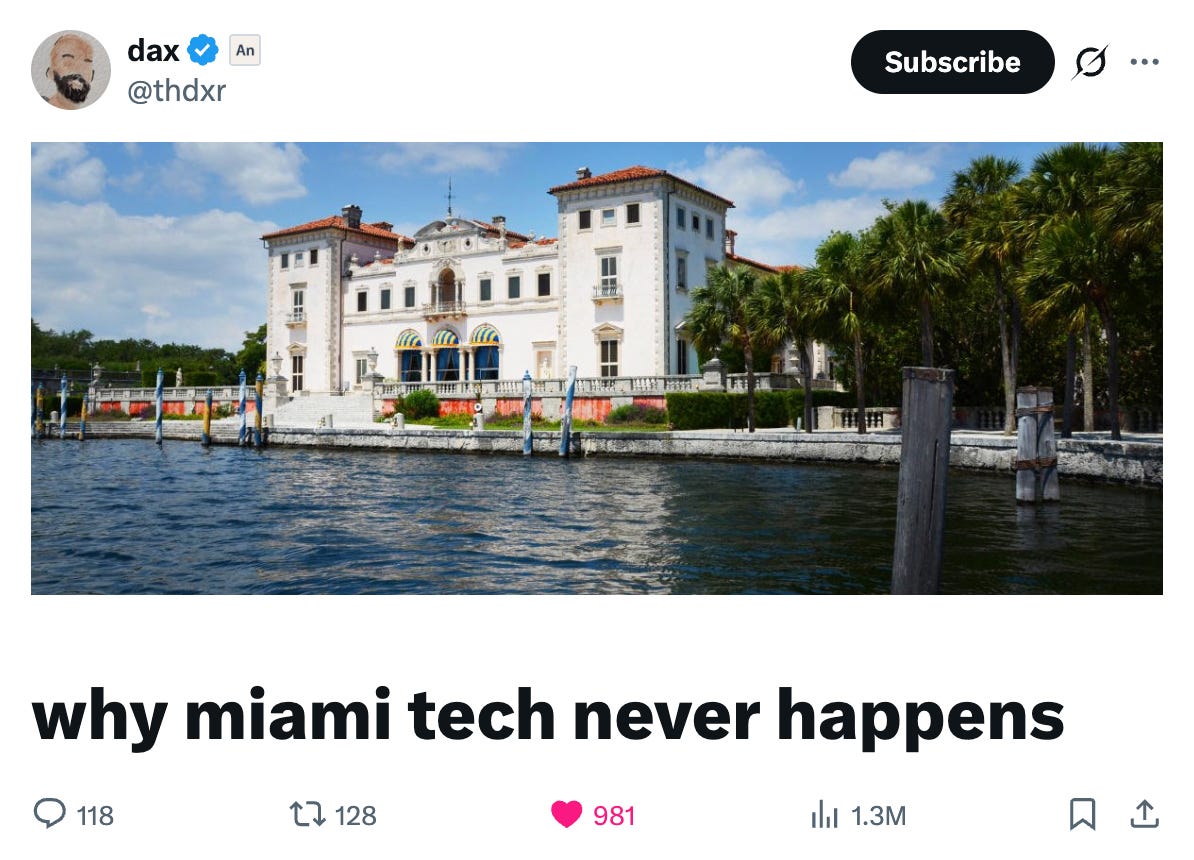
The article from Dax (who has 119k followers btw) spoke to what I experienced. So I fired off a repost in the coffee line assuming it would flop like all my other tweets. But 4k likes, 895 saves, and 290 reposts later… my day was derailed.

Rae@raechellambert
Husband and I tried Miami for 1 year after living in SF and NYC tech scenes. Very top heavy - mostly successful founders and VCs who go to live in their nice houses and aren’t out there being part of the community Tons of larping founders - I got invited to some “female founder
1:24 PM · Mar 22, 2026 · 884K Views
245 Replies · 236 Reposts · 4K Likes
Besides me spilling the tea on Miami Hack Week not paying my team the $10k prize money, my post resonated because a lot people had unmet expectations about Miami.
I actually take no joy in that fact.
Please know that if the hackathon organizer had called me after and explained that sponsors fell through and he didn’t have the cash, I would have understood and moved on. But instead I was ghosted for 6 months and when I finally got in touch, they acted surprised I was trying to reach them.
The reason I bring this all up: I know San Francisco will always be king, but I want the other 2-10 ranked startup towns to be great. Being a successful founder requires being in the game for a long time, and it’s easier to do that if there are a lot of solid tech cities to choose from.
So instead of just shitposting, I’m sharing what it takes to build a thriving startup community, and what I wish Miami had done differently (but still can):
Optimize for sweatpants builders, not rooftop selfies
Create free or very cheap third spaces where people can show up and work
Run long hack nights and open builds instead of cocktail “mixers”
Be publicly accountable when things break and over‑correct in favor of founders
Be accessible, but use strong filters on your time
Codify decentralized playbooks so others can spin up meetups, groups, and content
Invest in content infrastructure that turns local founders into public leaders
Treat founders as scarce talent to be recruited, not customers to be billed
Build your “community” around celebrity drive‑bys and PR stunts
Let gatekeepers prioritize status signals over actual competence
Monetize early‑stage founders with fees and memberships before supporting them
Ghost people when commitments fall through—own it, fix it, and learn
Over‑optimize for big‑name speakers instead of building internal ninjas
Confuse a city’s Twitter hype with actual local support and infrastructure
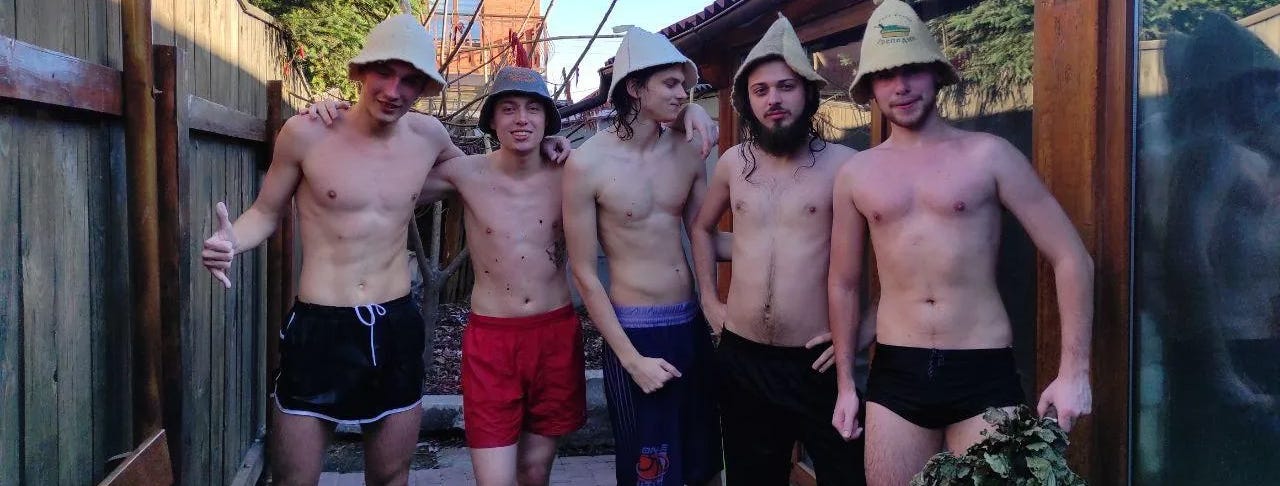
Every weekday morning I go to F45 (HIIT group workout for 45 minutes) and then head next door to sit in a hotbox with a bunch of strangers.
Well, they aren’t strangers anymore.
Banya, the social sauna, might be one of the most underrated health protocols. Regular sauna use has been linked in long-term studies to better cardiovascular outcomes and lower all-cause mortality, especially at roughly 15–20 minutes per session, multiple times per week.
Bryan Johnson’s own protocol is a daily 20-minute dry sauna at 200°F, though even he suggests most people aim for a more moderate 3–5 sessions per week at 175–195°F. He says it’s one of his most effective (and attainable) health protocols.
But Banya is not just sauna, it’s social. The one I go to is co-ed, and the sauna can cram 15 people in.
It’s chatty. People wear funny hats (to protect their ears/heads from the heat).
People bust each other’s balls and make plans to hang out.
It’s in the social layer — real conversation, familiar faces, sober connection, community — that you get something more powerful than just a sweat sesh. Because strong social ties are also linked to longer, healthier lives, a social sauna does double duty: helping the body and helping the soul.
TJ Larkin sits down with Rae Lambert to explore how hostless dinner clubs are the new monetization engine for local 70+ creators. Youtube, Spotify
Landon from Wichita Life shares how he grew to nearly 38k subscribers and built a thriving local media business with dinner clubs, Facebook ads, and ManyChat. Youtube, Spotify
Marissa Lovell built a $100k local newsletter from home (she uses DNNR to monetize). Youtube, Spotify
DNNR.io is the #1 white-labeled dinner club platform
Have an audience you want to send to dinner? Book a demo
Know someone who could launch a dinner club? Refer them to earn 5%
Last month I shared this new direction for the newsletter and 19,811 of you read it.
Thanks for being here, it means the world. I’m thrilled to build the offline future with you.
Will you send this to the group chat?
Comments
Nothing yet. Say the first thing.
Sign in to join the conversation.