
When I graduated from theatre school in 2013, I made an ultimatum with myself: if I wasn’t on Broadway by the time I turned 25, I would quit the business.
It’s an absurd deal, in retrospect—one I laugh at now, standing on the edge of 35. But at 22, three years felt like a lifetime. Up until then, I had been the kind of person to whom things came easily. I was the student who didn’t study and still got A’s, the kid who could hold a conversation with adults and be labeled “wise beyond her years,” which came with its own quiet burden of responsibility. I moved through my childhood and teens with a kind of self-assuredness that, it turns out, can carry you pretty far. The future felt abstract, something I would stumble into the way I always had, rather than something to deliberately build. I wasn’t worried—I just assumed things would always work out.
If my early-twenties hubris and naiveté annoy you, don’t worry. I got my comeuppance. And then some.
My first job was at a bagel place in Ronkonkoma, New York. My brother’s then-girlfriend—benevolent, in hindsight—got me the gig, trusting a 16-year-old me to handle cash, smear cream cheese onto bagels, and operate an industrial deli slicer that I cut my hand on more than once. The rest of the staff were mostly teenage girls like me. We made $7.25 an hour under the table and split a giant plastic tub of tips at the end of the day.
My standing order was a French toast bagel with egg and cheese, salt, pepper, and a little maple syrup. Sometimes I’d find long, dark arm hairs from the cook in my food. I ignored it. A free meal from notoriously cheap bosses felt like a privilege, and I was happy to be fed. The days were long and busy, my feet and legs would ache by the end of a shift. I would hobble home, sticky from orange juice and fingertips singed from handling freshly-toasted bagels, feeling totally spent. I also remember looking out the front window of the shop, identifying the cars belonging to creepy regulars, and ducking into the bathroom before they could come inside and hit on me.
Being anxious in bathroom stalls would turn out to be a stalwart of every job I ever had, come to think of it.
I worked there until I left for college, where I mostly focused on becoming a Big Broadway Star (™), save for a few desk attendant shifts that couldn’t have been more than a couple hours long but somehow felt like years. At that point, I understood money only in $7.25 increments, handed to me in sweaty, crumpled envelopes. The idea of taking out student loans for tens of thousands of dollars felt entirely theoretical. It might as well have been $5,000 or $500,000—both numbers were equally incomprehensible to me. It would all get paid off eventually, right?

As expected, I did well in college with very little effort. Good grades, good roles in musicals, lots of friends, and I graduated with a cute, ambitious boyfriend. The summer after, I worked at a Renaissance faire for about $250 a week and had the time of my life: no cell service, Molière in the woods one day, and “trial-and-dunk” shows the next. I’d sit on a chair attached to a long arm and get dunked into a murky pond while ale-drunk strangers yelled, “Dunk that bitch!” and “Let’s see her tits!” It was, in its own way, a dream. And as silly as the gig was, I really felt like an artist up there. On festival days I got to improvise and act to my heart’s content, and on days off my friends and I would write and knit and make up games. I slept on a mattress in a shack under a mosquito net and used a communal shower shared by tons of people, but it was some of the most fun I ever had.
Shortly after, I booked my first “real” acting job: Gertrude McFuzz in the TheatreWorks’ tour of Seussical the Musical. I gave a deeply mediocre audition, botched the very simple dance call, and still got the job. It felt like a massive win, especially because I earned my Equity card—another step along my deeply delusional path to becoming a Big Broadway Star (™) by 25.
The tour was mostly fun, sometimes stressful, and full of eager, ego-driven twenty-somethings getting paid to do theatre, maybe for the first time. We were probably insufferable—self-important in that specific, earnest way theatre kids are. It was hard work: early mornings, setting up shows in weird places for the most honest audience you can ever have: children. But it gave me core memories—dodging bedbugs at Super 8 motels across the East Coast, crying backstage at the Grand Ole Opry after cracking on my big number, meeting kids who decided during the show that they want to be actors, too. Unglamorous highs and lows that only made me love the business more.
My boyfriend was on tour too, with the non-Equity company of American Idiot. Our paths crossed once in Washington, D.C., where we grabbed dinner like ships (tour buses?) passing with shared delusions. When we got back, we moved into a one-bedroom in Washington Heights for $1,500 a month—a number that felt impossible to conjure, but armed with delusional certainty that we could figure it out, we signed the lease anyway.
I thought I’d string together acting gigs and maybe babysit in between. But rent, student loans, and the reality of living in New York City had other plans. Even then, getting a day job felt like failure, but with my expenses looming, I had no other choice.
A friend of a friend got me a job at Lush in Union Square. Around the same time, my boyfriend got hired at the Apple Store. We felt aligned—two working actors grinding it out, waiting for our big breaks. His came. Mine… stalled.
Lush was a strange hybrid of performance, retail, and manual labor. I woke up at 5 a.m., took two trains downtown, received shipments, hauled boxes of bath bombs (shockingly heavy), and opened the store. By mid-morning, I was washing strangers’ hands—teenage girls, grown men, mostly—while trying to upsell $40 scrubs you could probably make at home for 45 cents. I inhaled so much scented dust I try not to think about what it did to my brain.
One manager once dumped an entire day’s garbage onto the floor because someone misplaced a recyclable, forcing us to sort through it by hand. Another time, a man tried to rob the store. I was the only floor leader. He grabbed one of my coworkers. I ran to the back to call 911, and he followed, slamming his body against the door while I held it shut with mine. The police came hours after he left. I asked my manager if we could get a security camera, she gave me crystals for “stress management” instead.
Meanwhile, my boyfriend booked a production of Spring Awakening in L.A., which transferred to Broadway. Watching someone you love achieve their dream is a specific kind of joy—pure, uncomplicated. Even now, that memory remains untouched.
At the time, I rarely had more than $75 in my bank account. I’d wait until I hit $30 before panic-budgeting: If I buy one big sandwich, I can split it into three little sandwiches. That’s basically $3.25 per lunch! I lived on Taco Bell bean burritos until the staff knew me by name, and I got too embarrassed to go back.
When my boyfriend started making more in a week than our monthly rent, it felt surreal. We still split everything evenly. I was proud, stubborn. I wouldn’t have asked for help, not that he ever offered. When my boyfriend’s Broadway coworkers asked what I did, I couldn’t bring myself to say “actor.” I told them I sold soap. He never corrected me.
One day, after a long shift, he told me he wanted to buy a new TV.
“But we already have a TV,” I said.
“But now we can get a better one.”
I instantly burst into tears. Like, the kind of crying a toddler does when they fall: a quiet pause before starting to heave. I was rationing sandwiches; he was upgrading appliances. We later told the “TV story” as a joke, but something in me stayed quietly bruised.
Enjoying this post? Leave a tip!
After the attempted robbery, I couldn’t relax at work. I was nearing 25—my arbitrary but deeply serious cutoff—and still at Lush. Around then, I scraped together money for improv classes at the Upright Citizens Brigade. UCB became my third place. I spent hours there, asking for classes as birthday and Christmas gifts. Acting was something you had to wait for permission for, improv is something you could just do. While there I learned that most comedians also write, so I started writing—submitting satire and essays to anywhere that would take them: Reductress, McSweeney’s, HelloGiggles, Funny or Die. I collected some bylines, did some improv shows. If I couldn’t flex my creative muscles with acting jobs, this would have to do. I didn’t love it the way I loved acting, nor was I naturally good at it, but I learned comedy like any other skill.
I auditioned less. My schedule didn’t allow for it. I was deeply dejected from them, anyway. I kept telling myself that my hiatus from pursuing my dreams was temporary— that something would shift and I would regain the energy, or the passion, or the funds required to pound the pavement again. How, I didn’t know. But I was still that kid that things just worked out for, and I had faith they would work out again.
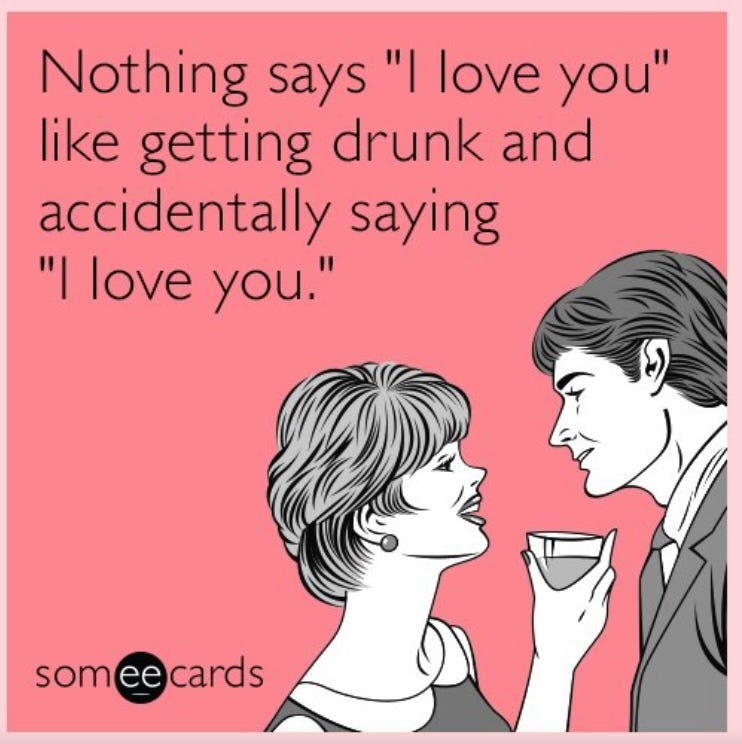
Eventually, I landed a job at a “comedy website,” which is generous phrasing. I aggregated five clickbait articles a day in a WeWork in lower Manhattan, mining the internet for content—from the 2016 election to Kim Kardashian selfies. The website also featured what I like to call the “original memes,” and I got to pitch some jokes for them. It was one of those jobs that seemed really creative and fun on the surface, but underneath was all grind.
Remember these?
I worked full-time, arriving just as the sun was rising and leaving after sunset, churning out content I didn’t care about. I gained weight quickly, self-soothing with two daily Starbucks chai lattes and unlimited bodega snacks. My brain felt both overstimulated and numb. I could finish my work in two hours and spend the rest of the day staring into the void of the internet, scrolling for hours.
I thought it would give me purpose. Instead, it made me deeply depressed. By now I had run out of money for improv classes, and my schedule made it impossible to audition. By the time I walked out of work like a zombie, I didn’t know what else to do but just stare at my screens (they felt different than my work screens). What I realize now that I couldn’t recognize then is that when creative people aren’t creating, they slowly go insane.
Around this time, my boyfriend’s Broadway show closed, and he was going through a slump himself. I would leave for work, bidding farewell to him while he played video games on the couch in his robe. 8+ hours later I would return to find him in the same place, playing the same game, in the same robe. Now that he has tasted professional success, he refused to return to the loser-world of day jobs. He would continue to audition and I would work in case he didn’t book anything, providing a safety net for him. After weeks turned into months I had a conversation with him about how staying home and doing nothing all day is probably not great, and the conversation ended not with a job search, but with a compromise to get a $10-a-month Planet Fitness membership to get him out of the apartment for an hour every other day.
By the way, he never got a day job. Our dynamic, him=actor/me=hourly employee, never shifted. When I finally got up the courage to ask him to consider getting a day job so that I could pursue my dreams, he ended up having an affair. He swore the two things were not related.
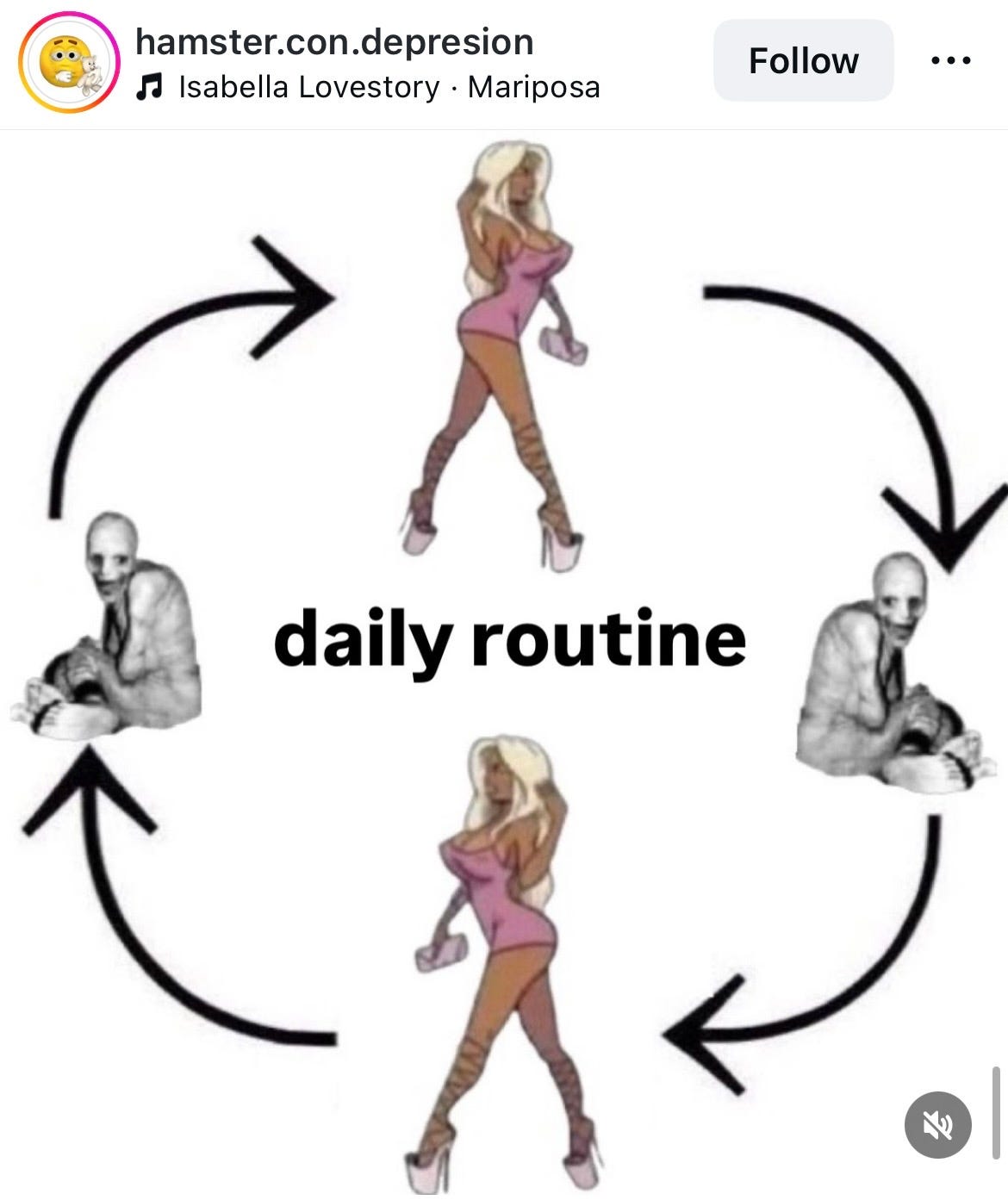
Somewhere in my late twenties, I realized something uncomfortable: many of my peers building creative careers didn’t have jobs. I was truly too busy hustling that I never even stopped to consider that this would be the case. But when I started to see it, I couldn’t unsee it. They would ask me to hang out during the day, which I never could because I had work. Then they would ask me to go out at night, which I never had enough money to do. I didn’t understand how they afforded their lives—the apartments, the time, the ease—until I did.
Rich parents.
Around 2018, I made one last ultimatum. I’d mostly stopped auditioning. I couldn’t afford improv classes anymore. I hadn’t sang in years. My theatre life felt like a distant echo. I took a commercial acting class—a pay-to-play situation. I auditioned for agents, heard nothing, and quietly accepted that this might be it.
Then, weeks later, one of the casting directors called. She was casting a Super Bowl commercial and remembered me from a thank-you note I’d written. I booked it. She got me a top commercial agent within minutes.
I quit my job. Recklessly, maybe. Hopefully, definitely.
Over the next two years, I booked eight commercials and made more money than I ever had. I reinvested in classes, got health insurance, joined a gym. For the first time, I felt balanced. My boyfriend booked another big show. It felt like things were finally aligning—just not in the way I’d planned.
And then, the work slowed. Savings dwindled. Free time turned into wasted time. I took another day job, assuming it would be temporary.
Then COVID hit.
Seven years later, I’m still at that very same job.
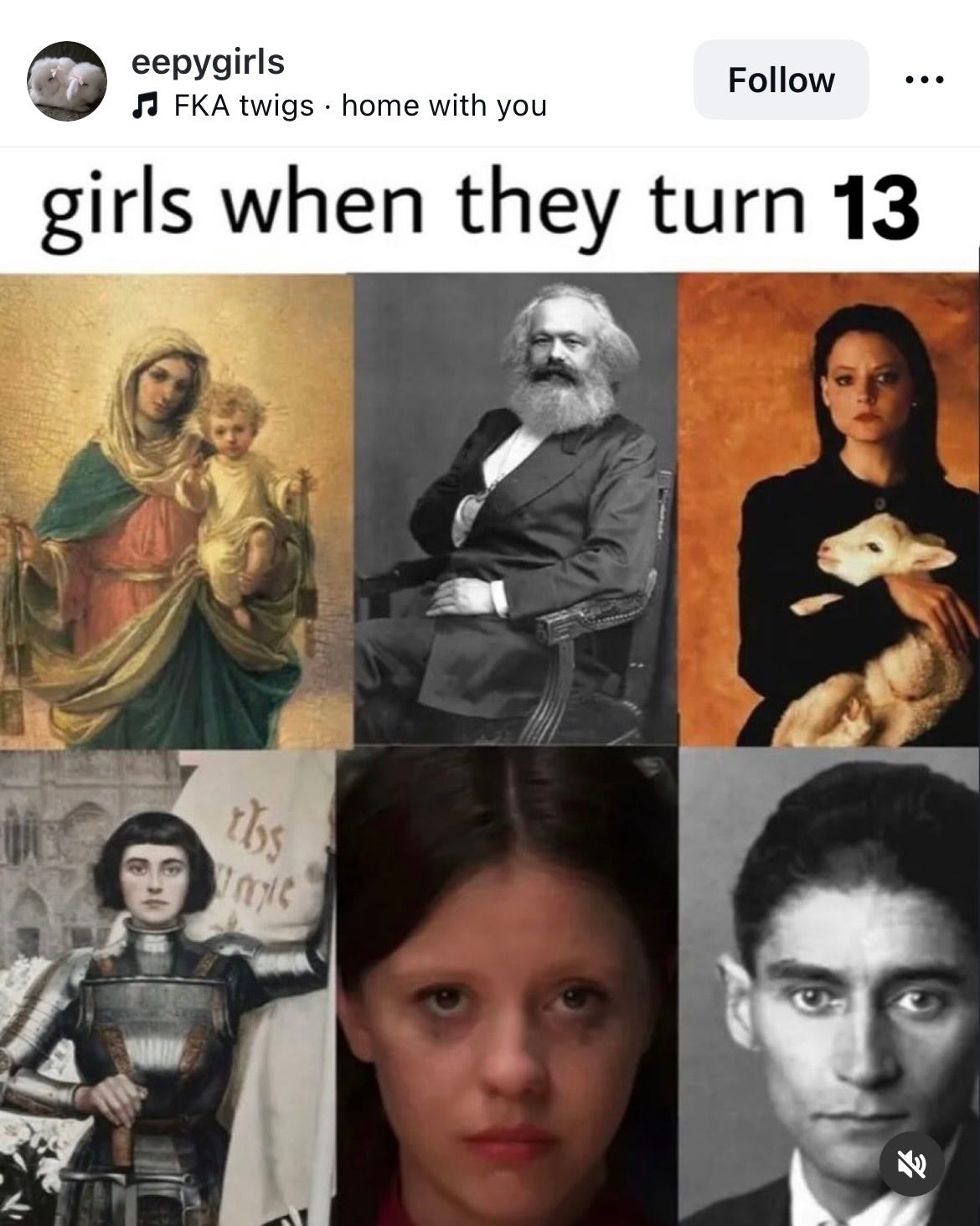
Now I work in a customer service-adjacent role at a large shopping center in Midtown. It’s not glamorous, but it’s stable. I’m grateful for it—grateful it feeds me, houses me, grateful I have not been replaced by an AI chatbot. My deadline expired a decade ago. I’ve never been further from my childhood dream.
The Equity card I once thought would set me free now sits deferred, more symbolic than functional. “Theatre kid” became a punchline somewhere along the way. I don’t have health insurance anymore. I will never be a Big Broadway Star (™). 22-year-old me would be devastated.
Most days, I feel like the only one who didn’t make it. The one who couldn’t crack the code. But life is a shifting, changing, breathing thing. And maybe that’s the part I couldn’t understand at 22, when I gave myself that ultimatum—when I believed success had a deadline, a shape, a single, glittering endpoint. I thought the dream was a destination you either reached or failed to reach, something finite and measurable, something you could point to and say: there, I did it.
But having day jobs has given me something else.
It’s pulled me out of my bubble. It’s introduced me to people I never would have met otherwise. It’s taught me the difference between “working hard” and “hard work.” It’s given me perspective I didn’t have when I was only surrounded by people chasing the same dream. Yes, it’s harder to hear people complain about opening night parties and fancy awards when you look down the barrel of a long shift on your feet. It makes red carpets seem trite, actor gossip feel even more vapid. But is that a bad thing?
I used to resent it—especially when I compared my life to my ex-husband’s. I thought it was the thing holding me back. It wasn’t.
It’s the thing that held me up. It pays for the apartment I write plays in. It has introduced me to unlikely friends and collaboraters. It provides a schedule that keeps me from isolating myself. When my life fell apart, it helped me to rebuild.
Sometimes a dream job is doing the job you always dreamed about. But sometimes it’s the job that lets you survive long enough to keep dreaming.
No posts
Comments
Nothing yet. Say the first thing.
Sign in to join the conversation.