
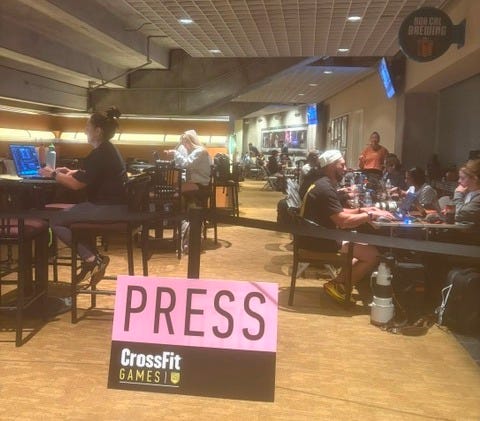
As most of you know, I’m writing my next book, which means I’m on the road doing research. So here is a sneak peek at the beginnings of my chapter on CrossFit. I attended the 2026 CrossFit Games July 22-26, 2026, on a media pass.
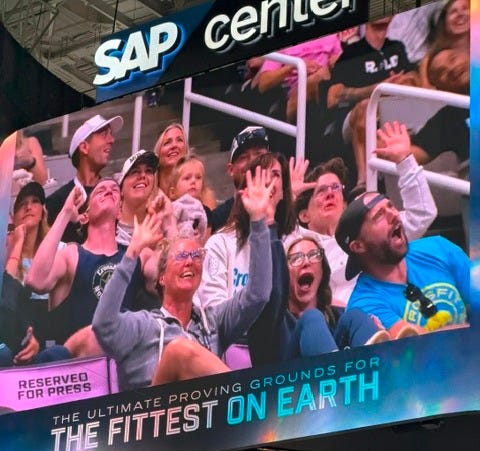
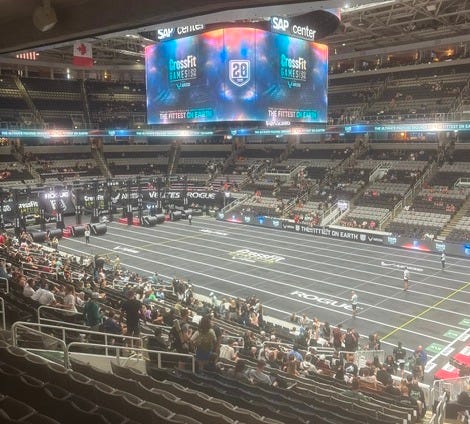
It’s July 24, 2026, and I am at the opening ceremonies of the twentieth anniversary of the CrossFit Games, held at the SAP Center in San Jose. For me, this is a dream come true. I’ve been doing CrossFit for the last fourteen years and have never attended the CrossFit Games. According to CrossFit.com, “CrossFit is a global fitness brand with a community and a methodology of constantly varied functional movements performed at relative intensity. In practice, that means coached workouts that build strength, conditioning, and confidence at a level that is challenging but appropriate for you.” But to me, it’s been an athletic community that’s both empowered me to accept my body’s natural strength, a place where I have reached my lowest lows and my highest lows, and where a strong community of friends surrounds me. So, as I was trying to understand the communities where strong-bodied women feel most welcome and are most empowered, it was easy to think of CrossFit.
CrossFit is a sport that mostly happens at the gym. There are CrossFit gyms all over the world, and while each follows the fundamental ideas of CrossFit, each gym is also a little different. At our gym, CrossFit NorthGate in Santa Rosa, CA, each workout begins at the whiteboard. Our coach outlines the W.O.D. (workout of the day) and then takes us through a series of warm-ups for the movements we’ll be doing that day. Some days we lift, some days we do gymnastic movements, some days we do a lot of cardio; oftentimes we’ll do a variety of all three. Today, we did a variation of a hero workout called “Murph” after U.S. Navy SEAL Lieutenant Michael P. Murphy, who was killed in action in Afghanistan on June 28, 2005. Our version was as many rounds as possible of an 800-meter run, followed by 20 pull-ups, 25 push-ups, and 30 air squats. In my class, there is a variety of experience and ages. But no matter which version of the workout we are doing, we cheer each other on.
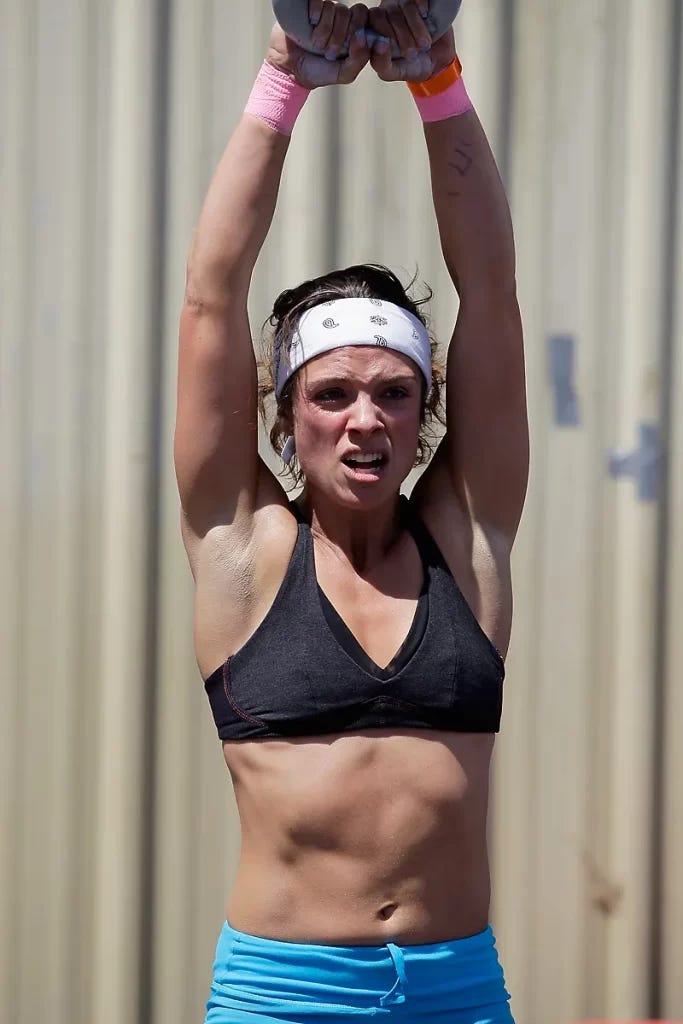
But beyond the box, there is also a competition where the elite in the sport compete, and it's called The CrossFit Games. The CrossFit Games were first held in Aromas, CA, at a venue that’s called “The Ranch,” a privately owned property that belonged to Dave Castro’s family. (Castro found CrossFit while he was in the military and began working with Greg Glassman and Lauren Jenai during CrossFit’s early days). He was the one who came up with the idea of holding a competition.
At the first CrossFit Games, Jolie Gentry, the female champion, received a gold medal and $500, exactly the same payout as the male winner, James Fitzgerald. As Dave Castro explained in Fittest on Earth: 20 Years of the CrossFit Games, “It never even crossed my mind to do anything but make the amounts equal…We don’t look to major sports or leagues for guidance on how to handle our sport. We make decisions based on what’s right for us.” (31) CrossFit has been a place where men and women were treated (nearly) the same. There are differences in weights and calories on machines, but since the beginning of the sport, women have completed the same workouts as men. At times, far exceeding the performances of men in the same workout.
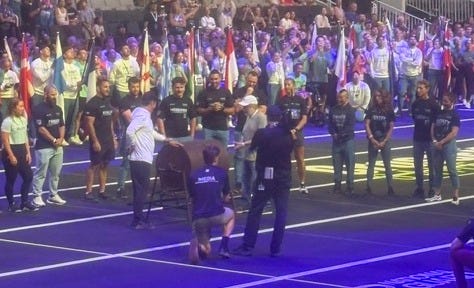
Back at the SAP Center, at 9:15 a.m., the opening ceremony began. The athletes poured into the stadium to a round of applause. Each country represented held a flag, and the competitors from the elite, age group, master’s, and adapted divisions formed a ring around the stadium that ended up being six people thick around the entire stadium. Looking around, one could see just how wide CrossFit had spread since its humble beginnings in the early 2000s. While the United States had, by far, the greatest representation, 31 other countries were represented.
Once all the athletes had entered, all of the past champions of the CrossFit Games were honored: everyone from the first winners up to GOATs Mat Fraser and Tia Claire-Toomey who dominated the sport with back-to-back wins for 5 and 6 years. Tia went on to win two more times after her six consecutive wins after giving birth to her daughter.
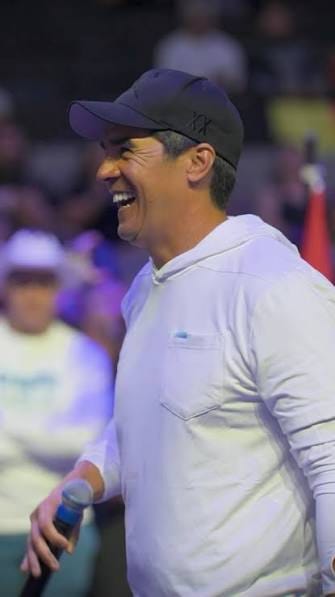
Then, Castro, who's been programming the events of the CrossFit Games for nearly two decades, announced that they were going to roll out one of the implements used in the early days of CrossFit: the hopper. A large metal bin was wheeled out to the center of the stadium. The hopper is a metal, cylindrical peanut roaster that’s filled with colored balls. It was used during the first CrossFit Games at the ranch to choose the first workout: 1000m row, followed by five rounds of 25 pull-ups, and 8 push-jerks. The athletes had already redone this classic workout on Wednesday, the first day of competition. (In fact, there was even a place for attendees who were just watching the games to sign up to do the same workout in the spectator area). But now, a new workout would be chosen from the Hopper.
When Level 1 coaches are trained in CrossFit, they are told about the hopper as a way to understand the fundamental definition of the sport. As Greg Glassman envisioned it, CrossFit is constantly varied, high-intensity functional movements, and CrossFit athletes should be ready for the unknown and unknowable. The idea behind the hopper- the randomness of choosing a workout in this way is that it eliminates training bias. As Glassman explains, “Think about what you’d like to see come out of it – what you are good at. Now, think of what you’d hate to see come out of it. The task that’s furthest from your comfort zone, that exposes your weaknesses.”
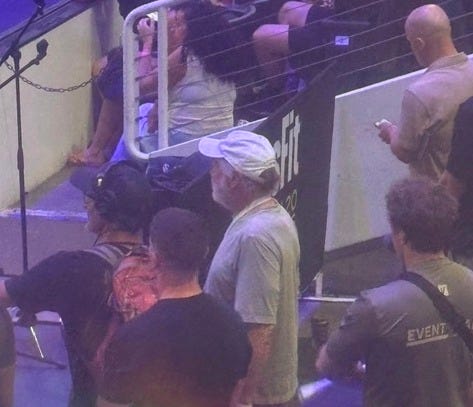
Once the hopper was introduced, Dave invited CrossFit founder Greg Glassman to the floor, and seventy-year-old Glassman limped out to the center, where he took the handle of the hopper and turned it. (Glassman had polio as a child, which caused his lifelong limp). These days, it isn’t common to see Glassman at a CrossFit event; he left in 2020 due to a string of offensive and racist tweets that sent the entire organization into a tailspin. Major sponsors like Reebok dropped out, and many affiliates left CrossFit. But in the six years since then, CrossFit has fought its way back.
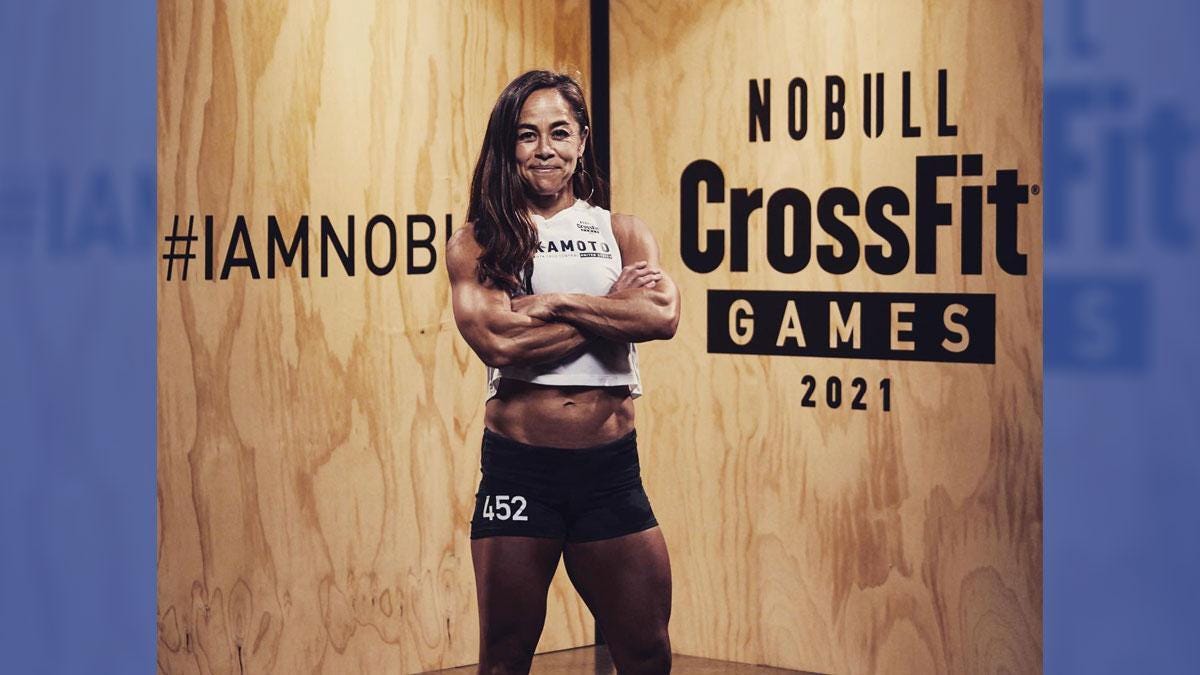
Back on the mic, Dave announced that the programming for the last event of Friday (the second day of the competition) would be chosen right now using the hopper. Then, he asked Annie Sakimoto, one of the original CrossFit athletes, and her daughter to come to the floor and choose the balls that would name the movements for the workout. Annie was featured in the now-legendary video, “Nasty Girls,” along with Nicole Carroll and Eva Twardokens, which was posted on CrossFit.com in December 2005. The “Nasty Girls” workout consisted of 3 rounds for time of 50 air squats, 7 muscle-ups, and 10 hang power cleans (95 lbs). When Greg and Lauren posted the video on Crossfit.com, it instantly became a sensation in the burgeoning CrossFit community. When asked why, Annie Sakamoto reflected that it was likely amazing to the audience of new CrossFitters that followed the site to see women doing muscle-ups.
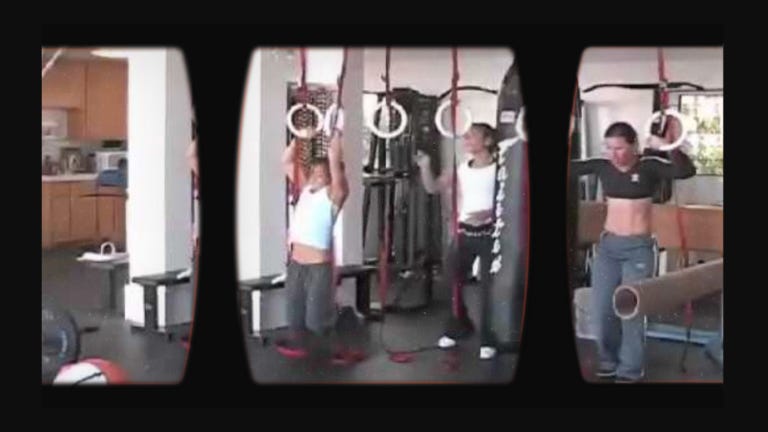
Growing up, Annie had been a “stocky” kid who felt like her body didn’t look like the other girls'. She weighed more and had bigger thighs. Clothes didn’t fit her body like she thought they ought to. She wasn’t encouraged to participate in athletic pursuits, but she remembers realizing she had unusual strength compared to the other girls during the Presidential Fitness Test. (Fun side note: the Presidential Fitness Test was started because of the influence of a woman, Bonnie Prudden - but more about that later). For the test at Annie’s school, boys were instructed to do pull-ups, while girls were told to just hang from the bar with bent arms. Instead of just hanging there, Annie started doing pull-ups and was surprised to find she could complete seven of them. Not only had she beat all of the girls at her school, but she had also beat most of the boys. As she remembered, “It was a huge score, and I had no idea that I could do pull-ups. It wasn’t like I had done gymnastics. I did a little short stint, but it wasn’t like I’d done gymnastics growing up. Like, there was just no good reason for me to do 7 pull-ups, but I could.” Like many strong women, she didn’t know how strong she was compared to other girls until a test of some sort revealed her strength to her.
But the full realization of what her strong body could do wouldn’t come to fruition until she reached her early twenties. That’s when a friend she met at Kickboxing, named Eva Twardokens, encouraged her to come try CrossFit. Eva Twardokens was a former World Cup alpine ski racer and two-time Olympian. So, Annie thought she’d give CrossFit a try. She met Greg Glassman and Lauren Jenai at their gym on Research Park Drive in Santa Cruz. In early morning classes, Annie started learning the basics of CrossFit: lifting, gymnastic movements, and the Workout of the Day or W.O.D. Within a few months, Annie realized that the innate strength she had served her well in the CrossFit gym. In the gym, she found like-minded, competitive women of all body types who wanted to push themselves to new limits. In essence, she felt at home. She’d long since given up the unrealistic goal of trying to reduce herself to the size of her peers at school. As she remembers, when something shifted in her from wanting to be skinny to wanting to be muscular like the girls she began working out with who had six-pack abs, butts, and quads, “I identify with these people. And then once I was probably a few months into CrossFit, it really became less about what my physique looked like, and more about what I could do. I wanted to do a ring muscle-up; I wanted to deadlift 200 pounds.”
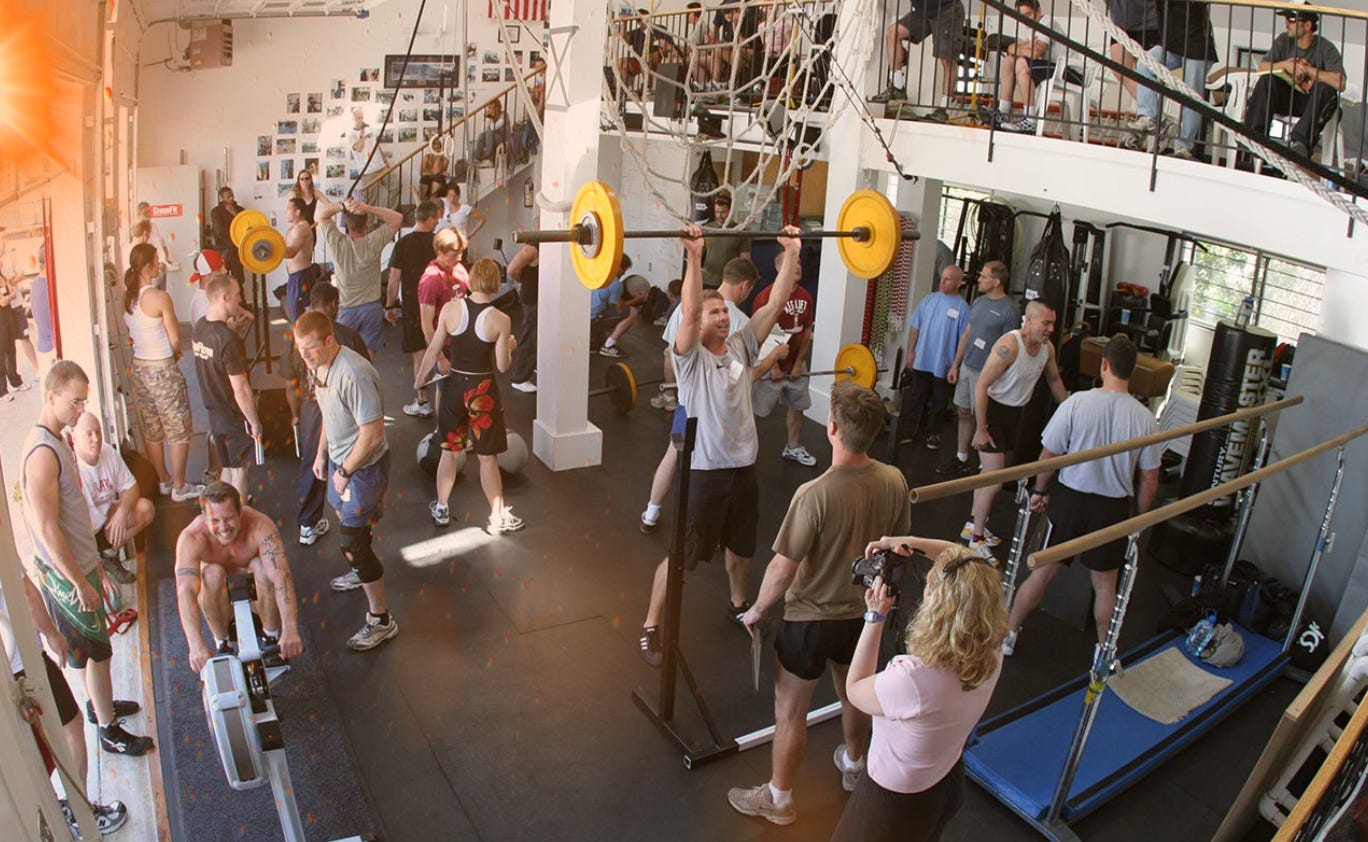
Annie took the 7:30 AM class, which was taught by Lauren Jenai. She remembers how incredible Jenai was at coaching the movements. When she was learning the muscle up, for example, Jenai, who couldn’t do one herself, was able to talk her through her first rep step by step. Annie recalls, “I never saw Lauren do one thing. Lauren would have his hoodie on, and sweatpants, and she didn’t have big muscles, and she never showed me how to do anything. She could explain how to do everything, though, and she was an incredible coach. The first time I did a ring muscle-up, I had never seen anybody do one. She coached me through her words what to do.”
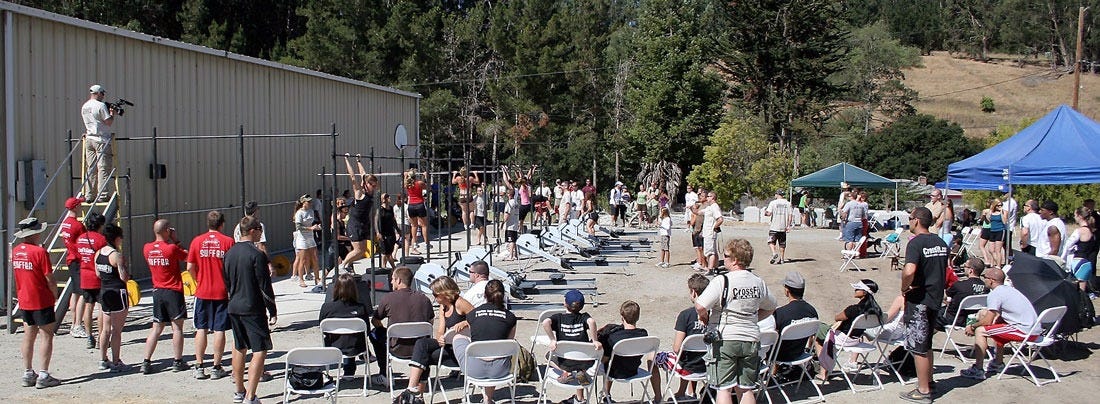
By the time the first CrossFit Games came around, Annie had become an integral part of the community. She remembers attending the first games and not competing (she’d just given birth to her daughter ten months prior to the competition. But she was still a part of the proceedings. Before the first event began, Castro called Annie up. She had her infant daughter in her arms, and Annie guided her daughter’s chubby hand into the open mouth of the hopper. Her daughter chose the blue ball, which meant heavy jerks. Then, Annie reached her hand into the metal belly of the bin to choose the second ball: pull-ups. And that’s how the first workout of the first CrossFit Games was selected.
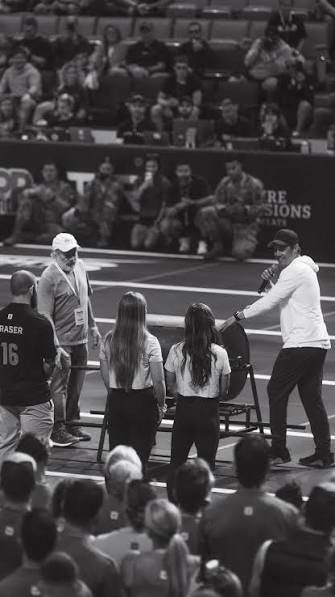
Back at the SAP Center in San Jose where the opening ceremonies were happening, Annie and her daughter each reached into the hopper, chose a ball, and handed both of them to Castro. He examined them and then got back on the mic to announced to the crowd that Annie and her daughter had pulled the movements of toes-to-bar (gymnastics exercise where you hang from a high bar and raise both feet to touch the bar simultaneously between your hands) and snatches (an Olympic weightlifting movement where an athlete lifts a barbell from the floor to an overhead position in one continuous, explosive motion.). Then, Castro asked CrossFit champions Mat Fraser, Tia Claire-Toomey and Jason Khalipa to each make up a workout based on these two movements (what, in CrossFit, is called a couplet). These three workouts will be posted on social media, and the community will vote on which workout they want the athletes to do. By midday, the three workouts appeared on social media. Later in the day, the community voted and chose Tia Claire-Toomey’s workout: 3 rounds for time of: 21 toes-to-bars, 7 unbroken power snatches (65/95 lbs), 7 unbroken hang snatches (65/95 lbs), and 7 unbroken squat snatches (65/95 lbs).
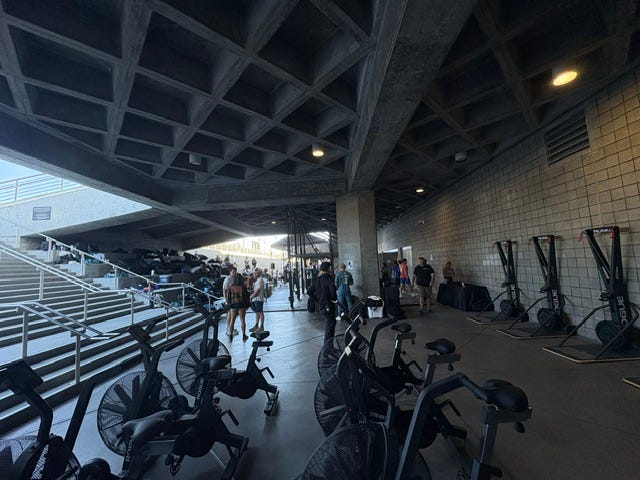
Before the first individual event of the day began, I headed back to the warm-up area, which was located behind the stadium. In it, athletes can try out any of the equipment that’s being used during the upcoming events. There are rigs, lines of echo bikes, ski ergs, barbells, and weights. In the far corner, there is an area dedicated to rehab. A team of masseuses, old-school ice baths (just big tubs with water and ice), and medical staff on standby.
Last night, the athletes had given a press conference in the CrossFit vendor village, an area where vendors from around the world sell their wares to hungry CrossFit addicts. Hordes of people were buying bright colored shirts, sweatshirts, and CrossFit gear. Stores with official CrossFit gear were packed. In the corner, the Marine Corps set up a challenge: anyone who could do ten push-ups or could complete a minute of burpees was given a free backpack. The line for this challenge wrapped around the booth. Groups of girls lay down on the ground, pulled their bodies into planks, and started doing perfect push-ups to the applause of the servicemen. No woman was afraid to show her strength in this crowd.
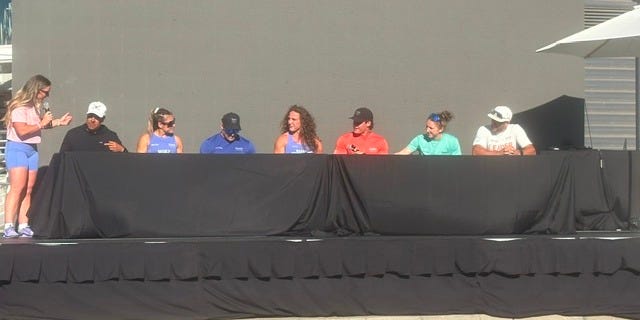
The sun was still shining brightly when the athletes were welcomed onto the stage by the announcer, Lauren Kalil. James Sprague (the reigning leader who was wearing the white and red leaders jersey), Lucy Campbell (who had just demolished the seventh event the first day of events, called Swim Standard, which was an interval-style swimming workout featuring a total of 500 meters of swimming and 100 burpees. Lucy not only beat all the women but also all the men: Ty Jenkins, Alex Gazan (who set a new record for the CrossFit total at 920 LBs, with an unfathomable 170 strict press), Pat Velner (who is retiring after the games), and rookie Aline Wirz. The athletes had just finished the first day of competition, where they had competed in seven events.
July 22, or day one, began for the athletes at the SAP stadium around 6:30 AM, where they boarded a bus to the events' venue: Morgan Hill Outdoor Sports Center, twenty-four miles away. The first event was a repeat of the hopper, which was a throwback to that very first CrossFit Games workout consisting of a 1,000-meter row on a rowing machine followed by 5 rounds of 25 pull-ups and 7 push jerks (135/85 lb). In a Push Jerk, you dip, drive with your legs, and aggressively press yourself under the bar into a partial squat to lock it out overhead.
Directly after the first event, the athletes again boarded a bus that took them to the Ranch in Aromas (about 25 miles away). did the Ranch 7200, a grueling 7,200-meter trail run. Then, the athletes boarded the buses again and went back to the Morgan Hill Outdoor Sports Center. The third, fourth, and fifth events were the three lifts in the CrossFit total: Back Squat, Strict Press, and Deadlift. This is the event where Alex Gazan blew Tia Claire-Toomey’s record (890 lbs) out of the water: Back Squat - 330 lbs, Shoulder Press - 170 lbs, Deadlift - 420 lbs for a total of 920 lbs.
The sixth event, called Grass Oval Bicycle Race, consisted of riding a mountain bike for 20 laps around a grass track. Then, they were escorted to the pool where they competed in the seventh event, which Lucy Campbell had won, “Swim Standard”.
Back on the panel, the athletes looked out at the audience, and it was hard to tell that just yesterday they had competed at a very high level in ten events. They all looked relaxed and smiled out at the crowd. When Alex Gazan was asked how she felt about the first day of competition, she said she had fun. She’d learned from the tragic car accident that kept her from the games last year how quickly everything can be taken away from you. Shortly after punching her games ticket in 2025 at the Northern California Classic, Alex and her husband were in a horrendous car accident that left her with a fractured fibula. Through the months of recovery she endured, she’s gained more perspective about what a privilege competing at this level is, and she really focuses on the “dream” side of her job. Her advice to future athletes? Don’t rush.
When asked about how she felt about winning another swimming event, Lucy said she’s finally feeling more comfortable having faith in the fact that if there is a swim event, she will likely win. She said she’s been feeling a lot of pressure returning after getting second to Tia last year at the 2025 CrossFit Games. So instead of focusing on that pressure, she’s concentrating on her personal wins. And realizing that programming makes a difference. She’s concerned about some of the upcoming movements (triple unders, ring rolls, etc.) and admitted that she spent her rest day practicing these movements instead of recovering.
After the panel ended, fans swarmed the athletes. Little girls ran up to Alex to have her sign their t-shirts; former swimmers were congratulating Lucy on her incredible swim. Everyone was in awe of what these athletes could do with their bodies.
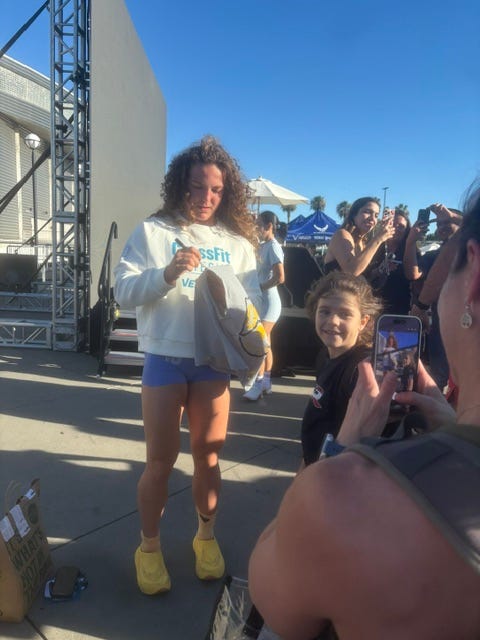
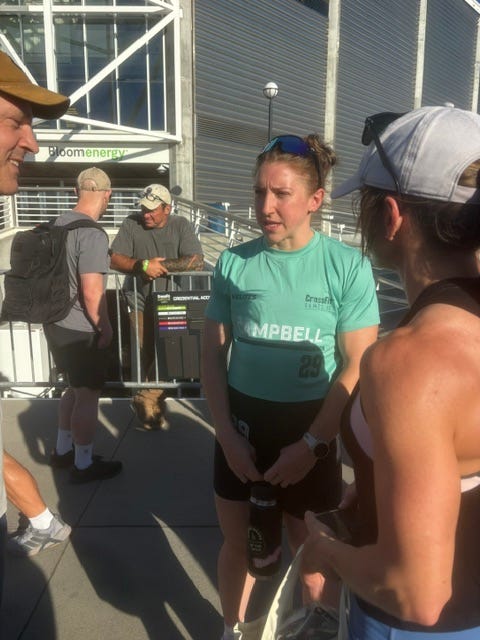
When I sat back in the stadium the next day, getting ready to watch the first individual event, I couldn’t help but think about how different each of the top women was and how each body served its purpose.
Comments
Nothing yet. Say the first thing.
Sign in to join the conversation.