
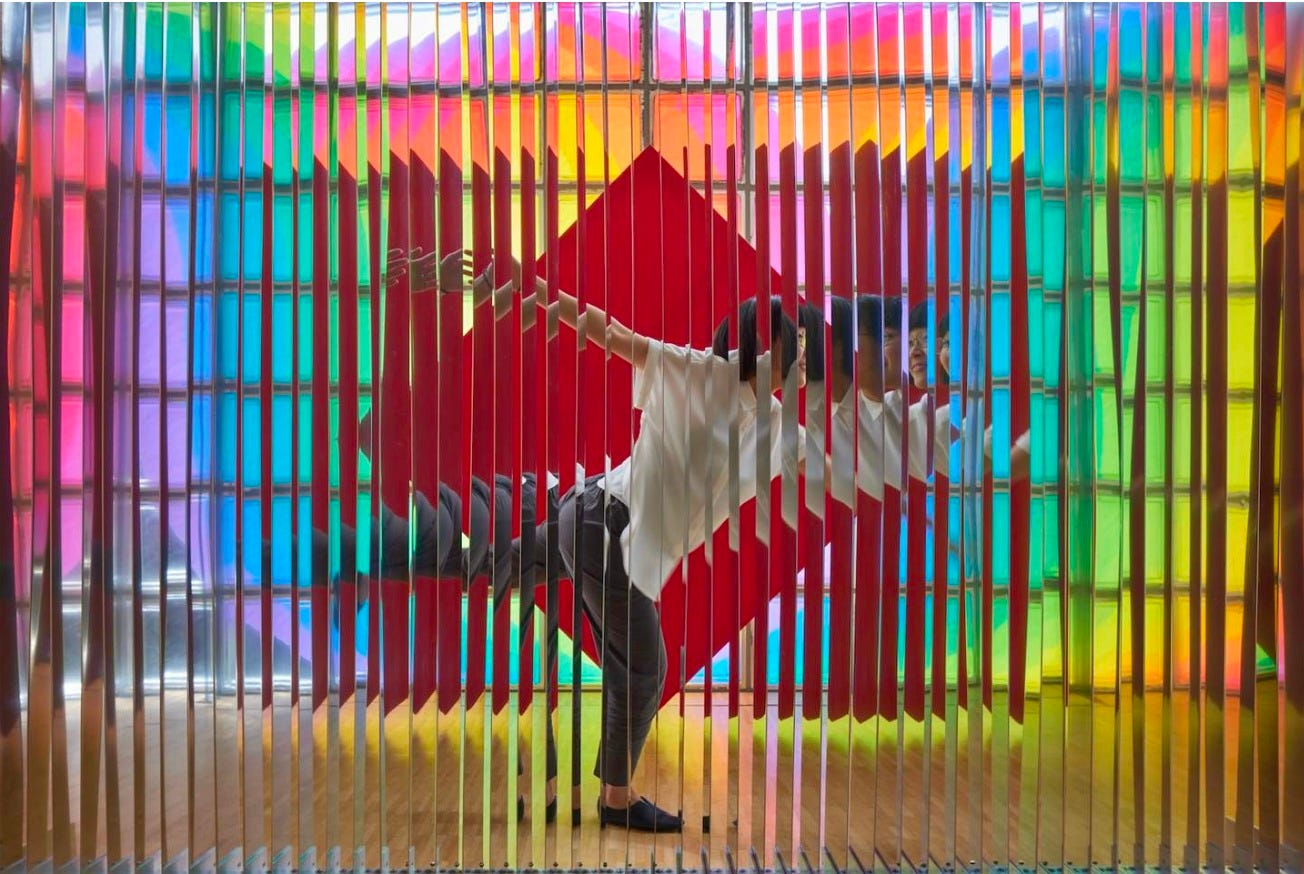
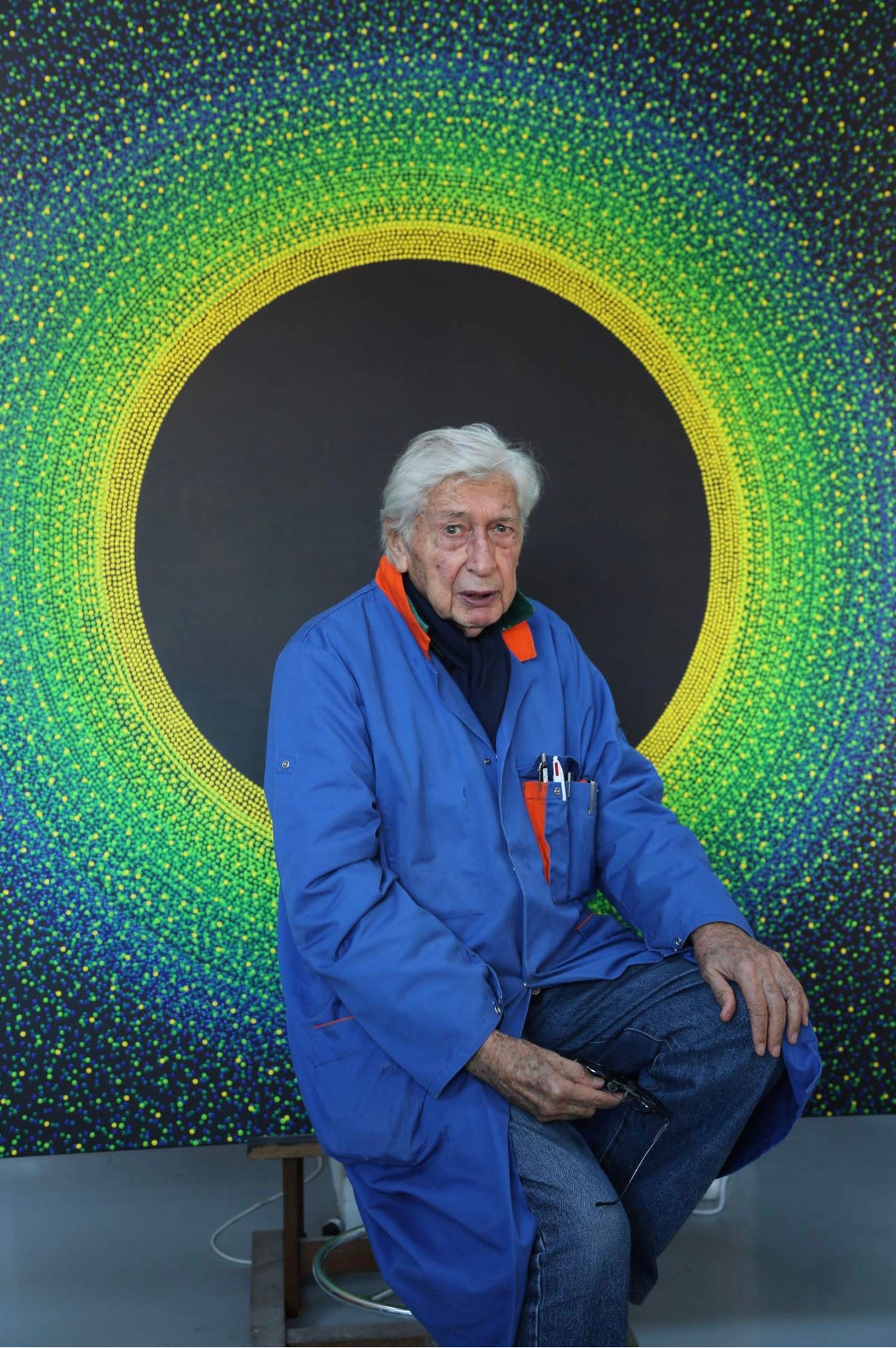
Tate Modern opened a retrospective exhibition of Julio Le Parc’s (Argentinian, 1928-2026) art on June 11, 2026.
Discover seven decades of joyful works by Argentinian artist Julio Le Parc, which turns visitors into active participants
Playful and mesmerising, this immersive exhibition celebrates the visionary work of Julio Le Parc. Featuring his striking interactive installations, shimmering light sculptures, and large-scale geometric paintings, the show spans an extraordinary career from the late 1950s to the 2020s.
He is best known for his pioneering kinetic sculptures, which use light, movement and mirrored surfaces to surprise and draw in the viewer. Le Parc wanted to make viewers feel active, with their acts of looking and experiencing bringing each artwork to life; to make more democratic art that everyone can easily enjoy.
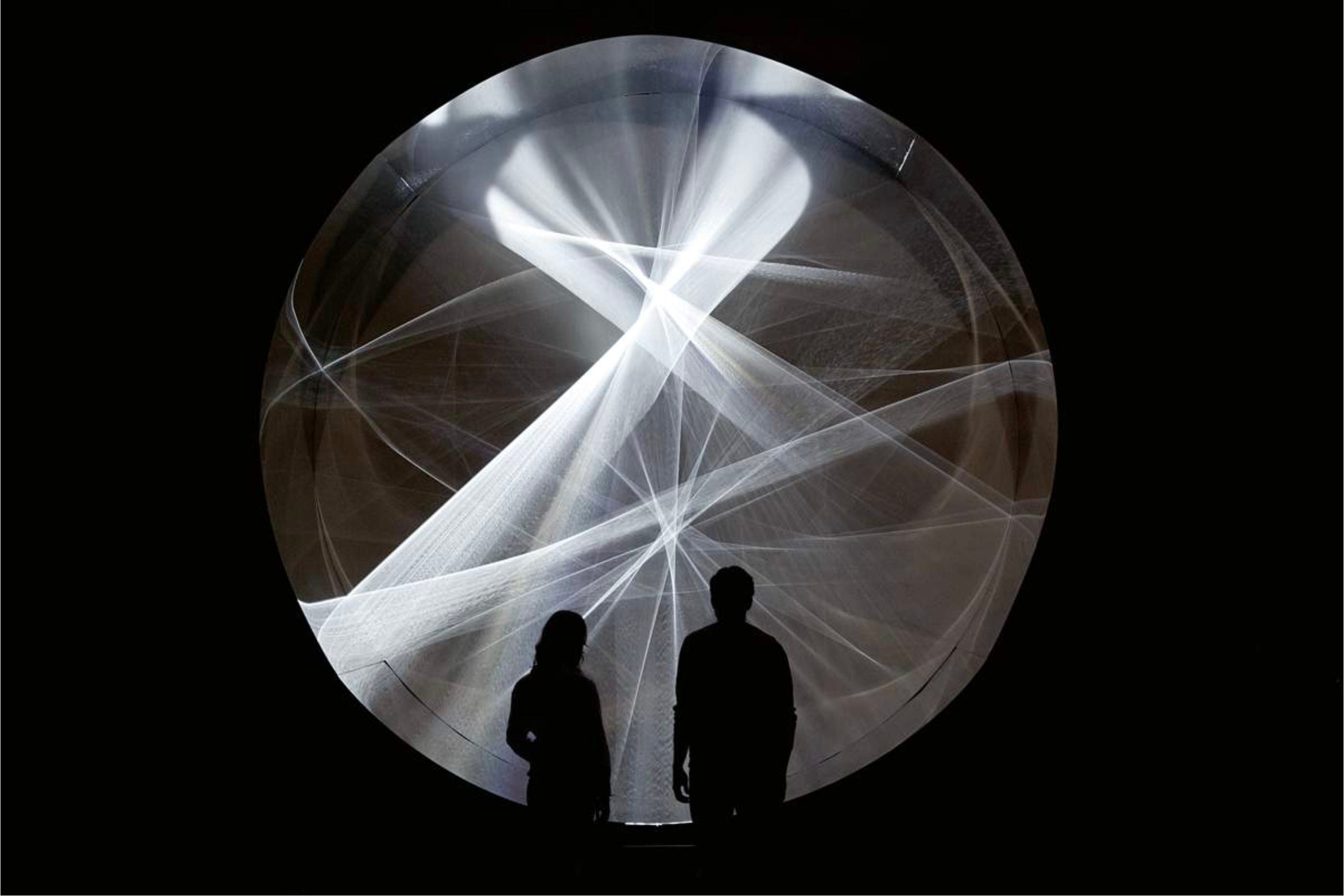
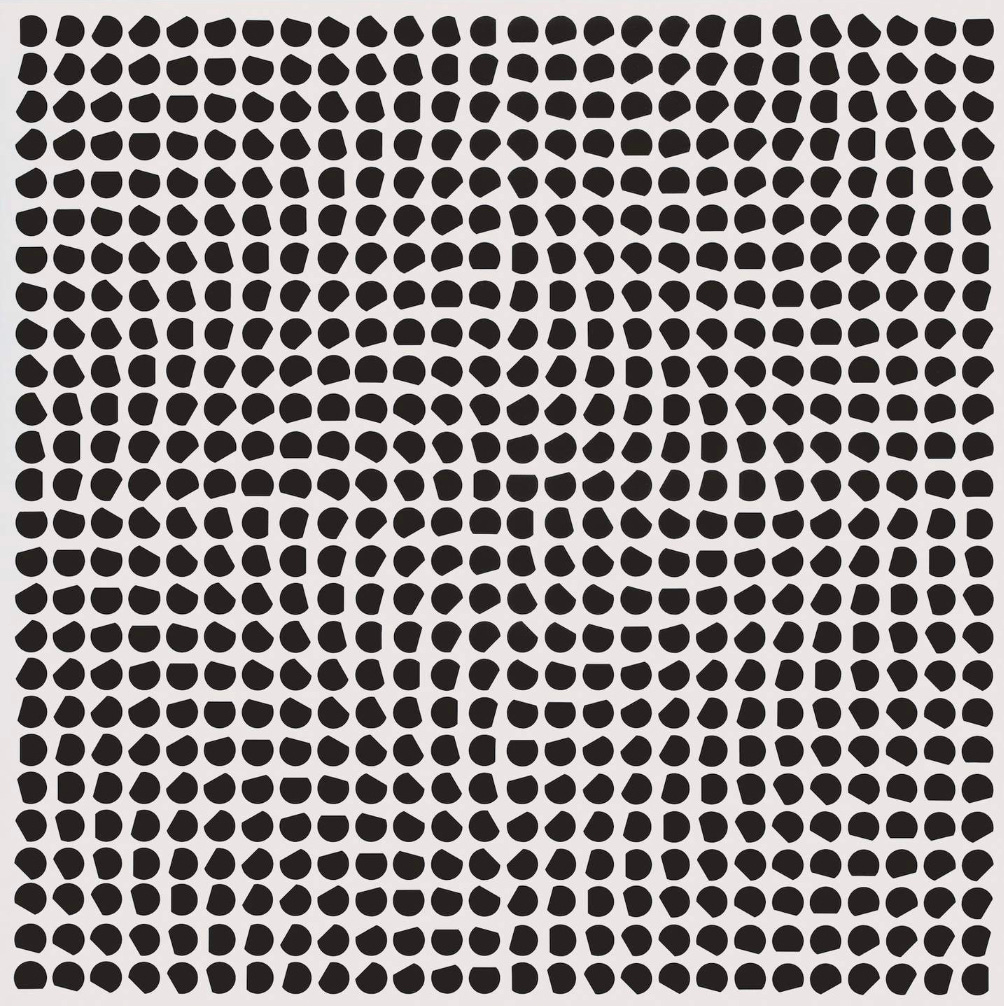
The show also explores the depth and diversity of Le Parc’s talent, with trailblazing installation art plus canvases and works on paper experimenting with colour combinations and dynamic visual effects.
Born in Argentina in 1928, Le Parc moved to France in 1958, where he settled. He was part of the vibrant artistic scene of 1960s Paris, a time of radical innovation and boundless creativity, but always maintained strong connections to Latin America. His story offers a fascinating insight into the evolving practice of an artist who, like his work, keeps surprising us and never stands still.
Find out more about the exhibition at Tate Modern
Welcome to the wonderful world of Julio le Parc. Think immersive, interactive installations, shimmering light sculptures, and large-scale geometric paintings. This exhibition brings together some of Le Parc’s most important works.
Have a question? Ask in the comments.
According to Le Parc, a piece of work is not finished until the visitor steps inside it or comes into contact with it – as though they are the final piece of the puzzle.
Le Parc formed part of GRAV, le Groupe de Recherche d’Art Visuel. They collectively stood for making art using simple forms that generated direct sensual experiences for the viewers. They believed in the idea of shifting the focus from artist over to audience.
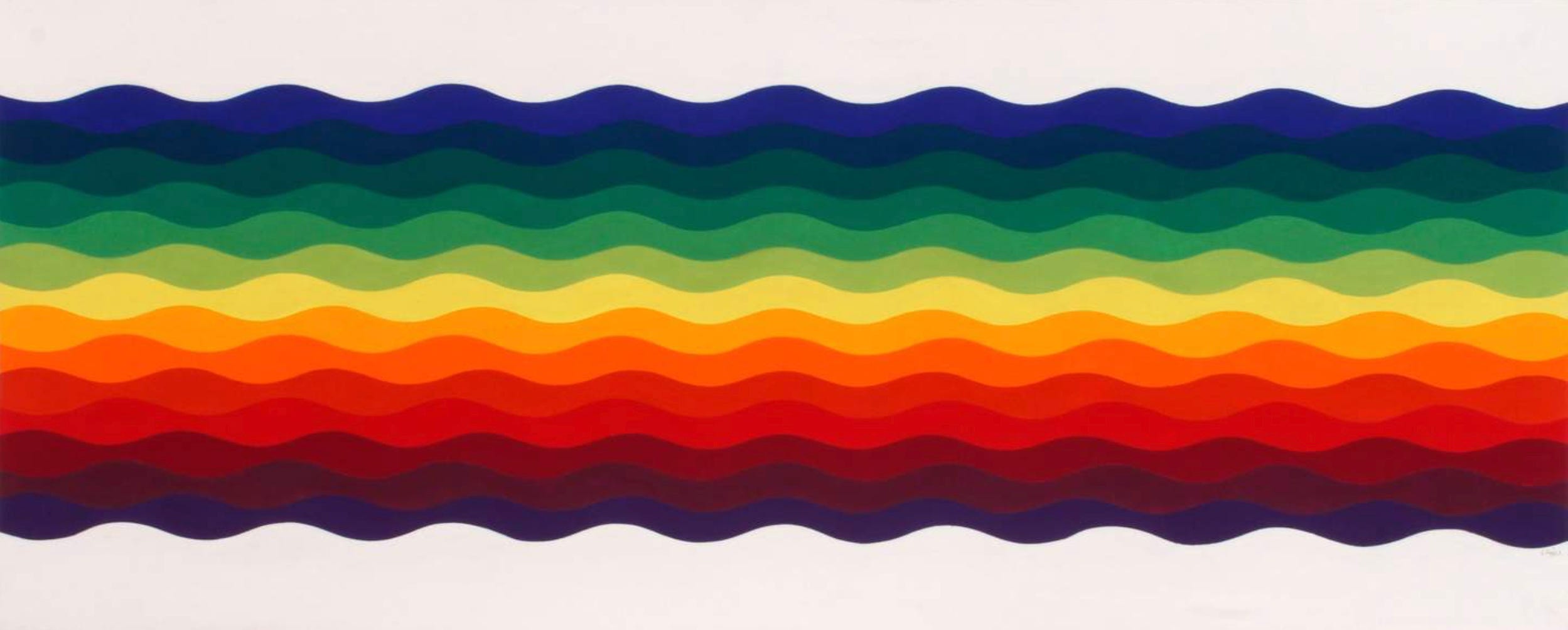
In the exhibition, you’ll notice plenty of rainbow coloured artworks. From 1959, Le Parc began exploring colour using a rule-based approach.
To make his rainbow artworks, he chose fourteen colours and combined them in precise, mathematically calculated patterns. He calculated it would take 150 years to actually physically make every possible variation.
From 1959, Le Parc used light as a sculptural medium. He used it systematically, exploring ways of creating reflection, refraction and vibration. In his Continual Light Mobiles, opaque, reflective or translucent forms sway in response to slight breezes, reflecting light from spotlights or natural light sources to create ever-changing reflections.
Le Parc has rejected being in the spotlight. When offered his first major Paris gallery show, he was reluctant to engage with big institutions, so asked his 8 year old son to flip a coin to decide whether to proceed. The coin toss determined his answer and he declined the invitation.
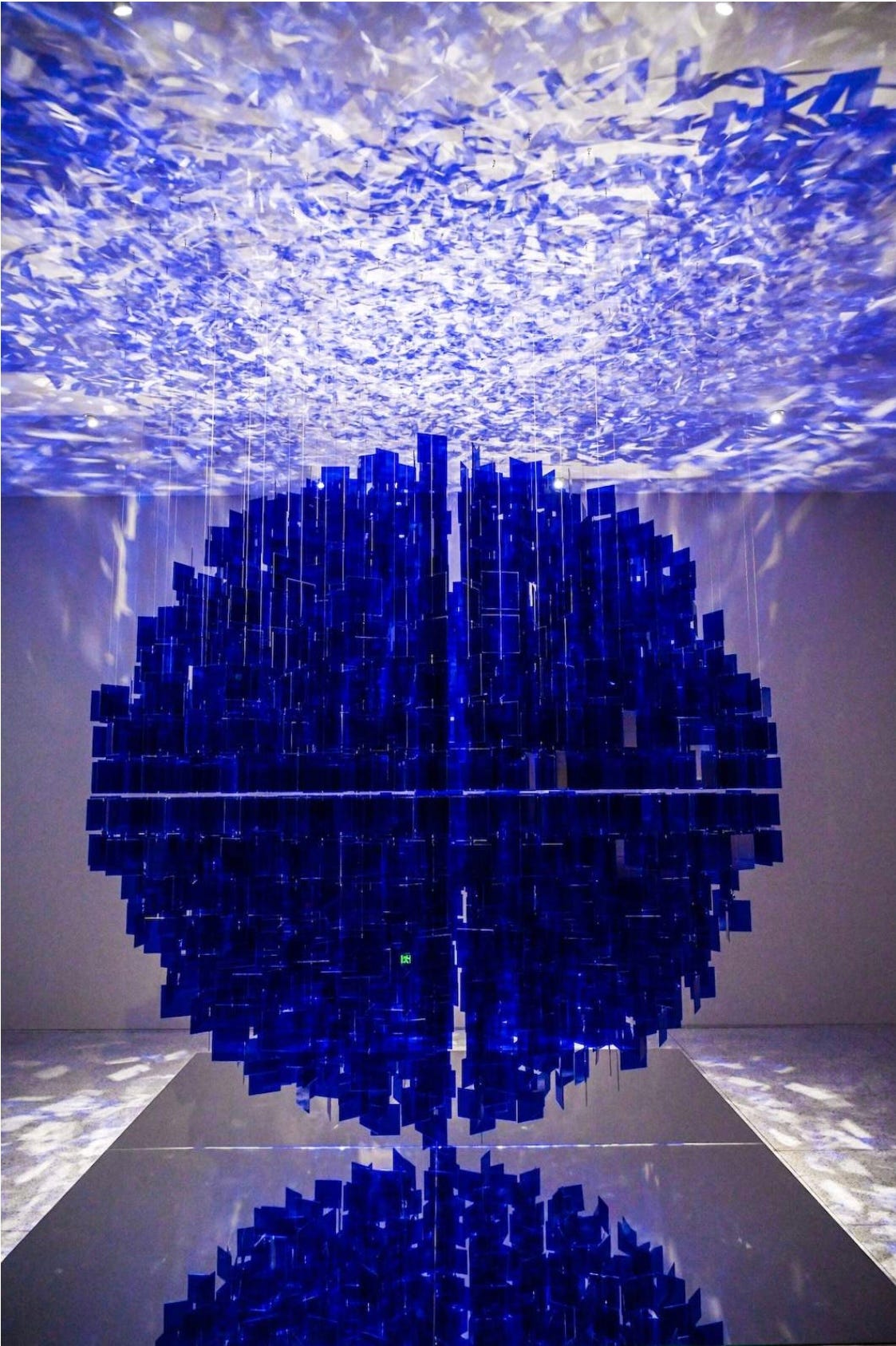
Le Parc often revisits and expands on his older works. Returning to the Continual Light Mobiles of the 1960s, he has produced a wide range of new mobiles, including Blue Sphere 2001–22. These recent mobiles appear to hover like exploded views of geometric solids, composed of acrylic or reflective squares, which catch the light at different angles.
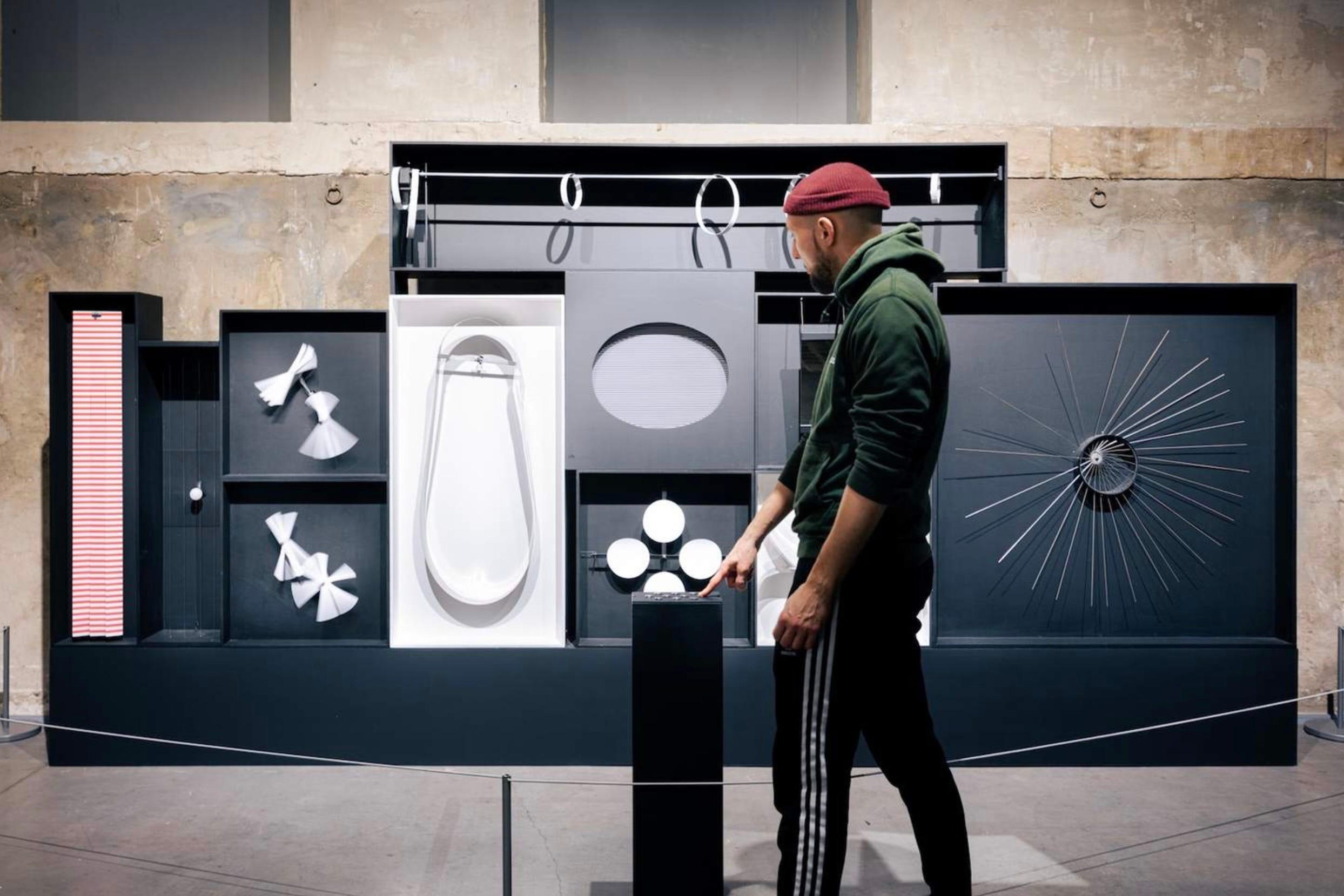
Le Parc has made several interactive works, which respond to touch or pushing buttons. He displayed these in groups called ‘Game Rooms’. As well as wanting spectators to be surprised by unexpected visual effects, Le Parc intended that they should become aware of their active role in completing the artworks, in direct or intuitive ways. He was fascinated by the connections created between people as they observed each other, often finding spontaneous ways of ‘playing’ together.
© The Board of Trustees of the Tate Gallery, 2026
Exhibition:
“Julio Le Parc: Light. Colour. Action,” through May 3, 2027 at Tate Modern, Bankside, London, England, UK. https://www.tate.org.uk/whats-on/tate-modern/julio-le-parc
Thanks for reading and for subscribing and commenting. We appreciate likes and shares. Laura Heyrman will be back soon with more art.
Comments
Nothing yet. Say the first thing.
Sign in to join the conversation.