
ALSO KNOWN AS: hairy crabgrass, hairy finger-grass, large crabgrass, crab finger grass, purple crabgrass, Digitaria sanguinalis
0:00
-11:23
Grasses are the first green we play in, the first green we hide in. Grasses make up 40% of all land area throughout the world. It’s the grasses we lie in, it’s the grass at our feet. It’s grass that the reaper harvests when it’s time. It’s time to touch grass. Part of this has to do with the construction of environment through lawns, but that doesn’t take away from the relationship we have with grass: it is so present, so indicative of what it means to be outside. The only challenge is so many of them look the same, but look deeper and understand that there are many forms of grass. They are part of the Poaceae family which includes bamboo, wheat, turfgrasses, corn, and rice. All plants that sustain us long term and can live in storerooms for a long time.
Straw men, scarecrows, all of these grass figures that humans burn, or take down, or scare the wild, they are representations of each of our own fallacies - and our own togetherness. Through its ability to sustain us and its multiple uses, civilization has a heart of grass.
So crabgrass is everywhere around the northern hemisphere. Its origin is unclear. It may be native to North Africa or Asia. Though there are also Stone Age remains in what is now Switzerland of this exact crabgrass species. Thus, it has a long history throughout the “old world” as both fodder and food. Crabgrass was cultivated by Slavic peoples who used it as a kasha, or a grain for porridge. As it is with grains, crabgrass can even be made into a beer. Records show that by 2700 BC crabgrass was used in China to treat “summer heat” and fever.
While crabgrass is now considered a persistent weed, for the majority of history it has been used as a forage, and not a low yielding one, not a hunger crop you could eat if you absolutely had to. No, the seeds from crabgrass make a coarse powder that can be ground into a semolina grade, the same gluey source of pasta. It has such a high content of protein and gluten that it sticks fast. Each plant can make 150,000 seeds.
Purple crabgrass won’t look clean like the turf grasses of fescue, Bermuda, or bluegrass. It sprawls and doesn’t follow rules. It’s not even admired as a wildflower. It’s literally the lowest weed.
There are 271 species of crabgrass and most of them are to blame for crop loss due to their ability to resist pesticides and they don’t really seem to give a hoot where they grow. My dog has peed on many a crabgrass, to which the crabgrass replies. “Is that all you got?!” Crabgrass goes on to be one of the top most destructive weeds to crop farmers in the world, from Argentina to Saskatchewan, and from South Korea to California. One number states that purple crabgrass was responsible for 59% of soyabean loss in Argentina. Loathe to farmers, the tiny seeds embed themselves into farm equipment and disperse as they see fit. They just about germinate with a touch to the soil, all they need is sun. And yet they will not live the summer long. Crabgrass will die away with the first frost.
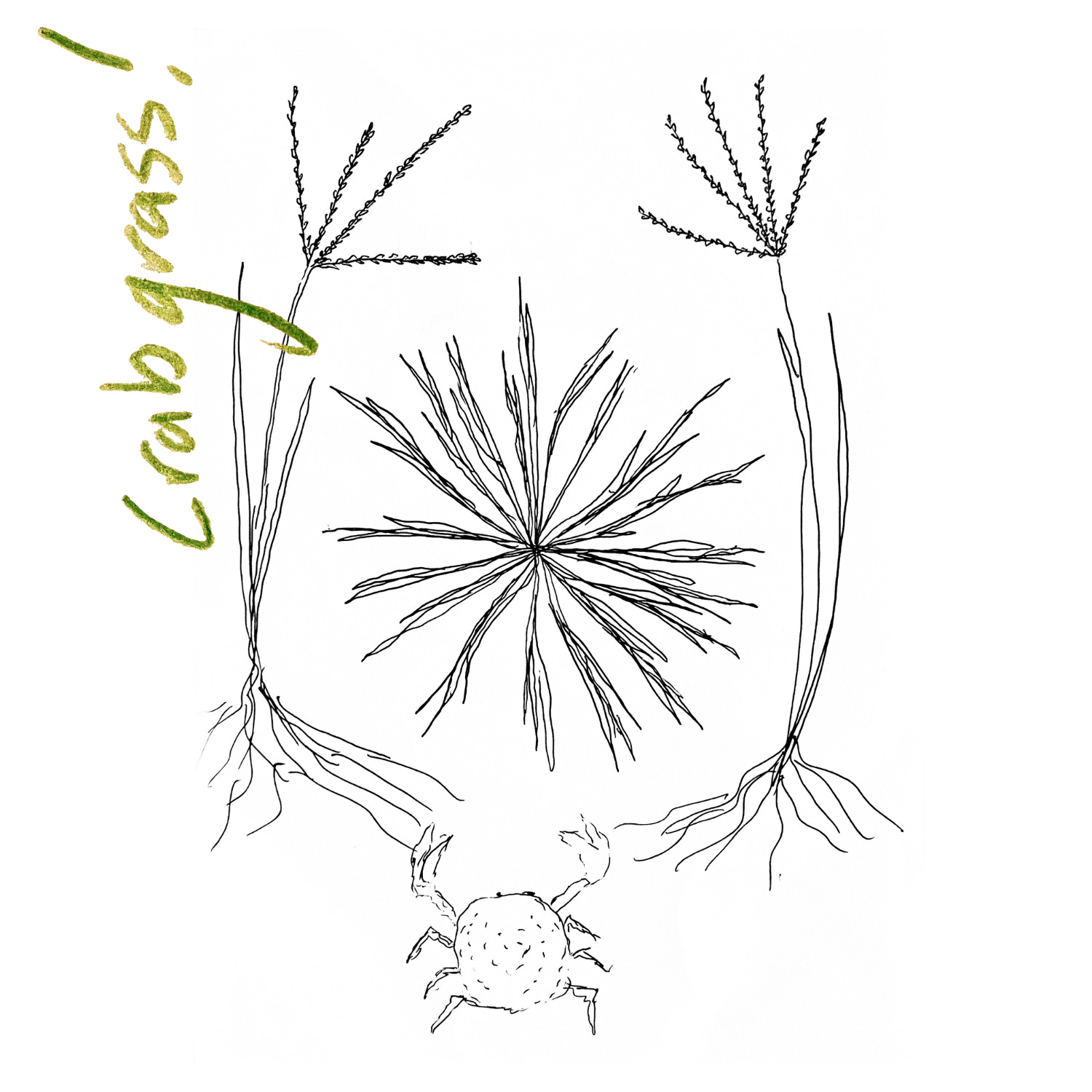
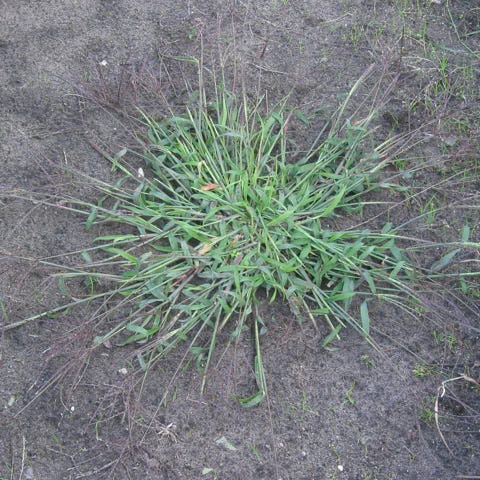
So crabgrass begins in a circle. Stalks spread out on all sides, nearly pressed down and from whose ligules new shoots will dig into the soil. Despite their ridiculous growth pace, they don’t grow very deeply. And then there’s the leaves, which hug the stems in fibrous sheaths with hair along the entire body of the plant and tufted from the seeds in fall. The stems are segmented into mauve joints and when the leaf comes out at the ligule there is a transparent membrane clasping the stem.
Digitaria sanguinalis. Literally translated to blood fingers. The stems blush purple as if coursing with life. The inflorescences are spikes that split into two or fifteen segments. The bloom and their pollen will blow in the wind, swelling with seeds that have tiny green rays that grow so tight against the stalk they look like clean braid. As it is with so many plants, their flowers tell their story. Flowers poised as pincers and a low growing rounded body, that’s how the image of the crab comes to be.
Crabgrasses have this special ability to preserve the nitrogen between their mesophyll and bundle sheath cells making healthy reproduction and strong growth almost inevitability. Not only do they disregard herbicides, they store their energy so that they become nearly super plants. They also lower the biomass of microbes in the soil, making it difficult for certain seeds like sunflower and sorghum and many more, to germinate at all, and put significant strain on the ever-powerful wheat. Certainly crabgrass lowers the potential of the soil and eliminates competition by making the place less habitable.
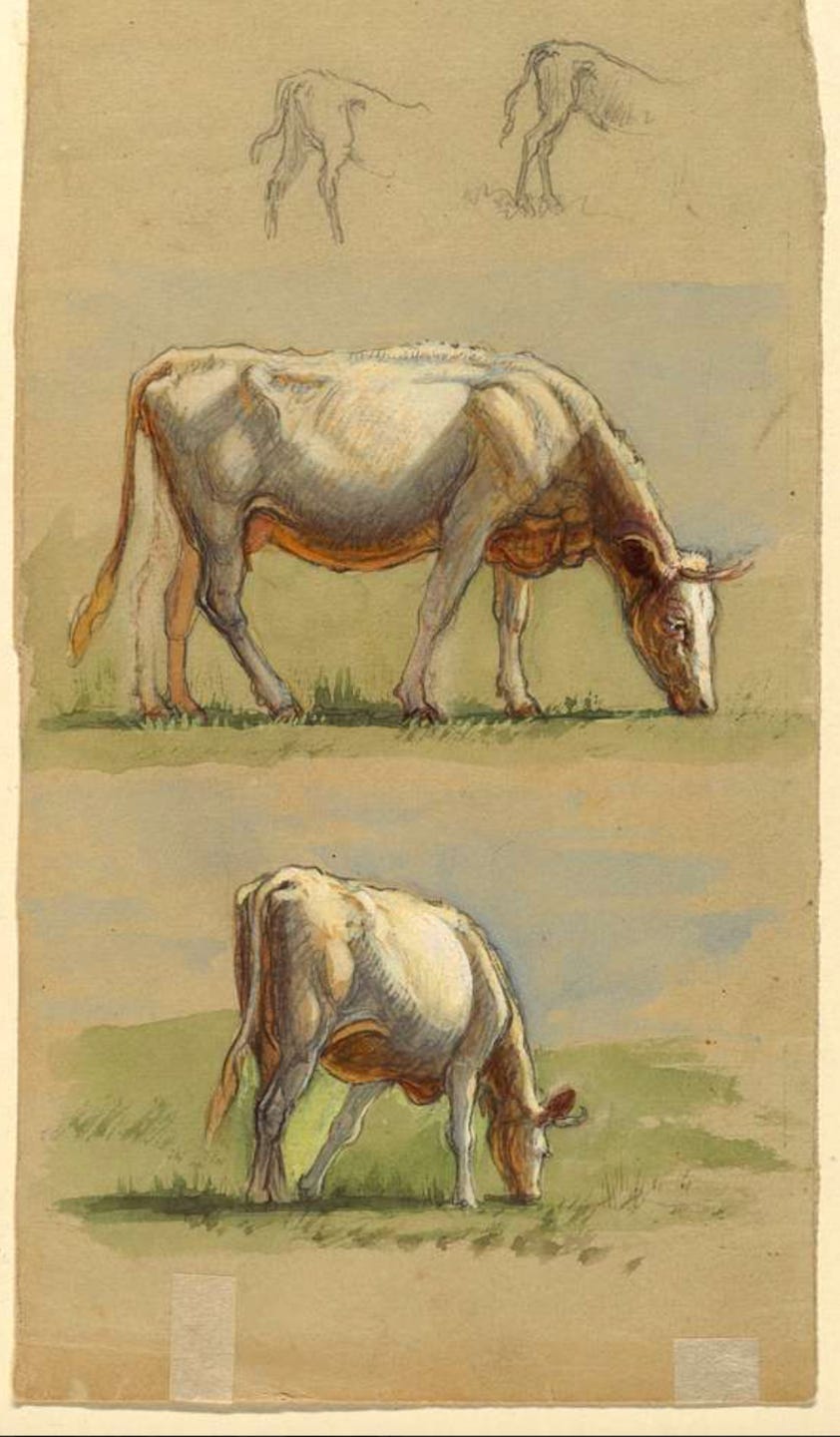
However, the medicinal properties are abundant. Prepared correctly and crabgrass prevents ulcers. It is anti-inflammatory, anti-diabetic and anti-depressant. If mixed with a healthy done of tasty legumes, crabgrass is a favorite forage for cattle, and it can also prevent the presence of parasites. It was first sold in the US as a cattle forage in 1849 and thus it was systematically planted. The seeds are food for all sorts of doves, quails, turkeys, and the ever present sparrow.
Because they grow in nearly deadened soil, crabgrass is a potential valuable source of food for land that is still dealing with the destructive impact of the green revolution that brought soil stripping crops to countries in the southern hemisphere as an attempt to solve hunger but instead brought plants that were neither culturally relevant nor suitable for the environment, or through climate change scenarios that would make it hard to grow any other crops. Crabgrass has been used to prevent erosion for its quickness of growth.
The seminal book about suburbanization in the United States is called Crabgrass Frontier. Author Kenneth T. Jackson elucidates how the term “suburban” used to connote a city, whereas now it is distinct from a city. Wherein the early 1900s there was a sense of pride within city life, industry, building, being together - close to one another. I look at New York City now and see alienation play all over, though the distinction between rich and poor. The idea of land control and management has for so long been one of wealth. But in one of the wealthiest cities in the world, a pesky grass still grows.
A type of crabgrass that grows beside the Dogon people in Mali was believed to be what burst and became the world. I imagine the people who cultivated purple crabgrass first, likely in the massive steppes and alpine meadows pocked with dry or xeric landscapes in the Caucasus mountains. Okay, so we put the name of “weed” on plants. Look down on a plant a dog pees on or that we walk over between the fissures in a sidewalk. We say we can’t control them. The world is changing beyond recognition. Too much control looks like a lawn plastered in pesticides. Crabgrass is kind of like an invitation - a way to look deeper at the plants around us. You can be afraid that it’s taking over. Go ahead, scream. But that isn’t going to make the crabgrass any less persistent. It likes unhealthy environments. It will take you as you are, in all your tiredness and wandering, with all the foulness city living can feel like. Perhaps it even wants a loving, or decisive hand, one that remembers it in the mountain meadows, who saw its seeds and believed it could sustain many, to say, yes, I see you too. In so many ways, the world begins when we see it.
myth for crabgrass
0:00
-3:56
Text for myth, Music for myth: Clara Schumann - Notturno / Nocturne in F Major - Op. 6, No. 2, Recorded, produced, and published by: Gregor Quendel
The arrangement is based on the notes by: J. Fung License Terms: CC BY-NC 4.0 © 2025 CLASSICALS.DE EXCLUSIVE RECORDINGS
Forager Friendly?
Go ahead, make sure to pick it out by the root and don’t let too many seeds fall off.
Sources
https://www.umass.edu/agriculture-food-environment/turf/fact-sheets/biology-management-of-crabgrass
https://onlinelibrary.wiley.com/doi/10.1111/wre.70032
https://cals.cornell.edu/weed-science/weed-profiles/large-crabgrass
https://www.minnesotawildflowers.info/grass-sedge-rush/hairy-crabgrass
https://warcapps.usgs.gov/PlantID/Species/Details/2490
https://oregonflora.org/taxa/index.php?taxon=4567
https://blogs.cornell.edu/weedid/crabgrasses/
Crabgrass frontier : the suburbanization of the United States, Kenneth T. Jackson
https://www.eattheweeds.com/crabgrass-digitaria-sanguinalis-2/#google_vignette
https://pfaf.org/user/Plant.aspx?LatinName=Digitaria+sanguinalis
https://www.nationalacademies.org/read/2305/chapter/6
Turfgrasses: Their Management and Use in the Southern Zone, Richard L. Duble, Second edition, Texas A&M University Press
Comments
Nothing yet. Say the first thing.
Sign in to join the conversation.