
All seasons bring something special, but the rhythm of spring and fall make them my favorite. They are the buffers out of and into the extremes of winter and summer, the times when one thing can morph into something else, similar or different.
Rather than a steady transition, this spring has felt weird. Heat followed by pulses of precipitation. The warmest March on record. Plants are waking up weeks ahead of normal. Snowpack is running off way too early. A couple weeks ago, I drove through Donner Pass and saw barely any snow. It felt like the end of spring, when it had hardly started. After that, we had a few late-season storms and a rainy few days, even some snow in the mountains. Not enough to make up the deficit.
The changes of this spring — much more apparent than in recent years — have been for me a constant reminder of transitions, and how much uncertainty and variability can exist within these shifts. It’s made me stop to reflect on the in-between spaces. Even if, in other years, change is so subtle we miss it, these spaces are always there. This year has made me pay more attention, attention I should give every year.
I write about it here because there are resemblances to water, so often occupying a transitional place. Water is cyclical and changing, constantly. The mechanics of these transitions happen on such a granular level it can be easy to forget them, until the extremes come, a drought year or a flood year. But change is happening all the time.
Water also rewards attention to detail.
And 28 days into spring, 67 days until summer, it’s a good time to pay attention.
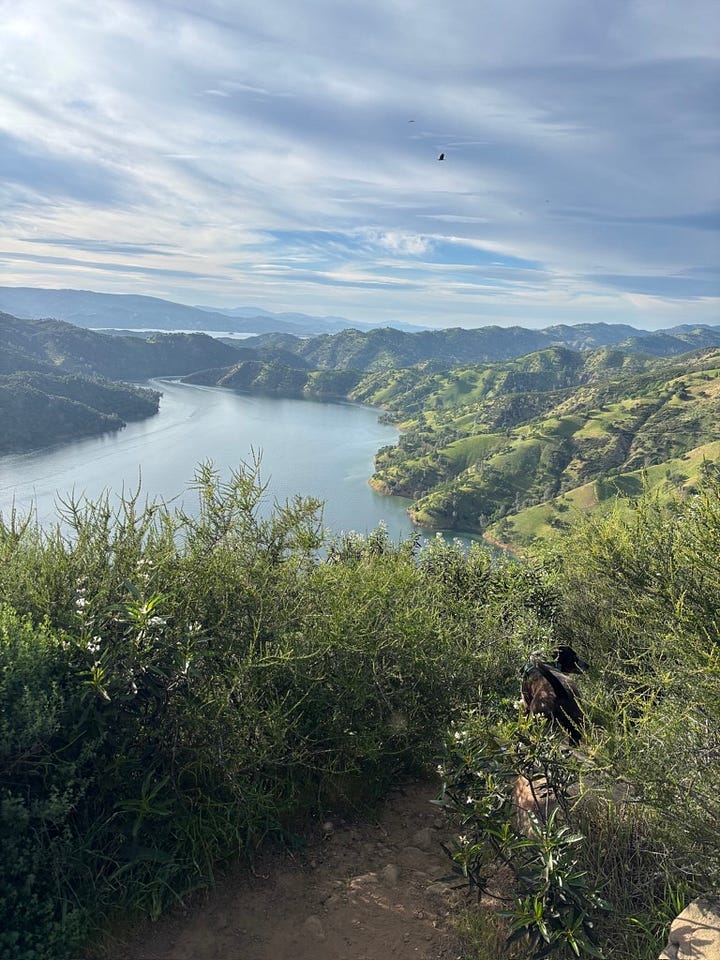
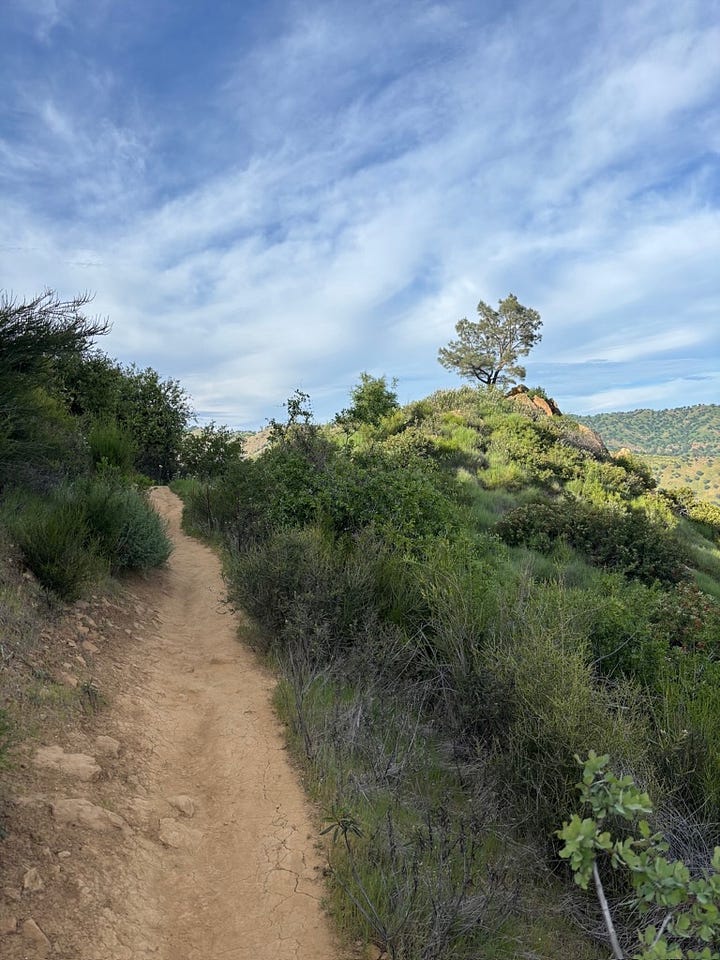
Visit a river, a spring, a wetland, and you glimpse only a part of a watershed at a place and point in time, connected to many other places and points hidden from view. Blink and it’s not the same. You’re witnessing water in the middle of a broader story.
Over the past few years, the time piece has become more important to me, seeing our water systems as not only as they are in the moment but shaped by time. That is, the water cycle alone is not the only player. We, too, have left our mark and influenced the shifts and transitions that we see. With dams, diversions, ditches, flood control, return flows, water rights. And these pieces of infrastructure all have their own histories.
To that point, I wanted to share an essay I came across this week that resonated with me. It’s titled “A Water’s History of the United States” and calls us to “examine water as an active force in U.S. history rather than a backdrop to national development.”
As the paper notes, historians have long highlighted the role of land expansion and territorial conquest in the story of the U.S., touching on, and at times, emphasizing its connection to water. But the essay calls for more intentionally centering water:
“A water’s history of the United States is indeed meant to bring such an environmental historiography into conversation with the rising field of the “blue humanities”—the study of the changing relationship between human cultures and organizations and water—and move toward a more critical history of the United States, one that is better attuned to oceans, rivers, and other water resources in a way that fully acknowledges the role that water has played in carving both American progress and its innermost contradictions and paradoxes.”
The essay goes on to reject the idea that water has been a “backdrop” in U.S. history but a “driving force” in the country as it is today. I find their arguments compelling.
“In our analysis, water, through its physical properties, geographic distributions, and ecological dynamics, has actively shaped possibilities, constrained choices, and reconfigured power relations, driving institutional development and helping to determine political outcomes.”
How we present and discuss the past can inform the present and hopefully help shape the future. It illuminates the messy in-between space — where water has been and where it might be going. This feels especially true in the Western U.S. where water rights are explicitly tethered to the past. “First in time is first in right.”
Citation: Di Tommaso, Gaetano, and Dario Fazzi. 2026. “A Water’s History of the United States.” Modern American History 9(1):1–17. doi: 10.1017/mah.2025.10081.
Two major U.S. water developments I’m watching this week.
The Colorado River inches toward a decision-point: The Arizona Daily Star’s Tony Davis published an excellent story on the state-of-play as the Colorado River faces an immediate shortage crisis. As early as later today, the federal government could decide on how to move water around in the system to stabilize Lake Powell, which risks falling so low it may not be able to generate hydropower or reliably deliver water downstream. The decision could be made within days, as they work to finalize a mid-month reservoir forecast report, known as the 24-Month-Study.
From The Land Desk: Abysmal math on the Colorado River
From KJZZ: A short-term fix for Lake Powell could be coming
Senate votes to overturn mining moratorium in Minnesota’s Boundary Waters
From Minnesota Public Radio: “The U.S. Senate has voted to overturn a 20-year ban on mining on about 350 square miles of federal land near the Boundary Waters Canoe Area, paving the way for Twin Metals to renew efforts to open an underground copper mine near Ely, on the doorstep of the wilderness area. … The vote is a major victory for Twin Metals, a subsidiary of the giant Chilean mining company Antofagasta…”
The close vote of 50-49 uses the Congressional Review Act to reverse mining rules for the Boundary Waters. Environmentalists, Indigenous communities and outdoor groups have pushed back against copper and nickel mining in the national forest and upstream of the Boundary Waters. They’ve raised concerns about contamination from heavy metals and sulfuric acid. (NYT)
American Rivers released its list of most endangered rivers in the U.S. Four of those rivers are in the Western U.S., including the San Joaquin River and Amargosa River in Nevada, both of which face threats from mining. More on this soon.
A few other stories I’m reading:
Mining privately griped to governor about water regulator (Nevada Independent)
How much water do we have? Scientists map water beneath our feet (L.A. Times)
Fog is a vital water resource. Could it disappear in a warming world? (Science)
Metropolitan Water District allocates $150 million for wastewater recycling project planning (Smart Water Magazine)
The US Government Will Ask Data Centers How Much Power They Use (WIRED)
Searsville Dam Under Official Consideration for Full Removal (CalTrout)
New conservancy to help accelerate Salton Sea restoration (State of California)
What I’m reading on Substack:
No posts
Comments
Nothing yet. Say the first thing.
Sign in to join the conversation.