
Hi there,
Have a short dispatch today on a proposal to re-mine the abandoned Anaconda Copper Mine in Nevada. The mine not only represents the legacies of hardrock mining on water and public land in the West, but it also highlights the intersection between groundwater demands and connected rivers in arid regions where water is already stretched thin.
And it’s a story of groups — who may have opposing views on other management issues — voicing shared concerns when a common resource faces potential threats, what has come to be a thread throughout my book research and writing. Mining has been on my mind lately because the early policies that govern it are so tethered with the development of our water rights system in the West. Recently revisited this USGS report on water for the Comstock, and it is worth its own newsletter one of these days.
Quick housekeeping note: If you find my work interesting, you can help support this newsletter by passing it along to colleagues or subscribing!
Liking posts also helps boost the newsletter on Substack. As always, please reach out if you have any tips, ideas, or suggestions.
Daniel
As land goes, the polluted mines left by the Anaconda Copper Company are among the most studied parcels in the West. By the time Anaconda Copper was purchased by the Atlantic Richfield Co. in the 1970s, the company operated numerous sites, which have required extensive clean-up. The Berkeley Pit in Butte, Montana. The Leviathan Mine by Markleeville, California. The Anaconda Copper Mine in Yerington, Nevada.
Now one of those mines is looking for a future in its past. With a state-led cleanup nearing completion, a company is moving forward with the necessary steps to re-mine the Yerington Pit in western Nevada, as The Nevada Independent’s Amy Alonzo and Kate Reynolds reported this week. So far, as they report, water is a major concern.
The Anaconda Copper Mine sits in Mason Valley adjacent to the Walker River near land belonging to the Yerington Paiute Tribe. Mining ceased there in 1978, nearly 50 years ago, but the legacy impacts of mining continued to radiate in the watershed. To extract copper at the site, the mine dug below the water table. When mining stopped, the pit — roughly one-mile long and 800-feet deep — filled with groundwater. The pit lake is only a couple hundred feet away from the Walker River (see map below).
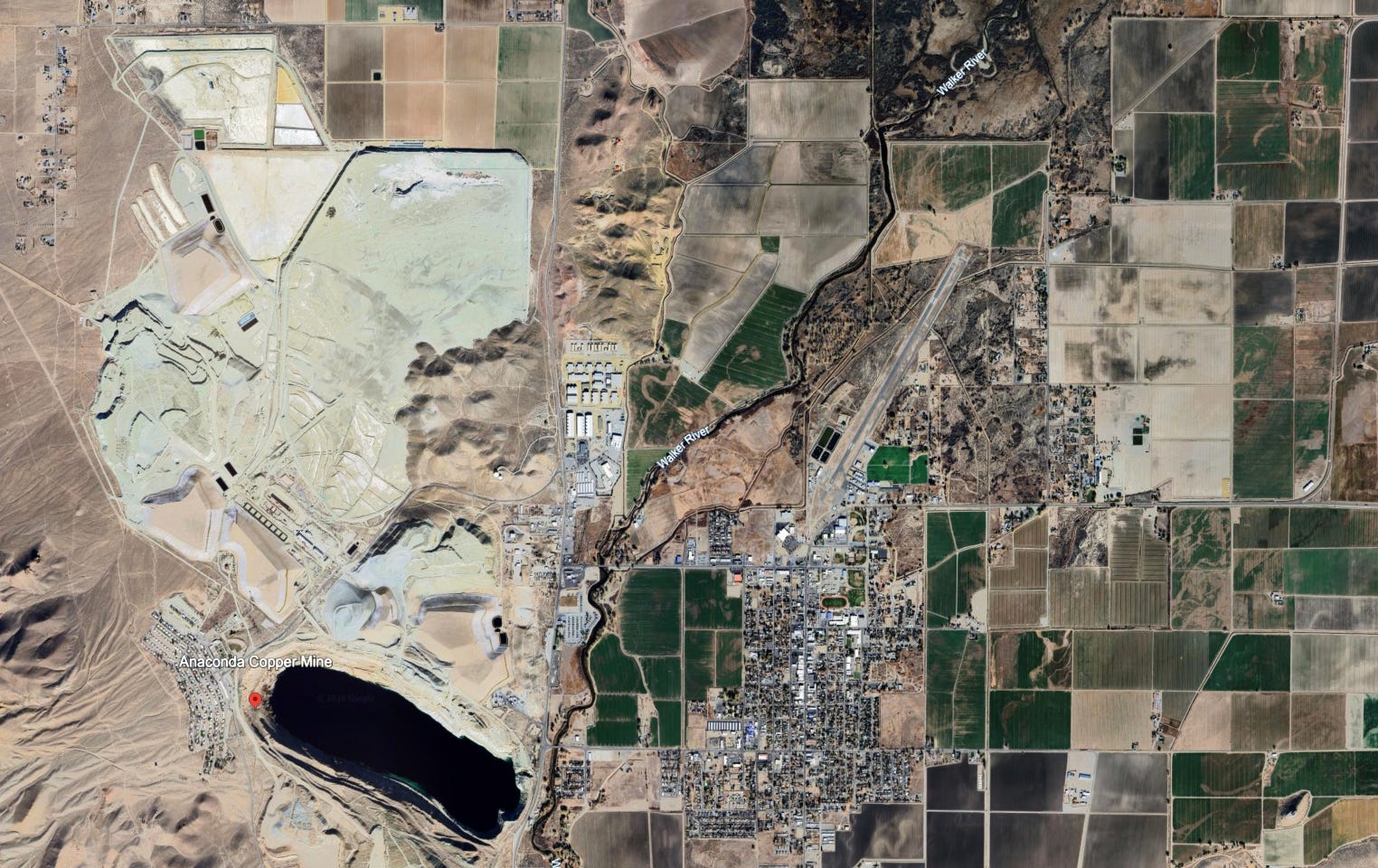
Efforts to cleanup the mine site and adjacent mine-influenced contamination in the local aquifer have a long, complicated history. But in 2016, the EPA proposed listing the 3,400-acre mine site on the Superfund list. Two years later, that listing was deferred and the EPA allowed the state to take oversee the cleanup.
To re-mine, the company has to deal with moving water. First, it will need to remove the ~43,000 acre-feet of water in the pit lake. In one technical report, the company has said this water could be treated and put into the Walker River, or infiltrated into the local aquifer. But even after that water is clear, it will need to pump groundwater to keep the pit clear as mining commences again, a practice known as dewatering. And this is where there has been some true apprehension from a range of water users.
Surface water and groundwater are interconnected in the Walker River Basin, as they are in many places. The Walker River Basin is over-allocated, with more rights to use water than there is water to go around. And apprehension about the prospect of re-mining is being raised by parties that come to the issue from different perspectives, histories, and incentives — a reminder that fault lines in water can cut into traditional coalition lines, even in places where allocations have been litigated over for decades.
In response to the mining company’s water rights applications to mine again in the Yerington Pit, the state’s top water regulator received four protests from four entities whose users rely on the river: the Walker River Paiute Tribe, the U.S. Board of Water Commissioners, the Walker River Irrigation District, and Walker Basin Conservancy.
At many times over the past few decades, these parties have fought in court over water rights on the river. But what they all have in common is that they hold decreed surface water rights to the Walker River, or represent water users who do. And so, their protests share a common concern that groundwater pumping to re-mine could deplete and affect streamflow.
From the Walker River Paiute Tribe:
Resumption of mine dewatering under applications 93718-93725 will place an additional consumptive use on the Mason Valley aquifer, exasperating regional water level drawdown and reducing Walker River baseflows and increasing river seepage loses through Mason Valley. Additional drawdown in the aquifer will jeopardize delivery of the Tribe's senior decreed Walker River water right, notably later in the irrigation season, and especially in dry years.
From the U.S. Board of Water Commissioners:
“The Applications do not provide information as to how the dewatering water will be discharged or disposed, what the options are for disposal and what the water quality of the dewatering water will be. The Board opposes any dewatering which would impact the flows or the water quality of the Walker River, its forks and tributaries or ditches used to convey decreed water rights.”
There’s a lot more to unpack here. For one, the federal government is seeking to sell land it owns at the mine to the Atlantic Richfield Company, a move watchdogs worry could reduce oversight and environmental review if mining moves forward.
I flag this story for a number of reasons. It’s not unique, and it’s worth watching with more and more mining proposals in the West.
With more pressure to mine in the U.S., what does water use and policy look like?
Similar to siting other industrial facilities, it’s not always the aggregate amount of water that is determinative of impact, but the particulars of how water is used and how they intersect with whole watersheds. This is a fact Jonathan Thompson over at the Land Desk did a great job emphasizing in the case of Arizona last month.
How does land use and ownership intersect with water use, and vice versa?
How does the physical connection between groundwater pumping and surface water — and concerns about streamflow depletion — translate into actual policy choices?
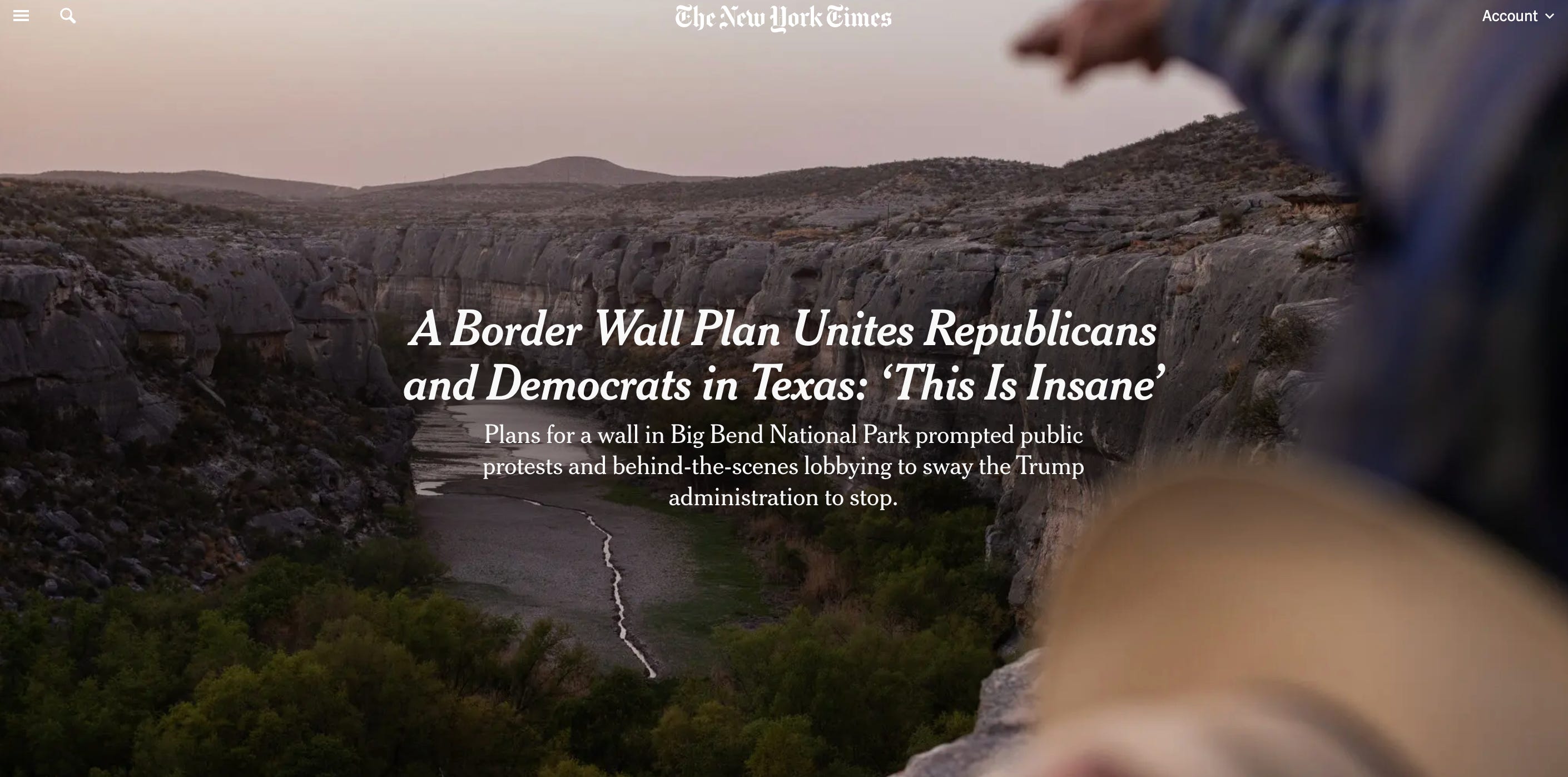
Speaking of water and shared threats, the New York Times looked at bipartisan pushback to plans for a border wall in Big Bend National Park and nearby areas:
Despite President Trump’s vow to complete a border wall along the southern frontier, the plan shocked West Texas. It also unnerved Republicans and Democrats across the state who wondered why the federal government would spend billions to build a wall through an area so remote…
A physical barrier would cut off river access, threaten crops and cattle, and disrupt migration routes, critics said. The prospect of its construction has brought together environmentalists, former national park officials, seasonal river guides, tourists and wealthy ranch owners, galvanizing support for surveillance as a preferred approach to this section of the border.
Balancing growth and conservation in Nevada’s water future (Sierra Nevada Ally)
Near the shrinking Salton Sea, children’s lungs may pay a price (L.A. Times)
Will data centers threaten California’s water? It’s complicated (PPIC)
Desalination plants in the Middle East are increasingly vulnerable (MIT Technology Review)
Endangered salmon returned to California’s far north — then the money dried up. (CalMatters)
New Mexico officials, tribes accuse feds of rushing to reverse Chaco Canyon drilling ban (Source New Mexico)
A botanist searches for the seeds of the rare Death Valley Sage (NPR)
The GAO says better data should be kept about weather modification efforts (Nevada Public Radio)
I’ve been mesmerized watching the Artemis II lunar flyby, and so I wanted to end with a picture and a quote from mission specialist Christina Koch:
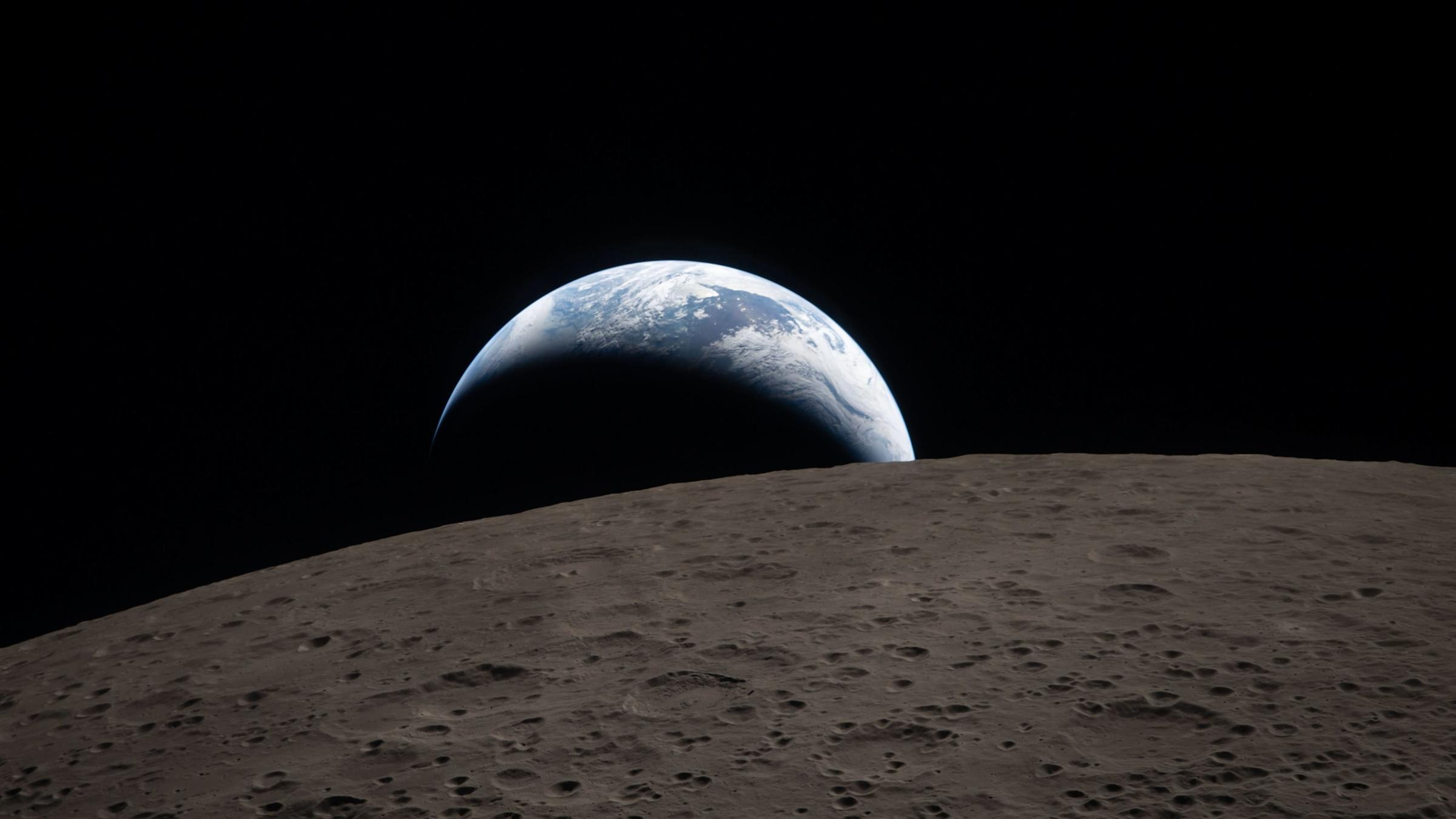
“The thing that changed for me, looking back at Earth, was that I found myself noticing not only the beauty of Earth, but how much blackness there was around it and how it just made it even more special. It truly emphasized how alike we are, how the same thing keeps every single person on planet Earth alive. We evolved on the same planet, and we have some shared things about how we love and live that are just universal. And the specialness and preciousness of that really is emphasized when you notice how much else there is around it.”
No posts
Comments
Nothing yet. Say the first thing.
Sign in to join the conversation.