
Skills are powerful.
We talked about how to build them.
And how you should create your custom skills to enhance your unique investing process.
But Claude has released skills of their own, for free!
Anthropic engineers worked with Accenture and banks like JPMorgan to develop skills and full agentic workflows.
The only problem is that they are only natively available for the enterprise and teams plans.
But there’s a workaround for installing them. I’ll show you below.
My custom skills + Claude Cowork course will be included in a toolkit we’re building.
No hard release date yet, but you can join the private beta. 20 spots. 50% off the launch price.
The point of the beta is to get one month of real feedback from serious investors before general release. That’s why the cap is small, and the price is half.
If you’re interested, you can join the other 75 already on the list:
A skill is a recipe. It has a set of instructions. It can compact multiple prompts together. You can add Python scripts.
Essentially, it’s a small piece of software. It has inputs, and it will deliver an output.
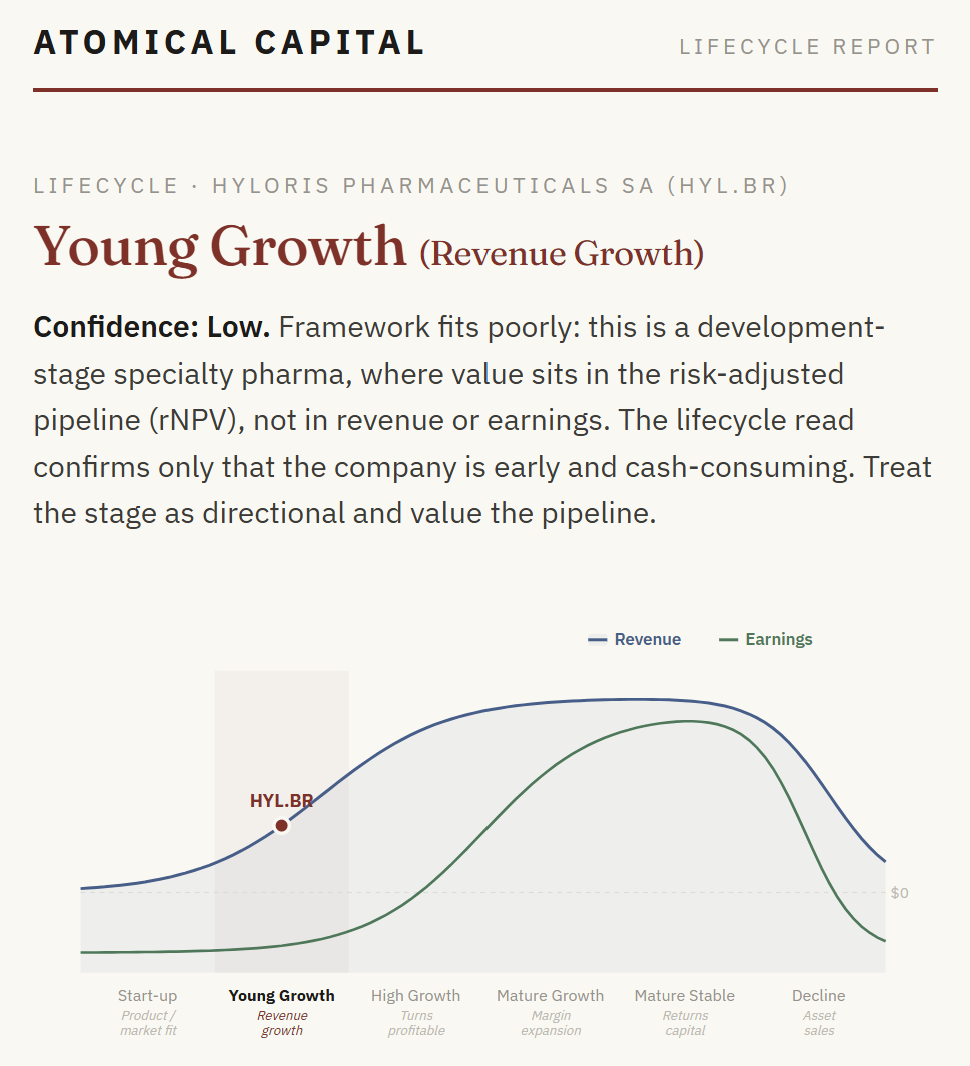
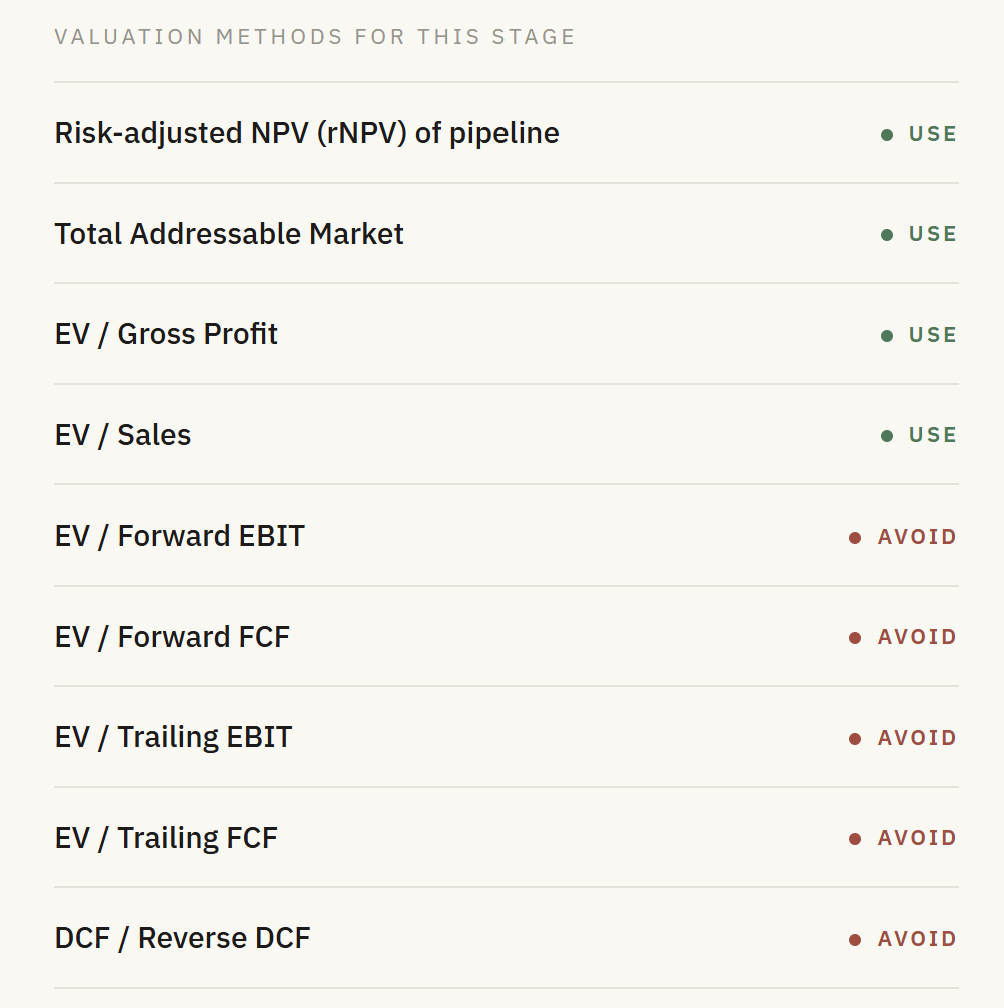
Here’s an example of the output of a company lifecycle skill I use. It fetches data, uses the lifecycle framework, and then outputs a report that:
Tells us where the company sits in its lifecycle
Proposes the appropriate valuation methods you should use
Verifies whether, as Professor Damodaran says, the company is acting its age (from a capital allocation perspective).
The skill creates a 2-page report.
A visual representation of where the company sits in its lifecycle:
And a 2-part analysis with valuation methods to use or avoid:
You can imagine building 10 to 20 skills like these, and then chaining them together to get a full equity research report.
That’s what Anthropic did.
The only caveat: it’s tailored to a sell-side research firm.
But before we go deep, let me show you how to apply these new skills.
Open the Claude desktop app
Go to Cowork
Click on Customize
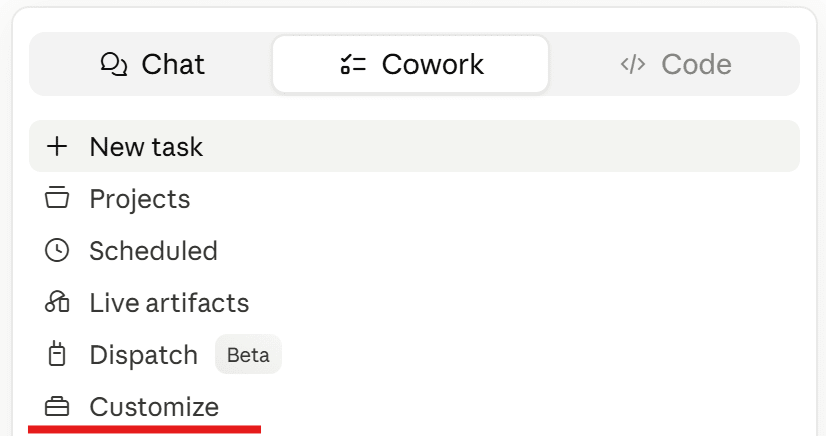
Now this window will appear:
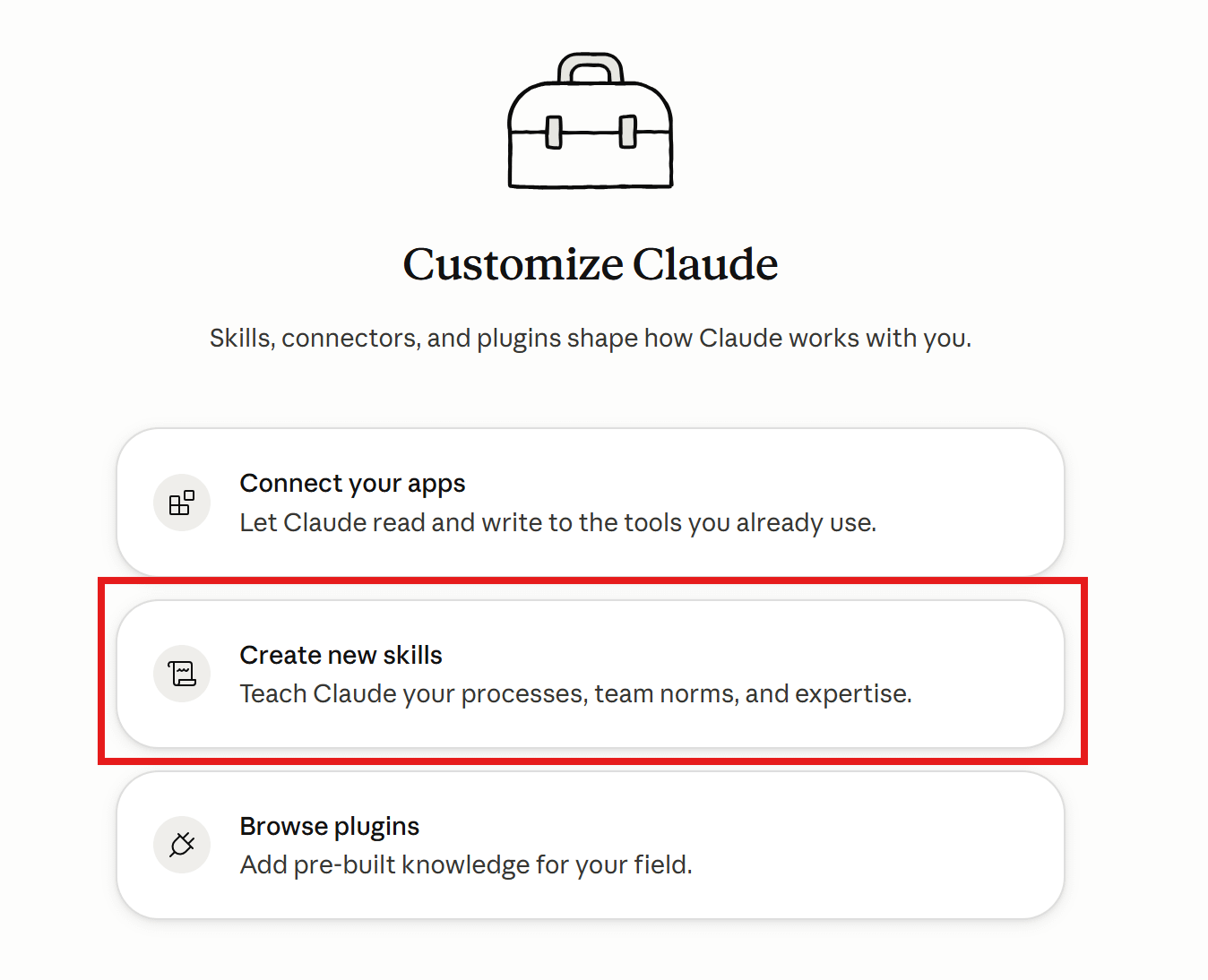
Pick Create new skills.
Now, logically, you would add a new skill, but that’s not the correct path here.
You need to click on the + sign to add a new plugin.
Then you select “ Create a plugin and add marketplace.
I know, it’s a bit weird.
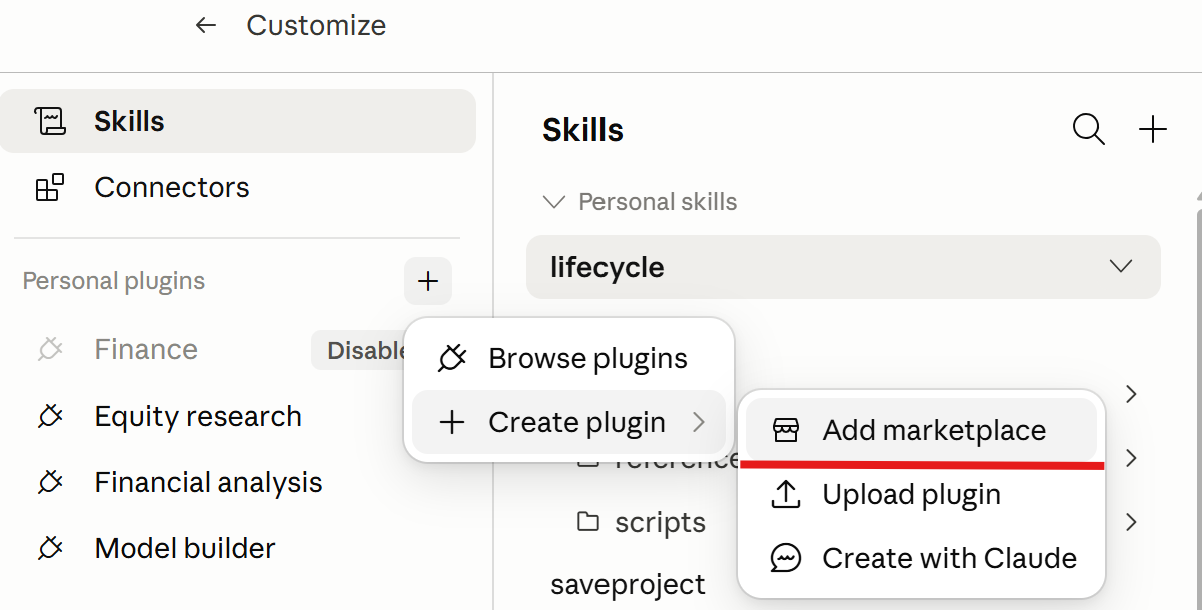
Now this window will appear
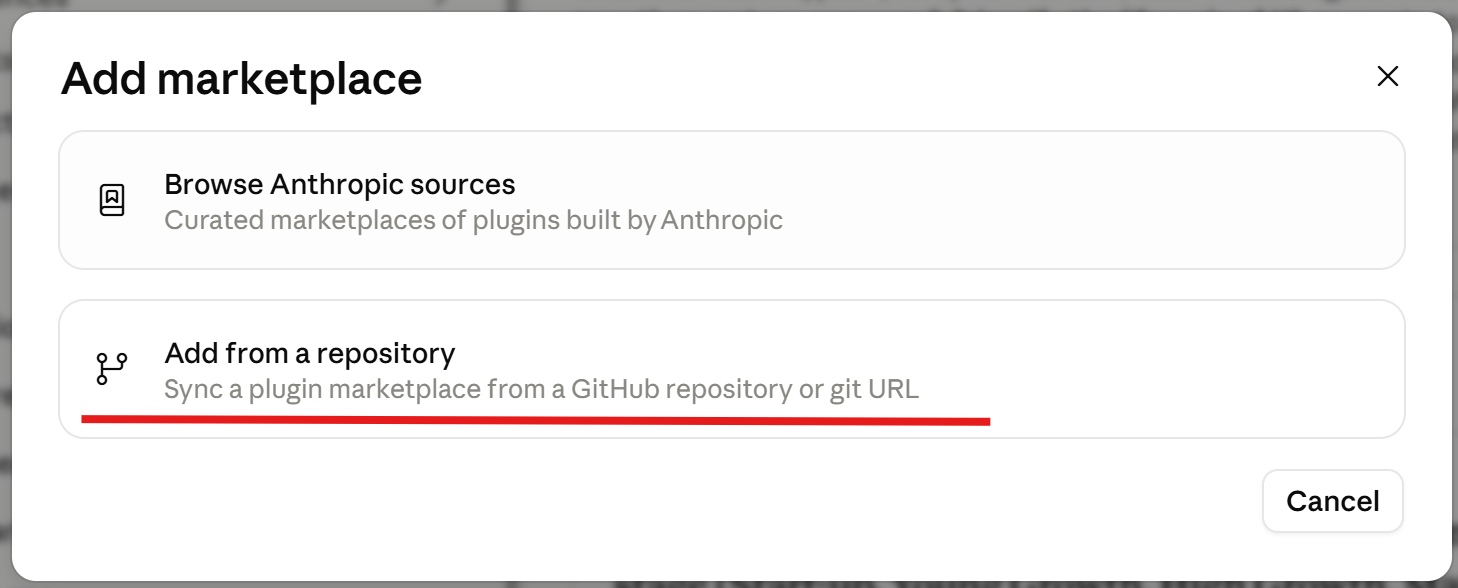
These skills do not appear in the official marketplace. We need to add them from a GitHub repository.
Now you paste this URL in: https://github.com/anthropics/financial-services-plugins
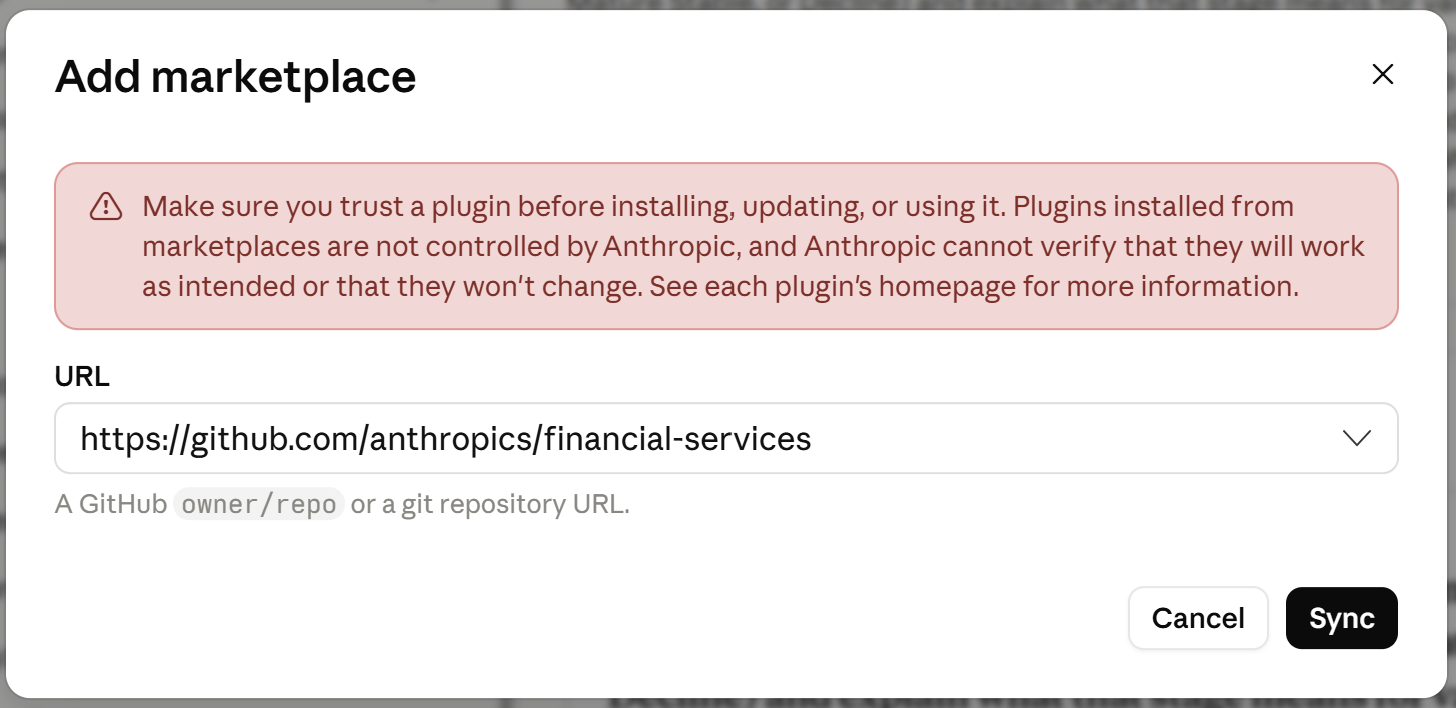
And click the sync button.
You now have access to a set of new skills:
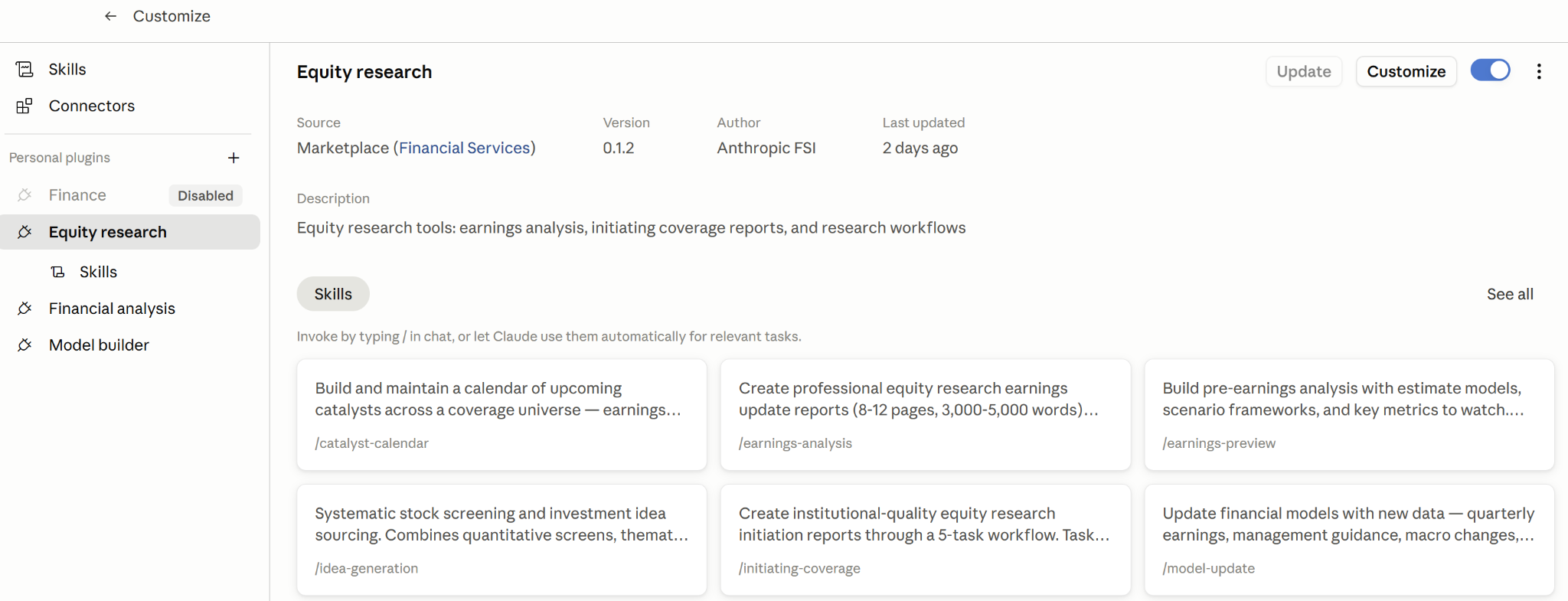
Now let’s take a look at one of them and see if they are actually useful.
When a sell-side research firm starts covering a company, it will publish a detailed, well-written report on it.
The company will, of course, have a price target.
I tested this with Claude Cowork on a company called Hyloris Pharmaceuticals.
Just for context, Hyloris develops medicines in the drug repurposing market. They have some compounds already commercialized and others still in the pipeline. The charts below will make more sense.
Just open a task and type
/initiating-coverage
Claude will ask you for additional information and will get to work. It uses its questionnaire tool to make it easy for you:
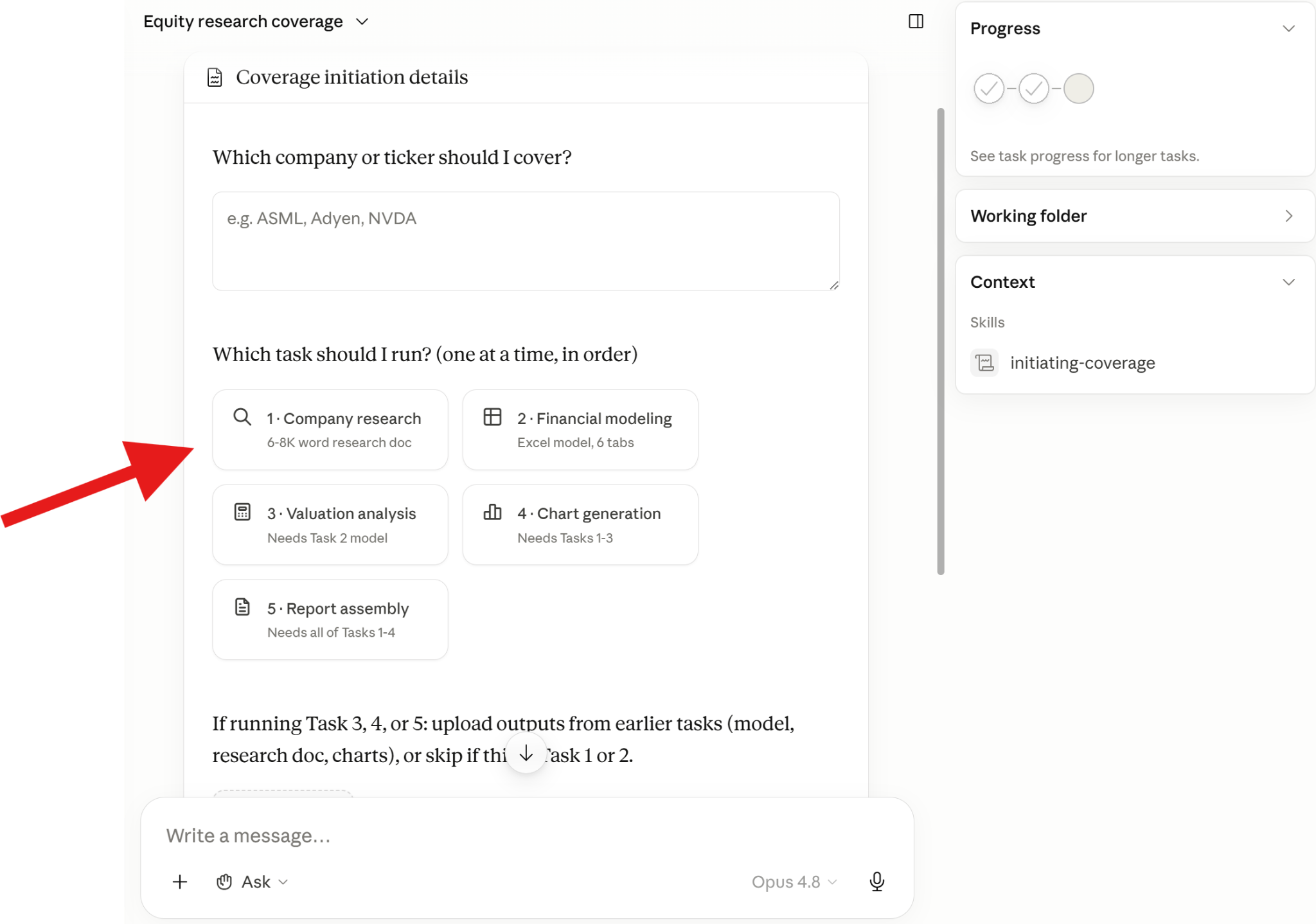
The workflow will be split into 5 discrete tasks. It took Claude Cowork with Opus 4.8 about 45 minutes to create the full report. It took me about 10 minutes just to check in from time to time and go through the different tasks.
The result: A 45-page, highly detailed report:
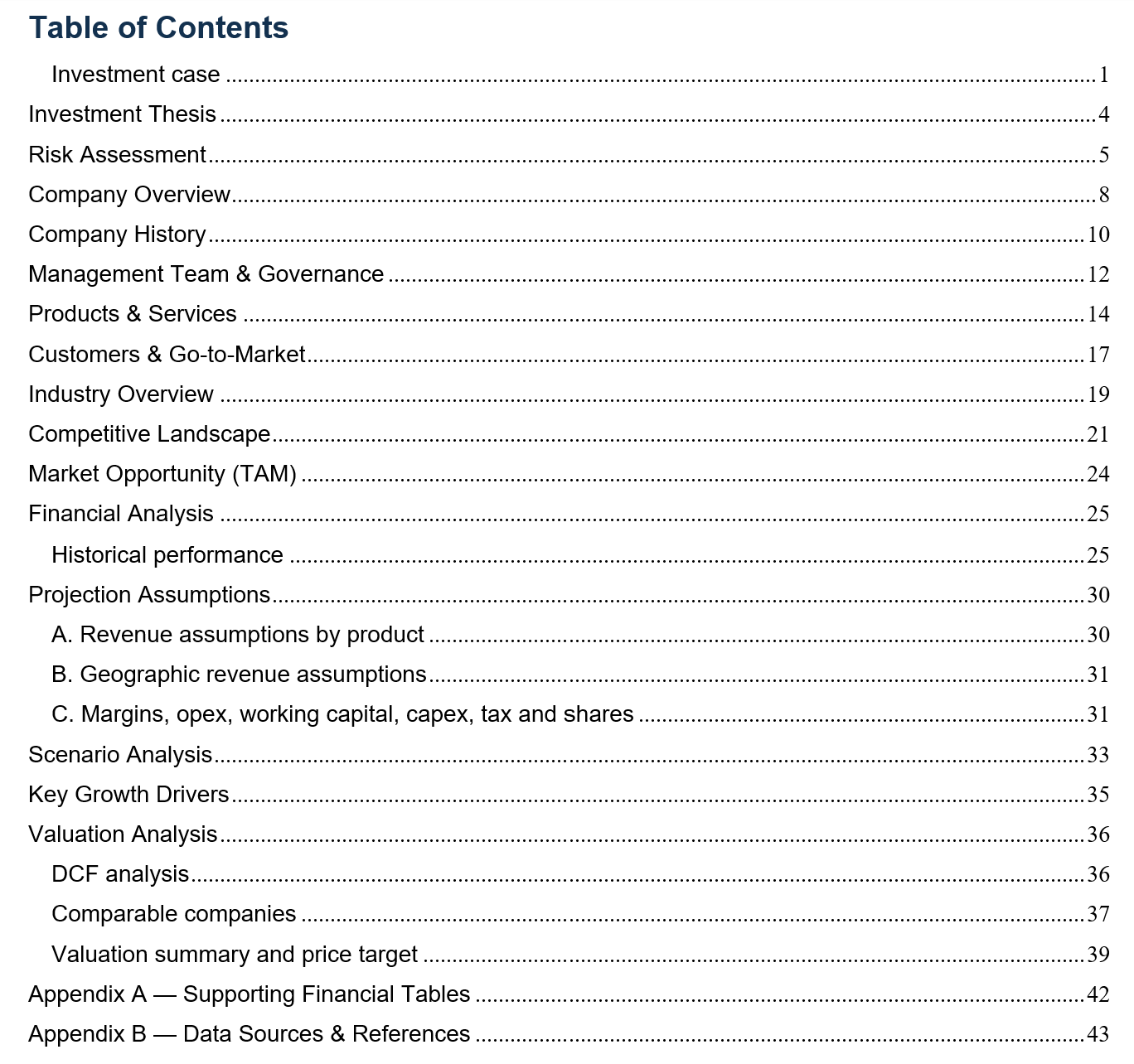
Riddled with financial data and charts.
A couple of my favorite charts it generated:
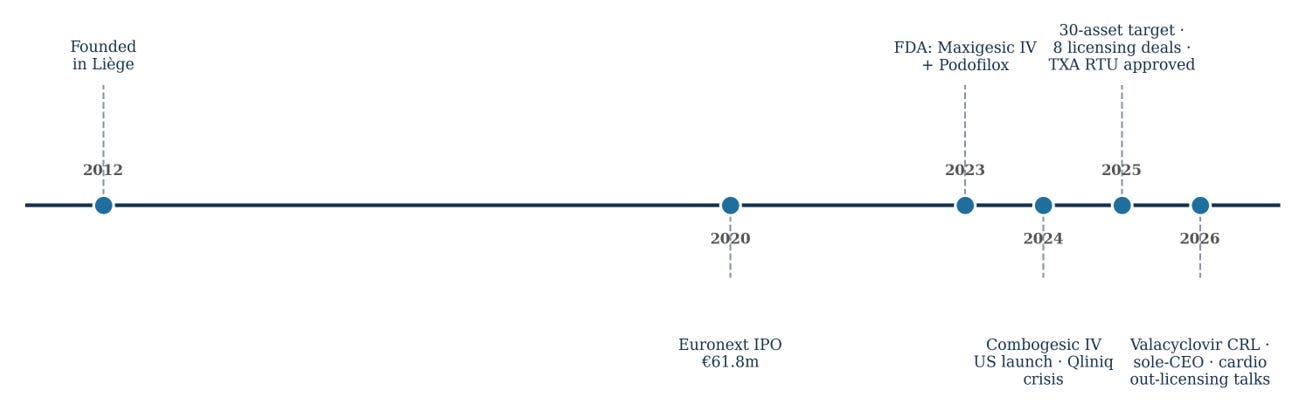
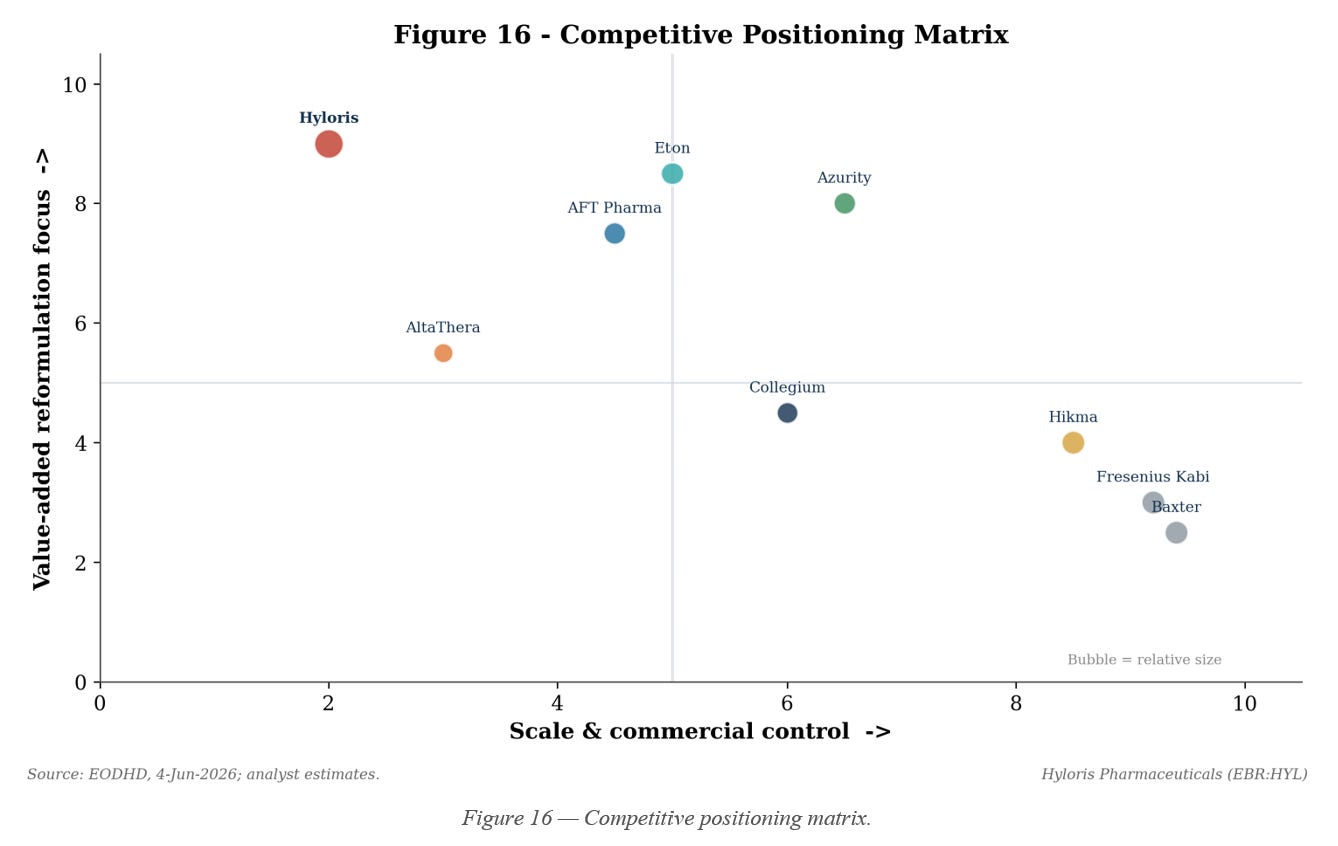
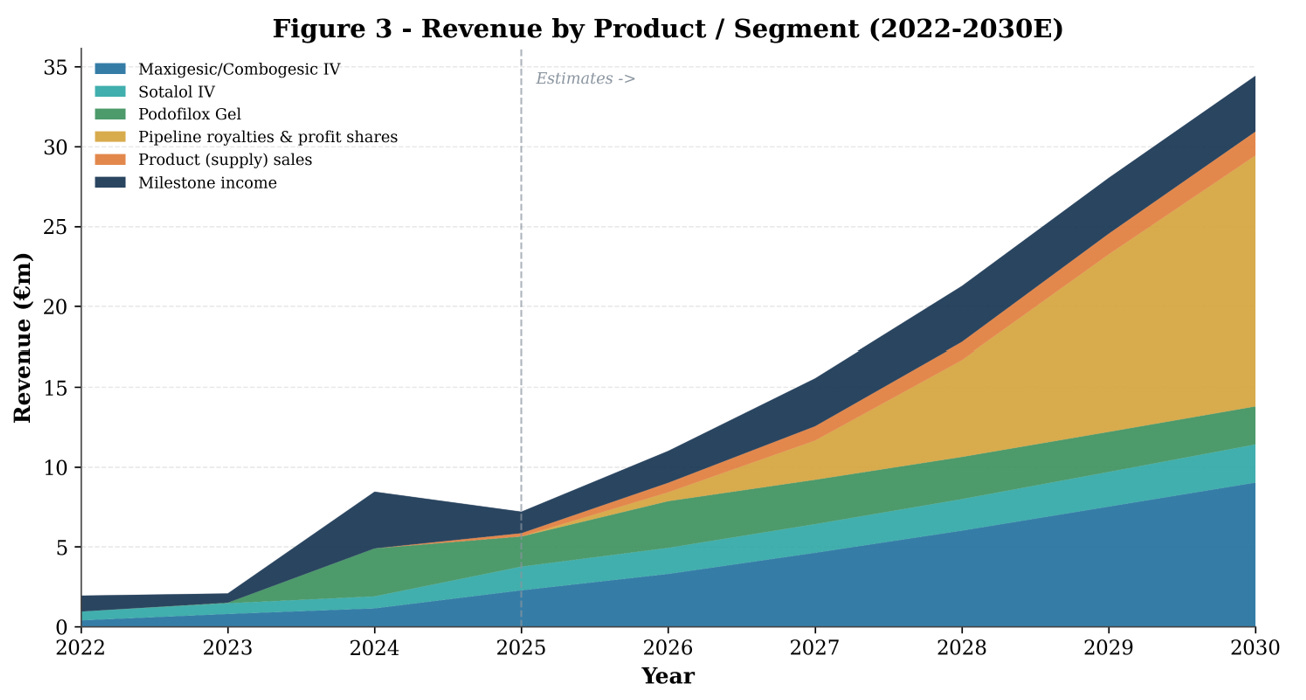
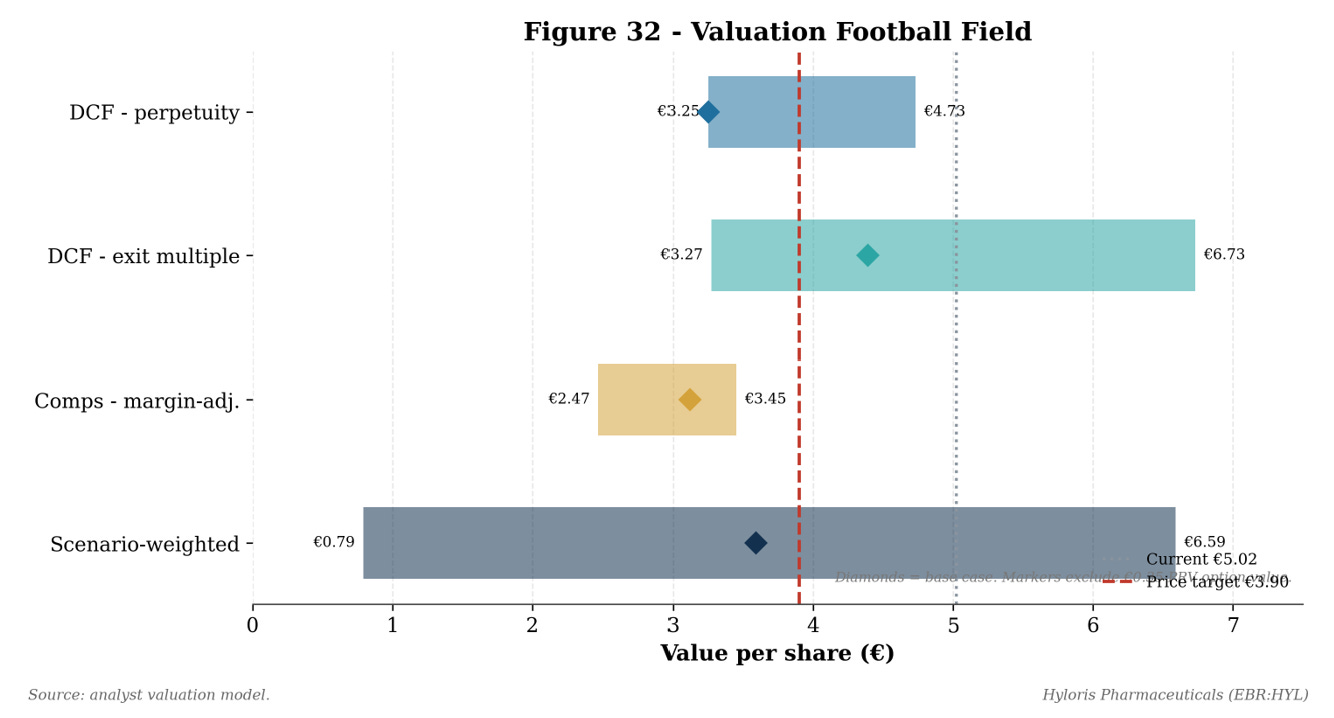
The valuation part is interesting. The terminal value is about 85% of the total DCF valuation. So a slight change in which perpetuity rate you choose will have a big impact on the equity value.
Now, if you remember, I ran my own lifecycle skill at the start of this article.
And for Hyloris, it says:
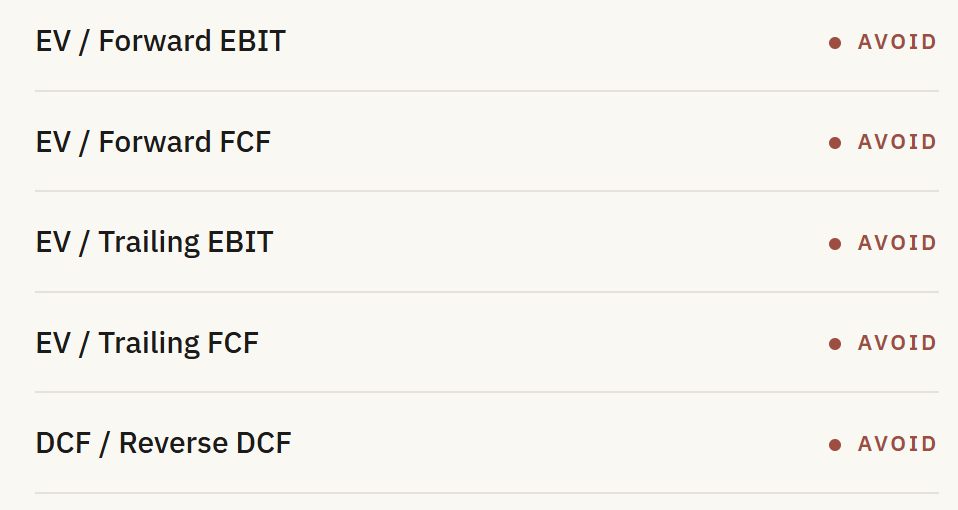
So, in this case, I would simply ignore the DCF output. It’s just too sensitive for this early-stage company.
However, the report did do a peer comparison valuation and even correct the EV/Sales multiple because Hyloris has a higher gross margin than its peers:
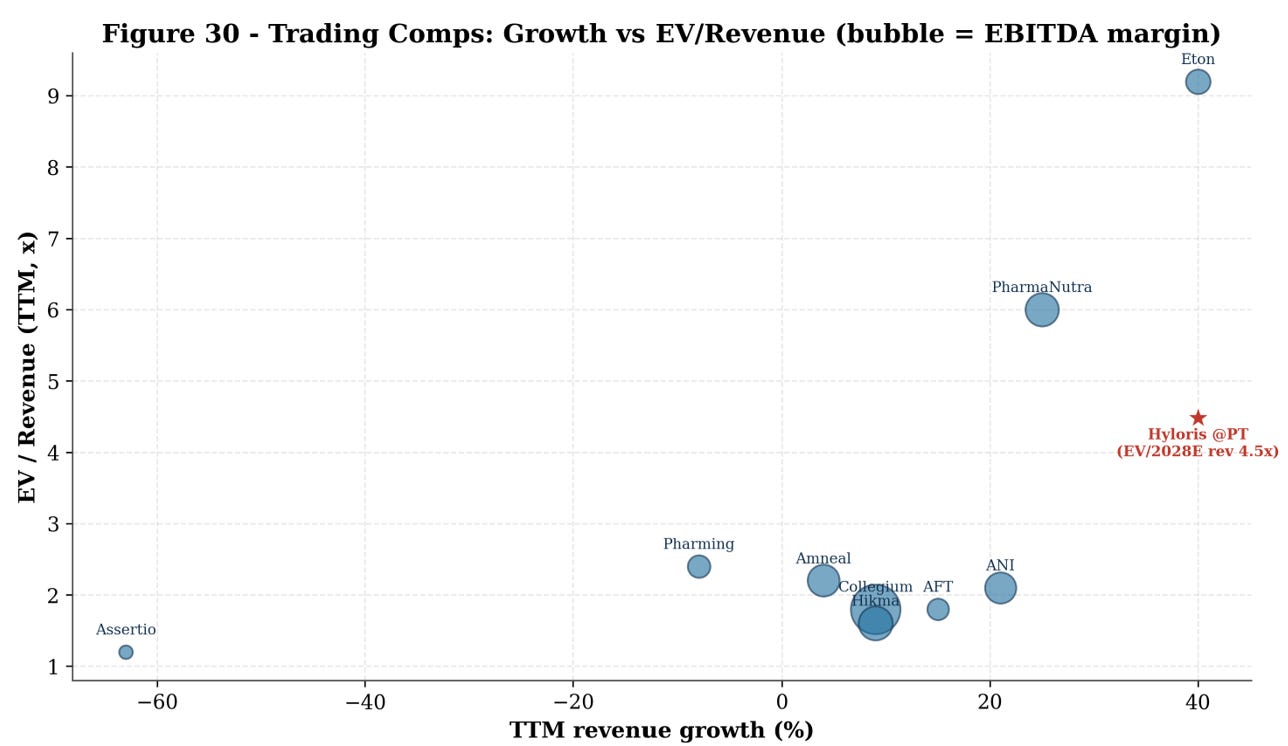
Now I think the idea of using EV/sales is ok. EV/Gross profits would be even better because it automatically includes gross margins.
So yeah, room for improvement. Always analyze the valuation outcome in detail, no matter which skill you use.
Positive: It explains how it arrived at the number, so it’s easy to verify.
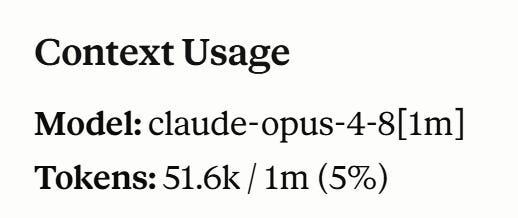
A task in Cowork is limited to 1M tokens. I had to use 2 tasks to complete the full report.
You can always use the /context skill to see your current usage and where the tokens went. And as a reminder, when you just start a task, it will already consume 5% because of all the prompts and tools it preloads:
Since this skill is divided into 5 parts, the first 3 were in task 1 and the remaining 2 in task 2.
Since we’re working in Cowork, always assign a folder where it can work. This makes it easy to switch from the first to the second task without losing context.
I ran this on Opus 4.8 High. I ran into a session limit right when the report was finished, but I had been using Opus for other tasks before. So I do think that, when using the best model, you should be able to get a full report on 2, maybe 3 companies.
For context: I run the max 5x plan. If you use the 20x plan, you can, of course, get more out of it.
The overall quality of the report is very high.
Company overview and history. Go to market and product lineup. Competitive positioning and assessment. Market potential and a full scenario analysis.
This is to be expected. The data is retrieved from annual reports, and I did a fact check on the financial data; it was spot on. No errors detected.
Now, when it comes to valuation and scenario analysis, I think it did a good job, but I personally do not like price targets.
It has identified a catalyst that would prompt them to reassess their view, but for now, they maintain a sell rating with a price target of 3.8, versus the current market price of 5.
This is an initiation report, not a thesis. This is not a “why I buy this stock document”, and these are my kill conditions and selling rules.
A thesis is needed if you want to create an automated tracking system, as we have shown here. However, this research report could serve as the basis for a thesis.
The best skill is one that aligns with your own process, how you look at companies, and how you research them.
I think this skill is a great starting point to make it your own.
A couple of things I would change for myself are:
Losing the price targets
Adding a more in-depth business model analysis
Add my lifecycle skill so that the research is adapted to where the company sits in its lifecycle.
We only looked at one skill. Notice that if you installed the full plugin, you now have 15 new skills to work with.
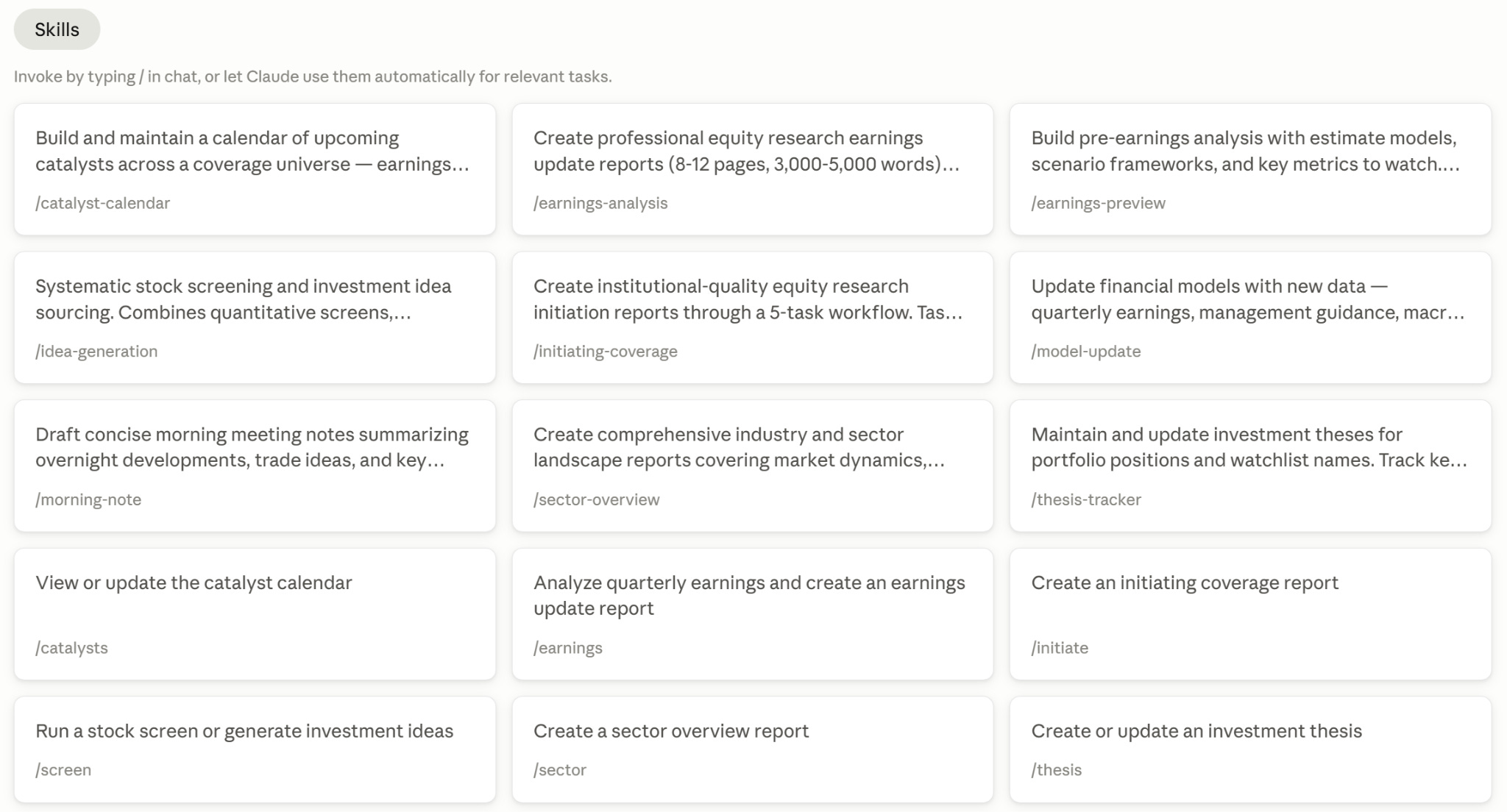
In the future, I’ll test each one of them with Opus and Sonnet to see if there is a big difference.
So now you have the skills at your disposal the pros use.
Play with them. Test them. Push them to their limits.
Thanks for reading.
May the markets be with you!
Kevin
No posts
Comments
Nothing yet. Say the first thing.
Sign in to join the conversation.