
Disclaimer: This newsletter is not financial advice it is for educational purposes only. Please DO NOT take this newsletter as a buy or sell signal.
Below is a checklist I normally use when analysing a company’s fundamental health. If the company meets my criteria it will be colour-coded in green and if it fails to meet my criteria it will be colour-coded in red which means I need to investigate further and ask myself why this is the case.
As you can see below there are 2 red boxes and I am going to explain them:
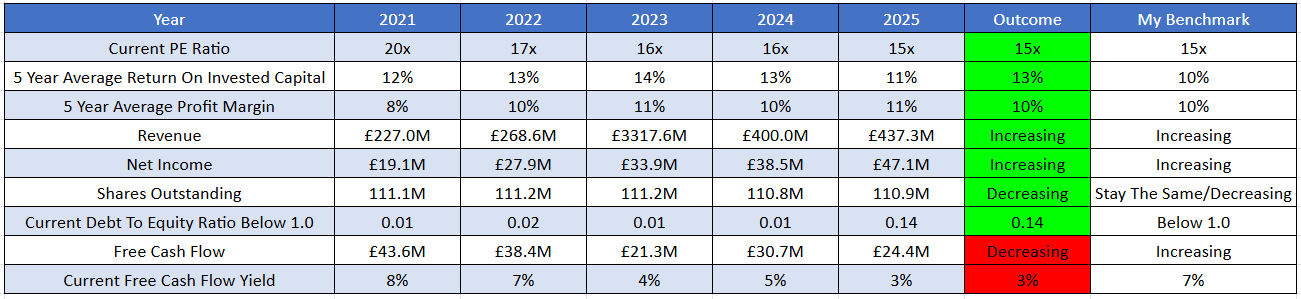
Free Cash Flow - Free cash flow (FCF) is a financial metric that measures the cash a company generates from its operations after accounting for capital expenditures. Companies can use their cash flow in various ways including reinvesting in the business, paying dividends, reducing debt, or repurchasing stock. When free cash flow is negative it usually indicates that a company is spending more on capital expenditures than it earns from its core operations. A.G. Barr's free cash flow has declined over the last five years due to the company's growth ambitions which include investing in high-speed canning lines at its Cumbernauld facility and acquiring Boost, Rio, and Fentimans to expand its product portfolio.
Free Cash Flow Yield - Free Cash Flow Yield gives investors another way to assess a company’s value. Free cash flow yield provides a better measure of a company’s performance than the P/E ratio because earnings can be manipulated based on accounting rules. The most common way to calculate free cash flow yield is free cash flow divided by the company’s market cap. The lower the ratio the less attractive a company is as an investment because investors are putting money into the company but not receiving an excellent return. A high free cash flow yield implies that a company generates enough cash to quickly satisfy its debt and other obligations including dividend payout. A.G. Barr's free cash flow yield is 3% which is below my 7% threshold and below the risk-free rate which is currently 4.4%. It is important to remember that when the treasury yield is higher than a company’s earnings/cash flow according to the intelligent investor you are NOT being compensated for the extra risk you are taking with an individual business which shows there is no margin of safety with this investment. Lastly even though A.G. Barr currently has a free cash flow yield of 3% it doesn’t tell the whole story because the company is going through a growth capex cycle which is why I like to analyse the company based on its operating cash flow. Currently A.G. Barr has an operating cash flow yield of 7% which indicates it offers some margin of safety.
Founded in 1875 by Robert Barr, A.G. Barr is a Scottish multi-beverage manufacturer whose primary business involves the production, marketing, and distribution of carbonated soft drinks, fruit juices, cocktail mixers, and functional health drinks. A.G. Barr operates across the United Kingdom through its major manufacturing facilities in Scotland and England as well as through its online commercial partnerships and international export markets. The company also manages a specialised portfolio of premium and adult-focused beverages that reaches consumers through both large-scale retail distribution and the hospitality sector.
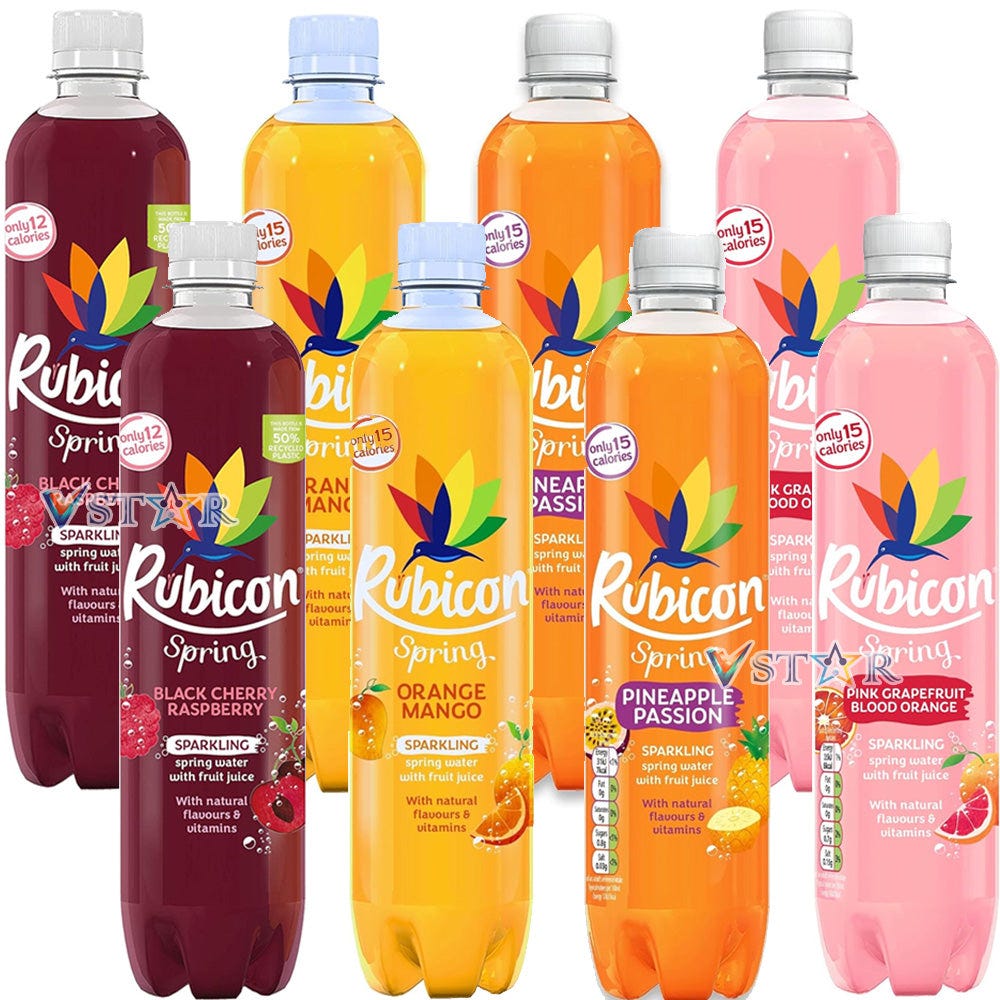
Soft Drinks - The Soft Drinks segment is the largest part of A.G. Barr's business that generated £382.0 million in the 2025/26 financial year. This division produces and sells well-known beverages such as IRN-BRU, Rubicon, and Boost energy drinks. These products are distributed in large quantities to supermarkets and small local shops. Recently the company has upgraded its factories with new machinery to increase production efficiency and reduce costs.
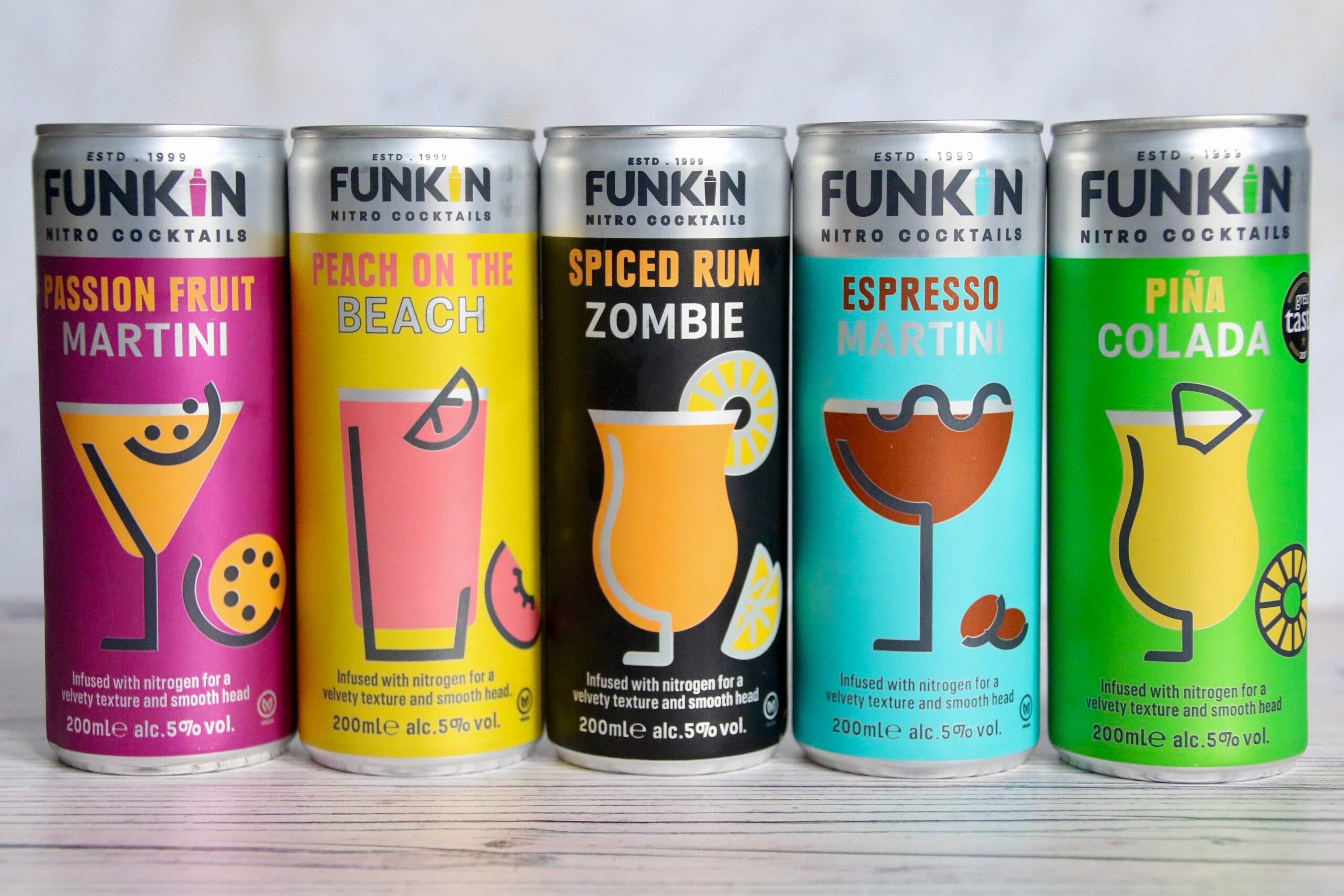
Cocktail Solutions- The Cocktail Solutions segment is centred around the FUNKIN brand which generated £35.8 million in revenue last year. This part of the business offers fruit mixes and ready-to-drink cocktail cans. A.G. Barr supplies these products to bars, restaurants, and individuals who enjoy making quality drinks at home. This segment is significant because it focuses on premium products that are more expensive and convey a sense of luxury.
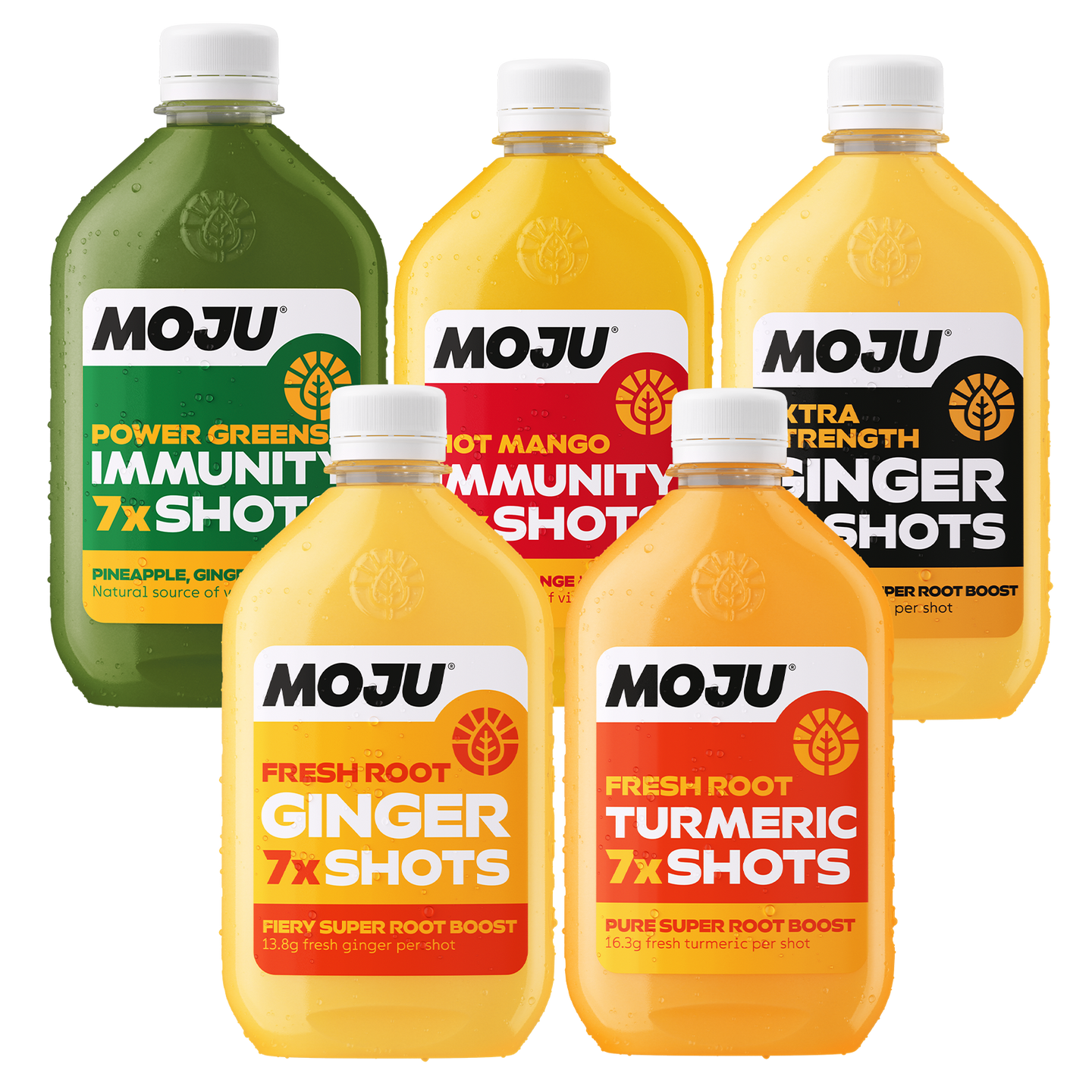
Others - This segment of the company is currently the smallest where it is generating £19.5 million in revenue but it is experiencing rapid growth due to its focus on health and wellness. This segment includes popular products like MOMA oat milk and The Turmeric Co health shots which appeal to younger consumers seeking to avoid sugar and prioritise natural ingredients. Despite its small size this segment grew by over 70% in just one year providing the company with a safeguard against potential declines in sugary soda consumption in the future.
When evaluating management I judge the CEO based on several factors such as experience, capital-allocation skills, and Incentives. In this section I will discuss whether management incentives are aligned with shareholders.
Experience - Euan Sutherland took over as CEO of A.G. Barr in May 2024 following a career spent leading some of the UK’s most famous consumer businesses. His academic foundation began at Edinburgh University where he studied Accountancy before moving to Aston University to complete a Business Studies course. Today he maintains a strong connection with Aston where he holds an Honorary Doctorate in Business Management.
Euan Sutherland's professional journey is deeply rooted in the Fast-Moving Consumer Goods (FMCG) world where he began as a graduate trainee at Mars Confectionery and later held high-level marketing positions at Coca-Cola. He further expanded his retail expertise through senior leadership roles at Matalan, Currys, and AS Watson (the owner of Superdrug) before becoming the Chief Operating Officer at Kingfisher PLC where he managed the day-to-day running of B&Q. In 2013 Euan Sutherland moved into the CEO spotlight at The Co-operative Group where he led a major rescue plan during a turbulent time for the organisation. He then spent five years as CEO of Superdry PLC where he focused on turning the brand into a global digital retailer before taking the helm at Saga PLC in 2020 to navigate the company through the pandemic's travel challenges.
Below is an image illustrating the current experience of A.G. Barr board members:
Capital Allocation - Capital allocation is very important when judging management because I want them to create value for shareholders not destroy it. So far A.G. Barr has done a great job with capital allocation because they are providing value back to shareholders by reinvesting in the business to further expand their presence and paying dividends.
Euan Sutherland’s capital allocation strategy at A.G. Barr is characterised by a pivot toward aggressive portfolio diversification and long-term infrastructure modernisation. Under his leadership A.G. Barr has transitioned from a period of conservative cash retention to one of strategic reinvestment where they are utilising their balance sheet to fund both internal efficiency and external growth. Euan Sutherland primarily allocates capital to high-impact Asset Refresh programs such as the major automation upgrades at the Cumbernauld facility. Beyond physical assets he has directed significant capital toward M&A by acquiring high-growth brands like Fentimans and Rio to reduce the group’s historical reliance on core carbonated sodas and capture a larger share of the premium and functional health markets.
In addition to these growth-focused investments Euan Sutherland maintains A.G. Barr’s long-standing commitment to a progressive and reliable dividend policy. Even during periods of high capital expenditure he has managed a steady increase in shareholder payouts reflecting a progressive philosophy that aligns with the company’s resilient operating margins. Despite the heavy outflows from recent acquisitions Euan Sutherland ensures that these dividends remain well protected by the company’s strong operating cash generation.
A.G. Barr currently offers a dividend yield of approximately 2.94%. This payout remains sustainable because while the company is in a heavy investment phase its core operations continue to generate sufficient cash to cover both its shareholder obligations and its ambitious expansion plans.
Incentive - This is important because if the current board is buying shares of their own business it indicates that management believes the stock is undervalued and is confident in the company’s long-term prospects.
As you can see below we have 7 buy and 1 sell order. Euan Sutherland (Chief Executive Officer), Stuart Lorimer (Chief Finance & Operating Officer), and Julie Barr (Chief Legal & Sustainability Officer) are the only insiders buying A.G. Barr shares. As for selling Stuart Lorimer(Chief Finance & Operating Officer) is the only insider selling but I won’t put weight on this because there are so many reasons why someone might sell their stock.
Bull Case - The first bull case is A.G. Barr moat. IRN-BRU remains one of the few brands globally to successfully challenge Coca-Cola's market dominance in its home territory. This deep-rooted cultural significance provides A.G. Barr with a significant moat and pricing power.
Bull Case - The second bull case is a diversified product mix. A.G. Barr has successfully moved beyond its traditional roots in fizzy drinks. By acquiring Fentimans and Frobishers in early 2026 and previously Boost and Rio, A.G. Barr has diversified its revenue streams into premium mixers, energy drinks, and exotic juices. This reduces the risk associated with any single product category and allows them to capture a larger share of the adult socialising market.
Bull Case - The third bull case is a long runway for growth. A.G. Barr is aggressively targeting the wellness trend through its "Other" segment which includes MOMA (oat milk) and The Turmeric Co (functional health shots). The UK functional drinks market is projected to nearly quadruple by 2033 and A.G. Barr’s early entry gives it a scalable platform in a category with much higher price points and consumer loyalty than standard sodas.
Bear Case - The first bear case is Integration Risk from Acquisition Spree. After spending over £60 million on three major acquisitions (Fentimans, Frobishers, and The Turmeric Co) in a very short window there is a high risk of organisational issues as merging different company cultures can be challenging.
Bear Case - The second bear case is market over-saturation in Premium Mixers. The premium mixer market is becoming increasingly crowded and recent reports show volume and value declines in the UK grocery channel. A.G. Barr’s heavy bet on Fentimans could backfire if the at-home cocktail trend continues to cool or if consumers shift back to cheaper generic alternatives during a cost-of-living squeeze.
Bear Case - The third bear case is dependency on high-volume grocery channels. The value-led growth seen in brands like Boost is heavily dependent on maintaining shelf space in major supermarkets. If retail giants decide to favour their own-label knock-off brands or demand even deeper price promotions A.G. Barr’s margins will be the first to suffer.
In this section I will discuss valuation. Using some basic metrics I will compare A.G. Barr to its industry rivals and determine whether the company is cheap relative to its peers. Then I will value A.G. Barr using a discounted cash flow model to determine a price I am willing to pay based on its expected growth rate and my desired return of 15%.
As shown below when compared to its peers A.G. Barr scores 3/5, Nichols scores 0/5, and Fever Tree scores 2/5. Below I am going to highlight the key differences between each company:
Business Model - A.G. Barr operates as a vertically integrated multi-beverage manufacturer and brand owner. Their strategy focuses on a hybrid model that combines high-volume production of heritage power brands with the acquisition of high-growth premium labels. Following their recent multi-million-pound Asset Refresh they have prioritised self-sufficiency by moving production in-house to capture higher margins. A.G. Barr’s approach to expansion is increasingly focused on consolidation by using its strong balance sheet to acquire established brands and then scale them through its superior national distribution network.
Nichols PLC utilises a capital-light business model. Unlike A.G. Barr, Nichols does not own large-scale manufacturing plants but instead it outsources the production and bottling of its core brand Vimto to third-party partners. This allows the company to maintain high cash reserves and low overhead costs. Nichols PLC's strategy is focused on brand licensing and a specialised Out of Home division (slush and dispensed drinks). This allows the company to remain agile and focus entirely on marketing and international partnership development rather than factory management.
Fever-Tree Drinks PLC offers a premium, outsourced asset-light model focused exclusively on the top tier of the market. Fever-Tree does not manufacture its own products but instead it works with specialist bottling partners globally. Their strategy is built on premiumisation that convinces consumers to spend more on high-quality mixers to accompany premium spirits. Fever-Tree’s growth is driven by intense marketing and a rapid first-mover advantage in new territories with the aim of becoming the global standard for the G&T occasion.
Market Reach - A.G. Barr is primarily a UK-centric company with a legendary stronghold in Scotland. While they have a growing presence in England and Wales through brands like Rubicon and Boost their market reach is characterised by deep local dominance. They are currently using recent acquisitions to move into the premium hospitality and functional health sectors across the UK but their international export business while present remains a secondary focus compared to their domestic market leadership.
Nichols PLC has a unique and highly diversified geographic reach. While Vimto is a household name in the North of England the company has an extraordinary Pan-International footprint particularly in the Middle East and Africa. In regions like the Middle East Vimto is a market leader and a cultural staple especially during Ramadan. This international diversity provides Nichols with a hedge against UK-specific economic downturns that its peers may not have.
Fever-Tree is a global player with a focus on Western spirit-heavy markets. While they started in the UK the United States has now become their largest growth engine. Their strategy focuses on market saturation in high-income countries where cocktail culture thrives. Unlike A.G. Barr’s regional focus Fever-Tree aims to be present in every high-end bar and premium supermarket from London to New York and Sydney.
Product Offering - A.G. Barr offers a diverse range of products. A.G. Barr is the market leader in heritage carbonates with IRN-BRU and exotic juices like Rubicon. They also offer value energy drinks such as Boost, cocktail solutions like Funkin, and functional health products like The Turmeric Co. A.G. Barr aims to provide a drink for every time of day from a morning protein shot to a late-night mixer.
Nichols PLC’s offering is highly concentrated around the Vimto brand which is known for its unique fruit, herb, and spice flavour profile. Their product range focuses on concentrates (squash), carbonated cans, and frozen formats like slushies. While they have expanded into some health-conscious and No Added Sugar variants their core expertise remains in the unique cross-generational appeal of their most famous flavour.
Fever-Tree has a specialised and narrow product focus. Their offering is built on high-quality natural ingredients such as quinine from the Democratic Republic of Congo and botanical flavours designed specifically to complement spirits. They avoid the mass-market soda space entirely but focus heavily on tonic waters, ginger ales, and premium sodas that justify a significantly higher price point than the standard offerings of A.G. Barr or Nichols.

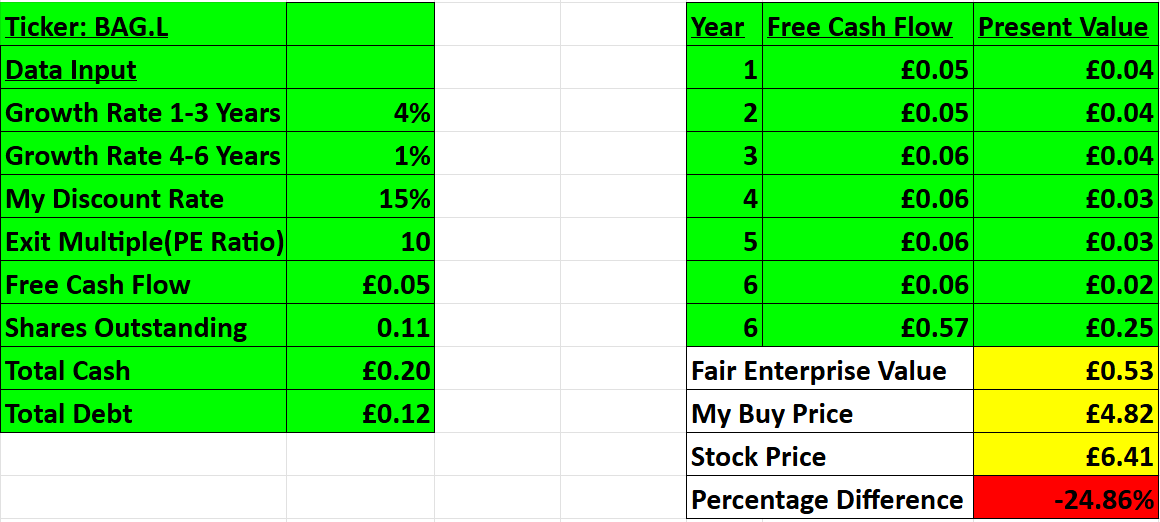
As you can see based on my conservative assumption A.G. Barr is looking to grow 6% over the long run so I went conservative and assumed a 4% growth in the first 1-3 years then the growth will slow down to 1% 4-6 years out. In my assumption I also went with an exit multiple of 10x earnings which is below the historical average at which A.G. Barr has traded. Based on my assumption I have come to a buy price of £4.82 compared to the current stock price of £6.41 which means right now A.G. Barr is trading above its intrinsic value.
Thanks for reading my newsletter on A.G. Barr.
Disclaimer: This newsletter is not financial advice. This is for educational purposes only, so please DO NOT take this as a buy or sell signal.
Remember to subscribe, share, and comment below if you find this newsletter insightful. Your support helps me continue my work.
No posts
Comments
Nothing yet. Say the first thing.
Sign in to join the conversation.