
In October 2019, a robot hand in a San Francisco lab solved a Rubik’s cube, one-handed.
Not impressive on its face. Children do it at school. There are people on TikTok who do it faster than you can finish reading this sentence. What made it interesting was that the hand had never touched a Rubik’s cube. It had never touched anything physical at all. It had been trained, instead, inside a simulator for thirteen thousand years.
Thirteen thousand simulated years. To learn one move.
Real Olympic gymnasts train for fifteen.
The project was called Dactyl, run by Sergey Levine, Wojciech Zaremba, and a team at OpenAI. It was a tour de force and an embarrassment at the same time. Tour de force: you could, in principle, transfer a skill from a simulator into the real world. Embarrassment: doing so required burning a small data centre’s worth of compute to teach a robotic hand a child’s pastime, and even then, the hand dropped the cube most of the time and could not generalise to anything else. The technique was called domain randomisation. The grim joke in the field was that the only thing it reliably randomised was the patience of whoever was paying the cloud bill.
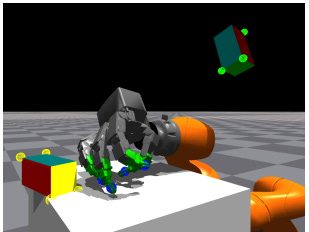
For the next four years, this was the state of robotics. You could simulate. You could not transfer. The gap between what worked in code and what worked in the world had a name. Sim-to-real. Roboticists said it the way oncologists say “metastasis.” It was the thing that killed your project.
Then, very quietly, in the eighteen months between mid-2024 and early 2026, it stopped killing projects.
You did not see a press release. There was no DeepMind blog post called “Sim-to-Real Just Quietly Solved.” But somewhere between NVIDIA opening its Newton simulator under the Linux Foundation, Physical Intelligence shipping π0.5, Unitree pricing a humanoid at sixteen thousand dollars, and Boston Dynamics retrofitting its production line with electric Atlas units, the calculus changed. The thing that used to take thirteen thousand simulated years now takes a weekend. The thing that used to require a team of twenty-five PhDs now ships from a startup with twelve people. The thing that used to be a demo is now a deployment.
This is what people miss when they talk about AI right now. They argue about chatbots and image generators and whether transformer scaling has plateaued. Meanwhile, the world’s most consequential AI breakthrough is happening in the part of the stack that touches atoms. The physical AI stack is evolving faster than anything in our lifetimes. And it is opening up a category of companies that have not been viable since the late 1990s. Companies whose value comes from understanding a piece of the physical world better than anyone else.
The world of interesting technology, the kind that touches the things you can hold, is coming back. And this essay is a map of how it got here, what is now possible, and where we think the next ten companies should be built.
To understand why the last eighteen months feel like a phase change, you have to understand what came before. Robotics simulation is older than the personal computer.
In 1986, Marc Raibert’s leg lab at MIT built the first dynamic running robot. The control loops were written in LISP. The simulators were hand-coded Newtonian physics, run on minicomputers, and the gap between simulation and reality was so wide that Raibert famously preferred to debug on the real machine. Forty years later, this remained the standard advice in the field. Trust the metal, not the model. The simulator was a toy.
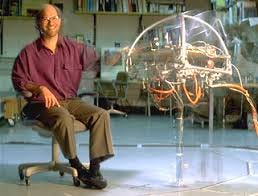
The next decade tried to fix this with better physics. The Open Dynamics Engine, written by Russell Smith in the late 1990s, gave the field a free rigid-body simulator that anyone could plug into a robotics project. Gazebo, launched in 2002, gave the field a simulation environment with sensors. MuJoCo, written by Emo Todorov at the University of Washington in 2012, gave the field a contact-rich physics engine fast enough for control research. None of these closed the gap. They got the physics closer. The reality gap stayed huge. A controller that ran at sixty hertz in Gazebo would, on a real robot, hit the wall, fall over, and look at you accusingly.
The cleverest people in the field gave up trying to make simulators more accurate and instead tried to make them more diverse. Randomise the friction. Randomise the mass. Randomise the lighting. Randomise the texture. Train a controller across thousands of randomised worlds and pray that the real world fell somewhere inside that distribution. This was domain randomisation, the idea Sergey Levine and his collaborators formalised in a 2017 paper that became one of the most cited works in modern robotics. It is the technique that made Dactyl possible. And it is the technique that, by 2022, had been pushed to its conceptual limits.
Domain randomisation could close the gap on simple tasks. It could not close the gap on dexterity, on locomotion across novel terrain, on manipulation of objects the robot had not seen. It was the right idea trapped in the wrong substrate. The compute was too expensive. The simulators were too slow. The neural networks were too small.
Meanwhile, the rest of AI was eating the world.
Between 2017 and 2022, language models scaled from one hundred million parameters to one trillion. Image generators went from blurry rabbits to photorealistic everything. The compute spent on training a single large model went from a few thousand GPU-hours to a few million. And robotics? Robotics watched.
There was a robotics renaissance happening on paper. RT-1 from Google in 2022. RT-2 in 2023. Diffusion policies. Behaviour cloning at scale. Cross-embodiment learning. But on the floor, on the actual floors of actual factories, on the actual roofs of actual warehouses, in the actual control rooms of actual refineries, the robots that worked were the ones that had been there since 1995. Articulated arms doing pick-and-place. AGVs running on pre-mapped routes. Conveyor systems with computer vision. The new stuff lived in YouTube videos. A robotics friend in the Bay Area told me in late 2023 that he had watched more demos in his career than products. And the demos were always two years from production.
He is now CTO of a venture-backed humanoid company. He told me, in March 2026, that he no longer says that.
In a single eighteen-month window, three things collided.
The first was the simulators. NVIDIA’s Newton, an open-source GPU-native physics engine developed jointly with Google DeepMind, Disney Research, and the Linux Foundation, hit a public release in 2025. Newton runs differentiable physics. Which means a robot’s training loop can pass gradients all the way through the simulated world the way a deep neural network passes gradients through its own layers. Genesis, an academic simulator released in late 2024 by a multi-institution team led out of CMU, claimed forty-three million simulation frames per second on a single RTX 4090. A claim that would have been dismissed as a typo three years ago. And Isaac Lab, NVIDIA’s robotics training stack, started shipping reference implementations that let a researcher iterate on a humanoid locomotion policy in hours instead of weeks.

The second was the world models. Not the physics-engine kind. The video-generation kind. In 2024, DeepMind released Genie 2. In 2025, Genie 3, which produced minutes-long playable worlds with persistent physics and consistent object permanence. NVIDIA released Cosmos in January 2025, a foundation model explicitly trained to generate physically plausible video for robot training. Decart’s Oasis open-sourced a real-time interactive world model the same quarter. These are not toys. A world model trained on internet video can produce training data for a robot that has never existed yet, in environments that have never been simulated, with physics that emerge from data rather than equations. The robot is no longer learning from a coded physics engine. It is learning from a model that learned the physics from watching the world.
The third, and most under-appreciated, was the foundation models for embodiment. Physical Intelligence’s π0, released in October 2024, was the first cross-embodiment robotics foundation model that could be fine-tuned for new robot bodies with a fraction of the data of training from scratch. π0.5, released April 2025, generalised to homes the model had never seen. Google DeepMind’s Gemini Robotics shipped in March 2025. Skild AI announced its “general-purpose brain” in early 2025 and raised at four and a half billion dollars on the back of it. The pattern across all of them is the same. A single model that can drive any robot, that can learn from any data, that generalises across tasks without retraining.
Put them together and what you get is a closed loop. A robot collects data in the real world. The data feeds a world model. The world model generates synthetic experience. The synthetic experience trains the foundation model. The foundation model deploys to the next robot. The next robot collects more real data. Loop. The thing that took thirteen thousand simulated years in 2019 takes a weekend in 2026, because the loop spins faster than anyone in the field predicted.
It is not that the sim-to-real gap closed. It is that the loop that closes the gap got cheap.
The closest historical parallel to what is happening in robotics right now is not a robotics parallel. It is a Pixar parallel.
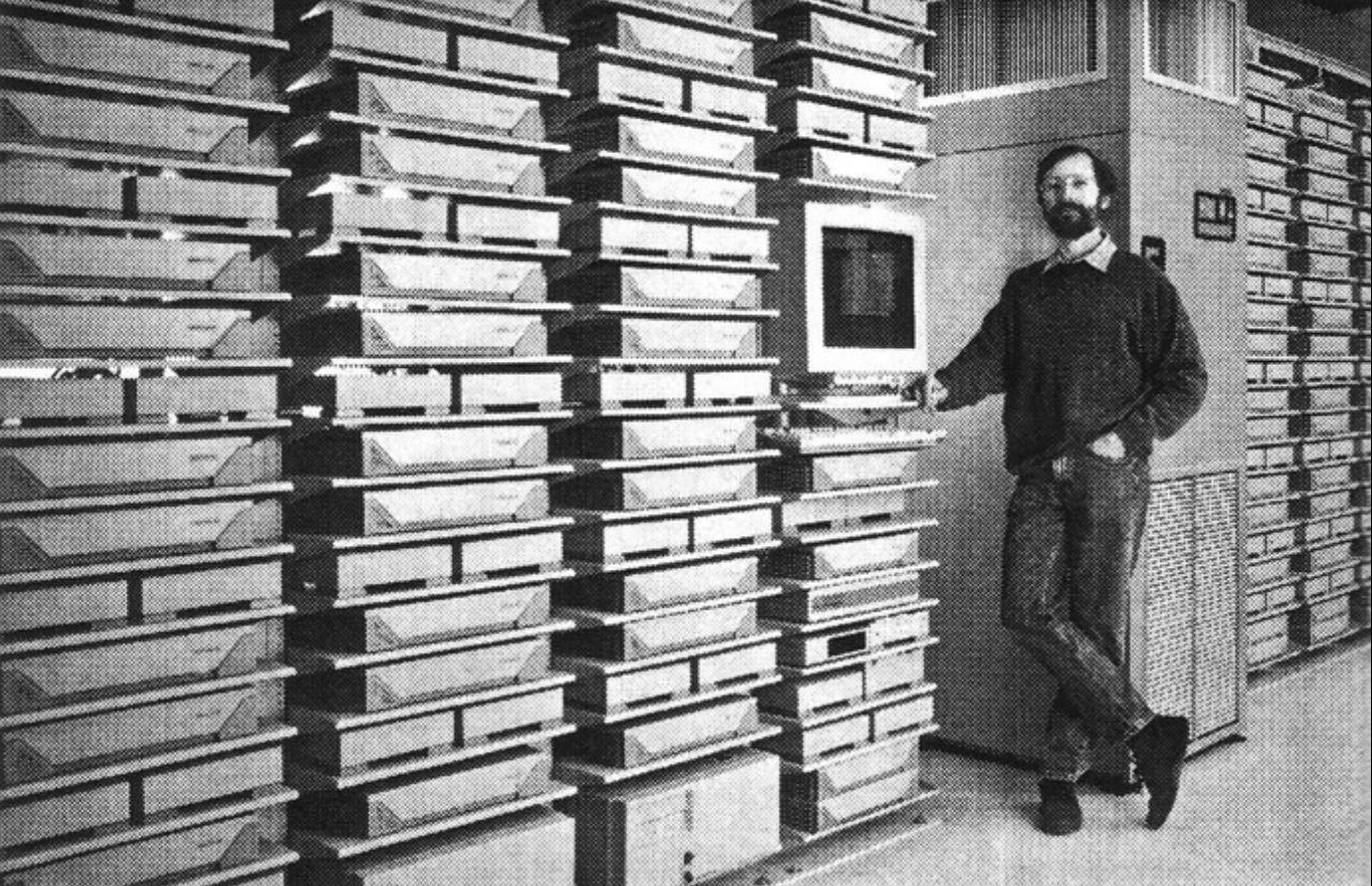
In 1986, Steve Jobs bought a small computer graphics division from Lucasfilm for five million dollars and called it Pixar. Their dream was the first feature-length computer-animated film. The technology to make that film did not exist. To render a single frame of Toy Story at the resolution needed for a cinema screen, the Pixar render farm (a custom-built cluster of Sun SPARCstations) took, on average, between six and twenty-nine hours. The film contained one hundred and ten thousand frames. The render farm ran around the clock for over a year just to finish the pixels. The film cost thirty million dollars to make and earned three hundred and seventy-three million. Pixar went public the next week. The world changed.
What changed at Pixar over the following twenty years is the more interesting story.
By the time Monsters University shipped in 2013, each frame of fur on Sulley took an average of twenty-nine hours to render. Not less. More. Pixar had spent two decades pouring every available efficiency back into higher resolution, more accurate light transport, finer geometry, more particles, more cloth, more hair. The render farm did not get faster in any user-facing sense. It got more honest. Pixar moved from approximating reality to simulating it.
Around 2015, GPUs and machine learning denoisers and real-time path tracing collided. Soul in 2020 used live previews on workstations. Lightyear in 2022 used Unreal Engine for set lighting. By 2024, every major studio was iterating on photorealistic scenes in something close to real time. The render farm did not disappear. The render farm became the substrate that everything else ran on. The bottleneck moved from “can we render this” to “do we have a story worth rendering.”
This is the parallel. Robotics right now is in the Toy Story moment. The render farm in this case is the simulator, the world model, the foundation model, the GPU cluster. It has just gotten good enough and cheap enough to make the impossible possible. The next ten years of robotics will look like the next ten years of Pixar. The simulators will keep getting better. The world models will keep absorbing more data. The foundation models will keep transferring across more bodies. The cost of trying something physical will keep collapsing.
And, exactly as in animation, the bottleneck will move. It will move from “can the robot do the thing” to “do we have a story worth telling, in atoms, with this robot.”
Which is to say: the bottleneck moves to the operator. The person who actually knows what the plant needs done. The person who knows which inspection on which pipe at which interval would actually pay for itself. The person who knows where the work is hidden.
Look at where capital is being priced in physical AI right now and you will see the same shift.
Physical Intelligence: founded 2024, last reported valuation around five billion dollars [Fact, public reports late 2024]. Skild AI: four and a half billion [Fact, 2025]. Figure: forty billion in the late 2025 round [Fact, public reports]. Wayve: raised over a billion at a multi-billion valuation [Fact, 2024]. Apptronik: backed by Google and Mercedes [Fact, 2025]. The Bot Company, founded by Kyle Vogt after Cruise: building household robots, valued in the low single-digit billions before shipping a product [Fact, 2025].
The numbers are large. The numbers are not the interesting part. The interesting part is what they are pricing.
None of these companies are priced on hardware. The Unitree G1 humanoid, available since 2024, lists at $16,000 [Fact, manufacturer]. Industrial six-axis arms from Universal Robots cost less than $30k. Mobile bases from Clearpath, Boston Dynamics Spot, AgileX are all commoditising. The cost of an embodied platform that can be programmed to do useful work has collapsed by more than ten times since 2020 [Hypothesis, based on aggregated public pricing]. The hardware is not where the moat lives.
None of these companies are priced on the foundation model itself, either. The models are convergent. Cross-embodiment foundation models from PI, Skild, Google DeepMind, NVIDIA, and a handful of academic groups will follow the same arc as LLMs. They will commoditise. The architectures will leak. The weights will leak. The differentiation will compress. The model is a feature, not a moat.
What the valuations are pricing is the loop.
The loop is the proprietary thing. Who owns the closed circuit between real-world deployment, real-world data collection, real-to-sim ingestion, sim-to-real retraining, and re-deployment. Physical Intelligence’s loop runs across multiple commercial deployments. Skild’s loop runs across academic and partner robots. Figure’s loop runs through BMW Spartanburg and a handful of other plants. Tesla’s loop runs through its own factories. Over a thousand Optimus units inside Fremont and Austin in early 2026 [Hypothesis, based on Musk’s public statements; the verified number is lower]. The loop is what compounds. The loop is what is, finally, defensible.
Three eras of robotics simulation:
Classical robotics (1980s–2010s). Hand-coded physics. Bottleneck: the reality gap. Canonical projects: Honda ASIMO, Boston Dynamics BigDog.
Reinforcement learning renaissance (2017–2022). Domain randomisation. Bottleneck: compute and transfer. Canonical projects: OpenAI Dactyl, Google RT-1.
Foundation model era (2024 onward). Differentiable sim + world models + cross-embodiment foundation models. Bottleneck: loop ownership. Canonical projects: π0.5, GR00T, Helix, Newton.
This shift is why operator-founders are suddenly the right profile for the category. The bottleneck has moved from technology to context. Whoever knows the asset best is now the person whose embedded knowledge is most valuable to wrap a deployment around. The plant. The port. The grid. The well. The warehouse. The pipe. The robot can be commodity. The simulator can be open source. The foundation model can be rented. The thing that cannot be rented is fifteen years of knowing which valve fails first in summer.
This is also why the GCC has a structural advantage that almost nobody outside the region has priced.
The countries with the most physical infrastructure being built right now are also the countries with the youngest digital substrate underneath that infrastructure.
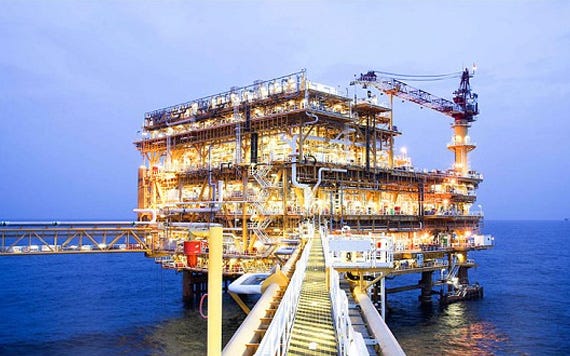
Qatar is in the middle of an eighty-five percent expansion of its LNG export capacity [Fact, QatarEnergy public filings]. Saudi Arabia is building NEOM. The UAE is laying out Etihad Rail, expanding DP World’s port network, and standing up two of the largest AI data centre footprints outside the United States. India is building airports. Indonesia is building a capital. Nigeria is building rail. None of these projects are running on twenty-year-old SAP installations. None of them have the entrenched, legacy enterprise software layer that paralyses physical AI deployment in the United States and Europe.
The result is that the region’s industrial assets are simultaneously some of the most modern in the world and some of the most software-poor. The LNG trains. The smelters. The desalination plants. The petrochemical complexes. The airports. The rail networks. The new construction sites. The control rooms are full. The data is in spreadsheets. The maintenance schedules are in people’s heads. The simulators do not exist. The digital twins do not exist. The training data for the next generation of physical AI is sitting in proprietary sensor networks that have never been wrapped in a product.
This is the structural advantage. Every plant, every grid, every port in the region is a private dataset. A foundation model trained on that data, fine-tuned for that asset, deployed on that asset, is not commoditisable in the way an LLM is. It is bound to a piece of infrastructure that has a sovereign owner. The data does not leak. The deployment does not generalise to anyone else’s site. The moat is a physical thing.
This is what we mean when we say that Utopia Studio exists for Qatar-first deployment and global commercial scalability at the same time. The Qatar-first deployment is what gives a company its proprietary data loop. The global commercial scalability is what makes that loop a category. Both, always. The fellow who runs a refinery in Mesaieed and builds a live twin of it is sitting on a defensible position in a global market that nobody else in the world can replicate.
This is why the next ten companies will not come from Silicon Valley. They will come from people who can hold a heavy industrial asset in their head, who have a small software team that can build the loop, and who have access to capital that can write a multi-year ticket against a sovereign customer. The studio is in the business of putting those three things together.
What follows is the map of the categories we think are now buildable. Six of them. Each one corresponds to a layer of the new physical AI stack. Each one is a venture shape that did not exist three years ago. Each one is a call.
These are the categories the Infrastructure Intelligence pod, with our partner pods in Sovereign Systems and National Resilience, are actively mapping. Each one wants a particular founder profile. Each one is a piece of the stack that is now, for the first time, a viable venture rather than a research project.
Apply to the Co-Build Fellowship
Every heavy industrial plant in the world runs on static physics. A consultancy ran a CFD model of the boiler in 2019. A different consultancy ran the corrosion analysis in 2022. The maintenance schedule was set in a board meeting based on a slide that referenced both reports. None of this is alive. None of these updates. The plant changes. The model does not. The first company that builds a vertical-specific, physics-grounded, continuously-updating digital twin of a single asset class owns the operational layer for that industry. LNG trains. Ammonia plants. District cooling networks. Water treatment. Refineries. Not horizontal. Vertical. Deep.
The founder profile: fifteen-plus years on a specific class of plant, ideally as a reliability engineer, operations director, or chief metallurgist. Paired with an ML engineer who has shipped production models on physical systems. If you have lived inside a control room and watched four different consultancy reports contradict each other on the same boiler, the studio wants to talk to you.
There are categories of physical work where the cost of human presence is enormous, the dexterity required is real, and the deployment environment is too messy for traditional industrial robotics. Oil and gas inspection. Decommissioning. Offshore wind maintenance. Mining drift inspection. Nuclear handling. Defence applications. The combination of a sub-twenty-thousand-dollar humanoid platform, a foundation model that can be fine-tuned for the specific task, and a simulator that can pre-train the policy on a digital replica of the site is, in 2026, a buildable product. It was not in 2023.
The founder profile: a robotics or controls systems engineer paired with a deep operator in the target vertical. Ideally, someone who has been called to a job site at 3 a.m. and decided which technician went into the hazardous zone. That person knows things no Silicon Valley team can guess at.
The largest barrier to deploying a physical AI system into a piece of industrial infrastructure is not the model. It is the data. Most of the data that matters is locked inside legacy SCADA systems, vendor-proprietary formats, and undocumented historian databases that have been accumulating for 40 years. The company that builds the ingestion layer owns a flywheel position. The ingestion layer takes a plant’s entire historical sensor record, turns it into training data for a simulator, and feeds it back into the loop. It is the gatekeeper between the asset and the AI.
The founder profile: control systems engineer with deep experience in OT and IT integration, paired with a data infrastructure builder. A specific edge if either side has worked in a sovereign infrastructure context, where the data governance constraints are the moat. We are particularly interested in builders who have run SCADA migrations and lived the gap between the spec and the reality.
A national infrastructure operator sits on a proprietary dataset that, properly wrapped, is a foundation model for an entire industry. A port authority. A national oil company. A sovereign rail operator. A national grid. The company that builds the wrapper does not own the data. It builds the technical, legal, and commercial architecture that lets a sovereign operator turn their physical infrastructure into a sovereign AI asset. This is a long-tail bet on Qatar, the UAE, Saudi, Singapore, and a small number of comparable jurisdictions. The product is the loop, but the customer is a country.
The founder profile: ex-operator at a national infrastructure entity, sovereign wealth fund, or strategic government office, paired with a product builder who has worked at the edge of regulated industries. This is the most political of the six categories, and the highest value. It requires someone who can maintain relationships with a minister and a CTO in the same conversation without losing either.
In any given industrial site today, you will find a mix of legacy fixed industrial robots, AGVs, drones, inspection robots, and increasingly humanoids. Each with its own software stack, its own integration cost, its own training pipeline. The integration cost of running all of these on a single control layer is what kills most multi-robot deployments. The company that builds the unified control stack owns the operating system for an industrial site. It runs policies trained on one body and deploys them on another. It hands off tasks between fixed and mobile platforms. It abstracts the hardware diversity into a coherent runtime.
The founder profile: robotics systems engineer with experience across multiple commercial platforms, paired with a supply chain operator who has lived the integration pain. Or an ex-ROS or NVIDIA Isaac engineer who has watched the same problems recur in every customer engagement.
When a robot becomes capable of doing the work of a human in a hazardous setting, or when an autonomous twin becomes capable of retiring a million dollars a year in consultancy spend, the unit economics start to make sense. But the financing layer is not built. Insurance does not price the new risk. Banks do not underwrite the new asset class. Project finance does not have a template for a five-year capex on a fleet of foundation-model-driven inspection robots. The first company that builds the actuarial science, the underwriting playbook, and the financing instruments for embodied AI deployments owns the wedge between the technology and the capital that pays for it.
The founder profile: ex-infrastructure project finance, paired with an actuary and a machine learning engineer. Specific edge for someone who has done capex underwriting at a major insurer, a multilateral, or a sovereign fund.
The thing that excites me most about the physical AI stack right now is that, for the first time in twenty years, the most interesting technology in the world is, again, the one that touches things you can hold.
The 1990s were a hardware decade. So was the 2000s. We built networks, phones, chips, and sensors. Then, for fifteen years, almost all the venture money in the world went into software. SaaS, marketplaces, infrastructure for other software, social, the cloud. Hardware became a thankless category. Robotics became a YouTube category. The most ambitious technical talent in the world worked on better ways to share photos.
That era is over.
The robot in your hand at OpenAI in 2019 took thirteen thousand simulated years to learn to do nothing useful. The robot on the BMW production line in 2026 was trained in a weekend on a closed loop that did not exist three years ago. The simulator runs on a single GPU. The foundation model fits on a workstation. The hardware costs less than a used car. And the most defensible position in this entire stack is the one held by the person who knows the specific piece of physical infrastructure best.
Most breakthroughs look obvious in hindsight and invisible while they are happening. This one is in the second category. The papers are public. The simulators are open source. The hardware is shipping. The valuations are pricing the loop. And yet most of the operators who have the embedded knowledge to win in this category have not been told that the substrate underneath their work has just changed. The reliability engineers. The chief metallurgists. The LNG schedulers. The port operators. The grid dispatchers. The maintenance directors. The inspection chiefs.
If you are one of them, the studio exists to remove the obstacles. Co-build OS. Technical co-founders. Sovereign capital. Pilots in the region. A structured path from problem to product to company in under six months. The map above is intentionally incomplete. It is expected to be redrawn by the people who walk onto it.
The world of interesting technology is back. The render farm is open. The robots are listening.
oliver@utopia-studio.co
OpenAI Dactyl: “Solving Rubik’s Cube with a Robot Hand,” OpenAI, October 2019. The roughly 13,000 simulated years figure is from the original technical paper.
Sergey Levine et al., “Sim-to-Real Transfer of Robotic Control with Dynamics Randomization,” 2017. The seminal domain randomisation paper.
NVIDIA Newton: announced jointly with Google DeepMind and Disney Research at SIGGRAPH 2024; placed under Linux Foundation governance 2025. Differentiable, GPU-native, open source.
Genesis simulator: multi-institution academic release, December 2024. Throughput claims of roughly 43M FPS on RTX 4090.
DeepMind Genie 3: announced August 2025, playable world model with minutes-long persistence.
NVIDIA Cosmos: foundation world model for physical AI, announced CES January 2025.
Physical Intelligence π0 (Oct 2024) and π0.5 (April 2025): cross-embodiment foundation models.
Skild AI: announced general-purpose robotics brain, valuation reported at roughly $4.5B mid-2025.
Figure 02 deployments at BMW Spartanburg, public statements from Figure and BMW, 2024 and 2025.
Unitree G1 humanoid: launched 2024, list price roughly $16,000.
Pixar Toy Story render statistics: drawn from Pixar engineering retrospectives, multiple sources. Average frame render times of six to twenty-nine hours on the original render farm.
QatarEnergy North Field Expansion: 77 mtpa to roughly 126 mtpa, public regulatory filings.
No posts
Comments
Nothing yet. Say the first thing.
Sign in to join the conversation.