
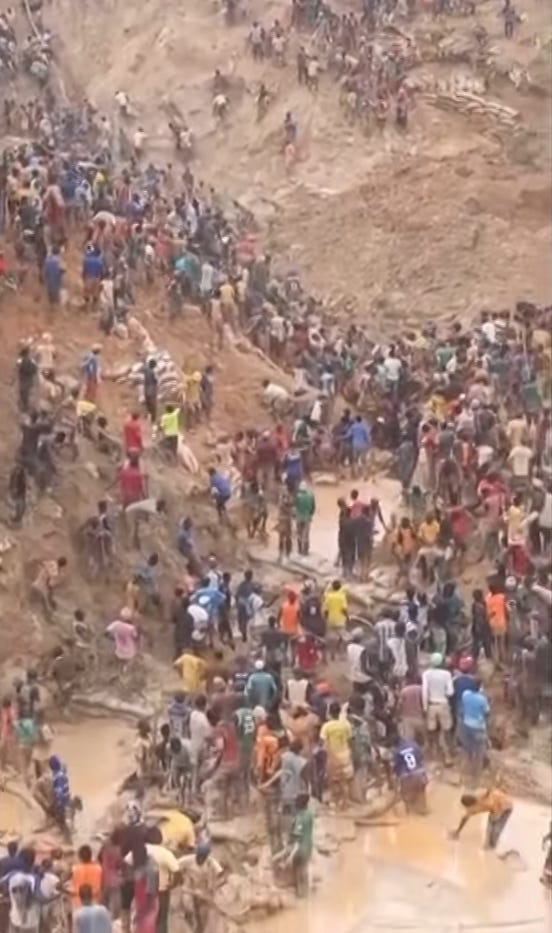
More than 100 people have died in a landslide at an artisanal gold mine in the village of Zamboye, in western Central African Republic (CAR), near the border with Cameroon, local officials said on 19 August (via BBC).
Video footage circulating on social media appeared to show an avalanche of sand descending on a group of miners working in an open pit, and covering them.
“It was a disaster. People were piled on top of each other. It was death,” said Mohamadou, who was working at the mine during the incident, in an interview with France 24. “I’ve never seen a disaster like that. I personally rescued more than 40 people.”
The landslide is believed to have been caused by “the collapse of several underground tunnels in which miners were operating,” a public prosecutor told the AFP.
Authorities have temporarily closed the mine and opened a judicial investigation into the cause of the collapse and possible breaches of mining regulations, including illegal mining and concealed employment.
The disaster in Zamboye is the latest one of several deadly mine collapses that recently hit the CAR, in which at least 40 more people died this year. The mining sites often operate with weak safety standards and outside state control.
Gold is one of CAR’s important mineral exports; artisanal and small-scale mining provides livelihoods for a substantial number of people. Gold alone represented about 36.4% of the country’s export basket in 2020–23, ahead of diamonds, according to the World Bank’s 2025 economic update.
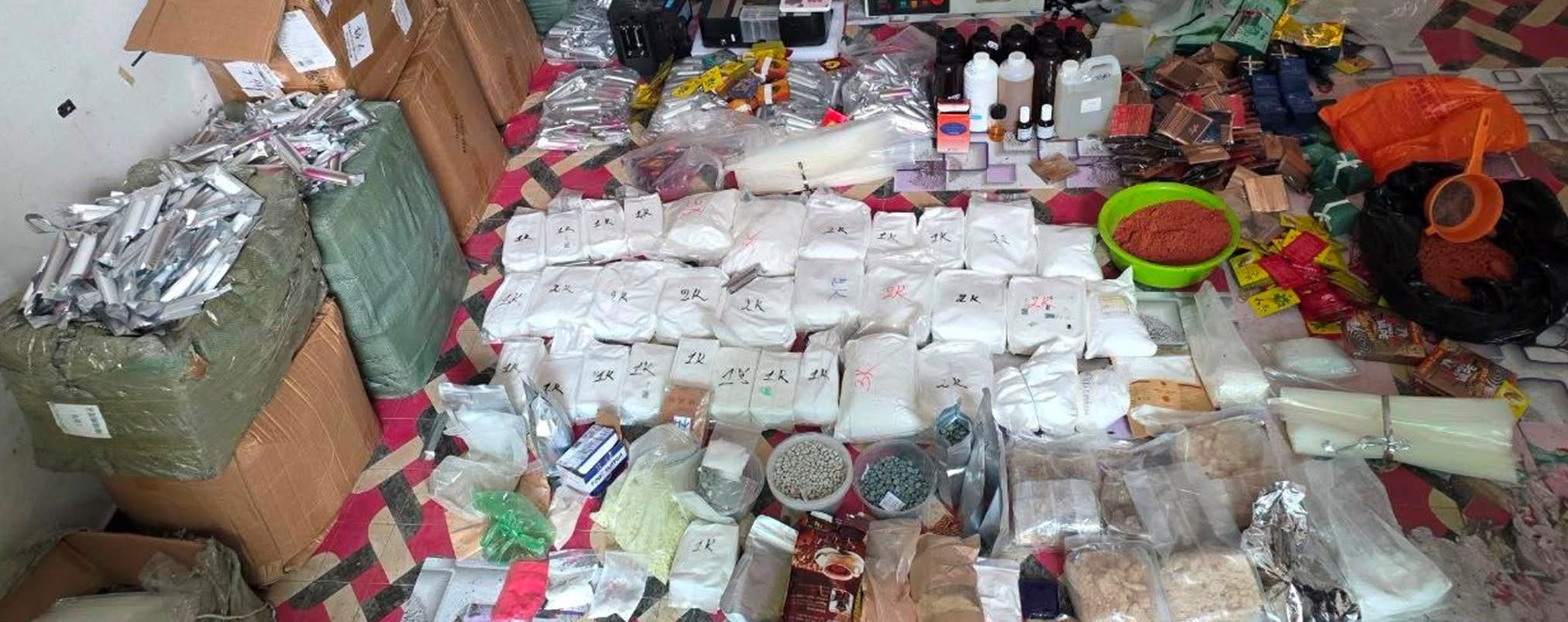
Mexican Sinaloa Cartel’s operations in Cambodia: Cambodian and U.S. anti-drug agencies seized chemicals, illegal drugs and approximately €6 million ($7 million) worth of cryptocurrency connected to a money-laundering network linked to the Sinaloa Cartel in Mexico, officials said on 21 August (via AP). Between 1 and 5 August, Cambodian police “raided four locations in Phnom Penh and Kandal province,” reports the Khmer Times, “arresting six Vietnamese nationals and seizing more than 200kg of illegal drugs and a tonne of precursor chemicals.” Investigators uncovered a local network laundering money through cryptocurrency for Sinaloa Cartel-linked traffickers, leading to the confiscation of €6 million ($7 million) in digital assets, said General Meas Vyrith, Secretary-General of the National Authority for Combating Drugs (NACD). The United Nations Office on Drugs and Crime identified Latin American cartels as key actors in Southeast Asia, with the region now functioning as a supply, financial management, and logistics hub for multiple criminal organisations.
China completes first phase at disputed Antelope Reef: China has completed the first phase of construction on Antelope Reef in the Paracel Islands, building a man-made island measuring 603 hectares (1,490 acres) in the disputed South China Sea, according to the Asia Maritime Transparency Initiative (AMTI). “Just nine months ago, Antelope Reef was nothing more than a coral sandbar in the South China Sea,” explains The Telegraph. Since then, the build-up was done “at lightning pace”, notices the British newspaper, with satellite images showing piers, pontoons, a helipad and buildings protected from the sea by reinforced walls. Chinese state media have said it will be used for weather forecasting and scientific research, but analysts say it will form part of Beijing’s largest military base. “The northern part of the South China Sea would be particularly important in a Taiwan conflict scenario, so Antelope is ideally placed,” Ben Lewis, the founder of the open-source data platform PLATracker, told Reuters. Claimed by China, Vietnam and Taiwan, Antelope Reef is located in the disputed Paracel Islands archipelago, occupied by Beijing since 1974.
Breakthrough in skin cancer vaccine: Moderna and Merck’s announced the success of the first large-scale trial for a personalised mRNA vaccine that helped prevent the return and spread of melanoma in patients, one of the deadliest forms of skin cancer, both companies said on 19 August. The vaccine uses messenger RNA (mRNA), the same technology used to develop COVID-19 shots. Once injected, the vaccine instructs the body to produce neoantigens, which prepare the body to recognise the threat. “We had never been able to train an individual patient’s immune system against their own tumour before,” said in Nature Adnan Khattak, a medical oncologist and an investigator in the trial at Hollywood Private Hospital in Nedlands, Australia.
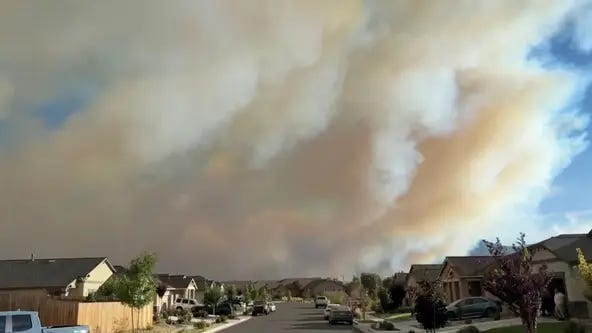
Hawk Fire triggers state of emergency in Nevada: Nevada Governor Joe Lombardo declared a state of emergency in Washoe County on 22 August after the human-caused Hawk Fire scorched over 6,086 ha (15,040 acres) of land near Reno. First reported on the morning of 22 August, the fire quickly spread due to “strong winds, low humidity, and dry grass and brush”, according to The Watchers. As of 25 August, the fire was 27% contained. “We saw flames hitting our apartment and other homes burning,” 14-year-old Andrew told the Reno Gazette-Journal at an evacuation centre. The Hawk Fire has displaced 63,000 people, with a further 23,000 in an evacuation zone. At least seven people, including three firefighters, were injured during the response.
Magnitude 7.2 earthquake shakes southern Peru: A powerful 7.2-magnitude earthquake struck the Ayacucho region in Peru’s southern Andes on 20 August, leaving “shocking” images of “families huddled together in the streets” who were “hugging each other as a precaution against possible aftershocks”, reports ATV Perú. The epicenter was located 35 kilometers north of Coracora, in the province of Parinacochas, at a depth of 108 kilometers, according to the Geophysical Institute of Peru (IGP), and was felt in various regions of southern Peru and also in Lima, the capital. The tremor injured at least three people and affected over 116 homes, according to Plan International.
Serbia receives help from EU, Russia to tackle wildfires: Helicopters and firefighters from the European Union have arrived to support Serbian crews in their efforts to contain a blaze that has engulfed over 3,500 hectares of the Deliblatska Peščara nature reserve, located 60 kilometres (37 miles) east of Belgrade. “The situation is extremely difficult,” said Ivica Dačić, Serbia’s Interior Minister, adding that “more than 400 people are deployed there on a daily basis.” A Russian Ilyushin Il-76 water bomber has also been deployed since 20 August, with Serbian authorities citing the need for “its greater water-carrying capacity”, reports Balkan Insight. The fire in the Deliblatska Peščara nature reserve has been raging since late July and is one of the 20 active wildfires in Serbia, according to Luka Čaušić, head of the Serbian Department for Emergencies.

The king has reclaimed the throne. Ethiopian runner Yomif Kejelcha regained the world half marathon record in Buenos Aires on 23 August, crossing the finish line in 56:51.
Kejelcha had previously lost his title to Jacob Kiplimo of Uganda, who ran the race in Lisbon in March in 57:20, beating the previous record of 57:30 set by Kejelcha in October 2024.
“I’m over the moon,” Yomif Kejelcha told World Athletics. “I’m super happy and right now I don’t feel any tiredness. The travel from Ethiopia was too long and I was tired the first days here, but later I felt better and today I was full of beans.”
“This time is unbelievable; I can’t describe it with words. I now hope to try the Argentinean meat, which has a very good reputation!” Bon appétit, Yomif!
Thanks for reading this week’s newsletter! This post is public so feel free to share it. Take care.
No posts
Comments
Nothing yet. Say the first thing.
Sign in to join the conversation.