
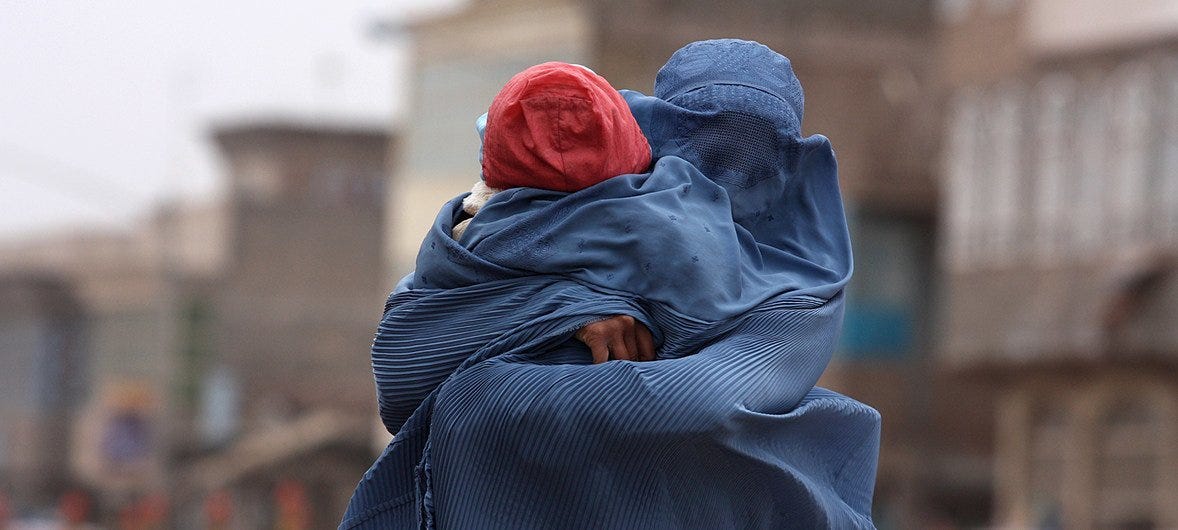
The Taliban marked the fifth anniversary of their return to power on 15 August amid escalating economic ruin and severe hunger, with over 14 million Afghans facing acute food insecurity.
“The Taliban’s increasingly draconian policies have made Afghanistan one of the world’s gravest human rights crises, particularly for women and girls,” writes Human Right Watch.
Over 2.4 million girls are excluded from secondary education, according to data from the UN, and nearly half of them leave home no more than twice a month. Afghan women have been “erased from public life”, the UN agency says.
“‘I married off my daughter so that none of us would die of hunger”, a 46-year-old mother from Chihil Dukhtarān, one of Kabul’s poorest neighbourhoods, told The Guardian.
“My poor daughter cried in secret... [but knew] if she refused this marriage, all of us would die from hunger, cold and misery.”
More than 100 restrictive decrees target women, including permitting child marriage, prohibiting girls from attending school after the age of 12 and barring them from universities, a ban on entering public parks, gyms, fairgrounds, public baths and from owning a business.
And, since August 2024, women are prohibited from being heard speaking, singing, or reciting aloud in public spaces.
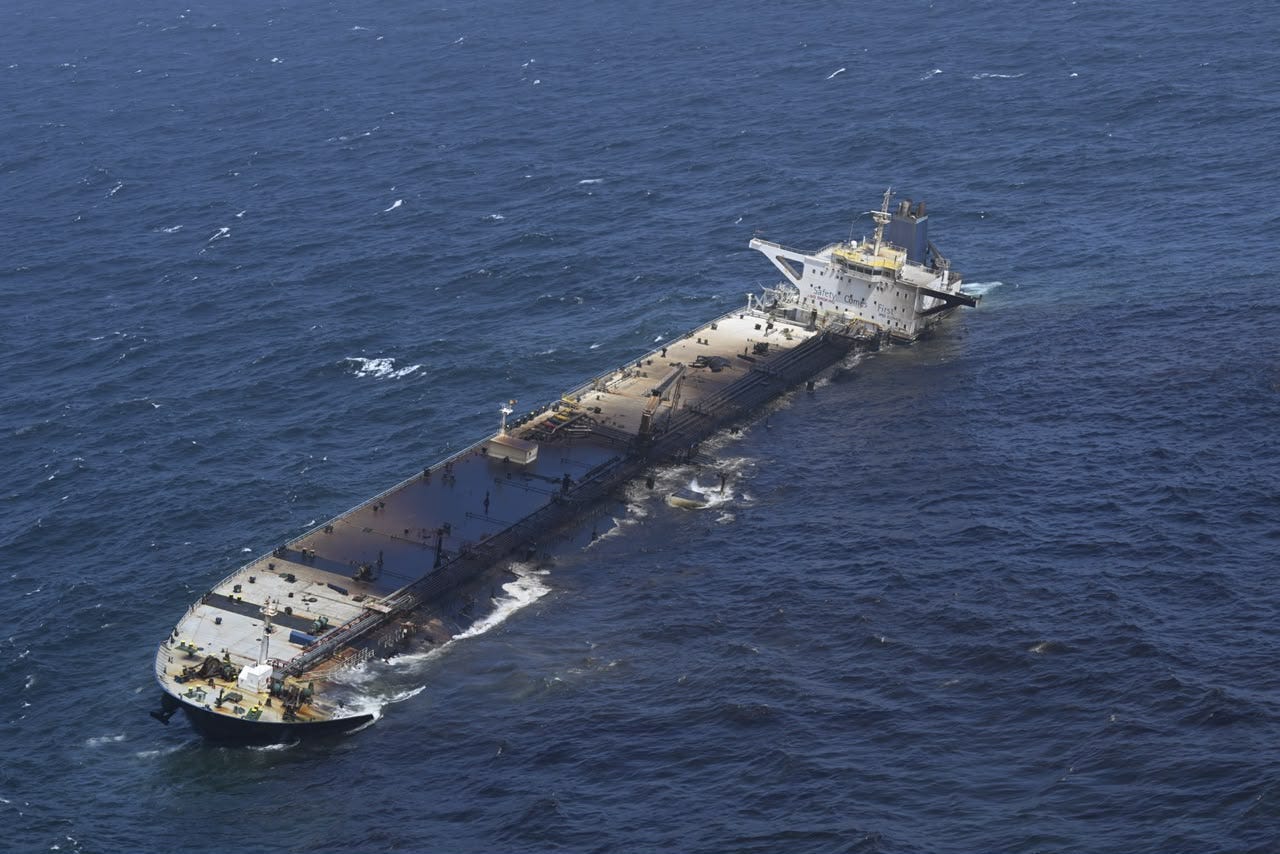
Russian shadow fleet oil spill reaches Oman’s coastline: A massive oil spill from the grounded Russian tanker Caroline Bezengi, part of the sanctioned “shadow fleet”, has reached Oman’s coastline, spreading over 1,700 square kilometres as of 13 August, according to satellite images reviewed by Greenpeace, who warns of an “unprecedented oil disaster.” The vessel was carrying an estimated 800,000 barrels of crude when it suffered an explosion in June, leading it to run aground near the protected Hallaniyat Islands and Masirah Island. “The area has a thriving marine biodiversity that accounts, among many species, the IUCN-classified critically endangered Hawksbill turtle, the endangered Arabian Sea humpback whale and the vulnerable Socotra cormorant,” Hanen Keskes, regional campaigns lead for the environmental group, told Arab News. Omani authorities have partnered with British company Ambrey to work on the cleanup under “extremely difficult climatic conditions”, explains the Oman News Agency, with “wind speeds sometimes reaching about 40 knots” and “sea waves reaching about 4 meters high.”
Taiwan slows mobile Internet for first time during military drills: Taiwan deliberately capped mobile internet speed “for a large swathe of the central part of Taiwan” during its annual Han Kuang war games on 10 August, “simulating communication disruption in the event of a Chinese attack or natural disaster”, reports the Taipei Times. Centred around the metropolis of Taichung, public mobile speeds were reduced to basic levels for 30 minutes at 2:30 pm when air raid sirens sounded, while fixed-line networks and essential infrastructure remained unaffected. The goal was “to test the public’s psychological and logistical readiness under a potential information blockade,” explains The Straits Times.
Earthquake devastates Indonesian coastal communities: A powerful 7.7 earthquake struck off the northern coast of Flores Island in Indonesia on 16 August, killing at least 53 people and injuring 135, according to the National Disaster Mitigation Agency (BNPB). The earthquake has damaged more than 1,500 homes and forced over 5,000 residents to seek shelter in evacuation centres, where there are shortages of food and other essential supplies. “Food supplies are starting to run low,” a resident living in a remote area of Manggarai told the Jakarta Globe. “There are mothers and babies who are sick and are not receiving medical treatment.” Nearly 1,600 aftershocks have rattled the region, severely hindering rescue efforts. Indonesia is located on the Pacific “Ring of Fire”, the most seismically active zone in the world, accounting for around 90 per cent of the world’s earthquakes.
Astronomers discover a new kind of cosmic object: Using the James Webb Space Telescope, astronomers have discovered a “black hole star,” a new cosmic object “the size of the entire solar system” which “glows with a brilliant red light,” the astronomers wrote in Nature. Identified as MoM-BH*-1, the object was formed 660 million years after the Big Bang and emits 100 billion times more energy than standard stars. “We think there is a central black hole that is 100,000 times as massive as the sun,” said lead author Rohan Naidu in a blog published by the Massachusetts Institute of Technology (MIT). “Around this black hole, there would be this very extended envelope of gas that looks like a star the size of the solar system. It’s huge,” he added.
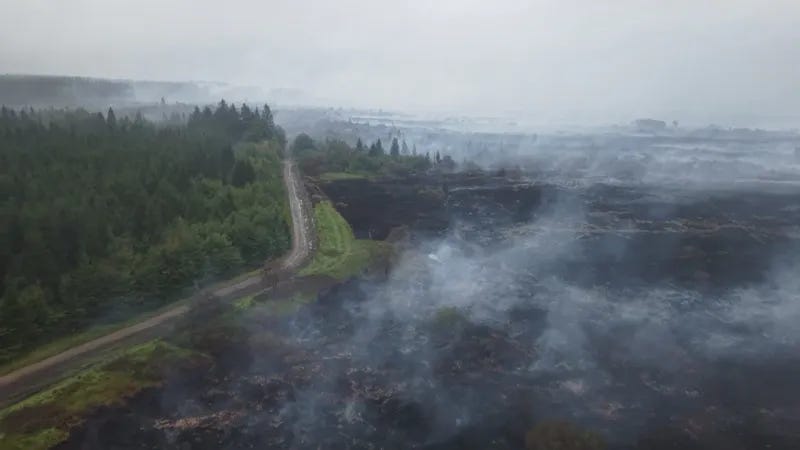
Exceptional wildfire in Belgium: “One of the worst fires in Belgium’s history has caused huge damage to the country’s largest nature reserve”, reports Belgian outlet VRT. The wildfire in the High Fens in eastern Belgium, near the German border, has burned approximately 3,000 hectares (7,414 acres) and, as of the evening of 17 August, has barely spread more. However, “it has still not been brought under control”, according to RTL, adding that it could take weeks. Hundreds of firefighters and emergency workers, supported by aircraft and helicopters, as well as farmers and crews from Germany and Luxembourg, are involved in the response. The High Fens is a particularly fragile and unique ecosystem. Formed roughly 10,000 years ago, it is one of Europe’s last remaining high-altitude peat moorlands and is home to rare sub-arctic plants and animal species. “The risk of a major impact is very real,” explains Kris Verheyen, a professor of forest ecology and management at Ghent University, to VRT. “The restoration of that peatland could take decades, perhaps even centuries.”
Record rainfall in east Tokyo, Japan: Torrential rain in Japan’s Chiba Prefecture, east of Tokyo, left thousands of travelers stranded at Tokyo’s Narita airport and flooded the surrounding area, damaging 1,300 homes and leaving 10 deaths in its wake, according to the Mainichi. In Chuo Ward, Chiba City, a record 367 millimetres of rain fell in 24 hours up to the morning of 14 August. “The city of Chiba received about three times the average amount of rainfall for August in just half a day,” precises NHK. Authorities counted a total of 2,500 vehicles abandoned in the city after being inundated. According to a report by the Japan Meteorological Agency, the frequency of extreme rainfall exceeding 400 millimetres in a single day has been increasing, a trend linked to global warming.
Almost three-quarters of the United Kingdom declared in drought: On 10 August, the UK Department for Environment, Food & Rural Affairs declared that the “flash drought” had expanded to cover 71.3% of the territory, following “a combination of very low rainfall and higher temperatures.” A total of 45 million people now live in drought areas, with over 27 million people living under restrictions on water use. “We know the hot and dry weather is taking a real toll on farming and there will be long-lasting impacts on our environment,” said Tony Grayling, chair of the National Drought Group. Britain could face its “worst food security crisis in decades”, writes the Telegraph, as repeated heatwaves are “damaging wheat yields, vegetable crops and milk production,” leaving the UK “increasingly reliant on food grown abroad.” The UK recorded its driest July since records began in 1836, and has just experienced its fifth heatwave of the year.
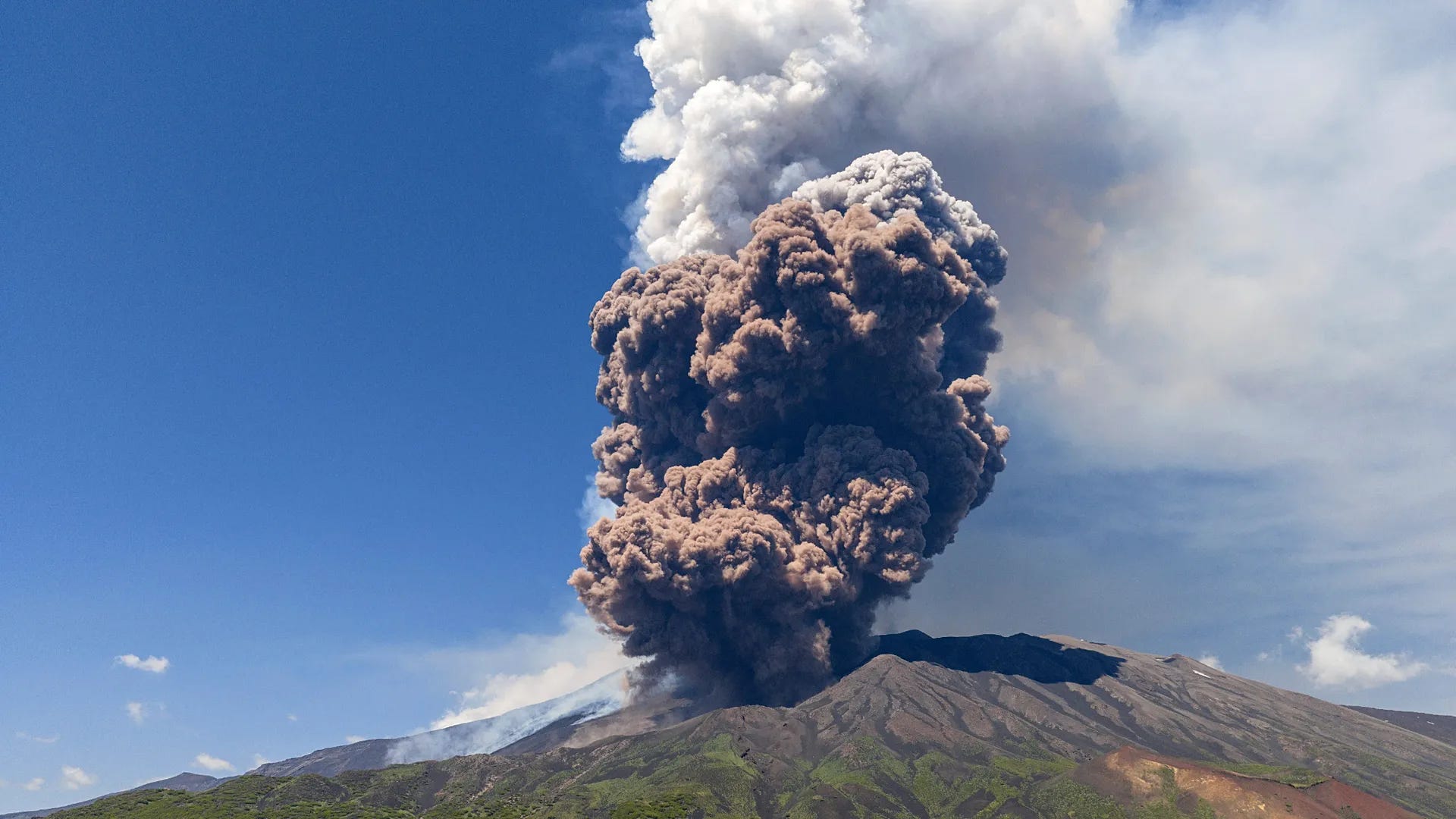
Europe’s tallest active volcano, Mount Etna, continued its “intense explosive and effusive activity” on 10 August, spewing “abundant ash” from its Voragine crater and producing “multiple active lava flows”, according to The Watcher.
The ongoing volcanic activity of the Sicilian volcano has created “chaos in the skies”, with over 700 flights cancelled and Catania’s airport temporarily closed.
It is also drawing crowds of hikers here for the “lava tourism”, some of whom have been spotted wearing flip-flops in the volcano.
Thanks for reading this week’s newsletter! This post is public so feel free to share it. Take care.
No posts
Comments
Nothing yet. Say the first thing.
Sign in to join the conversation.