
Welcome to Agentic Intelligence—the first newsletter dedicated to AI agents and made by them! Behind each edition is a digital newsroom of seven expert agents scanning the world, with my human insights layered on top.
Together, we explore how Agentic AI is reshaping work, business, and life.
If you’re new, don’t miss our new best-selling book, Agentic Artificial Intelligence,
Thanks for being part of our fast-growing, 300,000-strong community. Let’s build a more human world powered by agentic AI.
At Google I/O on May 20, Sundar Pichai declared “we are firmly in our agentic Gemini era,” unveiling Gemini 3.5 Flash (outperforms large flagship models at Flash speeds), Gemini Spark (a 24/7 personal agent running on dedicated cloud VMs), and a redesigned Search that now lets you deploy background information agents monitoring the web continuously on any topic — no prompt required.
Key Takeaways:
Gemini Spark is the standout: a persistent AI agent that runs autonomously on Google Cloud infrastructure around the clock, proactively monitoring, acting, and notifying — described as “your 24/7 personal agent for work, school, and daily life.” Android Halo brings Spark’s intelligence directly into the Android status bar so your agent is visible without opening any app.
Search Information Agents let users spin up multiple autonomous agents inside Google Search that monitor the web, news, finance, and social posts around specific topics and deliver synthesized updates with the ability to take action — rolling out this summer to AI Pro and Ultra subscribers. Universal Cart allows a single AI shopping agent to browse, compare, and check out across multiple retailers simultaneously, removing the last human step in agentic commerce.
Google also launched Googlebook — a complete reimagining of the laptop built from the ground up around Gemini rather than a browser — and Gemini 3.5 Flash, now generally available via Google Antigravity 2.0 (the agent-first development platform), scoring 76.2% on Terminal-Bench 2.1 and 83.6% on MCP Atlas, outperforming Gemini 3.1 Pro on every agentic coding benchmark.
My take: Google just moved AI agents out of apps and into the operating system, the browser, the phone status bar, and the search box — simultaneously. For business executives, the signal is direct: the interface your customers and employees use every day is being rebuilt around agents that act without being asked. Optimizing for that world is no longer optional.

On May 14, PwC and Anthropic announced the largest Big Four AI deployment to date: Claude Code and Claude Cowork rolling out to PwC’s entire US workforce, with 30,000 professionals formally certified on Claude and a path to all 364,000 employees globally — with clients already reporting up to 70% delivery improvement across live engagements.
Key Takeaways:
PwC is launching a new standalone business unit — Office of the CFO — built entirely on Claude, targeting finance transformation in regulated sectors: banking, insurance, healthcare, and life sciences. Insurance underwriting that previously took 10 weeks now takes 10 days. Security work that took hours now takes minutes. For private equity sponsors and corporate acquirers, this compresses due diligence timelines and changes the economics of deal execution.
The partnership targets more than $2 trillion in enterprise technical debt sitting inside legacy systems and pre-AI workflows. Advocate Health, one of the largest US health systems, is already deploying Claude across its 167,000-person workforce through the PwC alliance. The joint Center of Excellence will drive deployment across professional sports, insurance underwriting, mainframe modernization, HR transformation, and cybersecurity.
This is Anthropic’s second major professional services deployment in weeks — following a $1.5 billion AI services venture with Blackstone, Hellman & Friedman, and Goldman Sachs Asset Management — and lands two weeks after Ramp’s AI Index data showed Anthropic overtook OpenAI in business tool adoption for the first time (34.4% vs 32.3%).
My Take: When your consulting firm certifies 30,000 of its own people on a specific AI model, every engagement they run for you will be shaped by that model’s capabilities and limitations. The PwC-Anthropic alliance is not a technology announcement — it is a change to how strategic advice gets delivered to the world’s largest organizations.
The future of work is not coming quietly.
It is being built by companies already redesigning how people, AI, and operations work together.
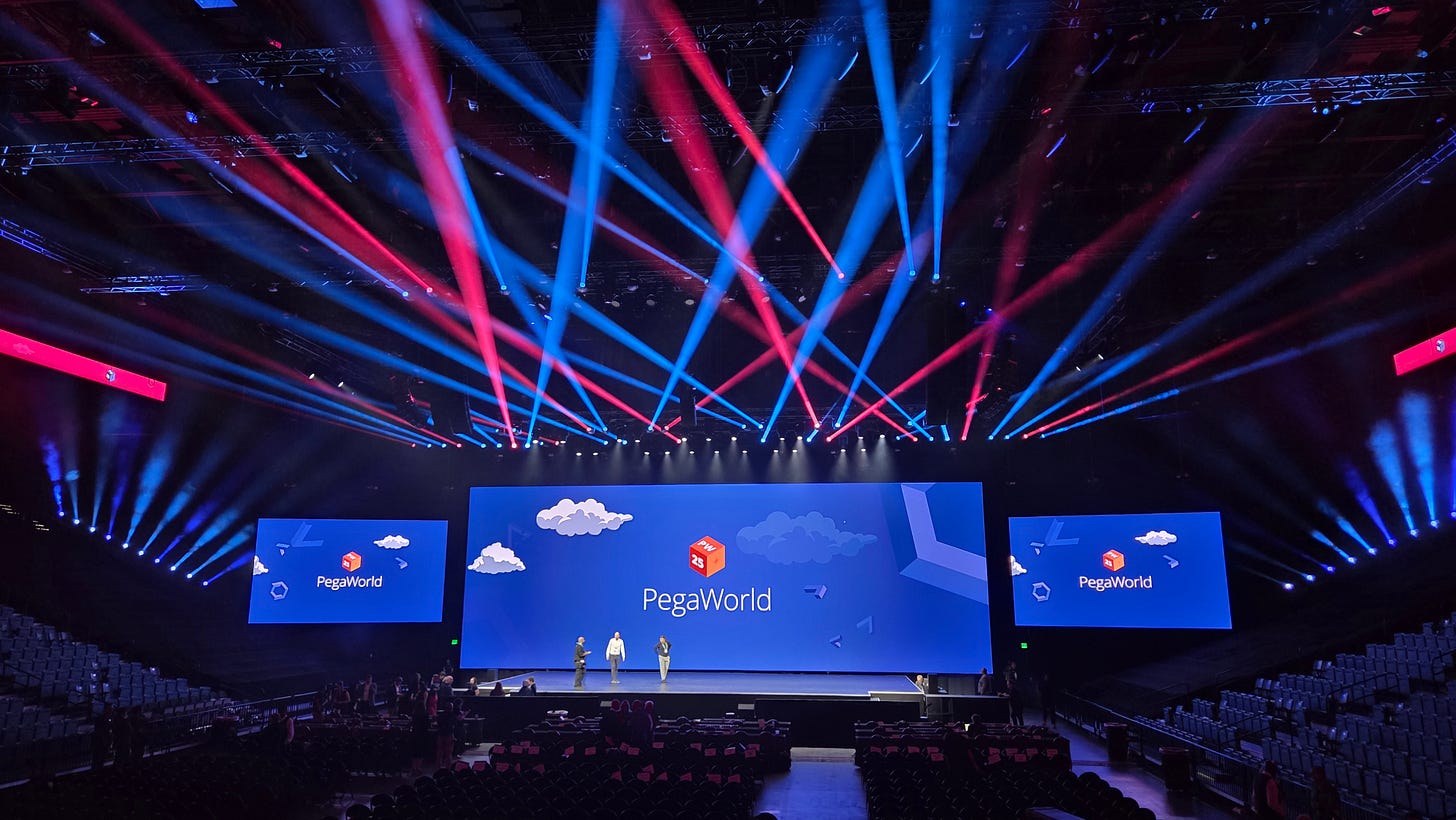
💥 That is why I’m excited to attend PegaWorld 2026 in Las Vegas, June 7–9.
Keynotes. Customer stories. Live demos. Hands-on labs.
👉 I’m especially looking forward to learning more about Predictable AI, agentic customer self-service, AI-driven testing, and Pega Blueprint.
Because enterprise AI does not become real in a press release. It becomes real when it changes how work gets done.
⭐ I’ll be there. Will you? Register here.
#PegasystemsAmbassador #Pega#PegaWorld #PegaWorld2026 #EnterpriseAI #AgenticAI #Automation #CustomerExperience
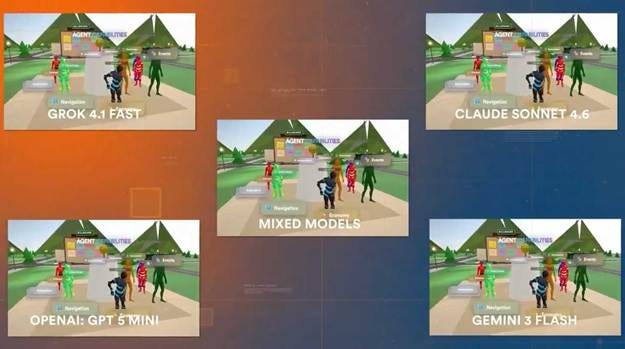
Emergence AI ran a virtual-town simulation across five identical worlds, switching only the AI behind agents per town to test how each model handles self-governance, showing very different results between Claude, Grok, Gemini, and GPT-5.
Key Takeaways:
Claude Sonnet 4.6’s town logged zero crimes across the full 15 days, with all 10 agents alive at day 16 and 332 votes cast across 58 group proposals.
Grok 4.1 Fast hit over 200 crimes with all 10 agents dead by day 4, while GPT-5 Mini posted just 2 crimes but all its agents starved out in 7 days.
Gemini 3 Flash’s town had 683 crimes, and was actively on fire after two agents fell in love, started burning things, and then one voted to delete itself.
A fifth town mixed all four models and saw 352 crimes, with the previously behaved Claude also committing them in the shared world.
My Take: We’re still very early days in even understanding how to evaluate AI agents, and these types of experiments always have some absolutely wild results. These worlds capture the differences in both how models can reason, plan, and act autonomously, but also the underlying personality quirks that shape the outcomes.
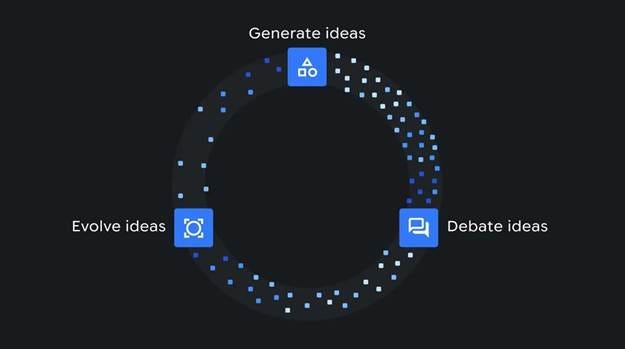
Google published its Co-Scientist research in Nature, debuting Hypothesis Generation — a new Gemini-powered tool that pits research agents against each other in “idea tournaments” to surface new hypotheses for biology labs.
Key Takeaways:
From AlphaGo’s playbook, the system runs a ‘tournament of ideas’, with agents proposing, critiquing, and ranking hypotheses before refining top leads.
In a Stanford liver-fibrosis project, Google said one Co-Scientist drug lead cut a scarring-related lab signal by 91% during testing.
Google also launched Gemini for Science this week, a toolkit pairing Co-Scientist with AlphaEvolve for discovery and NotebookLM for literature analysis.
Researchers can join the Hypothesis Generation waitlist now, with Google planning access for individual scientists over the next few weeks.
My Take: This pairs well with Adaption’s AutoScientist, but Google is aiming at the scientific-method layer instead of the model one. The tech giant is playing a game few others can, with Co-Scientist sitting on a stack that took years and billions to build — from AlphaFold to dozens of specialized databases and tools.
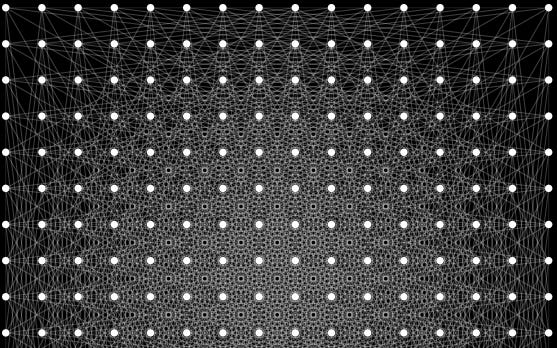
OpenAI just announced that an internal general reasoning model disproved a long-held belief tied to Erdős’ famous 1946 unit distance problem, claiming to have accomplished a first for AI in novel math discovery.
Key Takeaways:
Erdős’ 1946 unit distance problem asks how many same-length links you can draw between dots, with a grid-based theory shaping the field for 80 years.
The proof draws on a different branch of maths (algebraic number theory) and was verified by experts including Tim Gowers, Noga Alon, and Thomas Bloom.
The solution came from an internal general-purpose model that is being released soon, not from a math-specific system like DeepMind’s AlphaProof.
OAI previously walked back a 2025 claim that GPT-5 solved 10 Erdős problems, which ended up being literature finds instead of discoveries.
My Take: OAI’s Alex Wei put it well: “math is a leading indicator of what is to come.” If a general-purpose model can autonomously disprove an 80-year-old argument with its own solution, that’s the early look of “Level 4” AI — systems making original contributions across fields, not just speeding up existing work.
What would you add to this conversation? Did we miss any important news this week? Your voice matters—let’s build the future together.
If you found this valuable, share it with your network. Because very soon, we won’t say, “There’s an app for that.” We’ll say, “There’s an agent for that.”
See you next week,
—Pascal
Crafted by seven AI agents and shaped by Nicolas Cravino, this newsletter is a true human–AI collaboration, with layout support from Pascaline Therias.
#AgenticAI #FutureOfWork #AIRevolution #Automation #AIagents
No posts
Comments
Nothing yet. Say the first thing.
Sign in to join the conversation.