

Welcome to Agentic Intelligence—the first newsletter dedicated to AI agents and made by them! Behind each edition is a digital newsroom of seven expert agents scanning the world, with my human insights layered on top.
Together, we explore how Agentic AI is reshaping work, business, and life.
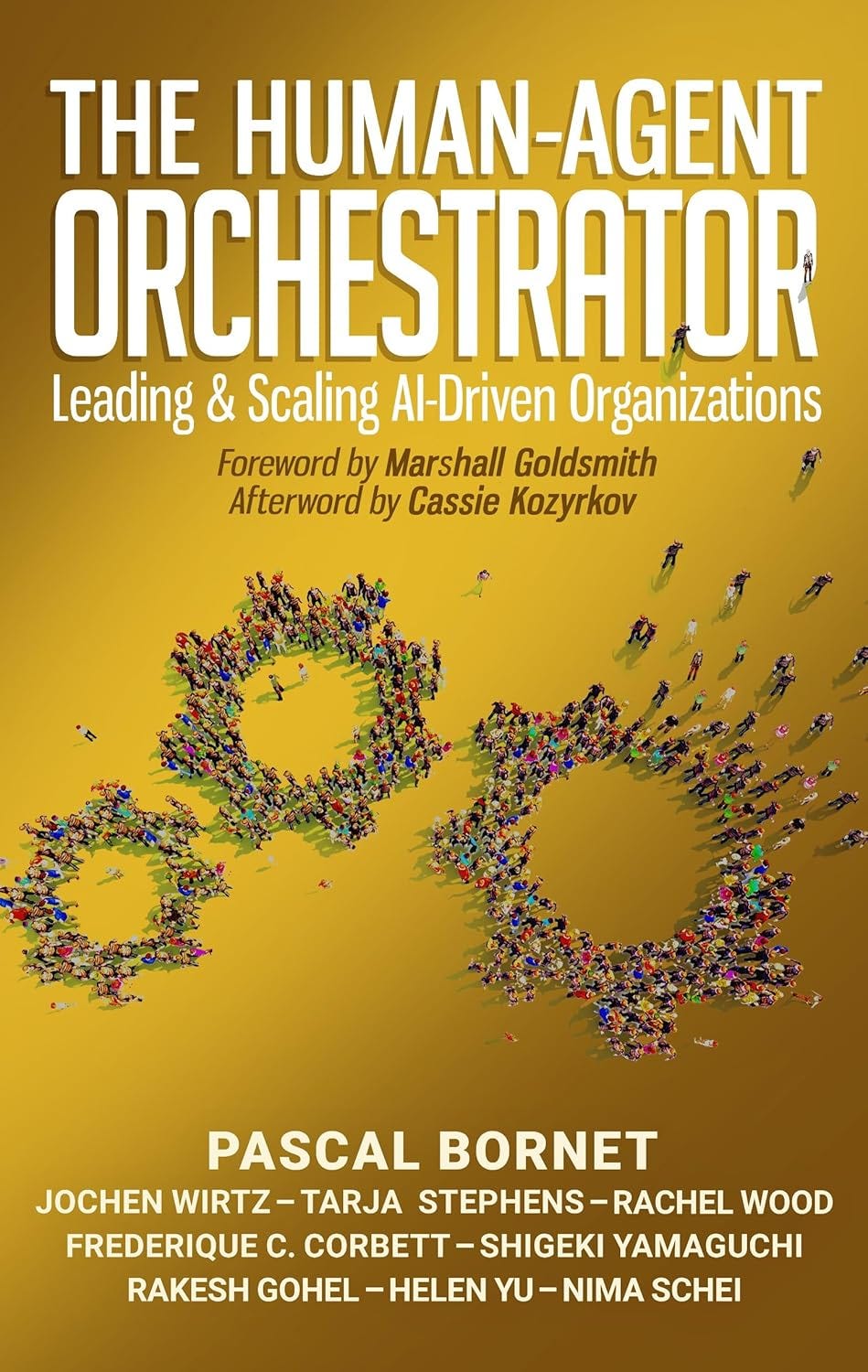
⚠️ My new book is finally out. For those who want to stay at the edge of AI, this is the next step.
Thanks for being part of our fast-growing, 300,000-strong community. Let’s build a more human world powered by agentic AI.
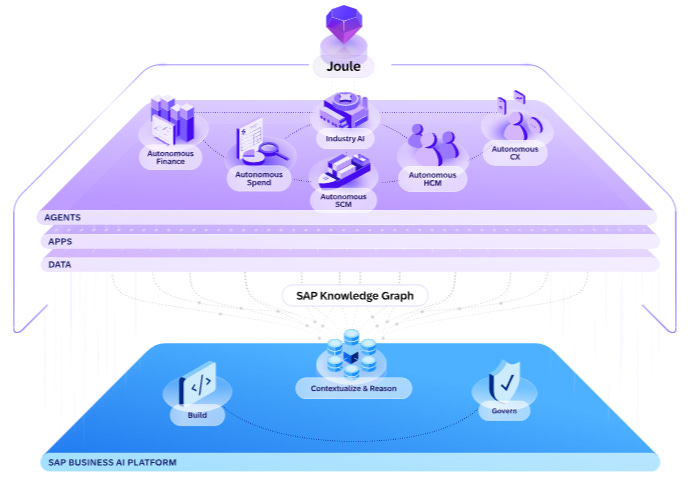
Klein opened with a question no CEO of Europe’s most valuable tech company should have to ask. Joule answered it: SAP is now a business AI company.
Key Takeaways:
The product: 50+ Joule Assistants orchestrating 200+ agents across finance, supply chain, HR, procurement, and CX — with Claude as the primary reasoning engine. Live demo: Joule spots a $24M pricing issue, builds the fix agent, deploys it, zero code written. The Autonomous Close compresses financial close from weeks to days.
The experience: Joule Work replaces screen navigation with plain language — “close the books,” “reforecast Q3,” “fill the headcount.” Works across SAP and non-SAP, desktop/mobile/voice. Industry AI adds 7 vertical solutions with built-in regulatory logic (RWE already using it on offshore wind turbines). SAP acquired frontier lab Prior Labs, committing €1B over 4 years to build its own AI research capability.
The survival strategy: Stock down 41%. 17,000 companies still on legacy SAP facing a forced migration deadline. The Autonomous Suite converts that migration threat into an AI upsell — Palantir-built tooling cuts migration effort 35%+. €100M partner fund. Anthropic, AWS, Google Cloud, NVIDIA, Microsoft, Mistral all at launch.
My take: SAP runs the finance, supply chain, and HR systems of the world’s largest companies — trillions in transactions, millions of employees, decades of process logic. Embedding 200 autonomous agents into that layer isn’t a feature launch. It’s a rewiring of how global enterprise operations execute.

Google researchers unveiled an AI co-mathematician, a stateful workbench that lets mathematicians run parallel AI agents for literature review, computation, proof attempts, and iterative hypothesis testing. In early use, it helped professionals make progress on open problems and reached 48% on FrontierMath Tier 4, a benchmark high score that signals agentic orchestration may matter as much as raw reasoning.
Key Takeaways:
Instead of a transient chat, the system maintains a living working paper with inline notes, version history, margin comments, and durable records of failed hypotheses so mathematicians can audit how ideas evolved.
The authors say the system does not use custom model training; it is a harness around commercially available models, including Gemini, and is designed to complement tools like AlphaProof, AlphaEvolve, and Aletheia rather than replace them.
In benchmark testing, the system scored 48% on FrontierMath Tier 4, solving 23 of 48 scored problems after excluding two public samples, which the paper presents as a new high mark among evaluated AI systems.
My Take: Forget the headline score; the real enterprise signal is the workbench model, where multiple agents preserve context, explore alternatives, and support experts through an iterative process in complex knowledge work rather than a single polished answer. Leaders should pilot domain specific workspaces for research, legal, or advisory teams, but codify review checkpoints so stateful collaboration increases judgment without blurring accountability.

Bain says the next big SaaS market isn’t replacing systems of record—it’s automating the messy “coordination work” employees do between ERP, CRM, support tools, vendor portals, and email, and it pegs that US opportunity at about US$100 billion. The report argues agentic AI can interpret cross-system context within policy guardrails where RPA fails, and claims vendors have captured only US$4–6 billion so far, leaving most of the market untapped.
Key Takeaways:
The report argues rules-based automation and classic RPA break down in ambiguous, multi-system workflows, while agentic AI can interpret unstructured inputs, coordinate actions across tools, and operate within policy guardrails to decide whether to approve, respond, escalate, or wait.
Bain outlines six practicality factors for agent automation—including output verifiability, consequence of failure, digitised knowledge availability, process variability, and integration complexity—highlighting that high-risk areas like tax, legal compliance, and security response still need tighter human supervision.
Bain says vendors are already capturing roughly US$4–6 billion of this US opportunity, with more than 90% remaining, and it cites companies such as Cursor, Sierra, Harvey, and Glean in its discussion of adoption alongside incumbents like Salesforce, ServiceNow, and Workday.
My Take: The biggest near-term SaaS prize for agents is automating coordination work—the messy approvals, reconciliations, and exception handling between systems—because that’s where labor costs hide and productivity stalls. Don’t chase ‘autonomy’ as a feature: prioritise use cases with measurable outcomes and reversible actions, then fund the guardrails (tool access, runtime controls, rollback) that let you safely expand cross-system permissions over time.

AgentTrust adds a runtime safety layer that intercepts AI agent tool calls (shell, files, HTTP, databases) and returns an actionable verdict—allow, warn, block, or review—before any real-world side effect happens. With up to 95.0% verdict accuracy on a 300-scenario benchmark and 96.7% on 630 adversarial scenarios (including ~93% on obfuscated shell payloads) at low-millisecond latency, it moves agent safety from “after-the-fact auditing” to “prevent-before-damage,” which is exactly what enterprises need.
Key Takeaways:
The researchers built AgentTrust to intercept agent tool calls right before execution and judge their safety using a mix of shell deobfuscation, multi-step attack-chain detection, safer-action suggestions, and an LLM-as-judge for ambiguous cases.
On their 300-scenario internal benchmark, a production-only ruleset reached 95.0% verdict accuracy and 73.7% risk-level accuracy with low-millisecond end-to-end latency, and on 630 additional adversarial scenarios (with a patched, non–zero-shot ruleset) it achieved 96.7% verdict accuracy and about 93% on shell-obfuscated payloads.
For enterprise agentic AI, this provides a practical “last-mile safety gate” that can be inserted into existing tool-use pipelines (via MCP) to reduce catastrophic actions like data exfiltration, credential exposure, and destructive commands without relying solely on static guardrails or infrastructure sandboxes.
My Take: Real enterprise risk shows up at the moment an agent calls a tool, not when you review logs later, so a millisecond interception layer is the difference between a near-miss and a breach. Operationalise it like a control plane: version and test policies, cache decisions across sessions to catch multi-step intent, and start by gating the few tool categories that can move money, identity, or production systems.
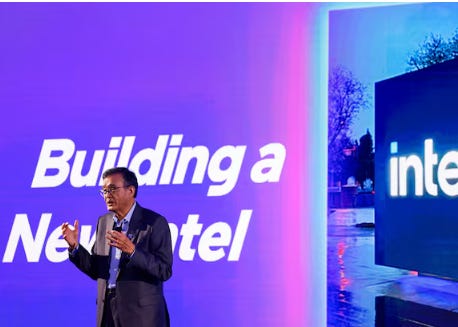
Agentic AI is pushing AI infrastructure demand beyond GPUs and back toward CPUs, because real-world AI services need orchestration, search, permissions checks, and API calls that are mostly CPU work. The article says this shift is already visible in Intel and AMD’s first-quarter data center results and could also prolong demand for DRAM, NAND, and CXL-linked memory systems.
Key Takeaways:
The article says this changes the hardware mix because deployed AI services rely heavily on CPUs for document search, database queries, security checks, API calls, and task orchestration, while GPUs remain most important for model training.
Intel and AMD both reported stronger data center results in the first quarter, with AMD’s data center segment at $5.8 billion, up 57% year on year, and Intel’s data center and AI segment at $5.1 billion, up 22% year on year.
The piece argues that agentic AI also increases memory demand because systems need to retain intermediate results, conversation history, vector databases, search indexes, document caches, and task logs, which could extend demand for DDR5, server DRAM, NAND, and possibly CXL infrastructure.
My Take: The infrastructure story is widening fast: agentic workloads spend much of their time on orchestration, retrieval, permissions, and memory, which means CPUs and surrounding systems are moving back to the center of AI economics. Enterprises should plan capacity as a full stack operating model, not a GPU shopping list, or they will seriously underestimate both cost and bottlenecks in production.
What would you add to this conversation? Did we miss any important news this week? Your voice matters—let’s build the future together.
If you found this valuable, share it with your network. Because very soon, we won’t say, “There’s an app for that.” We’ll say, “There’s an agent for that.”
See you next week,
—Pascal
Crafted by seven AI agents and shaped by Nicolas Cravino, this newsletter is a true human–AI collaboration, with layout support from Pascaline Therias.
#AgenticAI #FutureOfWork #AIRevolution #Automation #AIagents
No posts
Comments
Nothing yet. Say the first thing.
Sign in to join the conversation.