
By Lisa Bollow, MA, LPC-R, NCC®, EMDR PT-I®
Founder, The Integrated Life Project™
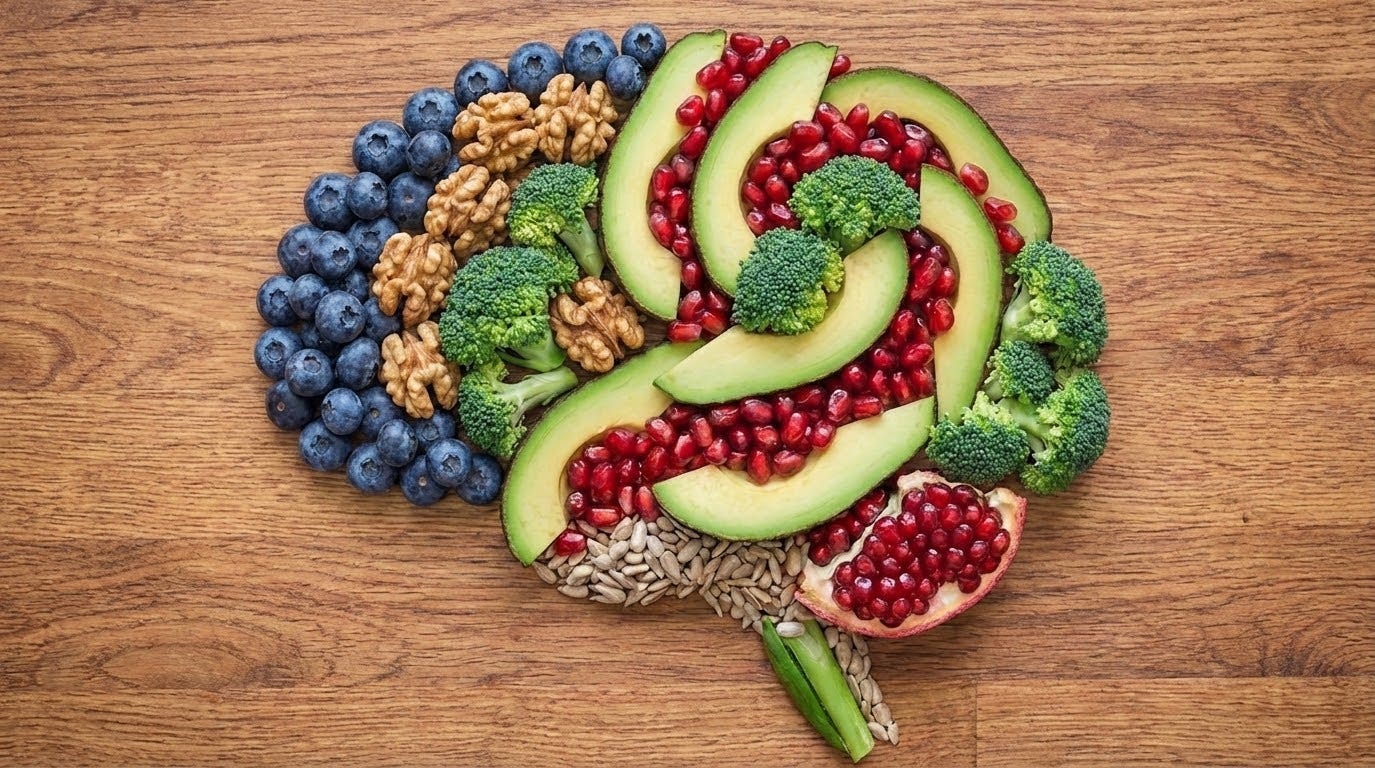
In my work as a therapist, I spend a great deal of time helping people move beyond overly narrow explanations of emotional health. It is never just about what happened to them. It is also about the ongoing conditions shaping how their brain and body function each day, including stress, relationships, sleep, nervous system load, life experiences, environment, biology, and the daily patterns that either support the brain or quietly strain it.
Food belongs in that conversation more than many people realize.
Not because food is a cure. Not because every emotional struggle can be explained by diet (though there are very strong arguments to support it). And not because parents need one more impossible standard to carry.
It belongs in the conversation because a growing body of research suggests that diet may meaningfully influence emotional well-being in children and adolescents, particularly when we look at overall dietary patterns rather than isolated nutrients in supplement form. A 2025 systematic review found that healthier dietary patterns were often associated with fewer depressive symptoms, while poorer diet quality was more often linked with greater psychological distress. It also found that the clearest approach favored whole-diet quality over single-nutrient approaches (Tucker et al., 2025).
That broader pattern is supported in additional studies. A 2025 systematic review and meta-analysis found that dietary patterns were associated with depressive outcomes in children and adolescents. A 2024 longitudinal study of 13,887 Canadian adolescents found that greater sugar-sweetened beverage intake predicted higher depressive symptoms, higher anxiety symptoms, and lower psychological well-being over time (Dabravolskaj et al., 2024). A 2022 systematic review and meta-analysis likewise found that greater ultra-processed food consumption was associated with higher odds of depressive and anxiety symptoms (Lane et al., 2022).
Historically, medicine and therapeutic interventions have often approached mental health in ways that underemphasize how deeply the brain and emotional well-being are connected to the rest of the body.
A developing brain depends on stable energy, hydration, micronutrients, amino acids, fatty acids, and a broader physiological environment that supports regulation rather than strain. Adolescence is a period of rapid growth, ongoing brain development, and increased emotional vulnerability. Tucker et al. (2025) describe adolescence as a critical developmental window and a key period for prevention. That does not mean one processed snack causes anxiety. It does not mean complex life situations can be solved by adding blueberries or fish oil.
What the literature and lived experiences do support is this:
Repeated dietary patterns may either support or strain a child’s developing nervous system over time. That is one reason the strongest message in this research is not “find the right supplement.”
Pay attention to the patterns.
This may be one of the most important distinctions for parents and clinicians alike.
Families are constantly marketed powders, gummies, capsules, and “brain-boosting” quick fixes. Don’t get me wrong, nutrients do matter. I often recommend that parents include supplemental omega-3 fatty acids, B complex vitamins, and vitamin D3K2 in addition to a balanced diet. Tucker et al. (2025) found mixed findings for vitamin D, omega-3s, and other targeted interventions. Not because specific supplementation isn’t helpful, but because the authors noted important limitations such as small samples, poor adherence, and inconsistent outcome measures. The focus of these studies was to identify overall dietary patterns, so the focus of the study led to the findings that a whole food-focused, balanced diet is consistently associated with better emotional outcomes.
That distinction changes the question.
Instead of asking, “What supplement should I buy?” a more useful question becomes:
What kind of fuel is my child’s brain getting most of the time?

Across the current evidence, the beneficial patterns consistently include more whole and minimally processed foods, more fruits and vegetables, more fiber-rich foods, more regular meals, and broader Mediterranean-style patterns built around plants, legumes, whole grains, nuts, fish, and healthy fats. Tucker et al. (2025) found that these patterns were more consistently linked with better emotional health than narrow nutrient-only approaches.
You can’t starve a brain of whole-food nutrients and throw supplements at it as a fix.
Dabravolskaj et al. (2024) add a practical layer to that picture. It found that higher fruit and vegetable intake was associated with better psychological well-being, while sugar-sweetened beverages showed a clearer and more concerning pattern in relation to depressive symptoms, anxiety symptoms, and lower well-being.
That does not mean every healthy food produces a dramatic emotional shift on its own. It means better dietary patterns appear to create a more supportive foundation.
The red flags in the literature are fairly consistent.
Poorer diet quality, higher sugar-sweetened beverage intake, and greater consumption of ultra-processed foods are repeatedly associated with worse emotional outcomes over time. Tucker et al. (2025) identified the same general pattern in the adolescent literature, including prospective findings linking poorer diet quality with greater distress.
The external literature points in the same direction. Dabravolskaj et al. (2024) found prospective associations between sugar-sweetened beverages and worse mental health outcomes, and Lane et al. (2022) linked greater ultra-processed food consumption with higher odds of depressive and anxiety symptoms.
That does not mean these foods are the sole cause of emotional distress. It does mean they may be one of the more modifiable contributors worth taking seriously.
This conversation is only helpful if it remains compassionate.
Many families are doing the best they can within real constraints: time, money, energy, sensory preferences, neurodevelopmental needs, food access, stress, and simple survival.
So this cannot become a moral conversation about “good” parents or “bad” foods. It is more helpful to think in terms of nervous system support.
A child who is already working hard to manage anxiety, irritability, emotional volatility, low energy, or overwhelm may benefit from steadier nourishment, fewer liquid sugars, and a more consistent intake pattern. That is a practical clinical inference from the broader evidence, not a claim that food alone determines mental health.
It does not mean diet explains everything.
Tucker et al. (2025) were appropriately cautious. The authors emphasized that the evidence remains limited by methodological inconsistency, self-report measures, attrition, and the influence of other variables such as socioeconomic factors. They also noted that sex and socioeconomic status may shape how diet and mental health interact.
So the most honest clinical position is a modest one:
Diet is not the whole story. But it is part of the foundation.
Most families do not need an extreme overhaul. They need a starting point that is realistic enough to sustain.
One of the clearest places to begin is with beverages. Dabravolskaj et al. (2024) found a prospective link between sugar-sweetened beverages and worse mental health outcomes. Separately, the American Heart Association has published guidance recommending that children and teens limit added sugars because of the association with adverse health risks.
Beyond that, the most meaningful shifts are often the least glamorous:
regular meals
more fiber
more color
fewer liquid sugars
and less reliance on ultra-processed convenience foods as the default pattern
Not perfection. Change the pattern.
That is where the evidence keeps pointing.
As a therapist, I am not interested in narrowing complex emotional struggles into simplistic explanations.
I am interested in helping people build a more complete picture of what supports healing, regulation, and resilience.
Sometimes that means talking about trauma. Sometimes it means talking about attachment, grief, or nervous system overload. And sometimes it means talking about sleep, movement, and the daily fuel a child’s brain is receiving.
That is not reductionistic. It is integrative.
And for many families, it can be refreshing to realize they do not need a perfect answer. They just need to start strengthening the foundations they can actually influence.
We often talk about mental health as though it begins only after symptoms appear.
But some of the most important influences on emotional functioning are quietly cumulative. Sleep. Stress load. Relational safety. Movement. And yes, food.
What a child eats will not determine everything. But it may shape more than we once assumed. And when a child is already struggling, supportive nourishment is not superficial. It is one way of strengthening the ground beneath them.
This is not an argument for perfection.
It is an argument for paying closer attention to one of the most daily, practical, and often overlooked supports we can offer a developing brain.
If we want a more complete and clinically honest conversation about children’s mental health, nutrition has to be part of it.
This article is provided for educational and informational purposes only and does not constitute medical advice, mental health advice, diagnosis, treatment, or therapy. It is not a substitute for care from a licensed healthcare or mental health professional, and reading it does not create a therapeutic relationship.
Lisa Bollow is a therapist and the founder of The Integrated Life Project™, where she explores the intersection of emotional health, regulation, and sustainable functioning. Her work integrates trauma-informed care, neuroscience, and practical strategies that support whole-person well-being.

Read more on Substack: https://integratedlifeproject.com
Connect on LinkedIn: https://www.linkedin.com/in/lisagoodwinbollow
View my Psychology Today profile: https://www.psychologytoday.com/profile/1572857
Tucker, J. E., Brennan, A. M., Benton, D., & Young, H. A. (2025). A recipe for resilience: A systematic review of diet and adolescent mental health. Nutrients, 17(23), Article 3677. https://doi.org/10.3390/nu17233677
da Silva, L. E. M., Costa, P. R. D. F., Magalhães, K. B. B. D. S., Cunha, C. D. M., Alves, W. P. D. O., Pereira, E. M., & de Santana, M. L. P. (2025). Dietary pattern and depressive outcomes in children and adolescents: Systematic review and meta-analysis of observational studies. Nutrition Reviews, 83(9), 1725–1742.
Dabravolskaj, J., Patte, K. A., Yamamoto, S., Leatherdale, S. T., Veugelers, P. J., & Maximova, K. (2024). Association between diet and mental health outcomes in a sample of 13,887 adolescents in Canada. Preventing Chronic Disease, 21, Article E82. https://doi.org/10.5888/pcd21.240187
Lane, M. M., Gamage, E., Travica, N., Dissanayaka, T., Ashtree, D. N., Gauci, S., Lotfaliany, M., O’Neil, A., Jacka, F. N., & Marx, W. (2022). Ultra-processed food consumption and mental health: A systematic review and meta-analysis of observational studies. Nutrients, 14(13), Article 2568. https://doi.org/10.3390/nu14132568
Vos, M. B., Kaar, J. L., Welsh, J. A., Van Horn, L. V., Feig, D. I., Anderson, C. A. M., Patel, M. J., Cruz Munos, J., Krebs, N. F., & Xanthakos, S. A. (2017). Added sugars and cardiovascular disease risk in children: A scientific statement from the American Heart Association. Circulation, 135(19), e1017–e1034. https://doi.org/10.1161/CIR.0000000000000439
Comments
Nothing yet. Say the first thing.
Sign in to join the conversation.