
Welcome back dear reader.
It was a busy H1. We’ve pushed our ethanol and acetone strains even harder, welcomed U.S. Venture as new investors and spent almost a month in Appleton with them, presented (twice) at Fuel Ethanol Workshop in St. Louis, closed out our NSF Phase I SBIR award, and applied for Phase II. I also notched so many legs on CRJs out of O’Hare that I now know the ORD-ATW flight crew personally.
Beyond the usual updates, we’ve also thrown in some more technical writing on the ethanol market at the bottom. Let us know what you think.
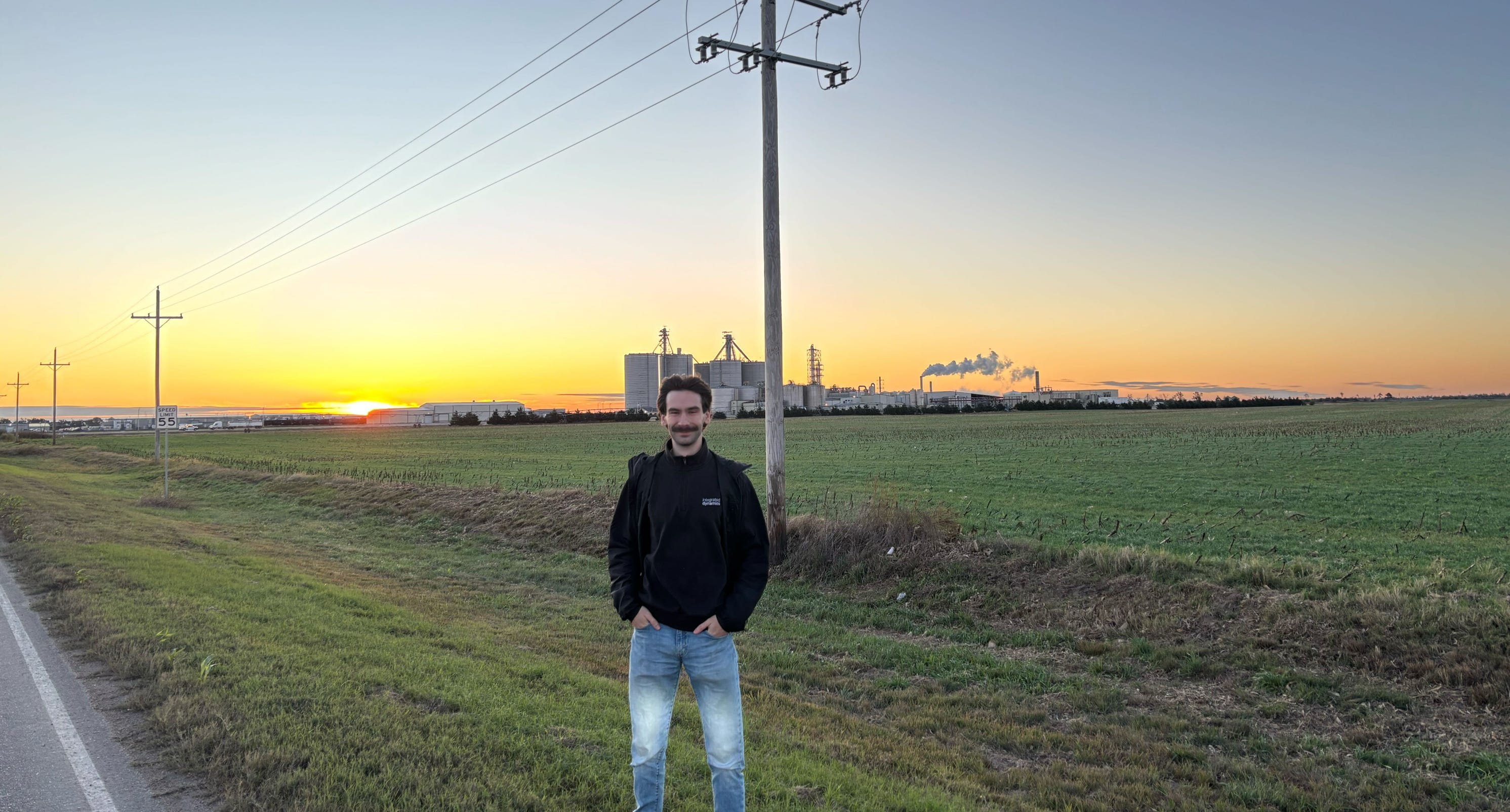
We’re going to pilot at a working volume of at least 10,000 gallons on-site at an operational ethanol plant by EOY 2027.
After a year of site visits, preliminary engineering work, and techno-economic modeling, we’re firm enough to commit ourselves to a public deadline. Keep your eyes peeled for more information through the next few updates.
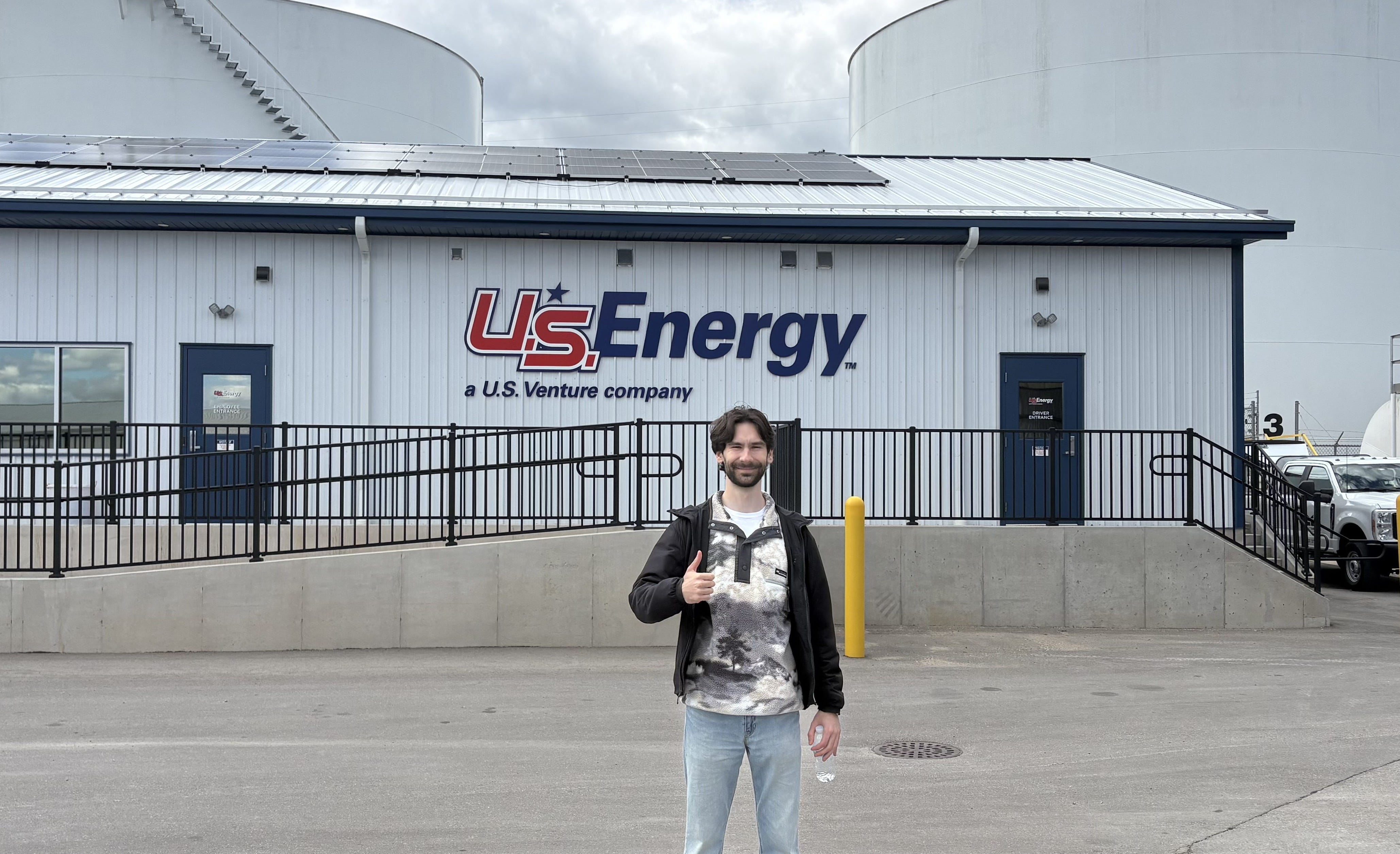
We brought U.S. Venture onboard as a strategic investor and spent a few weeks of Q2 with them in Appleton validating our off-take model.
On the heels of the above announcement, and last update’s note on engineering de-risking, I should note that making thousands of gallons of ethanol won’t do much to validate our unit economics until someone actually pays for it. For this reason, we thought it a solid H1 2026 goal to validate our model of how ethanol is purchased, handled, blended, and accounted for with an off-taker partner.
This opportunity presented itself in H2 2025 when we were introduced to U.S. Energy, a division of U.S. Venture with significant business in blending and marketing renewable fuels. Soon after, we closed a strategic investment from U.S. Venture and forward-deployed1 out to Appleton to spend a few weeks charting how bulk ethanol is purchased, handled, blended, and accounted for. We’re excited to continue our work with U.S. Energy, and look forward to developing a stronger relationship as we continue scaling and demonstrating our technology.
Many thanks to the U.S. Venture, U.S. Energy, and Gener8tor personnel who made our stint in Appleton worthwhile, including but not limited to Charles Dauk, Brett Wetzel, Andrew Templin, and Andrew Schmitz.
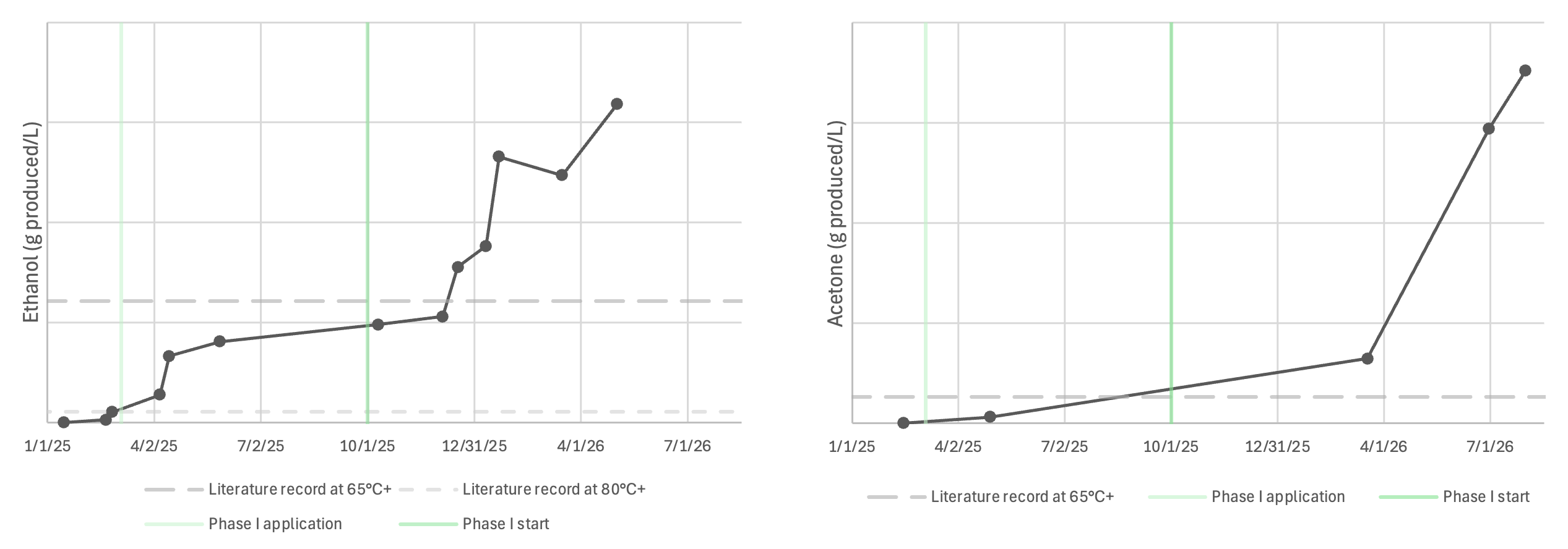
We pushed ethanol titer up by >100% YTD, achieved record-breaking yields in acetone production, and made ethanol from raw biomass.
We’ve covered some solid ground since our last technical update with improved ethanol and acetone (co-)production, our first demonstration of growth on raw biomass, and successful completion of our NSF SBIR Phase I research effort.
We kicked off H1 focused on improving ethanol productivity before the close of our Phase I award, and ended up pushing titer by 20% at 1.25L working volume within three months of our last newsletter. Some concurrent work on isopropanol production yielded a surprising result: no isopropanol, but a 98% yield of ethanol plus acetone, the highest soluble product yield achieved in hyperthermophiles at bioprocess-relevant feedstock concentrations. As far as we understand, this strain outperformed all microbes growing at or above 42ºC in both acetone titer and production rate.
Near the conclusion of the Phase I award term, while experimenting with raw corn stover, rice hulls, and alpha cellulose, we also accidentally hit the highest-temperature ethanol production on unpretreated cellulosic biomass. You’ll be hearing more about biomass fermentation through H2 2026. We finished out the H1 by exceeding every main NSF SBIR Phase I goal and a number of stretch goals, and submitted our Phase II application.
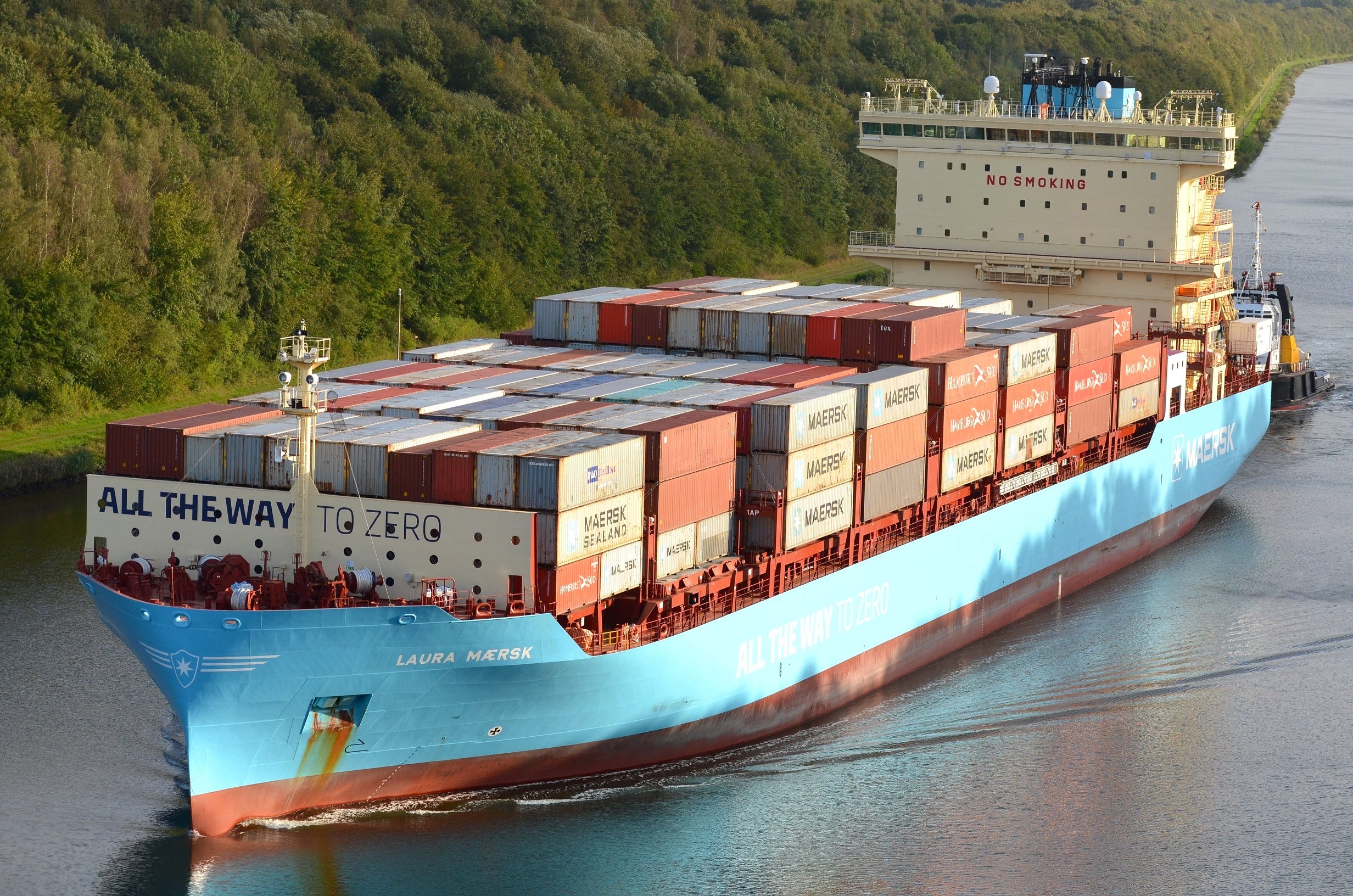
Impending decarbonization rules could induce new, low-CI ethanol demand equal to 30-35% of US capacity at >$3/gal as soon as 2028.2
The International Maritime Organization (IMO), an agency of the United Nations, in April 2025 approved a draft Net Zero framework that seeks to substantially cut GHG fuel intensity on ocean-going ships above 5,000 gross tonnage. To save you the research, companies could be fined $380/tCO2e for excess emissions beyond the 2028 base GHG fuel reduction threshold of 4% below the CI of bunker fuel, and $100/tCO2e for those above the target 17% reduction. The base and target thresholds are currently set to increase yearly, inflating to 8% and 21% respectively in 2030 and 17% and 30% in 2032. The ultra-large container ships that continue using fuel oil in the near future could be left bleeding millions in yearly compliance fees.
\(200\mathrm{k}\ \frac{\mathrm{L}}{\mathrm{day}} \cdot 40\ \frac{\mathrm{MJ}}{\mathrm{L}} \cdot 93.3\ \frac{\mathrm{gCO_2e}}{\mathrm{MJ}} \left( 4\%\cdot\frac{\$380}{\mathrm{tCO_2e}} + 13\%\cdot\frac{\$100}{\mathrm{tCO_2e}} \right) = \$21{,}048.48/\mathrm{day}\)
This begins to get interesting when you look at how the shipping industry has responded; the IMO affirmed Brazilian ethanol as ~three-quarters less GHG intensive than the heavy fuel oil basis, Maersk demoed 100% ethanol operation on its methanol-compatible feeder Laura Mærsk in Q1, Vale and Polaris Shipping have recently put in orders for tri-fuel ore carriers capable of operation on ethanol, and ethanol bunkering is being demonstrated in Europe and South America. Companies seem to have noticed that they can hit the 2028 base threshold with 5% ethanol on an energy basis, and have begun investing heavily in ethanol compatibility.
Assuming the framework covers 60B gallons of yearly fuel consumption, that 5% base-rate substitution using Brazilian ethanol CI scores would induce a new demand for 5-6B gallons of ethanol per year, equivalent to 30-35% of the current US supply. Growing the extra ~2B bushels of field corn needed to meet this demand could materially deplete midwestern aquifers, and might not even yield GHG intensities low enough to make ethanol attractive due to ILUC-like accounting, which is exactly why we’re focused on fermenting crop residues.
Considering avoided carbon and the base cost of each fuel, each gallon of fuel oil swapped for ethanol-equivalent energy saves $4.13 if the ship/company is below the base threshold, resulting in a calculated ethanol cost ceiling of $3.07-3.49 per gallon. The technology that can best capture the chemical value of the hundreds of megatons of biomass sitting in fields across the US Midwest has a clear shot at this >$15B opportunity. We intend to be that company.
We’ll be spending the next quarter pushing TRY on harder feedstocks, continuing to make use of our scaled fermentation infrastructure, and working to smooth the transition from lab to demonstration. Give me a shout over X or LinkedIn if you want to learn more.
-Henry Markarian, CEO
Can you tell I worked at Palantir?
It should be noted that these figures are illustrative and depend heavily on political, economic, and industrial realities. Adoption of the IMO Net Zero Framework is set to be voted on later this year.
Comments
Nothing yet. Say the first thing.
Sign in to join the conversation.