
When we published The Lagged Shock in June, the central concern was that a 2026–27 El Niño could begin affecting crops, water and hydropower as higher energy, fertiliser and trade costs worked their way through the economy.
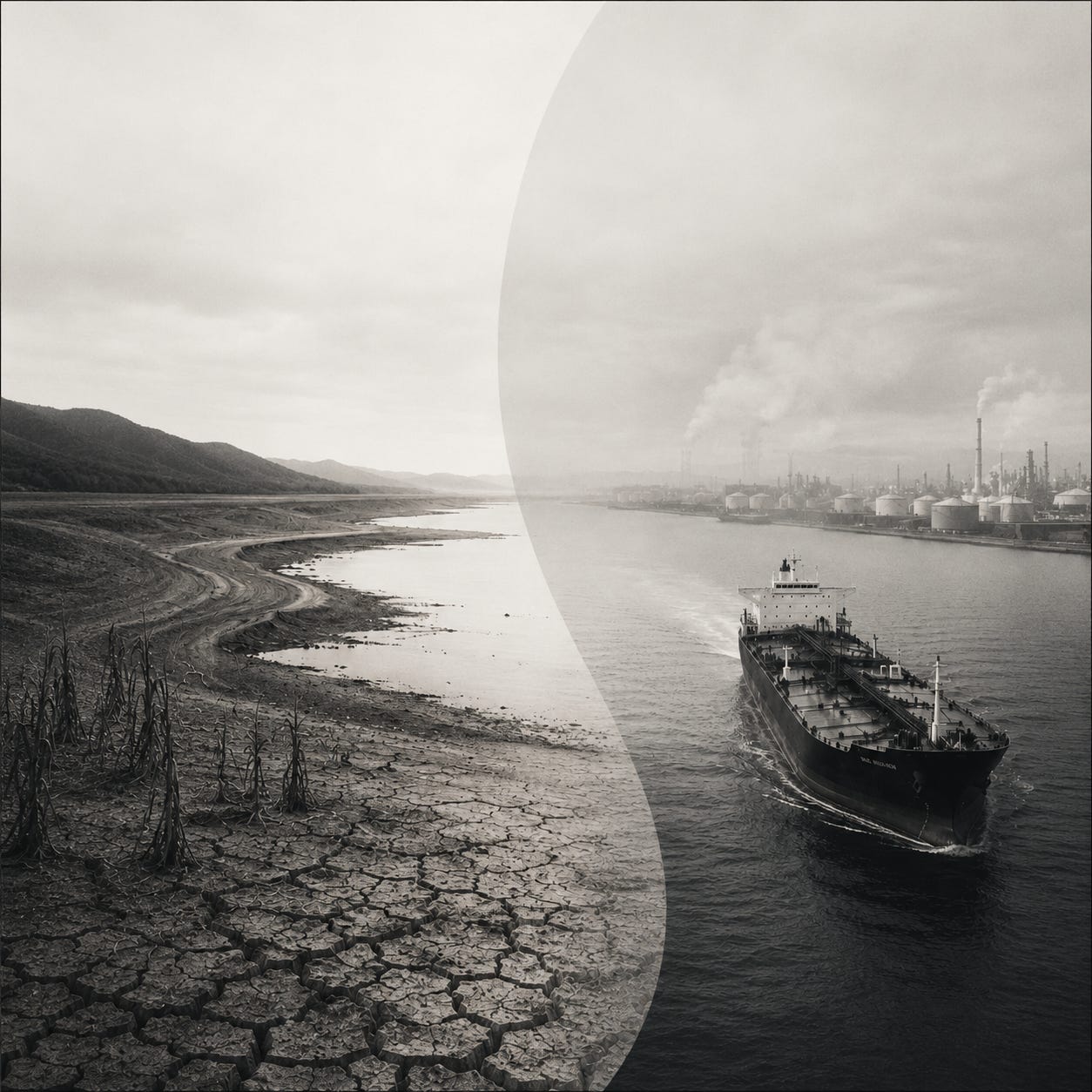
Two months later, the exposure has strengthened.
The first edition used a moderate-to-strong El Niño as its central assumption.
NOAA now assesses a greater than 90% chance of a very strong event during Northern Hemisphere autumn and winter 2026–27.
Regional effects will still vary. A stronger event does, however, increase the importance of monitoring rainfall, crop conditions, reservoirs, hydropower and water systems as we move into 2027.
Middle East disruption continues to expose energy, fertiliser, freight and insurance costs to renewed pressure.
A second channel has also become more important.
Attacks on Ukrainian and Russian Black Sea grain infrastructure have reduced the reliability of wheat, maize and oilseed exports. That adds a physical grain-supply pathway to the cost pressures already moving through energy and shipping.
The current evidence does not indicate a global grain shortage. Global stocks remain substantial and alternative exporters can replace some disrupted supply.
The exposure rises if those buffers begin to weaken.
Persistent Black Sea disruption could then meet weaker harvests, lower reservoirs or hydropower stress associated with El Niño, while earlier increases in fertiliser, energy, freight and financing costs remain embedded in operating conditions.
The most important period remains 2027 into early 2028.
For companies, the first evidence may appear well before headline inflation or public-order data move. Grain-origin changes, shorter supplier quotes, higher inventory values, tighter payment terms, utility problems and weaker customer demand can provide much earlier signals.
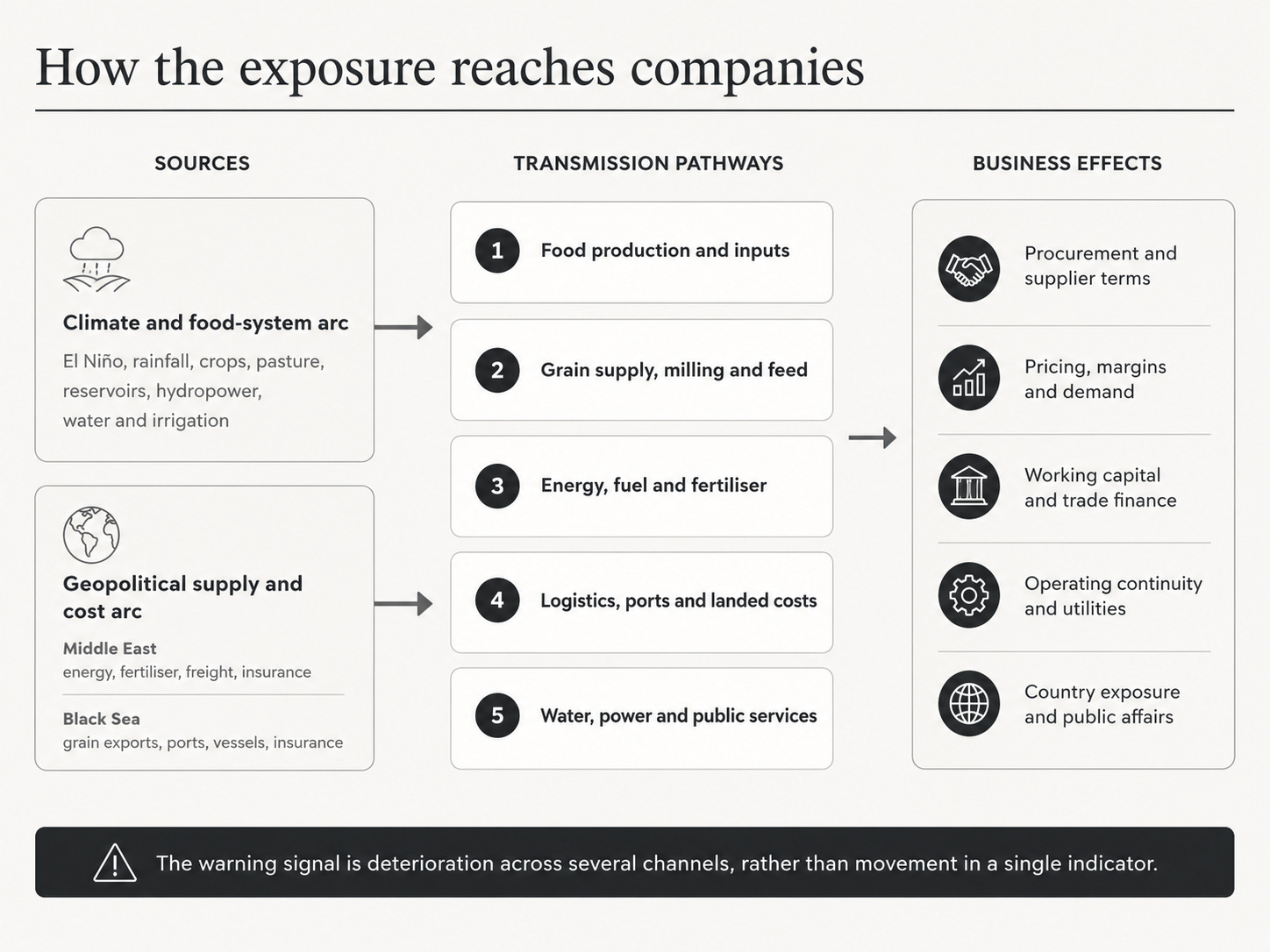
The updated Lagged Shock examines where these pressures could overlap, the countries and sectors with the greatest exposure, and the indicators that would show the shift from external pressure into operating conditions.
Subscribe to read the updated report →
Comments
Nothing yet. Say the first thing.
Sign in to join the conversation.