
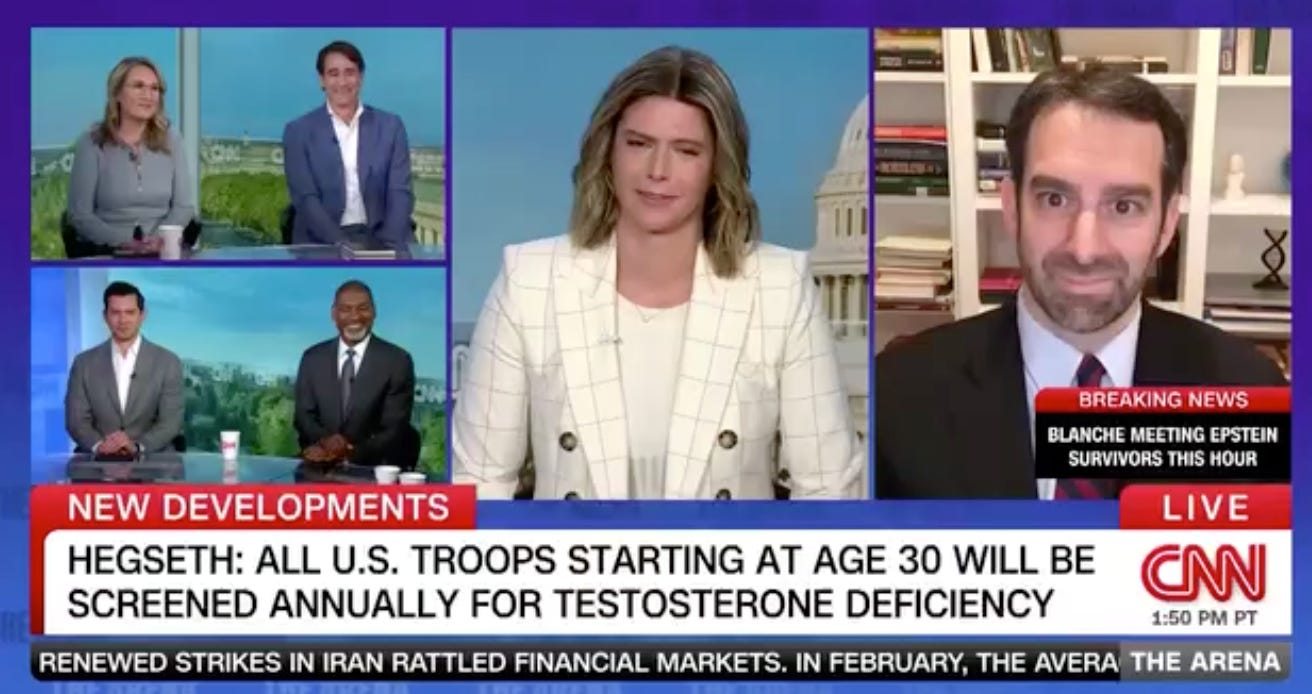
On three recent occasions, I went on CNN to discuss medicine & science in the news. I genuinely enjoy preparing and appearing in these segments (more on that below).
The only catch is that by the time I go on the air, I have much more to say than time permits. The only way to do these well is to over-prepare.
So, I’d like to share the clips with you, followed by the research and thinking behind them. Plus, I’d like to share more insights that I did not have time to say on TV.
Here are the clips (in case you aren’t a wall-to-wall CNN viewer) for everyone, followed by the deeper dives (including reading lists I developed for each appearance), for paid subscribers.
Oh, one more thing.
At the very end, I’ve included a special behind-the-scenes look at how I really get ready to go on television, including my never-fail secret for mastering my nerves at the last second before going live.
With Kasie Hunt.
Bottom line: Treating men with low testosterone but no symptoms is pointless and possibly dangerous for some. Benefits? None. Risks? Blood clots, broken bones, and concerns about mental health side effects.
With Erica Hill.
Bottom line: CPR works far less often than you might think. If the problem is your heart, and your heart alone, CPR can bring you back. But for people with other serious medical problems, it’s unlikely to bring about the outcomes we want.
Fun note: CNN’s Erica Hill and I go back about a quarter of a century. But we’ve never had a chance to appear on television before! So this was such a treat.
With Kate Bolduan.
Bottom line: The aorta is the largest blood vessel in the body. If its lining separates (or worse, ruptures), the likelihood of death is high. Aortic dissections (and ruptures, when we see them), are among the scariest medical emergencies we diagnose and treat.
But there’s much more under the hood for each of these appearances. What follows is a distillation of the thoughts and notes I wrote while preparing, along with my never-before-revealed secrets for getting ready to go live on television. I hope it’s informative and gives you a sense of how I work…
Comments
Nothing yet. Say the first thing.
Sign in to join the conversation.