
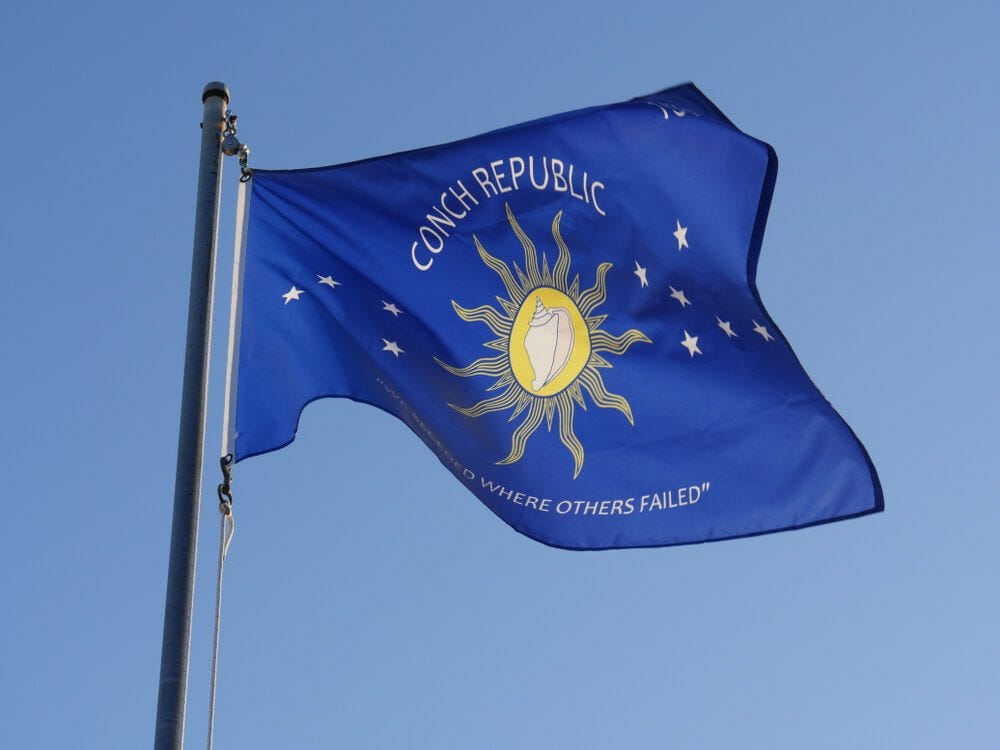
I love the Florida Keys—Key West, specifically, but they’re all pretty great.
Today, I want to tell you a very Florida story of how a tiny island of only 4.2 square miles created a cultural moment and forced a President to change course. I want to show you how you might learn from that experience and apply it. But without a little background, it’s difficult to understand how breaking a piece of stale Cuban bread over the head of a naval officer could have produced such counterintuitive results.
So, first, context.
How to describe Key West to someone who’s never experienced it?
Imagine if the Wisconsin Dells and Las Vegas had a foul-mouthed, inebriated GenX love child who left home at 17 and moved into a houseboat. That’s Key West.
How foul-mouthed, you might ask? Here’s an example of a typical candy aisle.
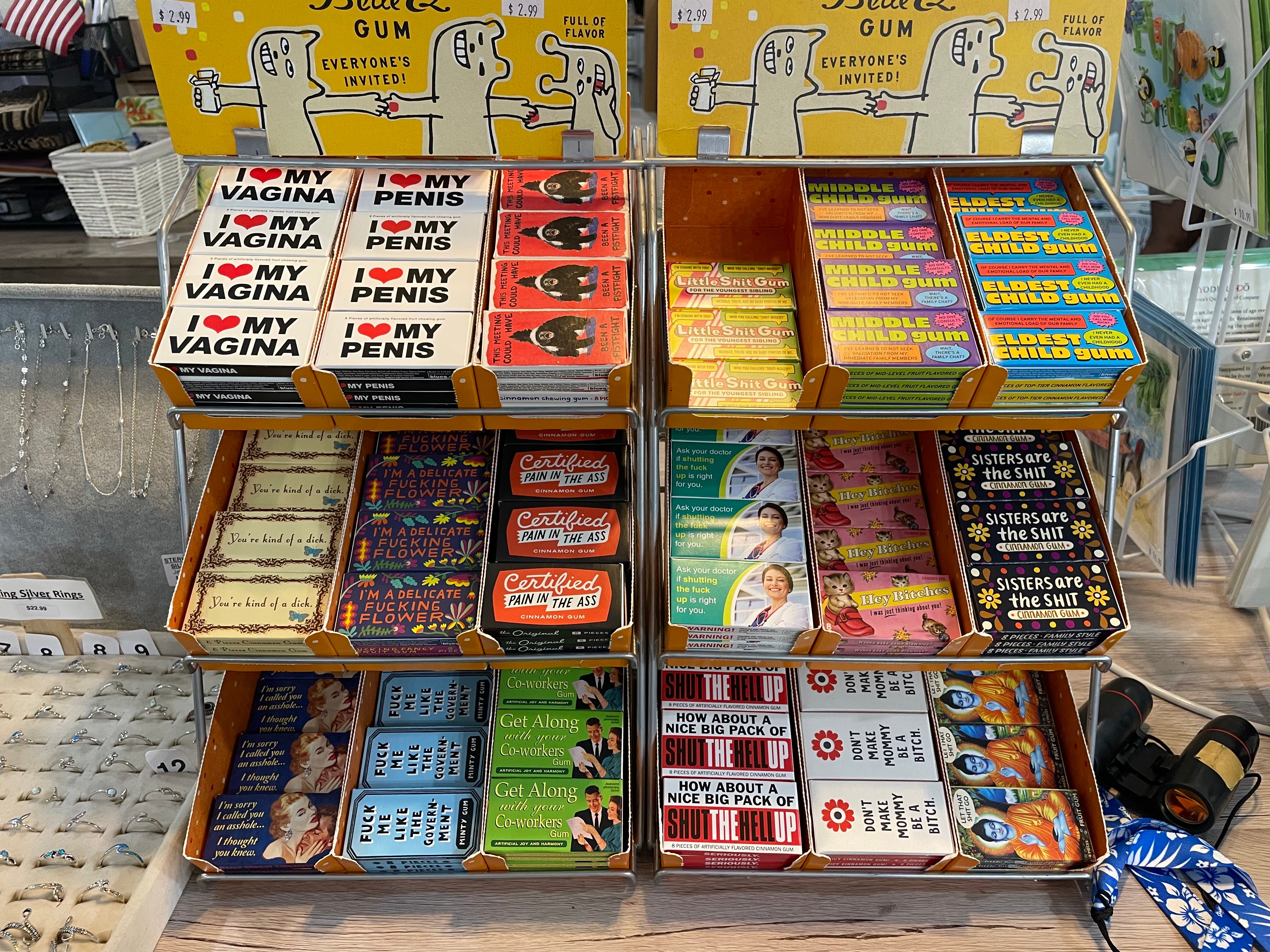
“Well,” you might say. “That’s novelty candy. Of course, it’s a bit risqué.” I’ll accept that wager and raise you what passes for high-class souvenirs.
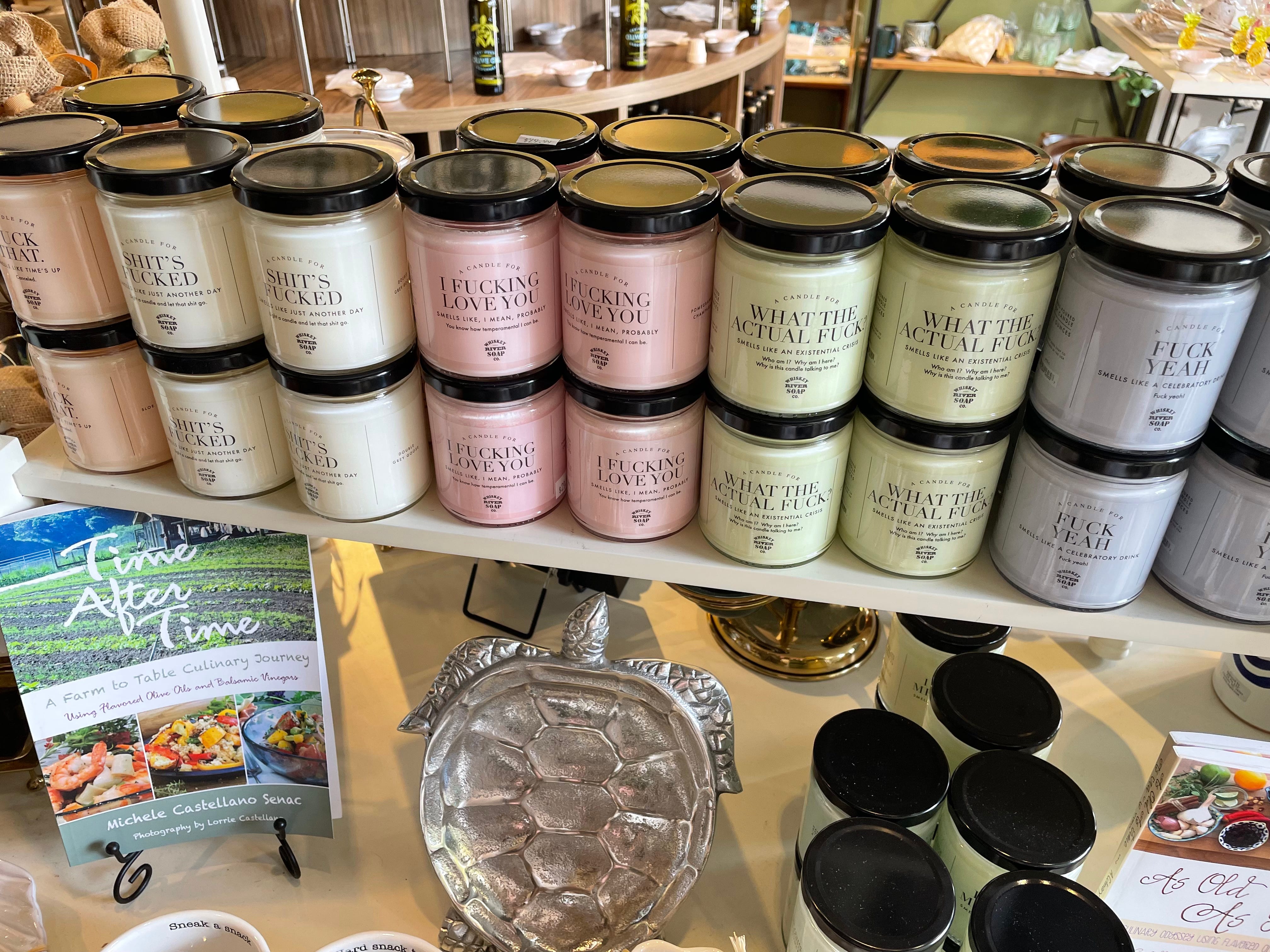
“Okay,” you agree. “Key West is profane. But it’s hard to believe they’re any more inebriated than any other resort town.”
Hold my beer.
It’s a place where nearly anything goes, and everyone (and I mean, shockingly, everyone) gets along. In my experience, I suspect that’s thanks to the level of casual drinking that even folks from Wisconsin are like, “Whoa buddy, you might want to put down that ninth rum cocktail.”
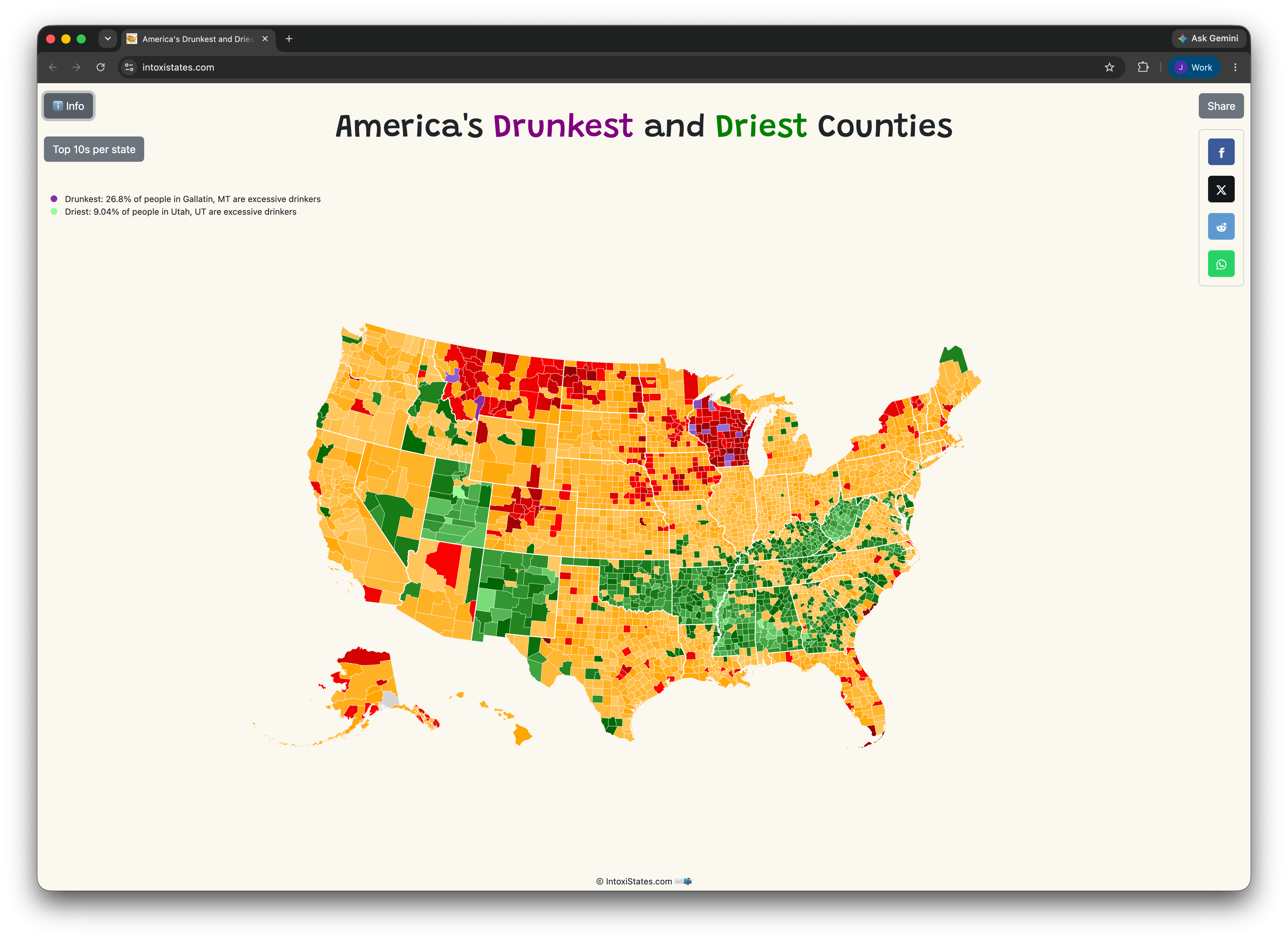
Doubt me?
Key West is where Ernest Hemingway got drunk, and his benders were legendary. Side note: Did you know you can tour his house in Key West? Be sure to ask about the nearly sixty (yes, 6-0) six-toed cats who now live there and the urinal he stole from his favorite bar when it moved across the street.
Have a mental image of what I’m talking about now?
Good.
It’s time to tell the story.
Today, the 220-mile stretch of semi-connected islands of the Florida Keys is a major tourist attraction. That’s been true ever since the first railroad connected Miami to Key West in 1912 and even more so when US Highway 1 (aka the “Overseas Highway”) opened in 1928.
But it wasn’t always so laid back.
Before the housing boom (and bust) of the 1920s that drew people to South Florida, Key West was one of the largest cities in the state. In fact, in the 1880s and 1890s, it was the largest city in Florida with more than 18,000 people—primarily due to the naval base that supported warships patrolling the Gulf. It remained in the top 10 until 1930.
(Remember that naval base part. We’ll come back to that.)
Now, fast-forward your cassette decks to the GenX heyday—the early 1980s.
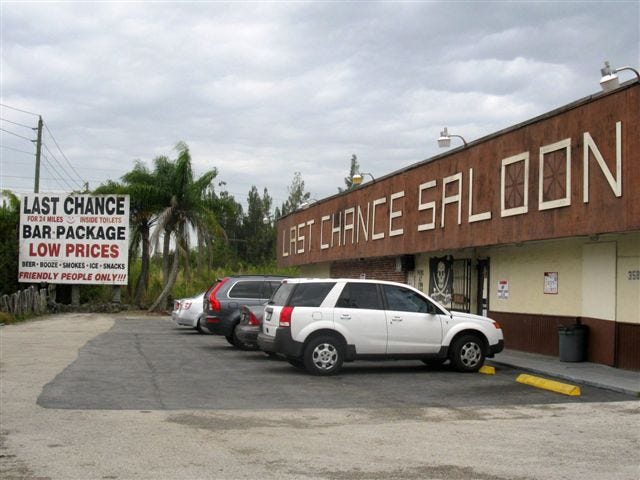
Ronald Reagan had just been elected president, and the United States was just entering its “Just Say No” era of drug policy. Perhaps it was to curb the illegal drug trade entering Miami through US 1. Or perhaps it was to stem the tide of Cuban immigrants landing in the Keys (Key West is a harrowing—but navigable—90 miles from Cuba). In any case, U.S. Customs and Border Protection set up a checkpoint and roadblock just outside Florida City on the mainland to inspect all vehicles entering Florida from the Keys.
The checkpoint was a chokepoint by design. There’s only one road in and out (two today, but the second remains janky and slow), and casual travelers wanted nothing to do with hours-long delays on the way back into Florida after a weekend vacation.
Tourism—the lifeblood of the Keys’ economy—dried up overnight.
Key West mayor Dennis Wardlow wasn’t the type to take the situation lying down. He petitioned the courts. He tried every legal remedy at his disposal. Nothing worked.
What happened next was pure genius, and I can’t stress this enough: drinking may have played a role.
Key West seceded from the United States of America.
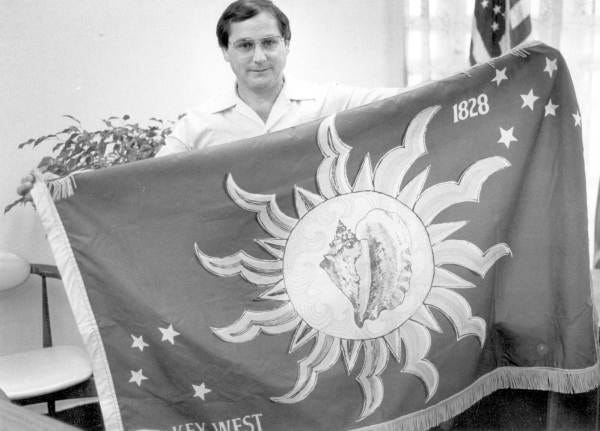
On April 23rd, 1982, Key West christened itself the Conch Republic and elected Dennis Wardlow its first Prime Minister. As a symbolic break with the motherland, Wardlow didn’t open fire on the Naval Station. Oh, no. He procured a piece of stale Cuban bread from a local bakery and broke it over the head of a naval officer. (Was the man simply dressed in a naval uniform? The details are…fuzzy…as you might expect.)
It may have been the shortest-lived rebellion in US history. Within a minute—yes, a literal minute by most accounts—Wardlow and his staff surrendered to the Admiral at the naval base, but not before demanding $1 billion in foreign aid “to rebuild our nation after the long federal siege.”
The story, as the kids say these days, went viral.
What the Federal court couldn’t do, the court of public opinion could.
Within a few days, the checkpoint quietly closed. Traffic reopened. Tourism returned with a vengeance.
The Conch Republic had won.
It wouldn’t be the last time.
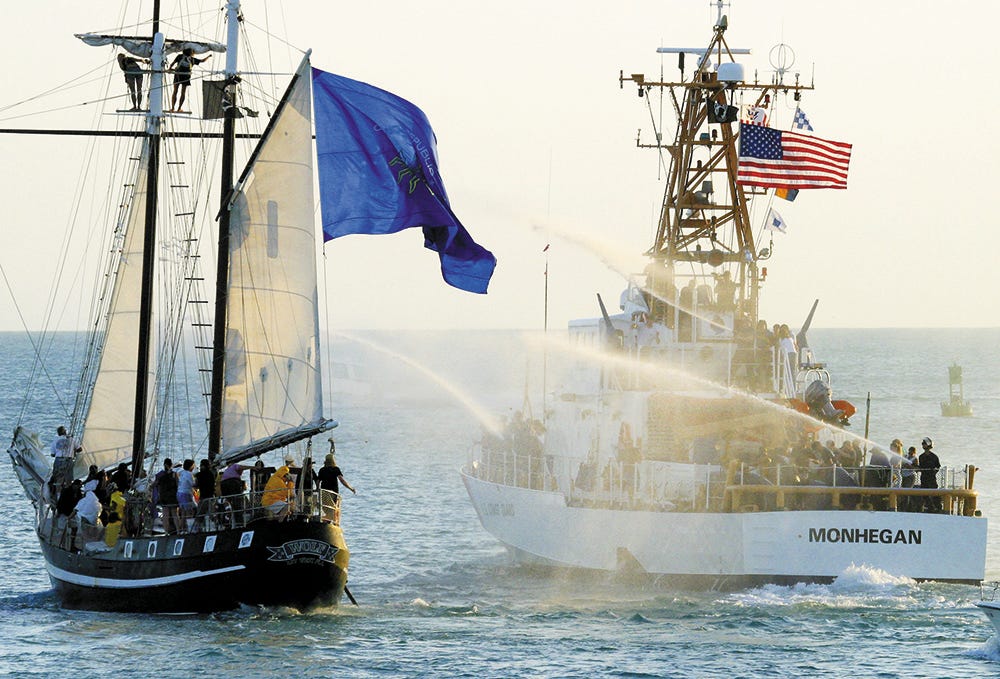
In 1995, the 478th Civil Affairs Battalion of the United States Army Reserve planned a training exercise to practice invading a foreign island. (Hmm…I wonder which nearby island that might be? Pinky, are you pondering what I’m pondering? I digress.) They chose, foolishly in retrospect, Key West. Even more foolishly, no one told Key West this was happening.
When the former Conch Republic caught wind of it, they hatched another plan.
(Again, and I can’t stress this enough, alcohol may have played a role in the decision-making process.)
Wardlow and his “officials” outfitted the “warship” (er…schooner) Western Union for the pitched battle to defend their Republic. Armaments included water balloons, conch fritters, and more stale Cuban bread. The “battle,” such as it was, proved short-lived. The 478th’s crew, perhaps sensing that the opposing navy could use a hosing down, opened fire with its water cannons.
The Conch Republic may have lost that battle, but they (again) won the war.
The 478th issued an apology the next day, saying they “in no way meant to challenge or impugn the sovereignty of the Conch Republic,” even graciously submitting to their own surrender ceremony on September 22.
Lines of communication have since improved.
The Conch Republic has also played a more serious role in national politics. In 1995, it mounted a “full-scale invasion” of Dry Tortugas National Park to reopen it with private donations during a Federal Government shutdown. Unfortunately, they could find no official on the island to accept their demands, so they were cited and went home. (Perhaps they ran out of rum?) But it did highlight the plight of the parks and prompted DC legislators to reach an agreement soon thereafter. The citation? Dropped.
More recently in 2006, officials moved to annex an abandoned part of the iconic Seven Mile Bridge because Cuban refugees had landed there and claimed protection under the “dry feet” provision. (In other words, if Cuban refugees make it to land, they can claim asylum. If they’re caught on the water, they cannot.) Federal officials considered the bridge “wet” and refused to budge. They repatriated the Cubans, but eventually relented and reclassified the structure as “dry” land.
These might be fun stories—even a bit inspiring—but what does any of this have to do with innovation?
Most people think “innovation” is all about technology, budgets, and strategy. No. That’s engineering, finance, and marketing. Innovation is the process of changing behavior.
At its heart, the Conch Republic is not about drunken shenanigans, publicity stunts, and attention-seeking. The Conch Republic innovated by changing behavior—the customs blockade came down, the military notifies Key West before conducting exercises, National Parks are “essential,” and the old Seven Mile Bridge is now “dry land.”
They did it by creating magic moments. (Learning to create those is a big part of my new book on innovation timing. You should read it.)
What can we learn from the success of the Conch Republic?
A few things.
Not all plans hatched at the bar near closing time will fail. Sometimes, loosening inhibitions encourages creative thinking.
Just because you can’t win in the real court doesn’t mean you can’t win in the court of public opinion. Change often happens much faster there.
Go big or go home. Secession. Invasions. Pitched battles. Those sort of things tend to get attention. But…
Keep it fun. The world is uptight these days. Lighten it up. When in doubt, use stale Cuban bread as your weapon of choice.
Symbols matter. You can use Nano Banana for free. Make a cool flag. There’s no excuse.
Finally, and most importantly, choose a cause greater than yourself. The Conch Republic didn’t secede from the union for “light or transient causes.” In each case, they made a statement of values that they were willing to put their necks on the line to achieve. This isn’t virtue signaling. This is virtue. Even Key West, staggering home at bar time, knows the difference.
You should too.
Long live the Conch Republic!
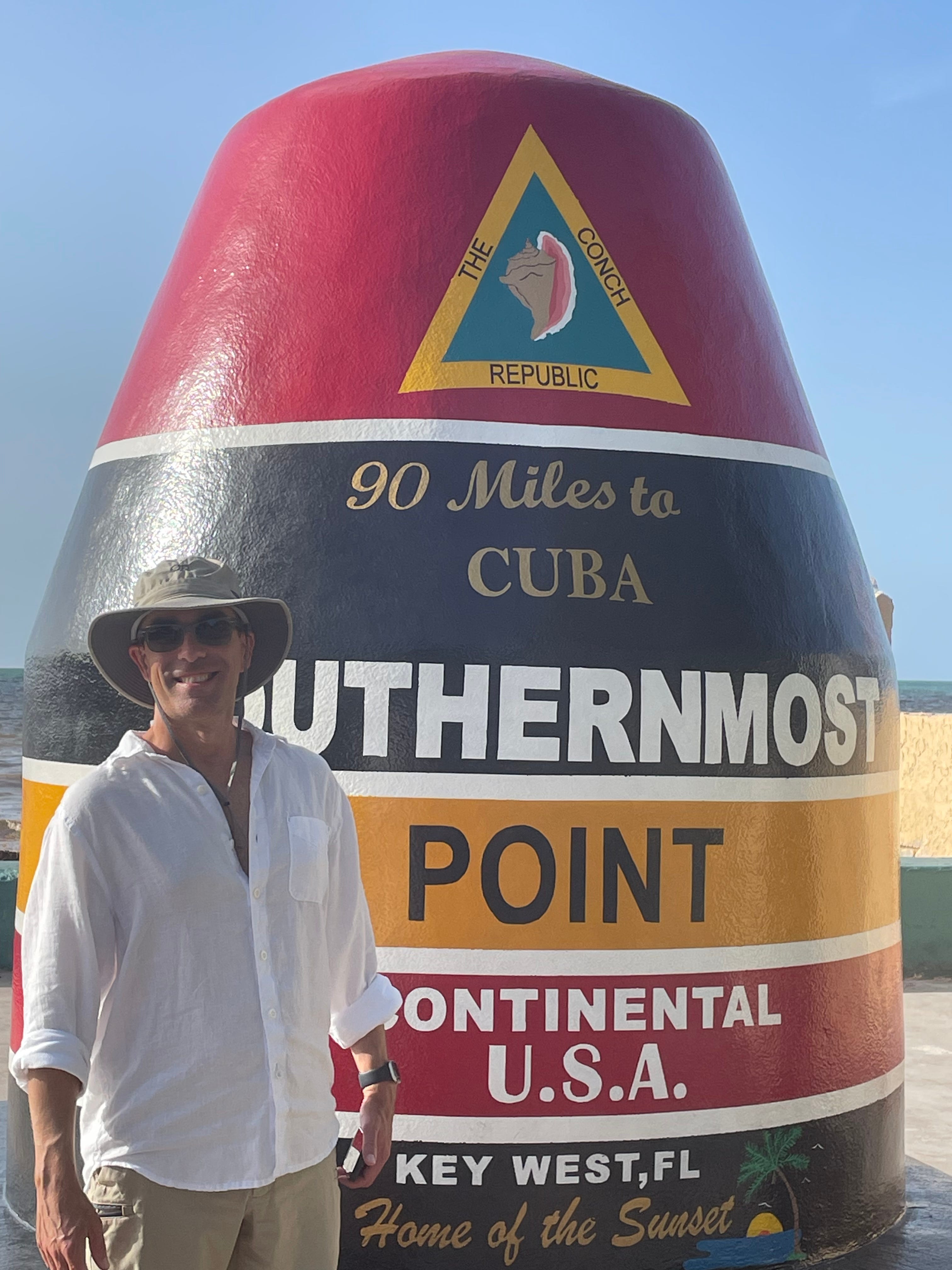
Oh, and one more thing…
If you’d rather watch this article on my YouTube channel, you can check it out here.
While you’re there, be sure to like and subscribe and all that good stuff!
No posts
Comments
Nothing yet. Say the first thing.
Sign in to join the conversation.