
I have a gift for languages. It’s just the way things turned out for me and it has had a huge impact on my life.
I was born in Holland. People spoke Dutch of course, so given I was there, so did I. My songs, nursery rhymes etc were in Dutch and for some reason French. Maybe it was just the nice chansons…. Like this one, which was one of the first songs I learnt for some reason. I guess when you come from a tiny country, culture seeps in accross the borders.
You probably know that we emigrated to New Zealand not long before I turned 3. My parents spoke a little bit of English, not much. In their schooling they spoke more French and German, and my father had attended an art school in Paris for a short time, which helped supplement his schoolboy French.
So coming to New Zealand, ignoring the age gap, we were sort of on an even footing. Although they had to learn English to get by, I didn’t have to do anything other than soak in life and absorb what came at me. I met kids and learned to communicate with them. I’ve said it many times, kids have a brain that says “fill me” and while they have to make sense of what they see and hear, they still get fed, sheltered and entertained, no matter what. So there is no pressure from a kids perspective.
Dutch was spoken exclusively at home, for probably the first 5 years after we arrived. When my parents didn’t want me to know what they were talking about, they would talk in French or German. But German was very similar to Dutch, so that just slotted in, and it wouldn’t be long before that didn’t work any more. Nothing like a little motivation for me to learn. I didn’t even understand the concept of languages. Everything was just words and communication.
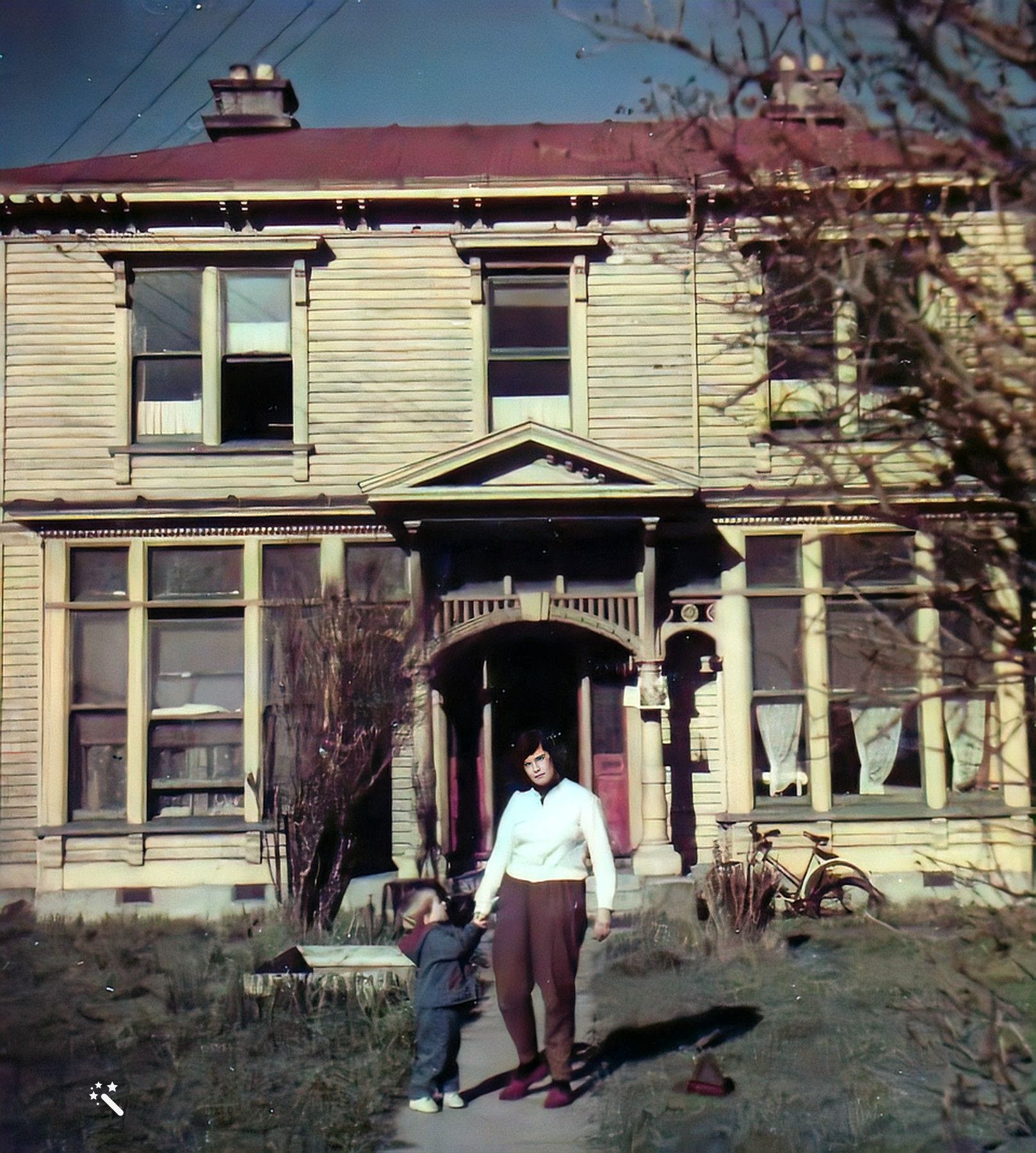
This photo was touched up with AI to be sharper and brought to life with colour. This is me and my mother outside our first home in Christchurch, New Zealand. At the time it was mostly tenanted by new migrants. Behind the front door was a steep staircase that went up to our flat, on the right. Its funny, I don’t remember the flat, but I do remember the wooden staircase with very dark, but thin carpet.
The floor level unit on the right, had a door which was always open, on the side of the building. This was home to a family not unlike ours. Mum, Dad, and a girl my age, called Laura, who became my first Kiwi friend in New Zealand. However they weren’t very Kiwi. They were Hungarian. They didn’t speak English, or Dutch. We taught each other and were quickly able to communicate together with ease.
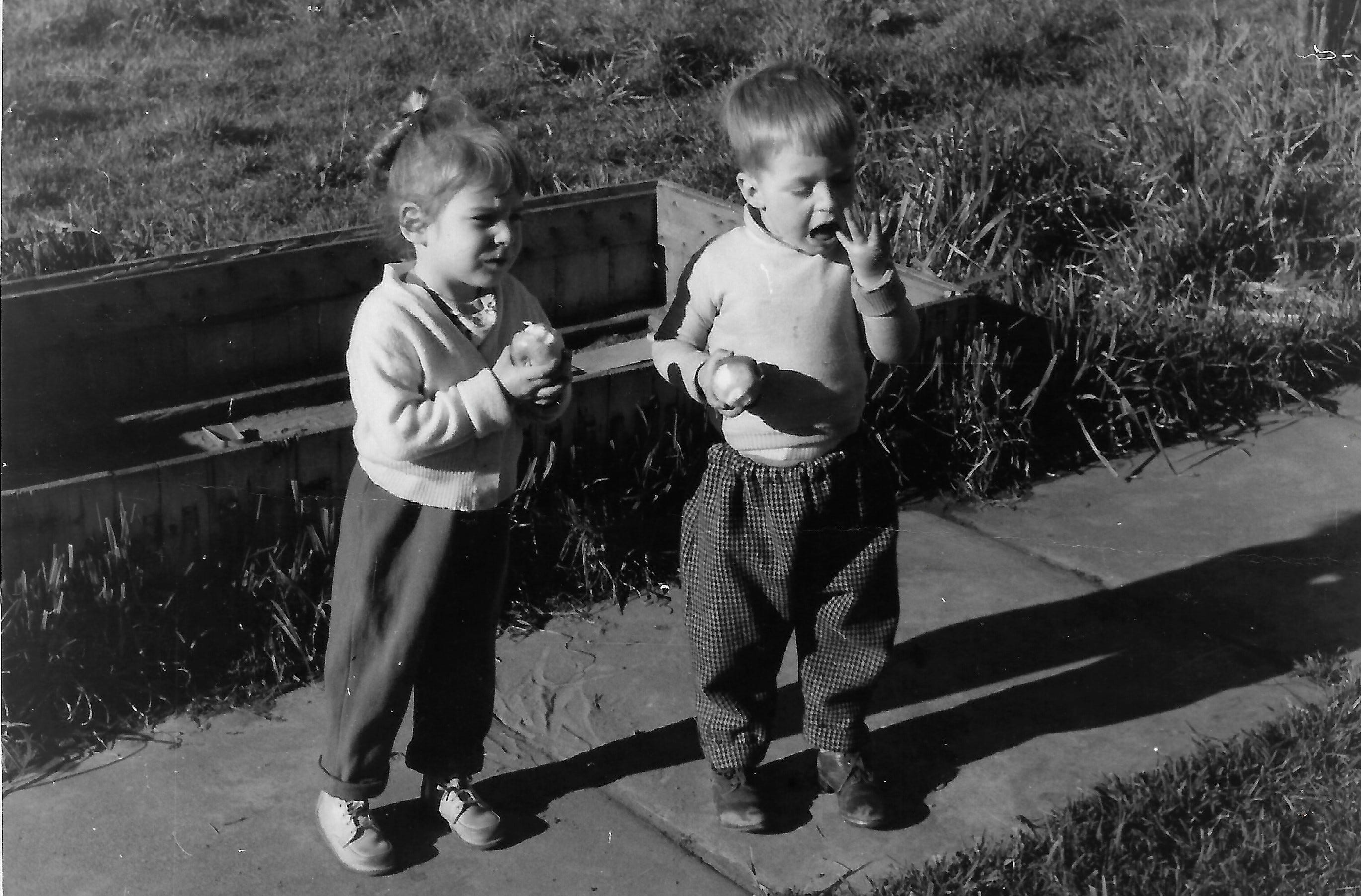
Later, after moving to Auckland, at the age of 9, I was sent to Hebrew school once a week. This was a bit more tricky, because I had to learn the Hebrew alphabet, as well as get my head around books that read from the back to the front, and from the right of the page to the left. I also joined an associated youth club called Habonim, where we sang Jewish songs, did folk dancing and added a sense of modern culture to the language. This fellowship only lasted a couple of years, because at the age of 11, when my parents broke up, I was put on a plane for a 36 hour unsupervised trip to the Netherlands, to live with my grandparents.
You may think that’s unlikely, but, if you follow the link above, the air crew did nothing for me that they didn’t do for adult passengers, other than a visit to the flight deck, and looking after my passport for me, so well that I arrived in Amsterdam without it, almost causing an international incident. It could have been much worse if I had stayed in Beirut much longer, or had disobeyed the soldiers orders about not taking photos.
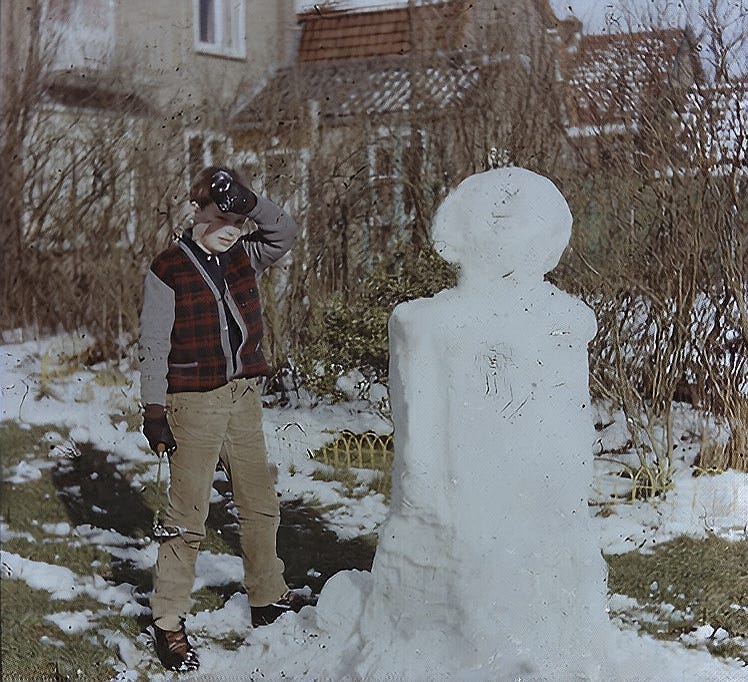
So there I was, back in the house where I was born, with family who spoke very little English, especially my grandparents. Speaking English was hard for them. They did their best for a couple of weeks, and then they warned me. “After next week, we will only be speaking Dutch again in this house. When it came to understanding Dutch, that was easy. I’d heard it all my life, but my vocabulary wasn’t so hot.
That all changed, particularly about 5 weeks after I arrived, when I was sent to school. Now I was not only expected to speech Dutch, but to be able to spell and understand the grammar, and if I was to learn anything, it would be in Dutch. My background and my new made friends made that pretty easy for me, especially my new friend, Frank.
At the end of my first year, my exam results for Dutch language were really good. I remember scoring 79 in my first writing exam, so I was pretty much up with the others.
I knew I was indoctrinated when one day, I was walking in the village and a person came up to me and asked me for directions. But they were speaking in English. “Cool”, I thought, “we can have a chat in English!”
It wasn’t quite so easy. First of all, I was now thinking in Dutch and hadn’t spoken English for the best part of a year. I struggled to tell them to walk up the street and take the second on the right!
An uncle and aunt (who were still living at home) decided they were going to go to Spain for a holiday. Sadly, no, they didn’t want to take me with them. But the way they were learning to speak Espanol, was a weekly Spanish language teaching programme on TV. So whatever they learned, I did too. Su casa era mi casa.
We watched a fair bit of TV, and it was quite common to watch French shows, so I was absorbing bits of that as well. I already had a year of French lessons under my belt from school in New Zealand before I left, so I had a basis to start from, and as I quickly learned, many words are the same or similar in many languages.
After a couple of years away, I returned to New Zealand, and was streamed for High School. That meant sitting exams to see how academic I was. I found myself in 3 AC1, which means the top academic stream in what we called Form 3.
That meant studying French and Latin, amongst other things. The French I could almost do in my sleep, and Latin was just a variation of French and Spanish for me. I wasn’t particularly interested in Latin. I figured it was a dead language, but it was the root of many other languages. It all just went into the melting pot. It turned out to be a lot more useful than I realised.
Latin helped me understand the root of words in many languages including English, which made it really easy for me to learn the others.
When I left school, I still had an interest in languages and travel, and a group of friends were heading to South America for an OE at the age of 18. I hadn’t committed, and didn’t go in the end, but I went to night school, and studied South American Spanish. I rarely got to use Spanish, other than the odd unusual situation, where I was asked to translate for someone who didn’t speak English.
When we got married, we went to Noumea in New Caledonia for the first time, for our honeymoon. This is where things got interesting. We stayed in a quaint French Hotel. It was recommended by my wife’s uncle who was a travel agent. The weird thing about that was that he didn’t speak French and they didn’t speak English, so how they became friends I’m not sure. It was probably to do with le rugby, because he ran and hosted international All Black tours.
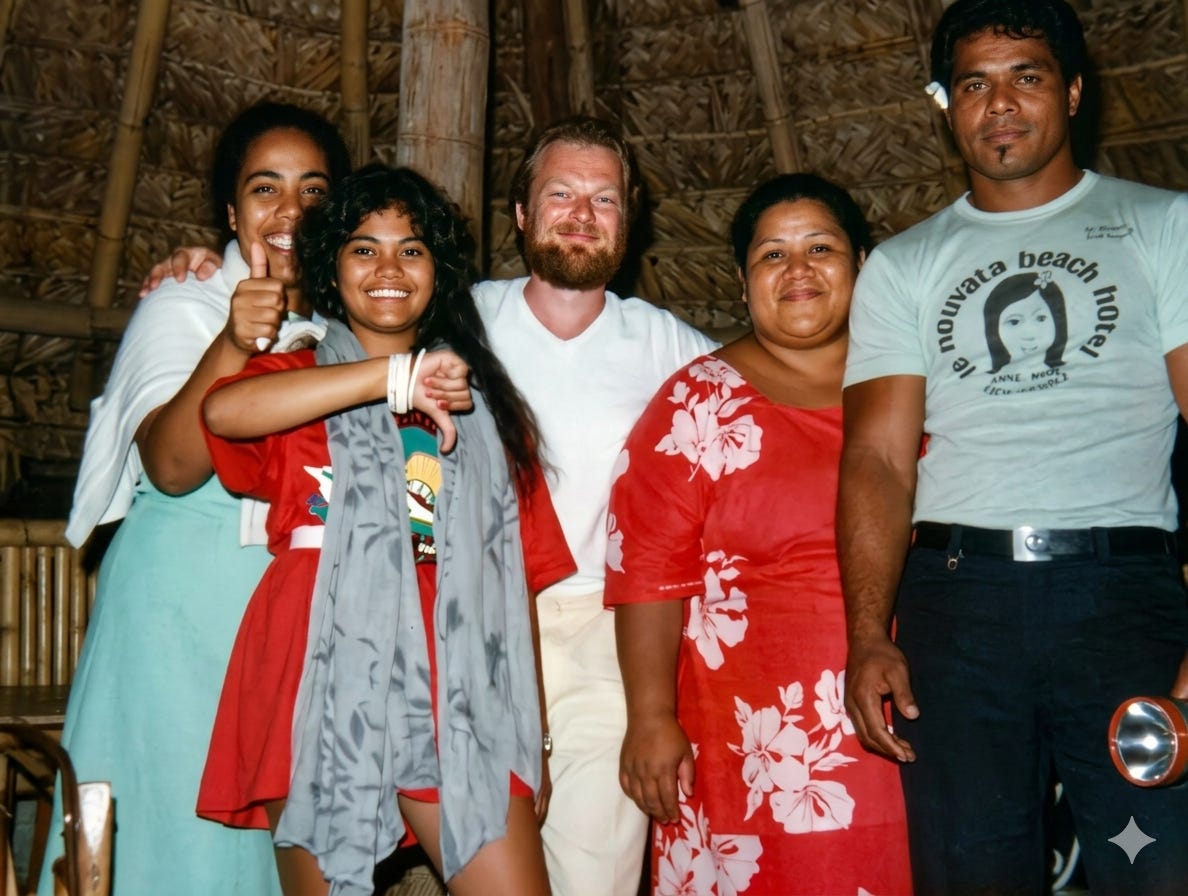
Our two weeks over there would have been even more interesting than they were, if I hadn’t been able to speak French. Racism, tanks in the street and a Kanak uprising.
Are you still with me? Come and check out where my life of languages went from there. It gets more interesting.
Comments
Nothing yet. Say the first thing.
Sign in to join the conversation.