
United States President Donald Trump and Defense Secretary Pete Hegseth recently dismissed concerns about servicemembers deployed for abnormally long periods on warships throughout the Iran war. Now, naval families are reacting with outrage, Ed Pilkington at the Guardian reports.
Three families connected to sailors aboard the USS Abraham Lincoln and USS Tripoli said the sailors have all described insufficient food, poor drinking water, and thin mental health support during deployments that stretched past nine months. Relatives said some sailors have lost 20 to 30 pounds since deploying to the Middle East more than five months ago, and one mother said photos taken after her son’s deployment show him noticeably thinner, with a gaunt face and thin arms.
When a reporter asked Trump on Friday whether naval families are worried about conditions aboard the Lincoln, he replied that they were not, and said the carrier’s deployment, then in its ninth month, was not nearly long enough. Hegseth similarly claimed that media reports had misrepresented conditions aboard the ship.
Sailors have described the deprivation directly in text messages shared with the Guardian. One crew member on the Lincoln said the drinking water has grown so bad that the ship has removed its water dispensers, and that because a deployed mental health counselor quit months ago, there is a five-week wait to see the ship’s single psychiatrist. A sailor aboard the Tripoli has told his mother he is running very low on energy and burned out, and that his unit shares food whenever anyone receives more than the standard ration.
CNN has reported that among several suicide attempts aboard the Lincoln, one sailor went overboard earlier this month and a helicopter crew rescued him. The sister of a Lincoln crew member said Trump and Hegseth’s remarks amount to a betrayal. “It’s a feeling of betrayal,” she said, adding that the comments carry real consequences for her brother.
If You Read One More Thing: Is Pete Hegseth Eyeing a 2028 Run?
At The Daily Beast, Will Neal covers rumors that Defense Secretary Pete Hegseth is eyeing a 2028 presidential run, citing campaign stops in Iowa, South Carolina, and Kentucky as indicators.
A Signal chat that accidentally included a journalist revealed Hegseth shared sensitive strike details on Yemen with 19 officials last year, undercutting Pentagon claims that he needs “secure communications” during his Iowa trip.
Neal connects Hegseth’s ambitions to the deteriorating USS Abraham Lincoln deployment, where sailors have described moldy showers, no hot water, and meals cut to half a cup of rice. Asked whether families are worried, Hegseth said, “No, they’re not.”
A CNN poll found just 28% of voters approve of the Iran war, seven points below Hegseth’s own 35% job approval rating in April.
Neal noted that any 2028 bid would likely pit Hegseth against Vice President JD Vance, who holds backing from some of MAGA’s wealthiest donors.
How VA Decides What Mental Health Care Veterans Get
At MilitaryTimes.com, Natalie Oliverio reveals that veterans often assume an FDA-approved treatment should be automatically available through the VA, though the agency requires additional layers of clinical guidelines, safety reviews, and feasibility assessments first.
VA mental health official Dr. Ilse Wiechers said the agency has moved new treatments into practice step by step, rolling them out broadly only after they are proven safe and effective.
The 2023 VA/DoD PTSD guideline recommended against benzodiazepines, cannabis, and ketamine, citing weak evidence, even as veterans like George Canfield question why medical cannabis remains uncovered.
Wiechers said the VA only offers treatments backed by strong evidence: “VA only offers treatments that have solid research behind them showing they help.”
Deep Dive: How the Trump Administration Dismantled Federal Civil Rights Enforcement
When callers phoned a federal fair housing hotline in the spring of 2025, they reached only a recorded voice: “The number you reached is no longer in use.” A new Human Rights Watch report, “Remedies Abandoned: US Civil Rights Enforcement Under the Trump Administration,” uses that dead line as a symbol for what happened across federal civil rights enforcement, as the Trump administration hollowed out four key agencies over roughly a year and a half. Drawing on more than 40 interviews, the 112-page report traces the collapse of the Justice Department’s Civil Rights Division, the Education Department’s Office for Civil Rights, HUD’s Fair Housing office, and the Equal Employment Opportunity Commission between January 2025 and the spring of 2026.
Attorneys have left the Civil Rights Division by the hundreds: nearly 300 of its roughly 400 lawyers were gone by June, and the Voting Rights Section, once staffed by dozens, was down to three. The order came from the top. An early memo from Attorney General Pam Bondi told career lawyers they are the president’s attorneys rather than neutral enforcers of the law, and Gloria A., who spent years in the division, said the idea “just flew out the window right then and there.” Nicole P. resigned that March and put the distinction plainly: “We viewed ourselves as attorneys for the United States, which is different.”
At the Education Department, the Office for Civil Rights lost nearly half its staff in a single day in March 2025 and shuttered seven of its 12 regional offices without warning. Career attorney Vince L. described the directive that arrived in the administration’s first weeks: “Stop all work. Decimate staffing. Divert resources to political witchhunts.” Only 112 cases ended in a resolution agreement that year, a steep drop from 507 the year before, even as $14.2 million already appropriated for investigators went unspent. HUD’s fair housing office saw its own staff cut by nearly two thirds, down to just 11 people from 31, and the agency has fired the attorneys who documented a gag order barring communication with complainants within weeks of their complaint going public.
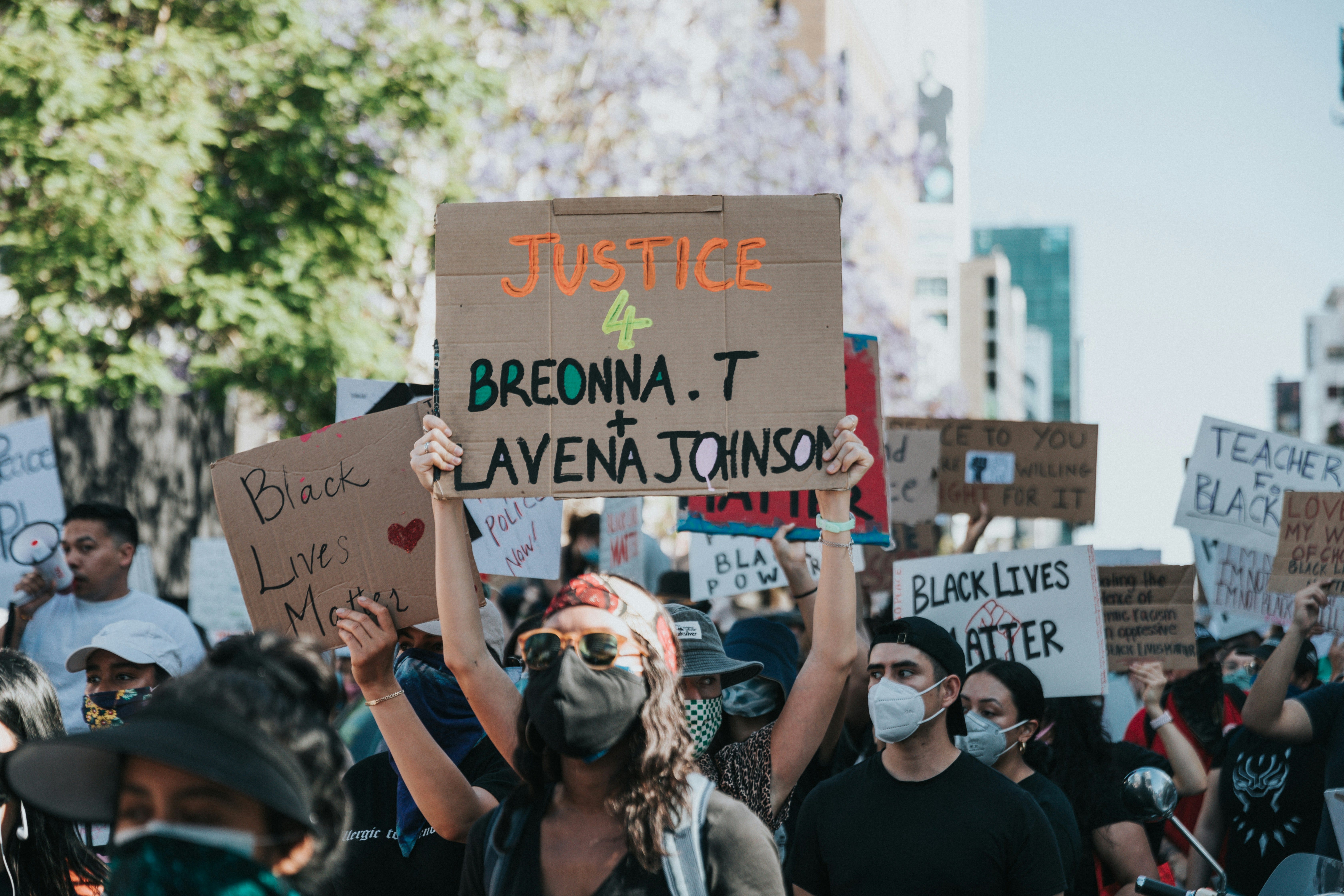
The human toll shows up case by case. In Louisville, the Justice Department moved to dismiss a consent decree meant to reform a police department found to have used excessive force against Black residents, then dropped the last criminal charges against two officers involved in the raid that killed Breonna Taylor. Her mother, Tamika Palmer, said outside the courthouse, “She was killed because of their lies and negligence.” The department dismissed a similar Minneapolis consent decree one week before the fifth anniversary of George Floyd’s murder, and closed or retracted findings against police departments in Phoenix and Memphis.
In Houston County, Georgia, the department sued over a countywide voting system that diluted Black voters’ influence in a county roughly 33% Black, a system that has sent just one Black candidate to the county commission since 1980. The department dropped the case two months later without explanation, leaving the original plaintiff to refile a private lawsuit. A similar reversal played out in Texas, where department lawyers have abandoned years of arguing that redrawn maps dilute Black and Latino votes and have defended those same maps instead.
In Lubbock, Texas, school staff reportedly interrogated a 12-year-old Black boy without his parents present and falsely accused him of a sexual offense. “After that I almost hated life,” he said. The regional office investigating his family’s complaint closed before it concluded, and an attorney representing the family later got only an automatic reply when she tried to reach the assigned investigator.
The dismantling has produced a chilling effect beyond the four agencies themselves. Universities, school districts, and nonprofits have started unwinding diversity and civil rights programs on their own, fearing investigation even where none exist. Alisa D., who directs an LGBTQ+ services nonprofit in Texas, said her staff has rewritten grant proposals and stripped references to the community they served, aiming for “the most innocuous organization that we could possibly be.” She said the fear such policies created will long outlast the administration itself.
Beyond staffing cuts, the administration has moved to weaken the disparate impact doctrine itself. An April 2025 executive order told agencies to stop enforcing cases built on statistical evidence of discrimination rather than proof of intent, the tool OCR had used to flag districts that punished Black students far more harshly than white students for the same behavior.
The Justice Department, the only agency that responded to HRW’s questions, rejected the findings and described the attorneys who resigned as activists who misused their authority to favor certain groups. Human Rights Watch’s conclusion is blunt: Whatever the administration’s stated intentions, people who experience discrimination in the US now have far fewer places to turn, a reversal of the federal role Congress built because state and local governments cannot be trusted to protect people on their own.
At Inkstick, Tyler Hicks reports that a transgender medic and activist known as Doberman described a no-knock raid on her Midlothian, Texas home in late June, when FBI and Department of Homeland Security agents used flash bangs and an armored vehicle following terrorism convictions in the Prairieland case. Agents later offered her $200,000 to inform on other activists, an offer she declined. Hicks ties her case to the Trump administration’s wider campaign against the political left, citing the NSPM7 memorandum and rhetoric from Stephen Miller, Marco Rubio, and JD Vance branding leftist organizing as terrorism. Doberman said, “The only response for state violence is community defense.”
Hannah Bowlus writes that Trump’s Golden Dome missile defense system remains mostly classified a year and a half after its announcement, with cost estimates ranging from $185 billion to $3.6 trillion. One report found that even the priciest version could reach only an 80% interception rate, a gap that would potentially leave tens of millions of Americans exposed in a nuclear exchange. Bowlus notes that contractors including Lockheed Martin and Northrop Grumman declined to explain how space-based interceptors would succeed when their existing systems have repeatedly failed in the wars in Iran and Lebanon. Laura Grego of the Union of Concerned Scientists said, “We’re chasing a technical fantasy.”
At The World, Host Carolyn Beeler interviews Afghan activist Mahbouba Seraj, who ran the last functioning shelter for abused women in Kabul until Taliban officials shut it down in December 2025. Seraj told Beeler that women have lost rights to education, work, and even leaving their homes, and that families increasingly marry off daughters as young as 12 to protect them from the Taliban. She said she has not been allowed to see the girls from her shelter for eight months and is now considering leaving Afghanistan after 23 years there. Seraj said, “The situation of women is really bad here, really bad.”
We don’t mean to sound dramatic, but nonprofit journalism needs your support here and now. Inkstick is committed to fight for the future of accountability journalism, even as press freedoms and nonprofit media funding dwindle. Here’s how you can join us: Consider supporting our work with either a one-time donation or recurring monthly support. And if you want something you can hold (and wear) in exchange for your backing, run now to snag yourself some of the snazzy Inkstick swag available for purchase at our merch store.
Critical State is written by Inkstick Media in collaboration with The World.
The World is a weekday public radio show and podcast on global issues, news, and insights from PRX and GBH.
Inkstick Media reports on how security decisions shape everyday life, following the money, power, and consequences of war.
Critical State is made possible in part by the Carnegie Corporation of New York.
Comments
Nothing yet. Say the first thing.
Sign in to join the conversation.