
In this issue (which was actually posted on July 15th, not the 17th):
Hib Vaccine Takes Center Stage at Vaccine Advisory Committee Meeting
Behind the COVID-19 Everett Hospital Charade from a Trauma Surgeon
PVS in Washington following COVID-19 Shots
Seed Oils, Real Fats, and the Heart-Health Myth
Episode 374 Guest Cherie Calbom, MS, aka “The Juice Lady,” discusses her book The Truth About Seed Oils, coauthored with Liana Werner-Gray. She describes the influences behind the widespread adoption of the “heart-healthy” seed oil message and how it reshaped American eating habits, causing “vegetable oils” to become a staple in our kitchens, institutions, and food industry. We also talk about the low-fat era, oxidative stress, marketing, label reading—and simple first steps families can take to begin replacing these commodities with real-food fats.
Watch replay on ICWA’s: Website, Rumble, X, YouTube
Watch replay on CHD-TV, and CHD-WA chapter’s: Website, Rumble, X
Listen to replay: KKNW AM 1150, SoundCloud, Apple Podcast, Spotify
Website: The Juice Lady, Cherie Calbom
Book: The Truth About Seed Oils: How the “Heart-Healthy” Myth Made Us Sick―and How to Heal with Real Fats by Calbom and Werner-Gray.
Book: Coconut Diet: The Secret Ingredient That Helps You Lose Weight While You Eat Your Favorite Foods by Calbom and Calbom
(As an Amazon Associate, Informed Choice Washington earns a commission at no extra cost to you when you shop for The Truth About Seed Oils or anything else starting at the book links above)
Upcoming Informed Life Radio show July 10: Health Freedom is on the Ballot
In episode 375, Erica Comerford, Director of Political Affairs for Stand for Health Freedom, joins us to discuss SHF’s state-specific voter guides, including for Washington’s 2026 primary election on August 4. The guides are designed to help voters review candidate survey responses and public records on medical freedom, informed consent, parental rights, privacy, school-based health centers, agency power, and related issues.
(Informed Choice Washington does not endorse candidates, make candidate recommendations, or otherwise participate in electioneering. This episode is shared for educational purposes so listeners can review the issues, candidate responses, and available resources for themselves.)
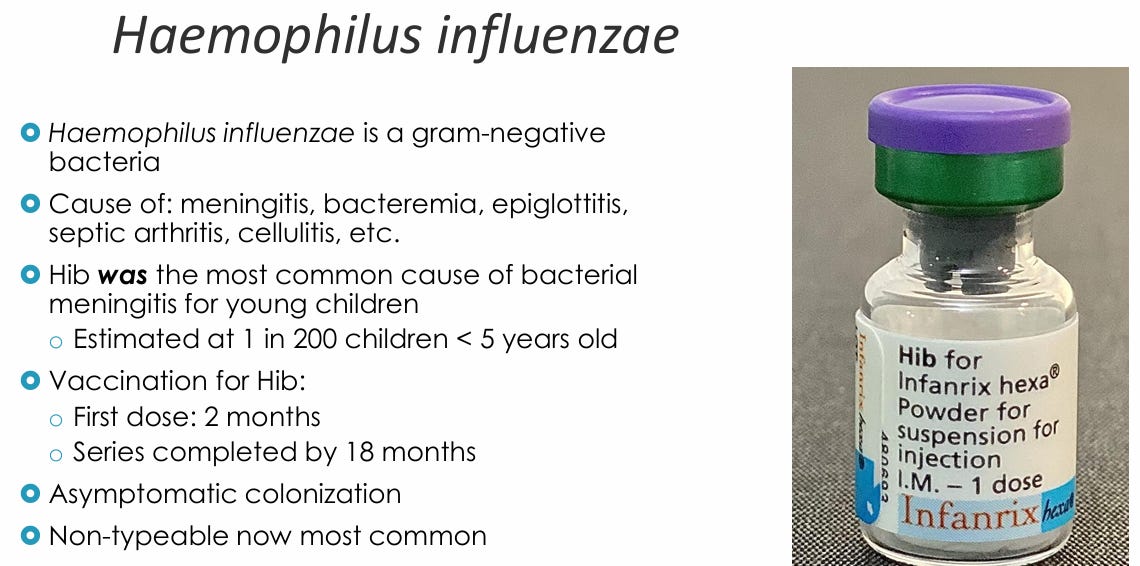
The most widely discussed vaccine at last Thursday’s Washington Vaccine Advisory Committee (VAC) meeting (agenda link) was for Haemophilus influenzae type b (Hib), as reflected in the large number of slides shared (slides 49-67) during the presentation. Slide 51 explained some of the background on this type of secondary bacterial infection, usually after having a flu, and that often leads to meningitis:
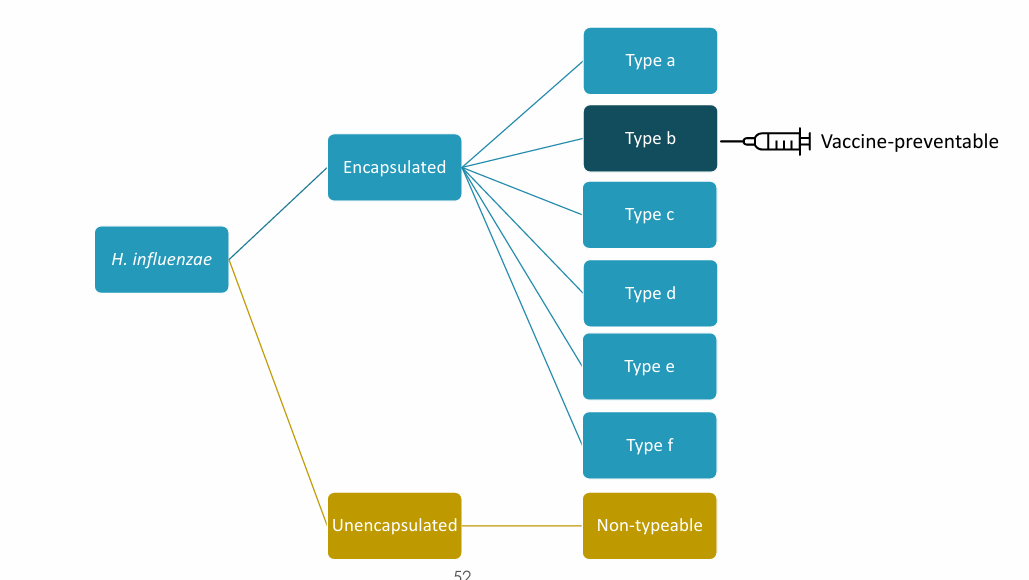
The presenters on the Hib vaccine, Cami Rencken and Nicholas Graff, then pointed to the Type b of Hib as “vaccine preventable.”
Fortunately, ICWA Director Bob Runnells was at the meeting to give public comment, and he pointed out that the Hib vaccine was not as “vaccine preventable” for type b as the presenters claimed. He started his two-minute testimony by quoting The Focal Points analysis of a 2018 study:
Soeters et al reported on laboratory-based surveillance for invasive H. influenzae disease conducted as part of Active Bacterial Core surveillance (ABCs). ABC surveillance is supported by the Centers for Disease Control and Prevention (CDC) as part of the Emerging Infections Program Network. Data over 7 years from 1 January 2009 through 31 December 2015 were included in this analysis representing ~12% of the population. There were 4924 cases of invasive H. influenzae disease were reported; 715 (14.5%) were fatal. However, only 77 (1.8%) were serotype b.
So, of the 77 with type b, Only 23 (29.9%) only 22 had available information on clinical syndrome: 9 (40.9%) had meningitis, 6 (27.3%) had bacteremic pneumonia, 3 (13.6%) had bacteremia, and 4 (18.2%) had other presentations. Two (8.7%) were too young to have received Hib vaccine, 6 (26.1%) were unvaccinated, and 10 (43.5%) were undervaccinated (n = 8/10 had received the 3-dose primary series but were missing a booster dose at 12–15 months). Five (21.7%) were age-appropriately vaccinated and had no reported underlying conditions; 2 were 3-month-old infants who had been age-eligible for only the first dose of Hib vaccine.
In summary, a very small fraction of all Haemophilus infections are serotype b that would be covered by Hib vaccination. No vaccine is perfect. Among those under age 5 where the big public health intervention has pushed vaccination since 1985, 73.9% were either fully vaccinated or going through the process of the routine schedule. Parents should understand that that a vaccine schedule is an intervention and as such intent-to-treat principles apply. For Hib with an intent to follow the ACIP schedule, among the small number of invasive Haemophilus type b infections, the majority will be failed by the vaccine schedule.
Thus, I hope this committee and the DOH can remind parents that the risk exposure for every recipient has to be weighed with these reported benefits from outcomes studies.
Note that the agenda allowed 10 minutes for public comments, but the VAC unceremoniously cut off Mr. Runnells right at the 2-minute mark. The above are the complete comments intended for the VAC and were submitted after the meeting to fully inform the VAC members.
To learn more about the overall ineffectiveness of the Hib vaccine, the VAC members should take the time to study Aaron Siri’s book Vaccines Amen. His historical analysis of the Hib shot detailed below tells it all:
Next on the Pre-Vaccine Chart is Hib vaccine—often cited by vaccinologists as a modern vaccine success story. The problem is that the data does not match the belief.
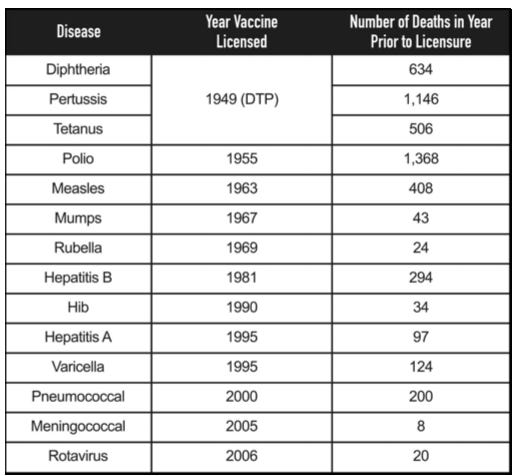
The first Hib vaccine was introduced in 1985 but was withdrawn three years later because it was entirely ineffective among children 18 months and younger and may have increased the incidence of disease in older children.
CDC - Pinkbook: Haemophilus influenzae type b Chapter - Epidemiology of Vaccine-Preventable Diseases
In 1991, after another Hib vaccine considered effective was introduced, the CDC for the first time recommended a three-dose series of Hib vaccine in the first year of life.
In 1992, only 28.2% of children were vaccinated for Hib, and there were a total of 17 deaths from Hib in the United States in 1991.
Yet, the steady decline in mortality from Hib in the prior decades, which had dropped rapidly without the existence of any Hib vaccine, is somehow magically attributed to the Hib vaccine.
Notably, mortality among infants under 1 year of age in the 1980s declined rapidly and sharply when there was no Hib vaccine for infants (not even an ineffective one like the one introduced in 1985 for children 18 months and older and then withdrawn a few years later for lack of efficacy). Yet, unsurprisingly, vaccinologists still take credit for the rapid decline in mortality among infants from Hib in the 1980s despite no Hib vaccine existing for infants in the 1980s.
[ICWA editorial note: Siri appears to be referencing the CDC table tbl10yr_drates_update.xls for meningitis rates in those under 1 year old, dropping from 12.9/100k in 1979 to 3.2/100k in 1991; data for all races, both sexes].
The VAC should also be aware of the lack of safety data concerning the Hib jabs, as Siri detailed below:
Moving on, there are three licensed Hib vaccines, injected at 2, 4, 6, and 12 months (with one brand skipping the 6-month dose). Not one of them was licensed based on a placebo-controlled trial.
ActHIB’s trial used an unspecified Hep B vaccine as a control (which was also not licensed based on a placebo trial, since no Hep B vaccine was) and had 30 days of safety review after injection during which 3.4% experienced a serious adverse event but “[n]one was assessed by the investigators [Sanofi] as related to the study of vaccines.” Package Insert - ActHIB
Hiberix’s trial used ActHIB as a control with 31 days of safety review after injection. Hiberix Insert
PedvaxHIB used an unlicensed vaccine as a control with 3 days of safety review after injection. Proposed Insert and Prescribing Information PAS November 2010
These trials were useless for confirming the safety of these products injected into babies three times by six months of age.
[Manufacturers and Cost of the monovalent Hib shots: ActHIB > Sanofi, $75; Hiberix by GSK, $139; and PedvaxHIB by Merck, $56 at Fred Meyer]
The VAC also covered school children vaccine exemption rates, probably since this was the last VAC meeting before the start of the school year. Kaitlyn Sykes and Trevor Kristensen presented on the annual school report surveillance data. Early on, they showed a graph for those who were in “compliance” with the school immunization requirements as well as for those who were not.
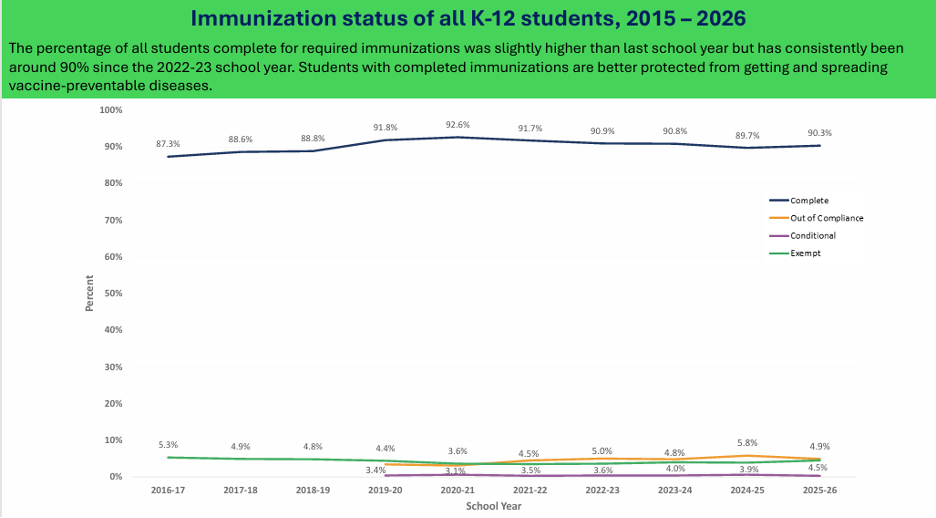
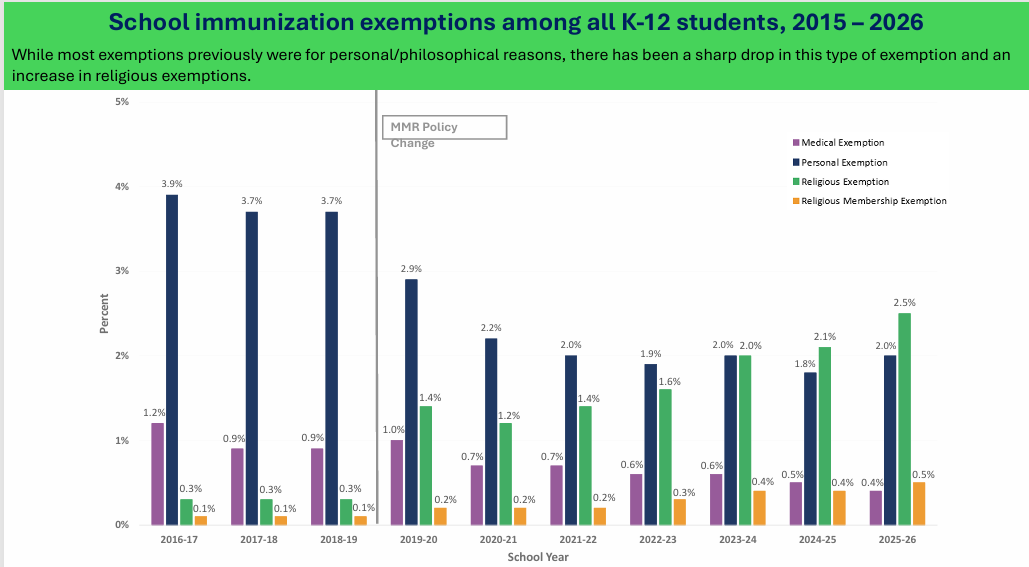
They also discussed the rise in religious exemptions for K-12 immunization requirements.
Additionally, they discussed the percentage of school vaccine exemptions by county. Stevens County topped the list at 16.4 percent.
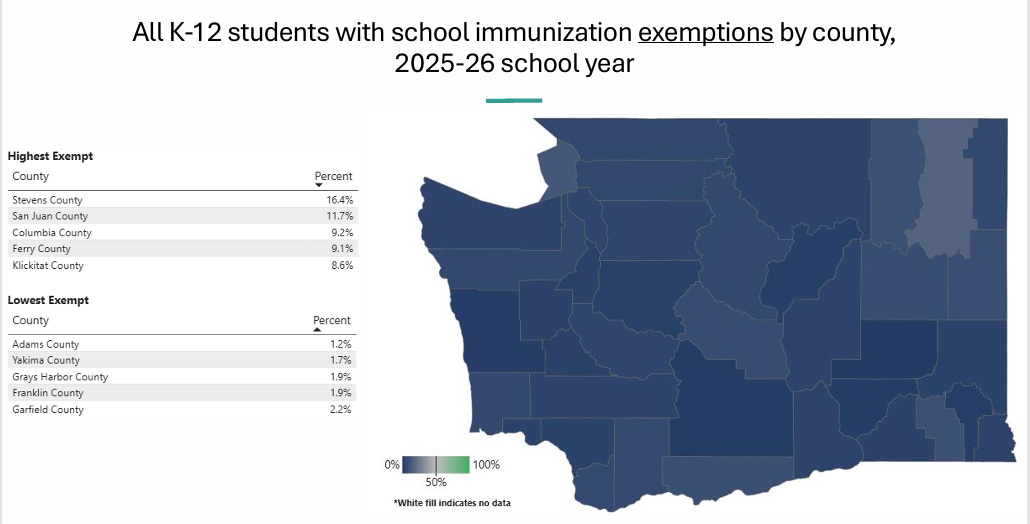
It is a bit odd that San Juan County has the second highest exemption –11.7 percent—in the state considering that at the Board of Health meeting last April, San Juan County Health Director Mark Tompkins touted their Luci B. van for its successful marketing of vaccines to children:
And so, again, we have used this van to go to Pride events, we’ve taken it to schools to do immunizations, we have taken it to other festivals and to the fair to provide programs and services out of,” Tompkins said to the board. “It’s just that the immunization nurse loves taking it, particularly in the summertime where it’s a little bit warmer, to meet people where they’re at. And what we have noticed, like with a lot of small jurisdictions, if you take your services to where the people are, they will get the services. Six or seven years ago, we had some of the lowest immunization rates in the state. But then we went to the Orca School District on a back-to-school night, and we were competing with cotton candy, hot dogs, and a bouncy house. And our line for providing immunizations to school-age kids was the longest, and it really was taking it to the parents, because they’re all working, and they don’t have time to take their kids to the doctor, and so taking it to the school was quite effective. So that was, Luci B.

Last week, Alix Mayer aired an interview with Dr. James P. Miller concerning his experiences at Providence Regional Medical Center Everett when COVID Patient Zero had allegedly arrived at the facility and was placed on the campus that housed the birthing center and rehabilitation unit.
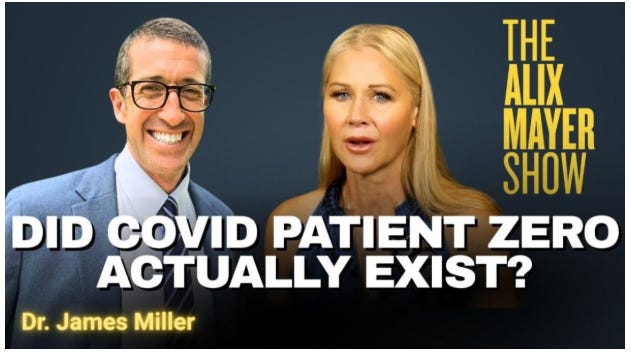
It’s worth listening to the entire discussion, but we provide an overview here if you don’t have a full hour and ten minutes.
Early in the interview, Dr. Miller provided his medical background. He grew up on San Juan Island, Washington. After his schooling, eventually became a trauma surgeon and ICU doctor in 2014 at the hospital in Everett.
I don’t think my ethics are amazing,” he said during the interview. “They are above bare minimum, and it turns out that bare minimum ethics were not tolerated because they’re uncomfortable for the hospital administration. There’s actually quite a system of corruption with the ethical systems up there (the Everett hospital), and I really think it’s endemic throughout America, and it’s one of the things that needs to be fixed for us to have a healthcare system that people can trust.
At the twenty-seven minute mark in the show, Dr. Miller discussed the alleged arrival of Patient Zero at his hospital in Everett. Somebody had said to him, “Hey, did you hear about this COVID guy.” Dr. Miller then provided the following narrative:
I said not really, it’s not my world. I’m a trauma surgeon. My thoughts of viruses and vaccines were under one percent of my brain space. The reason the hospital has such a cumbersome name of Providence Regional Medical Center Everett is because it’s actually two campuses and the second campus is just a birthing center and a rehab unit, so allegedly they housed that guy there. The CMO told me, ‘Oh, that’s where we have our special negative pressure rooms,’ which is a bald-faced lie because every ICU room in our hospital is a negative pressure room. And so, that’s just silly. Additionally, as a trauma surgeon, because you deal with all the bad cases, particularly in the middle of the night, everyone tells you everything. So, allegedly one of the ICU doctors I never met or talked to about it kept his mouth shut, but I never heard about it. So, none of the pulmonologists, you know the lung specialists, knew about him. No one talked. So, the whole thing was silly. But why would you admit a guy to a hospital campus that has no ICU when you’re worried about a deadly pandemic. It’s illogical. So, just from that, it was ridiculous. And then right before the lockdowns, they announced that anyone caught wearing PPE (personal protective equipment) would be fired. People were starting to get this fear that if they were wearing PPE, they would get fired.
“Are you kidding?” Mayer said.
“No, remember I was talking about the brain scrambling, which led to establishing insane protocols,” Dr. Miller said. “This was common throughout all America. They took all the PPE out of every floor in the hospital and put it in the operating room where you could see it was behind this wall. They put up these very obtrusive video cameras, says if you touch this PPE, we will fire you.”
“What was the point of hiding the PPE?” Mayer asked.
“Who knows,” Miller said. “The stuff was insane. Every two days, some insane statement would come out. So, that actually caused a lot of fear in people. A lot of the staff actually got nervous.”
The two then surmised that the hospital at first was concerned that the PPE would scare the patients, but then they laughed as it was later announced that PPE had become required.
“No pulmonologist talked about seeing him (Patient Zero),” Miller said. “I knew all the pulmonologists well. So, they sent no pulmonologist to talk with a guy who had COVID and back then they were diagnosing it on a chest X-ray. So, it would have been a pulmonologist who would have gone there. Again people talk. Granted, there’s a theoretical chance this actually happened. It just never happened with any other infectious disease like a tuberculosis patient who would come to the ICU because there were negative pressure rooms. Every other infection we were worried about came to the ICU. So, it’s just not logical. Again, as a trauma surgeon, people tell you things. They just do. You become a confessor for a lot of people, and they tell you stuff.”
“Hold on, I’ve got a weird question,” Mayer said. “Do you think that person actually existed or did they want everyone to think there was a COVID patient there from Wuhan?”
“I don’t know,” Miller said. “I just know I knew everybody, and no one met the guy.”
They both then laughed. As she continued laughing, Alix Mayer said, “Okay, that’s all I need to know.”
“And so that was bizarre,” Miller said. “And the other thing as part of the propaganda, the CMO called me down and said, Oh yeah, we’ve got this guy. We put him in the negative pressure room in the birthing center where we’ve never housed an infectious disease person there before. He’s in all the news. He’s national news, blah, blah, blah. And the CDC sent us this amazing medicine, and I don’t remember the name, but I’m guessing it was remdesivir, and it broke his fever just like that.
“Oh wow.” Mayer laughed incredulously. “Just like that.”
Speaking of remdesivir, according to Time magazine, Dr. George Diaz at the Everett hospital actually did treat Patient Zero, and he just so happened to use this deadly stuff:
Dr. George Diaz was at home in Edmonds, Wash., on Jan. 20 at 8:30 p.m., when his phone rang with news that he was both anticipating and dreading.
On the line was his hospital’s infection-prevention manager, who had just received a call from the U.S. Centers for Disease Control and Prevention (CDC). The agency wanted Providence Regional Medical Center to admit a patient who was infected with the novel coronavirus, which at that point had been reported only in China (where the first reported cases had emerged in December), Thailand, Japan and South Korea. The patient was the first confirmed case of COVID-19 in the U.S.
“They didn’t force us,” Diaz says. “We never considered saying no.” Because this was the first known patient in the country with the new infection, CDC scientists wanted to admit him for observation, in case his disease worsened.
The patient, who wishes to protect his privacy and remain anonymous, lives in the Seattle suburbs and had just returned from a visit with family members in Wuhan, China. He seemed relatively healthy when he was admitted to the hospital; he had a cough but no fever. But that quickly changed. Over the next few days, he developed a fever that spiked to 103°F, his cough worsened, and he complained of trouble breathing. Diaz gave him supplemental oxygen, but his condition continued to deteriorate. “We made contingency plans to move him to the ICU if he got worse,” he says.
Before doing that, however, Diaz tried something else: remdesivir.
Three years ago, Dr. Miller also offered a thoughtful first-person perspective of his experiences at the hospital in Everett when he wrote an article for The Daily Sceptic.
The following from the article reflects the COVID-19 fearmongering:
I was working a shift in the ICU in late April 2020 and had basically nothing to do because greater than half our beds were empty. We were ‘low censusing’ any nurses willing to go home because there were so few sick patients. I was having a cup of coffee, chatting with the staff and another ICU physician, who was in leadership, when the daily newspaper was delivered. Prior to the paper being delivered, we were all relaxed, jocular and noting how little work we all had. The other ICU physician picked up the local paper where the main headline said, “Local ICU Overwhelmed”. The article was referencing our ICU, as we were the only hospital in the county. He looked at me, started sweating, panicked and said, “What are we going to do? We may not be able to handle this!” I replied with, “Pour another cup of coffee and laugh at the morons writing the paper.” He became visibly distressed and left to call the hospital administration about the situation, who confirmed they were complicit with the newspaper article. This colleague was one of the medical directors of our ICU. Our hospital and ICU were not overfull at the peak number of infections in March 2020. In fact, the ICU was never overfull, even after the horrible protocols that hurt so many patients were established. I knew we were in serious trouble as a medical community when clinical leaders started believing the words in a newspaper and hospital administrators more than their own eyes and experience.
The following reflects the injustices behind the administration of the COVID-19 jabs:
After the vaccine was rolled out in late 2020, it became a functional mandate in the broader community, and then definitively mandated by the late summer of 2021. The medical community in the county I was working in (Snohomish, Washington State) started refusing to care for unvaccinated patients except in the hospital setting. I couldn’t believe that patients were banned from accessing basic primary care at first, but then I spoke to a man at my church who was denied both refills of his diabetic medications and treatment for a sinus infection by his primary care provider, all because of his Covid vaccination status. This was so inconceivable that I still didn’t believe it. Even when patients did make it to the hospital, I learned that the physicians and staff in the emergency room were directed to provide a lower tier of medicine to this group of patients. It was less than acceptable, and worse, less dignified, than the care given to any other patients pre- and post- Covid. I had to verify with physician leaders that they approved of this inhumanity. I found out that all the major healthcare systems in the county had agreed to this action, and drove the creation of the policies that demanded physicians act in direct opposition to their oaths. After discovering this, I departed from the medical community in spirit.
Last week, The Defender wrote an article about a new CDC study that presented the most comprehensive summary yet of the CDC’s V-safe active surveillance program even though the study couldn’t establish the absence or presence of rare or long-term vaccine-related adverse effects.
The Defender summarized as follows:
Based on TrialSite News’ ongoing review of hundreds of peer-reviewed studies, pharmacovigilance reports, registries and mechanistic investigations worldwide, we estimate that approximately 0.2%-0.8% of mRNA vaccine recipients may have developed a chronic post-COVID-19 vaccination syndrome (PVS) or related persistent condition — a figure that remains controversial and requires further prospective validation.
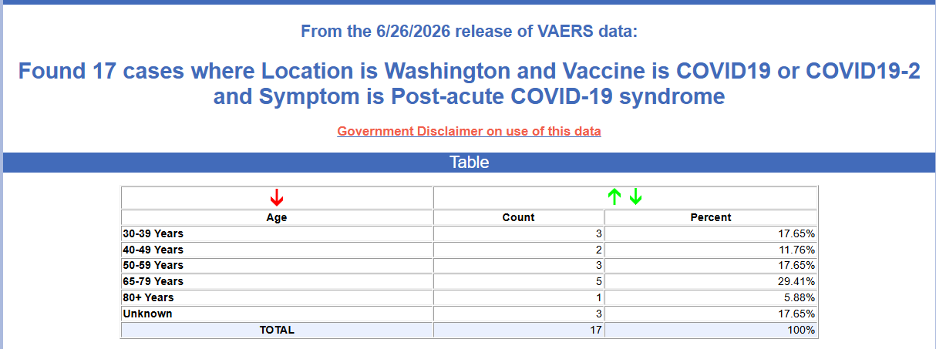
VAERS does not have a listing for chronic post-COVID-19 vaccination syndrome, but it does show 1,905 cases of this syndrome if one were to take away the “chronic” part.
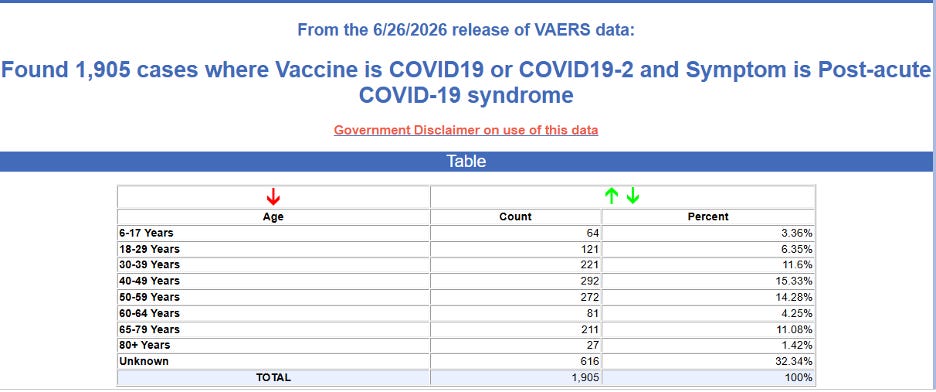
Washington shows seventeen cases of PVS:
As much as representatives from the Department of Health, notably Chief Medical Officer Tao Kwan-Gett, try to scare the public with “long COVID,” it would help restore their credibility if they were to take heed of the following write-ups of long COVID following the jabs:
21 days of constant post-COVID/long haul COVID type symptoms including tension/migraine type headache, photophobia, phonophobia, vivid dreams, disrupted sleep, dizziness/lightheadedness or presyncope, diarrhea, nausea with emesis, myalgia, fatigue, abdominal pain. No loss of taste/smell or respiratory issues. However, developed HSP-like vasculitis within 48 hours of vaccination, confirmed by dermatology. Within 2 months, had developed a dysautonomia with many of the above symptoms including profound orthostatic intolerance, tachycardia, disordered breathing, abdominal upset/nausea/anorexia, dizziness, diaphoresis, shaking.
This spontaneous case was reported by a consumer and describes the occurrence of POST-ACUTE COVID-19 SYNDROME (tested positive for covid before, but still has the symptoms) in a male patient of an unknown age who received mRNA-1273 (Moderna COVID-19 Vaccine) for COVID-19 vaccination. The patient’s past medical history included COVID-19. Concurrent medical conditions included Diarrhea, Shortness of breath, Cough, Loss of taste, Loss of smell, Sore throat and Congestion nasal.
Almost 1 year ago I received my second Pfizer vaccine. Since that time, I have suffered debilitating injury and have been unable to drive, work, care for my family and children, or care for myself. I filed for disability. My doctors say that I have Long Covid as a result of the vaccine. I suffer from constant 24/7 vertigo, headache, brain fog, severe fatigue, nausea, vomiting. I have to use a cane to walk inside my home, or crawl from room to room. I am unable to sit at the dining table with my family or play in the living room with my children. This has been a life altering severe vaccine injury for me.
I was told by someone who is monitoring the vaccines to fill out a report using the website on the back of my vaccination card because I had a breakthrough Covid infection even after being boosted. My series was the Pfizer vaccine and my injections were on 4/4/21 and 5/2/21. I did J&J as my booster on 12/9/21. Day 0 of my Covid was on the evening of 1/8/22 and my diagnosis was confirmed through PCR testing at a doctor’s office. I had not previously had Covid (to my knowledge). My first symptoms were a sore throat before going to bed. The next day, my throat was more sore. I also had a runny nose and then hot/cold flashes, before developing a barking cough which was similar to the chronic bronchitis I had during childhood. The cough lasted for about 2 weeks, even with a steroid inhaler added on, which required me to quarantine for the full 10 days. It also caused worsening urinary incontinence. I had fatigue and additional brain fog, as well, which have lingered and became long Covid (with some shortness of breath when walking, on occasion, but especially up inclines). I recently went through a semi-experimental treatment for the long Covid. Interestingly, I did not infect any of my 4 housemates or any of the 4 other people with whom I had been in close proximity all day, unmasked, on Day 0.
Third dose of Pfizer was on January 3, 2022: I contracted COVID-19 on 01/23/2022 with symptoms of severe fatigue, headache, weird taste sensation, shallow cough, body aches, abdominal pain, difficulty swallowing, swollen tonsils, constipation, diarrhea, loss of appetite, hallucinations, ear drums are bulging, difficulty waking up or concentrating, brain fog, shortness of breath, chest tightness, not being able to complete normal activities, chills, and felt feverish. I only had to use my inhaler 3 times throughout the illness. My symptoms did not improve until after 04/18/2022, and I am still experiencing lingering symptoms of brain fog, fatigue, difficulty swallowing/digesting, swollen tonsils, ear drums are bulging, chest tightness, shortness of breath, swelling in my lower extremities, and put on weight. I was diagnosed with Long Term COVID-19 and I am waiting to have an echocardiogram.
Breakthrough case. Started feeling achy and feverish on 7/4/2022, took a Home test on 07/07/2022 and tested positive. I was prescribed Gabapentin after my first vaccine reaction. My Dr. increased my dosage. Still feeling bad but tested negative for COVID-19 now. Long haul COVID-19 and symptoms have never completely gotten better.
Patient received Pfizer COVID vaccine on 2/17/21 (out of state), 3/10/21 (out of state), and 9/8/21. Patient was initially diagnosed with COVID in May 2022 and had been hospitalized at an outside hospital several times since then. He had persistent acute on chronic hypoxic respiratory failure of unclear etiology in the setting of persistent COVID-positive testing. On 8/13/22, patient admitted to our inpatient facility CCU with acute on chronic hypoxic respiratory failure due to long COVID-19 and pulmonary fibrosis. Patient expired on 8/17/22.
After five doses of the Pfizer COVID-19 shot: I was coughing with congestion. I had body aches and fatigue. I tested myself using a COVID-19 Home test on November 27th and that was positive. I went to Pharmacy, and they did an assessment for me and decided I was eligible for Paxlovid and prescribed. My symptoms were mild the whole time. I had congestion, fatigue and body aches. I also had low oxygen saturation as low as 72. I also used cold medicine to reduce the congestion and improved to date I have not completed recovered. I requested a 2nd round of Paxlovid since my Oxygen levels were so low. The oxygen levels still did not improve. I returned to the doctor and was prescribed oxygen by a respiratory doctor. The doctor believes I have long COVID and possibly COVID Lung. I have overnight Test Oximetry Test on November 15, 2022, and it showed low average of 87% .
Clinical course: Patient had a very harsh and long lasting reaction to the moderna vaccine in 2021. Patient took a Pfizer booster in November 2021. Patient was only ill for a week and understand that the Pfizer vaccine was not as strong as the moderna. Patient had Long COVID and do not want to be ill for months like was with the moderna vaccine. The information on the batch/lot number for bnt162b2 has been requested and will be submitted if and when received.
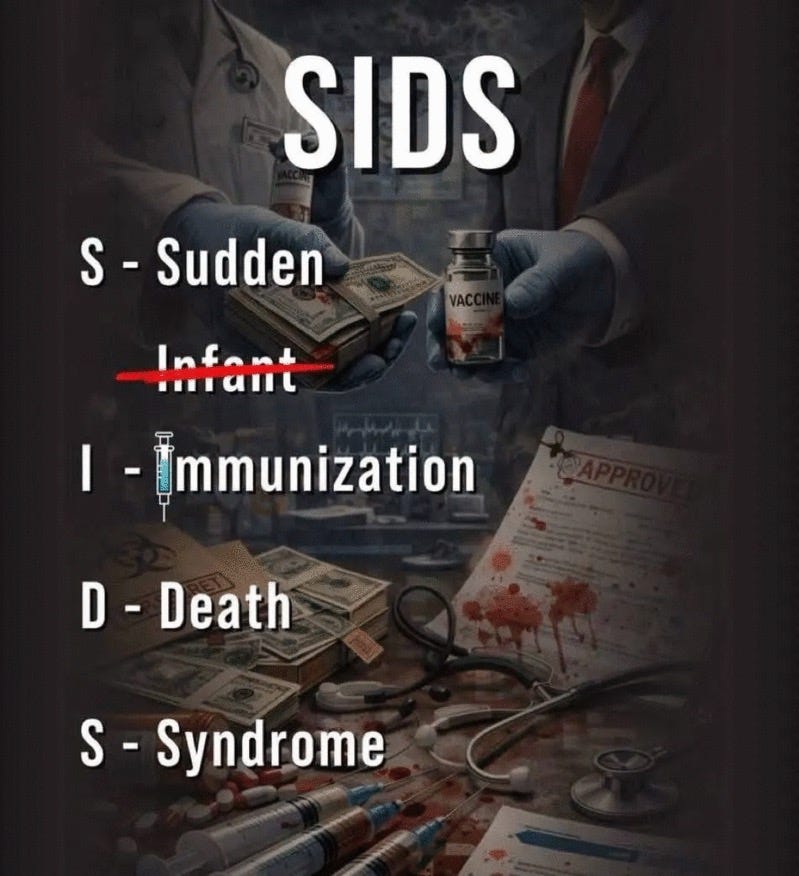
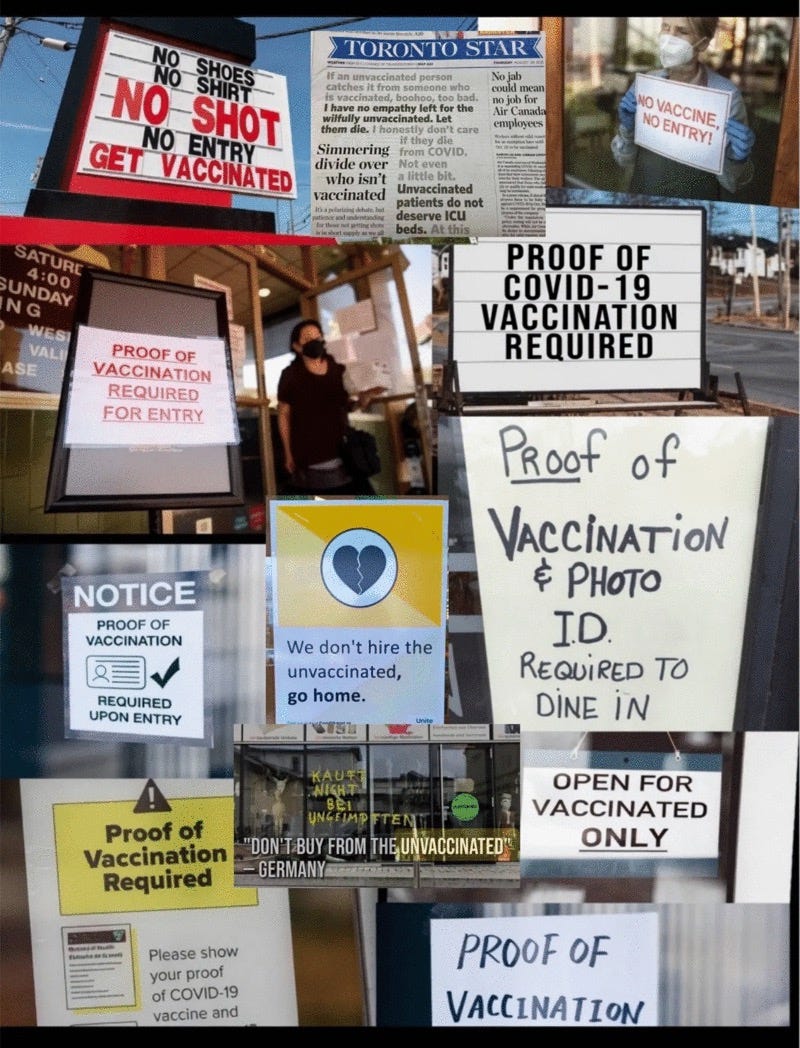
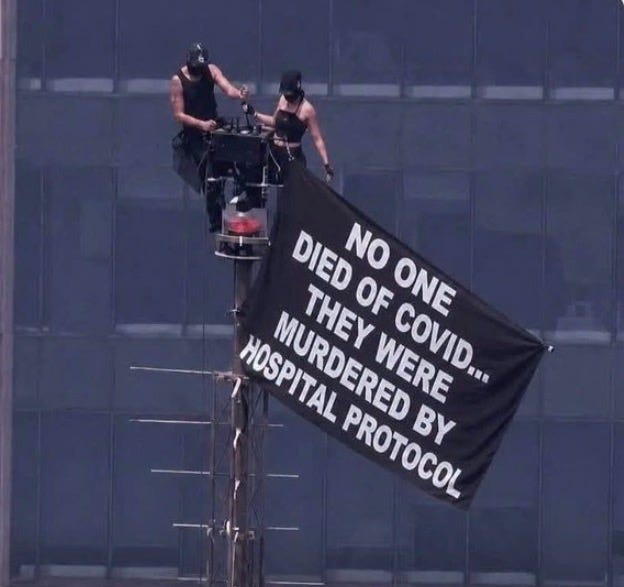
Memes to back up all we’ve been telling you:
Yes, we are tracking the Idaho mom in jail who is accused of killing her twins - over a year ago! The twins died eight days after a round of vaccines.
Comments
Nothing yet. Say the first thing.
Sign in to join the conversation.