
See also my previous article on Intracellular Hypercalcinosis.
Trousseau’s sign is a clinical indicator of low blood calcium (hypocalcemia) or high nerve and muscle sensitivity (neuromuscular excitability). It causes the hand and wrist to spasm into a flexed position when a blood pressure cuff is inflated above the systolic pressure for two to three minutes.
Chvostek Sign: How to test: Tap gently on the facial nerve, located right in front of the ear just below the zygomatic arch (over the masseter muscle). Positive result: A brief twitch or spasm of the facial muscles (such as the corner of the mouth or the side of the nose) on the side being tapped. Clinical note: It is less reliable because roughly 10–25% of healthy people can test positive, and some patients with true hypocalcemia may not show it.
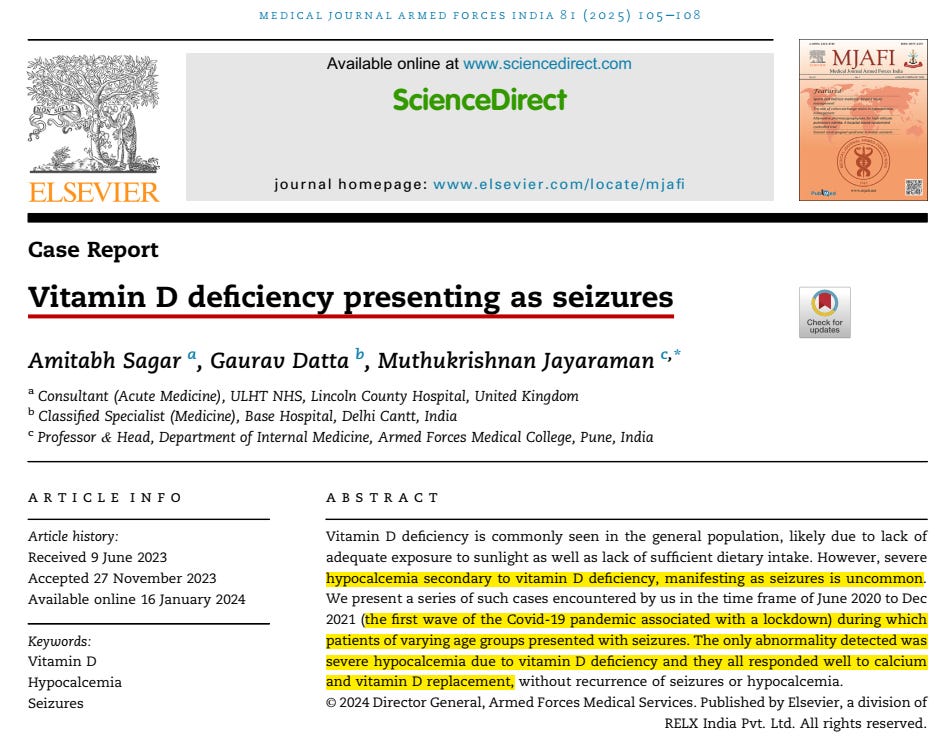
Note the very impressive laboratory results reported in this article: the two tests that I highlighted are tests that clinicians should be using in the evaluation of these more severe cases, in addition to the usual serum calcium and 25ohD.

Dr Alex Vasquez 2004 2008 2024 Vitamin D 2008 Jcem Paradigm 2004 Jama 2004 Bmj 2005 Pharmacology 2024
4.89MB ∙ PDF file

Comments
Nothing yet. Say the first thing.
Sign in to join the conversation.