
Your weekly UX digest is below ↓
Hey there,
Why can we, creatives, never stop creating? 😅 Even in my burnout, I can’t lie down and do nothing. No, I am creating my own app design.
Do you know people from ‘normal’ jobs who come home from work and do pottery classes, study new gen AI tools, draw, sew, make sketches?
You know me, I seem to do the impossible stuff:
I work full-time in a leadership role at Zalando
publishing weekly YouTube videos
buying an apartment
…and yes, somehow even passing a C1 German exam.
All that without a single person ever complaining (most importantly, not my partner 😅).
I recently found out that people think there is a team behind it. Here to disappoint you: I have no team, assistant, or magical productivity app.
This week, I decided to talk about the time management techniques that actually work for creative professionals. And no, I’m not talking about waking up at 4:30 AM or batch-cooking meals for the week — I tried that, but it didn’t stick.
My time management journey started when I was studying at university, working full-time as an in-house full-stack designer, and freelancing because I wanted to specialise in web design.
So I had to learn time management.
But what I found is that most advice is aimed at businesspeople in ‘normal’ white-collar jobs. I felt this advice does not account for me, a creative who lives by the waves of inspiration.
So over the course of my 17-year career (yes, I turned this number), I developed my own techniques, sometimes a mix of what I heard and sometimes my own inventions.
I counted, and I have 9 foundational techniques PLUS 5 creative-specific strategies that I use daily, sometimes in an unconscious way, to have time for everything I want to do outside of my day job.
Because I really love my small side projects, I do them not because I have to, but because this is how I’ve always wanted to live — doing more creative stuff, not less.
Let’s start with this 3 (out of 14!) of my most unconventional time-management techniques for creatives:
What if your full-time job could secretly fuel your side projects?
I used my company’s educational budget last year to learn vibe coding—not just for work, but to build my own app. The key is finding adjacent skills that serve both worlds and persuasively explaining to your boss why you need them.
This one nearly killed me to implement as a recovering perfectionist.
But once I started aiming for 60% quality instead of 100%, everything shifted. You’ll see how this counterintuitive approach actually helped me create MORE, not less.
And here’s the thing: people rarely notice the difference you’re obsessing over.
Corporate doesn’t understand this. But most creatives I know don’t maintain consistent energy year-round (are you the same, too?).
Sometimes you’re in a productivity season. Sometimes you’re in maintenance mode.
I'm in maintenance mode right now because I am still recovering from my burnout, and I can’t tell if I've got all my inspiration back yet.
But recognising the rhythms is what allows you to set the expectations of your collegues, choose projects to work on, and be generally easier on yourself.
I wish that we could also change the rhythm at work, but it’s really impossible, the corporate world is ruthless to creatives.
Since there is so much advice I can share (11 more techniques), I compiled them all in 1 video, where I explore:
Why the standard productivity advice fails creative professionals
The foundational advice you need to nail to implement more advanced techniques
My favourite environment-changing ritual that helps me to sit at the same place in front of the same laptop after my day job is finished, without feeling miserable
Here’s the boring truth: there’s no silver bullet.
But there IS a system that works specifically for creative brains. One that accounts for the fact that we can’t just manufacture inspiration on command. That context-switching destroys us more than others. And that we need creative seasons to survive.
→ Watch the deep dive video here.
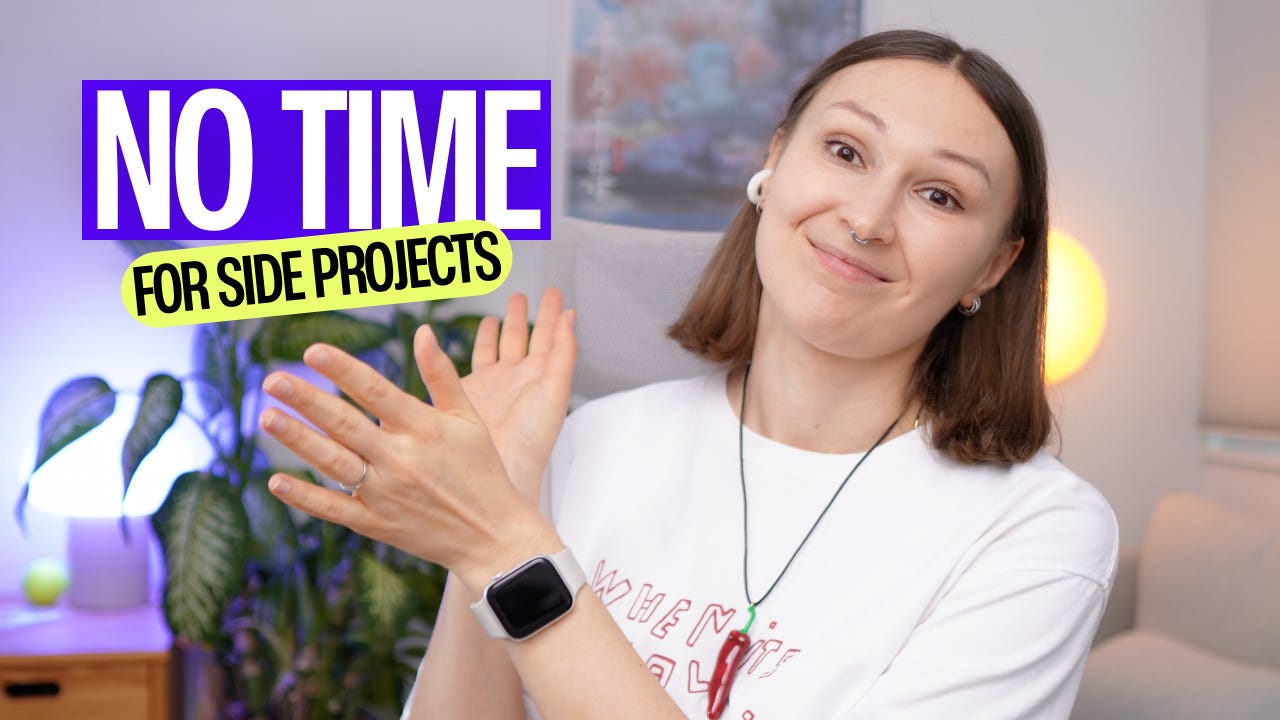
Because creatives are wired differently and sometimes need a different approach.
Here is everything I was reading last week to stay relevant in UX design world.
01 Tahoe Icons
A great breakdown of why Apple’s Tahoe icon set works so well — and what designers can learn from its constraints, consistency, and restraint. Link
02 Friction
A thoughtful piece on friction in design — when it’s bad, when it’s necessary, and why removing it blindly can make products worse. Link
03 Usability Heuristics and Competition in Games
An interesting crossover between classic usability heuristics and game design — showing how competition changes what “good UX” even means. Link
04 Why Tooltips Are Bad
NN/g explains why tooltips often fail users — and what to do instead when you feel tempted to add one. Short and convincing. Link
05 How an Accessibility Designer Adds Keyboard Shortcuts
A very practical, behind-the-scenes look at how keyboard shortcuts are designed with accessibility in mind. Concrete and super useful. Link
🩶
P.S. Share your techniques on time management, let’s expand the list! Just reply below on Substack to answer this email.
No posts
Comments
Nothing yet. Say the first thing.
Sign in to join the conversation.