
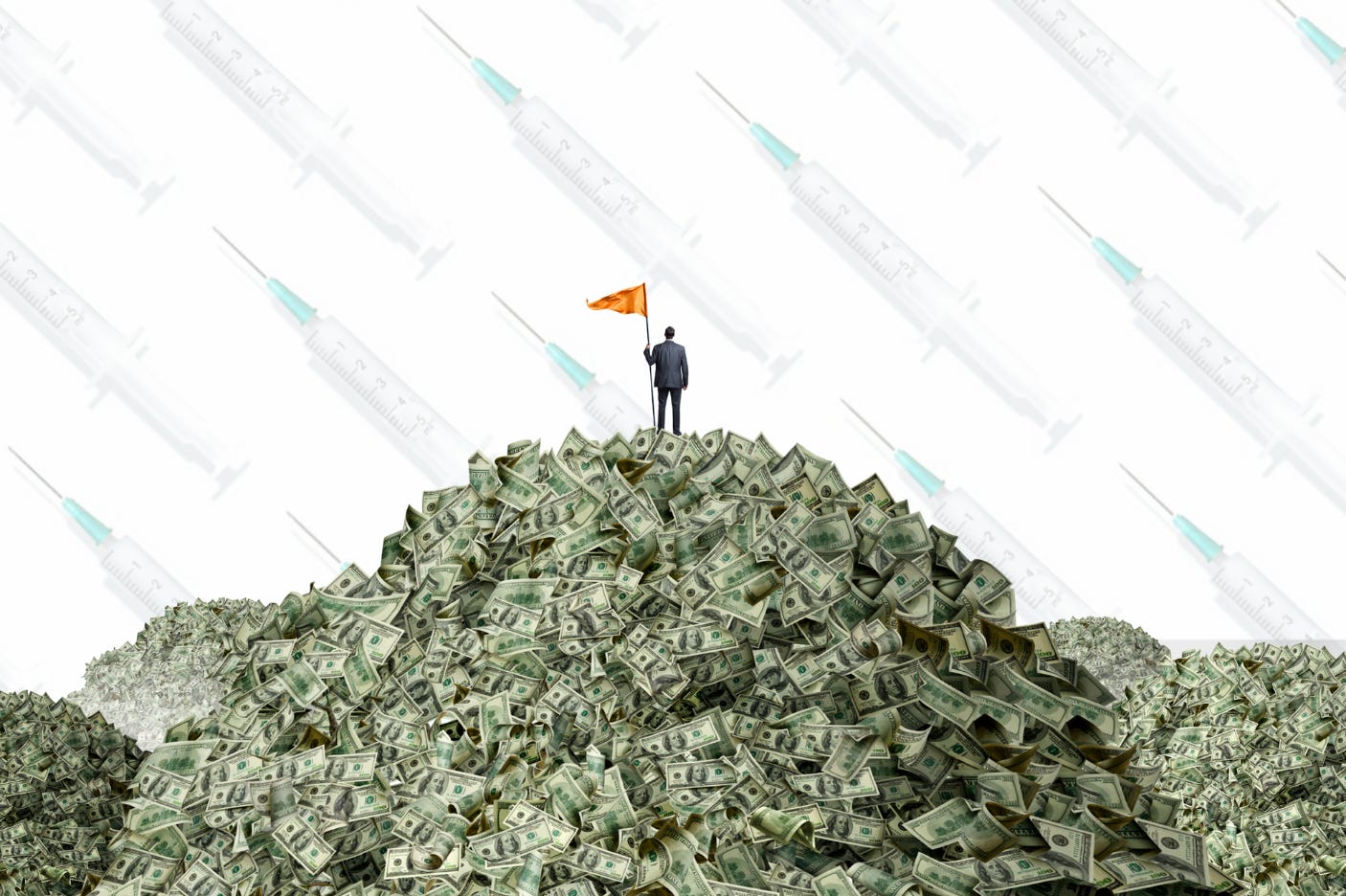
For decades, vaccines were seen as a low-profit product where financial benefits were limited, but that has dramatically shifted since the 1980s. Vaccines have evolved from being “common good” public health tools to becoming highly profitable commodities for private enterprise, propelled by patents and worldwide sales.
Additionally, when vaccines are added to the childhood immunization schedule, it significantly boosts sales and represents a major win for the manufacturer, often leading to positive impacts on the company’s share prices.
Today, vaccines fuel a thriving industry, serving as strong profit drivers for manufacturers and accounting for a significant share of their annual sales revenue.
According to a report by Fortune Business Insights, the global vaccine market is projected to reach a valuation of USD 178 billion by 2032. In recent years, the market was valued at USD 77 billion in 2023 and USD 86.06 billion in 2024.
For perspective, the vaccine market was worth approximately USD 170 million in 1982, with seven core products on the childhood vaccine schedule: diphtheria, tetanus, pertussis, measles, mumps, rubella, polio. Forty years later, there are over twenty vaccines available, with seventeen recommended for children by the time they reach 13 months of age.
If the vaccine market reaches USD 178 billion by 2032, it would reflect an extraordinary growth of about 104,606% over the 50-year period from 1982, representing a 1,047-fold increase!
But does this staggering expansion in the vaccine market translate into better health outcomes for children?
One could argue that if vaccines contribute to chronic conditions like asthma, ADD/ADHD, allergies, diabetes and autoimmune disorders, then the subsequent sales of medications to manage these potential side effects could represent a substantial additional revenue stream for pharmaceutical companies.
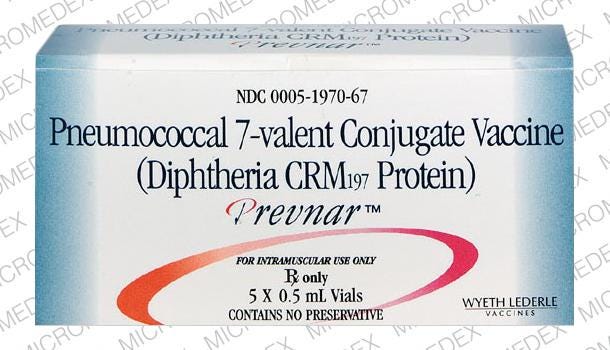
First approved in the US in February 2000 as the heptavalent pneumococcal conjugate vaccine (PCV7), Prevnar® was originally produced by American pharmaceutical company Wyeth/Lederle—acquired by Pfizer in October 2009.
The FDA approved this first version of Prevnar®—targeting seven serotypes of Streptococcus pneumoniae—in under 12 months and it was the very first vaccine to be granted FDA priority review status.
When it was launched in 2000, Prevnar® cost USD 232 for four doses and in the first year alone reached sales of USD 461 million. In 2001, the vaccine was granted a marketing authorization in Europe under the brand name Prevenar®, and in 2004 it reached over USD 1 billion in global sales, becoming the first ever blockbuster vaccine. In the March 31, 2004 edition of The Wall Street Journal, Prevnar® was reported as being “the most lucrative vaccine ever made.” Not only did Prevnar® become the first vaccine to reach this benchmark, but it also set a new precedent for vaccine market growth and profitability.

In 2022, the novel mRNA vaccine Comirnaty® generated USD 37.8 billion in annual sales thanks to the COVID-19 pandemic, and is Pfizer’s second best-selling product to date, behind statin drug Lipitor®. In 2021, the sales of Comirnaty® represented 45% of Pfizer’s total revenue.
The US price of the 2–3 primary dose blockbuster COVID-19 vaccine:
2020: $19.50 per dose
2025 CDC Vaccines-for-Children (VFC) program price: $65.45– $99.71 per dose
2025 Private sector cost: $77–$136.75 per dose
Comirnaty® alone accounted for approximately 37.7% of Pfizer’s total annual sales in 2022, which was also the first time a pharmaceutical company surpassed USD 100 billion in yearly sales.
Pneumococcal vaccine Prevnar® was the first ever vaccine to achieve blockbuster status in 2004. Since its 2000-approval as Wyeth’s PCV7, to the 2021-approved PCV20 by Pfizer, the Prevnar® family of vaccines remains a leading bestseller.
The price of the 4-dose regimen for children is:
USA retail/list price: ~$277 per dose
CDC VFC program price: $192.46 per dose
GAVI/UNICEF price: $3.30 per dose
In 2024, Prevnar® achieved annual sales of USD 6.4 billion, representing 10% of Pfizer’s yearly revenue.
In 2023, the 4-valent and 9-valent HPV vaccine Gardasil® achieved its highest annual sales to date, generating USD 8.8 billion. Gardasil® was Merck’s second best-selling product in 2023, runner-up to the best-selling medication of all time: the cancer drug Keytruda®—earning USD 25 billion.
The price of the 2-3 dose blockbuster HPV vaccine is:
USA retail/list price: ~$306.86 per dose (9-valent)
CDC VFC program price: ~$257 per dose (9-valent)
GAVI/UNICEF price: ~$4.55 per dose (4-valent)
Gardasil® alone accounted for approximately 14.7% of Merck’s total sales in 2023.
Moderna’s first ever commercialized product was poised to be a bestseller following the massive global demand at the height of the COVID-19 pandemic. In 2021, the mRNA vaccine Spikevax® generated USD 17.7 billion in annual sales, USD 18.4 billion in revenue for 2022, plummeting to USD 6.7 billion in 2023. In 2024, sales were “only” USD 3.1 billion.
The US price of the 1–2 primary dose mRNA COVID-19 vaccine:
2020: ~$15–$25 per dose
2022-2023: $30–$130 per dose
2025 CDC VFC program price: $78.28 per dose
2025 Private sector cost: $141.80 per dose
As Moderna’s sole commercial product until the launch of its RSV vaccine mRESVIA in 2024, Spikevax® accounted for 95.7% of Moderna’s total annual revenue in 2021, 95.3% in 2022, approximately 100% in 2023, and 86% in 2024.
The only vaccine on this list that is NOT recommended for children, but given to adults from age 50, Shingrix® quickly reached blockbuster status in its first full year on the market, generating over USD 1 billion in sales in 2018. By 2024, Shingrix® was achieving USD 4.56 billion in annual revenue.
The US price of the 2 dose shingles vaccine:
2025 CDC price: $124 per dose
2025 Private sector cost: $215.50 per dose
Since 2022, Shingrix® has represented around 10% of GSK’s total annual sales.
As reported in the WHO’s 2024 Global Vaccine Market Report, COVID-19 vaccines represented 27% of total global vaccine market value in 2023.
According to the International Federation of Pharmaceutical Manufacturers and Associations (IFPMA), as of July 2024, there were over 285 vaccines (preventive or therapeutic) under development by companies, either in clinical trials or awaiting review of the FDA.
In 2022, Pfizer’s total revenue was USD 100.3 billion, with its COVID-19 vaccine Comirnaty® generating USD 37.8 billion (37.6%) and other vaccines, including the Prevnar family, contributing USD 6.5 billion (6.5%). Vaccines represented approximately 44.2% of Pfizer’s total revenue that year.
In 2023, total revenue dropped to USD 58.5 billion. As COVID-19 vaccine sales declined, the proportion of revenue from all vaccines, including Comirnaty® and Prevnar®, was estimated to be around 30–35% of the total.
For 2024, Pfizer’s reported revenue was USD 63.6 billion, with vaccines accounting for an estimated 25–30% of overall sales.

If you want to discover more, watch this 40-minute fireside chat with Pfizer CEO, Albert Bourla, at the 2025 J.P. Morgan Healthcare Conference.
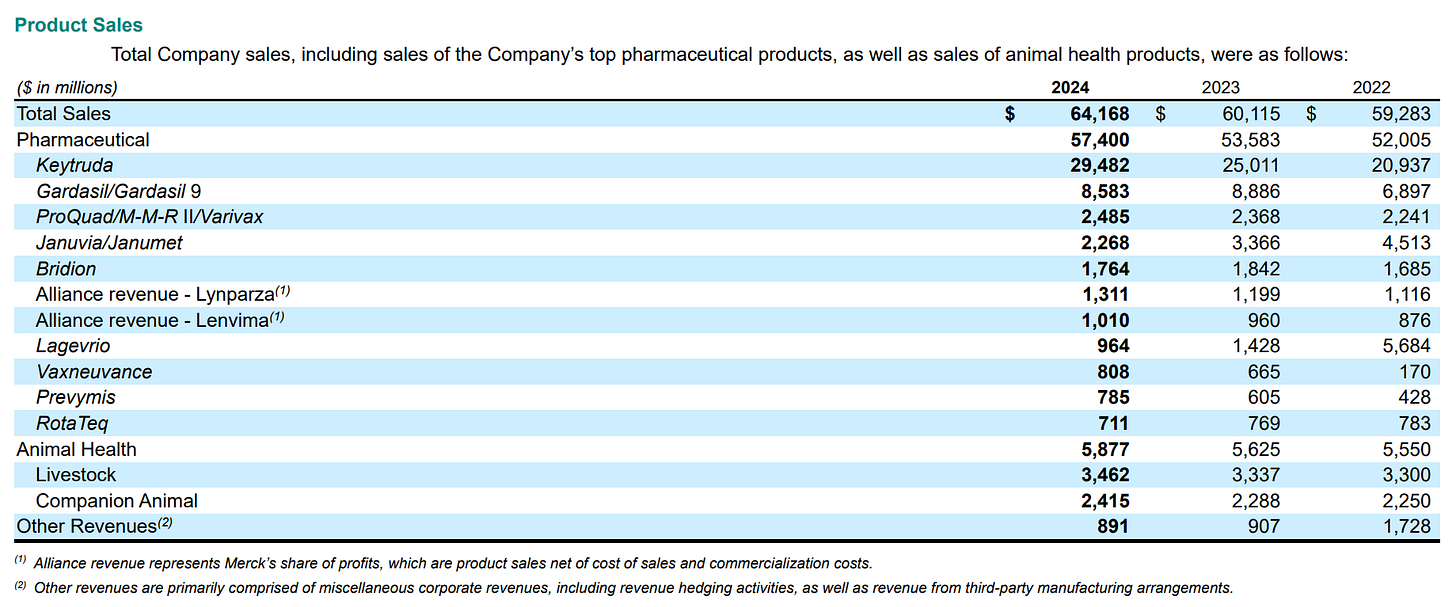
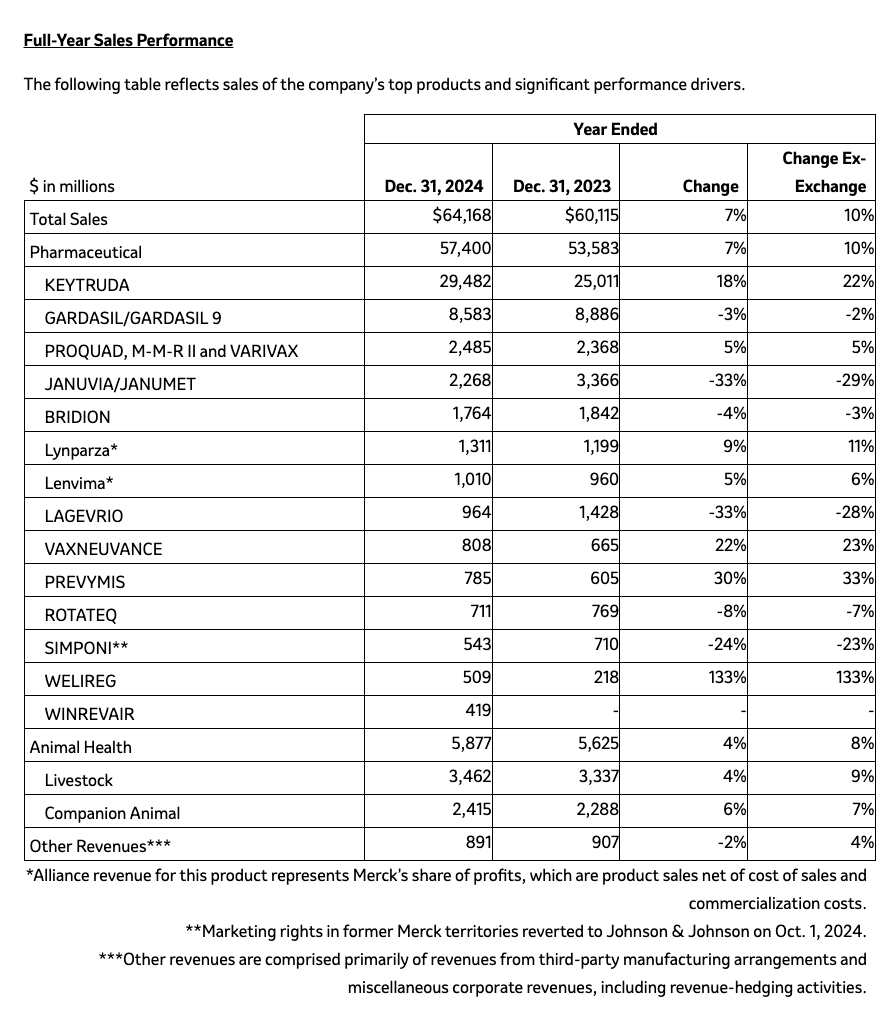
Based on the 2024 financial results from Merck's report, vaccine sales—which include Gardasil/Gardasil 9 and other vaccines like ProQuad®, MMR-II®, RotaTeq®, Vaxneuvance® and Varivax®—totaled approximately USD 12.6 billion. This represents about 19.6% of Merck's total sales of USD 64 billion in 2024.
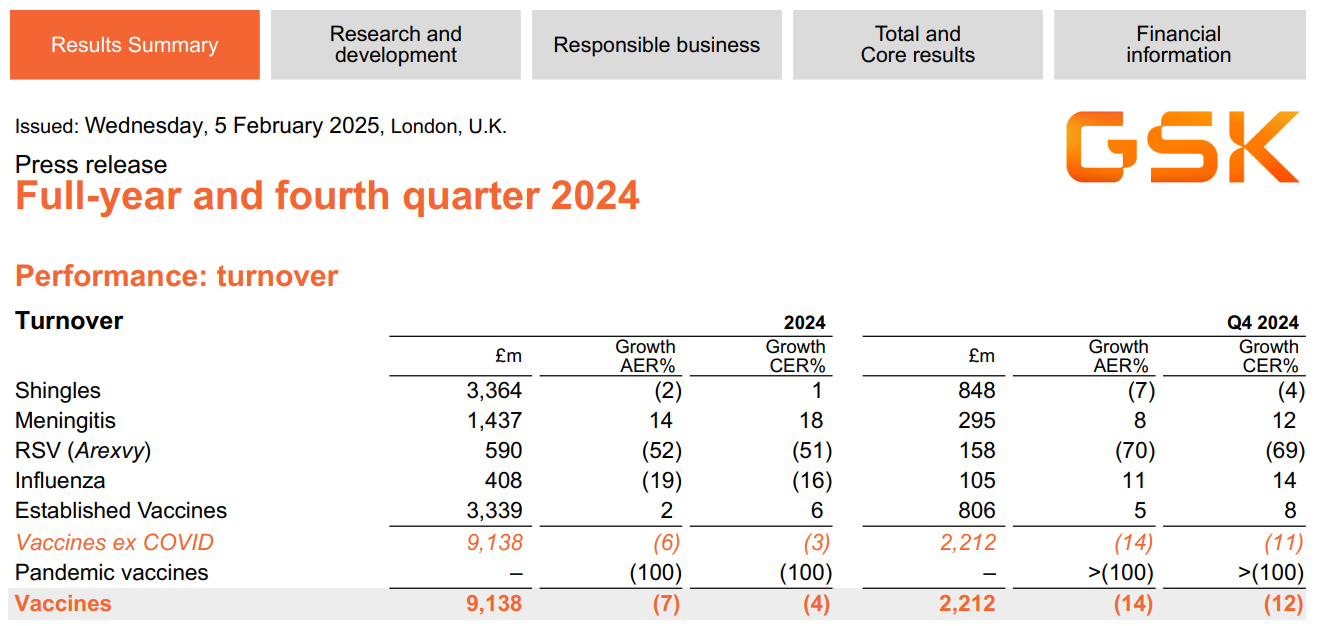
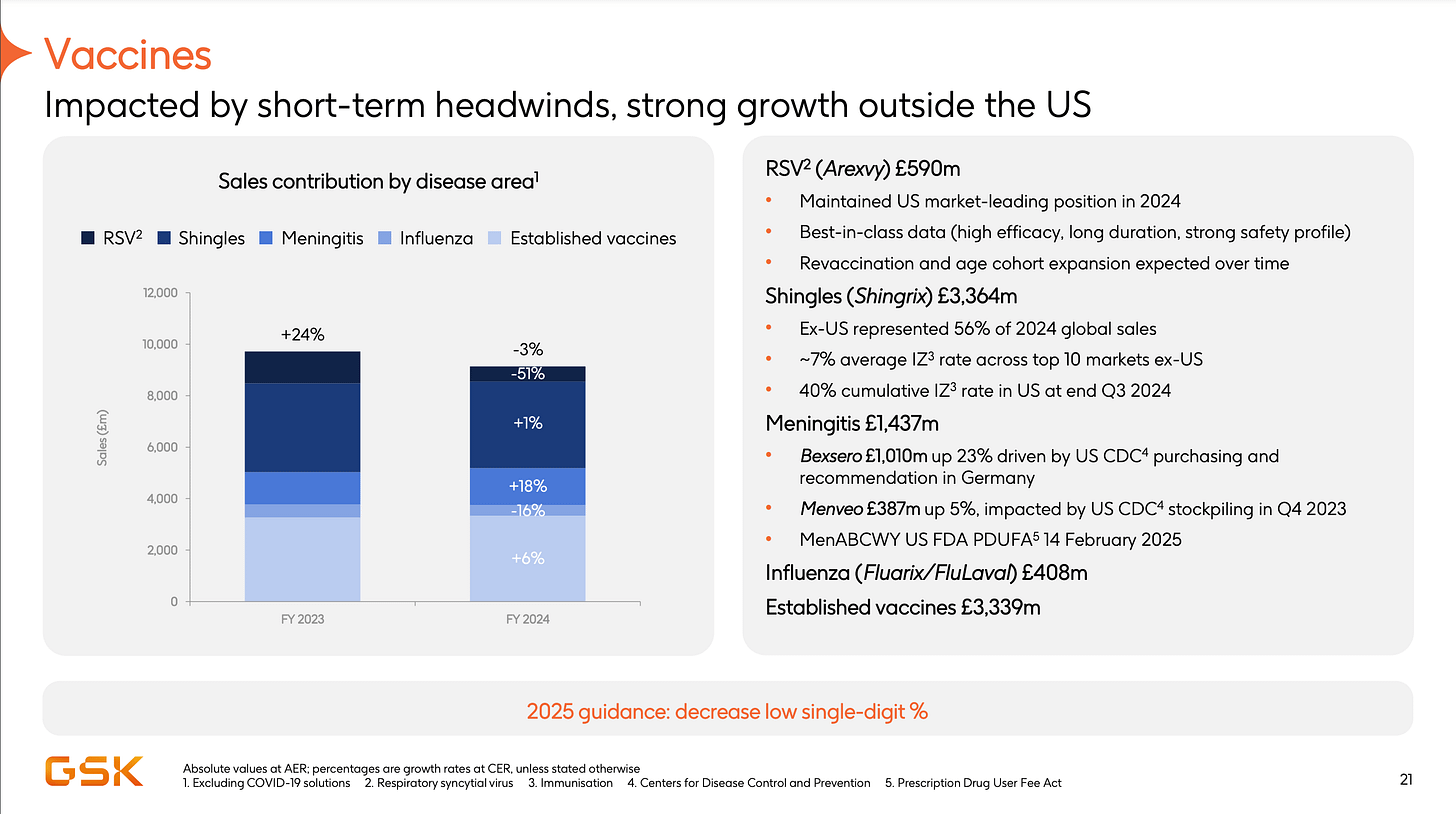
Total sales revenue in 2024 was approximately USD 39 billion, of which vaccines represent roughly 29%, or USD 11.252 billion. The company’s vaccine portfolio includes seventeen products, led by its bestseller Shingrix®. GSK also generates strong annual sales from its meningitis vaccines, Bexsero® and Menveo®, while the RSV vaccine Arexvy® contributes solid revenue with promising potential for future growth.
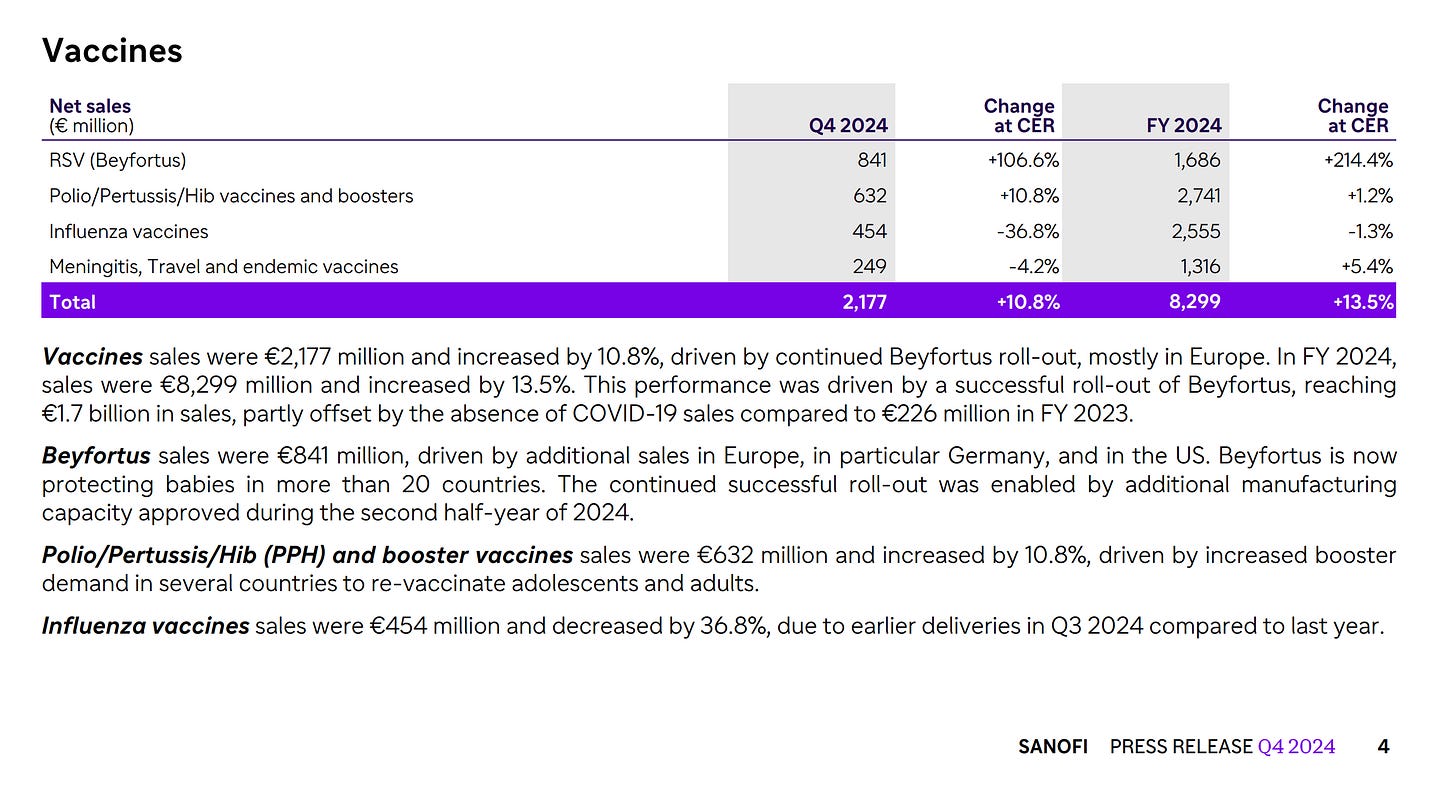
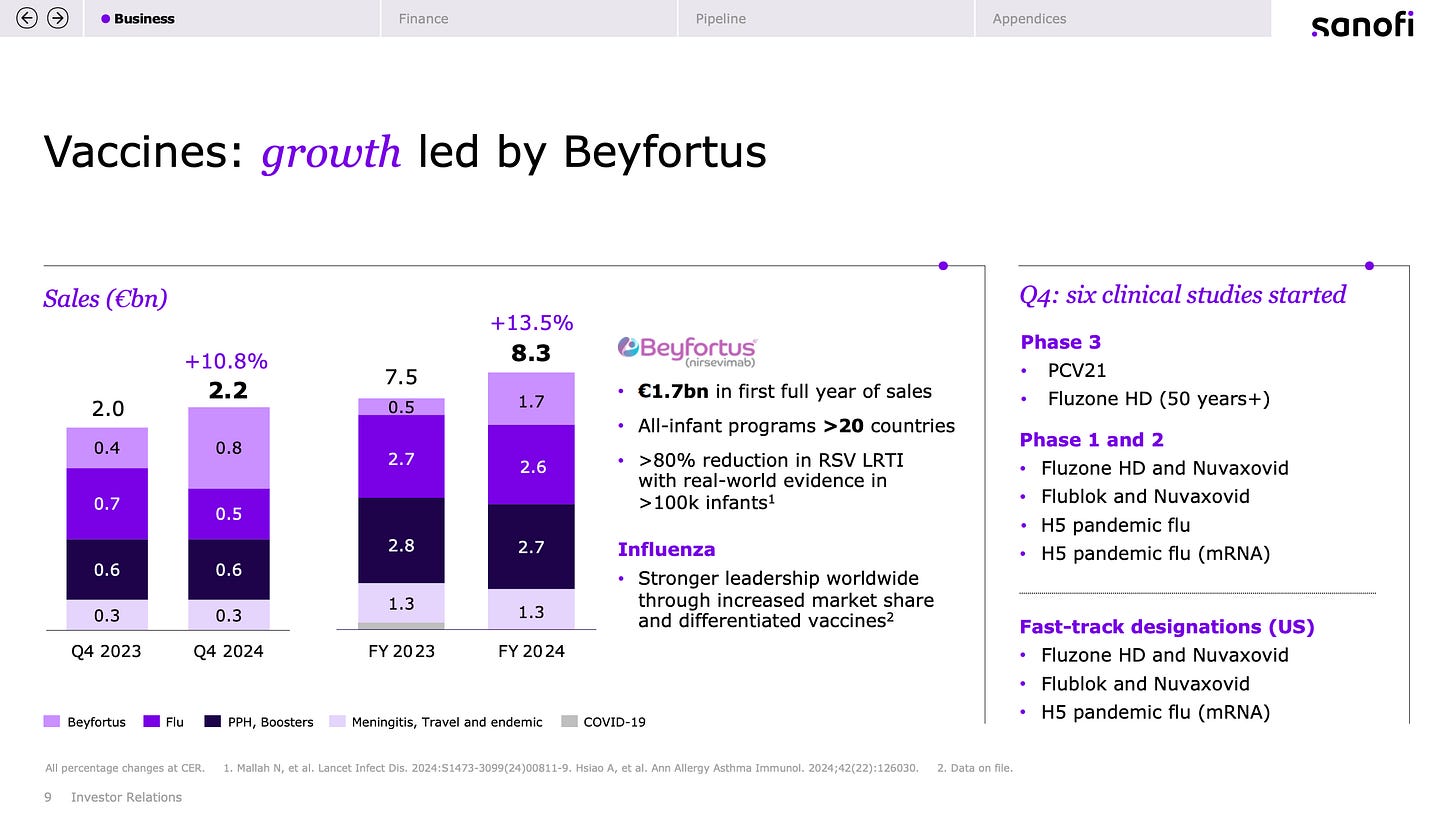
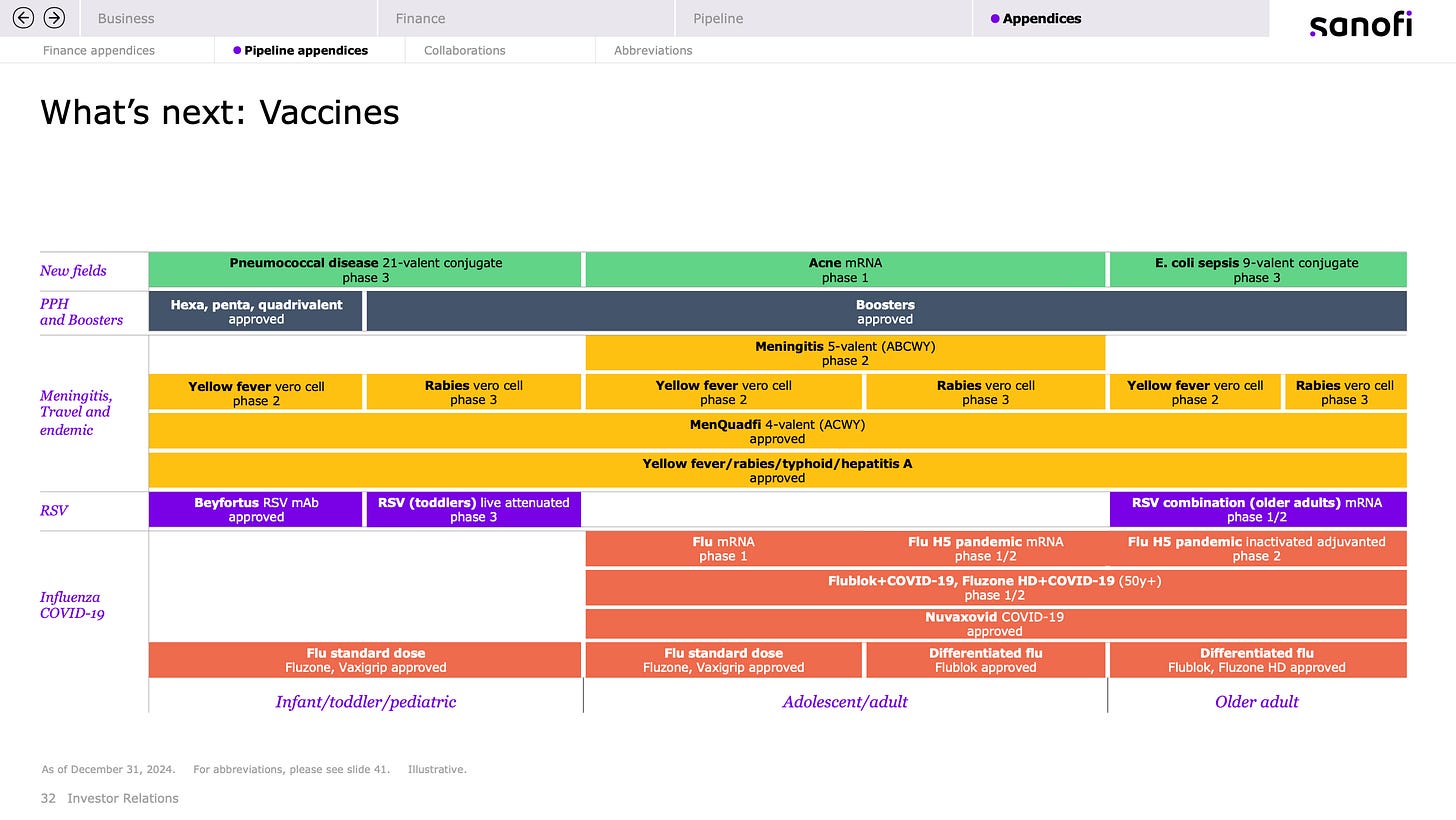
In 2024, total sales revenue in was approximately USD 42.6 billion, with vaccines contributing roughly USD 8.6 billion, or 20%. Sanofi’s best-selling vaccines include its polio/pertussis/Hib and influenza vaccines.
Since 2023, its expensive (~USD 556 per dose) monoclonal antibody RSV product Beyfortus®, misleadingly labelled a “vaccine,” is recommended to newborns, and achieved USD 1.86 billion in sales in its first full year of commercialization.
No posts
Comments
Nothing yet. Say the first thing.
Sign in to join the conversation.