
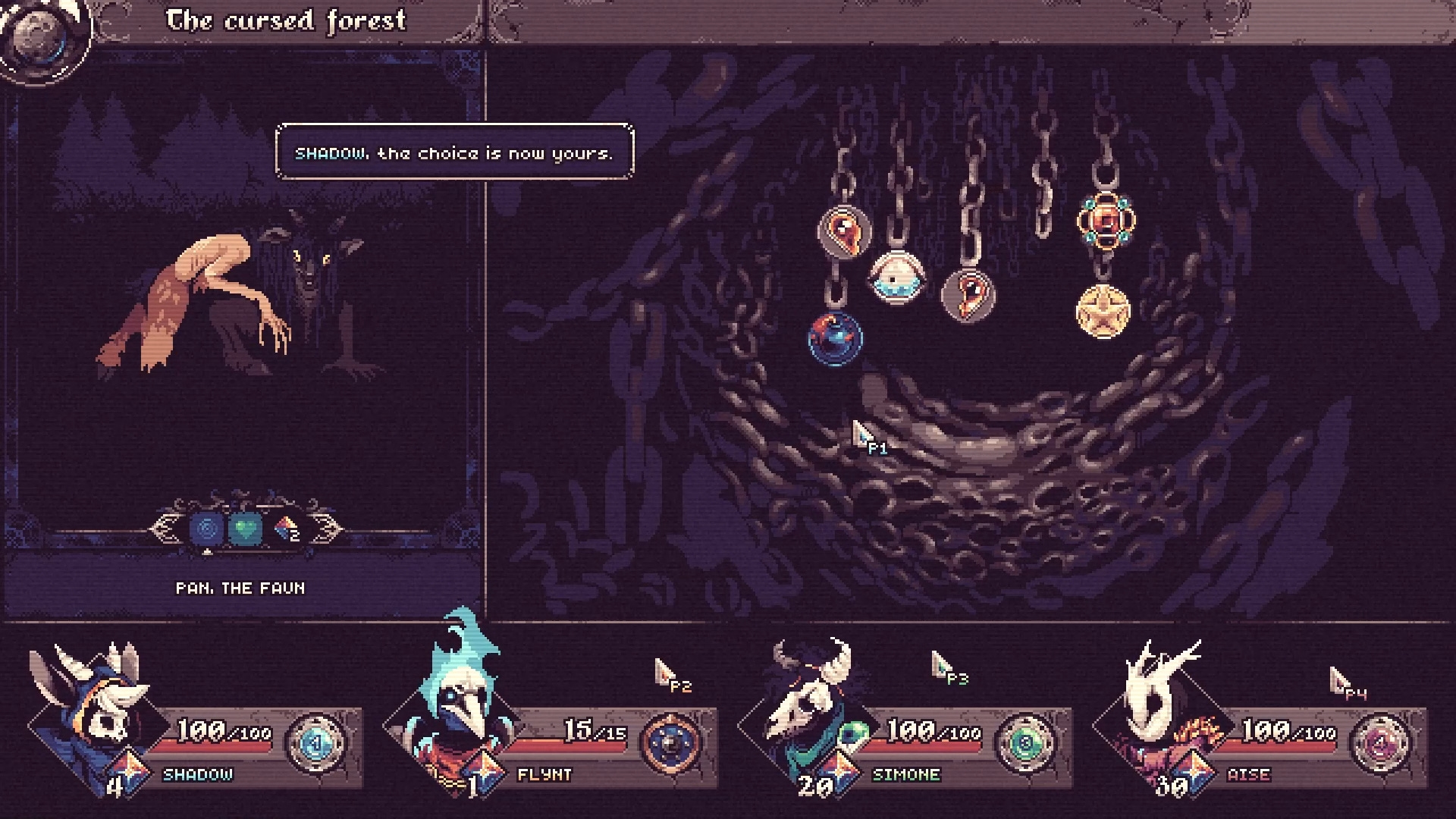
In 2023, we began working with Suzy on our first commercial video game, Another Door, a game centered on gambling and betrayal. The primary platform for its release is Steam, which currently boasts 132 million monthly active users.
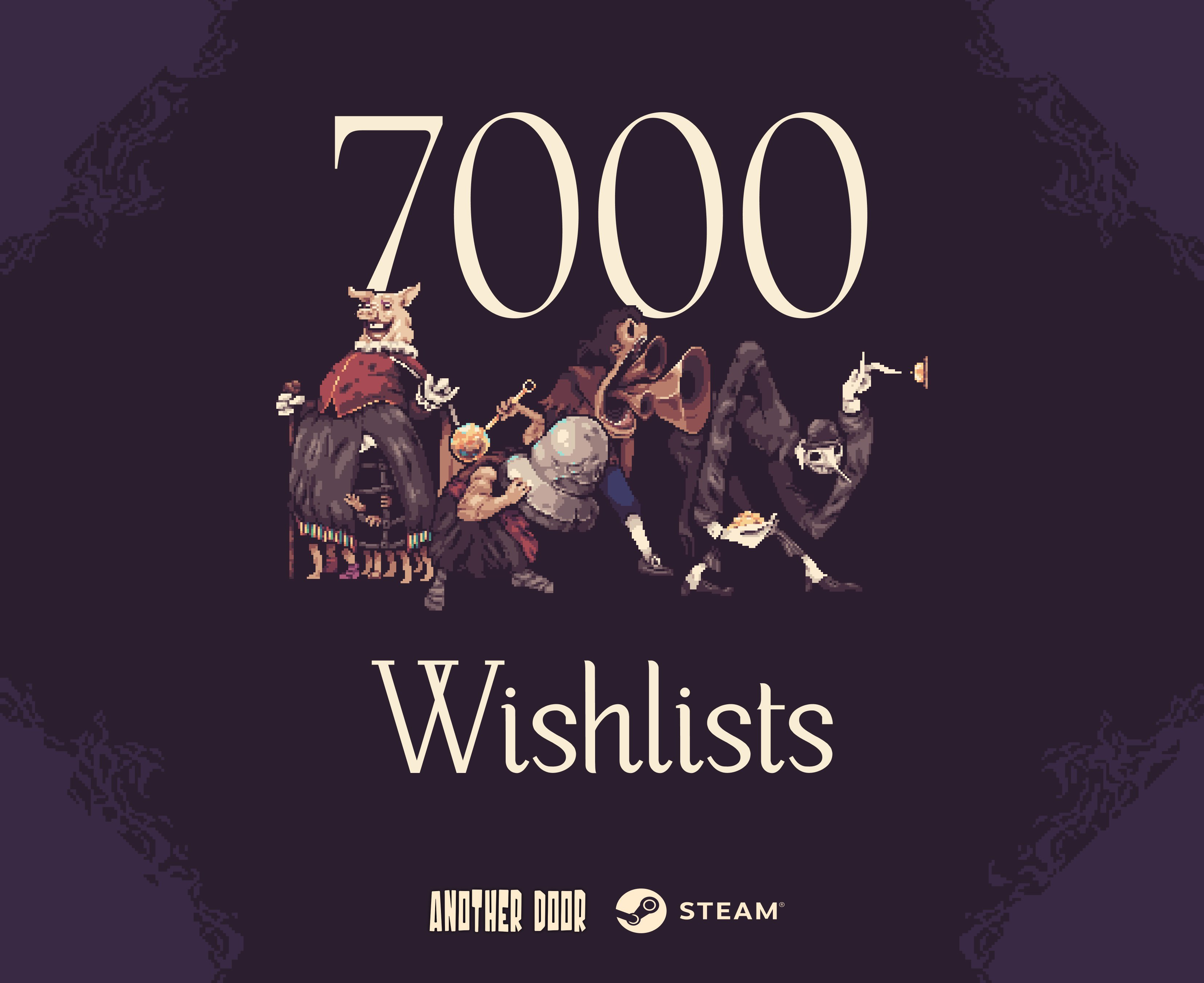
Yesterday, on November 19, we hit a significant milestone: our game reached 7,000 wishlists. So, how did we get here, and what does this mean for us? Let’s break it down.
I missed writing. It’s been a while since my last newsletter #21: Creating a Harmonious Color Palette: Tips and Resources dated June 4, 2025. I’ve been overwhelmed with game development and publisher research (more on that soon, stay tuned), and the focus of my newsletter no longer aligned with my current work.
As a full-time indie developer, my days revolve around building an entire game, not just UI design. Writing solely about UI felt like covering only 5% of my journey, which was frustrating.
I hesitated to expand into broader topics like development, design and marketing, fearing I’d lose followers who subscribed only for UI content. But I’m setting that fear aside and will start sharing more of what fills my days, beginning with this piece on how we reached 7,000 wishlists for Another Door.
Steam is an incredible platform for reaching gamers. For a relatively low cost ($100), you can create a game page and access millions of potential players. On these pages, users can add games to their wishlist, a collection of titles they’re interested in, whether upcoming or already released.
A wishlist addition is essentially an “I’m interested”, which is a positive signal but not a guaranteed sale. For developers, wishlists serve several functions:
Metrics: They help gauge interest in the game.
Reminders: Users receive an email when the game launches.
Tracking: Users are notified of price changes.
This feature is vital because, as any indie developer knows, marketing is half the battle. Even the best game is meaningless if no one knows it exists.
There’s a well-known threshold in the indie game world: 7,000 wishlists. This number often determines whether a game is ready for launch. Reaching it suggests:
Interest: We’re so happy that over 7,000 players are intrigued by our game.
Momentum: It increases our chances of appearing in Steam’s “Popular Upcoming” section, boosting visibility.
Validation: Our design and concept are resonating with players.
Effective marketing: Our recent efforts are paying off.
And it is on this last point that I will focus today.
On the famous blog of “How To Market A Game” someonce once said:
However, if you are sitting at 3000 wishlists despite at least 6 months of trying EVERYTHING to get your game seen and nothing seems to be working, it might be time to just release it.
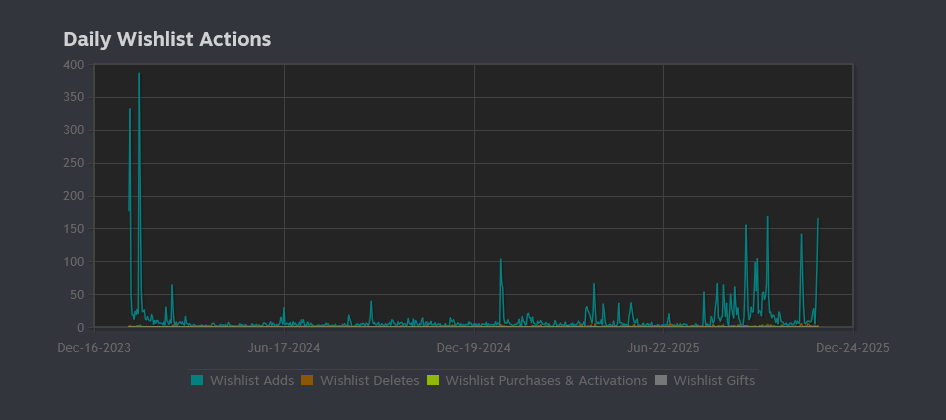
We kept this in mind when we launched our Steam page in January 2024. Here’s how our wishlist growth looked from launch to six months later:
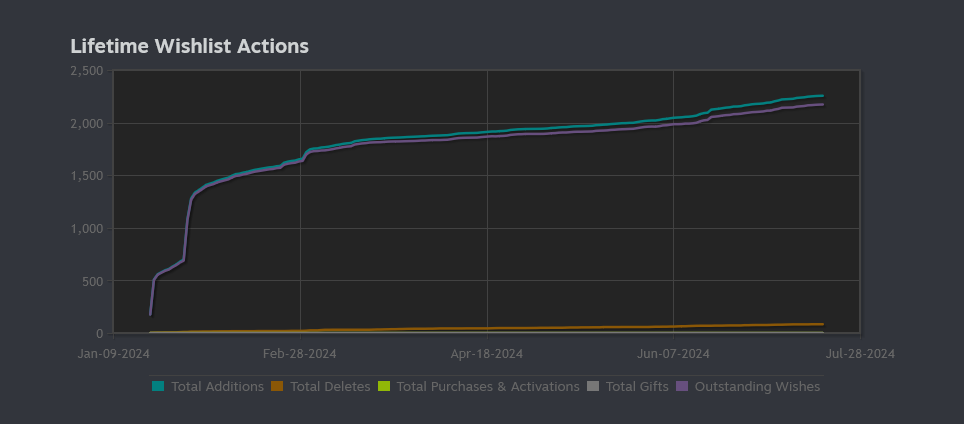
Initially, we saw a spike, but growth slowed significantly afterward.
Did we try everything? Not at all. We were consumed by development, playtesting, and art direction, often neglecting marketing, assuming a few weekly tweets would suffice. Spoiler: it wasn’t enough.
In January 2024, our Steam page was minimal: a basic description, no trailer, and a few screenshots.
Fortunately, a Japanese Twitter account spotted us, and their post garnered over 300,000 impressions and 2,000 likes. We believe this single post accounted for nearly all of our first 1,500 wishlists in under a month.
It was a strong start and validated our idea.

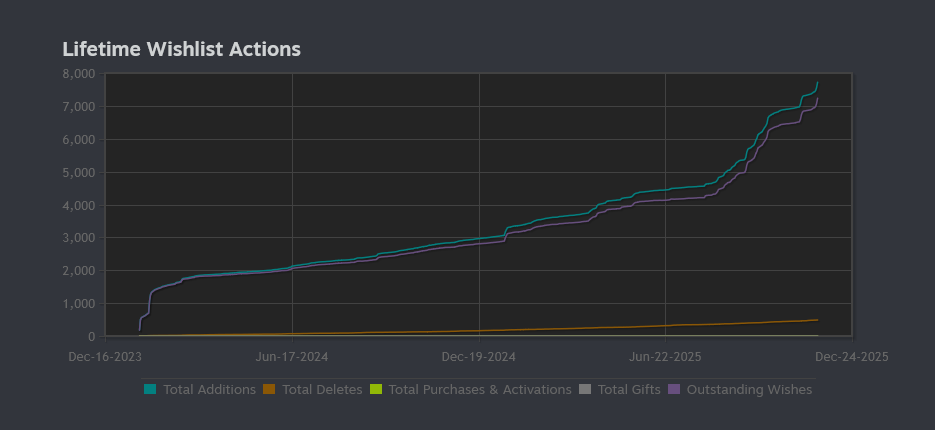
From February 2024 to August 2025, we added just 2,500 wishlists, reaching a total of 4,000. With minimal marketing, just a few tweets and local events, it was encouraging to see organic interest. But we knew we needed to do more.
After August 2025, we made key changes:
Updated the Steam page with a trailer, new screenshots, and a revised description.
Posted daily on Twitter, Threads, and Bluesky.
Followed trends more closely.
Reused successful content repeatedly.
Celebrated milestones more frequently.
The results speak for themselves. Instead of relying on viral posts for spikes, we built steady, daily growth. People often ask what specific actions drove our wishlists. The truth? We didn’t do anything groundbreaking. Consistency and focus were key, along with the advantage of Suzy’s appealing pixel art style.
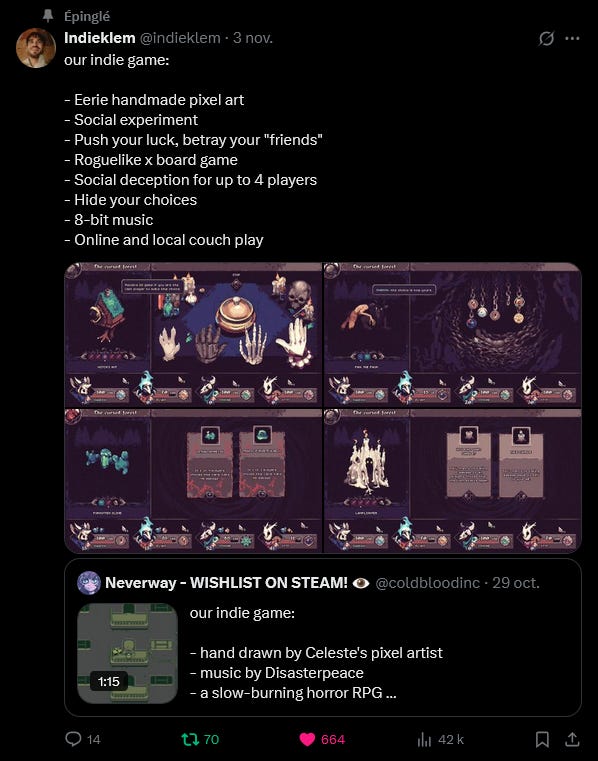
For example, a recent post that performed well was simple: no hashtags, just a mix of in-game screenshots and keywords, reposted by someone else, a tactic that seems to work well on Twitter.
We’re aiming for a Q4 2026 launch, giving us plenty of time to ramp up marketing. Here’s what’s next:
Reaching out to content creators and press.
Releasing a demo and participating in Steam festivals.
Experimenting with TikTok and YouTube Shorts.
Writing more newsletters.
Continuing daily posts on Twitter, Threads, and Bluesky.
I have 20,000 wishlists in mind for launch. Let’s see if we get there!
From 0 to 1.500 wishlists
⌛ In less than 1 month
▶ Thanks to a viral post from a Japanese content creator linked to our Steam page launch.
From 1.500 to 4.000 wishlists
⌛ 1 year and half
▶ With minimal marketing and a couple of local events.
From 4.000 to 7.200 wishlists
⌛ 3 months
▶ Posting daily, updating the Steam page, and reusing successful content.
From 7.200 to ??? wishlists
To be continued.
Thanks for being part of this adventure with us! If you’re curious to see how Another Door unfolds, want to chat with the team, or just love games about gambling and betrayal, we’d love to have you along for the ride.
Join us here:
Discord – Hang out, share your thoughts, and be the first to hear our updates
Steam page – Wishlist the game and stay tuned for the launch.
Every other link – For everything else.
Comments
Nothing yet. Say the first thing.
Sign in to join the conversation.