
In the last post on Monasticism in Britain, we left our story at 660AD; a mix of monasteries - British, Roman, Irish - had begun to spread across the British Isles. The Irish monks were great evangelisers, but they brought with them their own practices. We have very little written evidence from the period, but while many Christians found the religious practices of the Irish praiseworthy and adopted some of them, there was still a divide in Britain.
In this and the next post I am going to look at the period up to 800 AD, when the Viking raids began and changed the monastic landscape. This time we will look at the country generally, consider how many saints were active and look at some architectural remnants from that period. In the next post we will look at some monastic architecture that survives.
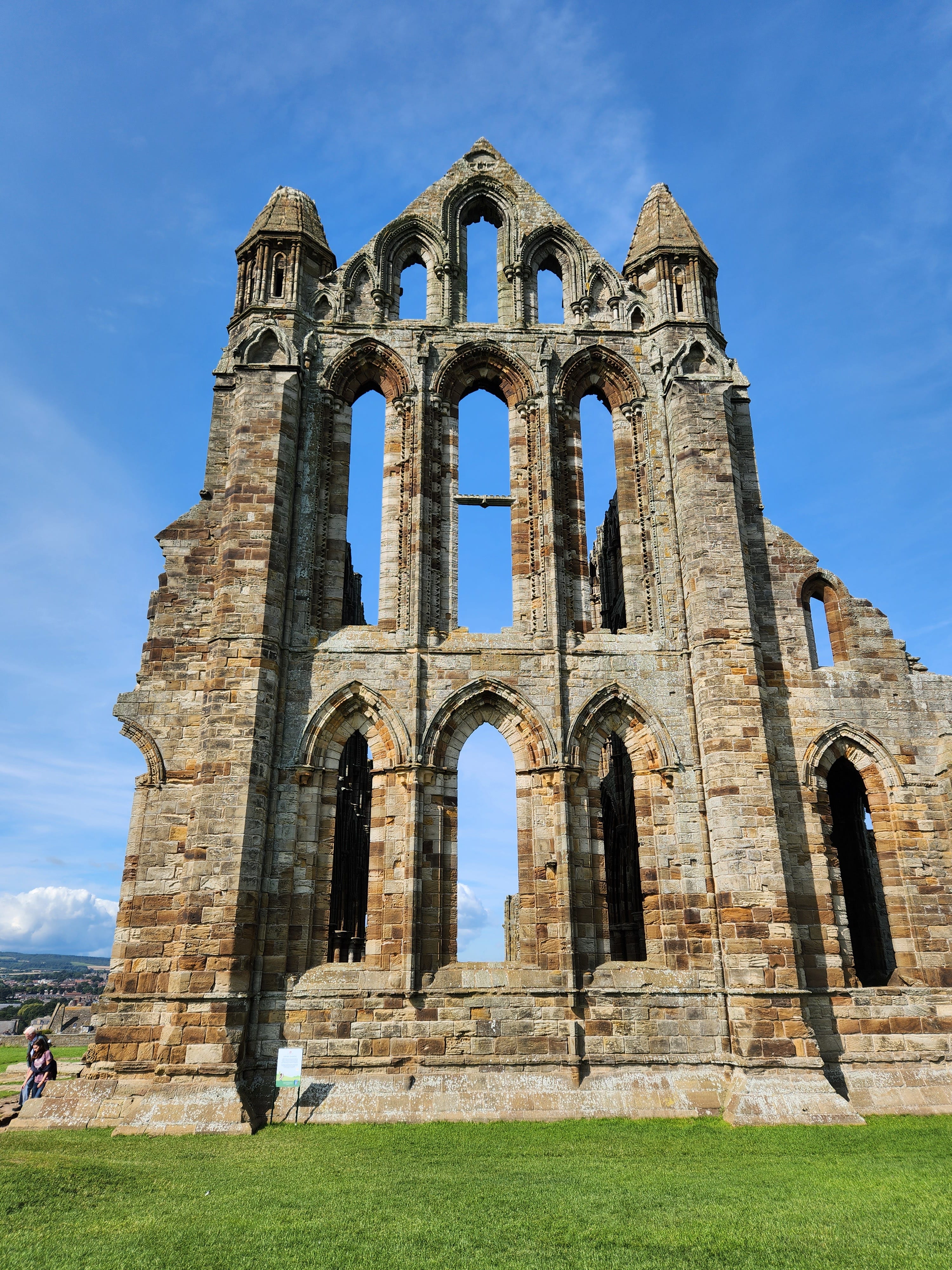
The east end of Whitby Abbey, a very active monastery in the 7th century, though the surviving ruins are from much later.
The religious divide was brought home physically in the household of King Oswy, where he and his wife celebrated Easter on different days, according to the different calculations practised by Rome and Iona.
A young St Wilfrid and a similarly young St Benedict Biscop made frequent trips to Rome, bringing back books, chant and other Roman practices such as veneration of relics in the catacombs.
Wilfrid took over a recently founded Irish monastery at Ripon, but he brought Roman customs and built a new monastery in the place where Ripon Cathedral now stands.
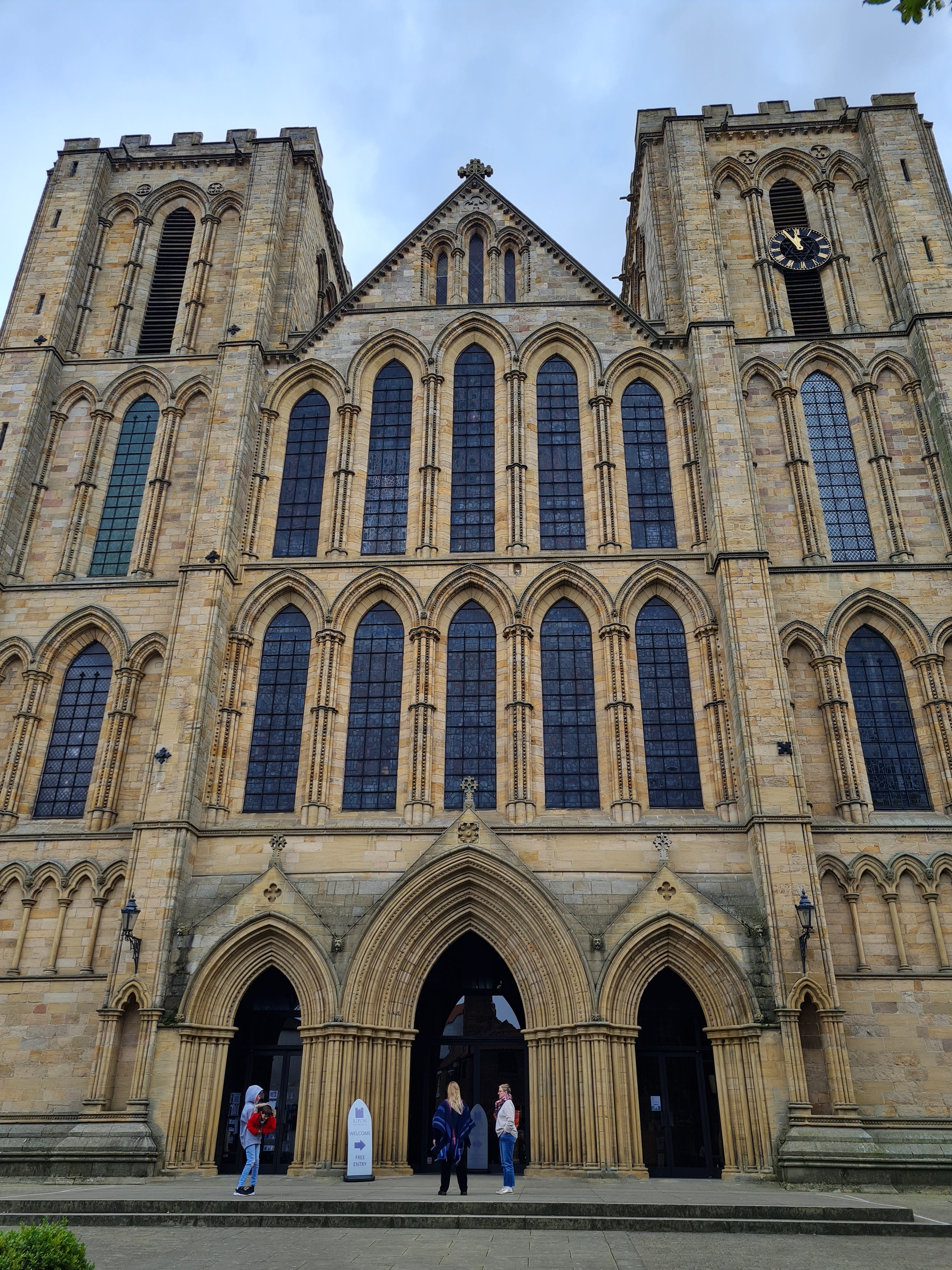
The west end of Ripon Cathedral, which most likely stands on the foundations of the Irish monastery founded there first.
Wilfrid was a key player in the Synod of Whitby in 664, which brought to a head the untenable situation; the north of the country was rule by St Columba’s monastic descendants, with the south under the control of the Archbishop of Canterbury. Colman, bishop of Lindisfarne, wanted the Irish timekeeping of Easter to be maintained, along with the Irish tonsure (shaving the front of the head) instead of the Roman tonsure (shaving the crown of the head). The Synod of Whitby was convened to address these issues.
This is how the Synod is always portrayed but there was another issue in play here; how a Christian country is structured and governed. As we have seen before, the Irish did not have a diocesan structure which we would recognised; instead monasteries would be based on clans, and the abbot of the monastery would nominate bishops, who were not attached to sees but roamed around. This was the opposite of the Roman system; bishops fixed in a see, with authority over their area and where monasteries, while having some independence, were also subject to the authority of a bishop. The fundamental question here was - should Rome or Iona direct the church in Britain?
“A Short History of the English People” by John Richard Green (1915) recounts the conversation at the Synod as this:
The one disputant [Colman] appealed to the authority of Columba, the other [Wilfrid] to that of St Peter. “You own,” cried the puzzled king [Oswy] at last to Colman, “that Christ gave to Peter the keys of the kingdom of heaven - has he given such power to Columba?” The bishop could but answer “No.” “Then will I rather obey the porter of heaven,” said Oswy, “lest when I reach its gates he who has the keys in his keeping turn his back on me, and there be none to open.”
The decision of the Synod of Whitby to adopt fully the Roman practices in terms of the timing of Easter, the tonsure and general governance had long-lasting and transformative impacts on the Church in Britain. Colman and most of his monks left for Iona and from there back to Ireland; the ties between the English and Irish church were effectively broken for a while.
Many thanks to paid subscribers for their support and welcome to new subscribers! With your support I am able to make donations to help preserve our ancient churches, including a current appeal for funds for Michaelchurch which I wrote about recently - money needs to be spent to preserve the 13th century wall paintings for the future. So thanks for your support!
Comments
Nothing yet. Say the first thing.
Sign in to join the conversation.