
So, you’ve had a few VC meetings. You’re getting some radio silence, some vague declines and the classic “too early” feedback. If you’re like most founders, you’ve probably found yourself staring at those two words in an email and wondering what they actually mean.
Is it a polite brush-off, a way to sidestep uncomfortable truths, or a signal of something more, something worth revisiting down the line?
I’ll admit it: there have been times when an email, buried deep in my inbox, sat there for so long that responding became more awkward with each passing day. And it’s not just me. VCs sometimes withhold detailed feedback - pressed for time, unable to offer the depth they might wish. Other times, they may need to do additional research on a specific vertical but lack the time, unconsciously relying on cognitive biases to fill in the gaps.
But here’s the thing: even when a response does come, it’s often easier to leave the door ajar than to shut it entirely. In some cases, you’ve been “friend-zoned” for now - kept in the periphery. But by keeping the door open, we preserve goodwill, maintain the relationship, and leave space for future conversations.
The truth is, providing candid feedback is never simple. It feels especially risky when it’s written down. A startup is personal - it’s a founder’s heart and soul on display - and there’s little incentive to offer criticism that might sting. The delicate balance between honesty and empathy is a challenge every investor faces.
Much like dating, the feedback you receive also often reflects the level of time and effort invested in getting to know you. Some get a well-thought-out response, while others get the VC equivalent of a polite “sorry, just not feeling a spark.”
If it’s been a quick coffee date - a brief intro call, perhaps - you’re more likely to hear a generic response: “too early” or “not the right fit.”
But if the VC’s essentially “met the family” - spending hours reviewing your data room, meeting your team, engaging in back-and-forth Q&A - you can and should reasonably expect more substantial, detailed feedback.
Even then, though, the nature of the feedback can vary. In some cases, despite deeper conversations, a VC might still lean toward polite ambiguity, carefully avoiding the risk of conflict or misunderstanding depending on the relationship that’s formed.
Other times, it’s less about hesitation and more about the long game - like someone who’s interested but not ready to commit just yet, they might want to see how things develop, tracking the founder’s progress and building a deeper connection before making a move.
Sometimes the issue isn’t your startup at all. Rather, the VC’s own constraints:
Maybe their fund is nearing the end of its cycle, with limited capital left to deploy.
Maybe they’re hesitant about your sector - everyone struggles with marketplace businesses until one takes off. A sector-agnostic investor might pause when faced with an unfamiliar industry, even if the numbers look good.
Or maybe it’s just a matter of scale. A large fund might need to write bigger checks than your stage allows, or they simply prefer later-stage bets, where the risk is lower and the path to growth is clearer.
Investors also take meetings with founders - not just to write cheques, but to stay ahead. They want to build relationships, spot the next big trend, offer strategic value through introductions, and gather insights that might give their portfolio an edge. These external factors are beyond your control, but they shape the feedback you receive. Understanding them can make all the difference.
Especially for early-stage investors - whether funds, angels, accelerators, or scout check writers - the phrase “too early” can feel maddeningly vague. But more often than not, it’s a signal, rather than a dismissal. Maybe the product-market fit isn’t there yet. Maybe the go-to-market strategy is unclear, demand is still unproven, or the team is missing a critical piece.
But here’s the catch: what “early” means isn’t universal. A seed-stage company in one market might look like a pre-seed company in another. Investors define stages differently based on geography, competition, and their own portfolio strategy.
Founders, of course, want to aim high. The temptation is always to push for a bigger round, a larger cheque, a valuation that stretches expectations. But investor feedback is more than just a hurdle - it’s a map. It shows where the market sees you, how your traction stacks up, and what needs to happen before the right investors say yes. Because in the end, “traction solves all problems” - but only if it’s the kind of traction investors are looking for.
But the equation isn’t just about familiarity - it’s also about how much information an investor needs before they can make a decision, and that varies. Some VCs move quickly, drawing conclusions from a handful of data points, while others require a more exhaustive set of proof before they’re comfortable writing a check.
Another layer to consider is how much diligence the VC is willing to undertake. Some investors adopt a “wait and see” approach - particularly if they’re skeptical about your market or believe they can enter later when the risk is lower. In these instances, “too early” may simply serve as a placeholder for “show me more progress”.
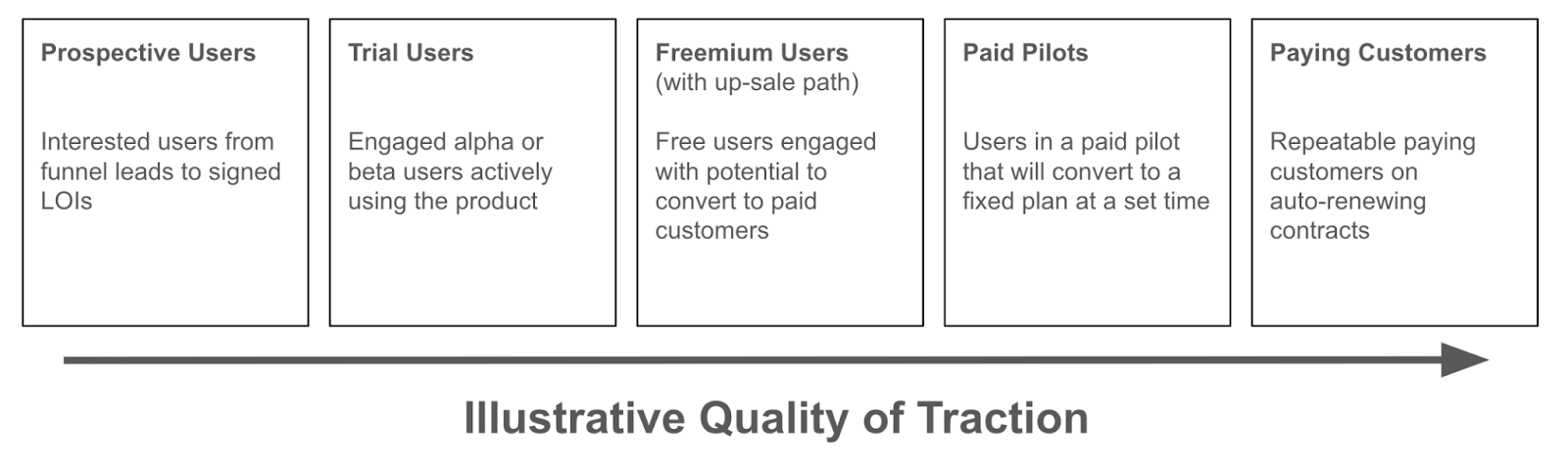
That being said, progress isn’t just about hitting milestones - it’s also about the pace at which you hit them. Move fast enough, and even the skeptics start paying attention. Move too slowly, and “not yet” starts to sound a lot like “never.”
When investors say “too early,” it can feel like an open-ended dismissal. But instead of taking it at face value, founders should treat it as an opportunity to gather insight. Ask the VC: What would make you reconsider?
Are they waiting for a revenue threshold, a jump in daily active users, or a key partnership that signals market validation? Understanding whether they prioritize hard KPIs (e.g., ARR, retention rates, CAC) or broader qualitative signals like team strength or product-market fit will help you focus on what truly moves the needle.
And don’t stop at a one-time conversation. Ask how often you should check in and what type of updates would be most relevant. Fundraising isn’t just about the pitch—it’s about staying on an investor’s radar so that when the timing is right, they already know your trajectory.
A rejection, even a polite one, isn’t the end of the road - it’s a starting point. Every “too early” is a chance to refine your approach, strengthen relationships, and align more closely with investor expectations. The “right time” isn’t a fixed moment; it’s something you can actively create by hitting milestones, demonstrating traction, and keeping VCs engaged.
To turn passive interest into real momentum:
Send periodic investor updates with meaningful progress and key wins.
Build relationships through informal check-ins - not just when you need money.
Be strategic about re-engaging after major milestones to show you’re executing.
The goal is to turn feedback into action - it’s to make sure the next time you pitch, “too early” is no longer part of the conversation. Because the real difference between a “no” and a “yes” isn’t just time - it’s progress.
Comments
Nothing yet. Say the first thing.
Sign in to join the conversation.