
💡 Which medical specialty is experiencing the most dramatic technological change?
Some might say radiology, and for good reason: AI and machine learning are revolutionizing this field! ⚡️
With the record number of approvals for AI-based tools dedicated to radiology in Europe and the US (far ahead of all other medical specialties combined), this trend is just getting started.
The impact on medical practice and patient care is immense: faster workflows, enhanced diagnostic accuracy, and better-informed clinical decisions!
🤖 As we enter the era of “multimodal” models—capable of interpreting diverse data formats like voice notes, images, videos, and texts—we can only expect this evolution to accelerate even more in the coming months and years!
🎙️ In our latest episode, we explore this transformation with Dr. Amine Korchi, a Swiss radiologist, entrepreneur, and investor pushing the boundaries of what’s possible in medical imaging.
23andMe: Genetic Insights or Privacy Nightmare?
23andMe is a pioneering firm in direct-to-consumer genetic testing services, promising to unlock every individual’s DNA secrets.
With a saliva sample, they provide insights into your ancestry, health risks, and even potential genetic conditions.
Sounds amazing, right?
But here's the catch: In October 2023, 23andMe suffered a major data breach, exposing millions of users' sensitive genetic information, which raised serious questions about data security and privacy.
While the firm touts the benefits of building a vast genetic database for medical research, it's worth asking:
Who benefits from your DNA data?
How secure is your most personal information?
Could your genetic data be used against you in the future?
As genetic testing becomes more common, we're entering uncharted territory, with companies needing to display the greatest level of caution to ensure clients’ data remain in good hands.
With the potential to tailor diagnostics and treatments at an individual level, the promise of mass genetic testing and personalized medicine is enticing, but at what cost?
🔍 Advancements in Cancer Immunotherapy: The Role of Intelligent Nanocarriers
Recent innovations in intelligent nanocarriers (microscopic drug-carrying shuttles) are transforming cancer immunotherapy by enabling precise targeting and modulation of immune responses.
These advanced drug delivery systems, designed with immune-targeting moieties or responsive properties, can effectively transport immunomodulatory agents, antigens, and adjuvants to key areas within the tumor microenvironment (TME) or directly into immune cells. This targeted approach enhances bioavailability and stability while minimizing side effects.
The potential of nanotechnology is evident in clinical trials, where lipid-based mRNA vaccines (👋 COVID-19) and protein-based cancer vaccines have demonstrated safety and efficacy. For instance, the intravenous administration of the RNA-LPX vaccine has shown promising results in patients with unresectable melanoma, leading to durable responses when combined with PD-1 checkpoint inhibitors. Similarly, novel formulations targeting specific neoepitopes (peptide class recognized by the immune system as dangerous) are being evaluated for their capacity to induce robust T-cell responses.
Despite these advancements, challenges persist. Issues such as tumor resistance to immunotherapy and off-target toxicity due to nonspecific distribution highlight the need for continued research. Utilizing innovative experimental models, like microfluidic co-culture systems and patient-derived xenografts, will be crucial for refining these therapies.
As our understanding of tumor biology and immunology deepens, intelligent nanocarriers are poised to play a pivotal role in the next generation of cancer treatments, improving outcomes and enhancing the effectiveness of existing therapies!
🤖 A Leap in Cardiac Care: The Artificial Pacemaker!
The artificial pacemaker has come a long way! Let’s rewind to the early 1930s when the first devices used electric pulses delivered through needles to stimulate the heart. By the 1950s, pacemakers had evolved from bulky, external models that needed to be plugged into more practical, battery-powered versions.
The real breakthrough came on October 8, 1958, when the first fully implantable pacemaker was successfully used. This small device transformed heart care by offering a reliable way to regulate heartbeats and save lives. For more on this incredible journey, check out our newsletter #7!
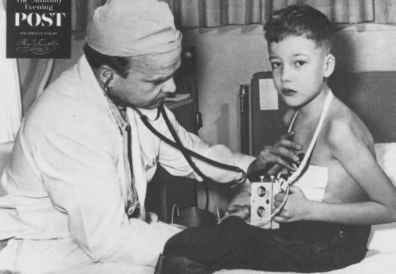
David Williams’ heart was kept ticking on schedule by the electronic pacemaker in his hand. Examining David is the Dr. C. Walton Lillehei, who helped develop the device. Source: The Saturday Evening Post.
#sport - we recommend listening to the jaw-breaking episode of Peter Attia’s podcast The Drive featuring cycling phenomenon Tadej Pogačar - not much about medical technology per see, but a true human machine that pushes the physiological limits of his body and sport!
#conference - Mathieu will be speaking at MedTech Malta on November 7! Dylan Attard and his team at MedTech World invited me to moderate the panel “Young Visionaries: Under-30 CEOs Shaping Tomorrow” where we will talk about medtech entrepreneurship with three emerging leaders! To secure your ticket, head over to med-tech.world/get-tickets and use the code MTWMaltaMathieuChaffard150OFF to get 150€ off on any Premium or Platinum tickets! See you there! ✌️
#support - As you might know, the Impulse Podcast and all the content we produce around it is the fruit of a voluntary passion project, and we are always keen to receive your support to grow the show and make sure we can sustain our activities in the long term! That’s why we would encourage you to subscribe to the podcast, leave a 5-star review on Spotify and Apple Podcasts, and share it with your surroundings or colleagues who might be interested in the subjects we cover! 🙏
Have a great day,
Mathieu & Abderrahmane
Comments
Nothing yet. Say the first thing.
Sign in to join the conversation.