
🌱 Understanding the early stages of human development has long been a significant challenge in medicine. Despite the advances in medical science, much remains to be discovered about the causes of miscarriages, infertility, and early developmental defects.
In 2023, Prof. Jacob Hanna and his team at the Weizmann Institute of Science achieved a groundbreaking milestone. They created the first synthetic embryo model that closely resembles a day-14 human fetus, without using gametes or a womb. This model was derived from "naive" stem cells in the lab, which can be obtained from adult cells such as skin cells.
A jump back in time in a way, where these cells were brought back to immaturity and differentiated again into a fetus! This innovation, featured in Nature and recognized by TIME Magazine as one of the 100 best inventions of 2023, has the potential to revolutionize our understanding of early human life and its associated medical conditions.
Join us in Episode 28 of the series, where we discuss this revolutionary technology with Prof. Jacob Hanna himself!
💡 Do you know Scott Nelson ? He is the founder at FastWave Medical - a MedTech startup whose goal is to treat atherosclerosis - but also a serial entrepreneur and the host of Medsider!
FastWave Medical is developing a technique called intravascular lithotripsy (IVL). It uses sound waves to create bubbles inside a catheter that selectively break down calcium deposits surrounding blood vessels. The breakage makes the vessels more flexible, facilitating the placement of a stent or balloon catheter, without damaging the surrounding tissue. This method has already proven beneficial in improving clinical outcomes for patients, and will be brought to new heights thanks to Scott’s team!
🎙️ In Episode 29, we talk with Scott about his journey in Medtech, the benefits of IVL, and what’s next in interventional cardiology. He also shares stories from his early podcasting days with Medsider! An episode with one of the leading voices in the MedTech scene, offering a glimpse into the future of cardiac surgery!
siRNA: Silencing genes for therapeutic gains
🔬 siRNA (small interfering RNA) technology might be the next revolution in gene therapy! By targeting and degrading specific mRNA molecules, siRNA can effectively prevent the production of proteins that cause certain genetic diseases with molecular precision.
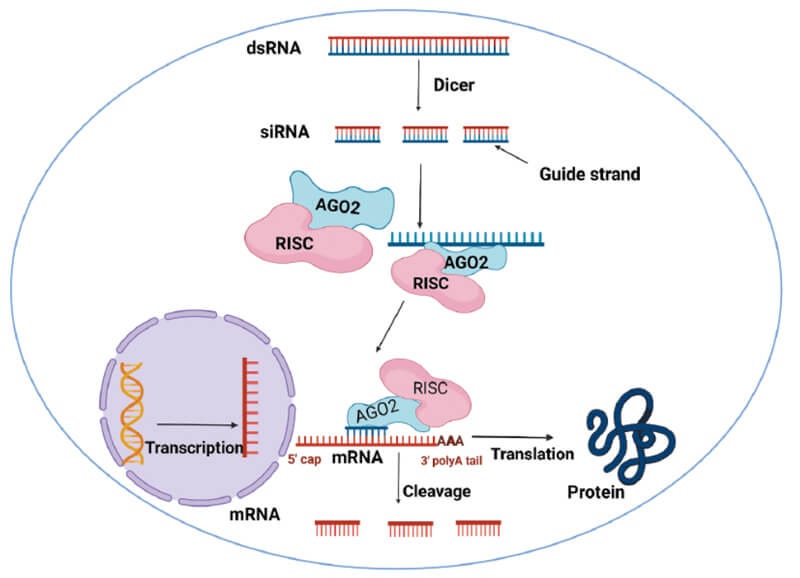
Figure. Schematic illustrations of the working mechanisms of siRNA
This technology has led to the development and FDA approval in the US of drugs like Eplontersen, now used to treat hereditary transthyretin-mediated amyloidosis. This condition, which can cause serious heart and nerve problems, previously had limited treatment options, primarily supportive care and liver transplantation.
Biotech companies like Alnylam Pharmaceuticals and Amgen are developing new siRNA-based treatments to tackle multiple conditions. These advancements aim to provide more effective therapies and move toward personalized medicine, where treatments are tailored to individual genetic profiles.
The rapid progress in siRNA research highlights the potential of gene silencing technology. New therapies bring hope for more targeted and effective treatments, improving outcomes for patients with conditions that were previously hard to treat.
A new era in pacemaker technology
💓 A new prototype pacemaker is set to transform cardiac care by recharging itself using the heart's own beats. In laboratory tests, this innovative device was able to generate 10.9% of the energy needed for each heartbeat. If this energy harvesting capability can be enhanced, it could significantly extend the lifespan of pacemakers, reducing the need for battery replacements and offering a more sustainable solution for patients, especially younger ones who require long-term cardiac support.
Dr. Babak Nazer, a leading researcher in this field, presented these promising findings at the 2023 American Heart Association sessions. While the technology is still in its early stages, its potential to revolutionize pacemaker design is immense! Future developments could lead to pacemakers that are not only more efficient but also less invasive and more comfortable for patients, improving their quality of life and reducing the frequency of surgical interventions.
From Frost to sun: the origin of sunscreen
☀️ Sunscreen is an essential staple for protecting our skin from the harmful effects of ultraviolet radiation, especially during the sunny summer months! But did you know it was originally developed for use in cold environments? The story begins in 1938 when the chemist Franz Greiter suffered a severe sunburn while climbing Piz Buin, a mountain on the Swiss-Austrian border. This experience inspired him to create the first sunscreen. Funnily enough, Johnson & Johnson later named their sunscreen brand "Piz Buin" after the very mountain where Greiter's sunburn sparked this innovation!
Comments
Nothing yet. Say the first thing.
Sign in to join the conversation.