
Experiencing life in Dali was the goal of our April “ladies only” trip. This is the second half of what the 10-day trip has impressed on me; it also marks the end of this trip’s travelogue series.
If you missed the first part, read here.
For previous pieces of this series: read my coffee exploration in Gaoligong here, and my layover in Hong Kong here.
When I was a kid, the word “incense” meant burning incense sticks either as a spiritual offering in Buddhist temples or a family ritual to pay respect to the departed. Neither was a pleasant association for a child, and I always found the smoke irritating.
There is, however, a different way to appreciate incense. My husband and I recently discovered indirect heating—when the heat source is not applied directly to the incense—which eliminates smoke, makes the aroma more subtle, and renders the process more personal… and intentional.
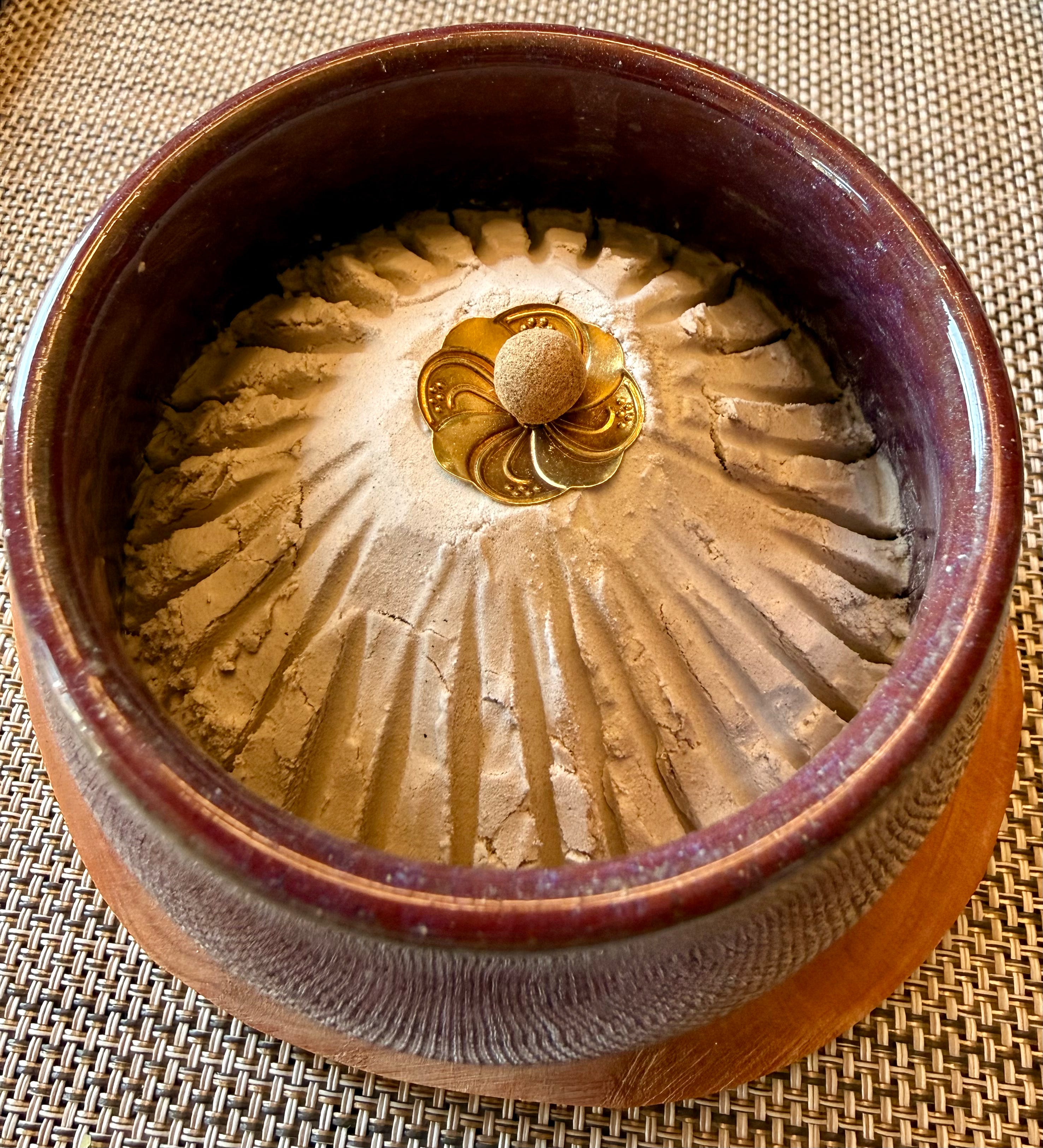
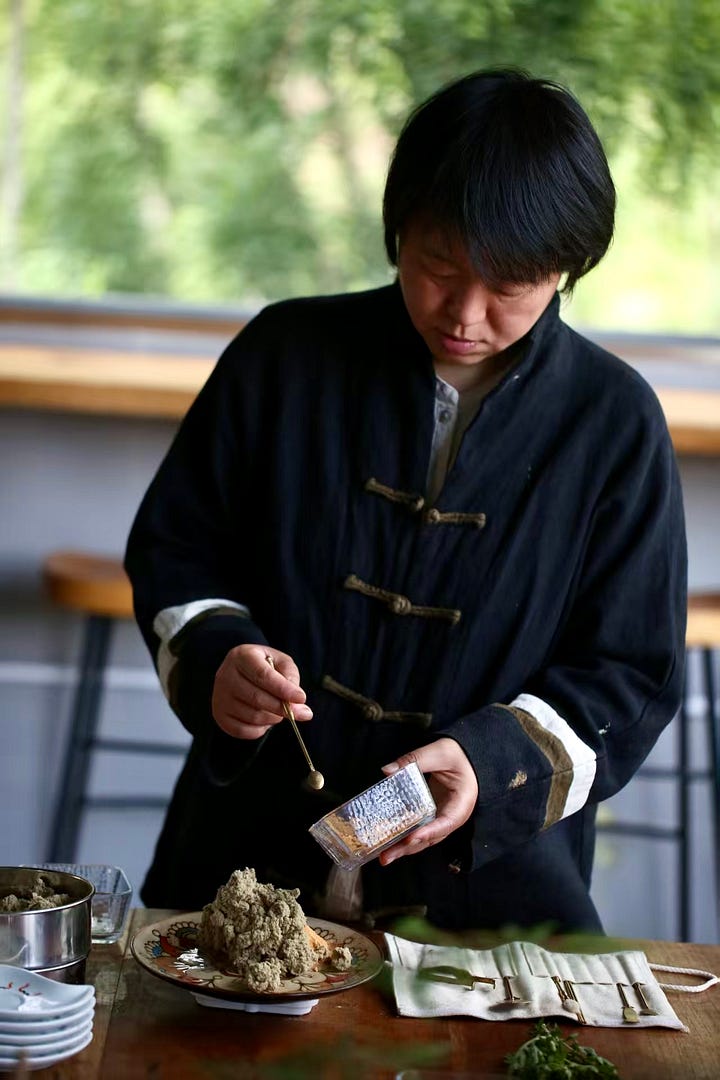
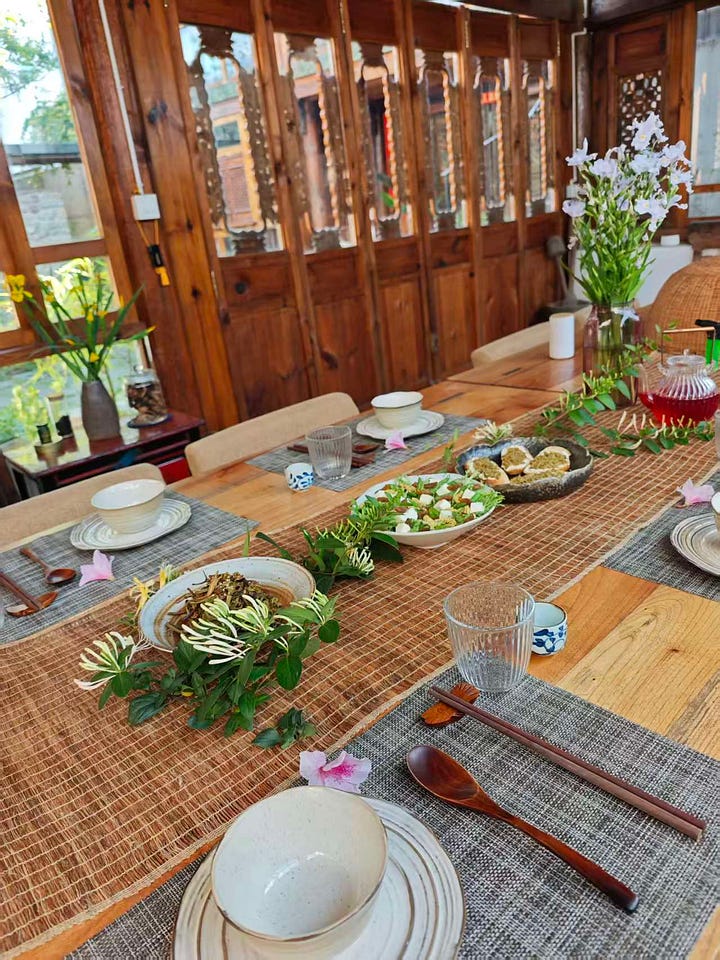
While I was researching private kitchens specializing in local seasonal ingredients, I found Amo, a chef offering private dining experiences in her Dali courtyard. As it turned out, Amo also led an incense-making program.
You bet I booked both for our group of three.
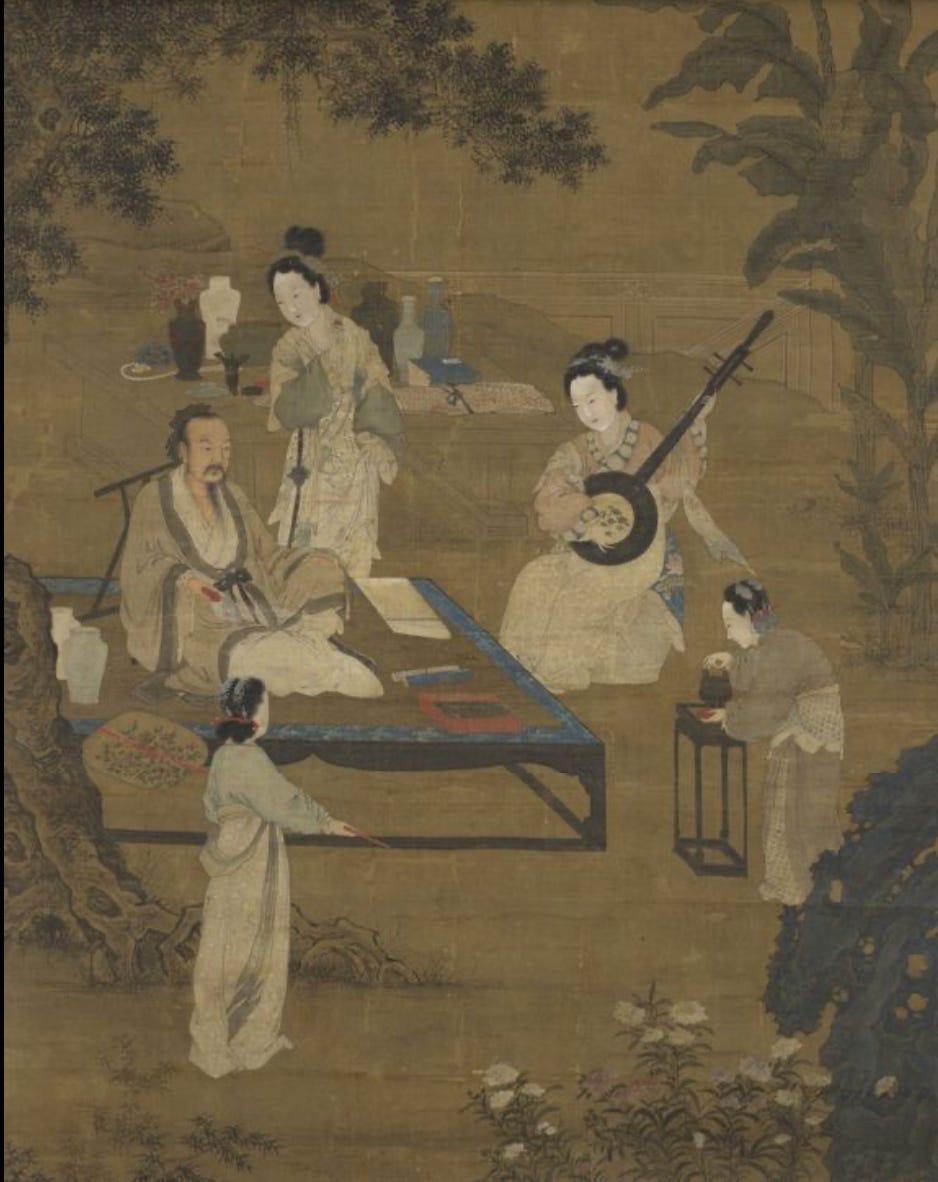
The history of incense making and use in China can be traced back to the Han and Tang dynasties. Initially, incense served practical purposes in hygiene, medicine, and temple rituals; with the arrival of exotic ingredients via the Silk Road, it became a fixture of refinement among Tang royals and elites. A subsequent boom of maritime trade made incense available in everyday life, and the Chinese aroma culture was born.
The movement reached its peak during the Song dynasty (960-1279 CE), and incense was included in 四般闲事—Four Arts of Leisure, alongside tea brewing, flower arranging, and scroll hanging. Incense was elevated into a refined art form by the Song literati; it became a vehicle for meditation and philosophical contemplation. 香道—Xiangdao, the Way of Incense, was born. It became a spiritual path leading inward, cultivating a quiet mind, and connecting with the Dao.
In Amo’s breezy living room, we acquainted ourselves—up close and personal—with frankincense, myrrh, agarwood, and Sichuan Thuja (aromatic cliff cypress).
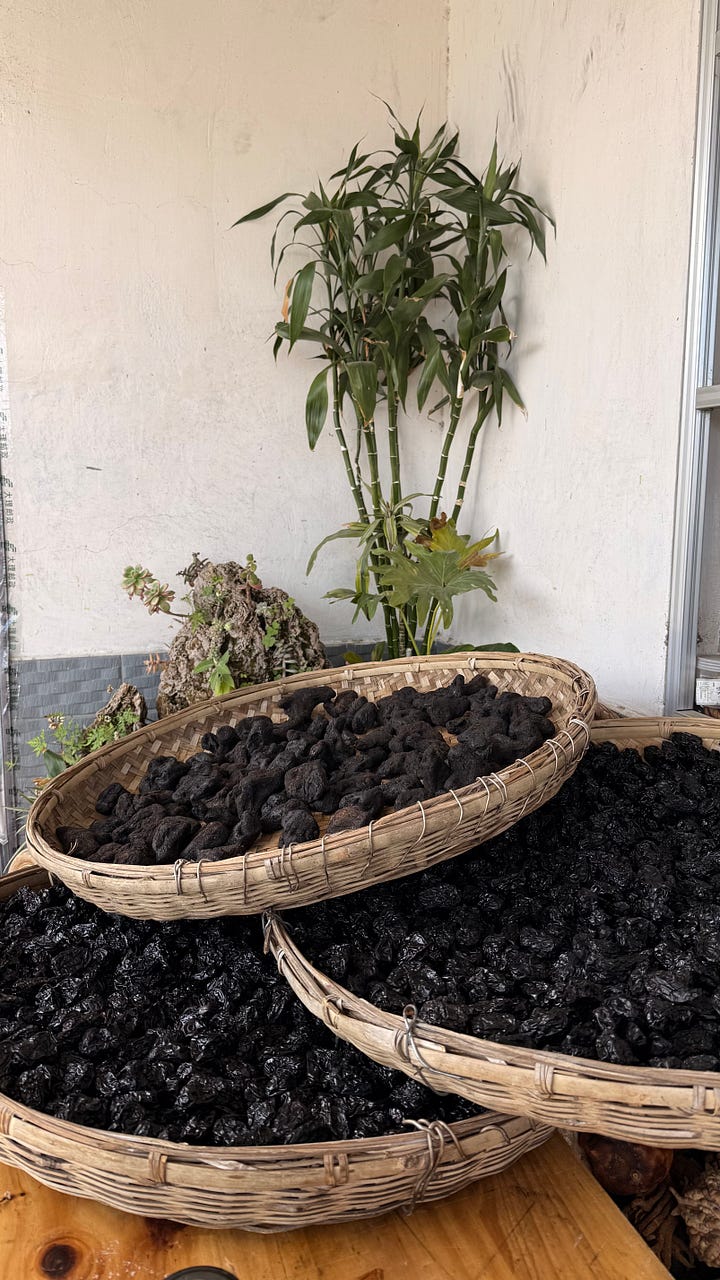
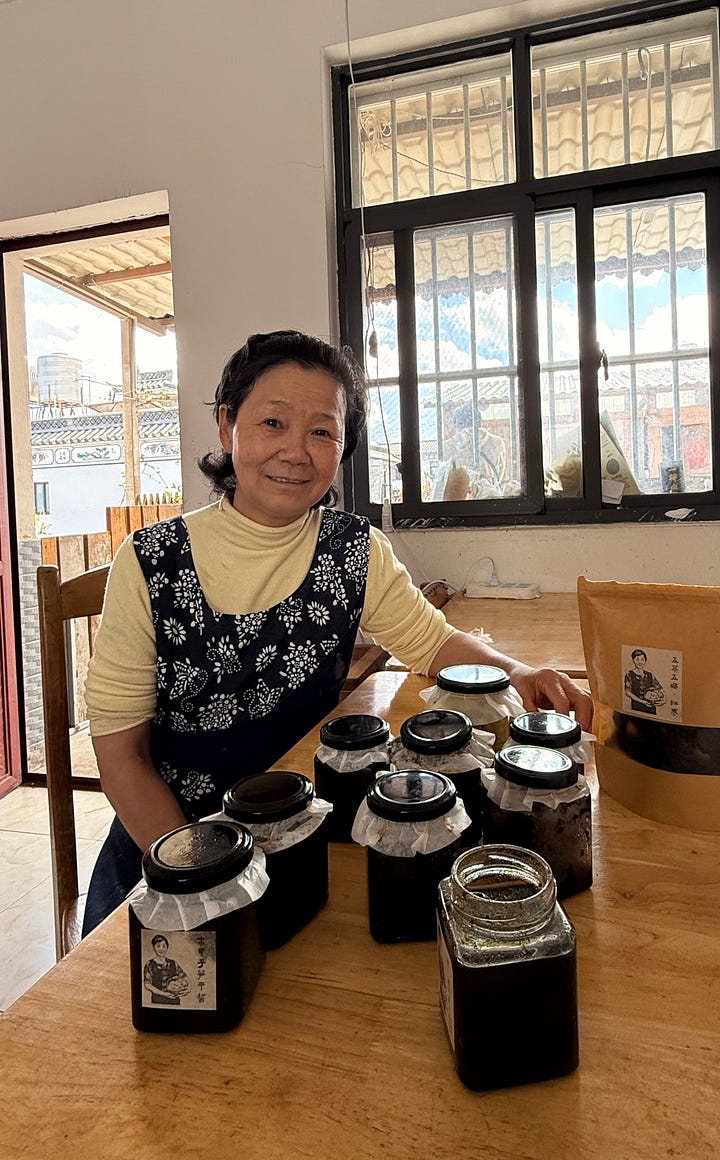
We smelled the scents and described the different moods and images these scents conjured in our minds; we ground the wood and kneaded the powders into a dough using agarwood water; we hand-rolled the incense pills, letting them dry in the elm tree bark powder while sipping Amo’s homemade fruity vinegar and listening to her story of transformation: from a Shanghainese working in the food trade to a Dali transplant discovering and preserving the region's culture and abundance.
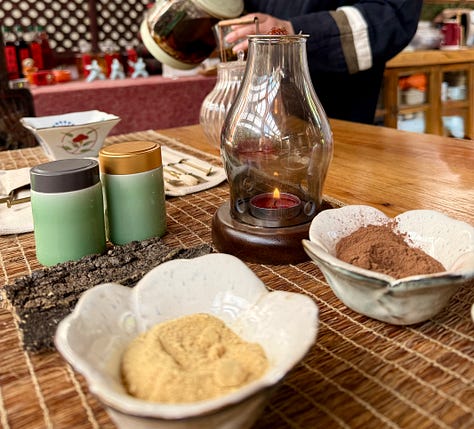
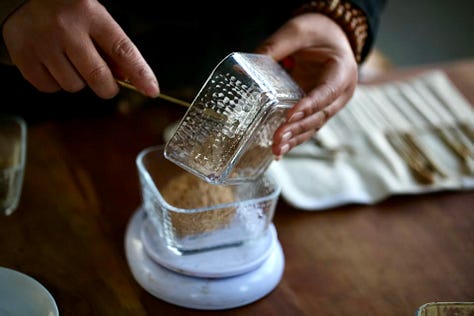
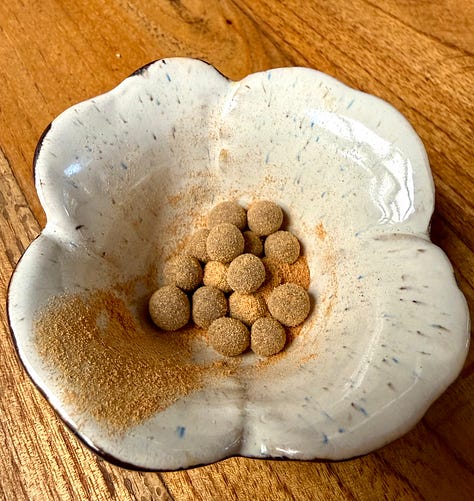
During those two hours in that breezy room, the line between the solitary Way of Incense and the popular Aroma Culture began to blur.
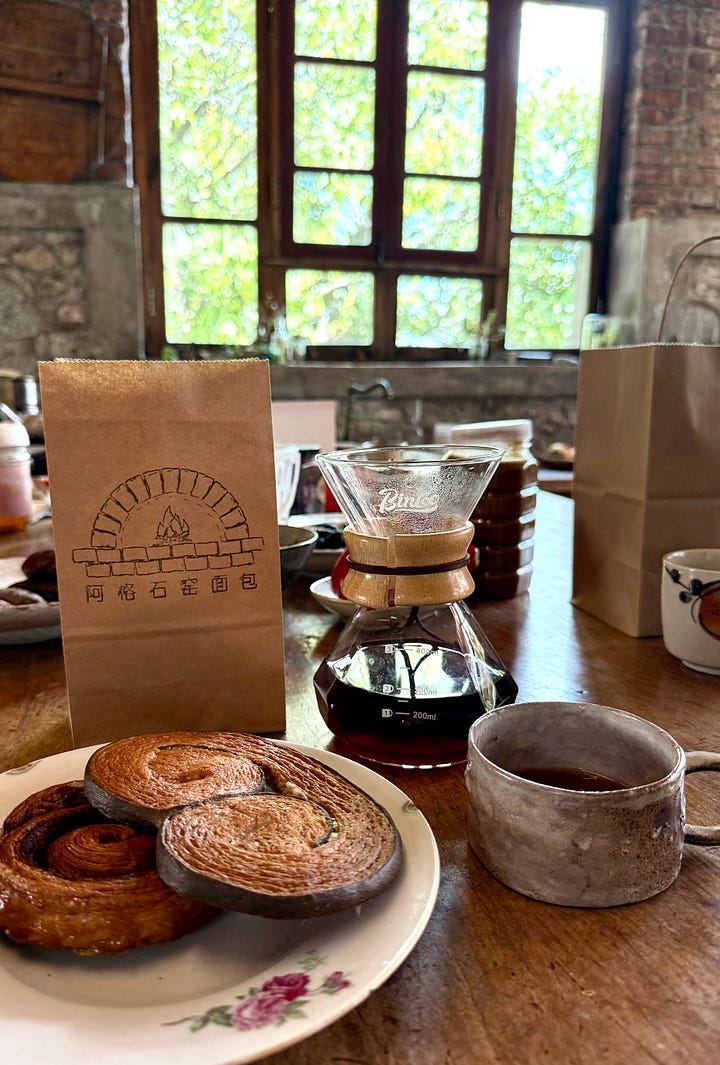
I came to Dali with 破酥包—Posubao (Yunnan buns) and 米线—Mixian (Yunnan rice noodles) in mind, and I unexpectedly stumbled upon sourdough bread and Palmier.
More precisely, I stumbled upon 阿格石窑—A’Ge Stone Oven, a home bakery hidden in plain sight in a Dali village.
From the outside, it just looked like any other remodeled courtyard on any given Dali village street. Once inside, a wave of tangy, rustic aroma hit my nose before I had a chance to see anything. The warm smell was unmistakably that of a sourdough bakery.
A’Ge Stone Oven Bakery is run by the baker A’Ge and his wife, a couple in their 30s. They came to Dali from different parts of China, both leaving their 9-5 office jobs in search of a different kind of life.
“Did you always want to be a baker?” I was curious.
“Not at first.” A’Ge briefly stopped scoring the dark rye dough, pointing to the back of the house. “I’ve always liked to work with my hands, so when I came here, I ran a leather craft workshop at the house. But my longing for freshly baked sourdough bread led me to spend several months learning from the masters in France. I opened this bakery after returning.”
“Ah, so you’re the real deal!” I teased him, looking around his bakery.
The operation took place almost entirely in the yard under a canvas canopy; loaves of sourdough that had already gone through the second fermentation were lined up on the wooden table, waiting to be scored. In the side yard, a stone oven almost took up the entire space, wood crackling inside and sending out an intoxicating, charred-flour smell.
A’Ge designed and built the stone oven. Along with the popularity of his sourdough bread, the stone oven had also gained a reputation among other aspiring home bakers. He now overnights his bread from Dali to Shanghai and Suzhou, and consults on building stone ovens all over the country.
“Running a still-expanding bakery and providing consulting at the same time must be tough.” I tried to imagine the workload, remembering being told earlier that most of the bread baked today was heading to Suzhou that night.
“It’s alright.” A’Ge loaded the loaves into the oven. “Doing what I love, I don’t really feel it’s hard work.”
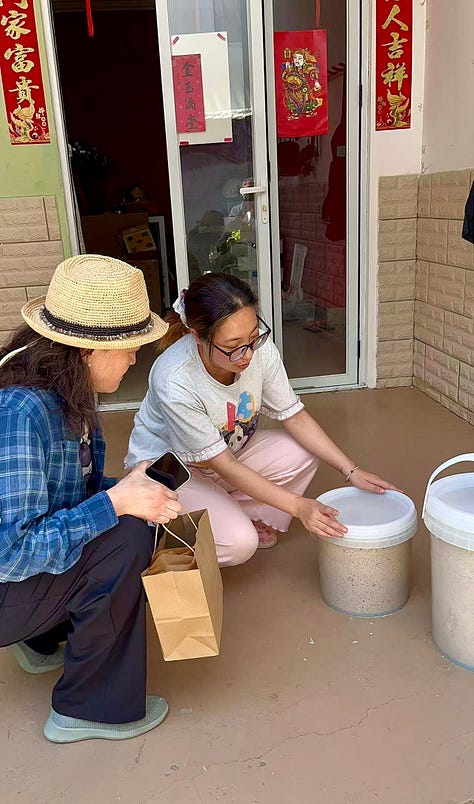
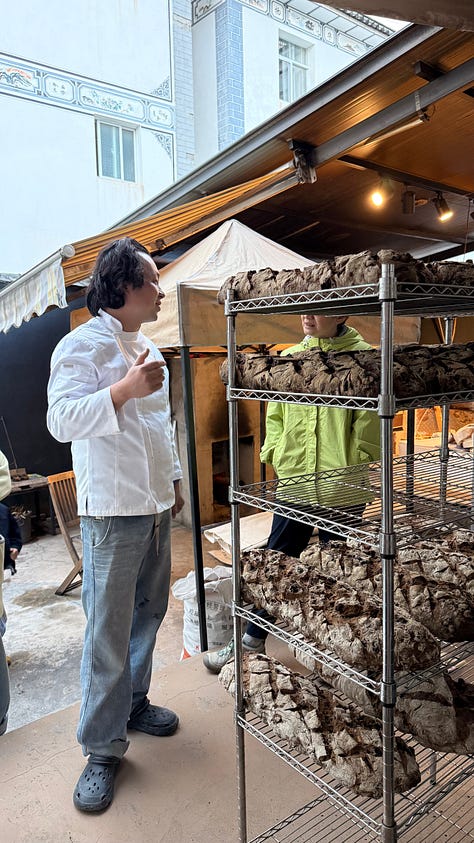
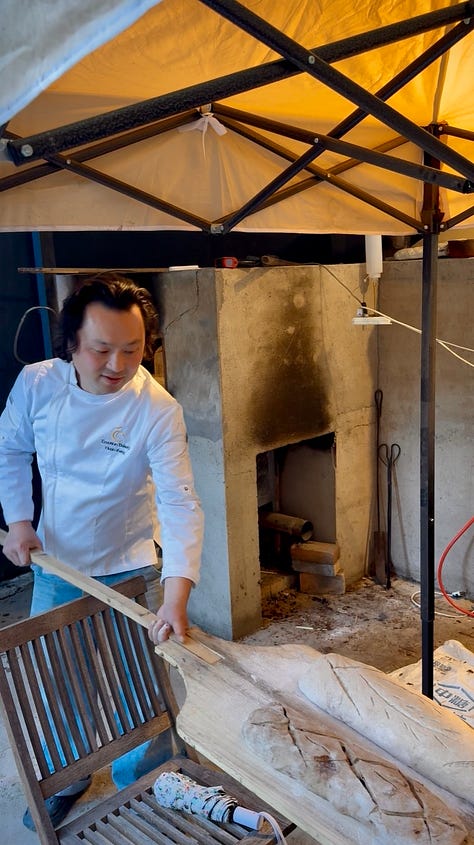
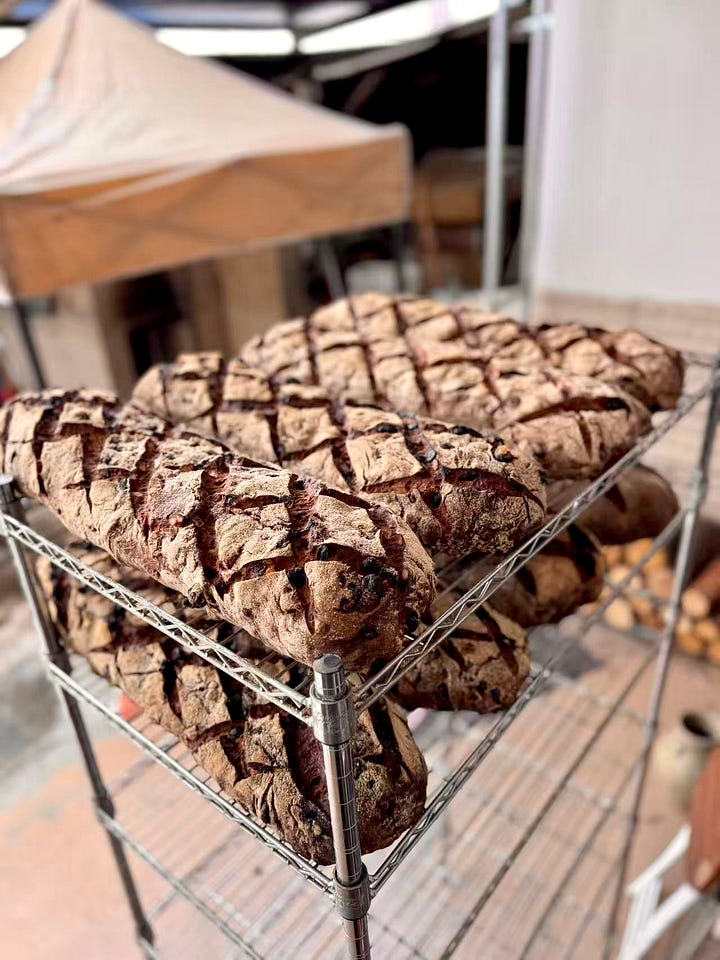
There were three different kinds of bread available that day: plain whole wheat, raisin and walnut, and blackened garlic. I really wanted to taste all three, but hesitated, looking at the size of the loaves.
“Just tell me how many slices you want,” A’Ge’s wife sensed my hesitation. “We sell by weight, knowing no one can consume an entire loaf, and we’d never want our customers to eat stale bread!”
A small detail, and I was delighted.
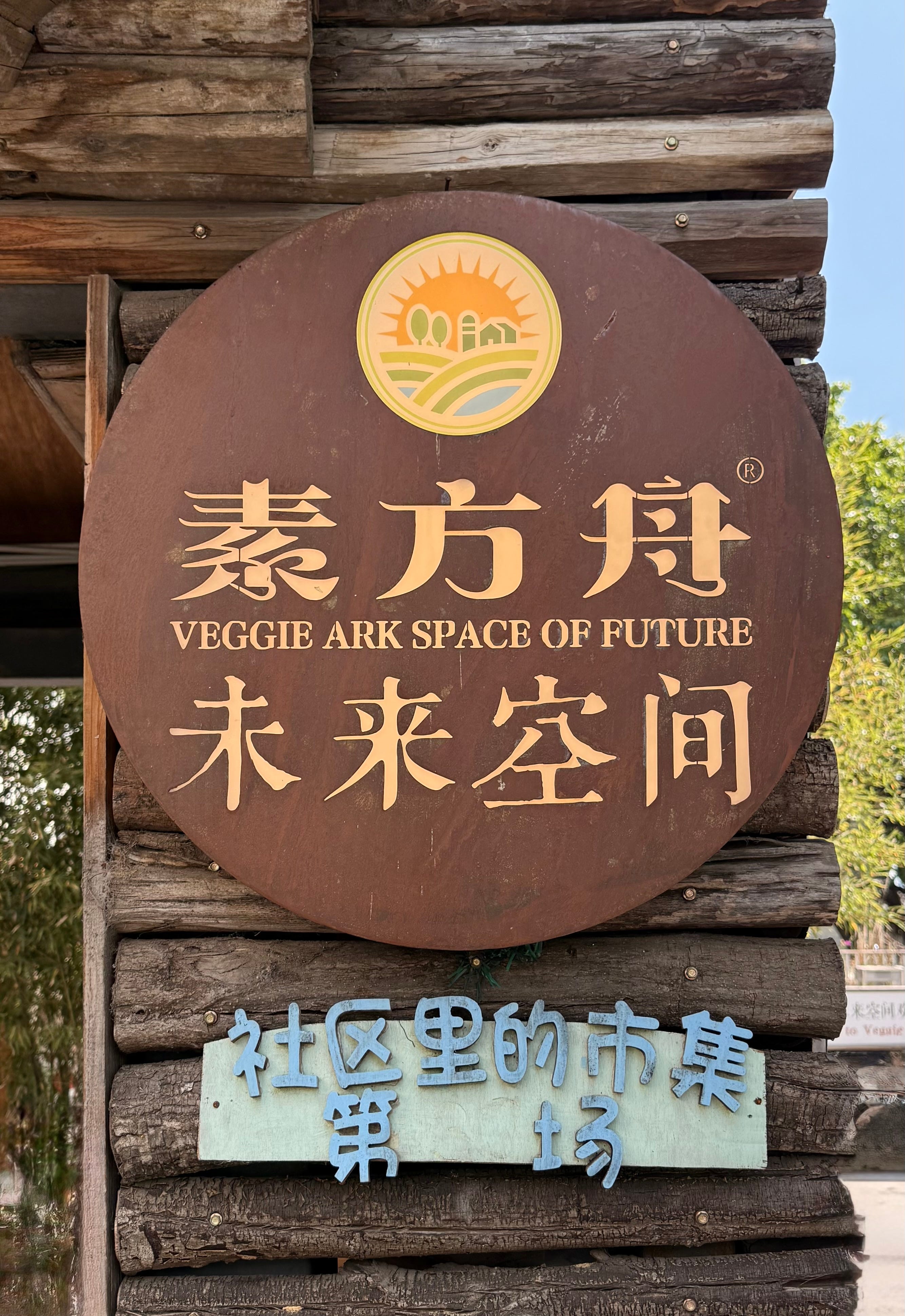
Twice a month, the marketplace 素方舟—The Vegan Ark, hosts weekend events. I had seen posts about the place and the event on a friend’s Instagram and thought it was interesting. When Zhenyi offered to take us there on the Saturday, two days before our departure, we jumped on it.
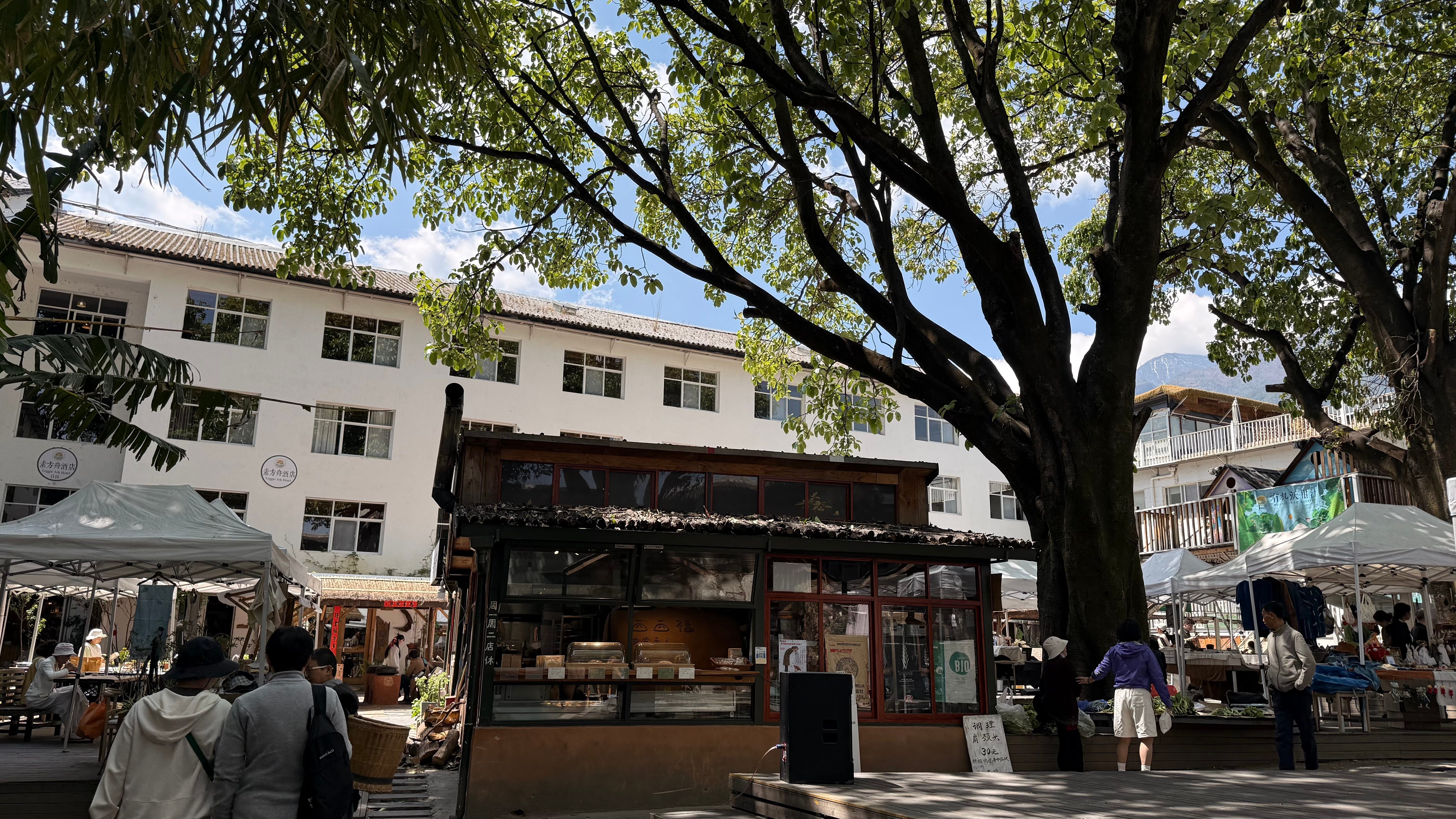
My sister had lived in the Bay Area of California for over 20 years, and I often visited her on weekends while traveling for work. It didn’t take more than a minute before we simultaneously picked up a familiar vibe that brought us back to the Berkeley weekend fairs: the clean and bright organic-only indoor produce market, the vegan food stands with reusable plates and utensils made with eco-friendly materials, the musicians playing guitars and handpan, families with strollers and kids running around…
“Oh, this is so Northern California,” my sister and I looked at each other, amused. “A farmers’ market for China’s hippies!”
A note on linguistics: the direct Chinese translation of “hippie,” 嬉皮, carries a more negative connotation in the Chinese cultural context than the English word, which has recently been romanticized to describe a nomadic, communal lifestyle. I don’t think there exists an exact Chinese translation, so I prefer 文青—the cultured, artistic youth.
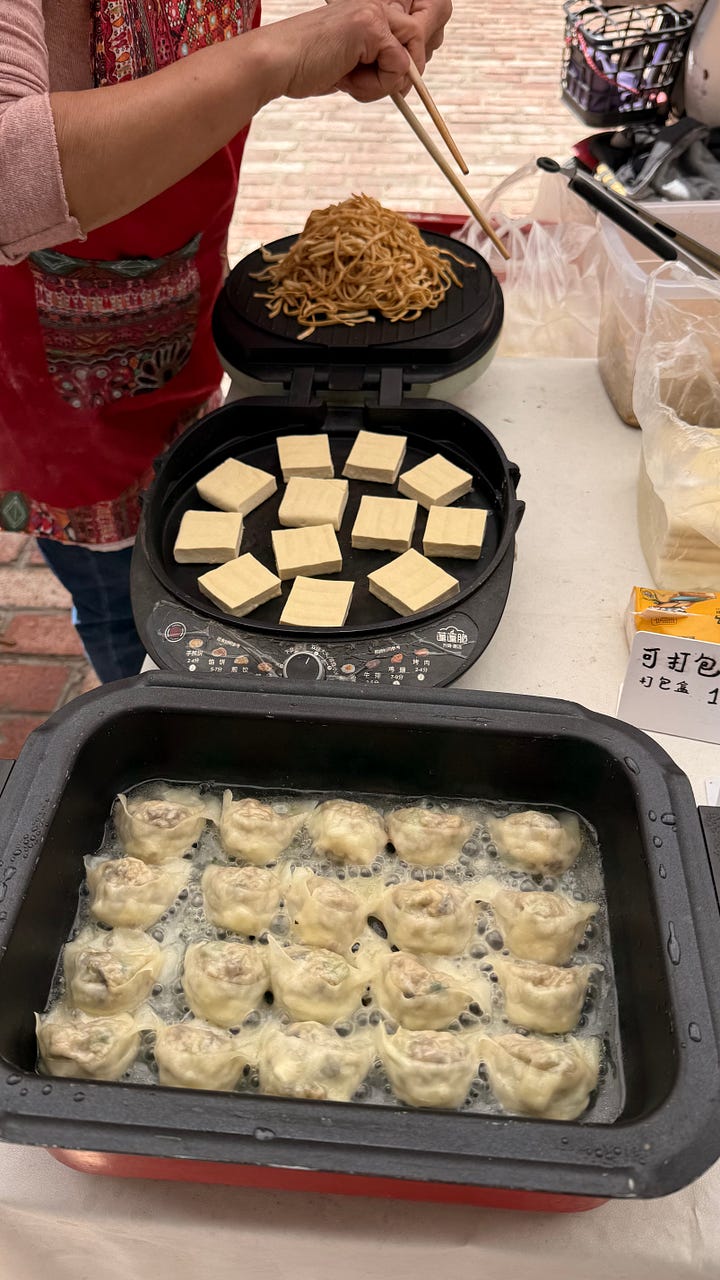
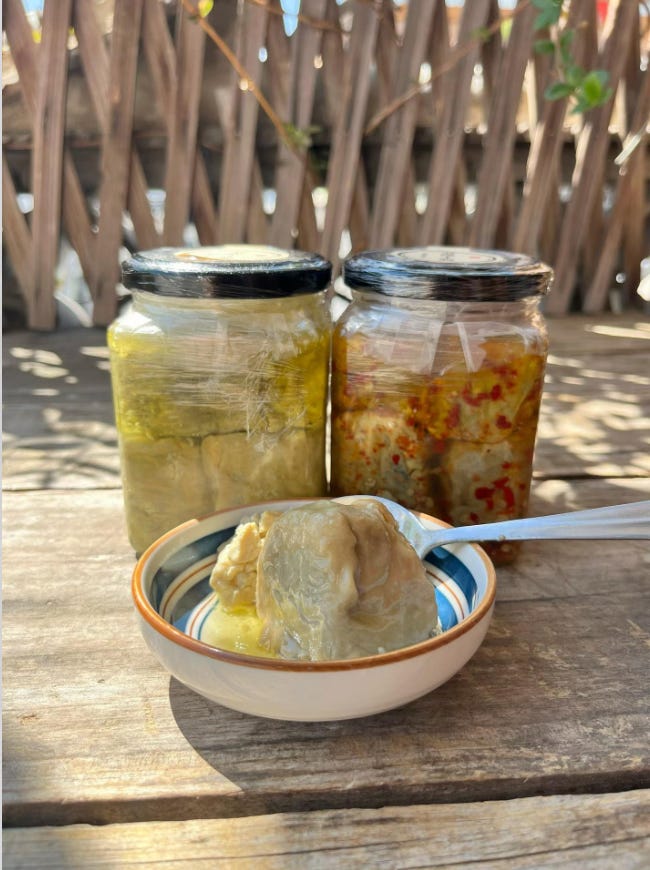
Zhenyi’s sister, Guohe, was there with her vegan food stand. Guohe moved to Dali ten years ago to escape the rat race of a sales job. Focusing on eating well to nurture a healthy lifestyle, Guohe discovered a creative side she never knew she had: with her sensitivity to taste and attention to quality, her cooking became a staple within the local community. Combined with the disciplined work ethic from years of being a sales rep, and top-quality local ingredients, her private dining and sauce-making business, 春天姐姐—Sister Spring, took off.
She was happy to find a new way of living, and people in Dali were happy to find food made with care and pride!
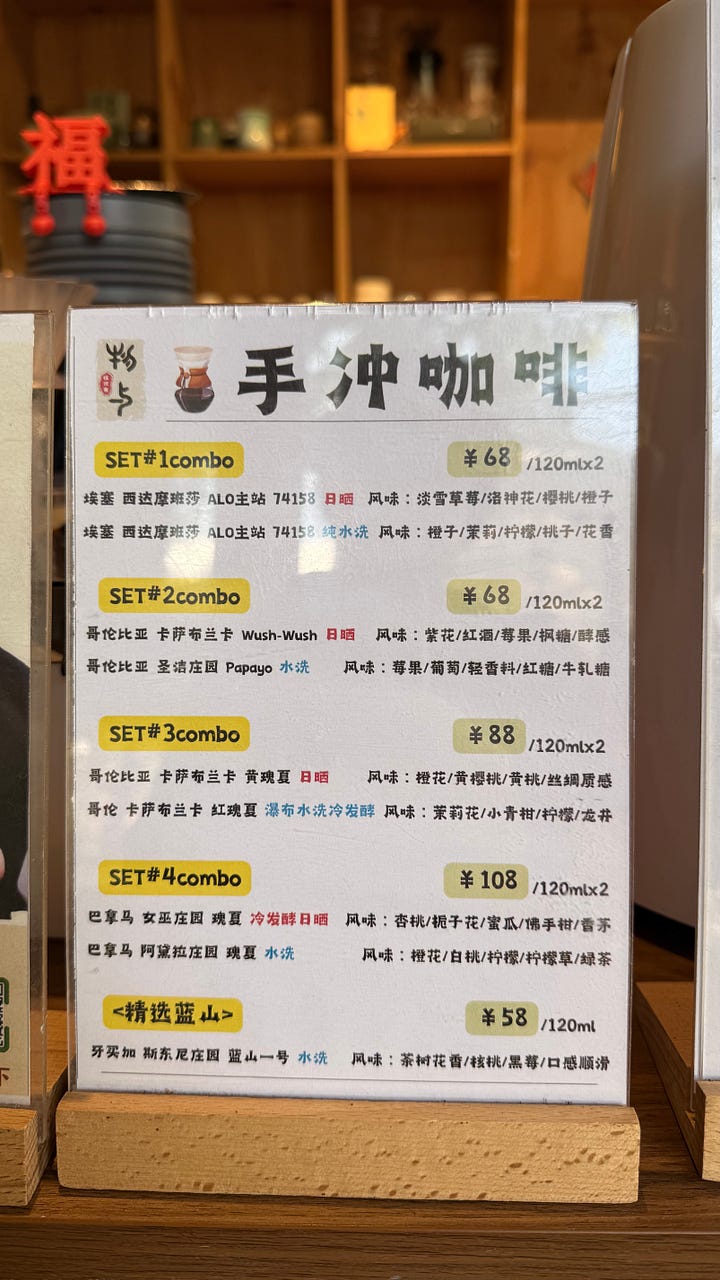
Tucked in a corner of the market was a coffee stand that, according to Zhenyi, made the best pour-over coffee in town.
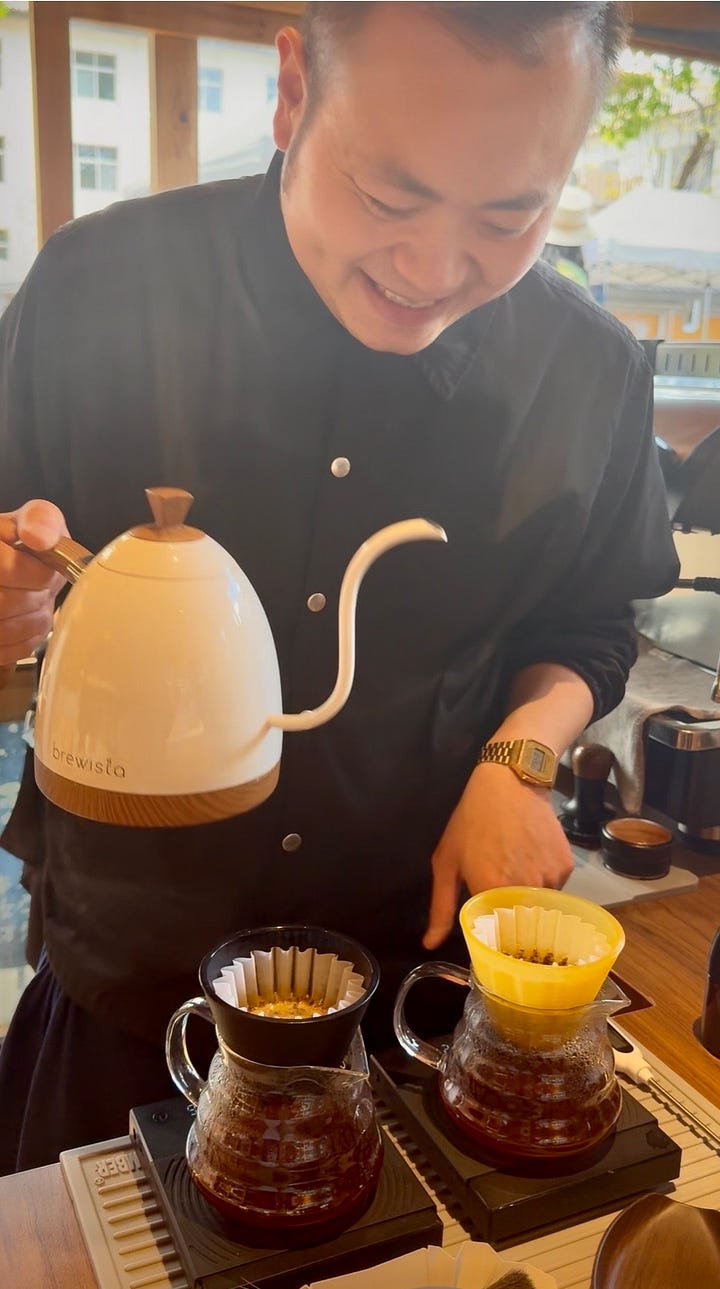
As coffee snobs, we had to order the “barista-recommended” special pour. While waiting for the drink, I chatted with the owner and barista, Lee.
A transplant from the neighboring Guizhou, Lee used to teach foreigners Chinese. His love for handcrafted coffee and the pursuit of a life not prescribed by others’ expectations brought him to Dali, where he opened this tiny store inside Vegan Ark.
Watching him skillfully work the beans and gears while explaining his roasting procedure and pouring method with obvious pride, I saw contentment, contentment not produced by financial income, but knowing—and doing—what brought joy in life.
I congratulated Lee on living his dream.
Next door to Lee’s cafe was a vegan ice cream store. Vegan ice cream—as in, the soy latte equivalent of ice cream?
“We've got to give this a try! Let’s each pick a flavor, and it will be my treat!” I called out to our group.
The store had an interesting setup with the ice cream stand taking the back half of the shop, and a tea-tasting table at the front. A middle-aged Caucasian man was chatting with a local woman while serving tea. I eavesdropped on the conversation and caught the man exclaiming “我靠!”—a Chinese equivalent of “Holy Crap!” but with mild profanity.
“我靠!” I exclaimed, genuinely amused.
He immediately caught on, and looked sheepish for a brief moment before carrying on the conversation with his customer. I concluded that this man was also a transplant—of a different kind—a Westerner who had spent years in China and chosen Dali as his new home.
Ten days weren’t long enough for me to imagine myself living in Dali. Yet it opened a window into the Dali transplant community: a group of people from different walks of life, who left their old lives and came to the City of Wind to rediscover their passion; a community that was uniquely Dali, and one I may someday see myself as part of.
There is a saying that Dali is a place one desires to visit again and again. When I left Lee’s coffee shop, he invited me to come back to Dali again.
I certainly will.
Like what you read? It would make my day if you let me know by clicking the ♡ below, and share with your friends.
Check out the website to read more stories from The Dreams of an Immigrant.
Subscribe to receive future newsletters in your email inbox. You can unsubscribe at any time.
Thanks for reading The Journey of an Immigrant’s Dream! Subscribe for free to receive new posts and support my work.
Comments
Nothing yet. Say the first thing.
Sign in to join the conversation.