
Experiencing was the goal of our April “ladies only” 10-day Dali, Yunnan trip. The three of us decided to avoid 网红打卡点 (Instagram Hotspots) and instead, focus on cultural experiences.
The complete essay has more than 3,000 words and is photo-heavy. I will share it across two postings. Today is post #1.
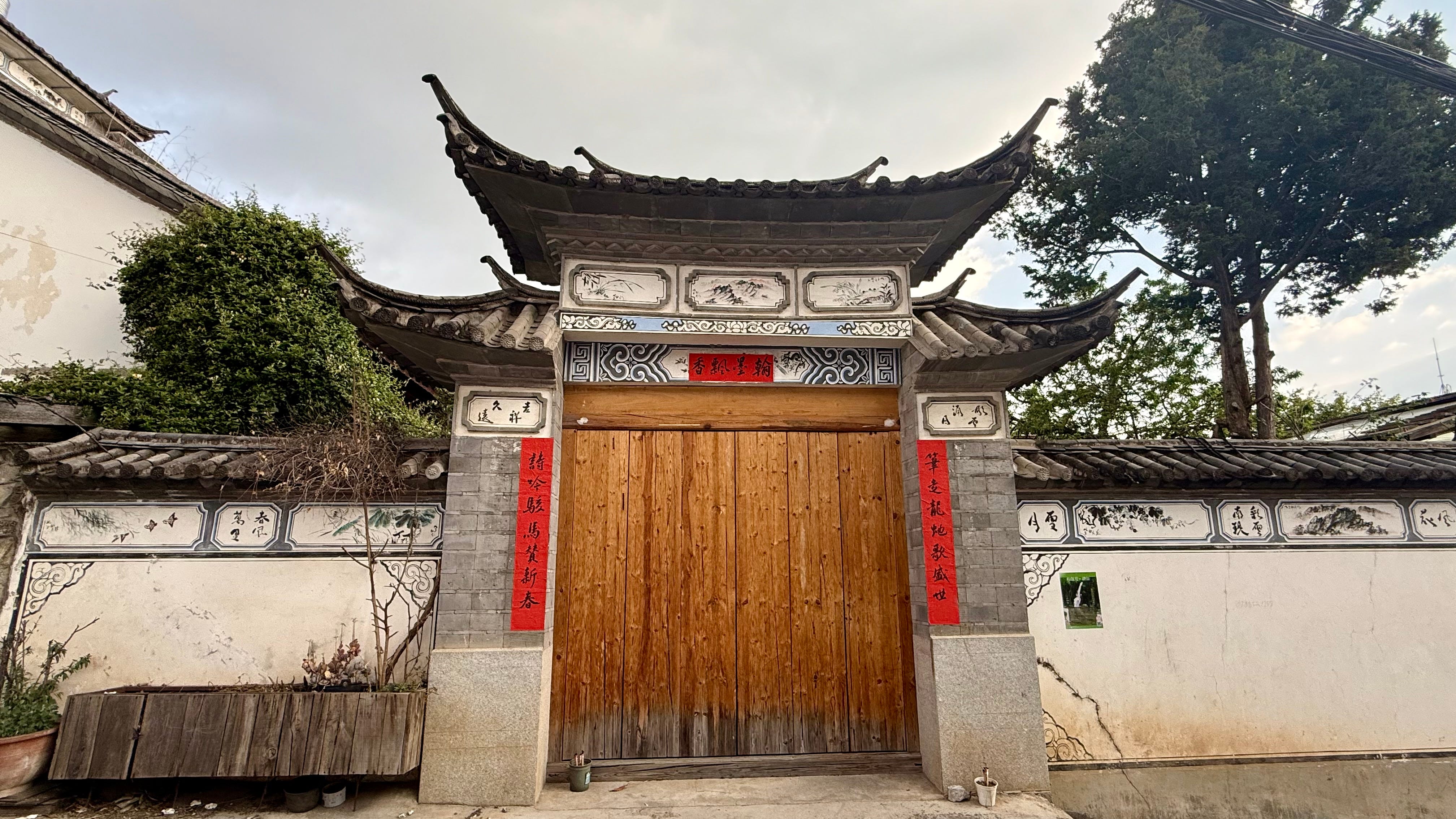
I stumbled upon this place while searching for private dining opportunities. The photos on 小红书 (Little Red Book, China’s Instagram + Pinterest) presented a tranquil setting, but offered a sparse description. I liked the vibe and, after chatting with the hostess online, I decided to take a chance.
It was just before nightfall when our Didi (China’s most popular ride-hailing service) arrived at a nondescript street corner.
“Here it is,” announced the driver.
If you have never experienced the spirit of a traditional Bai ethnic courtyard, I can’t think of a better place—carved wood panels and wooden beams still function as they were intended a hundred years ago, wood floors squeak under your feet, and the sweet scent of honeysuckle seeps into your dream. It’s a place where time stood still.
The next morning, when the sun rose outside my bedroom window, the courtyard revealed its full charm.
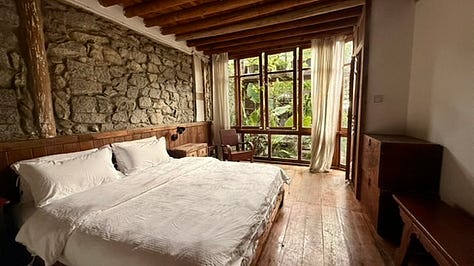
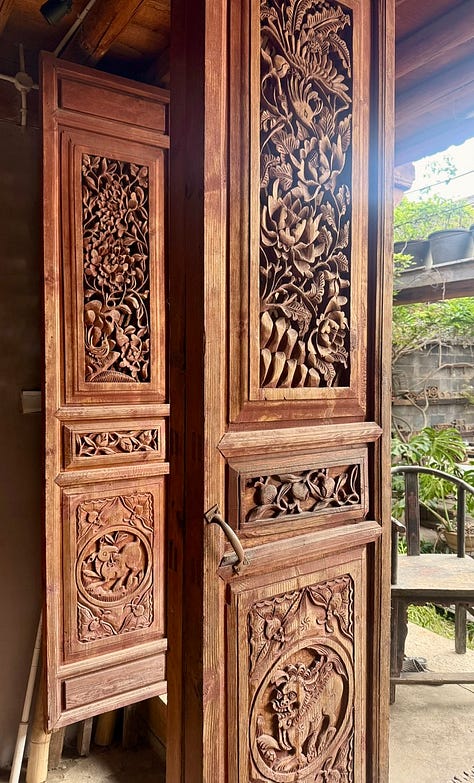
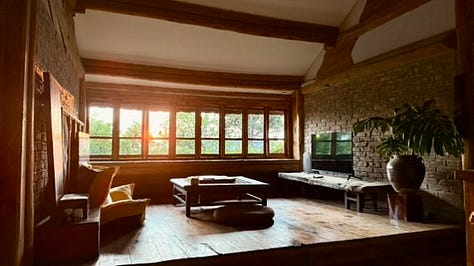

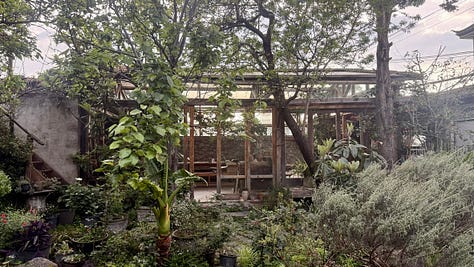
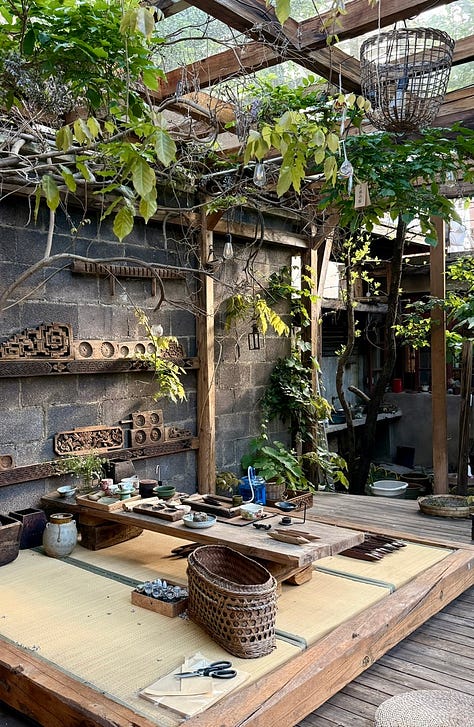
Our hostess Zhenyi was a Dali transplant. An interior designer by trade, she came to Dali during a month-long break between projects in 2008.
“Dali cast an irresistible spell on me,” Zhenyi mused. “I had to come back!”
She ended up moving to Dali with her mother in 2012. It was in Dali that her mother spent the last few years of her life—the best years the two of them ever shared.
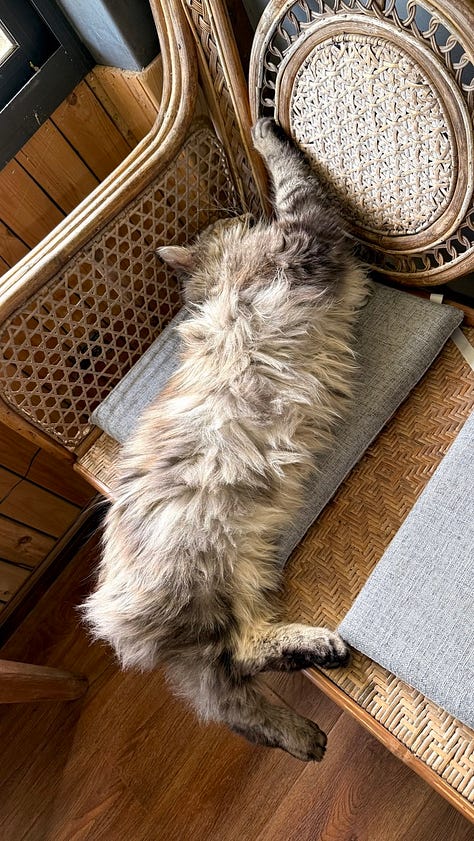
During our days in Dali, Zhenyi lived in the dorm next door, so the three of us had the entire courtyard to ourselves. Well, I take that back. The three of us shared the entire courtyard with five free-roaming cats Zhenyi had rescued. She named the courtyard “Flowers and Kitties” after a design studio she once operated.
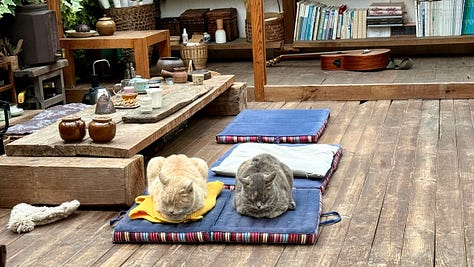
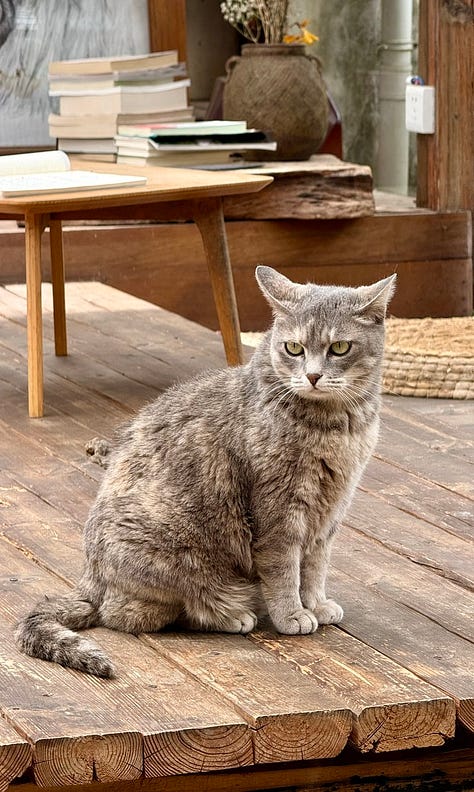
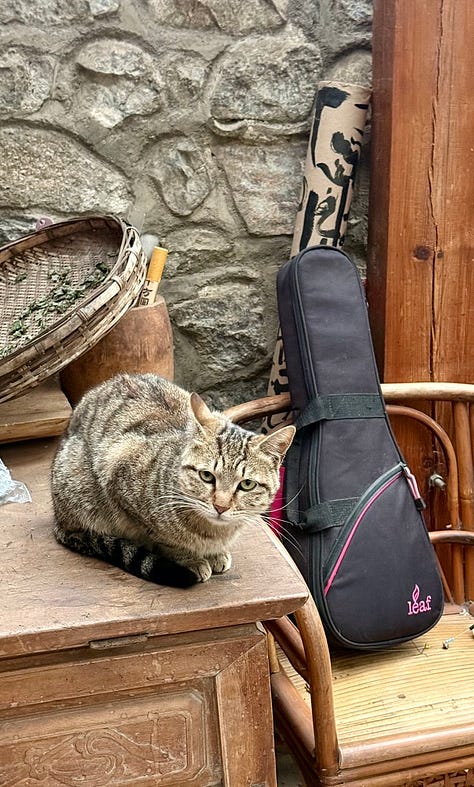
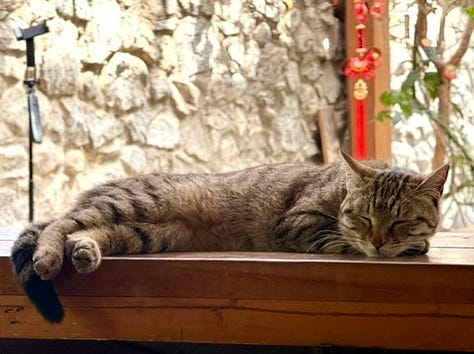
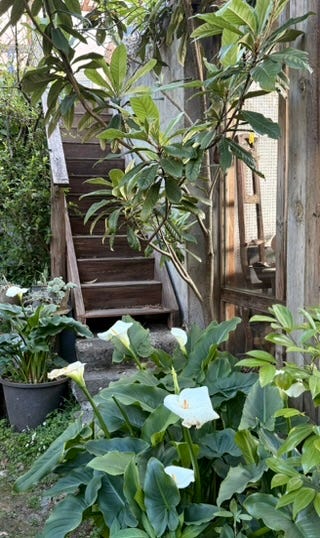
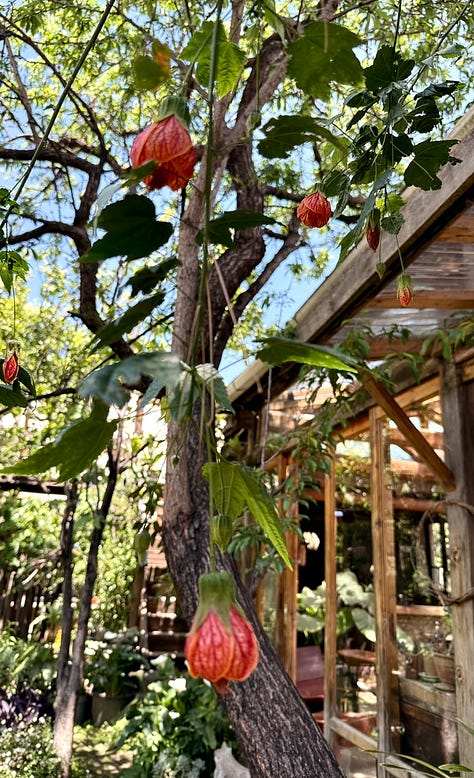
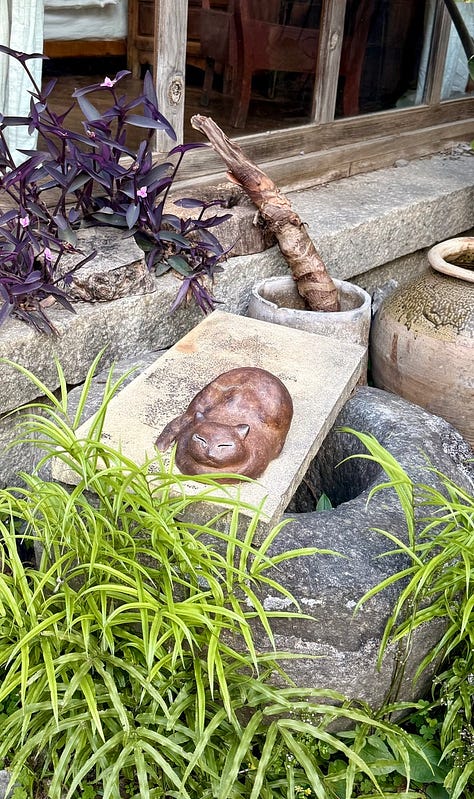
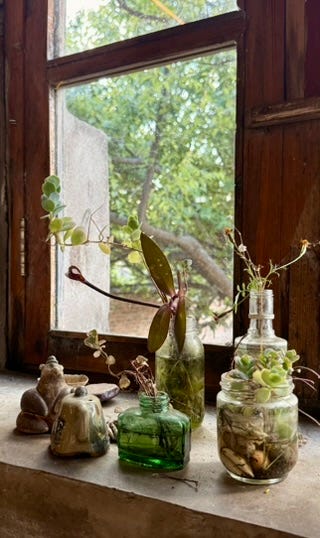
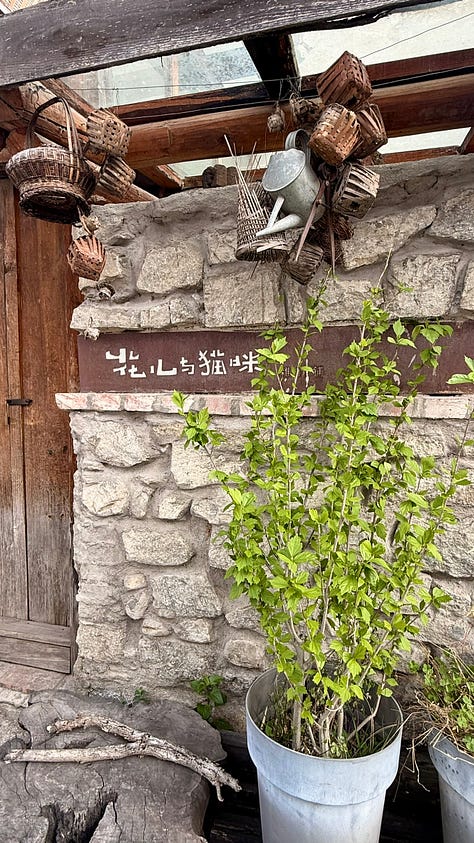
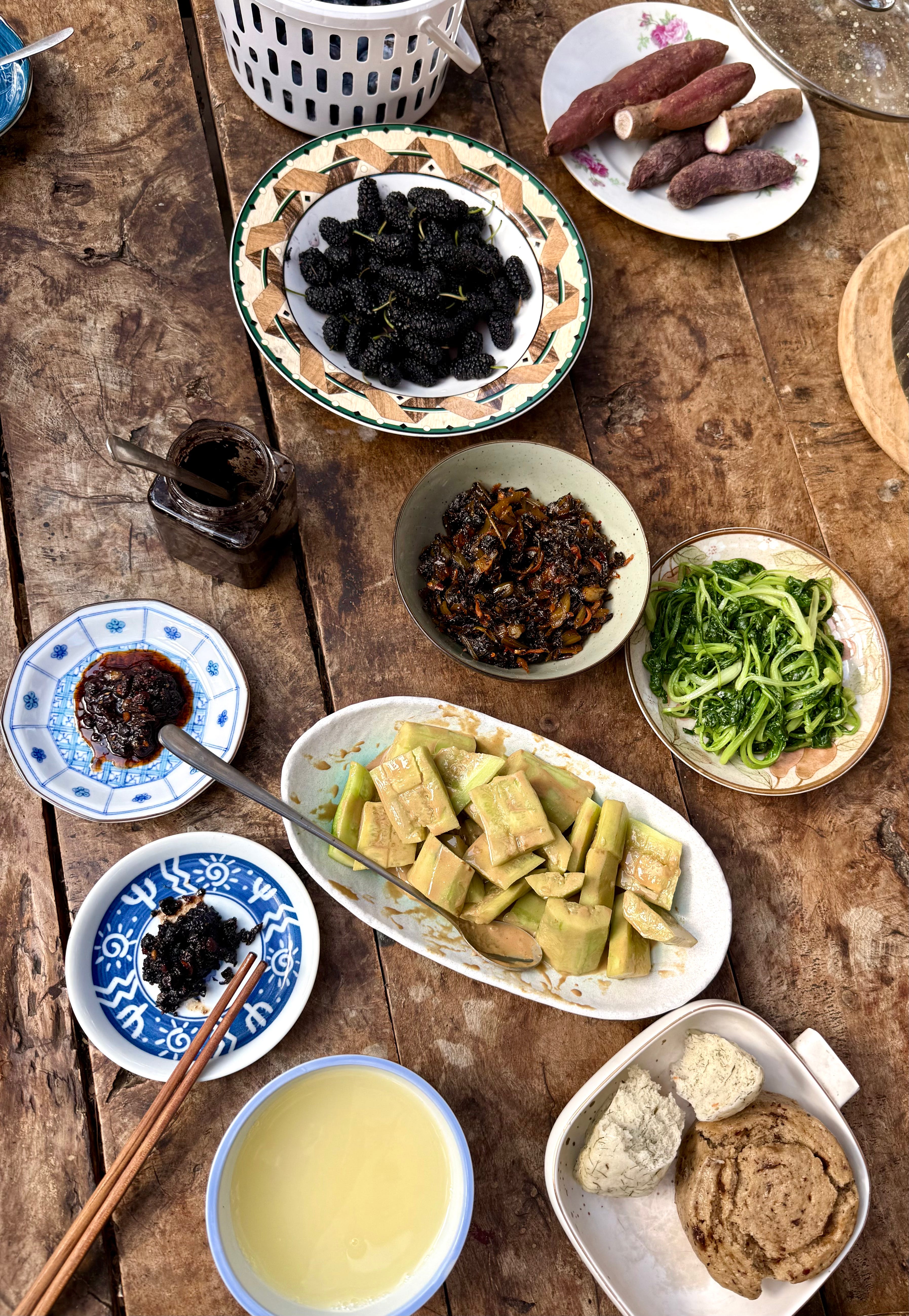
There was Wi-Fi throughout, but no TV. The kitchen had a gas stove, a refrigerator, and free-standing shelves; windows were always cracked open; the cats explored the yard and roamed the tables freely. Zhenyi was a vegan and a lay Buddhist practitioner, but when her cats brought back fresh kills, she would turn away and chant “Amitabha" a few times.
I video chatted with my husband, showing him around. He asked if I could imagine myself living out my retirement life in a courtyard like that.
I didn’t have an answer.
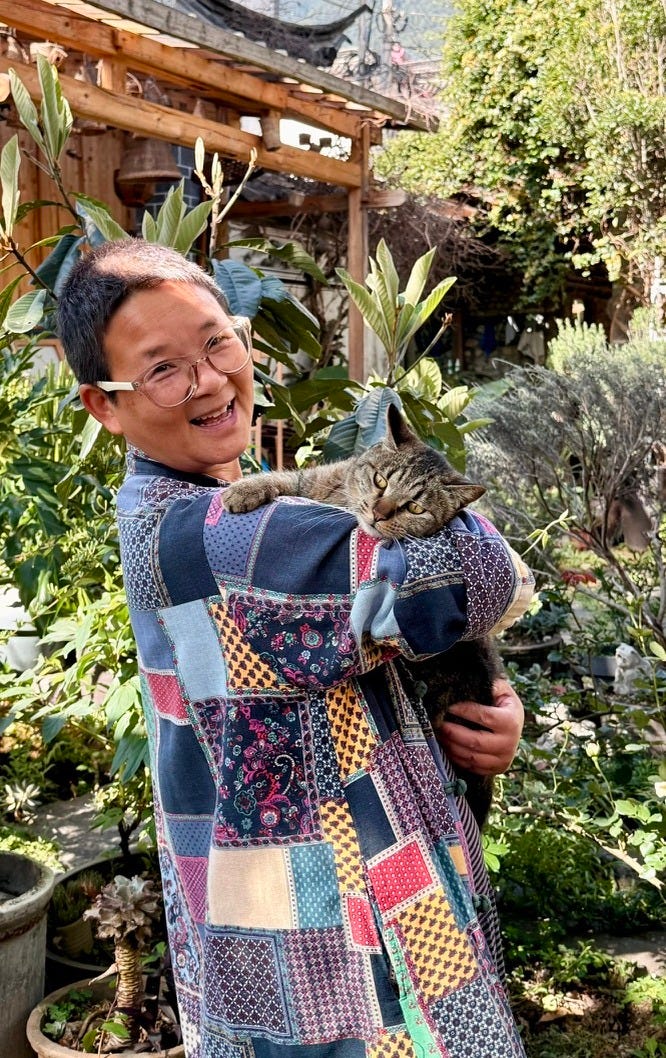
The slow-living movement has gained momentum recently in China. It started among the well-educated and financially self-sufficient few. Then, the Millennials (or, as they say in China, 九零后, the “post-90 generation”) who grew tired of the relentless pace of life in the first-tier cities joined the movement. For places that cater to that lifestyle, central Yunnan has always been at the top of the list, thanks to its year-round temperate weather, abundant regional bounty, and laid-back way of living.
Before long, a special kind of local community was formed—one made up of the newly transplanted, the “live life slow” bunch. And with that, many “experience and learn” programs emerged, not to cater to tourism but to the transplant community.
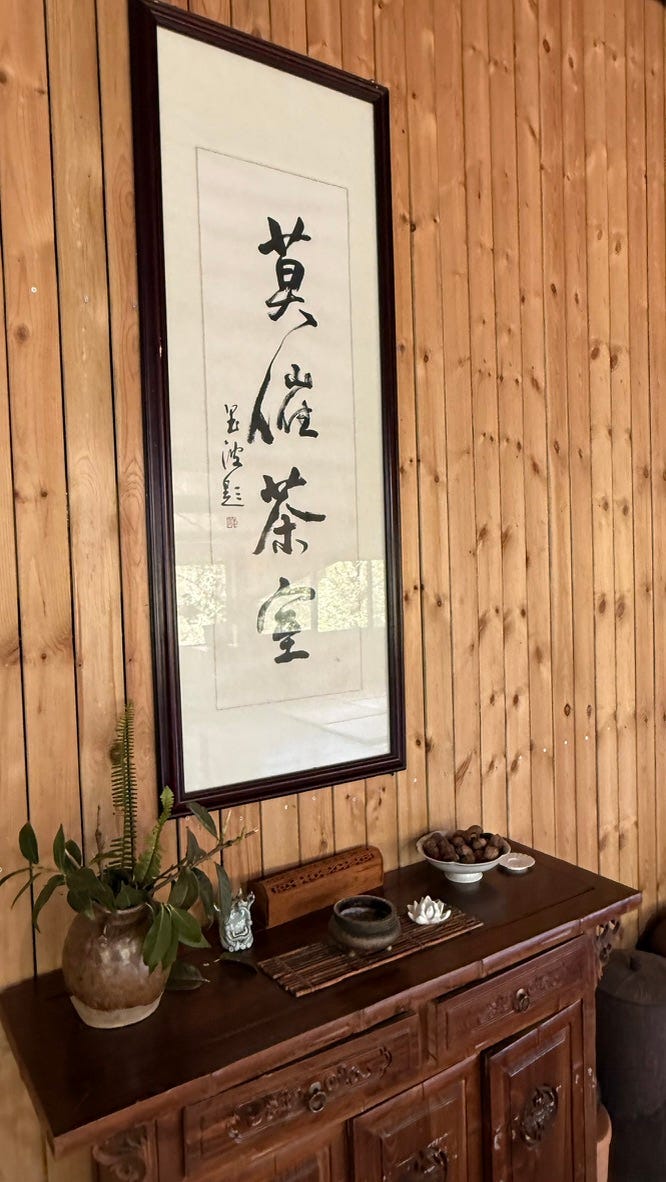
We found a tea-making experience program at a quiet sanctuary deep in the hills, aptly named 莫催茶室—The No Rush Teahouse.
We went on a sunny day, and it was unusually warm that morning. The paved road stopped at an entrance shared by the tea farm and a discreet, no-name resort. Our Didi driver dropped us off at the end of the road. We had been assured during registration that the tea house would be a short hike up from that point, “just a few minutes away”. Well, by the time we reached the gate of what looked like a sprawling ranch some 15 minutes later, we were sweating and fanning ourselves with our hats.
During registration, we had opted out of the tea-picking portion of the program. My sister and her friend had experienced tea-picking before; “tedious and time-consuming” was how they described it to me. “You won’t miss the process, we promise you!”
I agreed, but not without doubting whether it was a wise decision on my part—after all, I was there for the complete tea-making experience.
We began with a tasting of the Ancient Tree Large-Leaf Tea. The tea-master and owner of the tea house was yet another transplant, this time from Northern China. She invited us to have a seat at the table to cool down while she brewed the tea.
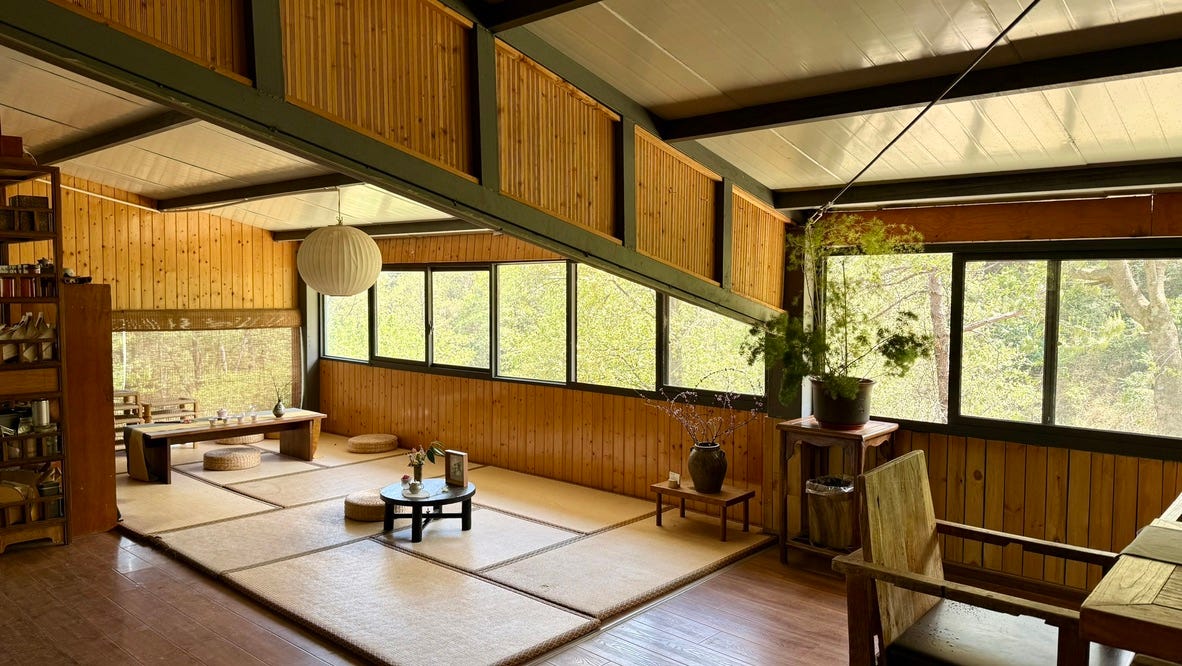
The tasting room was spacious, partitioned into three sections with different seating styles. A tall wooden ceiling covered the entire space, and wall-to-wall windows were left ajar to let in the breeze. We sipped freshly brewed tea, and the cool breeze swept away our sweat.
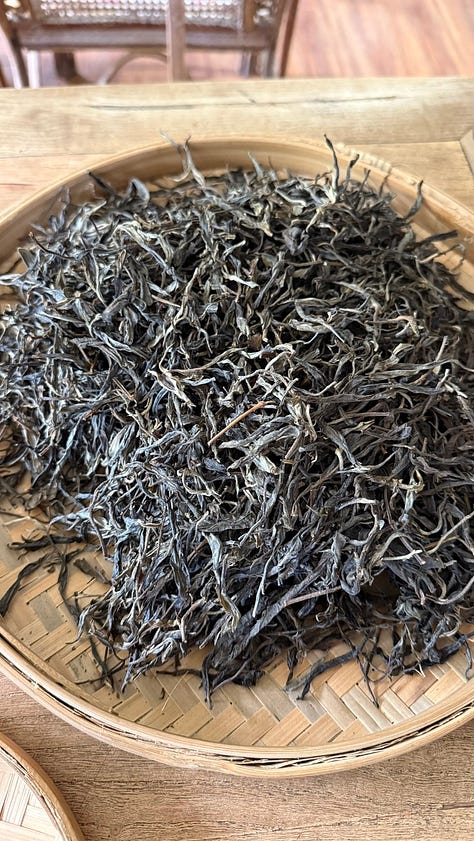
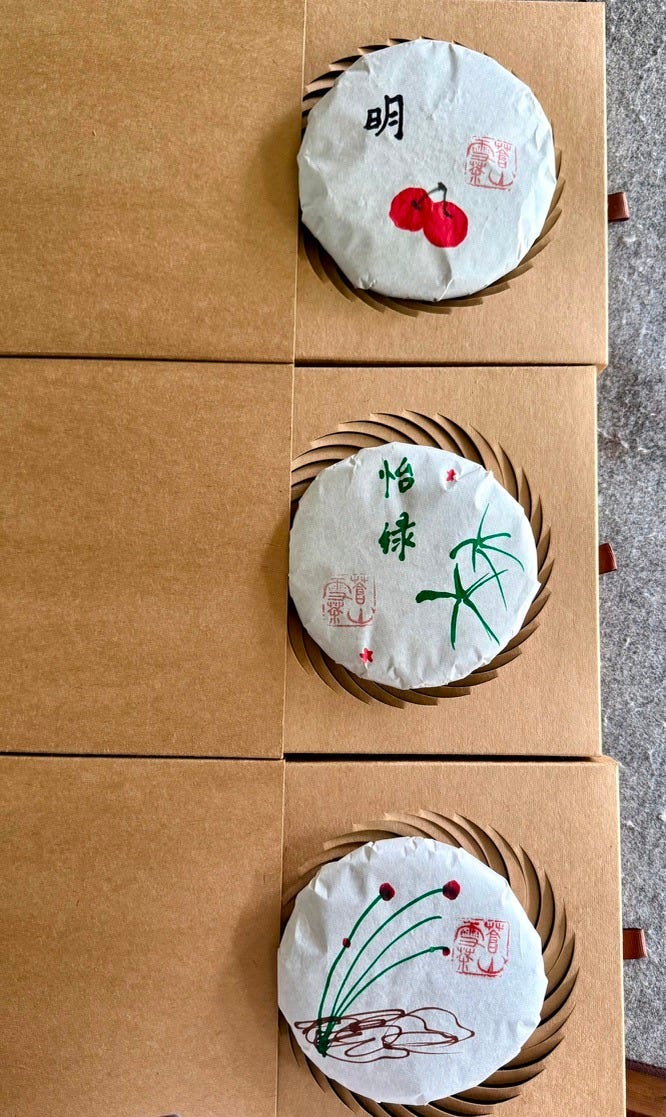
We were to make Pu’er tea cakes today. My sister chose to make Shou Pu’er—a ripe, black tea cake. Our friend and I both opted for Sheng Pu’er—a raw, green tea cake.
Our shifu (teacher) was a young Bai girl dressed in bright marigold, a spiced and earthy tone loved by Bai ladies. She gave instructions in fluent Mandarin, accentuated with thick nasal tones, an influence from the Bai dialect, and when the process got too complicated, she’d demonstrate the technique with such fluid ease that it simply left us in awe. We followed diligently step by step: selecting the leaves, weighing, steaming, and then wrapping the hot and wet leaves in cloth. The most fun part? Standing on a stone with the cloth-wrapped leaves placed underneath, we rocked back and forth, back and forth, until a cake of tea leaves started to form.
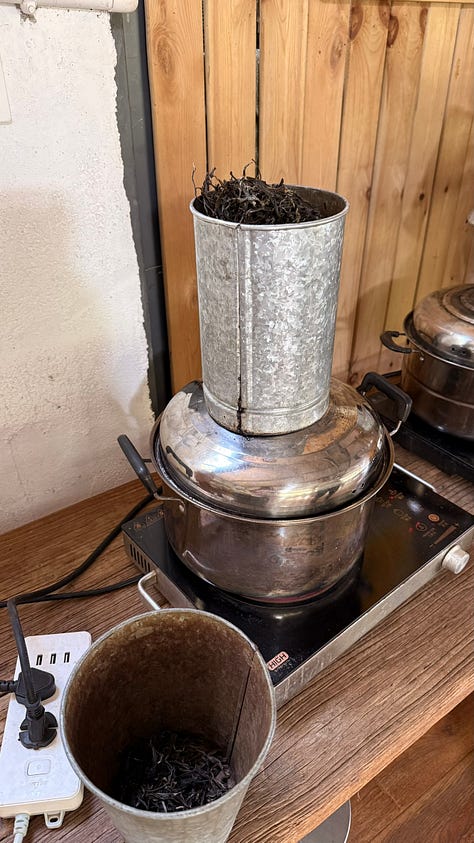
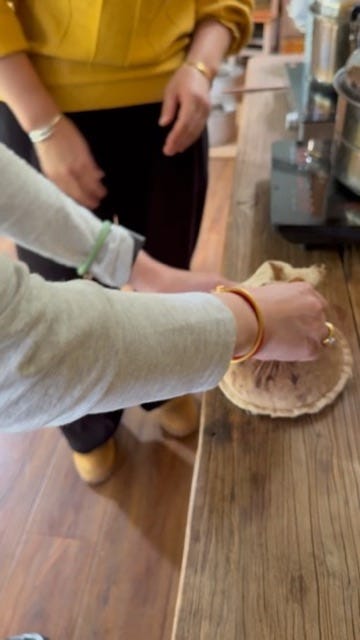
While we waited for our tea cakes to dry sufficiently to be wrapped in their paper covers, the three of us took our tea tasting outside in the garden, accompanied by the resident Maine Coon, a rescue.
Life felt easy. Or at least, it did for visitors like us, who were merely dropping in for the romanticized experience of making a tea cake. I thought about the back-breaking work of picking tea under the sun, the intense heat from pan-firing required to “kill the green”, and the immense time and patience needed for the drying and fermentation. Scaled up to a commercial scale, would life still feel easy and content?
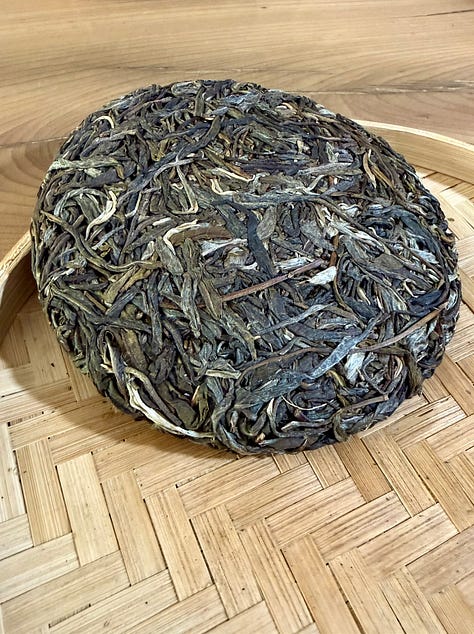
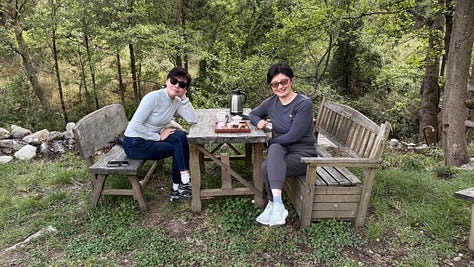
I didn’t let that contemplation dampen the joy of the last part of the program, which is also the most satisfying part of the whole experience: designing the artwork for our individual teacake wraps, and watching the end products come together under our hands and in front of our eyes.
Visiting a farm had always been on our itinerary, but we didn’t have a particular one in mind before arriving in Dali.
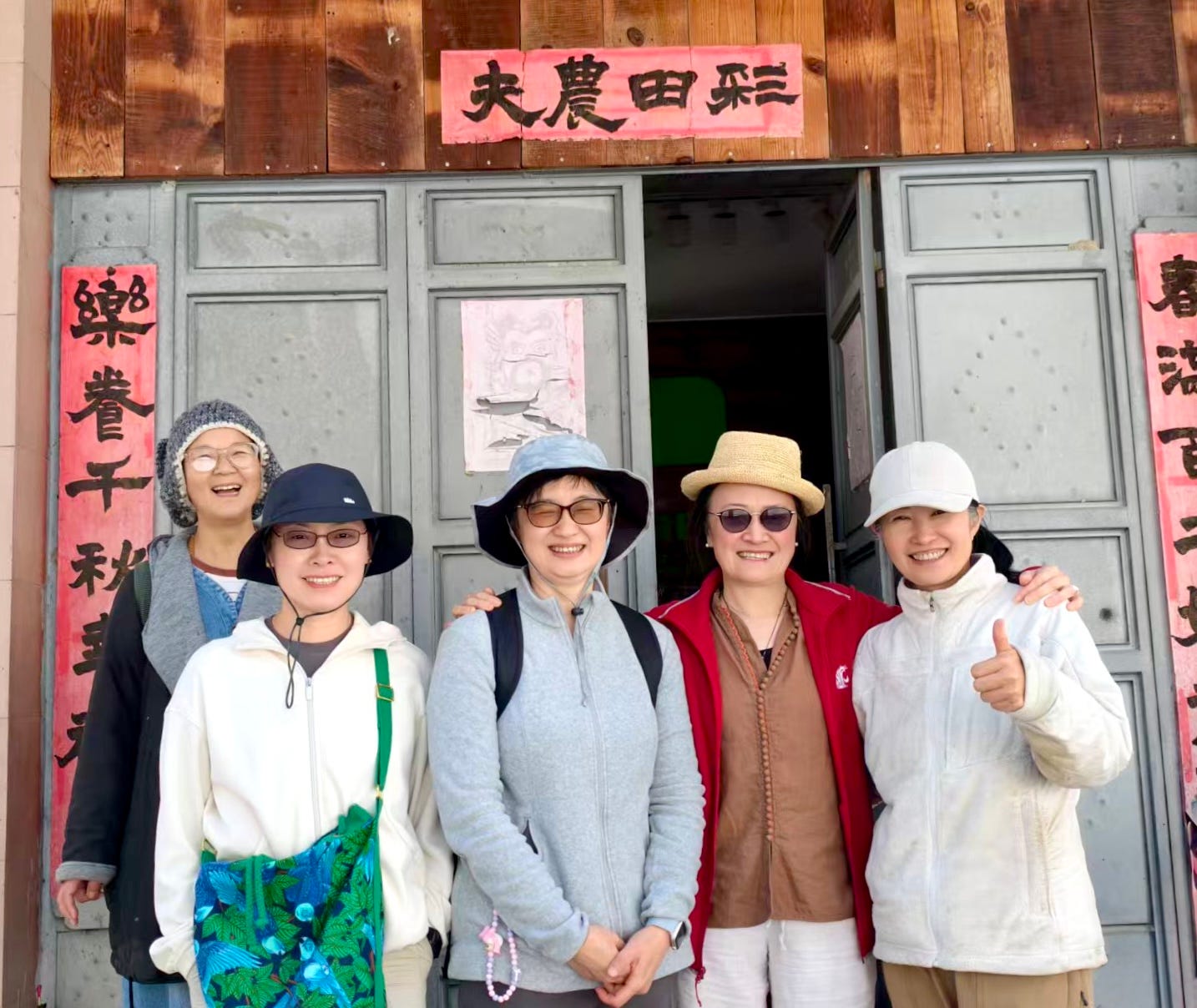
We were enjoying the morning tea when Zhengyi mentioned that the fragrant “Seven Aroma Herbal Tea” was made locally on a farm with a pretty name: 彩田农夫—Rainbow Tiller.
“Would it be possible for us to visit there?” I asked, swallowing a mouthful of tea.
“Of course! I am going there to take photos today, and you gals are welcome to tag along!” Zhengyi was all smiles, pointing at her Nikon on the table.
A 20-minute Didi ride later, we arrived at the farm—thirty acres of rainbow-colored flower fields just outside of a village.
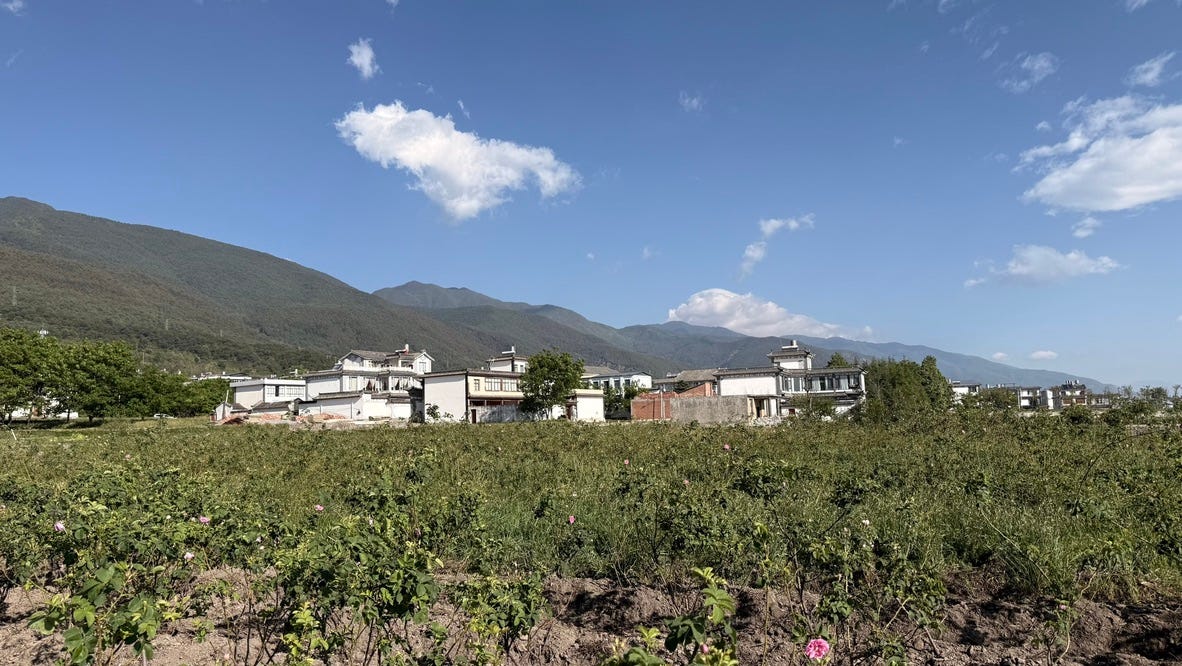
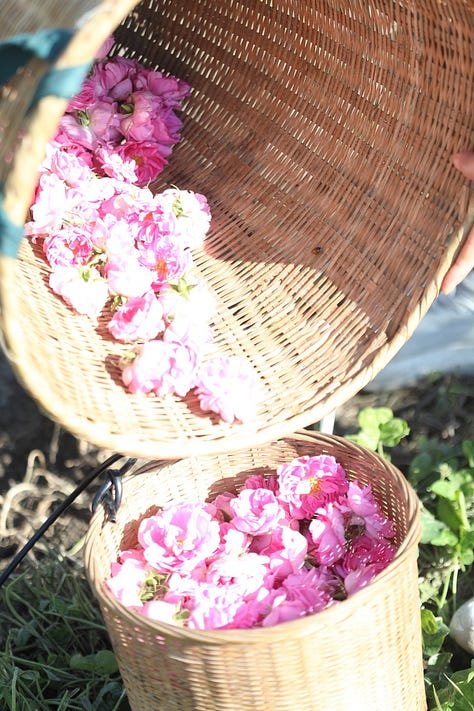
It turned out that the farm’s main crop was the legendary Damascus rose. Damascus rose is an ancient hybrid famous for its intoxicating, deep, and complex essential oil prized in luxury perfumery. Its flowers have soft, multi-layered petals that blush a delicate pink, and they must be hand-picked during the morning hours when the oil peaks in the blooms.
At the foothills of Cangshan, Dali’s subtropical highland climate mimics the sun-drenched, semi-arid hills of Syria, the hometown of the Damascus rose. About ten years ago, two women from different parts of China, who shared a belief in healthy living, came to Dali. It was here they embarked on an adventure of farming the land in a way that was harmonious with both earth and soul. One of them, Ms. Gao, welcomed us with a bright smile and a warm hug.
“The best way to learn about our farm is to work the field,” she said with a wink, as she handed us each a back-basket. “Follow me!”
The harvest season had just begun, and we arrived in time for the second pick of the day—a couple of hours of the bright Dali sun had just turned the earlier buds into full blooms. We followed Ms. Gao, trudging through the furrows, looking for the perfect flowers, and leaving the ones the bees were feasting on. She showed us how to use just three fingers to pick a flower with one quick snatch and explained why the same field needs to be picked multiple times a day—to catch the flowers at peak bloom at different times of day.
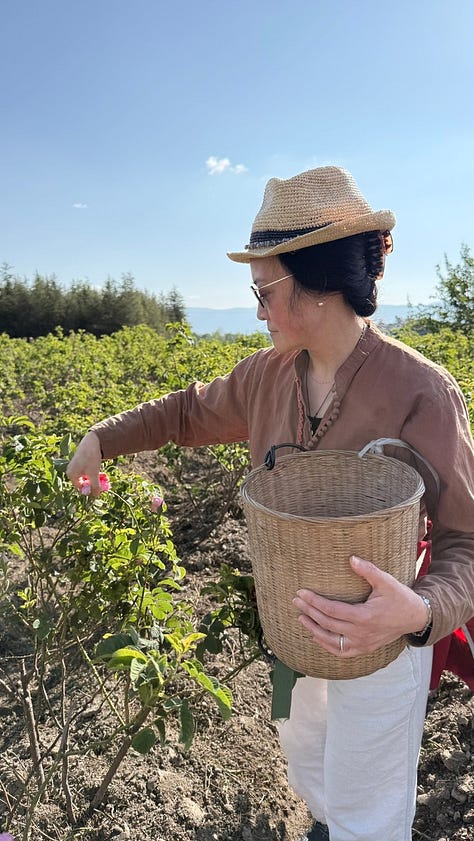
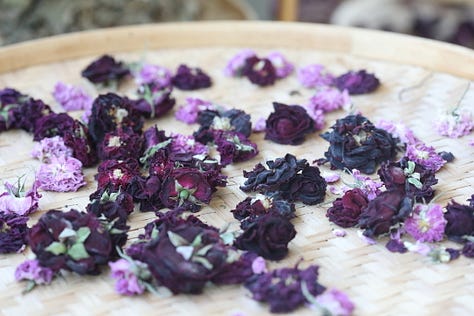
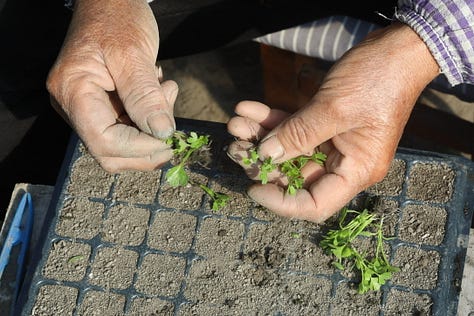
Ms. Gao told us the aphids almost destroyed the roses in their first year. Her team patiently waited for nature’s solutions—ladybugs—to descend on the aphids, instead of resorting to pesticides. They also committed to manual labor instead of using farming machinery. “Farming can be overwhelming, and the work in the field might break our backs at times, but we never let it break our spirit.”
If I didn’t know these were Damascus roses, I’d think the thriving flowers were native to this land; if it weren’t for Ms. Gao’s Beijing accent, I’d think she was one of the Dali Ayis (aunties). When I told her that, she laughed in a way that was unmistakably Beijinger.
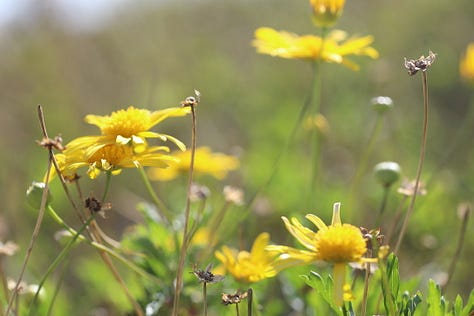
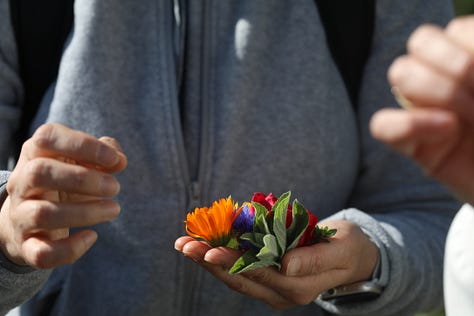
Beyond the rose field, patches of vibrant flowers and herbs filled every nook and cranny—marigold, chamomile, Blue Boy Rosemary, lemon thyme… These were the very ingredients that went into the Seven Aroma Herbal Tea we drank in the morning.
I asked if they would expand the farmland now that it seemed every inch of usable land was being fully utilized.
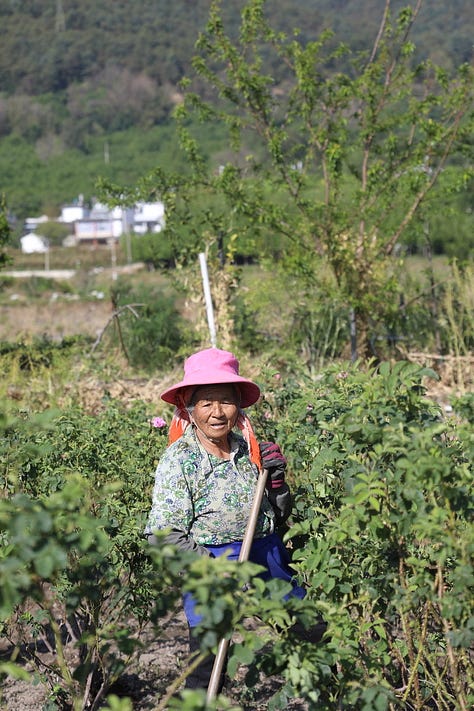
“We came here to find a lifestyle that’s closest to what nature intends, not to get rich.” Ms. Gao was unapologetic. “We want to improve what we are doing, but no, no expansion.” She paused to step aside to let a file of ladies wearing sun hats and carrying hand tillers pass by. “And we city folks would never have any success without the guidance and hard work from these local Ayis.” We all stopped and said hi to the Ayis.
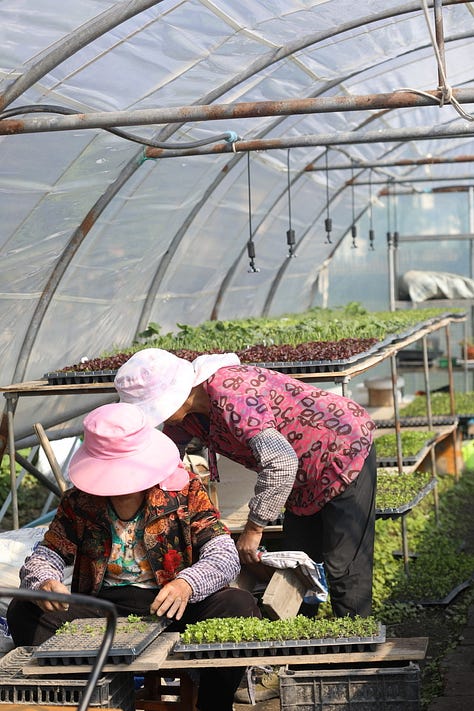
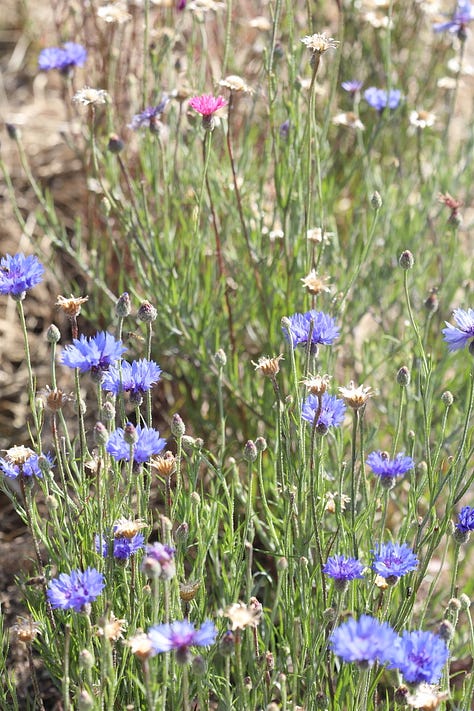
“See this blue beauty?” She placed a delicate blue cornflower in my palm. “We call it 找到幸福—Finding Happiness.”
I looked at the rainbow-colored field, and I saw happiness; happiness that’s nurtured by patience, hard work, and belief.
Read the second half of this travelogue here.
Like what you read? It would make my day if you let me know by clicking the ♡ below, and share with your friends.
Check out the website to read more stories from The Dreams of an Immigrant.
Subscribe to receive future newsletters in your email inbox. You can unsubscribe at any time.
Comments
Nothing yet. Say the first thing.
Sign in to join the conversation.