
In the final episode of Netflix’s five season series Stranger Things, the teenage sleuths of Hawkins, Indiana come face-to-face with a familiar, old evil.
But the form their old enemy takes is not one they remember. For multiple seasons now, the series’ main cast has been at war with the Mind Flayer, first introduced in the global phenomenon’s second season as a spider-like creature made of living, airy particles that can possess individuals and has a dark connection to the series’ big bad, Vecna (Jamie Campbell Bower). To track down Vecna and stop his plan of destroying Earth as they know it, the heroes have traveled into the Abyss, an alternate dimension where Vecna and the Mind Flayer are waiting for them.
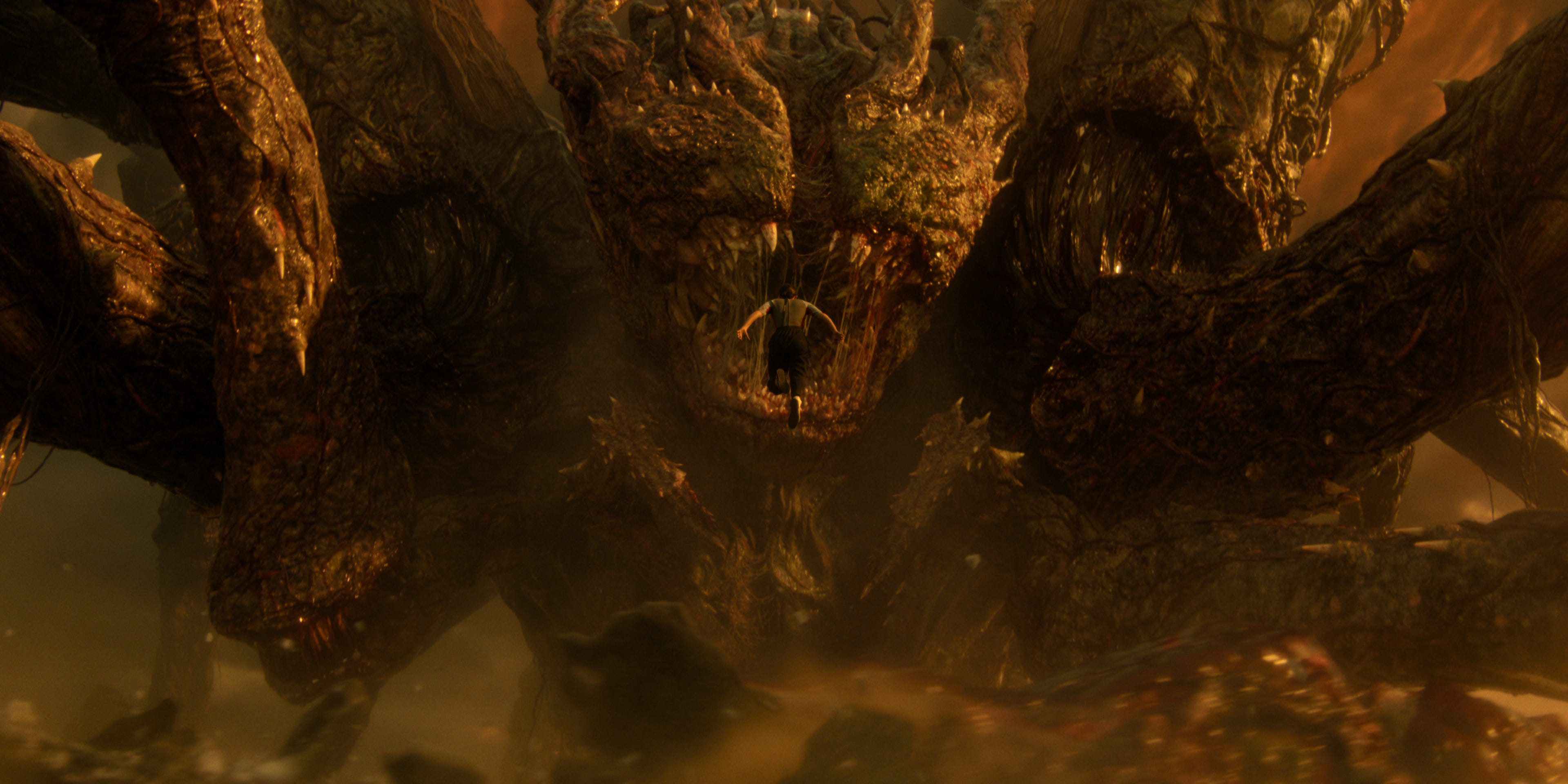
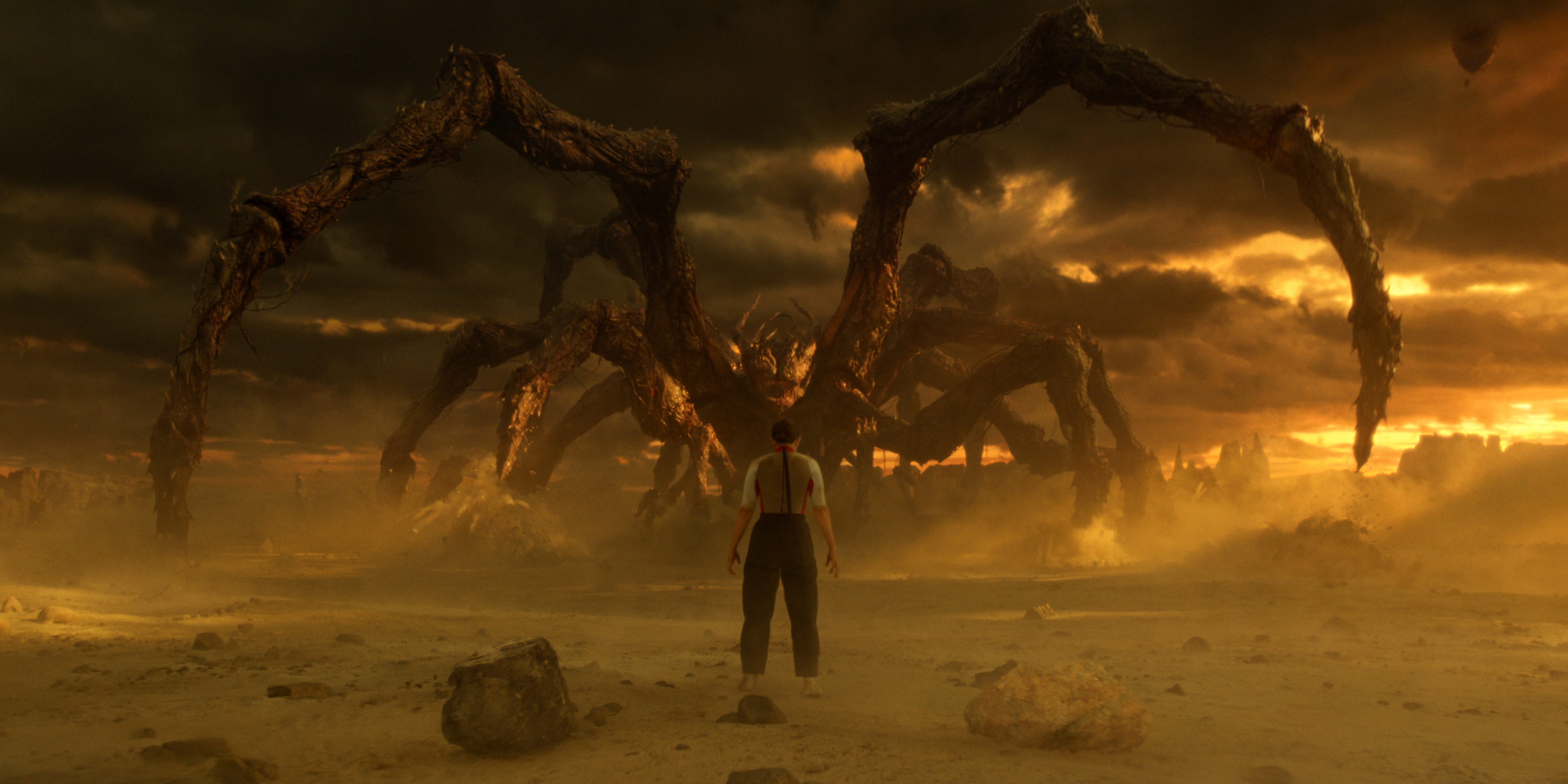
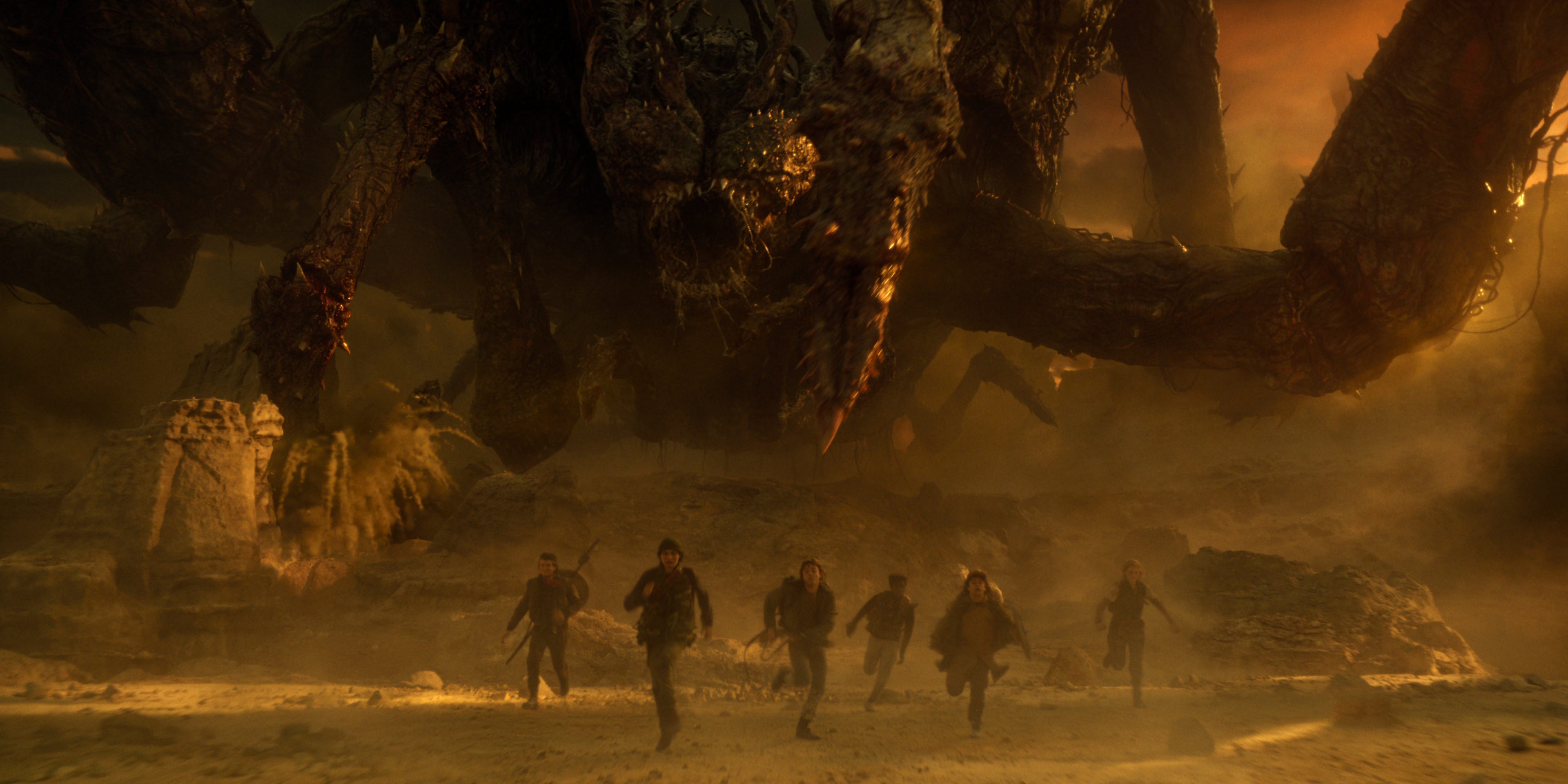
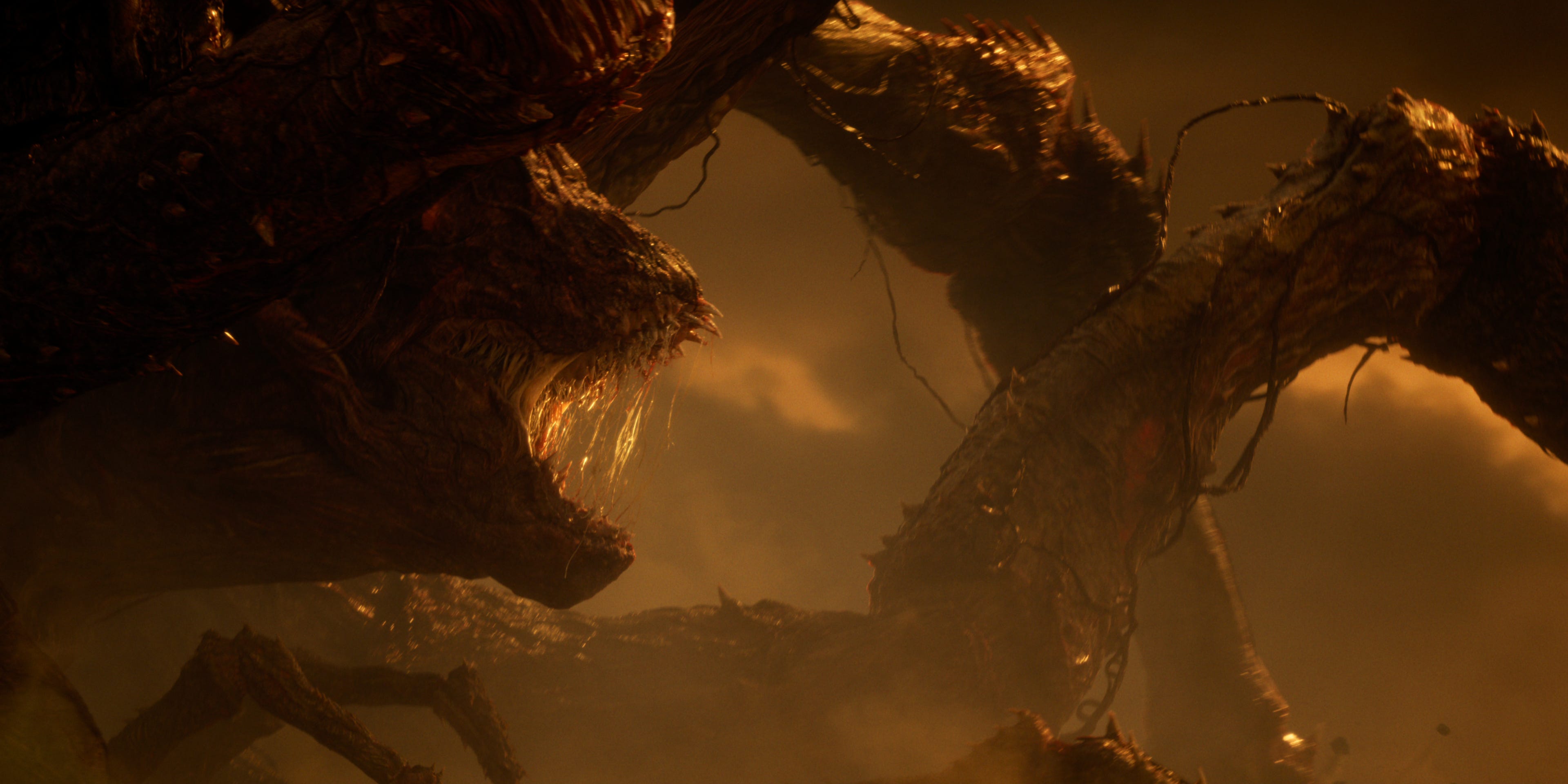
Now, the Mind Flayer is no longer a smoky, airborne possessor. Instead, it’s taken a more solid form, a humongous tree-like structure made of flesh that unfolds into a massive spider monster with a gaping maw. This new design, introduced for the first time in this fifth season, was shepherded, in part, by the season’s VFX supervisor Betsy Paterson. Paterson, along with series creators The Duffer Brothers and a host of other creatives and artisans, brought the upgraded Mind Flayer from concept art to final visualization, so that when the series’ universally-loved characters faced it down in battle, the overall intricacies of the action made sense.
“It was interesting because it was probably the most collaborative I’ve had on a show, where we’re talking to the writers, talking to the Duffers, talking to the directors, just really everybody kind of pitching in and figuring out what it would take to make those scenes,” Paterson told Immersive. “And we had to design most of the landscape. … We weren’t just designing the Mind Flayer, we were also designing the whole battlefield, as well.”
For her work on the season, Paterson, and a host of other VFX vendors and artisans, has been nominated for the Emmy Award for Outstanding Special Visual Effects In A Season Or A Movie. Paterson recently spoke to Immersive via Zoom about her experience closing out Stranger Things, breaking down creating the Mind Flayer’s final form and what looking back on the work has looked like for her.
[This conversation has been edited for clarity and length].
How did you get involved with this season?
The Duffers and the producers kind of knew it was going to be a big project, being the final season, and, of course, everything they do is large-scale. They were just sort of looking for help to kind of plan it from as early as possible and really try to attack it in an organized way and just make sure that they had all the pieces in place to bring it together, so they called me.
What exactly was your process as a VFX supervisor? Were you overlooking different assets that came in? Just planning and scheduling things?
The planning and scheduling is mostly the producer, not the supervisor. Because this is such a huge project, we had almost 6,000 shots, which we kind of knew from the beginning. It was my job to kind of look at the big picture and kind of figure out what were the hardest problems (and) what were the biggest design challenges that we were going to need to face. From the very beginning, from reading the first script, I was on the project altogether for three years. At the beginning of that, it was all about reading the scripts as they came in and kind of just identifying what the global picture was going to be for VFX and assembling the team.
I had a lot of great help. It’s not usual on every show, but especially on big shows like this, I like to have a VFX art director, who kind of is really focused on the design of things. On this show, we were lucky enough to have Michael Maher Jr., who had been with Stranger Things since season two, so he was responsible for a lot of the creature design and doing a lot of storyboards. His job was kind of to keep an eye on making sure we were getting the designs done and the scenes kind of laid out so that we knew what to expect. My job was more figuring out how to shoot them, and for that I had help on set. Our on set supervisor was Sean Ames, so I leaned on him to kind of be there day to day so that I could be behind the scenes, talking to the other department heads (and) really figuring out how to solve our problems during the shoot.
Then in post, it’s my job to kind of work closely with the Duffers and the editors and really make sure that we are giving them what they need and telling the story in the right way. The job extends all the way from early script reading and just kind of sketching out what’s needed, through pre-vis and then shooting, and then in post-production doing postvis, which we kind of do a really rough version of the shots to make sure we’re going in the right direction before everything’s locked. Then looking at all of the versions from all the vendors to finalize.


Could you tell me what you identified as the overall vision for the season, what that needed to be, but then also during production what the hardest elements became?
Stranger Things, it has such a well-defined kind of world after four seasons, (so) we had kind of parameters that we needed to stay within, but at the same time, we wanted to plus everything. How can we take this Demogorgon that we’ve seen season after season and make it even cooler and even stronger, and kind of send the message through design tweaks and action tweaks that these guys are even stronger now? They’re supercharged. The Demodogs got bulkier and more muscular and a little bit bigger. The whole kind of overriding story is that Vecna has rebuilt himself and all of his creatures to be unstoppable, so that was what we were really trying to sell throughout the season.

I have to ask you about the Mind Flayer leviathan in the final episode. Can you just walk me through creating that, maybe from the pre-prod stage — where you’re talking about it with the Duffers and what’s in the script — to actually making it, to seeing it fully realized? For me, that’s one of the biggest standouts of the VFX world in this.
It certainly was one of our biggest challenges, just because of the scale of it. At the start it was just kind of figuring out, what do we need from this creature? We knew it was going to be the ultimate big bad that needed to be defeated, so it needed to feel like an extension of Vecna, but also part of the Mind Flayer. The Duffers came up with the idea that, ‘OK, when we first see it, we won’t even know that it’s the Mind Flayer. We’ll just think it’s Vecna’s lair,’ and it’s this big tree form. We had a great time really figuring out how to design a creature that could be in this kind of gnarled tree form, and then unfurl when it attacks in the coolest way. Michael did a lot of sketches and went back-and-forth with the Duffers for probably six months, kind of figuring out what the story beats needed to be (and) what the Mind Flayer needed to accomplish, so that has to inform the design.
Then when we felt like we kind of had the overall look, we went to Wētā and they started filling in all of the details, all the little vines dripping off it and what its skin really looked like. They did a lot of tests for us to figure out the scale; we needed to know exactly how big it is, not just, ‘Oh, it’s big.’ If you look at it, it does not change size from shot to shot. It’s an established, real size. We did a lot of tests to kind of figure out what would be clearly just the biggest thing we could possibly make that we could still shoot (and) that we could still design action scenes around, and sequences that wouldn’t look completely ridiculous with all our little tiny humans trying to kill it.
It was interesting because it was probably the most collaborative I’ve had on a show, where we’re talking to the writers, talking to the Duffers, talking to the directors, just really everybody kind of pitching in and figuring out what it would take to make those scenes.
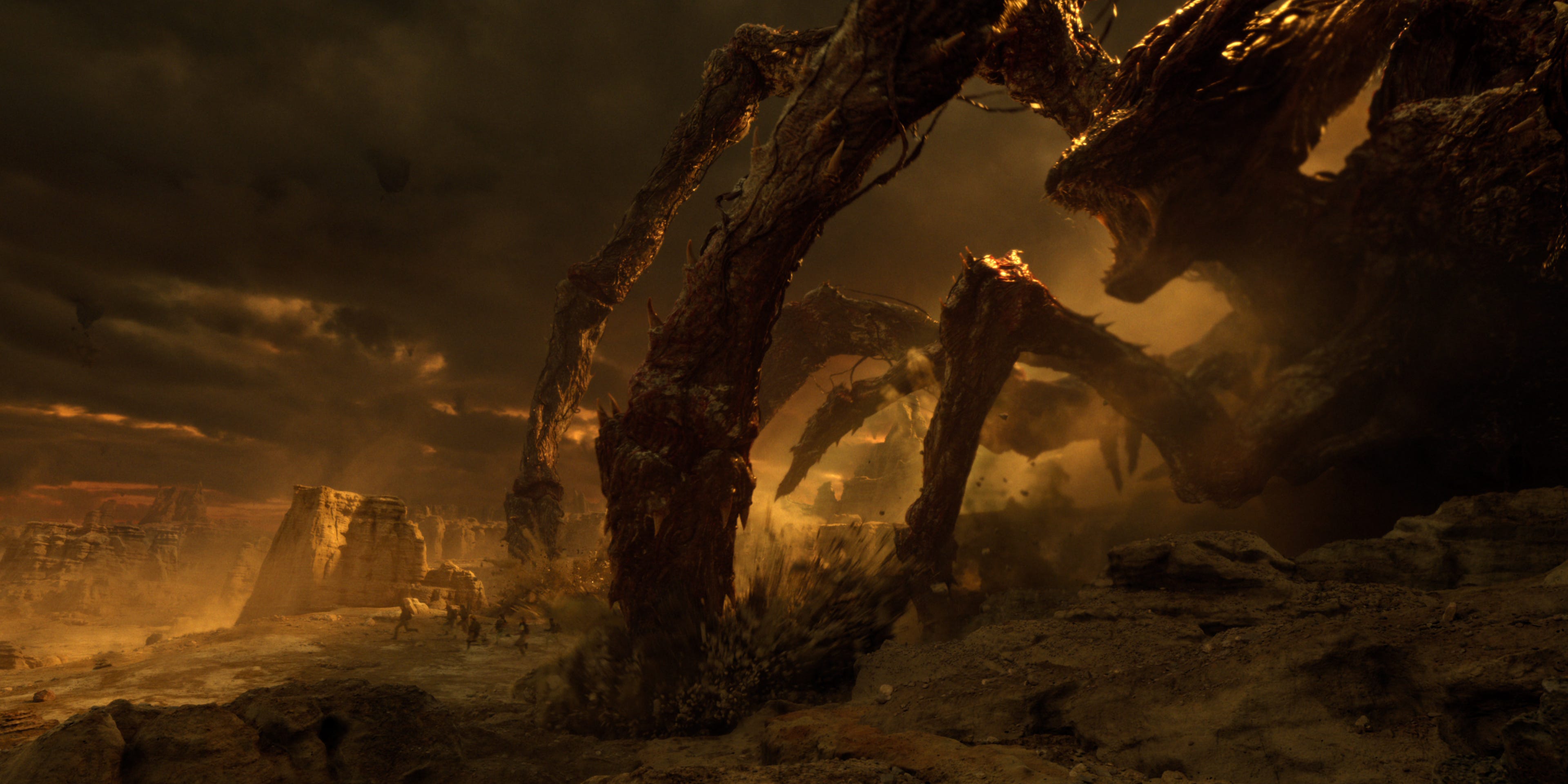
That’s super cool that you mentioned size; watching that final sequence as a viewer, you’re kind of just watching it and you’re immersed in the battle. It’s really cool to hear about how every single shot, no matter from how close or how far you are, has to be consistent. That’s a small granular detail that I think if you didn’t know the behind-the-scenes of the VFX, it’s something you wouldn’t know about.
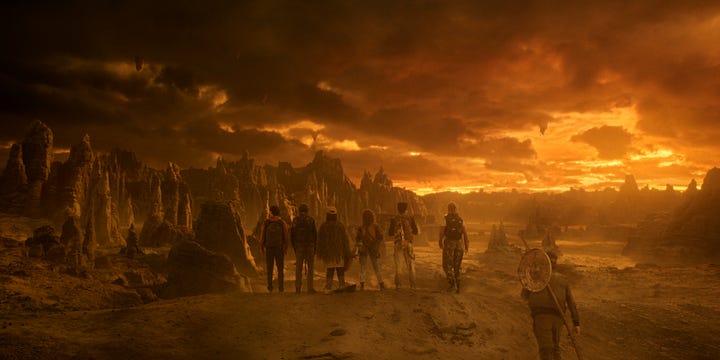
Yeah. And we had to design most of the landscape; it was based on a real place, but the kind of real geometry of it we had to lay out according to how the battle went, so that they had the right kind of playing field, the distances all made sense, where they all run to at what times in the battle, the cliffs where they figure out if they can run up the cliffs, they can start firing down on the monster. All of that had to be worked out, so we weren’t just designing the Mind Flayer, we were also designing the whole battlefield, as well.
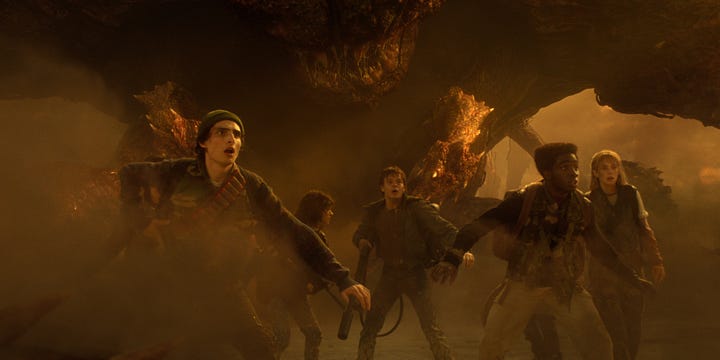

It sounds like basically, VFX-wise, everything in this scene, aside from the physical actors, was laid out around that creature. Every element of VFX circled the final battle.
Yeah. Exactly. And the choreography of the humans, too; we worked closely with the stunt coordinators to really figure out what they could actually do and what physical stunts we could do, because we try to keep everything as physical as possible. All of the ground plain that they’re actually running on is all real. There’s a couple of shots where she’s a few hundred feet up in the air where we had to go CG with Eleven, but for the most part, all the kids, they’re human characters or stunt people. They’re not CG.
Is there one aspect of visual effects creation, or maybe a personal North Star you have about VFX, that you look to on every single project you’re a part of?
It really has to be story. It is a visual art form, but you can’t let yourself forget that it all has to be in service of the story. You can go down many rabbit holes trying to tweak this little part or make this one thing really beautiful, and you do that as much as you can, but the goal at the back of everything has to be to tell the story in the best way possible.
What elements of the season would you say you and the VFX team had the most creative leeway (on)? Something completely new to this world that you got to kind of design and create.
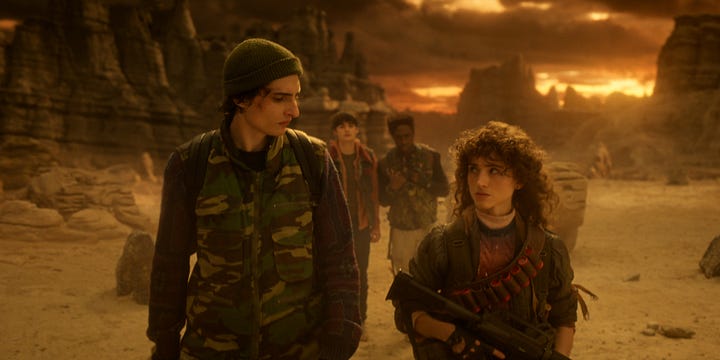
That final battle scene; the whole Abyss environment, we had a lot of input into what it looked like and how to make it evolve. We knew from the scripts and from talking to the Duffers (that) there were going to be these long walk-and-talks before we even get to the battles, so we had to make sure we were designing a world where that made sense. (We) had to have all the little reveals, (like) oh, they first see it around the corner and it’s very far away and then they see more detail and then they get up close and it starts to attack. It was a lot of fun to really get to be very involved in the design of that final battle.
How do you feel to have this work, and this season, behind you?
It was certainly the longest I’ve ever been on a single season of television; a year-long shoot, over a year of prep, really, because the strikes kind of extended it, and a year of post. It was very much all-consuming for three years there, so I think even now I’m still decompressing. It was great. It was really such a satisfying project to be involved in and to really feel like we succeeded.
I assume it has to be super gratifying because you’re working on one of the biggest shows in the world, on the finale. That’s so cool.
Yeah, exactly. It was very exciting. We didn’t get bored.
Stranger Things season five is available to stream on Netflix. The winner of the Emmy Award for Outstanding Special Visual Effects In A Season Or A Movie will be announced on Sept. 6.
No posts
Comments
Nothing yet. Say the first thing.
Sign in to join the conversation.