
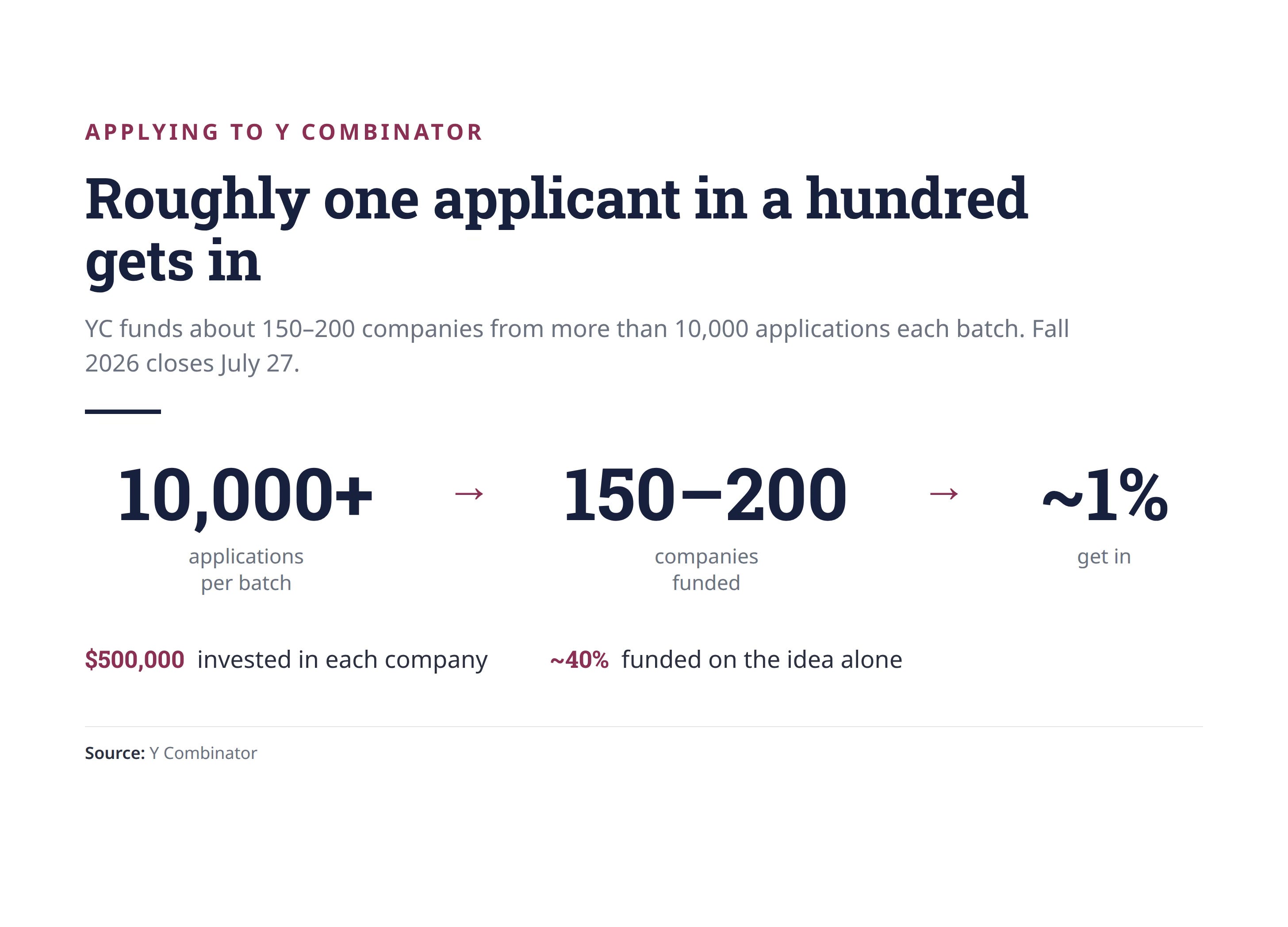
YC’s Fall batch closes to on-time applications on July 27 at 8pm Pacific, several days from now. Roughly one applicant in a hundred gets in. YC funds about 150 to 200 companies out of the more than 10,000 that apply, and writes each a $500,000 check.
That ratio isn’t peculiar to YC. Every early-stage investor runs the same process, and I've spent years studying it. What follows lines my research up against YC’s own advice for applicants.
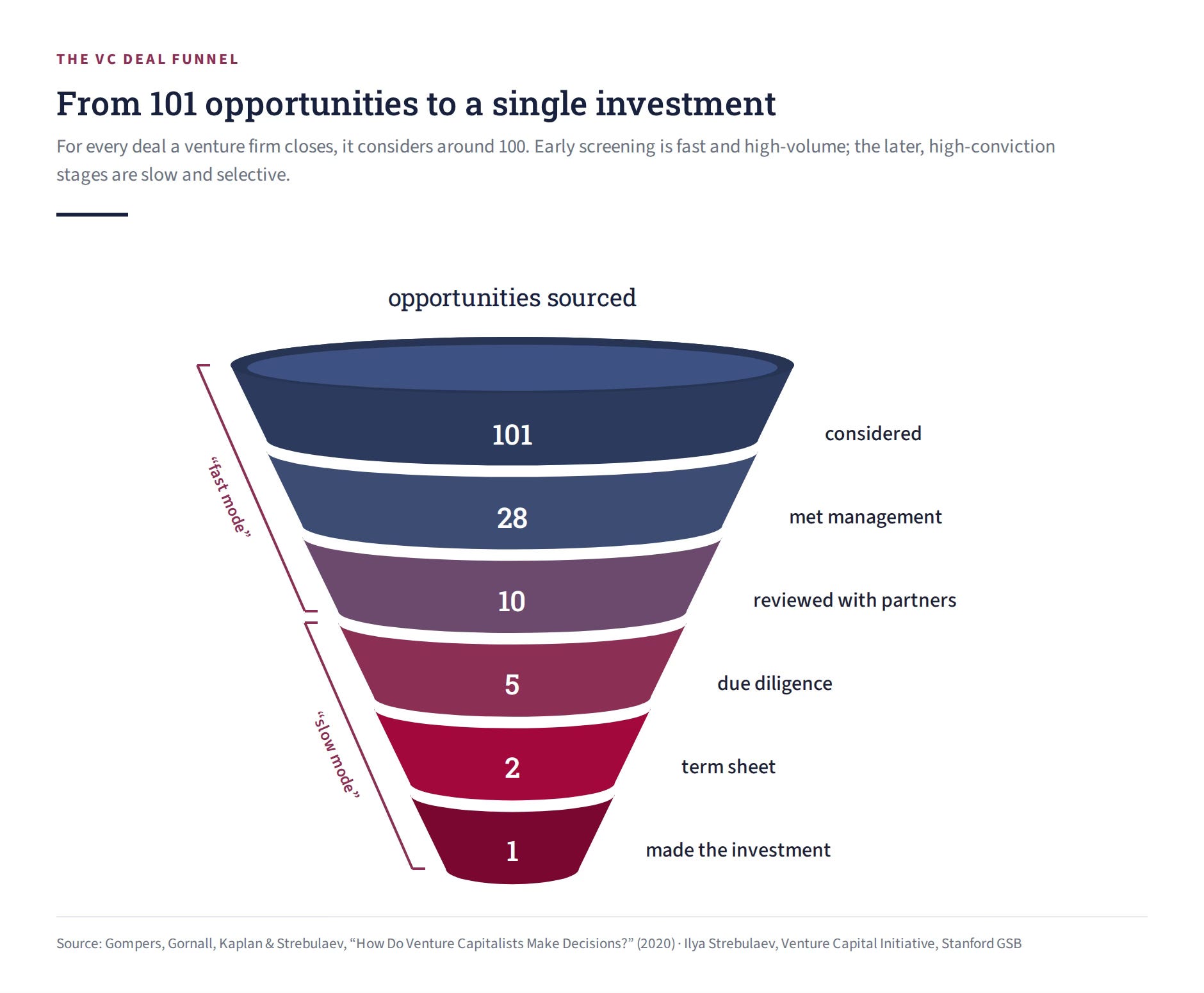
The average venture capitalist looks at about 101 startups for every one they invest in. Of 100 companies that reach an investor, around 70 are gone almost immediately, usually without a single meeting.
YC is unusual in a way that matters a lot this week. In the rest of the venture world, about 60% of deals come through someone’s network, and a warm introduction usually beats a cold one. YC has deliberately taken that lever away. It says plainly that it doesn’t rely on introductions and reads every application on equal terms. You don’t need to know anyone. So the advantage most founders spend years building up counts for nothing here, and all that’s left is the written application.
All of which puts a huge amount of weight on being clear. Paul Graham, who wrote YC’s application guide, is blunt about it. A partner might read a hundred applications in a day, and more than half of the groups who were good enough to earn an interview talk themselves out of one just by failing to explain what they do.
The fix is the discipline I give anyone writing a cold email. Say what your company makes in the first sentence, plainly. Drop the marketing language, because experienced investors are deaf to it; YC’s own test is whether, after reading your description, the reader could rebuild what you’re doing. If they can’t, you haven’t told them anything. Be genuinely different in what you’re building without dressing it up in a clever description. Investors are sick of me-too ideas, but “X for Y” is a perfectly good way to be understood. And put your credibility on the page early, whether that’s a technical background, a company you ran before, or customers you already have.
I know cold outreach works because I tested it. With Will Gornall I sent more than 80,000 cold emails to over 28,000 real investors. Almost 10% wrote back with interest to at least one, and the best pitches drew interested replies from 13 to 17% of the VCs. Garry Tan, who runs YC now, is the obvious example. Back in 2012 he answered a cold email from an address that looked like spam, put in $300,000, and it turned into Coinbase. A good company with a clear pitch can start from nothing and still get somewhere — and your application is that pitch.
At the screening stage, an investor isn’t deciding whether to invest. The only thing on the table is whether you’re worth more of their very limited time. So they do what behavioral researchers call elimination-by-aspects, and what I call looking for the critical flaw. They hunt for the one problem that lets them stop reading. You get one, maybe two red flags before that happens.
Which leads somewhere counterintuitive, and my research and YC agree on it completely: name your problems yourself. YC’s guide puts it well. If a partner finds a hole you didn’t mention, they assume you never saw it, and since they care more about the founders than the idea, hiding a weakness to protect the idea trades away the thing that matters. The interview works the same way. YC says founders who talk honestly about what’s hard come across better than founders who wave the hard parts away.
It’s also where the question of what sets you apart gets settled. Saying you’ll be better designed or easier to use doesn’t work here: that’s just a promise to execute well (and everyone before you made the same one). You need to know the products already out there, know exactly what’s wrong with them, and have a real theory of why you win. Sit in the reader’s chair, ask the questions they’ll ask, and find your weak spots before they do.
My research and YC’s process both put the founder first. YC comes right out and says it cares more about the founders than the idea, since most funded startups end up changing the idea anyway. The application’s most important question asks each founder to describe the most impressive thing they’ve built or done. Be specific.
Another question I’d put at the center is your unfair advantage: why you, and not any of the other people chasing the same idea. Founders trip on this constantly. A student once walked me through a genuinely smart idea, but she spent her time on how she’d arrived at it instead of why she was the person to build it. A personal story tells the investor that you’re committed. On its own, it won’t move them.
And lead with evidence instead of projections. Years ago, before remote work was an obvious bet, a student pitched me a remote-workplace platform by reciting market size and growth rates. The thing she’d buried, and I had to drag it out of her, was that she’d already interviewed more than 300 remote workers and had three companies, one of them with 3,000 employees, ready to pay for a trial. That’s worth far more than any number from a consultant’s report. “Here’s what we built and here’s who already uses it” beats a market-size slide every time.
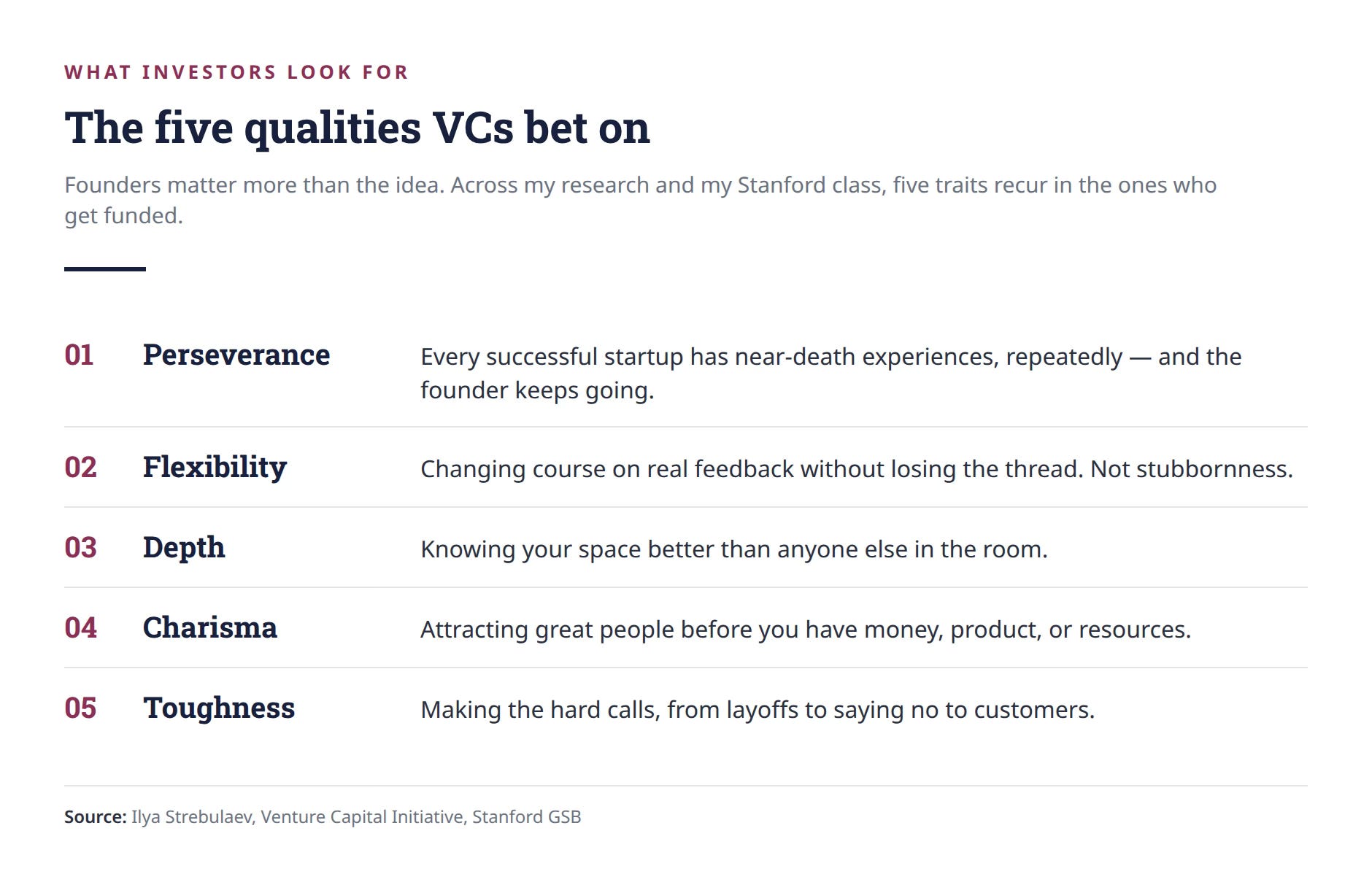
Under all the specifics, the same five founder qualities keep coming up, in my research and in my Stanford class.
If your application gets through, the interview is ten minutes over Zoom with two or three partners who’ve already read it. No slides, no room for a speech. YC is firm about one thing that catches founders off guard: don’t rehearse. Over-preparing makes you stilted and doesn’t help your odds.
What does help is progress. YC says the best way to impress the partners is to have moved the company forward between applying and interviewing, whether that’s launching, shipping something, or growing revenue. It’s the same signal the whole industry reads. Growth is the clearest evidence that people actually want what you’re making, which is why investors are so fixated on it. So if you get an interview, spend those weeks building rather than practicing.
The rest is about surviving those first two minutes. Be able to say what your company does in a few plain sentences with no jargon. It’s YC’s usual opening question, and a surprising number of founders fumble it. If you’ve launched, know your users and your numbers cold, from where they come from to whether they stick around to what each one costs you. Have a demo ready to screenshare. If you have co-founders, make sure each of you actually talks. And be sincere. The people on that call are the ones you’d be working with, and they’re deciding whether they want to.
A few beliefs keep strong founders from applying at all, and the data says they’re wrong.
You’re not too early. On average, 40% of the companies YC funds each batch are just an idea, most with no revenue yet.
You don’t need a co-founder, though both YC and I think your odds are better with one.
You don’t need to be a software company either; YC has funded everything from microbes to fusion reactors, as long as the founding team can build the product themselves.
And it won’t count against you that they’ve already funded something similar.
This comes back to a point I made in a recent Q&A: if you’re building something that could reach billions of people, the question isn’t whether you’re the one in a hundred. It’s how you make sure you are.
One more reason to take this seriously. When we ranked where the founders of unicorns actually got their early support, YC didn’t just come out on top among accelerators. Nothing else was even close. If you want early-stage backing, there’s no stronger argument for putting your best work into this application.
The deadline is July 27 at 8pm Pacific. Apply on time and you get priority, plus a decision by August 28. Apply late and they’ll read it when they can, with no promised date.
Before you submit your application, do what YC’s guide suggests. Print the thing out, take a red pen to every word you don’t need, and make sure what’s left is specific and plain. Then read it once more as if you were the one on the other side of the table.
Getting turned down once doesn’t close the door. About half the companies YC funds applied more than once (sometimes a lot more than once) before they got in, and showing real progress since your last try is a genuine point in your favor. YC gives detailed feedback to everyone it interviews, though not to the applications that don’t get that far, so even an interview that ends in a no is worth a lot. And the bigger thing I tell founders still stands: most companies shouldn’t be chasing venture capital in the first place. If yours should, treat the rejection as feedback and try again.
I hope it goes your way. But if it doesn’t this time, it really isn’t the end of anything. Reapply, and in the meantime keep in mind that you don’t need an accelerator to get in front of investors yourself. If you want somewhere to start, our investor lists are here:
Global VC Unicorn Rankings
·
Jun 5
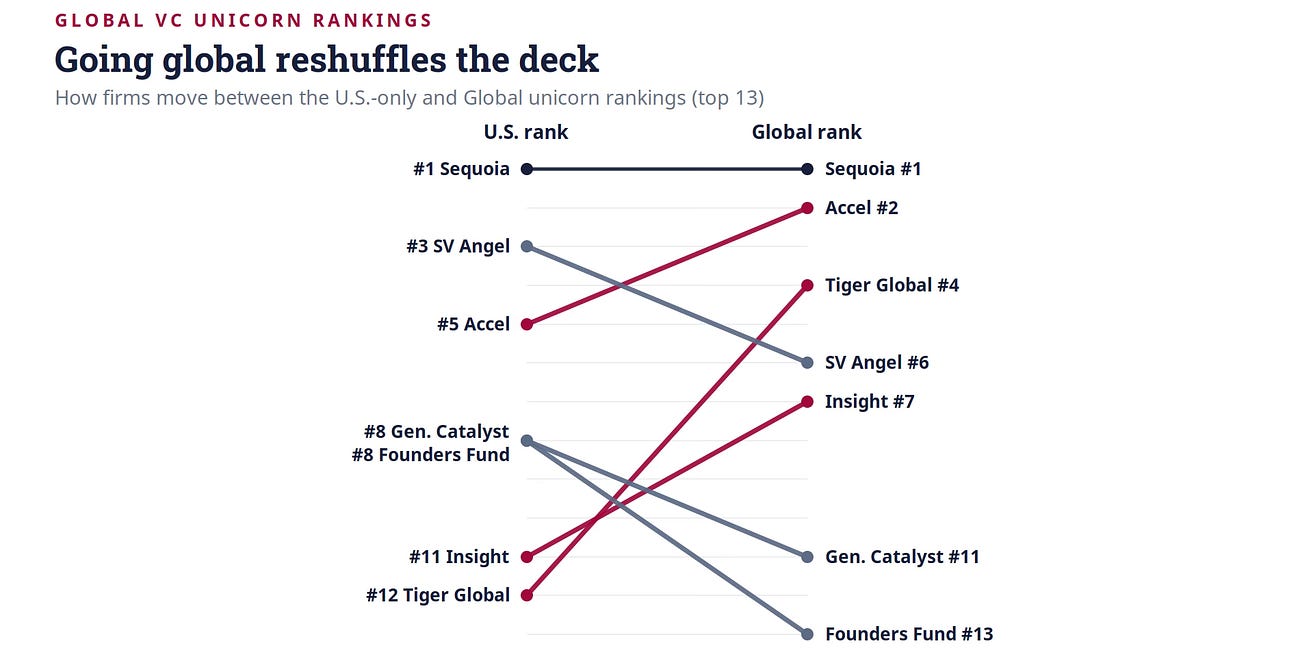
Recently I ranked VC firms by their US unicorn investments. Accel was #5. Tiger Global was #12. IDG Capital was nowhere on the list. Globally, the order shifts: Accel rises to #2, Tiger Global to #4, and IDG Capital — with 103 unicorns, all outside the US — enters at #11.
No posts
Comments
Nothing yet. Say the first thing.
Sign in to join the conversation.