
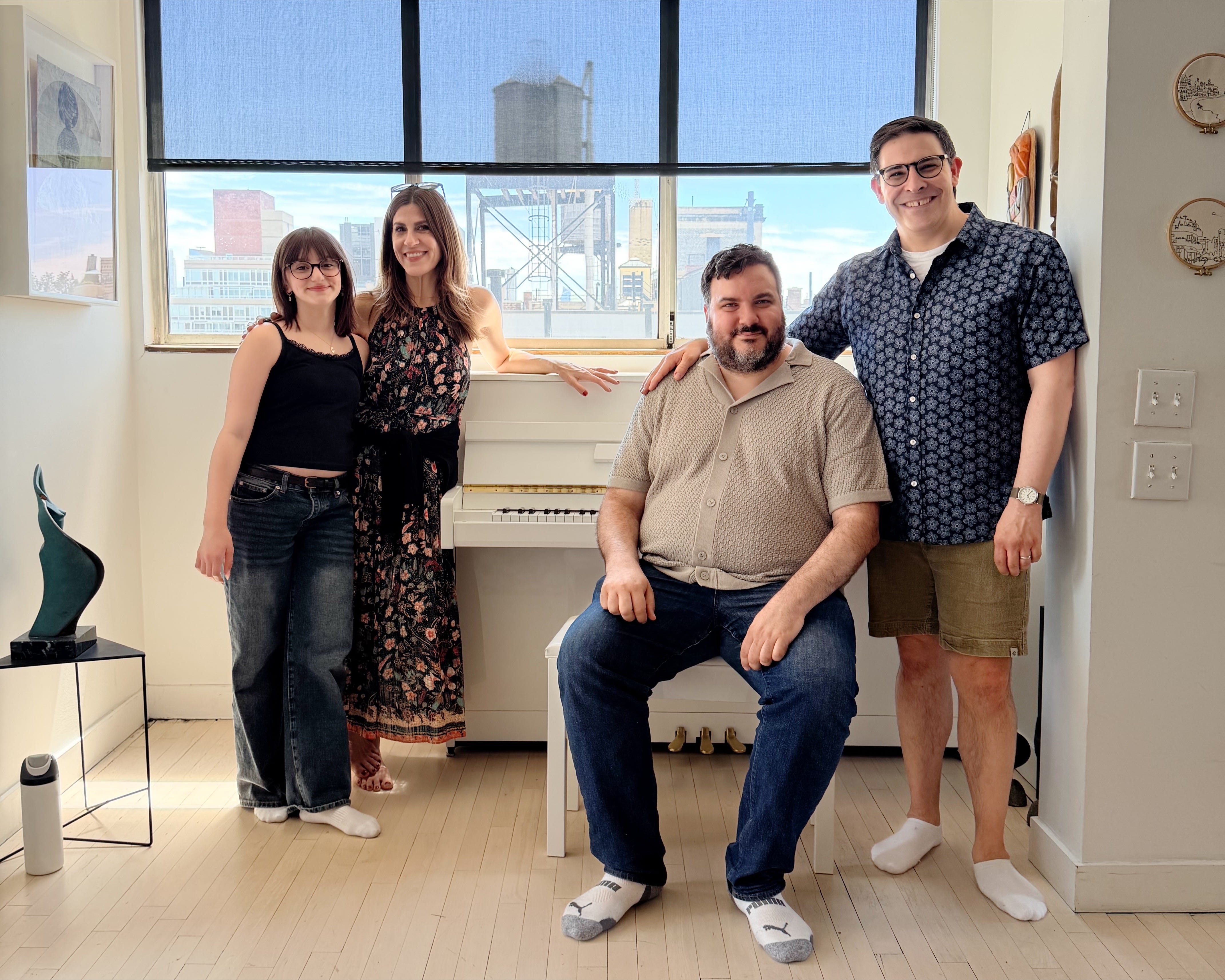
A few weeks ago, I announced that I was making the exciting step of becoming a co-producer for the musical Mythic, which if all goes as planned, will be coming to Broadway some time in 2027. It’s an original pop rock musical comedy based on Greek mythology, which is nice because so few shows are original works these days. The story is set in modern times, centered around the story of Demeter and Persephone (a mother and daughter wrestling with how their relationship will change once she leaves the nest) which is also nice because it so closely resembles what many of us are going through right now with our own kids.
After my announcement, I asked if anyone had any questions and got quite a few! So I answered what I could and gave the rest to the Mythic team to answer. Nothing like having access to a qualified group of professionals to answer your questions rather than running to AI! I also had the opportunity to sit down with Mythic creators Marcus Stevens (books and lyrics) and Oran Eldor (music and orchestrations) to answer all questions related to the creation of the show.
If you have any more questions, please ask them in the comments!
What is a co-producer? What decisions do they control, and do they contribute financially?
First let me explain the producing team. There’s Mythic’s lead producer, Shoshana Parets, who serves as the primary decision-maker. She raises money, hires the creative team, oversees the production, and is responsible for the show’s overall success. Then there is Samantha Lazarus Levin and Jacob Levy who are both producers helping Shoshana produce the show and bring the vision to life.
The degree of decision-making authority varies from production to production, but usually co-producers serve as advisors, advocates, and strategic partners as opposed to hands-on decision makers. Part of the co-producer role is helping raise the money needed to produce the show, usually by introducing potential investors to the project and helping build excitement around it. Many co-producers also bring a particular expertise or perspective. Someone with a marketing background might help think about audience development and advertising, while someone else may focus on partnerships, fundraising, or industry relationships. Ultimately, co-producers help champion the show and support its journey from development to opening night.
Often, there are only a certain number of co-producing opportunities available, so it’s important to find people who are truly in love with the project and have skills to help it succeed.
Does being a co-producer also mean being an investor? How do you find investors?
Often but not always. Many co-producers invest in the show themselves because they believe in the project and want to be part of its success. They also frequently help identify and introduce other investors who may be interested in supporting the production.
Most investors come through relationships and networks. They may be theater lovers, businesspeople, philanthropists, or simply people who are excited by a particular project. A producer’s job is to help them understand both the artistic vision and the business opportunity.
Can anyone be a producer or co-producer?
In theory, yes. There’s no specific degree or certification required to become a producer. Some producers come from theater backgrounds, but many do not. What successful producers tend to have in common is a passion for storytelling, strong problem-solving skills, and the ability to bring people together around a shared vision. Producing is ultimately about helping great work get made.
Do producers have any say in casting, lighting, or set design?
Yes. Theater is a highly collaborative art form and producers are integrally involved in all decisions that affect the success and design of a show.
One of the lead producer’s most important responsibilities is hiring the director and assembling the creative leadership team. Once that team is in place, producers generally trust those artists to do their jobs, while remaining actively involved throughout the process.
Producers attend rehearsals, watch presentations of the work, and offer feedback, thinking about the show from the audience’s perspective: Is the story clear? Is the experience exciting? Is it reaching its full potential?
The best productions happen when the creative team and the producing team trust each other and work together toward the same goal.
What is the time commitment like for producing?
For lead producers, it can be a full-time job that lasts for years. For co-producers, the commitment is more varied or as needed; usually focusing on fundraising, strategy, or supporting specific aspects of the project.
How did Mythic come to be and what kind of musical is it?
Mythic began when Oran and Marcus met through the BMI Musical Theater Workshop (a highly selective training ground for emerging musical theatre composers, lyricists, and bookwriters) and decided to create something together. Marcus says he was inspired by a mythology book he was reading, which had a paragraph about Persephone and Demeter that reminded him of the relationship between his mother and sister.
From the beginning, Marcus and Oran thought there was something funny about the inaccuracy of placing ancient Greek gods in modern times, along with the awareness of that contrast. Like the idea of Aphrodite having a cellphone. They also imagined that the Greek gods of today would be more like Beyoncé and Taylor Swift. This idea led the music to evolve into a more pop-inspired sound.
How many years has Mythic been in the making?
Mythic has been in development for nearly two decades. Writers Marcus Stevens and Oran Eldor first met in 2008 and began developing the show shortly afterward. Their original idea evolved through years of writing, rewriting, workshops, readings, and productions.
Along the way, the show was selected for the National Alliance for Musical Theatre (NAMT) Festival, one of the industry’s premier showcases for new musicals. It later had productions and developmental opportunities in London and Montreal before making its U.S. premiere at Cincinnati Playhouse in the Park.
One of the things people don’t always realize is that Broadway musicals are rarely built quickly. By the time audiences encounter a show, they are usually seeing the result of years of experimentation, collaboration, and refinement.
The recording is from 2019. What's been happening since then?
The short answer: A lot. One of the biggest misconceptions about Broadway is that shows appear fully formed. In reality, most musicals spend years developing out of the public eye.
The 2019 concept album introduced audiences to the music, but a musical is much more than its score. Since then, the creative team has continued developing every aspect of the show—rewriting scenes, deepening character relationships, refining the storytelling, and learning from each new production and audience.
Since the album’s release, the show has continued its journey through productions and developmental opportunities, including work in London, a sold-out run in Montreal, and most recently its U.S. premiere at Cincinnati Playhouse in the Park, which also sold out. Each stop provided a different audience and a different opportunity to learn what was working and where the show could grow.
Some of the songs from the album remain central to the show, while others have evolved significantly, and new material has been added as the creative team has continued exploring the characters and story. That’s one of the exciting things about developing a new musical: it’s a living piece of art. Every production teaches you something, and every audience helps shape what comes next.
By the time a show reaches Broadway, it has often been tested, revised, and reimagined many times. What audiences will see when it opens is the result of everything the team has learned over the past seventeen years.
Why did Mythic open in other states before New York? What is the general path for getting a show to Broadway?
The purpose of an out-of-town production is to put the show in front of a real audience and learn from that experience. You look for theaters that are excited about the project, have strong audiences, and can be great partners in the development process. As the show grows, producers continue raising money and assembling the team needed to bring it to a larger audience.
How closely does the show represent the creators' original vision?
The heart of the show remains very true to the original vision. What changes over time is how that vision is expressed. Songs evolve, scenes get rewritten, characters become more nuanced, and new ideas emerge through collaboration and performance.
When we first put Mythic up in London, we found that we wanted the show to have more feeling and heart. Then, we went to Montreal and felt we needed to bolster the humor. By Cincinnati, the show was really delivering a heartfelt message with honest and true humor.
The goal isn’t to change the vision—it’s to tell the story more clearly and more effectively. In many ways, development is about discovering the best version of the story that was there from the beginning.
What comes first— the lyrics or the melody?
There is no single correct way to write a song, and every songwriting team works differently. In the case of Mythic, the music generally came first, but before any songwriting begins, Oran and Marcus discuss the structure, including the hooks, whether the song follows a verse-chorus format or a different structure, and how the lyrics and music will fit together. They also ask each other several key questions about the goal of each individual song: What does this character want? What is happening in the scene? How does this character express themselves differently from everyone else, and what makes this song unique to them?
After those conversations, Oran typically creates a first pass that is entirely instrumental, usually on the piano. Marcus then writes the lyrics and “populates” the music with the story and character’s voice.
One of the first songs written for the show was Aphrodite’s song, because they knew early on that putting a spell on Persephone would be an important plot point. They also knew they needed a defining song for Persephone as the main character and spent time exploring who she is: a high schooler who loves her mother but feels stifled by her as she tries to discover where she belongs in the world. These conversations ultimately led to “Pantheon.”
What is the audition process for a Broadway musical like?
Professional auditions are actually more similar to school and community theater auditions than people often expect. Different creative teams structure auditions differently, but the basic process remains remarkably consistent. Short choreo, 16 counts of a song and a side of a scene. Professionals may have slightly less time to learn slightly more complicated material, but overall it’s the exact same audition elements.
How much does a show like this cost?
Broadway musicals are incredibly expensive to produce. A new musical can easily cost $10 million to $20 million or more before it ever opens.
That budget includes everything from salaries for actors, musicians, stage managers, and crew to scenery, costumes, lighting, sound, theater rental, advertising, insurance, and countless other expenses.
What audiences see on stage is the result of years of work and the efforts of hundreds of people behind the scenes.
What does the process of designing the set look like?
Set design usually begins with conversations between the director and designer about how the story should be told physically. What world does the show live in? Those conversations become sketches, renderings, and eventually scale models. Once the team agrees on a direction, the design is budgeted, engineered, and built.
The set often continues evolving throughout rehearsals and productions. Actors, directors, and designers all learn from seeing it in use, and adjustments are frequently made as the show develops.
What’s fascinating is that a set isn’t just scenery—it’s a storytelling tool. The design has to support the actors, help tell the story, and create the world the audience is stepping into.
How long are you in rehearsals and previews before opening night?
Every production is different, but Broadway musicals typically rehearse for four to six weeks before beginning previews. During previews (which are public performances that happen before the official opening night), the creative team continues making adjustments based on what they’re seeing and hearing from audiences. Changes can happen right up until opening night.
One of the unique things about theater is that it remains a living, evolving art form even after audiences start seeing it. Even though it’s supposed to be frozen by the time it opens, sometimes things don’t go as planned and improv is needed!
What makes a successful Broadway show?
If there were a guaranteed formula, everyone would use it! Successful shows come in many forms, but they usually create a strong emotional connection with audiences. They give people an experience they want to share with friends and family.
Great music helps. Great storytelling helps. Memorable performances help. But perhaps most importantly, successful shows create excitement and word-of-mouth.
One thing that’s exciting about Mythic is its ability to appeal to a wide range of audiences. The broader the audience a show can bring together, the greater its chances of long-term success.
How can we support the show? Do you need theater-family investors from across the country?
Everyone on the Mythic team is so excited about the response to my announcement and very grateful that my audience wants to support the show’s Broadway journey! As the team told me, “Producing a new musical takes an enormous community of believers!” I am happy to connect anyone interested with members of the producing team if you’d like to learn more about investing or getting involved.
FYI, I asked about the possibility of crowd funding a “Mommy Shorts investor group” but for tax reasons, it’s actually quite complicated if investors aren’t individuals. It’s also a pretty high entry point, but if anyone has serious interest, please email me directly (you can just hit reply to this email) and I will put you in touch! We actually already have one investor from my audience!
Are there ways to support the show that aren’t financial?
YES!!! One big way is following Mythic’s journey to Broadway and spreading the word! That includes liking, commenting and sharing my videos and posts about the process, sharing this Substack, and following Mythic on Instagram, of course. You know, all the social media things. This is actually why Mythic made me a co-producer. Because they know I have an interested community of theater goers who can hopefully become audience members who feel invested in the process and the success of the show. How great would that be??
I’m also in many conversations with the team about unique ways to get you all more involved. Like weighing in on design choices, participating in market research and maybe even hosting additional events leading up to the opening. If you have any ideas, feel free to leave them in the comments!
Is there a way to get on a presale list?
Absolutely. The best way is to join the show’s mailing list and follow its official channels for updates.
As we get closer to future productions and ticket announcements, that’s where people will hear about opportunities first. I’m excited to continue sharing the journey with you all as Mythic moves closer to its next chapter!
If you are excited about this new venture, please heart this post. And if you have any more questions, ask them in the comments!
No posts
Comments
Nothing yet. Say the first thing.
Sign in to join the conversation.