
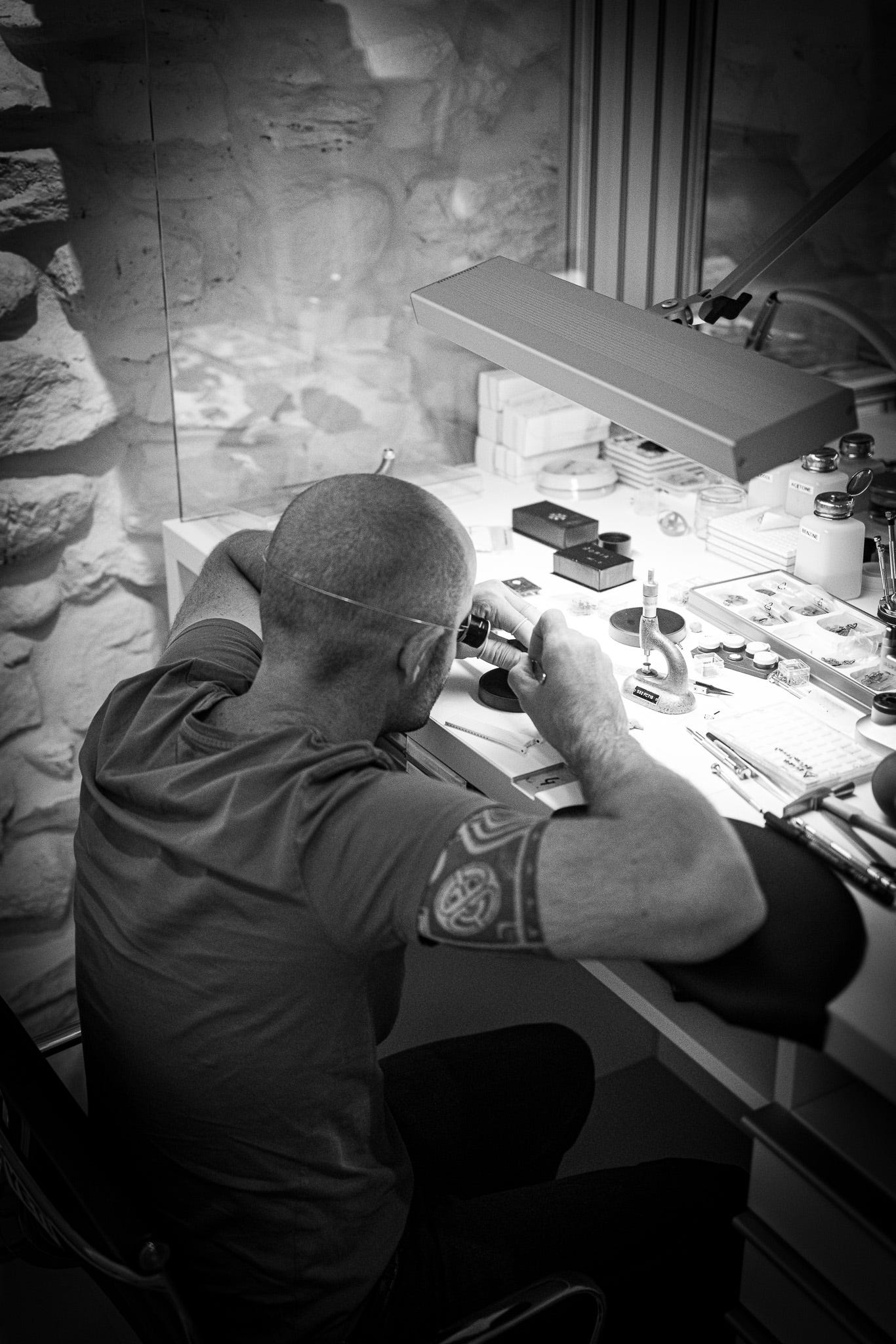
In all my visits to workshops, I never truly had the words to define craft.
I knew craft when I saw it, I could explain to others why a product mattered, but I never had a framework to describe craft, or help others understand it. Writing and filming Seeking Perfect about Denis Flageollet actually became the tipping point for me in wanting to understand craft: why do I care so much about it? Why should others care? What is it about a craft product that makes it different to something available off the shelf? And why does craft matter?
After listening to James Eden defend craft on Monocle’s The Globalist1 podcast, I finally had a framework for how to view craft. Now, I could explain it beyond knowing it when I saw it.
Today it feels like every brand is obsessed with craft, authenticity, and heritage. More often than not, it feels like brands are borrowing the language of craft to lend credence to their selling price without actually engaging in the arduous work of craft.
A craft product is simply the result of an obsession with quality. I would argue that most craftspeople began with disappointment and opportunity. They see a product that could be better and then dedicate themselves to improving it. Like so many other entrepreneurs, craftspeople aren’t trying to make something new, so much as they are trying to improve the experience of a product.
That pursuit of a better product never ends. Finding the right material, improving construction, modifying a pattern are all part of the continuous refinement. The craftsperson is never satisfied because they believe their work can always be a little bit better.
That is why craft objects feel different the moment you pick them up. You inherently know they are special. Every minute detail, no matter how insignificant we may think it is, has been considered.
Craft isn’t about price. It’s about intentionality. Not every expensive good is a craft good, and the inverse is also true. Price may reflect craft, but it does not define it.
As James Eden points out during his interview: “doing anything badly is very, very easy. Doing things on the cheap is very, very easy. Doing things properly, craftsmanship, is complicated and costly.”
Craft isn’t efficient. It demands experimentation, failure, and revision. It’s about years spent on a problem that few notice.
Craft is the pursuit of excellence and perfection, even if unattainable. Mechanical watches are a fantastic example of this: a mechanical watch may never be as accurate as our smartphones, or as accurate as an atomic clock. But the pursuit of chronometric perfection is what drives watchmakers forward, even with the knowledge that they may never attain the same level of accuracy. Many invest years in watchmaking school and then work for other brands before striking out on their own to create something new that solves the problem with which they are obsessed.
It is said that art is for the artist and a product is made for an audience. Craft falls somewhere in the middle of these ideals. It’s made for the creator, to answer to a problem, but it is also for their audience, for their consumers and collectors who appreciate their specific niche of products.
Perhaps that is why the workshops of craftspeople feel so magical — they are the physical embodiment of that pursuit of perfection, obsession with quality, and passion for making something that will outlast the maker.
A craft product is the tangible result of sustained human care.
It is one human’s quest to solve a problem that bothered them. The craftsperson is part engineer, part artist, and part historian, blending all three effortlessly. The finished object is the evidence they leave behind.
James Eden eloquently defended his products in closing with “I’m not interested in competing on price. We compete on authenticity, provenance, and ultimately quality.” And that is exactly where craft products live. They are the embodiment of human care, development of materials and techniques over time, and an obsession with quality.
What object in your life has taught you the most about craftsmanship?
July 28 edition, James’ interview starts around the 18:00 minute mark
No posts
Comments
Nothing yet. Say the first thing.
Sign in to join the conversation.