
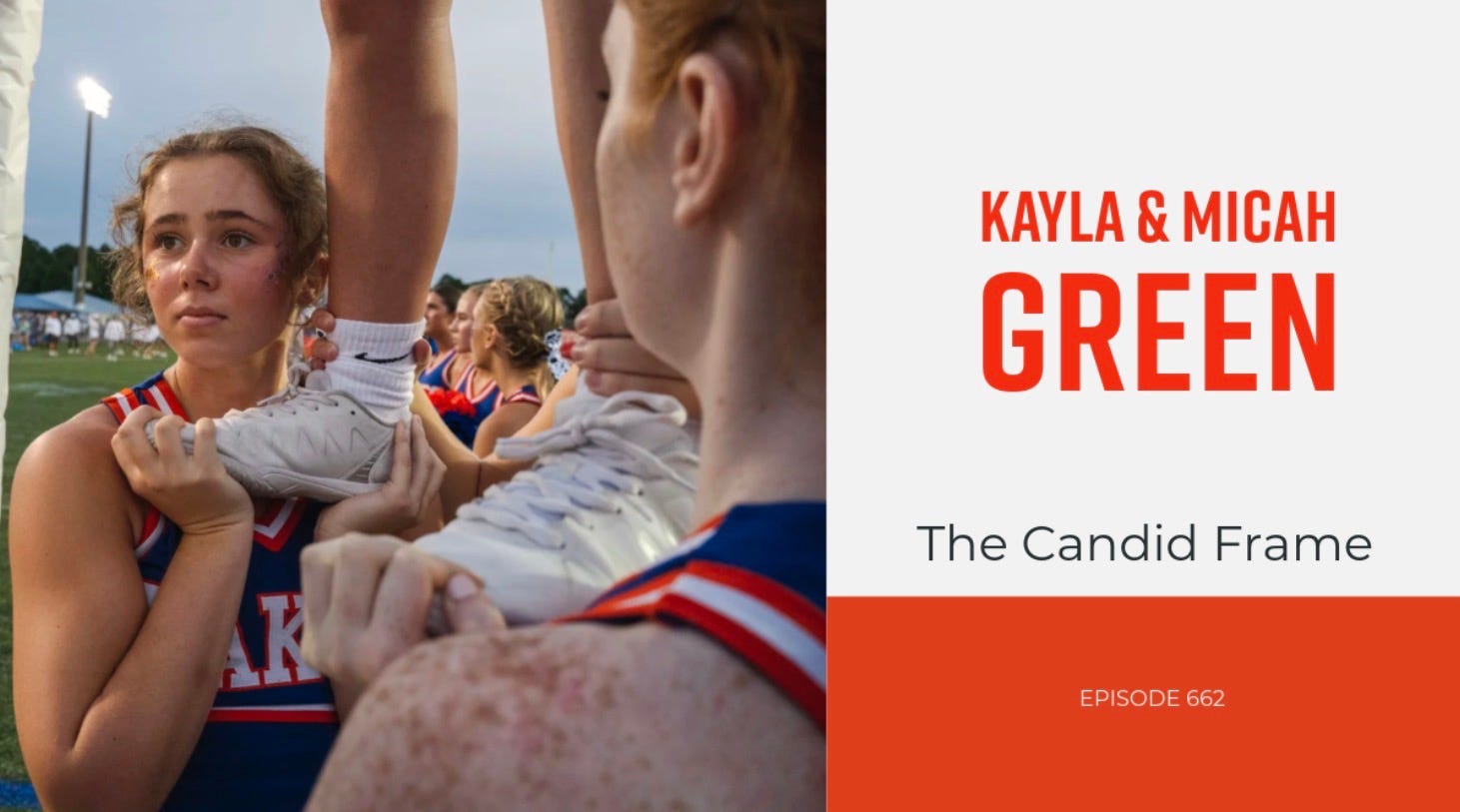
The latest episode of The Candid Frame features Kayla and Micah Green, two journalists, whose work demonstrates the power of collaboration, both behind the camera and within their community.
As photographers, storytellers, and educators, they’ve built a practice rooted in connection. Whether documenting life along the Gulf Coast, mentoring emerging photographers, or creating opportunities through organizations like RAW Society, they have consistently used photography as a means of bringing people together rather than simply making pictures.
What I appreciate about their work is the belief that photography is as much about relationships as it is about images. The strongest photographs and stories often begin with trust, curiosity, and a genuine investment in the people and places we photograph. That philosophy runs throughout everything Kayla and Micah do, whether they’re working on personal projects, assignments, or building programs that encourage photographers to support one another.
Photography can sometimes feel like a solitary pursuit, but Kayla and Micah remind us that our growth often depends on the communities we help create. Their commitment to collaboration, education, and visual storytelling has made them important voices in contemporary photography and local journalism, and I’m excited to share their work with listeners of The Candid Frame.
Listen to the full episode here:
https://www.ibarionex.net/thecandidframe/2026/7/6/the-candid-frame-662-kayla-and-micah-green

There is no substitute for spending time with photographs in the company of other photographers. While social media offers an endless stream of images, festivals create something much more valuable: an opportunity to slow down, engage in conversation, and experience photography as a shared practice.
That’s why I recommend the 5Boro Photo Fest, an event that brings together photographers, curators, educators, publishers, and photography enthusiasts from across New York City and beyond.
What appeals to me about the festival is its emphasis on community. The program combines exhibitions, artist talks, panel discussions, portfolio reviews, workshops, and networking opportunities, creating space for photographers at every stage of their journey. Whether you’re just beginning to develop your voice or have been making photographs for decades, there is something energizing about being surrounded by people who are equally passionate about the medium.
Photography has always grown through the exchange of ideas. Some of my most memorable experiences have come not from looking at photographs alone, but from discussing them with other photographers—hearing different perspectives, asking questions, and being challenged to think more deeply about my own work. Events like 5Boro Photo Fest provide exactly those kinds of opportunities.
If you’re in or around New York, I encourage you to check it out. It looks like a wonderful chance to immerse yourself in photography, discover new work, and connect with a vibrant photographic community.
Learn more about 5Boro Photo Fest:
https://www.5borofotofest.com
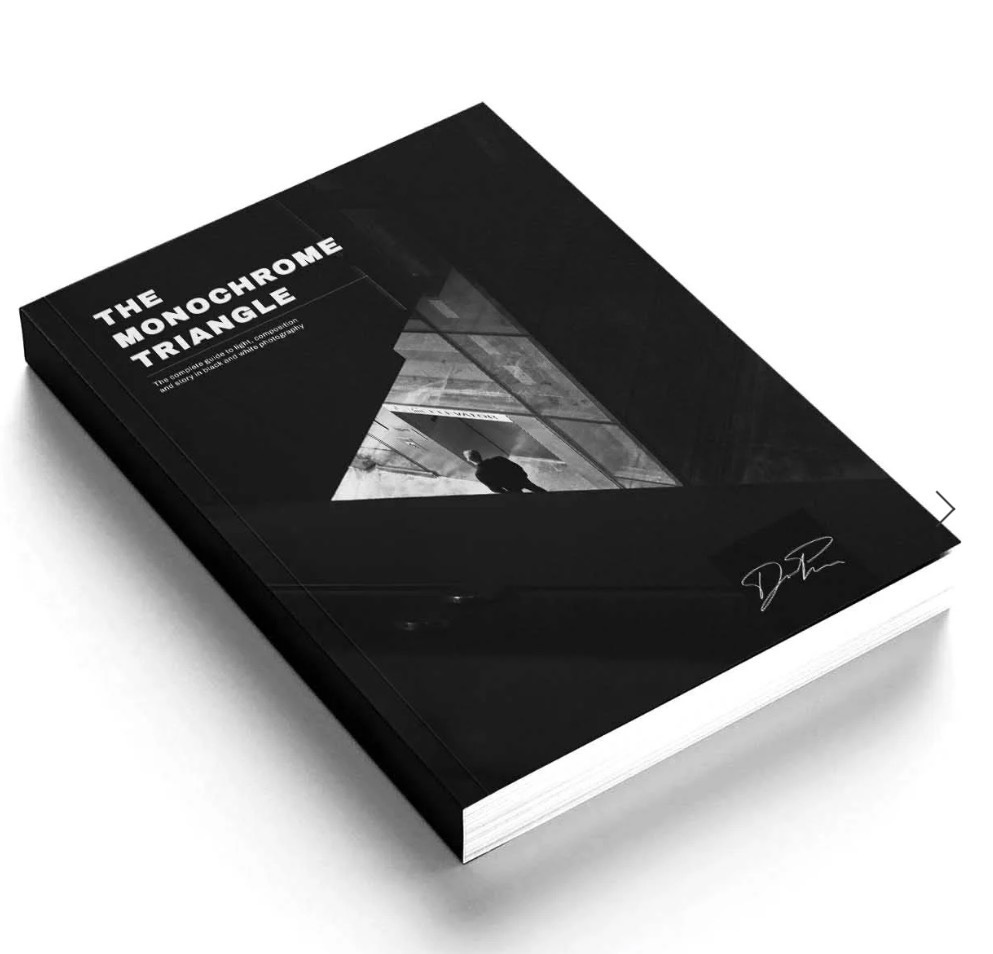
One of the misconceptions about black-and-white photography is that it’s simply a matter of removing the color from an image. Anyone who has spent time making successful monochrome photographs knows that’s far from the truth.
Black-and-white photography asks us to see differently. Without the visual cue of color, we’re called to pay closer attention to the relationship between light and shadow, the balance of shapes and lines, the rhythm of tones, and the way composition guides a viewer’s eye through the frame. It requires a heightened awareness of the visual elements that make a photograph work.
That’s exactly what Darren Pellegrino explores in The Monochrome Triangle. Rather than concentrating on camera settings or software techniques, Darren focuses on developing a photographer’s ability to see. He examines how light, shadow, composition, and tonal relationships work together to create photographs with depth, clarity, and emotional impact.
What I especially appreciate is that the book doesn’t present black-and-white photography as a nostalgic alternative to color. Instead, it argues that monochrome is its own visual language—one that demands a different way of observing the world. The lessons encourage photographers to slow down, simplify, and recognize the interplay of light and form before ever pressing the shutter.
Although the book is devoted to monochrome photography, the principles Darren discusses apply to every photographer. Learning to see tonal relationships, understand the quality of light, and create stronger compositions will improve your photographs regardless of whether you work in black and white or color.
If you’ve ever wanted to move beyond simply desaturating a color file and begin making photographs that are conceived in black and white from the moment you lift the camera, The Monochrome Triangle is an excellent resource that will challenge—and ultimately refine—the way you see.
The Monochrome Triangle by Darren Pellegrino:
https://www.themonochromecollective.co/store1/p/themonochrometriangle
Comments
Nothing yet. Say the first thing.
Sign in to join the conversation.