
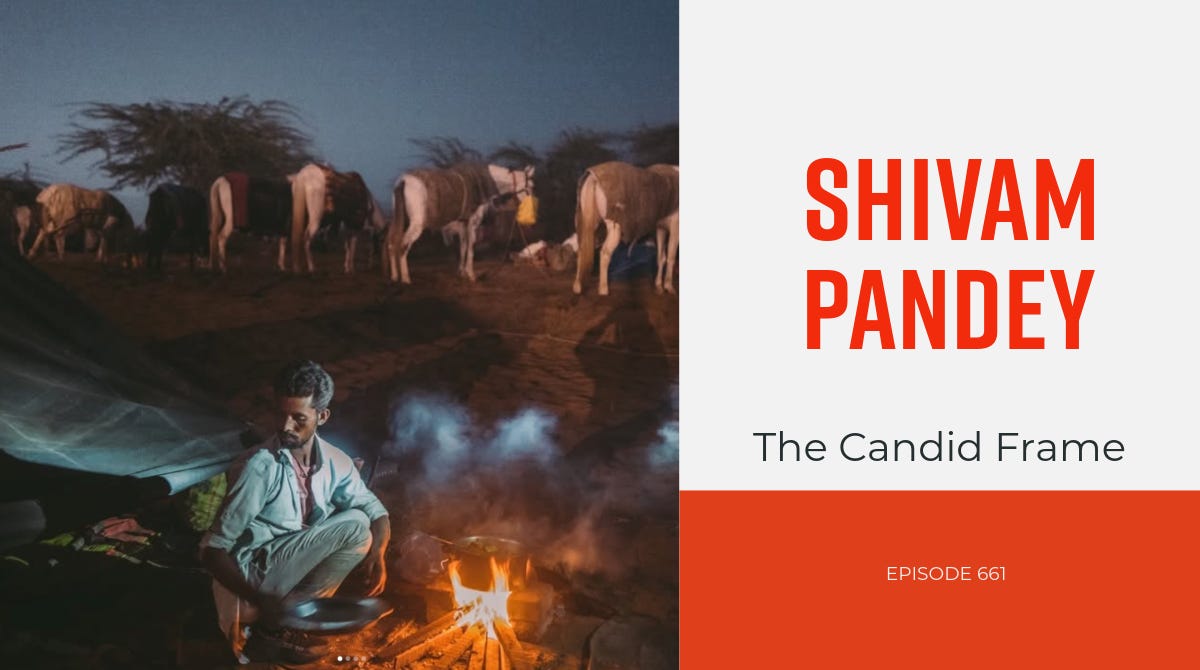
The latest episode of The Candid Frame features Shivam Pandey, a photographer whose journey is as compelling as the photographs he creates.
I first became aware of Shivam through his street photography, which is deeply rooted in the visual energy and complexity of Kolkata. His photographs reveal an appreciation for gesture, color, light, and timing, but what makes the work particularly engaging is the sense of familiarity and connection he has with the people and places he photographs. The images feel less like observations from the outside and more like the work of someone photographing from within his own community.
What I find especially inspiring about Shivam’s story is the path he forged for himself. He began working as a fixer and guide for photographers visiting India, helping them navigate a culture and environment that was often unfamiliar to them. Over time, that experience became the foundation for developing his own photographic voice and, eventually, for building a successful career leading workshops and photographic tours of his own.
His journey is a reminder that there is no single path to becoming a photographer. Some begin with formal education, others through personal projects, and still others by supporting others’ work before discovering their own direction. Shivam’s success reflects not only talent and perseverance but also a genuine passion for sharing photography with others.
Whether photographing the streets of Kolkata or helping visitors discover the city through a camera, Shivam brings a deep love for photography and for the place he calls home. The result is work that feels both personal and inviting, encouraging viewers to slow down and see a familiar place with fresh eyes.
Listen to the full episode here:
https://www.ibarionex.net/thecandidframe/2026/6/21/the-candid-frame-661-shivam-pandey
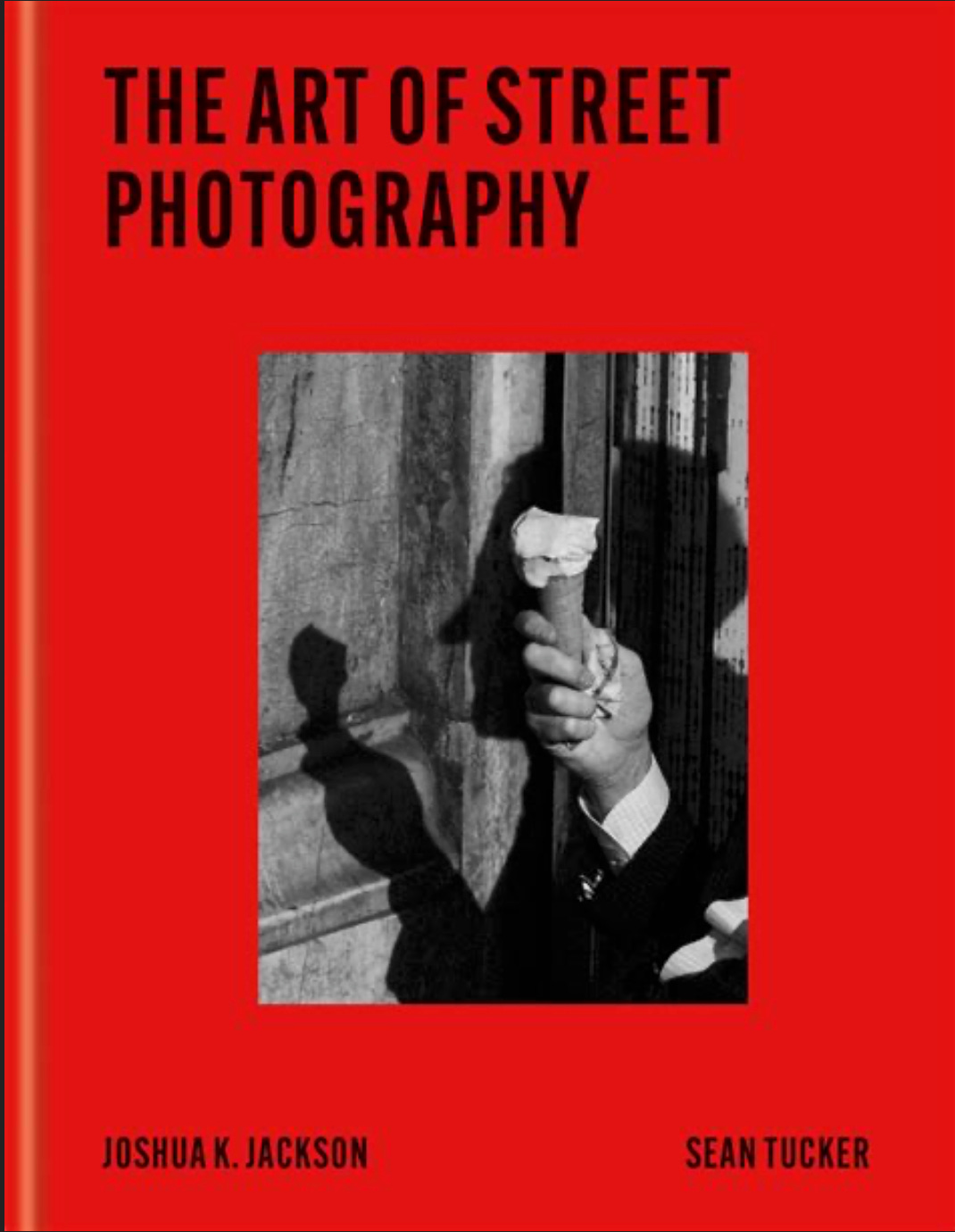
I’ve been spending time with a new book by Sean Tucker and Joshua K. Jackson, The Art of Street Photography, and it has quickly become one of the most enjoyable photography books I’ve read this year.
What immediately appealed to me is that the book focuses far less on technical considerations and far more on the development of seeing. While there is certainly no shortage of books, videos, and online discussions dedicated to cameras, lenses, and settings, far fewer resources address the more important question: how do we learn to see?
Tucker and Jackson approach street photography as something much broader than the familiar images that often dominate social media feeds. Rather than defining the genre through a narrow set of visual conventions, they explore the many ways photographers engage with public spaces, human behavior, and the visual complexity of everyday life. The result is a book that expands rather than restricts our understanding of what street photography can be.
What I especially appreciate is the emphasis on personal vision. Throughout the book, street photography is presented not simply as a practice of observation, but as a way of examining the world and understanding one’s relationship to it. The strongest photographs emerge not from following formulas but from developing a deeper awareness of place, people, light, gesture, and one’s own curiosity.
For photographers frustrated by rigid definitions of street photography, this book offers a welcome alternative. It challenges assumptions, encourages experimentation, and reminds us that photography is ultimately less about categories and more about cultivating a meaningful way of seeing.
Whether you’re new to street photography or have been practicing it for years, The Art of Street Photography is an exceptional book that may very well change the way you think about the medium—and your place within it.
The Art of Street Photography by Sean Tucker and Joshua K. Jackson:
https://www.amazon.com/Art-Street-Photography-Sean-Tucker/dp/B0FQN8JTJB

One of the challenges photographers often face is learning how to make sense of visual complexity. Faced with a busy street corner, a crowded market, or any scene overflowing with information, it’s easy to become overwhelmed and settle for photographs that feel cluttered rather than intentional.
That’s one of the reasons I enjoyed Jonathan Jasper's video on creating complex images.
What makes the video particularly valuable is that Jonathan goes beyond the usual discussion of compositional rules. Rather than treating composition as a checklist of techniques, he explores the thought process behind making photographs that successfully contain multiple layers of information without descending into visual chaos.
He does an excellent job of breaking down how to parse a scene and identifying relationships among people, objects, light, gesture, and space. Watching him work through examples reveals how strong photographs are often built through a series of observations and decisions rather than a single decisive moment. The process becomes less about imposing order on a scene and more about recognizing the underlying structure that already exists within it.
I especially appreciate how the video addresses something many photographers struggle with: learning to see beyond the obvious subject. Complex photographs often succeed because they reward repeated viewing. They contain secondary and tertiary elements that enrich the image and invite viewers to spend more time exploring the frame. Jonathan demonstrates how photographers can train themselves to recognize those opportunities and incorporate them into their work.
Whether you’re interested in street photography, documentary work, travel photography, or simply becoming a more observant photographer, this video offers valuable insights into transforming visual complexity into photographs that possess both meaning and beauty.
Watch the video here:
Comments
Nothing yet. Say the first thing.
Sign in to join the conversation.